Outdoor Herb Garden Ideas That Are Pretty Practical and Make Your Cooking So Much Better

The first time I planted herbs outside, I watched them struggle through one disaster after another. Too much water, then not enough. Bugs that showed up overnight. Leaves that looked perfect one week and yellow the next.
Most people give up because they treat herbs like houseplants or follow generic advice that misses what outdoor herbs actually need. They’re tougher than you think, but finicky about the basics.
Once you understand where herbs want to grow and what actually protects them, everything gets easier.
Here are 26 ways to grow herbs outside that work with limited space and real life.
How Do You Protect Outdoor Herbs From Pests Naturally?
Pests usually show up when herbs are already stressed. Start with proper sunlight, spacing that lets air move, and soil that drains well instead of sitting wet.
Skip the overwatering — soggy roots invite trouble. When pests do appear, rinse them off with the hose, pinch damaged leaves clean, or use neem oil if things get serious.
Plant basil near tomatoes, rosemary where it gets hot, mint in its own container so it doesn’t take over. Strong scents confuse pests more than most sprays do.
Save this article for later! 👇👇
Where Is the Best Place to Put an Outdoor Herb Garden?
Put herbs where you’ll actually see them every day. Morning sun with some afternoon protection works for most varieties, but the real key is placement you can’t ignore.
Too far from the house means you’ll forget to check on them. Too shaded means weak, leggy growth that attracts problems. Near the kitchen door, along a walkway, or beside your patio works best.
If water drains away instead of pooling and you can grab a handful without planning a trip, you’re already ahead.
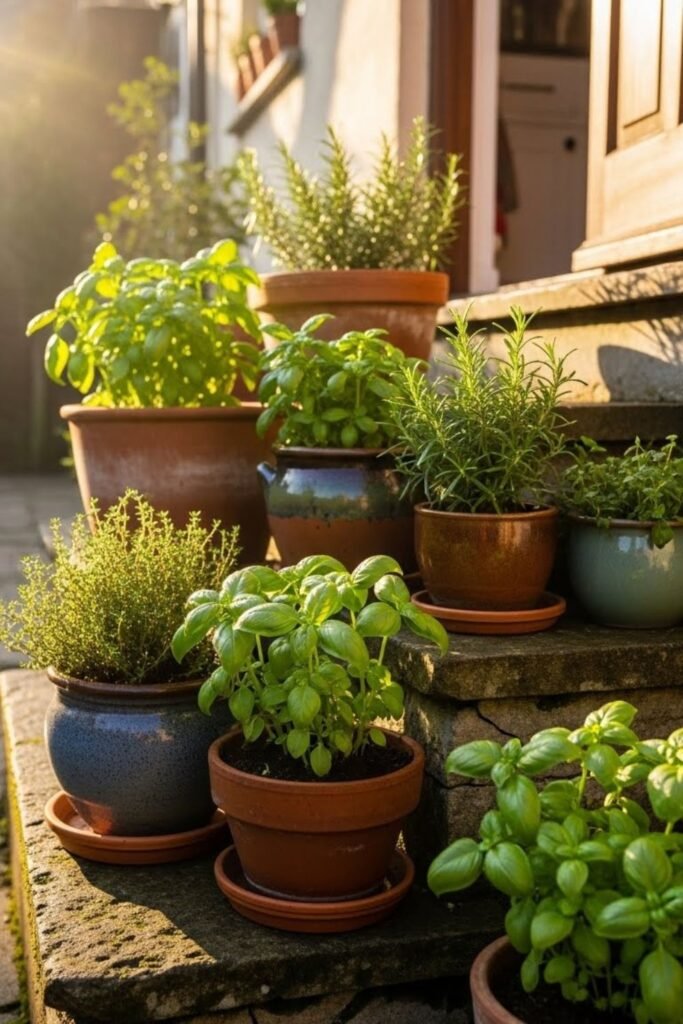
Kitchen Steps
I keep my most-used herbs right along the back steps. Every time I let the dog out or step outside with coffee, they’re right there looking thirsty or overgrown or perfectly ready to snip.
Morning sun hits gently here, and water runs off the concrete fast enough that roots don’t sit wet. If I need basil for dinner, I don’t have to walk across the yard in my slippers.
Fence Line
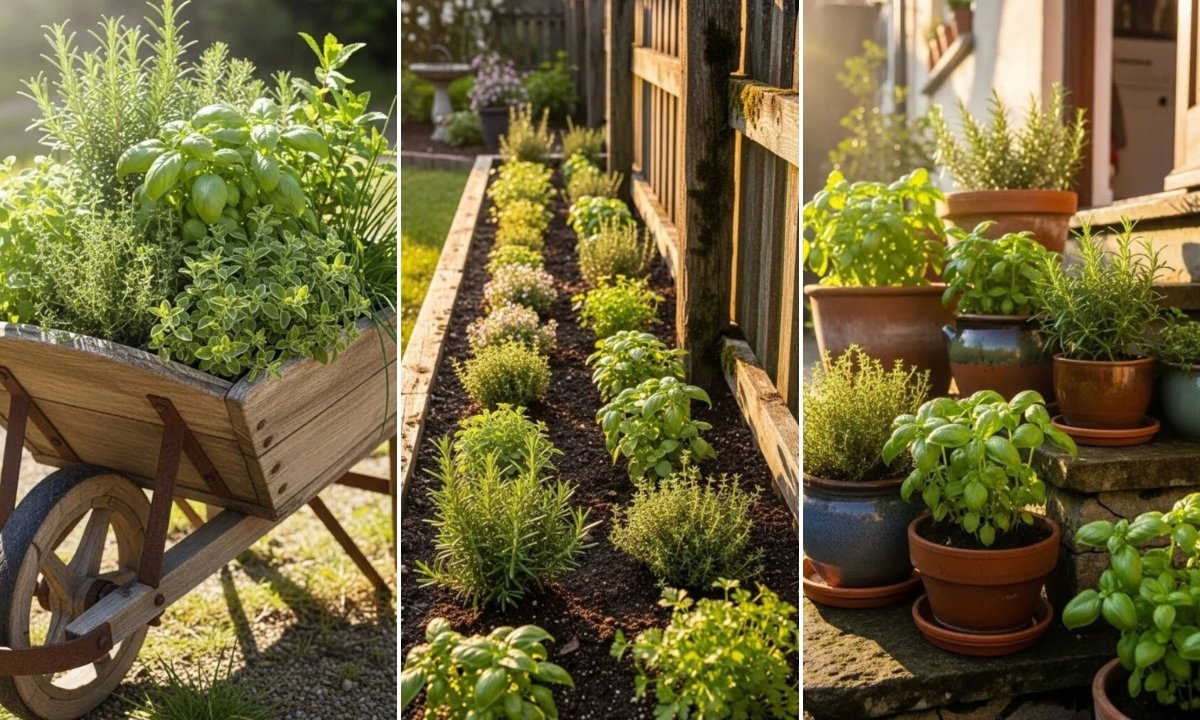
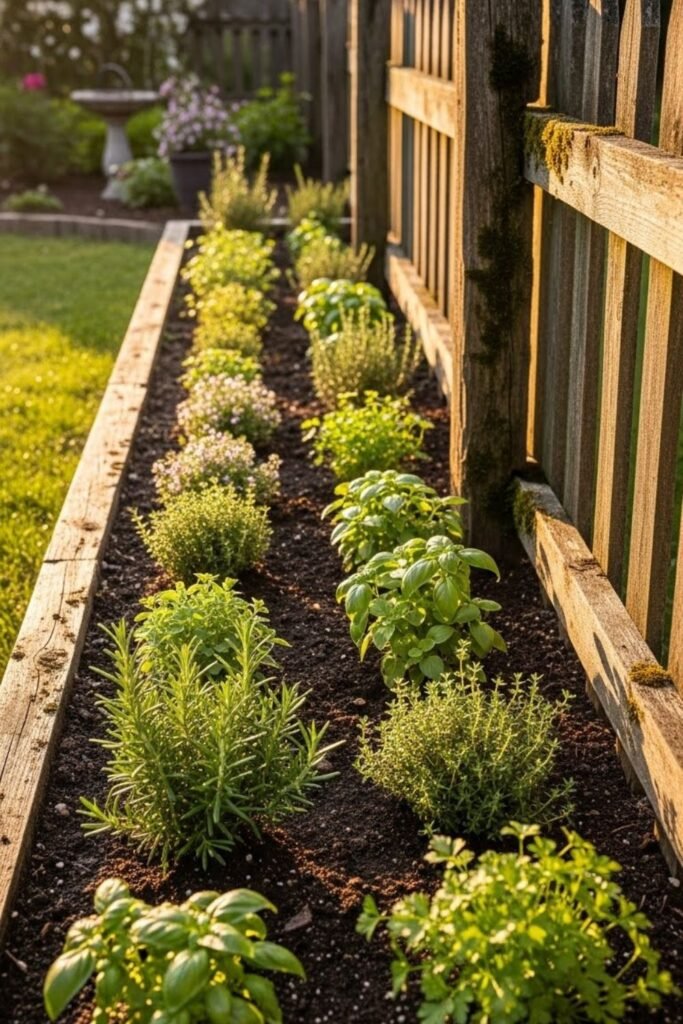
Running herbs along the back fence solved my wind problem and made that boring boundary useful. I space them so air still moves but the worst gusts get blocked.
When something outgrows its spot, I trim it back and use what I cut the same day. This setup works when you have ground space but need protection from weather or neighbors.
The fence also means I can hang tools or labels without them blowing around the yard.
Garden Wheels
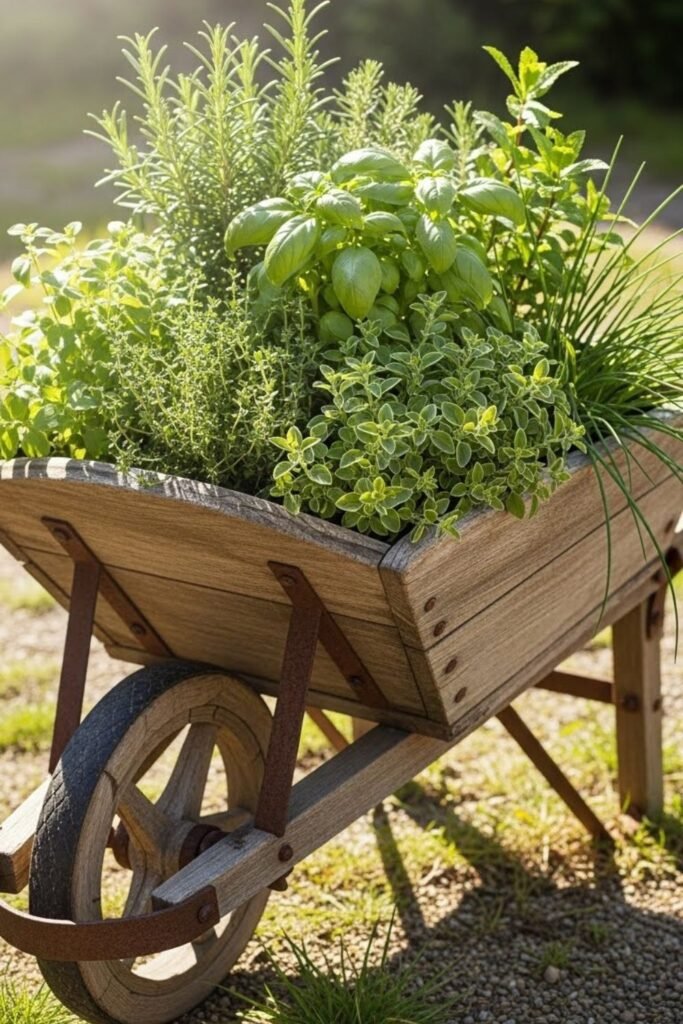
Frank found an old wheelbarrow at a garage sale, and I drilled drainage holes and turned it into a moving herb garden. If the sun gets too intense, I roll it a few feet into partial shade.
I added gravel at the bottom because drainage matters more in containers. This works best when I want control over conditions without committing to one permanent spot.
Patio Corner
The herbs tucked beside my patio chairs get filtered sun and consistent attention. When I’m sitting outside with coffee, I notice dry soil or bug damage right away.
I keep the layout simple so the walking path stays clear, and the scent drifts when there’s any breeze.
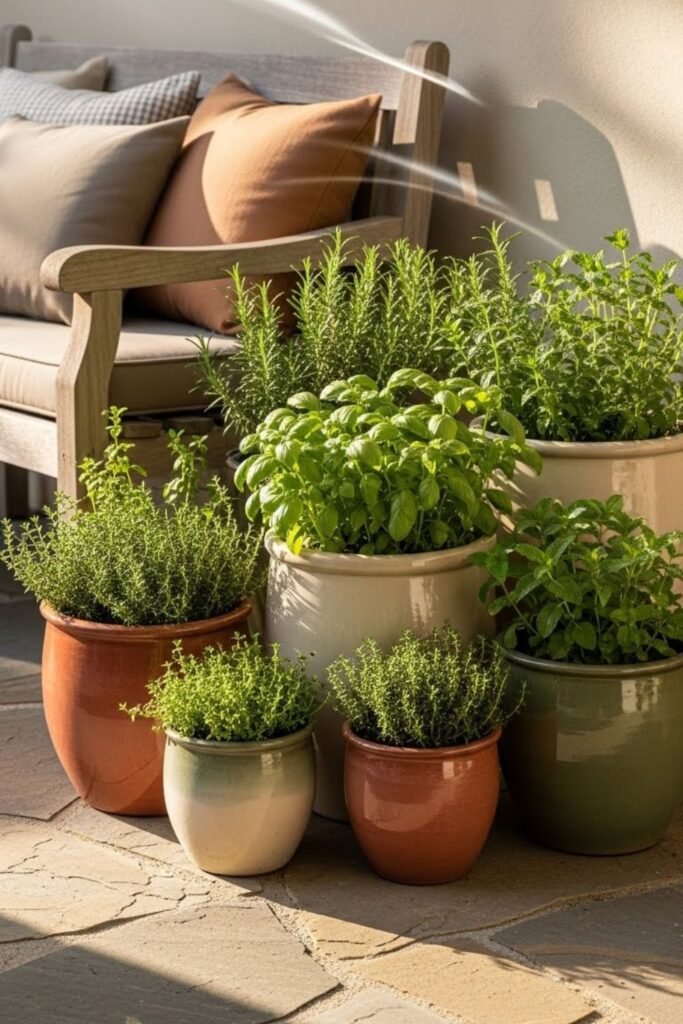
Crate Stack
Three wooden apple crates stacked against the garage wall gave me height without building anything permanent. Heavy herbs go at the bottom, lighter ones higher up so everyone gets sun.
Water from the top crate drains into the middle one, then the bottom, so nothing gets wasted. When seasons change or plants outgrow their spots, I just rearrange.
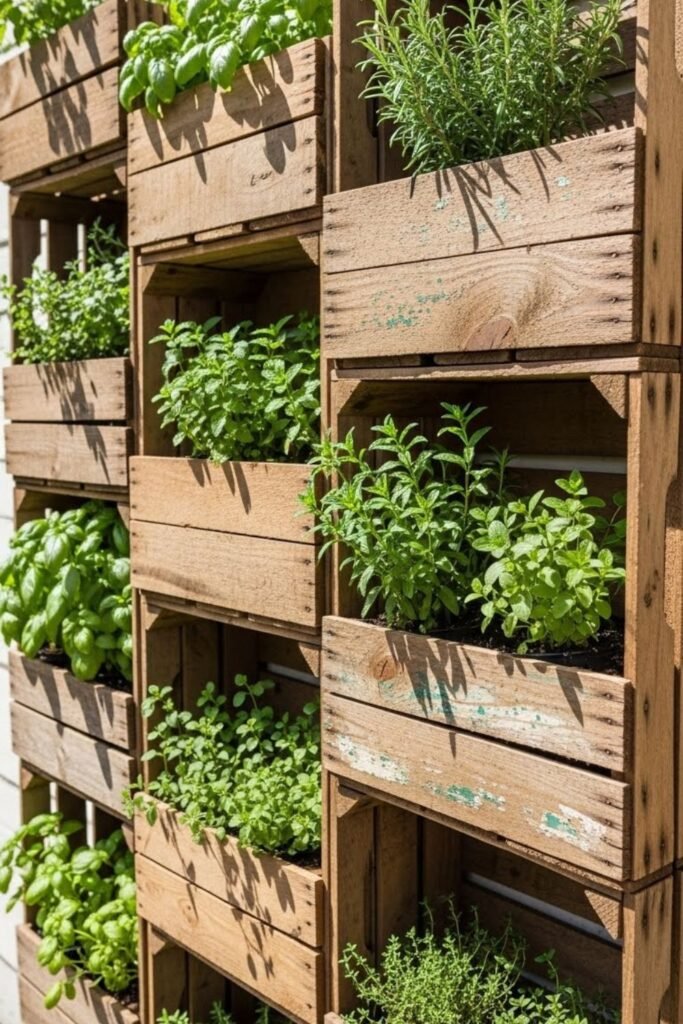
Rail Garden
Clipping planters to the deck railing keeps herbs at eye level, which means I notice problems before they get serious. Wind can be rough up here, so I secure everything twice and stick with sturdy varieties.
Morning sun works best — afternoon heat at this height can be brutal. This turns unused railing space productive without taking floor space I need for chairs.
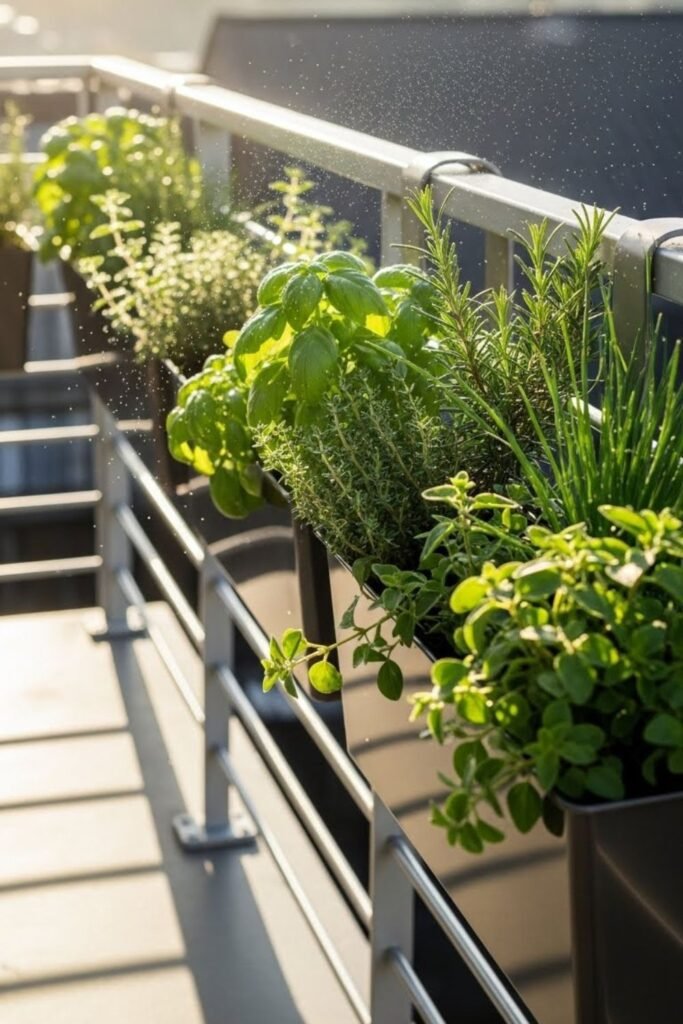
Drawer Garden
I felt ridiculous using old kitchen drawers as planters until they worked better than anything else I’d tried. The shallow depth prevents overwatering, which has killed more herbs than drought ever did.
I line the bottom with hardware cloth for drainage and group herbs by how much water they want. Drawers slide into corners or against walls where deeper pots won’t fit.
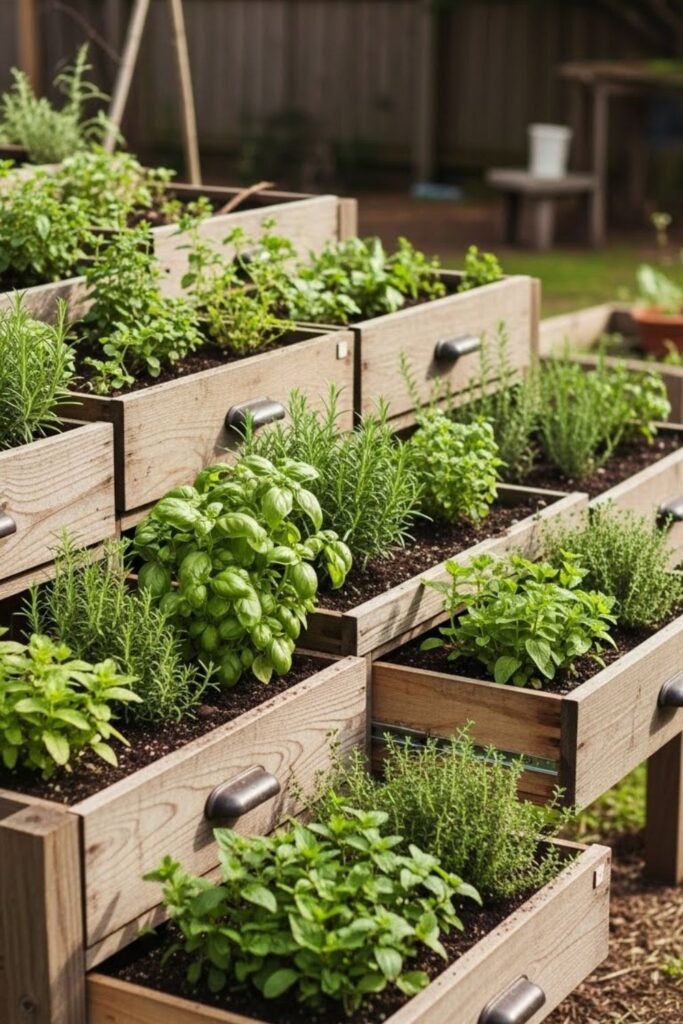
Path Border
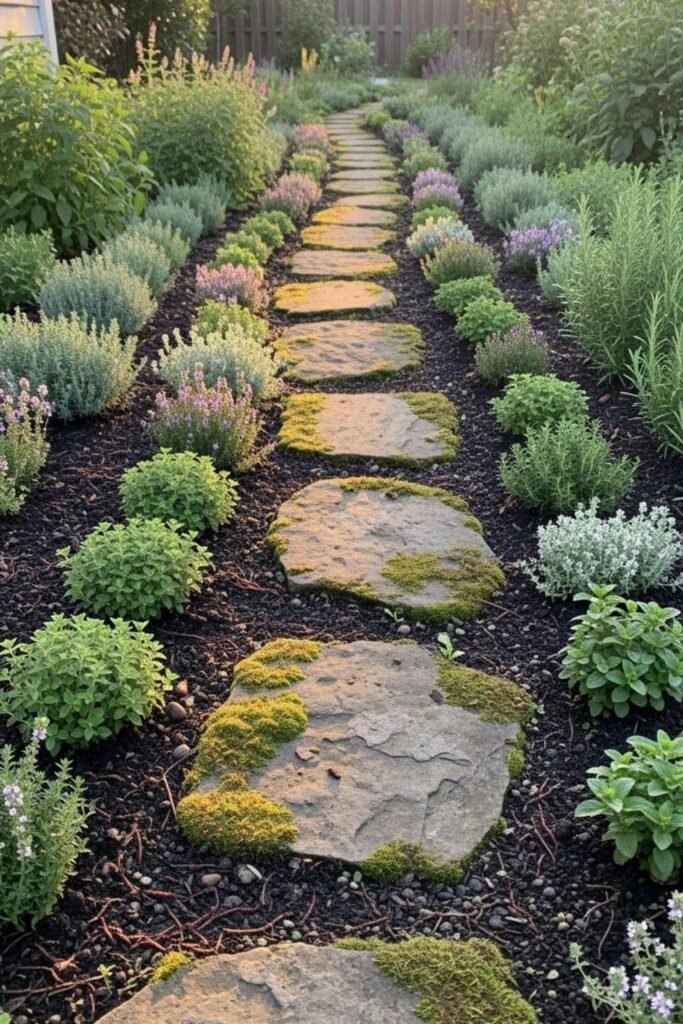
Lining herbs along the garden path means I check on them every time I walk through, which is exactly the kind of consistent attention they need. I keep taller ones toward the back so I don’t trip.
Foot traffic naturally reminds me to pinch growth, pull weeds, or notice if something looks off.
Hanging Baskets
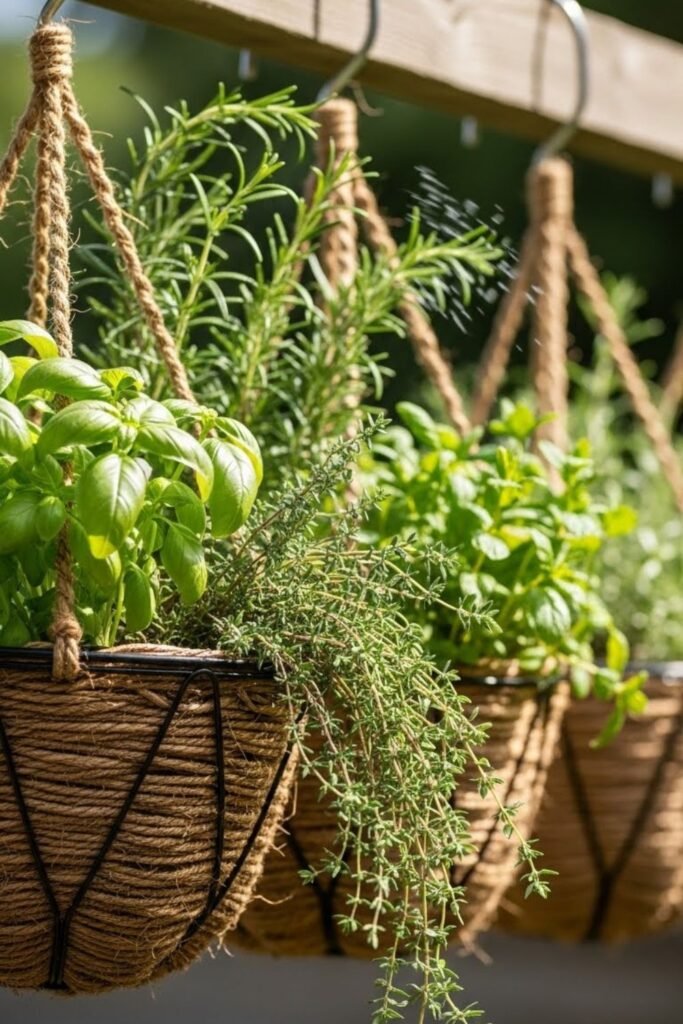
Hanging herb baskets solved my slug problem instantly. Bugs have a much harder time reaching plants when they’re off the ground, and I like the greenery at eye level.
Baskets dry out faster than ground plants, so I check them daily. I hang them where sun stays even but not harsh — too much heat and they’ll stress.
Brick Circle
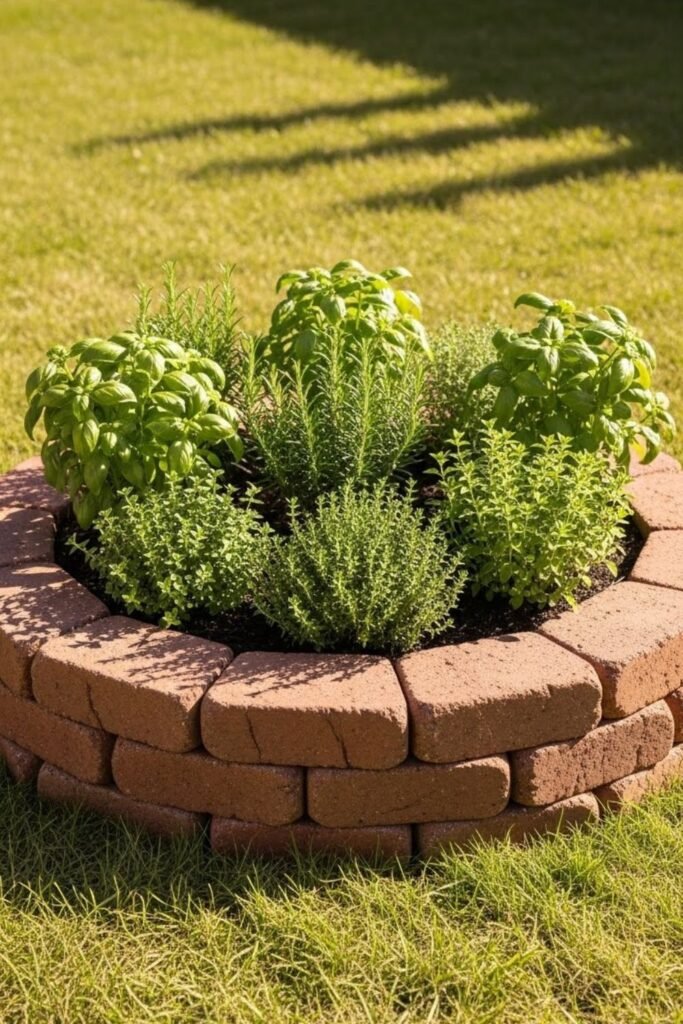
The low brick circle around my herbs gives them structure and holds heat during the day, releasing it slowly at night. I keep the center open for airflow and easy access.
This layout feels intentional without being fussy. Drainage stays consistent, weeds stay manageable, and it turns herbs into a focal point instead of something tucked away.
Window Side
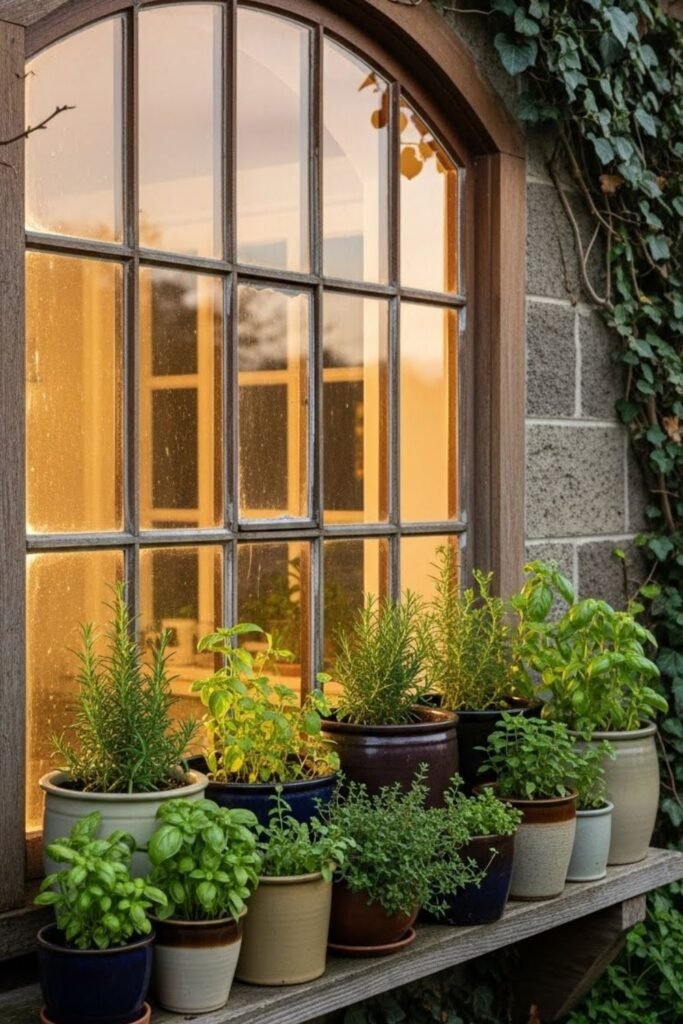
Positioning herbs near the outdoor kitchen window means I can see changes even from inside. If something looks wilted or chewed up, I notice before it becomes a bigger problem.
Light reflects gently off the house wall, which reduces stress. I avoid crowding so air moves freely.
Rolling Cart
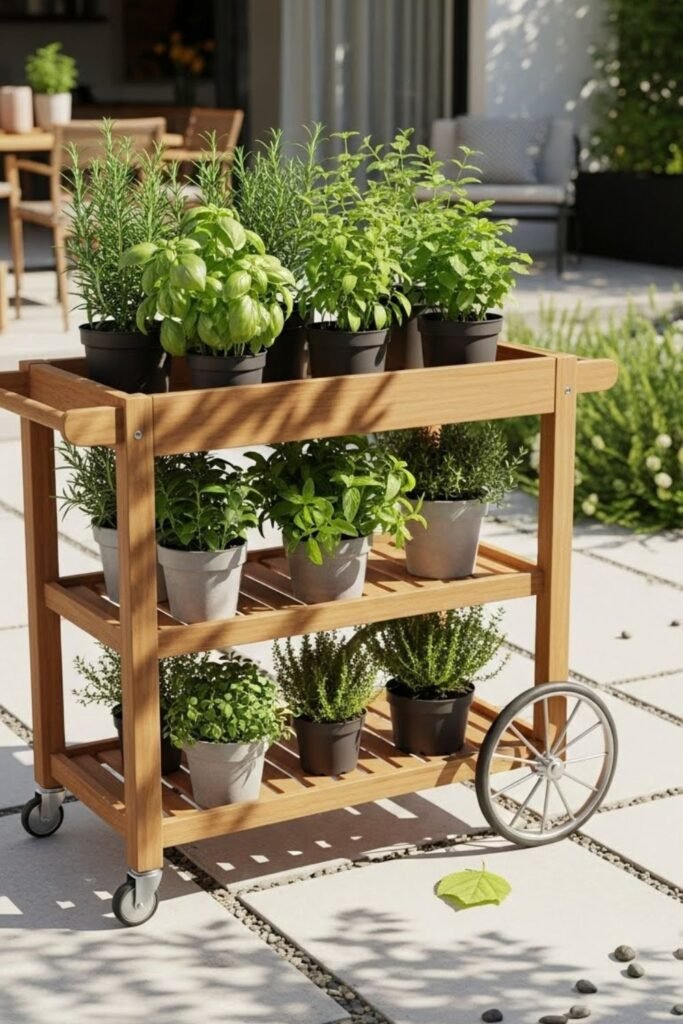
A small outdoor cart lets me chase the best conditions. Morning sun near the patio, afternoon shade by the fence, back inside during storms. Shelves keep plants separated for better airflow.
If pests show up, I can isolate affected plants immediately. Perfect for patios or when you’re renting and need flexibility.
Save this post for later ❤️
Ladder Lean
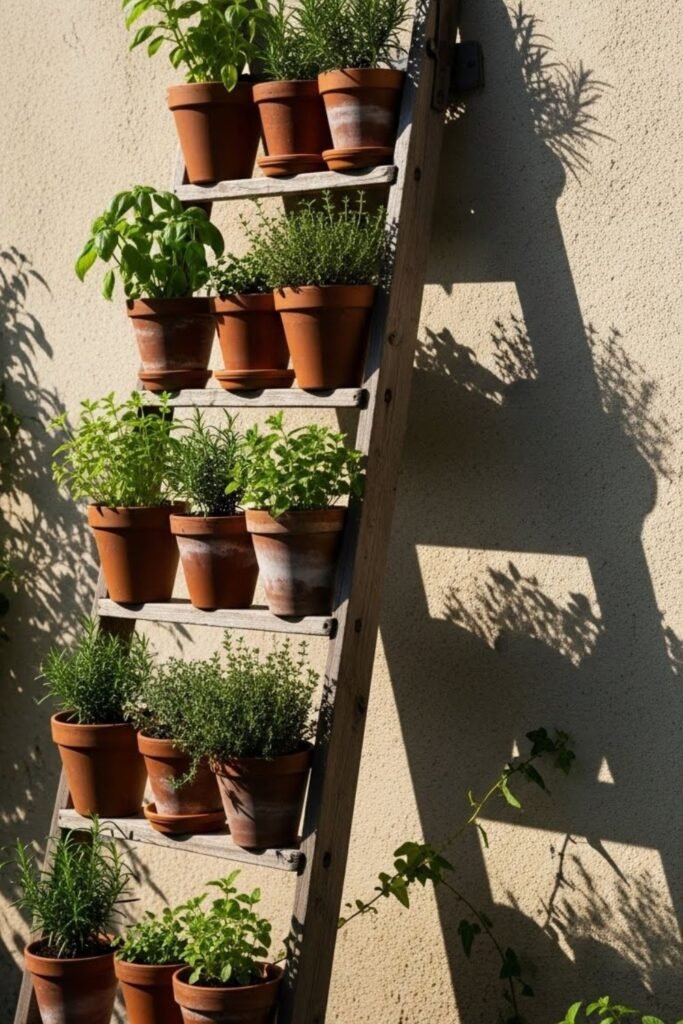
An old wooden ladder leaning against the shed wall gave me vertical growing space without any construction. Each rung holds a pot, so herbs stay separated and get good airflow.
Sun-loving herbs go higher where light is strongest, shade-tolerant ones lower where it’s gentler. Water starts at the top and trickles down naturally.
Fire Ring
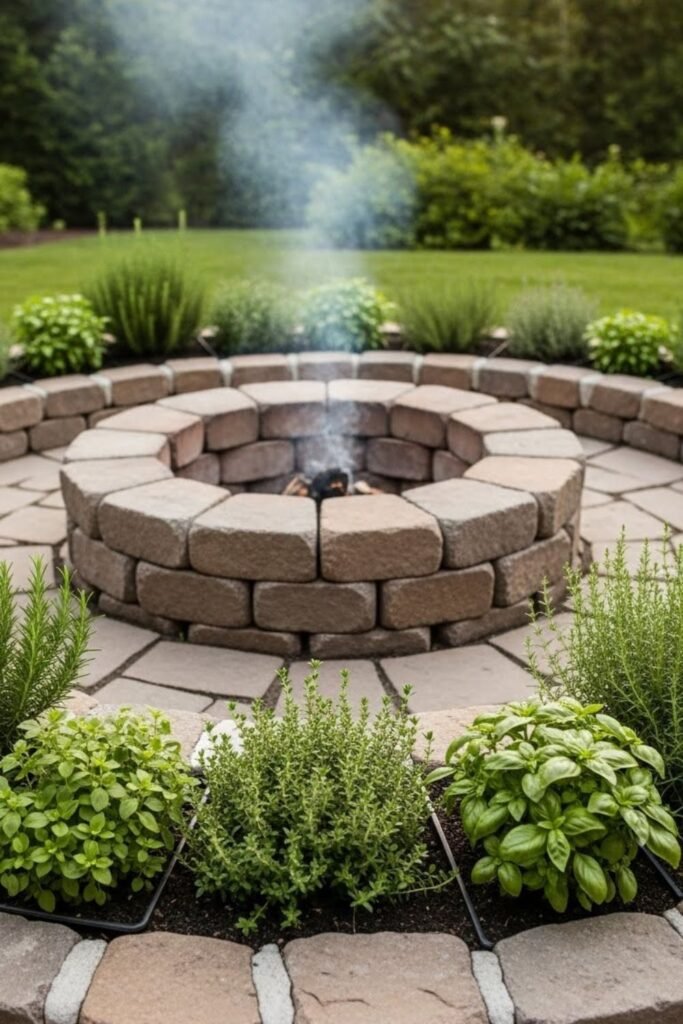
Circling herbs around the fire pit created a protected growing zone that gets gentle warmth from stored heat in the stones. I leave plenty of space so direct heat never reaches the plants.
Strong herb scents help keep bugs away during evening fires, which is an unexpected bonus.
Gravel Base
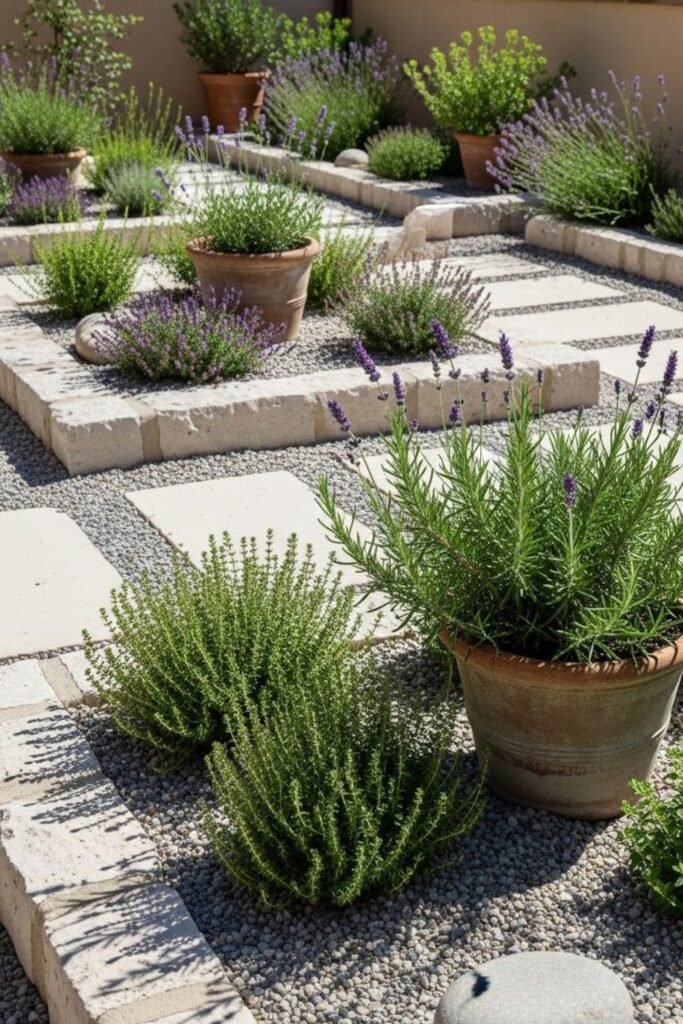
Spreading a gravel base under herbs fixed every drainage problem I’d been fighting. Water never sits too long, roots stay healthy, and heat-loving varieties thrive.
I plant into soil pockets beneath the gravel and let the stones handle moisture control. Weeds can barely get started, which keeps maintenance simple.
Wood Boxes
Reclaimed wood boxes gave me structure without permanence. I dedicate each box to herbs with similar water needs — Mediterranean herbs in one, tender leafy ones in another.
Raised height means better drainage and easier harvesting. Boxes warm up faster than ground soil, which helps early spring growth.
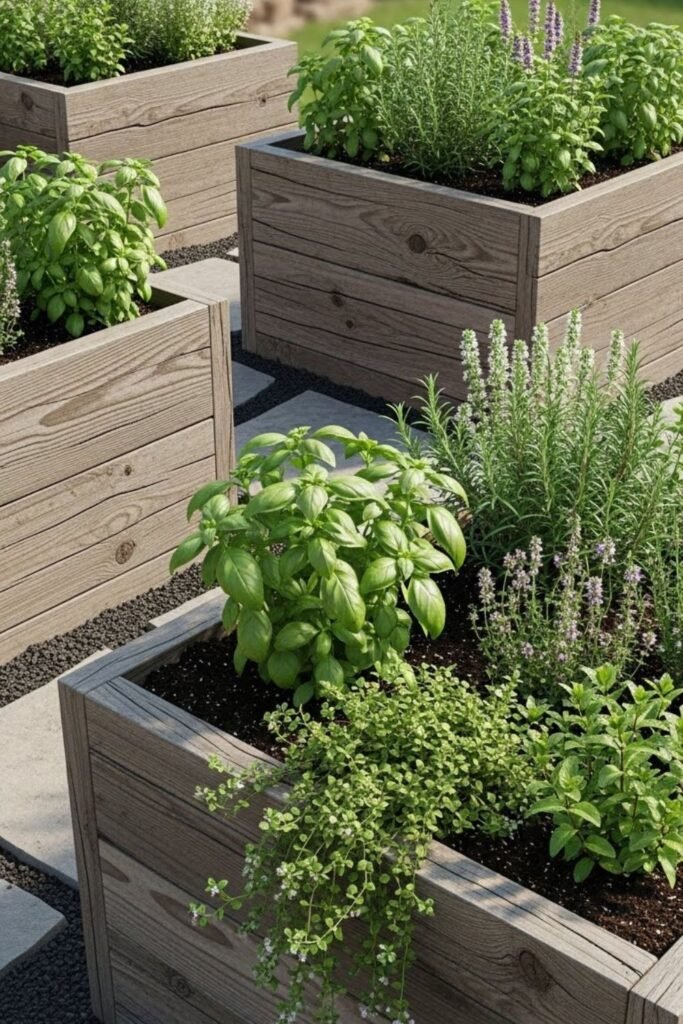
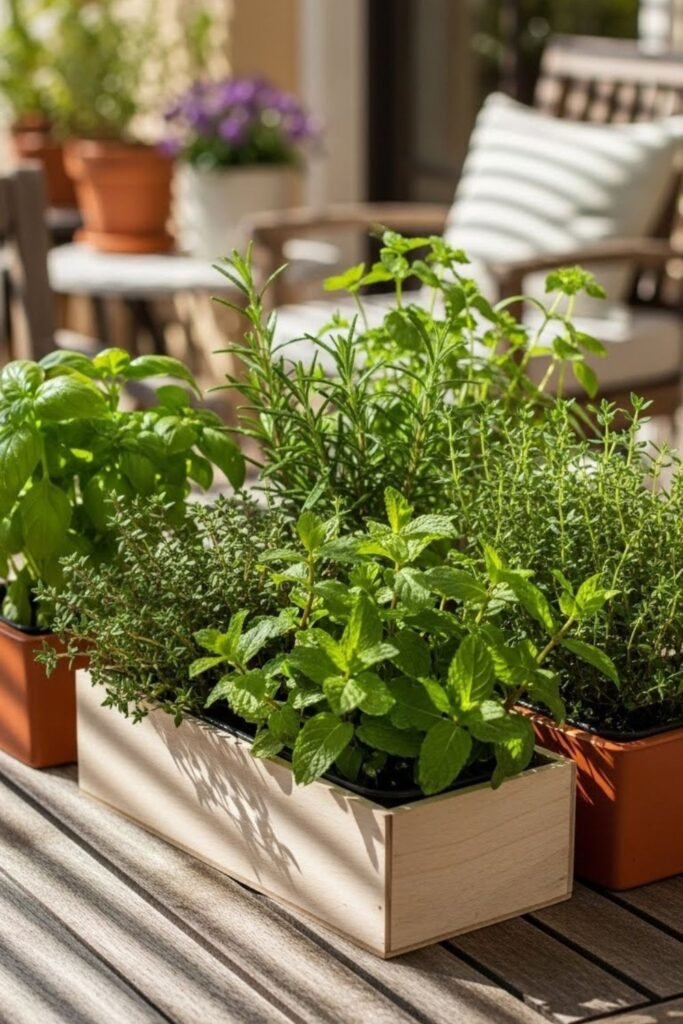
Table Top
An outdoor table keeps herbs within reach while I’m cooking on the patio or reading in the evening. Shallow containers prevent water from sitting in roots.
Height lifts plants away from ground heat, which keeps them cooler. If weather turns ugly, the whole table can move under cover in seconds.
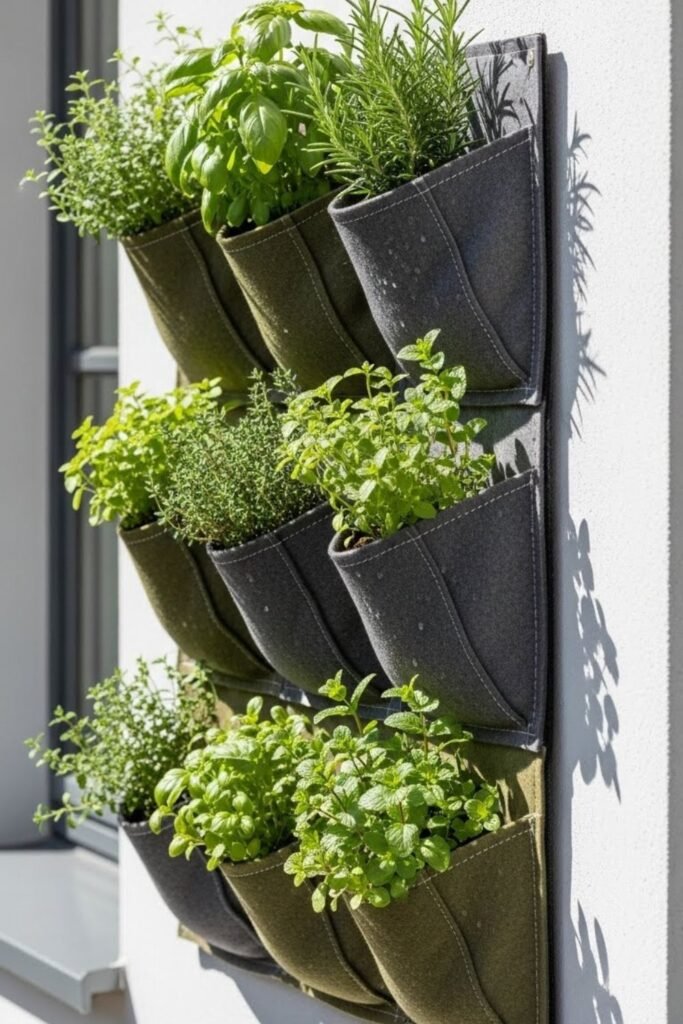
Wall Pockets
Fabric wall pockets attached to the garage wall work better than I expected. Rain drains fast, roots get good airflow, and I don’t lose any floor space.
Light spreads evenly across the wall surface. Watering takes a gentle touch to avoid runoff, but maintenance feels lighter because problems show early.
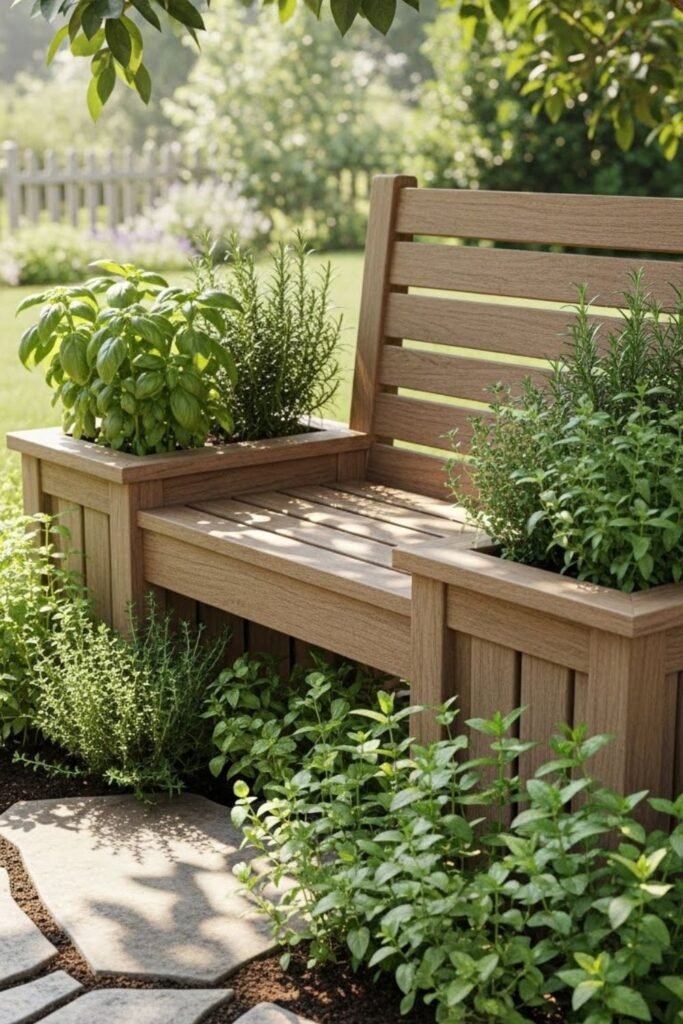
Bench Blend
Combining seating with herb growing turned my garden bench into working space. Planters sit underneath and alongside, staying shaded during peak heat.
Every time I sit down, I check soil moisture and notice what needs picking. Harvesting becomes natural instead of scheduled, and care stays consistent because everything’s visible.
Rain Catch
Placing herbs where roof runoff reaches soil gently (not forcefully) cut my watering in half. Drainage still matters most — loose soil that doesn’t hold water too long.
Herbs grow steady without stress from dry spells, and balanced moisture keeps pests and diseases lower naturally.
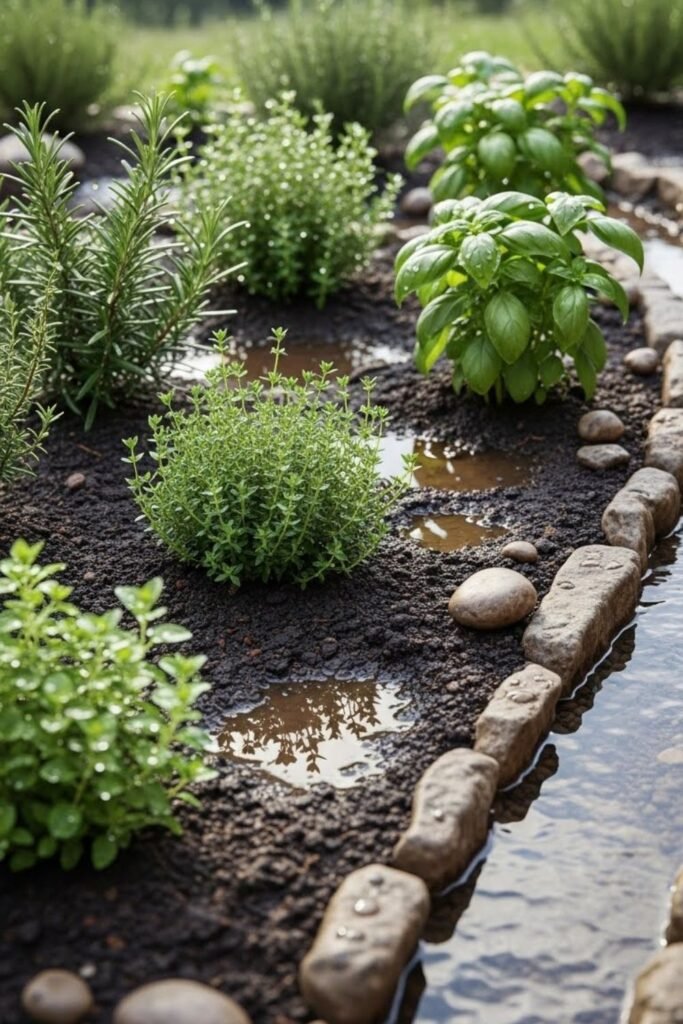
Shade Corner
The naturally shaded corner behind the house grows herbs that hate harsh sun. Gentle morning light and protection during the hottest hours keeps soil cooler and reduces stress.
I space plants wider here so air still moves. Not every herb needs full blazing sun — some prefer it easier.
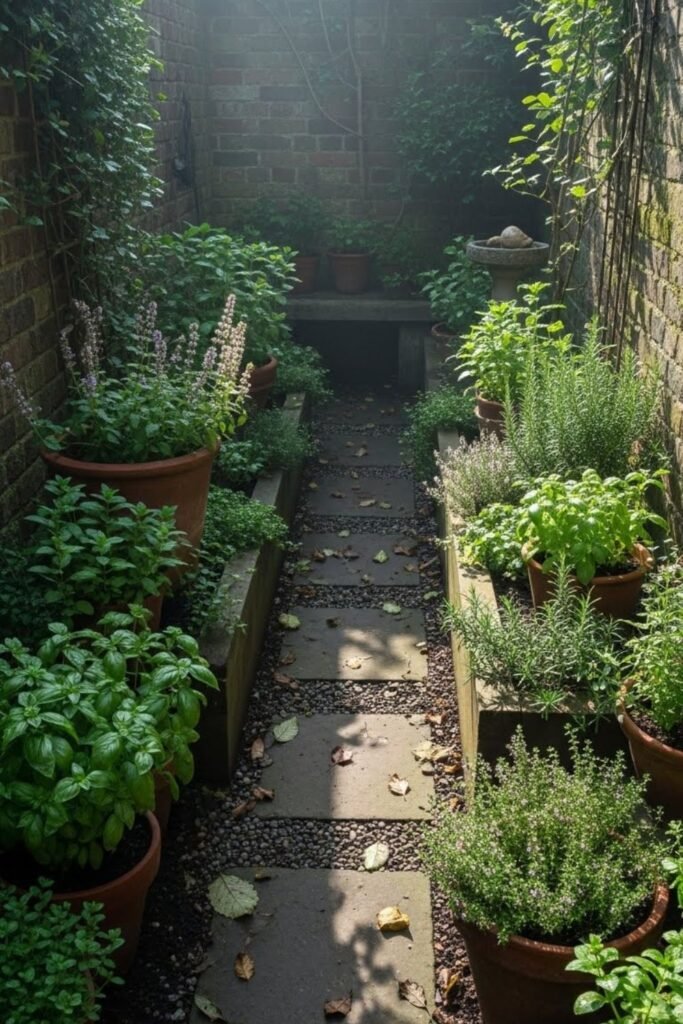
Tree Circle
Surrounding the young apple tree with herbs turns wasted ground productive. I keep them far enough from the trunk so roots don’t compete, and dappled light works surprisingly well.
Fallen leaves help hold moisture, reducing watering needs. Herbs discourage some pests that would otherwise climb the tree — a natural partnership that works both ways.
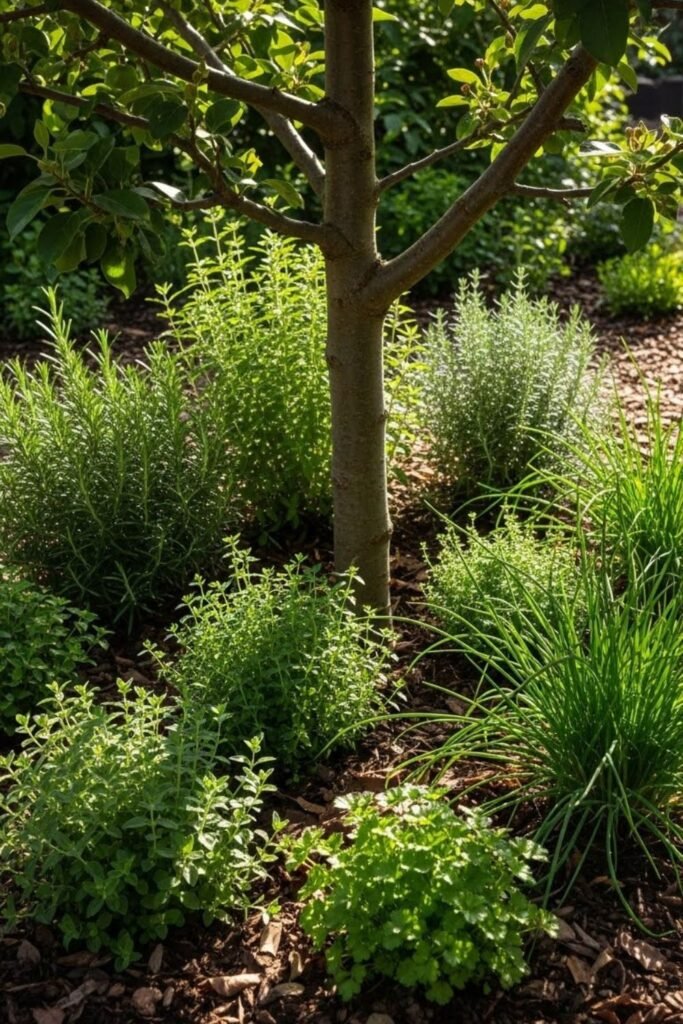
Entry Welcome
Herbs near the front entry get seen every single day, which prevents the kind of neglect that kills plants. I choose sturdy varieties that handle foot traffic and changing light conditions.
Containers stay narrow so walkways remain clear, and strong scents make the whole entrance feel alive. Daily exposure turns care into habit.
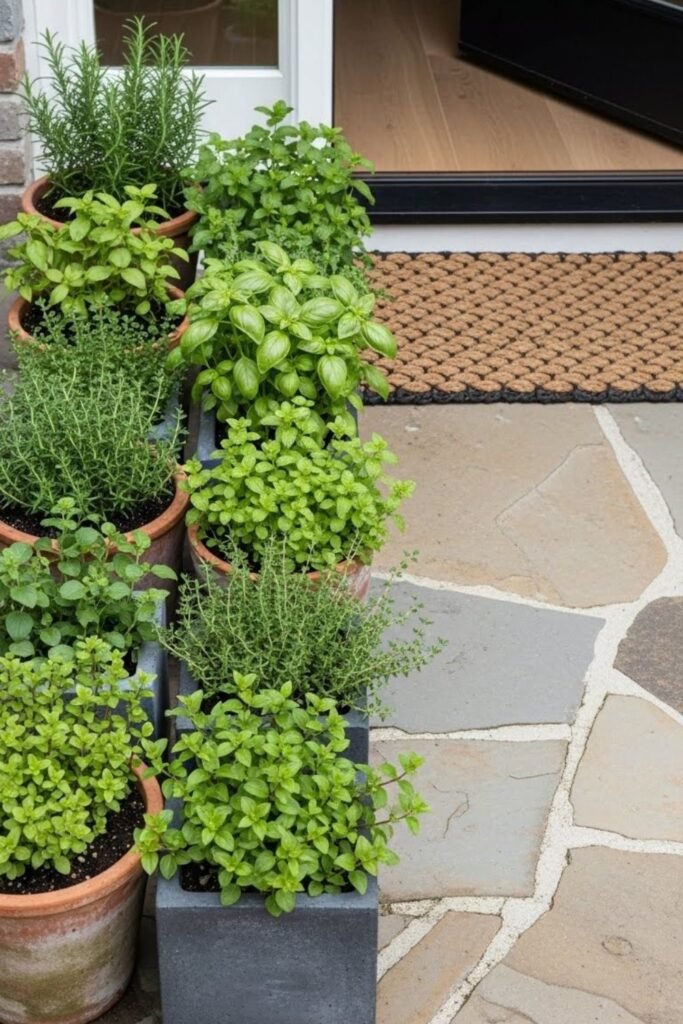
Simple Success
Simplifying everything finally made herbs work for me. Group by water needs, skip fancy layouts, focus on fewer plants with better attention.
Consistent sunlight, fast drainage, and daily visibility. When care feels manageable, I stay consistent, and herbs respond quickly to steady routines.
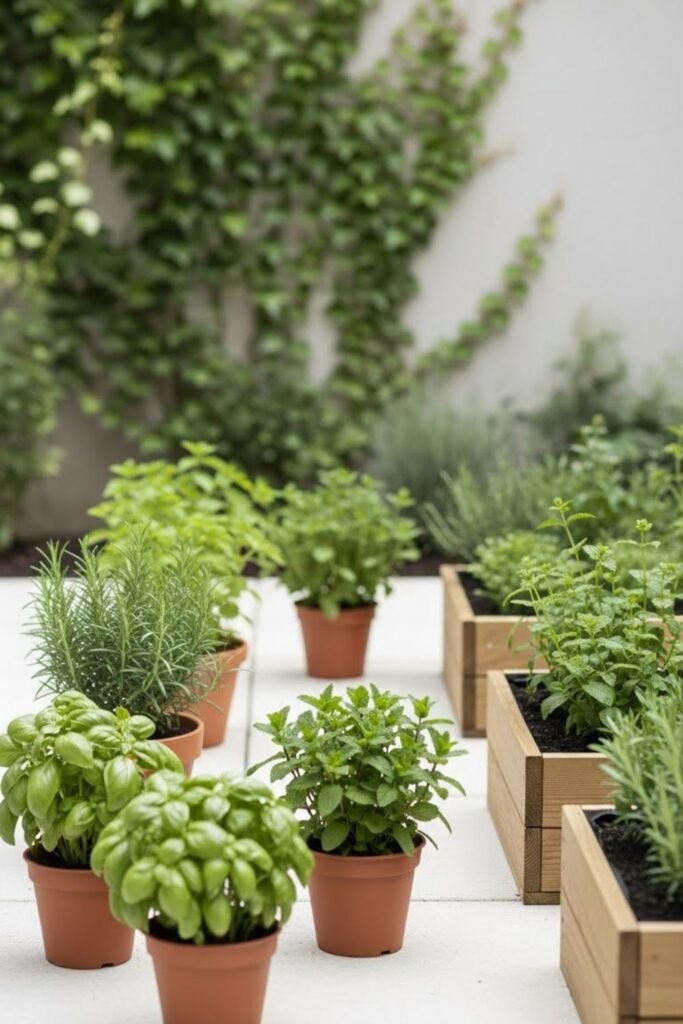
Family Learning
Teaching kids to pick herbs gently changed how the whole garden feels. I place plants low and spread them out so little hands don’t damage stems accidentally.
Fast-growing varieties work best here. I accept some mess because learning matters more than perfection, and regular interaction keeps plants checked often.
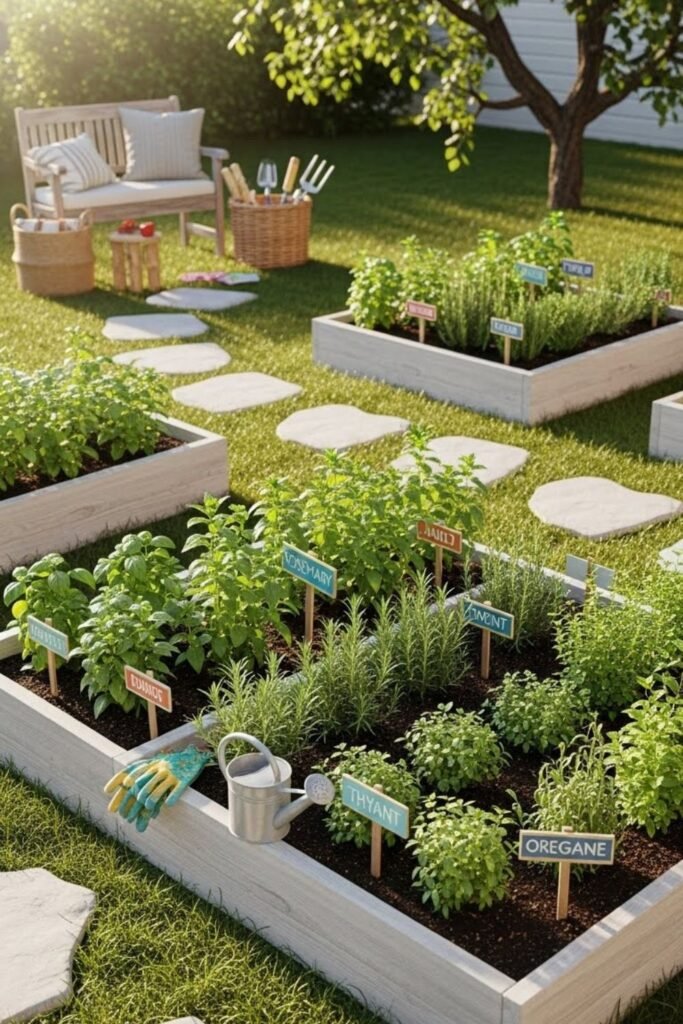
Season Rotation
Swapping herbs by season keeps soil healthy and plants productive. Heat-lovers come out as temperatures drop, then return later when conditions improve.
Containers make this manageable without disturbing roots too much. I track what thrives when and adjust accordingly — rotation prevents disease buildup and keeps growth strong year after year.
Common Questions
Can outdoor herbs survive all year, or do they need to be replanted?
Depends on the herb and your winters. Rosemary, thyme, and mint come back year after year if conditions are right. Basil dies with the first cold snap no matter what you do.
If winters get harsh, move pots to a protected spot or cover ground plants. Most herbs are tougher than you think, but tender varieties need help or replacement.
Why do outdoor herbs grow but lose their flavor over time?
Usually means they’re stressed or growing too fast. Too much water, poor sunlight, or overly rich soil dilutes flavor significantly.
Herbs taste stronger when grown in well-draining soil and harvested regularly. A little stress actually concentrates the oils that give herbs their punch — which is why Mediterranean herbs taste best in rocky, dry conditions.
I’ve spent over four decades building a marriage, raising a family, and learning what truly matters along the way. I write about relationships, home, and navigating life’s later seasons with grace, honesty, and a little humor. My goal is to share the kind of steady, real-life wisdom that helps you feel grounded, encouraged, and a little less alone.