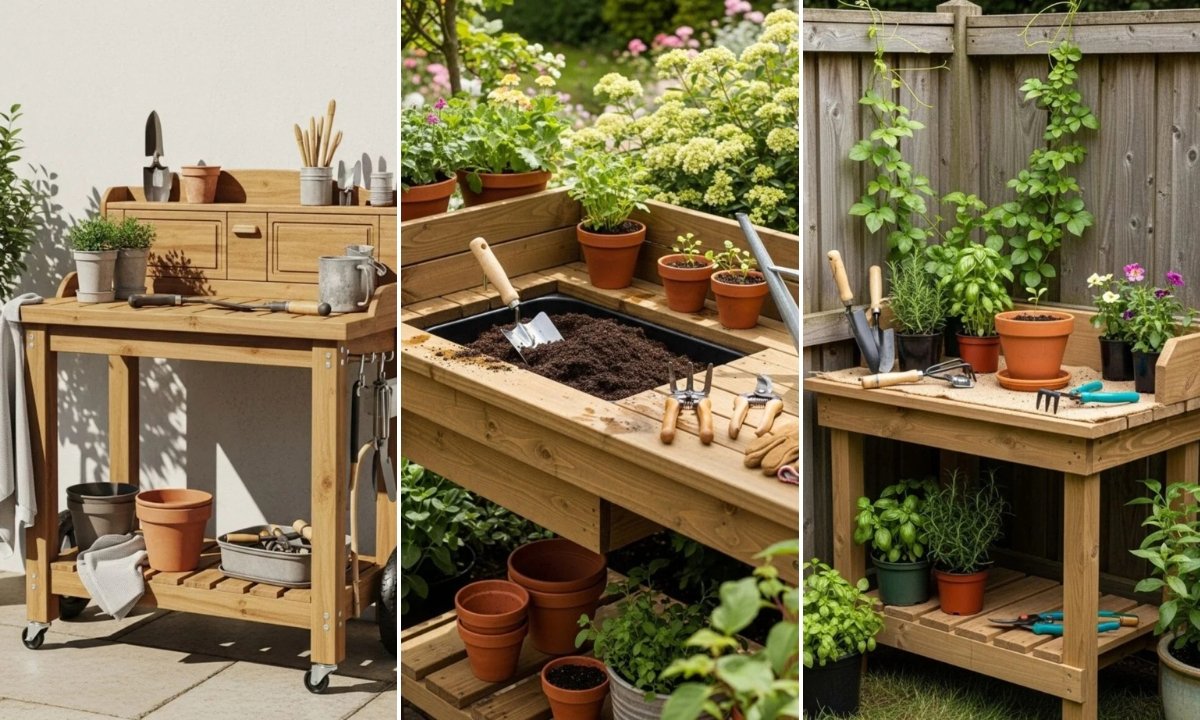
Potting Benches That Made Me Actually Want to Spend More Time in My Garden

Last month I watched Frank try to repot the rosemary bush on our back patio, crouched over a bag of potting soil with dirt scattered everywhere and him muttering about his knees. It reminded me of every gardening project I’d done the same way for years — bent over, tools disappearing into the mess, my back complaining by the time I finished.
A proper potting bench fixes this without requiring a bigger yard or expensive setup. You just need to think about how you actually work with plants, not how the magazines say you should.
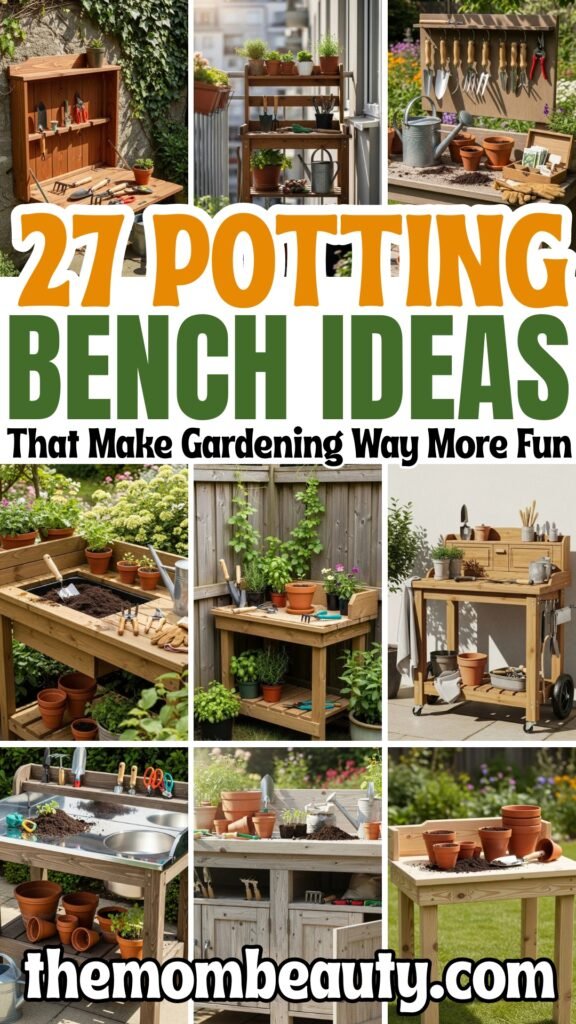
Here are 27 potting bench ideas that work in real spaces for people who garden the way most of us do — a little at a time, with whatever room we have.
How Big Should a Potting Bench Be for Home Gardening?
Most people overthink this. The right size depends on your counter height at home — if you can chop vegetables comfortably, a potting bench at the same height will work. Too low and you’ll bend over anyway. Too deep and you’ll waste space trying to reach the back.
I’ve been using a bench that’s 36 inches high and about 20 inches deep for three years now. It holds two decent-sized pots, a small bag of soil, and my basic tools without crowding. More than that and things start falling off.
Measure your space first, then choose something that lets you work without stepping around it constantly. A bench that fits your routine matters more than one that looks impressive.
Save this article for later! 👇👇
Can You Use a Potting Bench in a Small Garden or Balcony?
Yes, but you need to be realistic about what you’re trying to fit. A narrow bench against a wall or railing works better than trying to squeeze in something meant for a full yard.
I’ve seen people try to cram large potting benches onto small patios and end up with less usable space than they started with. The trick is choosing something that adds function instead of just taking up room.
Wall-mounted or fold-down options make sense if you only pot plants occasionally. Corner setups use dead space. Vertical storage keeps supplies organized without spreading out sideways.
The goal is making your small space work better, not filling it up.
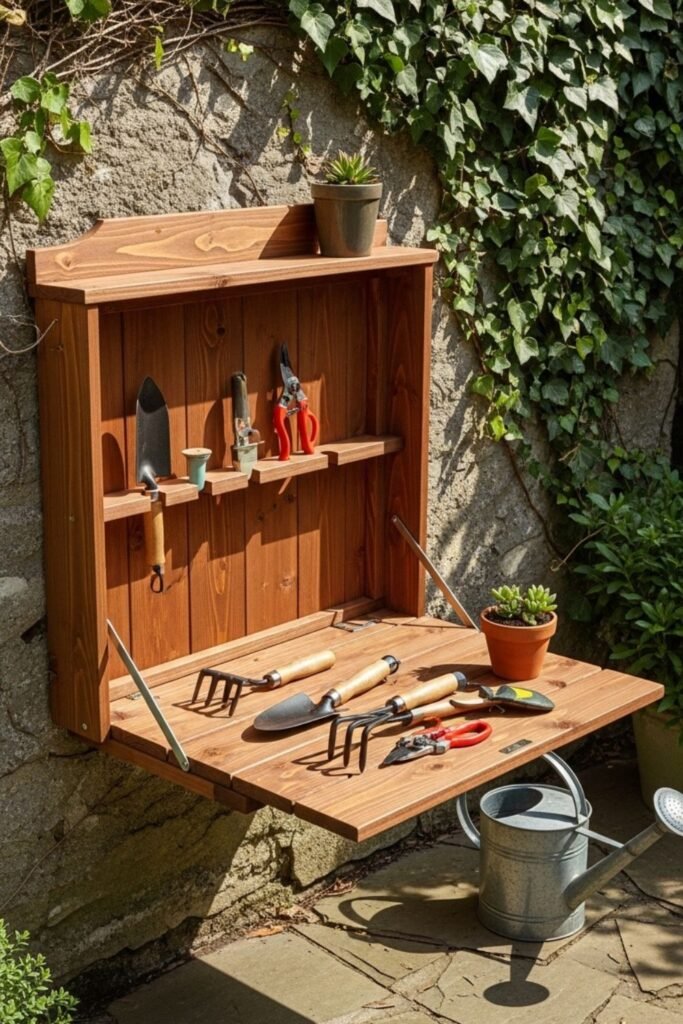
Fold Down
I installed one of these on the side of our garden shed after getting tired of setting up and breaking down a card table every time I needed to pot something. Mount it at the right height, flip it down when you need it, fold it back up when you don’t.
The surface is smaller than a permanent bench, but it’s big enough for most home gardening tasks. And it doesn’t take over your patio the other 90% of the time when you’re not using it.
Installation took Frank about an hour with basic tools. Just make sure the wall can handle the weight when it’s loaded with soil and pots.
Narrow Balcony
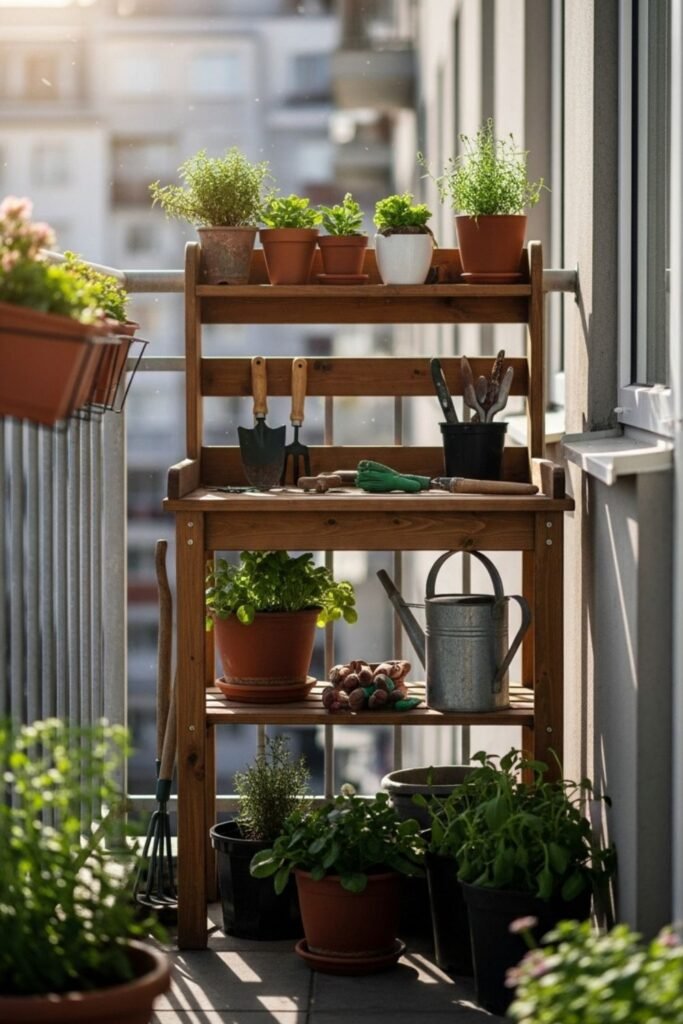
My neighbor Sarah has a balcony that’s maybe four feet wide, and she uses a bench that’s only twelve inches deep. It sits against the railing and doesn’t block the sliding door.
She keeps it simple — the surface holds whatever she’s working on, and everything else goes in a plastic storage bin underneath. It’s not magazine-pretty, but she can repot her tomatoes without kneeling on concrete.
The key is accepting that you don’t need counter space for multiple projects at once. You’re working on one plant, then the next.
Tool Board
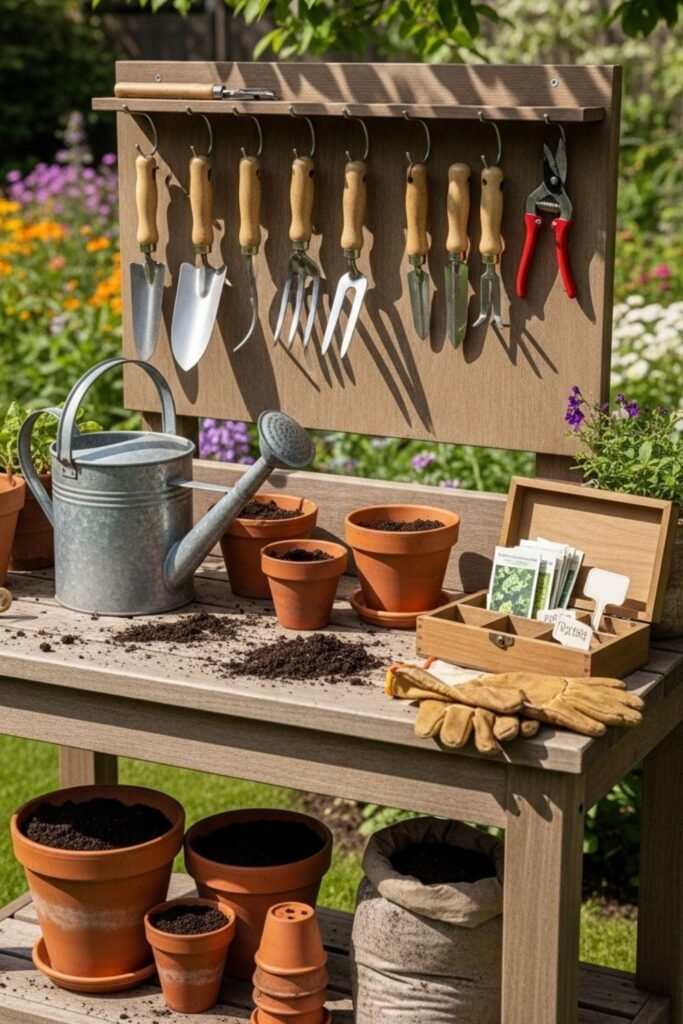
I used to waste more time looking for my hand trowel than actually using it. Adding a pegboard above the bench fixed that — everything hangs where I can see it.
Trowel, pruners, gloves, plant markers, small watering can. All right there, no digging through drawers or buckets. When I’m done with something, it goes back on the hook.
The pegboard cost twelve dollars at the hardware store. Frank mounted it in twenty minutes.
Mobile Wheels
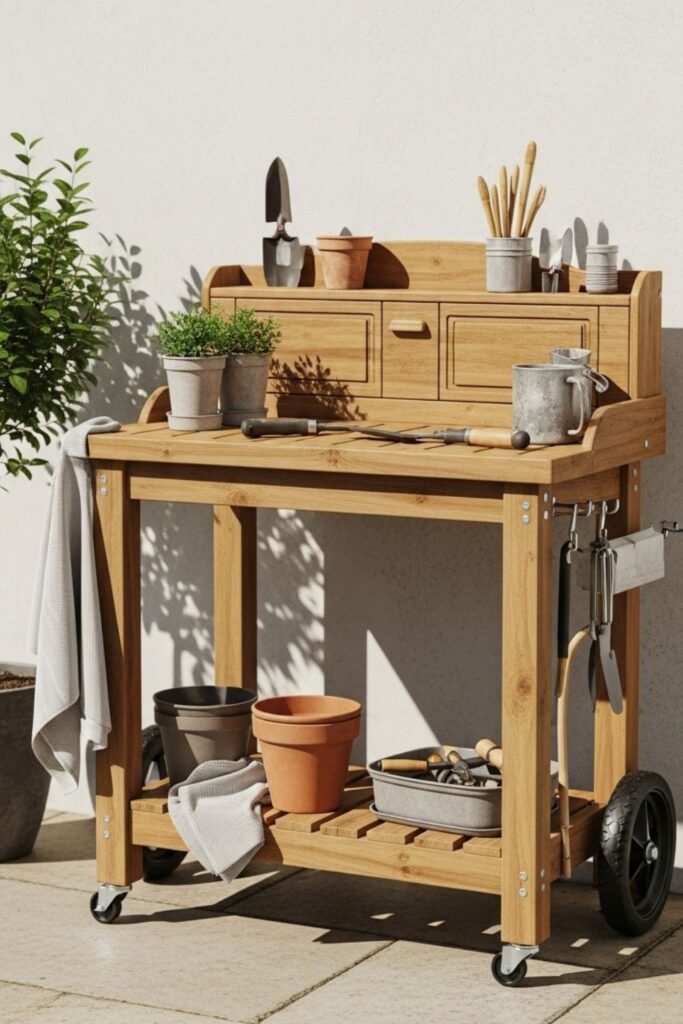
This was Frank’s idea, and I was skeptical until I tried it. He put locking wheels on my potting bench so I can roll it around the yard.
Morning sun, afternoon shade, closer to the water spigot, out of the way when we’re mowing. The wheels lock when you’re working so the bench doesn’t slide around.
It’s particularly useful in spring when I’m starting seeds and need to move flats in and out of direct sunlight. I don’t have to carry everything — I just roll the whole setup.
Corner Fit
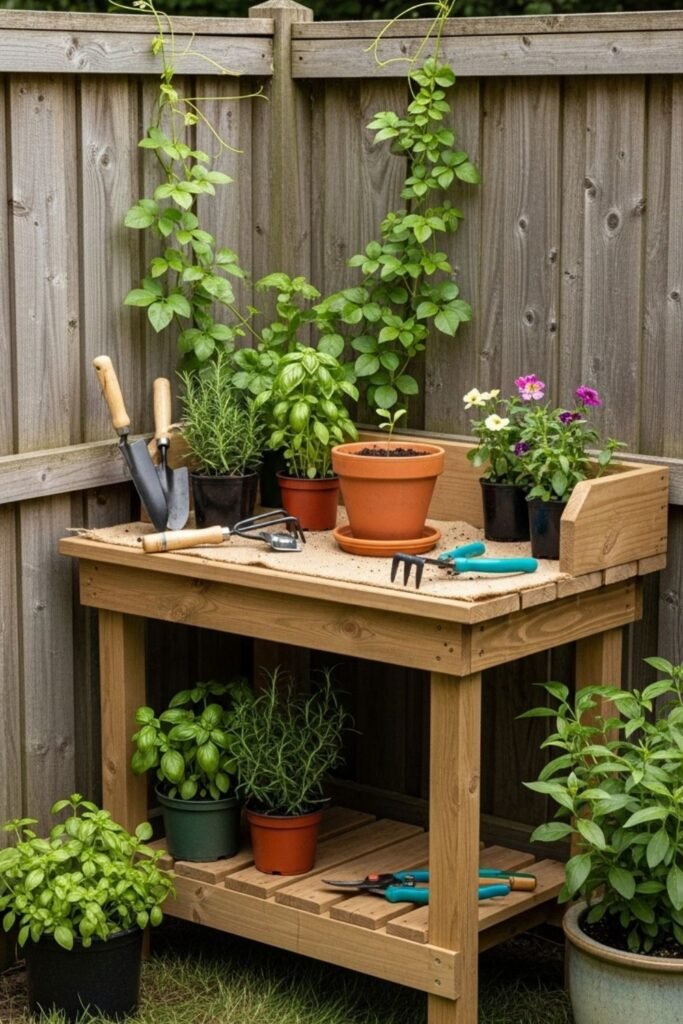
We had this awkward corner where two fence lines meet — too narrow for anything useful, but too visible to ignore. Building a triangular potting bench there turned dead space into something that actually works.
The angled design fits perfectly, and the corner location keeps it out of traffic patterns. I store tools along the fence sides and use the point for smaller pots.
It’s not the biggest work surface, but it handles most of what I need to do without getting in anyone’s way.
Soil Height
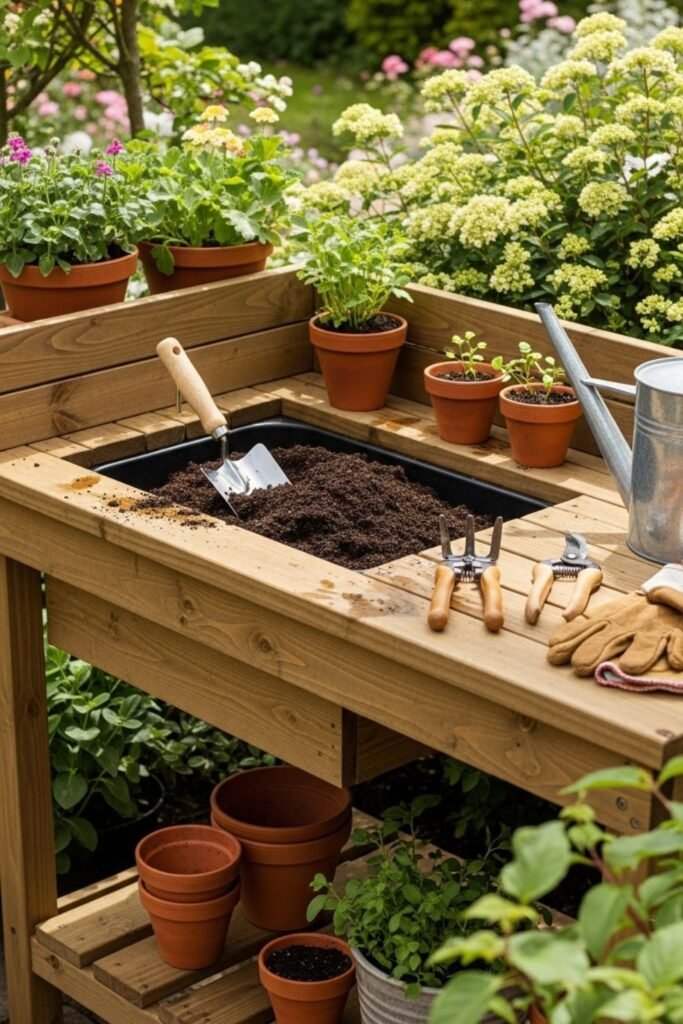
I’m tired of buying soil and then hunching over to scoop it out of bags on the ground. This design puts the soil bin at waist level, right next to the work surface.
I can fill pots without bending, and spills land in the bin instead of on my shoes. It uses more soil than I need sometimes, but my back is worth the extra expense.
The bin holds about half a large bag of potting mix, which lasts me through most weekend projects.
Simple Table
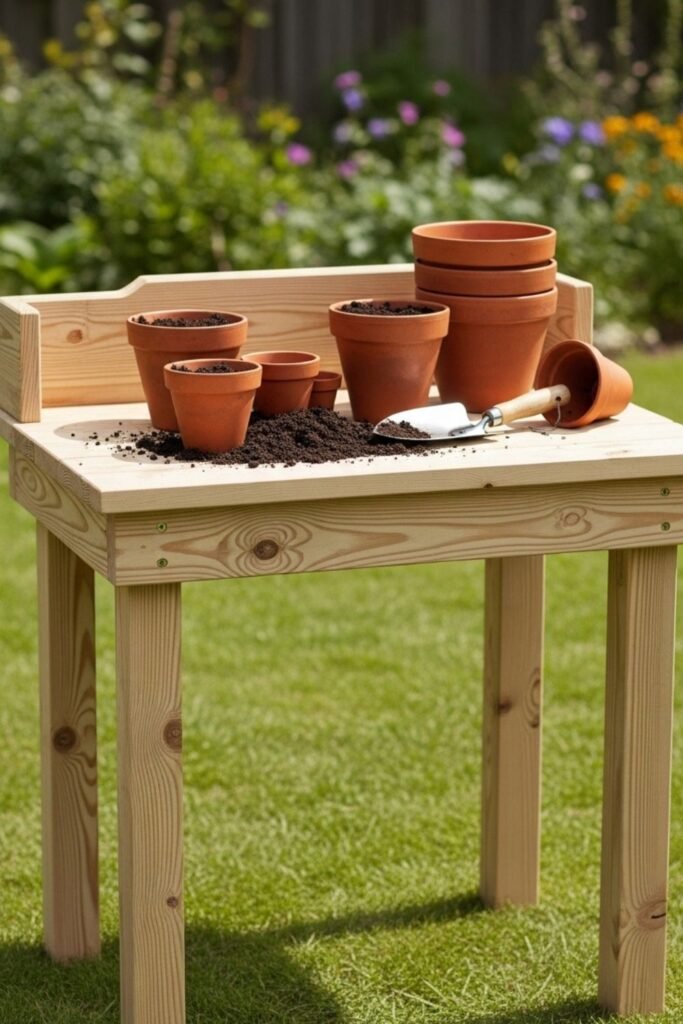
My first potting bench was literally a folding table from Costco. Bought it to try the whole concept before investing in anything permanent.
It worked fine. Flat surface, right height, lightweight enough to move around. No storage, no special features, just a place to work standing up instead of crouched on the ground.
Sometimes simple is exactly what you need, especially when you’re not sure how much you’ll actually use it.
Closed Storage
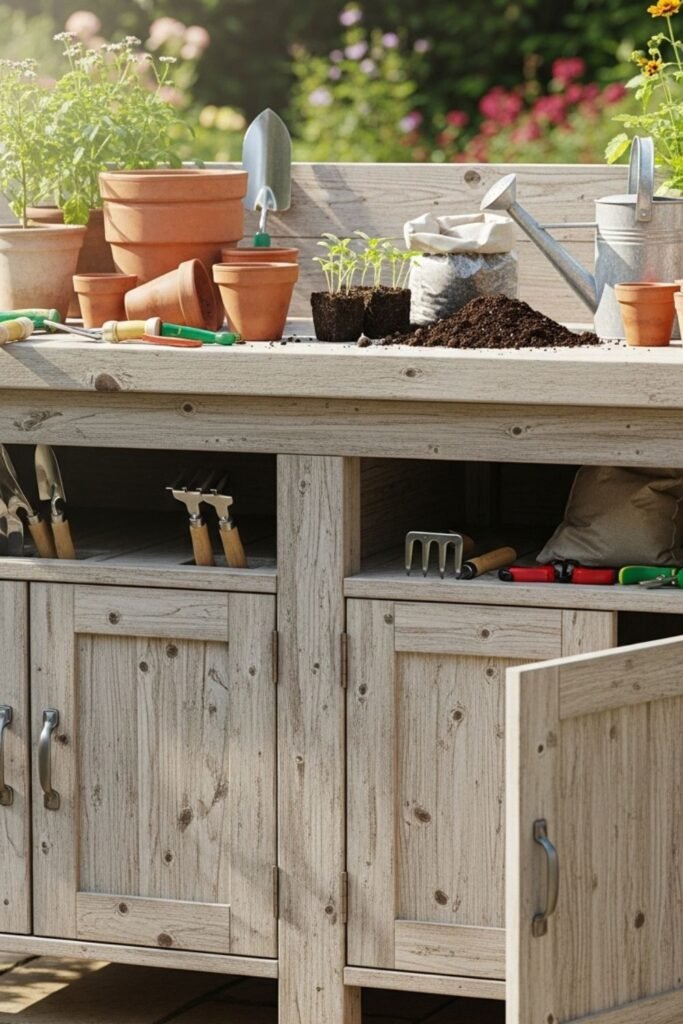
Open shelves look nice in photos, but they collect dust and everything gets rained on. Closed cabinets underneath the work surface keep supplies clean and dry.
I store bags of soil, extra pots, fertilizer, and seasonal tools behind doors. The bench looks neater, and I don’t have to cover everything or bring it inside when weather turns bad.
The doors are just plywood with hinges, nothing fancy. But they make the difference between organized storage and a pile of gardening junk.
Metal Surface
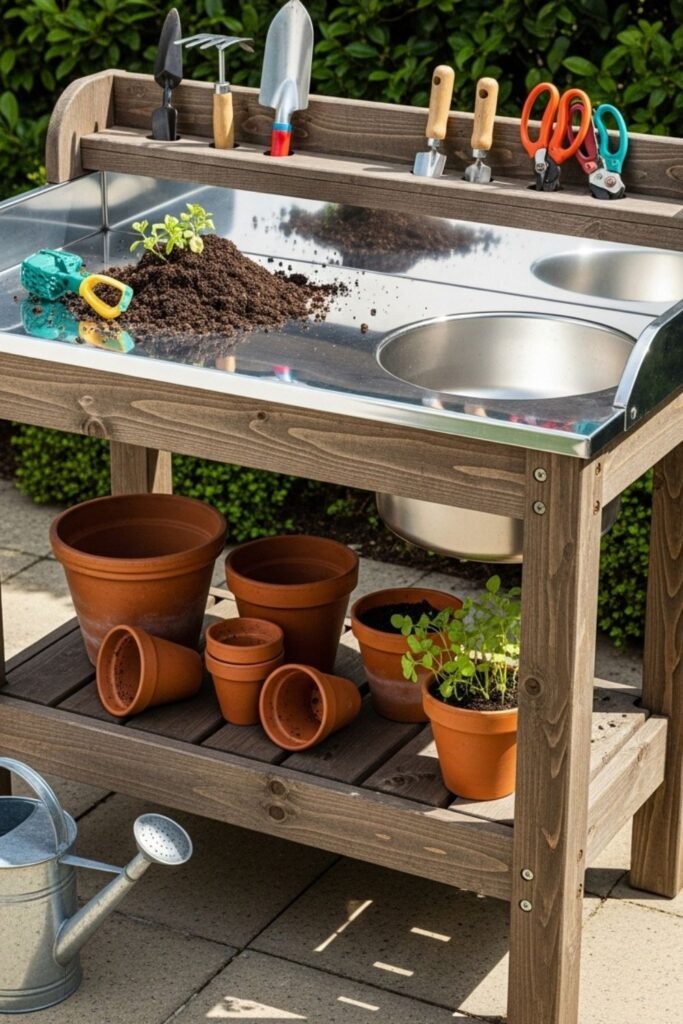
Wood looks warmer, but metal handles weather and mess better. My current bench has a stainless steel top that I can hose down after messy jobs.
No worrying about stains, rot, or warping. Soil brushes right off. Water doesn’t leave marks. It’s practical in a way that wood just isn’t when you’re dealing with wet soil and fertilizer regularly.
The initial cost is higher, but I won’t need to replace or refinish it in a few years.
Minimal Style
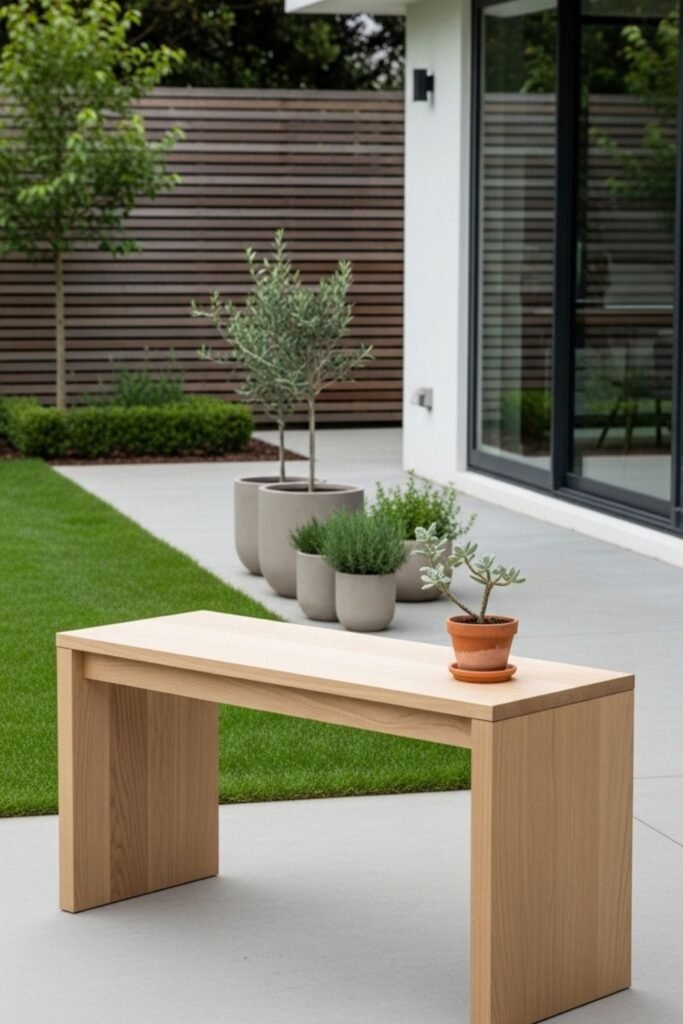
Sometimes less really is more. Clean lines, no extra shelves or hooks or compartments. Just a well-built surface at the right height.
I like this approach when the garden already feels cluttered or when you don’t want the bench to dominate the space visually. It does its job without announcing itself.
Plus fewer parts means fewer places for things to break or collect dirt.
Side Hooks
I added simple S-hooks to the side rails of my bench after realizing I was setting my trowel down and forgetting where I put it. Now it hangs right there where I can reach it without looking.
Save this post for later ❤️
Small watering can, hand pruners, work gloves. The tools I use most stay within arm’s reach instead of in a bucket under the bench.
It’s a tiny change that saves constant interruptions to hunt for things.
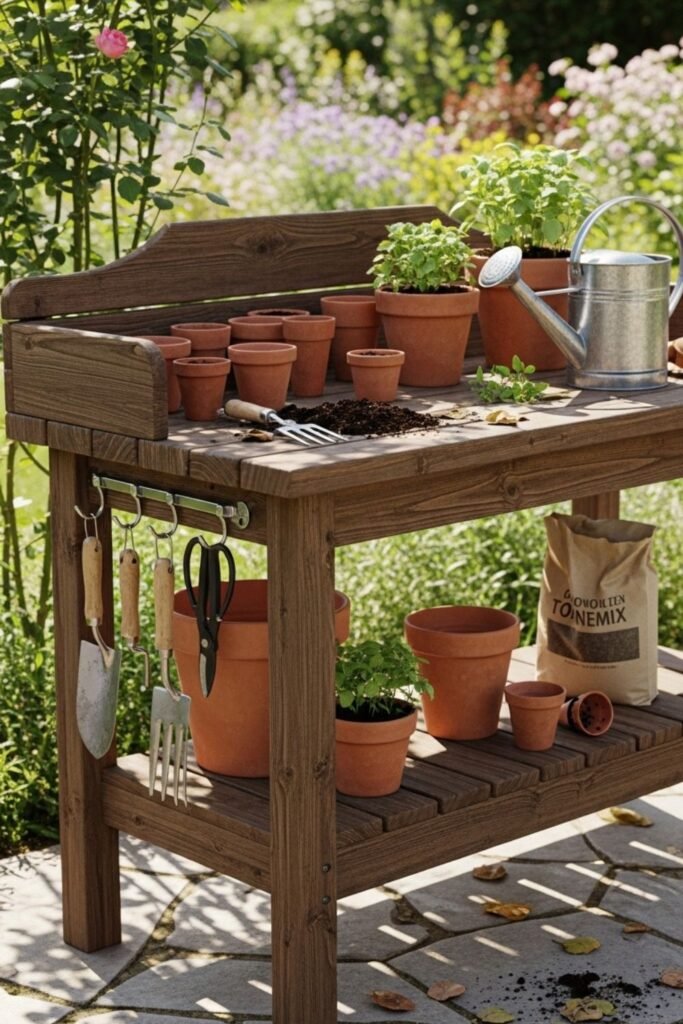
Multi Level
Different heights for different jobs makes more sense than one flat surface for everything. Main work area at counter height, lower shelf for staging pots, higher shelf for supplies.
I keep soil and tools on the upper level, work on plants at the main surface, and set finished pots on the lower shelf. Everything has its place and I’m not constantly moving things around to make room.
It takes up more vertical space, but uses the same footprint as a single-level bench.
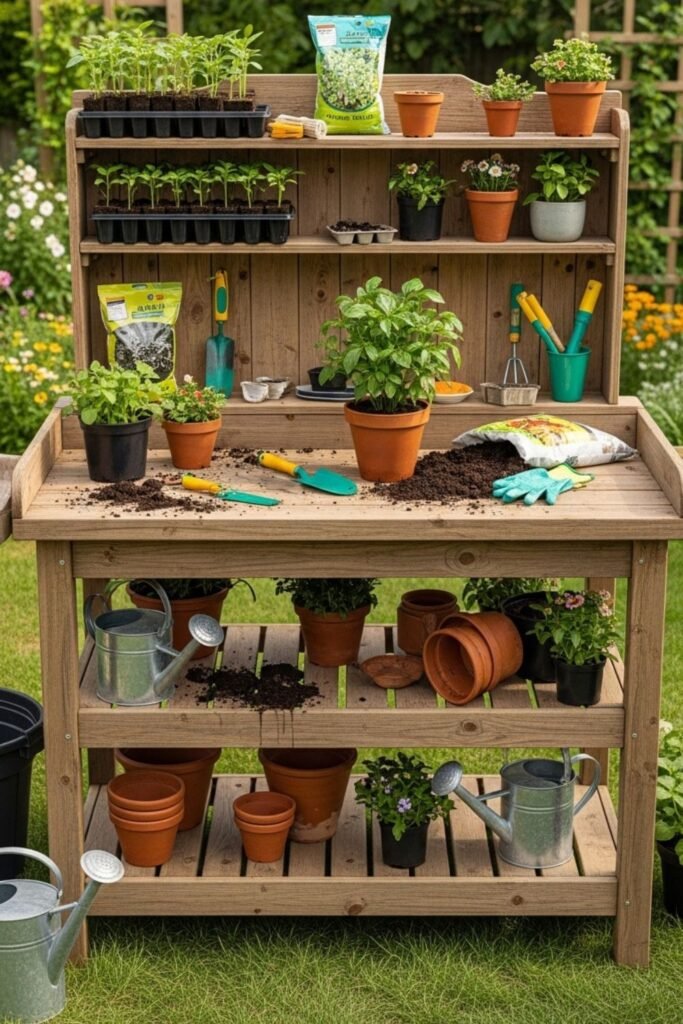
Hidden Shelf
The slide-out shelf under my work surface holds exactly what I need for most potting jobs — a few different pot sizes, hand tools, plant markers. It’s there when I need it, hidden when I don’t.
Keeps the main surface clear while everything stays accessible. No digging through storage bins or walking back and forth to collect supplies.
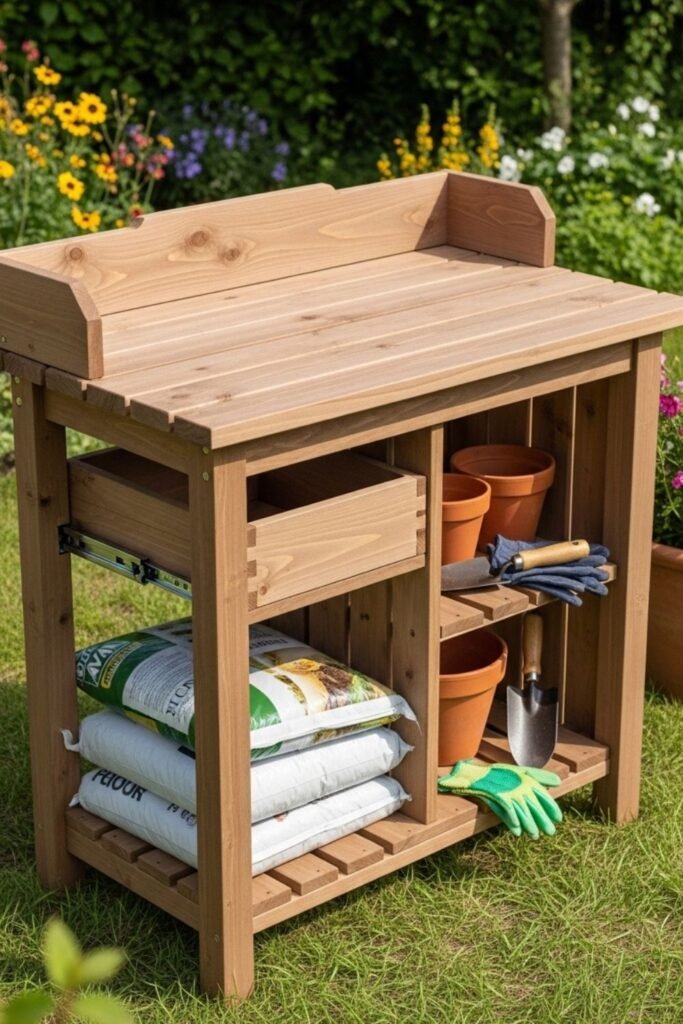
Seated Gardening
Not everyone can or wants to stand for extended gardening sessions. A bench designed for seated work — lower height, pull-out sections that come closer to you — makes potting accessible.
My friend Donna has arthritis in her knees and uses this setup. She can spend an hour repotting without discomfort, and the height actually gives her better control over delicate tasks.
Just make sure the seat is comfortable and the work surface is at the right height relative to your lap.
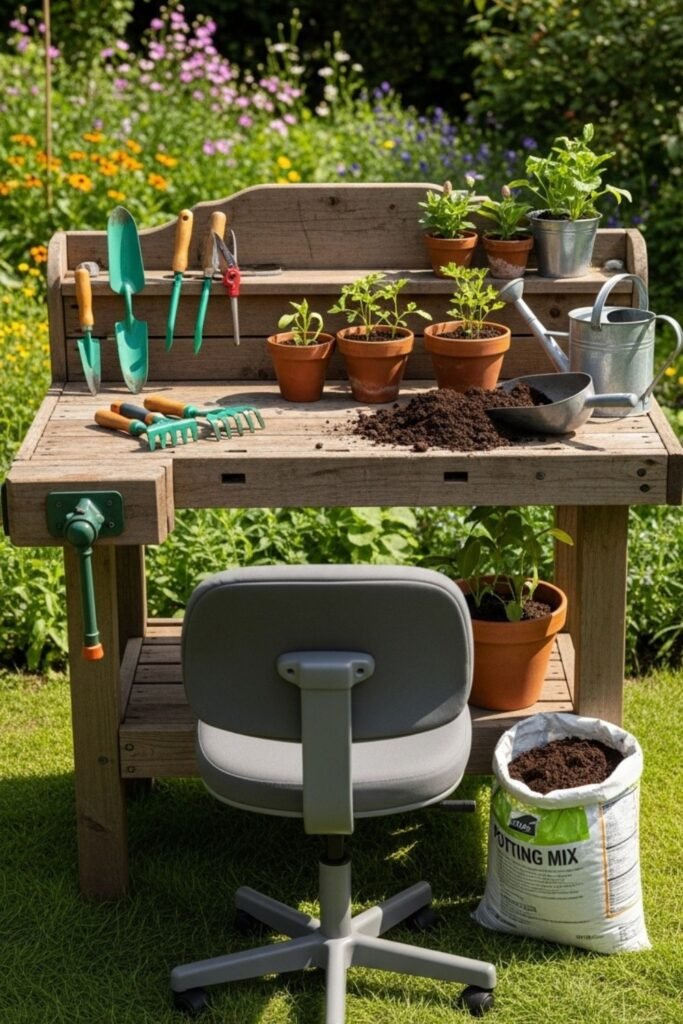
Recycled Wood
Frank built my first real potting bench from leftover deck boards and fence posts we had sitting in the garage. Sanded them down, sealed the surfaces, added basic hardware.
It’s not as pretty as something made from new lumber, but it’s been outside for four years and still works fine. The weathered look actually fits our yard better than something too polished would.
And the materials were free, which made trying the whole concept less risky.
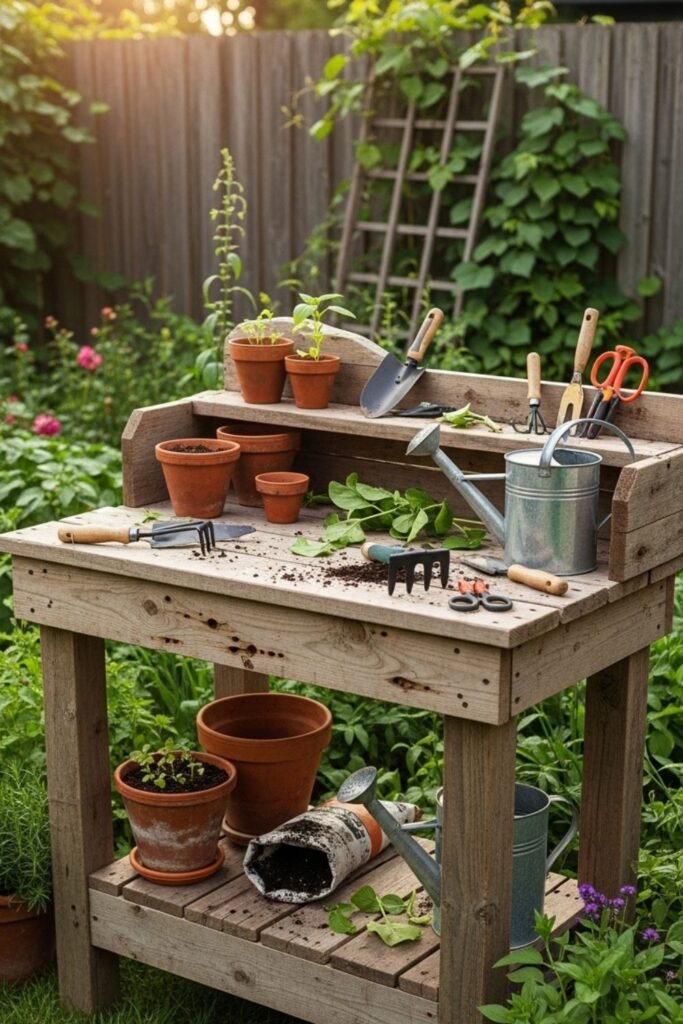
Drying Rack
I reuse plastic pots constantly, but they need to dry completely or you get mold problems. The slatted shelf above my bench gives wet pots a place to air out.
Wash them, set them up there, grab them when they’re dry. Keeps them off the work surface and prevents the pile-up that used to happen on my patio table.
Simple addition, but it solved a recurring problem.
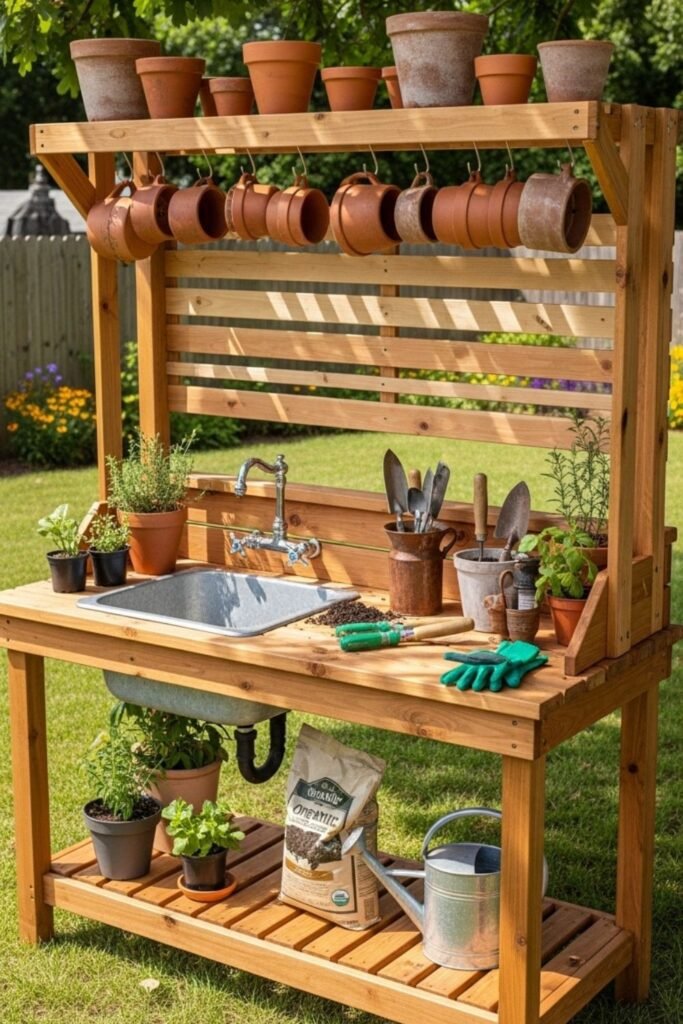
Overhead Shelf
Vertical storage makes sense when floor space is limited. The shelf above my bench holds lightweight items — empty pots, gloves, plant labels, small hand tools.
Nothing heavy enough to be dangerous if it falls, but things I use regularly and want to keep clean and organized. It’s like having a medicine cabinet for gardening supplies.
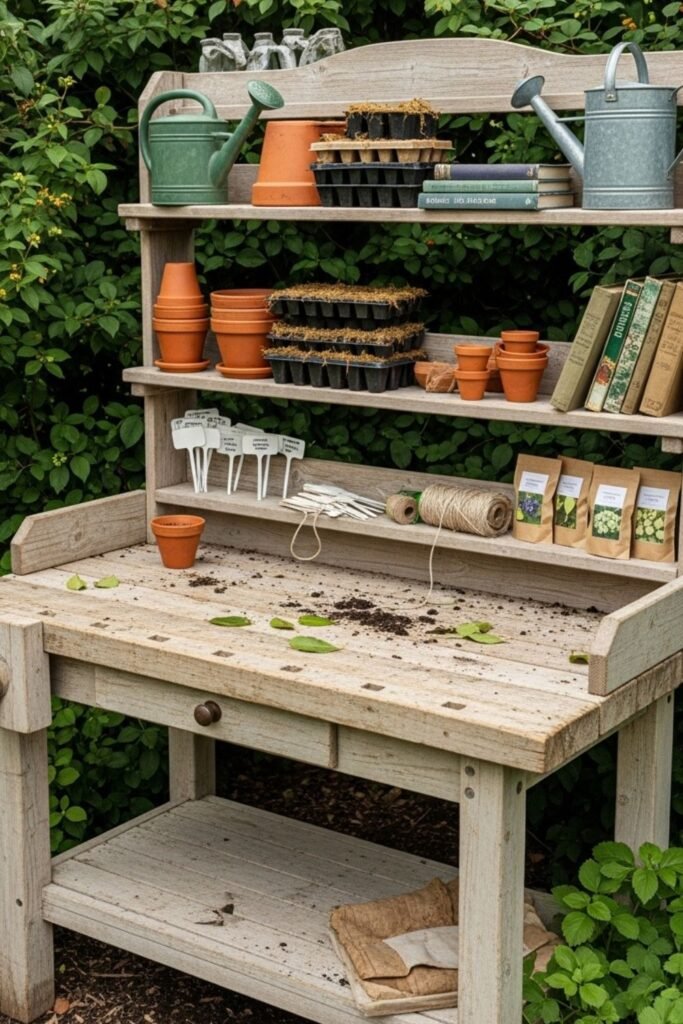
Dual Purpose
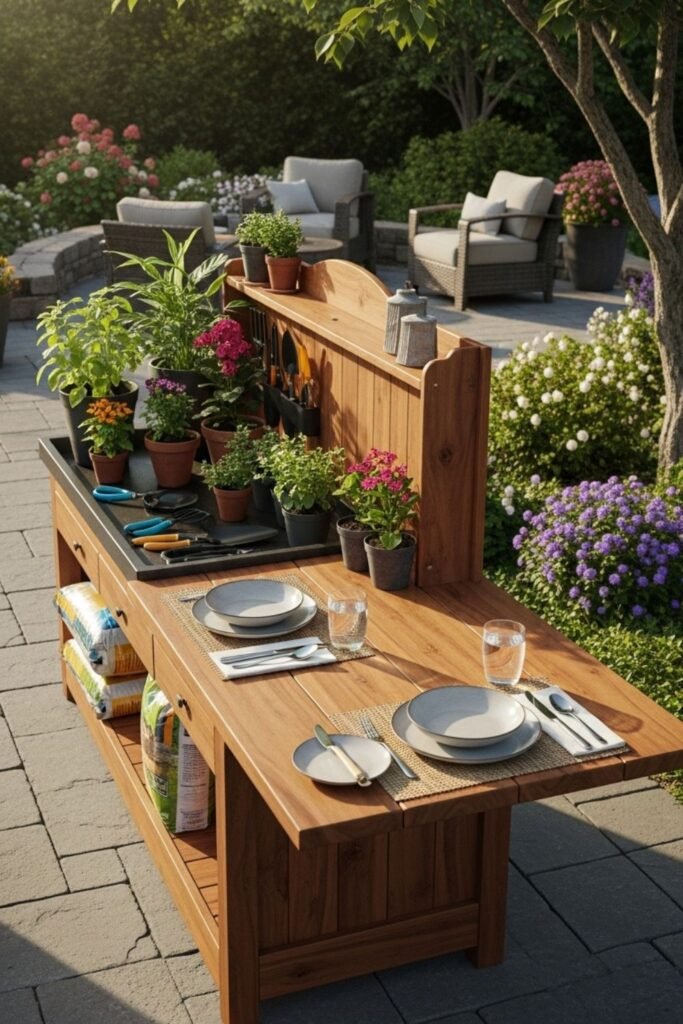
Our potting bench doubles as a serving station when we have people over. Clean off the work surface, add a tablecloth, and it becomes a place for drinks or appetizers.
The storage underneath hides the gardening supplies, and the height is perfect for people to access food without bending over. Not something I planned originally, but it works well.
Saves space and gets more use out of a piece of furniture that might otherwise sit idle most of the time.
Indoor Setup
Winter potting happens in the garage with a simple indoor-friendly bench. Waterproof surface, contained storage, easy cleanup. I can start seeds or repot houseplants without tracking dirt through the house.
The key is accepting that it won’t look as nice as an outdoor setup, but function matters more than appearance when you’re working inside.
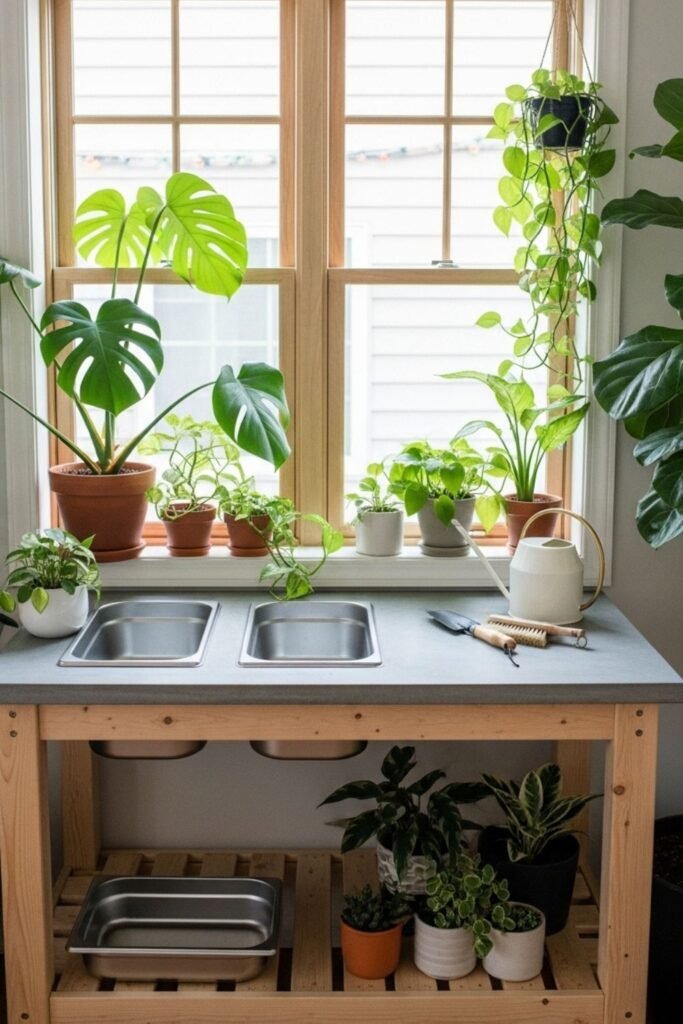
Task Zones
Left side for soil, center for working, right side for finished pots. Simple organization that prevents the chaos that used to happen when everything mixed together on one surface.
I don’t have to think about where things go — soil goes left, completed work goes right, everything in between happens in the middle. It’s become automatic.
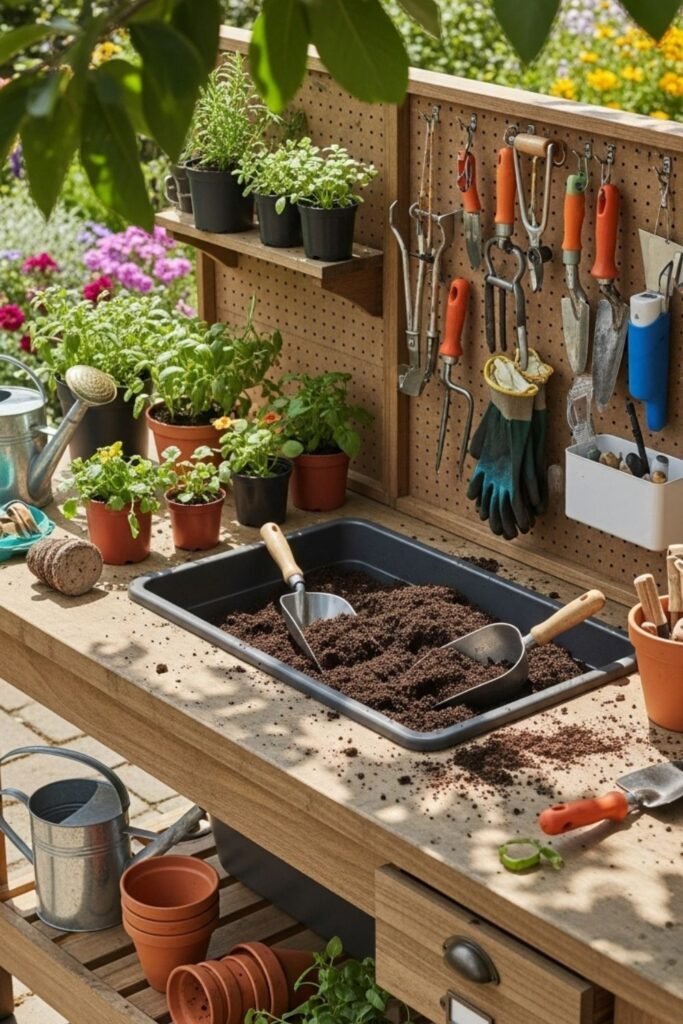
Lightweight Move
Heavy benches sound substantial until you need to move them for mowing or cleaning. This design prioritizes portability — I can pick it up and relocate it myself without waiting for Frank to be available.
Still sturdy enough for normal potting work, but light enough that I’m not trapped by its location. Sometimes flexibility matters more than permanent installation.
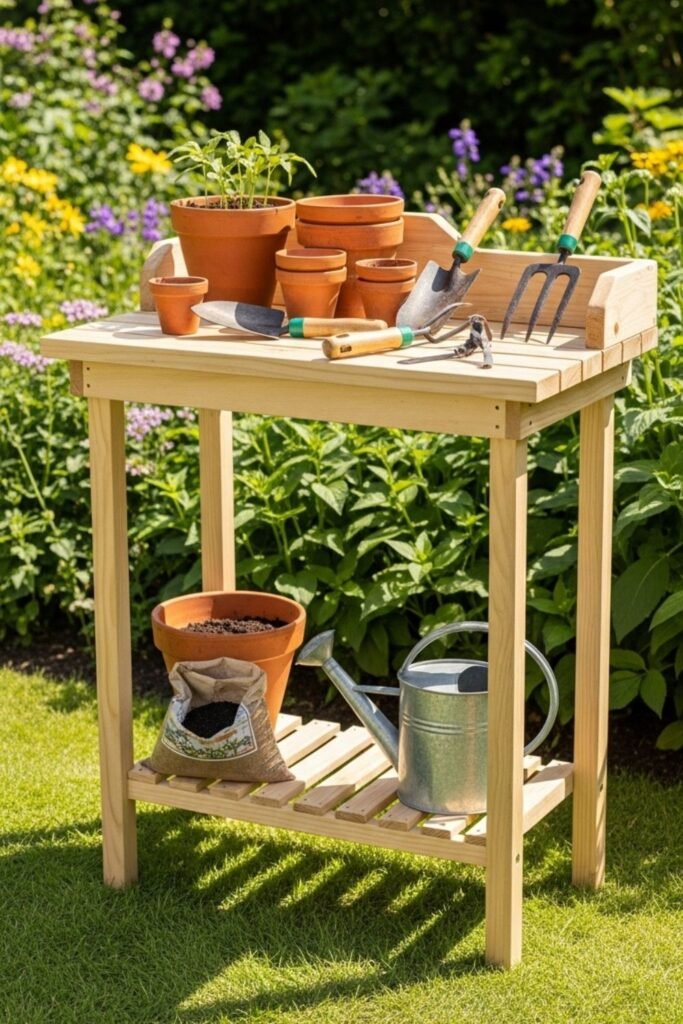
Side Extension
The flip-out side gives me extra surface area when I’m repotting several plants at once, then folds away when I don’t need it. Best of both worlds — compact most of the time, expandable when necessary.
Frank added a simple piano hinge and a support leg. Takes ten seconds to set up or put away.
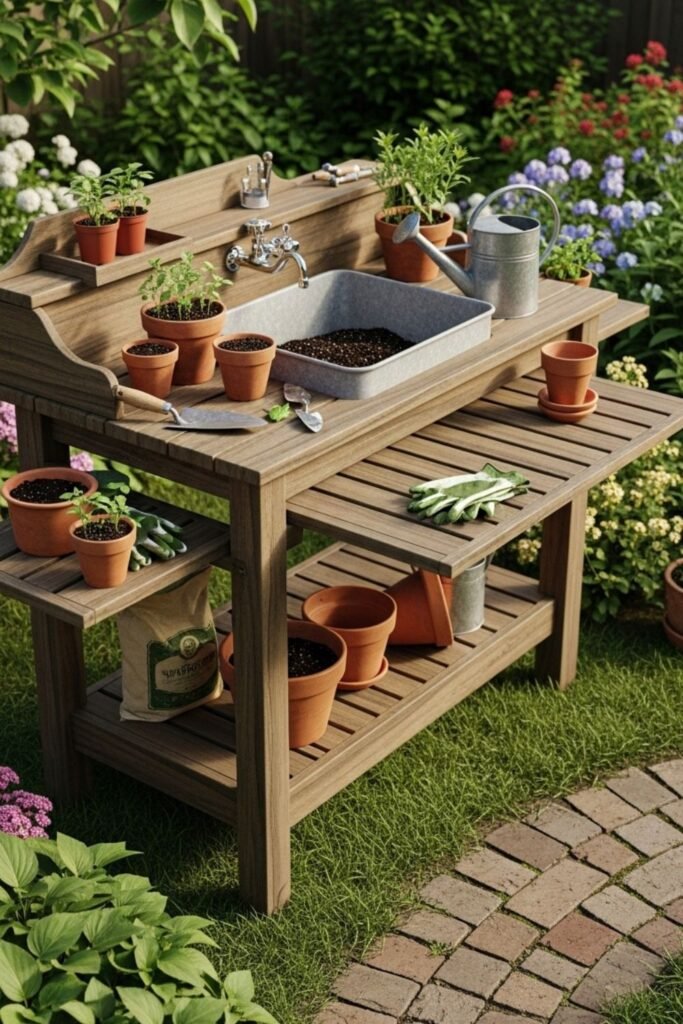
Open Access
No doors, no drawers, everything visible and reachable. I see exactly what I have and can grab it immediately. This works if you don’t mind the more utilitarian look.
Open storage also dries faster after rain and doesn’t trap moisture the way enclosed spaces can. Fewer moving parts to break or stick.
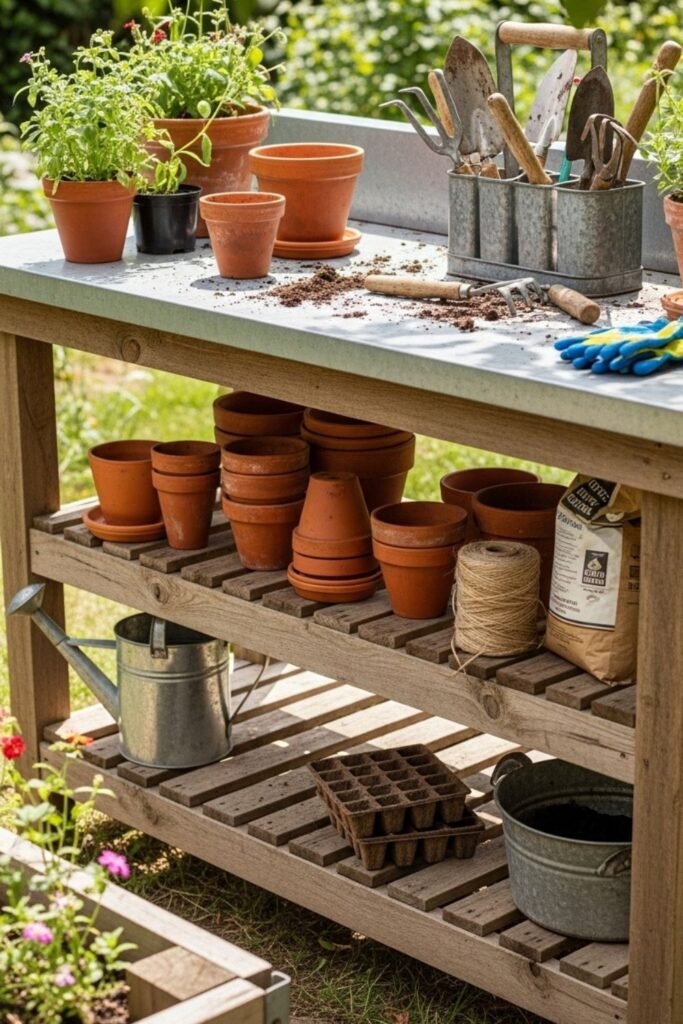
Water Tray
Built-in tray catches soil spills and water runoff. Easy to clean out when I’m done, and it protects whatever surface the bench is sitting on. Simple idea, but it prevents a lot of mess.
Especially useful if your bench sits on a deck or patio where you don’t want staining.
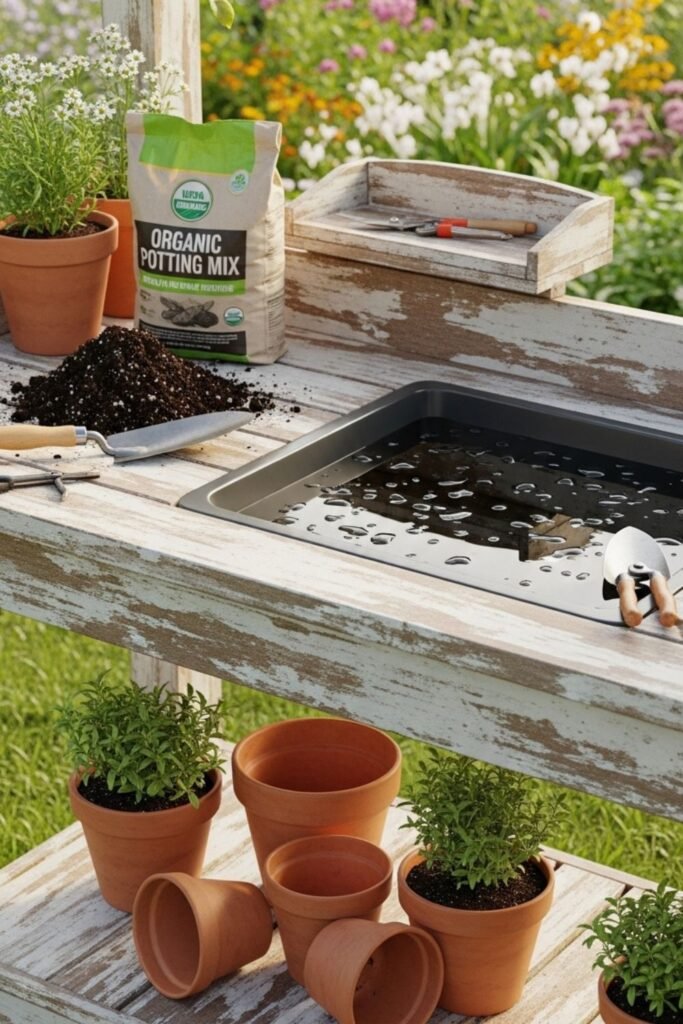
Fence Slim
Against-the-fence placement saves space and gives you a back wall for hanging tools. The bench itself can be narrower because you’re not walking around both sides.
Works well in narrow side yards or along property lines where you want function but not visual bulk.
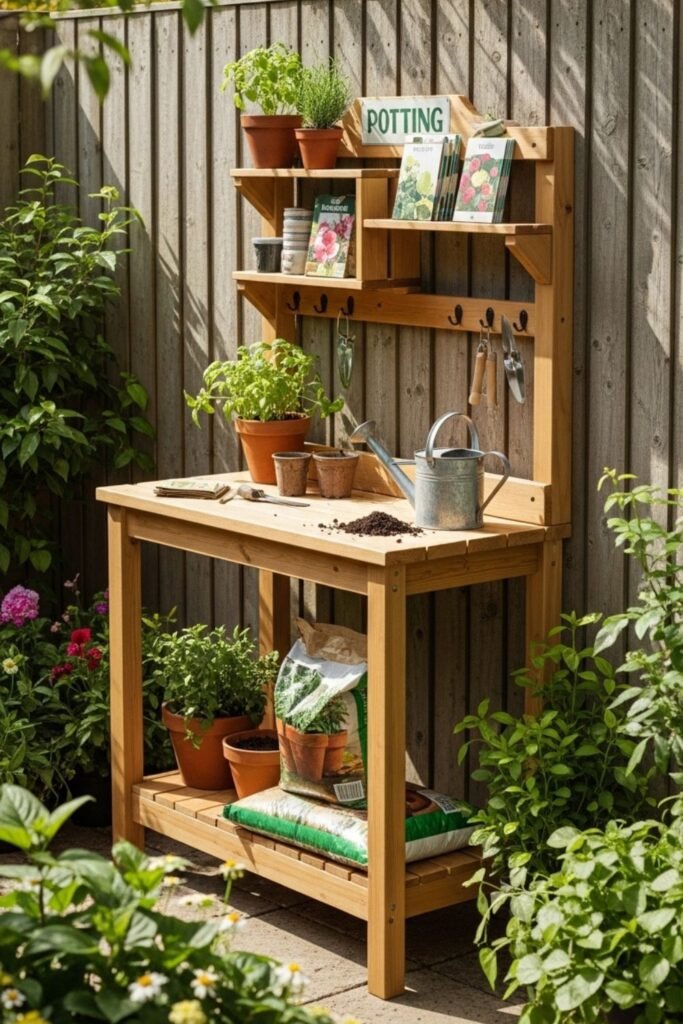
Heavy Storage
Soil bags, large pots, and other heavy items belong at the bottom where they don’t create lifting hazards. I can slide bags in and out without picking them up, and the weight keeps the whole bench stable.