Our Front Yard Needed Help — These Landscaping Ideas Sent Us Down a Rabbit Hole

Most front yards look fine until you realize they don’t actually match the house. You water things, you trim things, but something always feels slightly wrong.
I spent years thinking the problem was what I planted, when really it was how I thought about the whole space.
Here are 28 ways to get your front yard working with your house instead of against it — without starting over completely.
How Can I Landscape My Front Yard On a Budget?
The fastest way to waste money is buying plants before you fix what’s already wrong with the layout.
Clean up what you have, decide where you want people to look, and then add plants that support that plan. Skip anything that promises to transform your soil overnight — work with what you’ve got.
If your grass is patchy, replace it with something that wants to be there. Mulch costs less than trying to fix bad grass for three years running.
Save this article for later! 👇👇
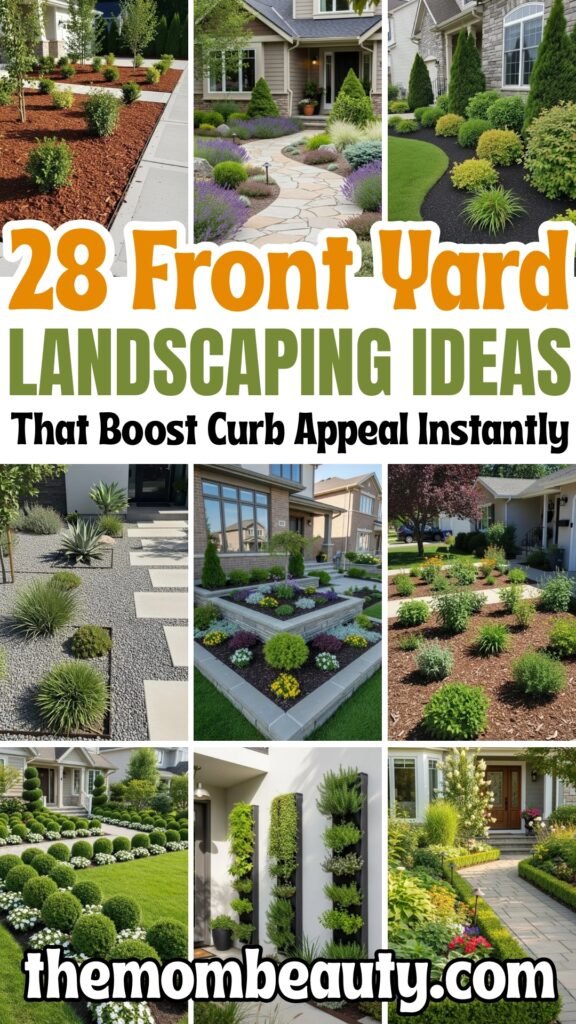
How Can I Add Privacy To My Front Yard Landscaping?
Privacy doesn’t mean hiding your house behind a wall of shrubs.
Use plants to block what actually bothers you — the neighbor’s kitchen window, the street corner where people wait for the bus.
Plant low near walkways where you want the yard to feel open, and taller near places where you want to feel hidden.
A row of ornamental grass along the property line works better than a hedge that makes your yard feel small and your neighbors feel locked out.
Evergreen Layers
The problem with most front yards is they disappear in winter. I plant tall evergreens in back, medium ones in the middle, shorter ones up front.
This gives you something to look at year-round without the constant worry about what’s blooming when. Your yard holds its shape even when everything else goes dormant.
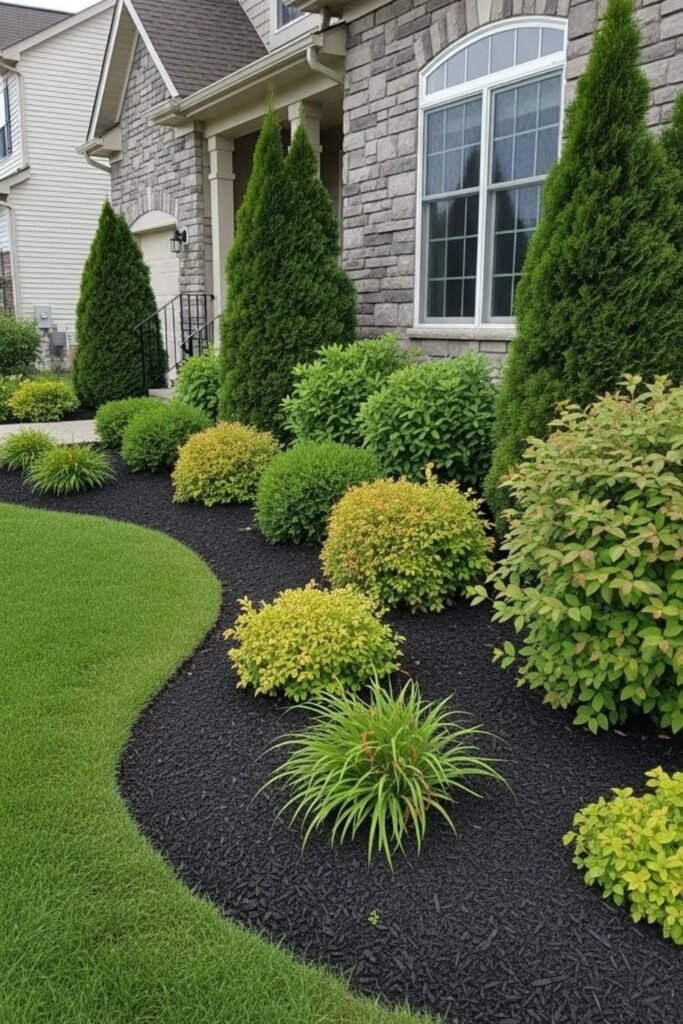
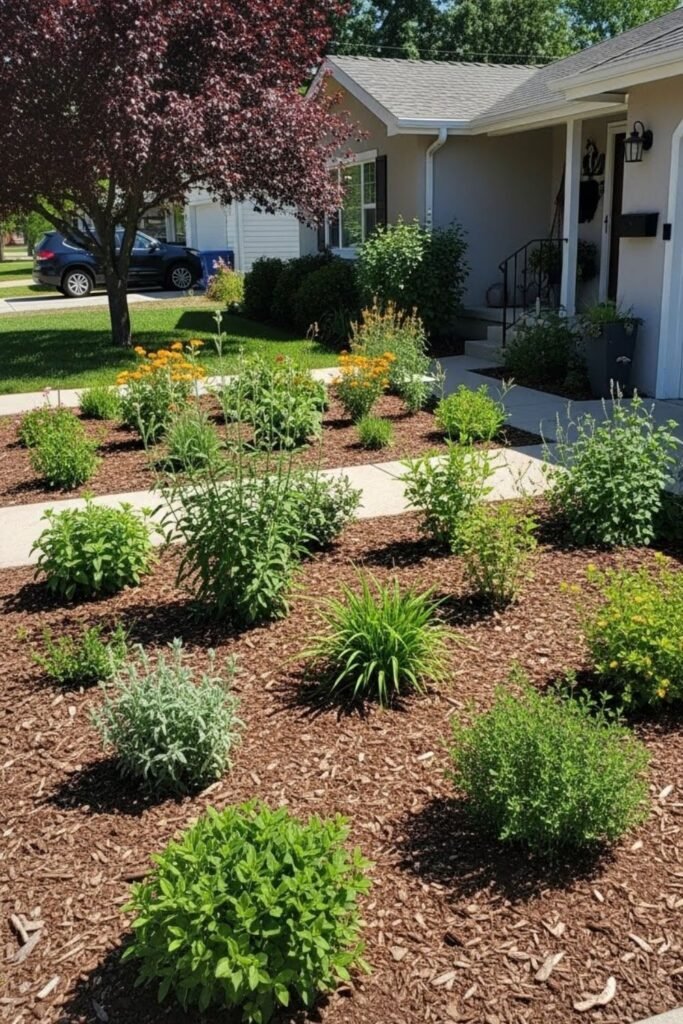
Mulch Focus
I got tired of patchy grass that never looked right no matter what I did to it.
So I pulled it all out, shaped the beds how I wanted them, and covered everything with dark mulch. Plants look better against mulch than against struggling lawn, and weeds can’t get started.
It looks intentional from day one instead of like you’re still trying to figure things out.
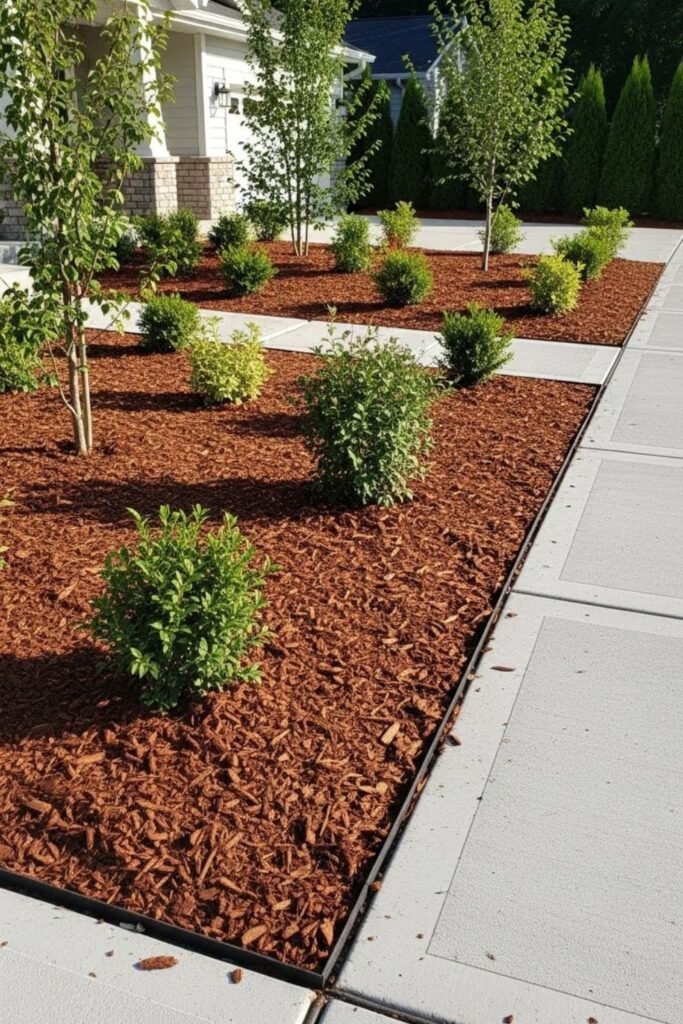
Curved Path
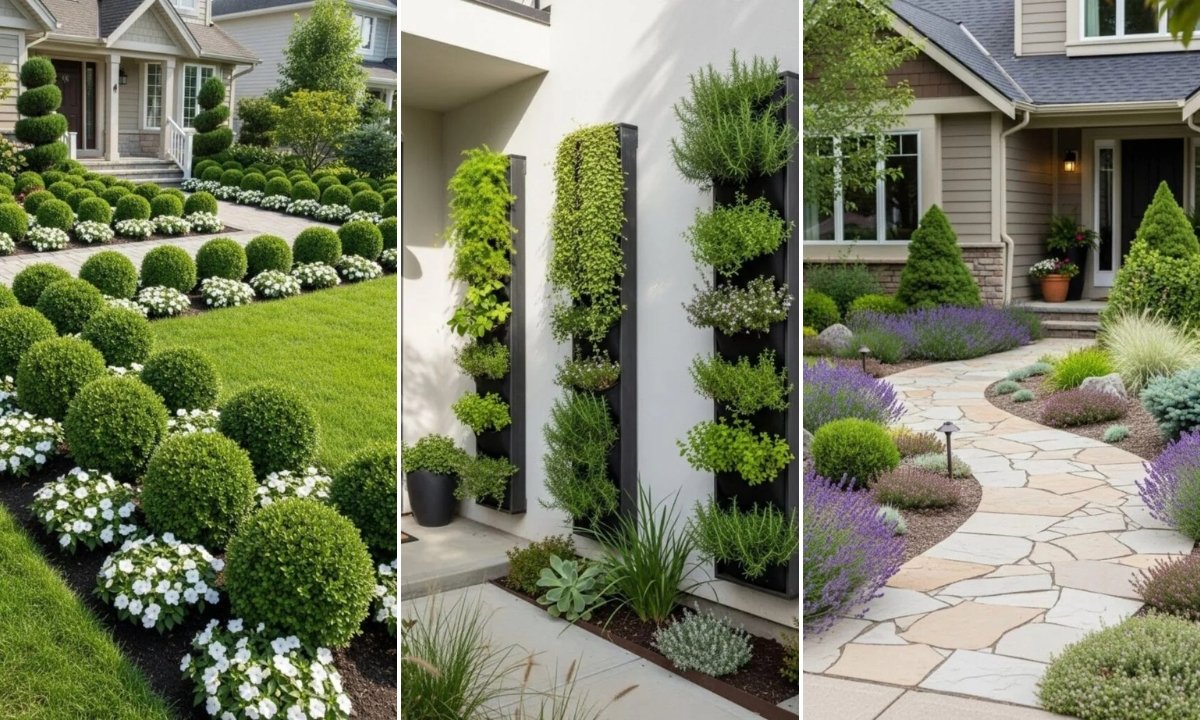
A straight line from the sidewalk to your front door makes visitors feel like they’re walking through a hallway. A gentle curve slows people down, makes them notice the plants, makes the space feel bigger than it is.
I keep the plantings simple along curved paths — too many different plants makes it feel busy instead of welcoming.
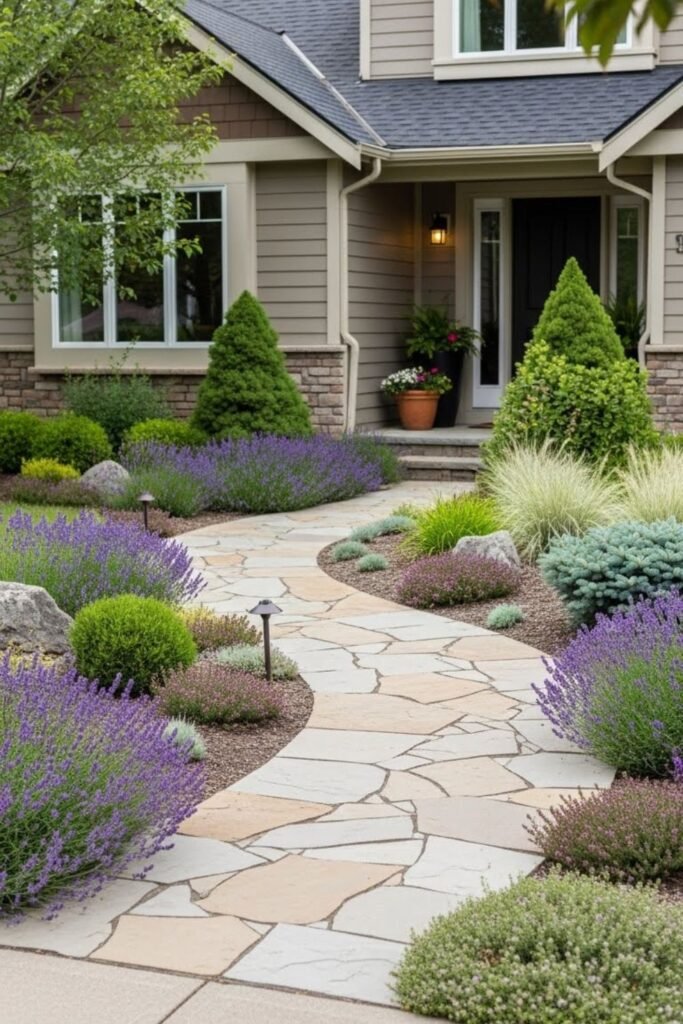
Native Choice
I used to think native plants were boring until I realized how much time I was spending trying to keep other plants alive.
Native plants already know how to handle your soil, your weather, your bugs. They don’t need you to baby them through every season.
And they look like they belong instead of like you’re trying too hard to make something work that doesn’t want to be there.
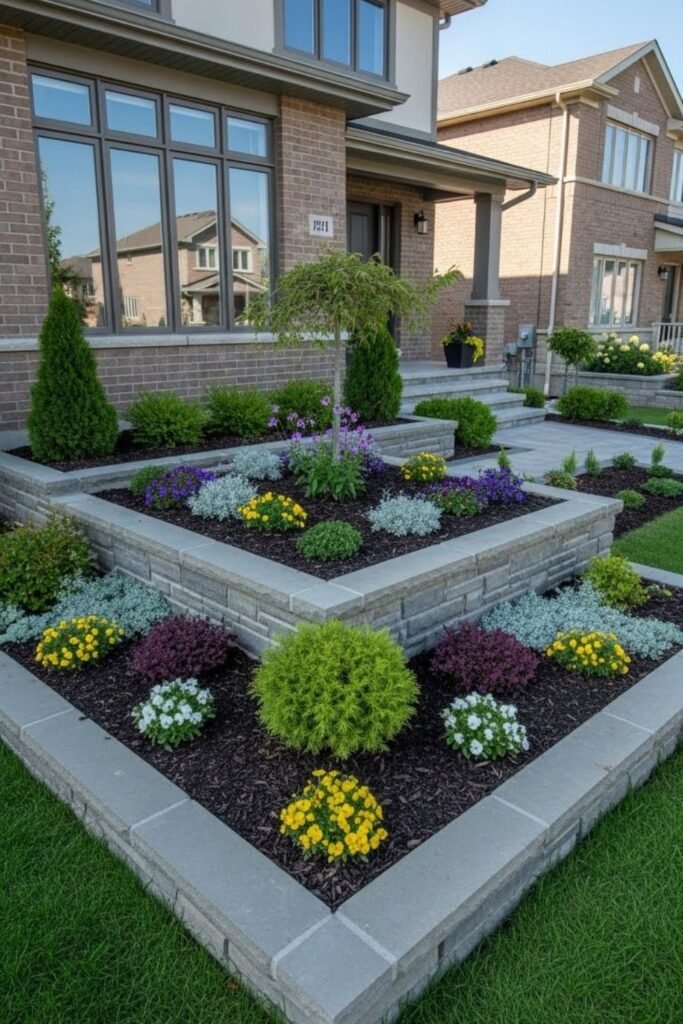
Raised Beds
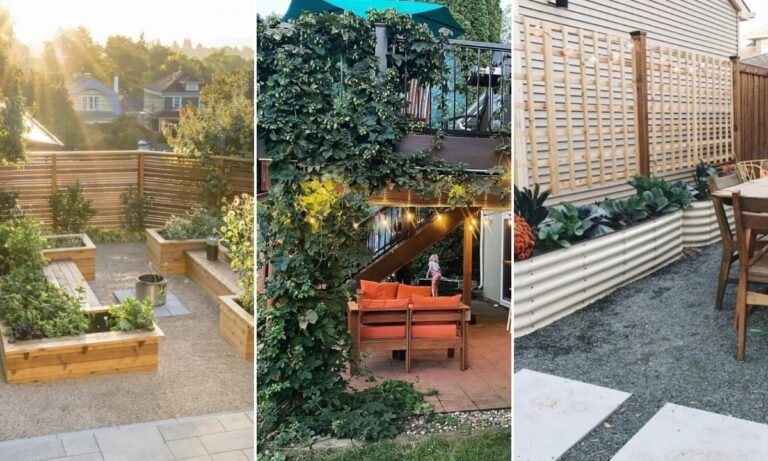
When your yard doesn’t have clear structure, raised beds give you instant organization. I use simple wood or stone borders to define where plants go and where they don’t.
This way I’m not fighting the existing soil, and I can control spacing without plants growing into each other and looking messy.
Everything stays where you put it, which means less maintenance and more control over how the whole thing looks.
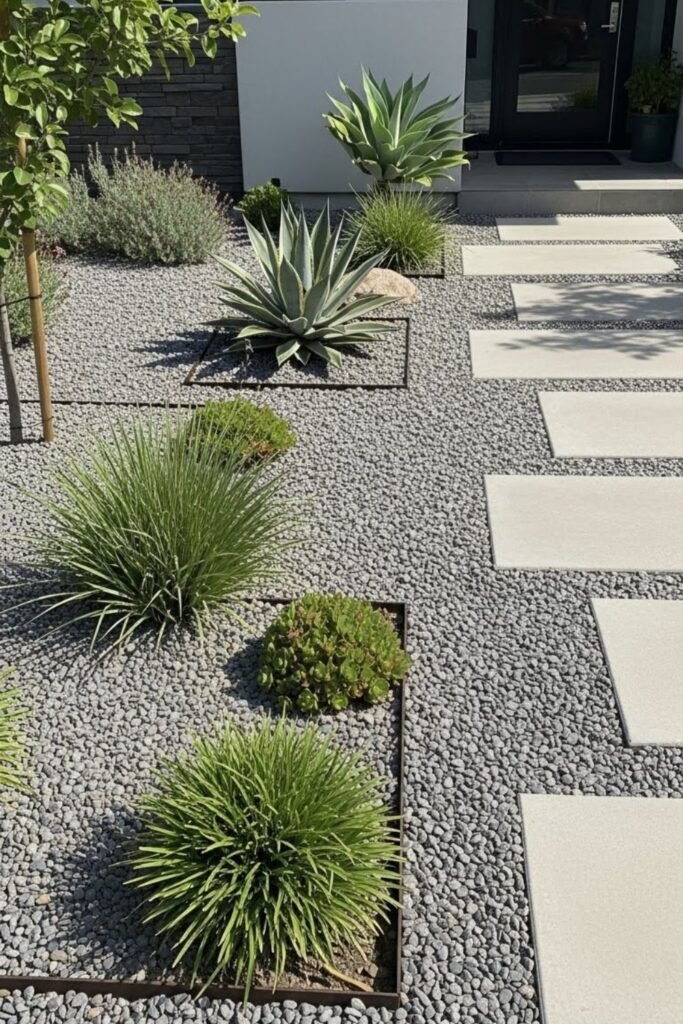
Gravel Base
There comes a point where you have to stop pretending grass is going to work where it clearly doesn’t want to work.
I put down landscape fabric, spread gravel, and planted a few strong shrubs that can handle the drainage. No more brown patches, no more constant watering, no more wondering if this is the week it’s finally going to look good.
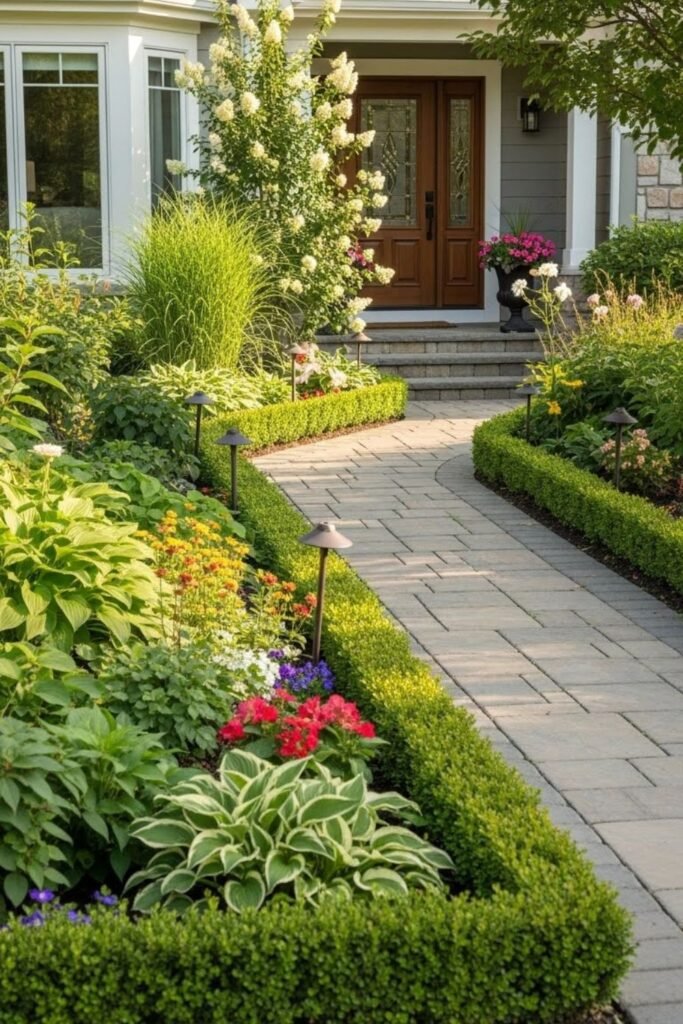
Entry Focus
I learned this from watching where people actually look when they come to the house — they look at the path to the front door, not at the corners of the yard.
So I put the effort there. Simple plants repeated along the walkway, good lighting, clean edges. Once the entry looks right, the rest can be pretty basic.
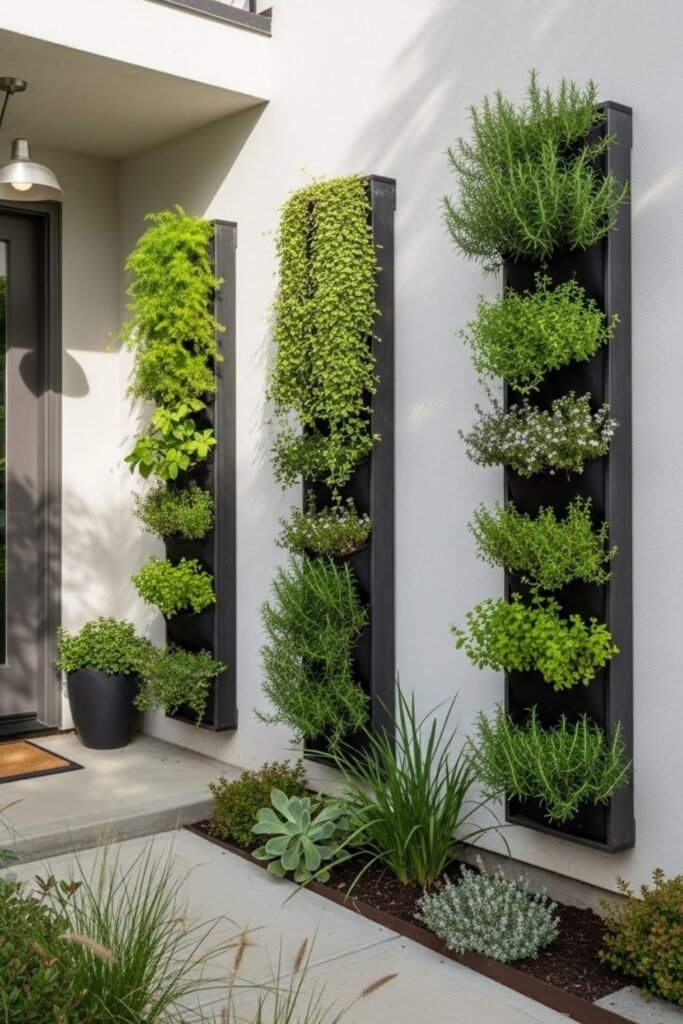
Vertical Planters
Small front yards feel cramped when you try to put everything at ground level.
Tall planters near the house or along fences give you more growing space without taking up more ground space.
I use them for herbs or small flowering plants that I want to see up close. They’re easier to water and maintain than ground beds, and you can move them if you change your mind.
Repeating Plants
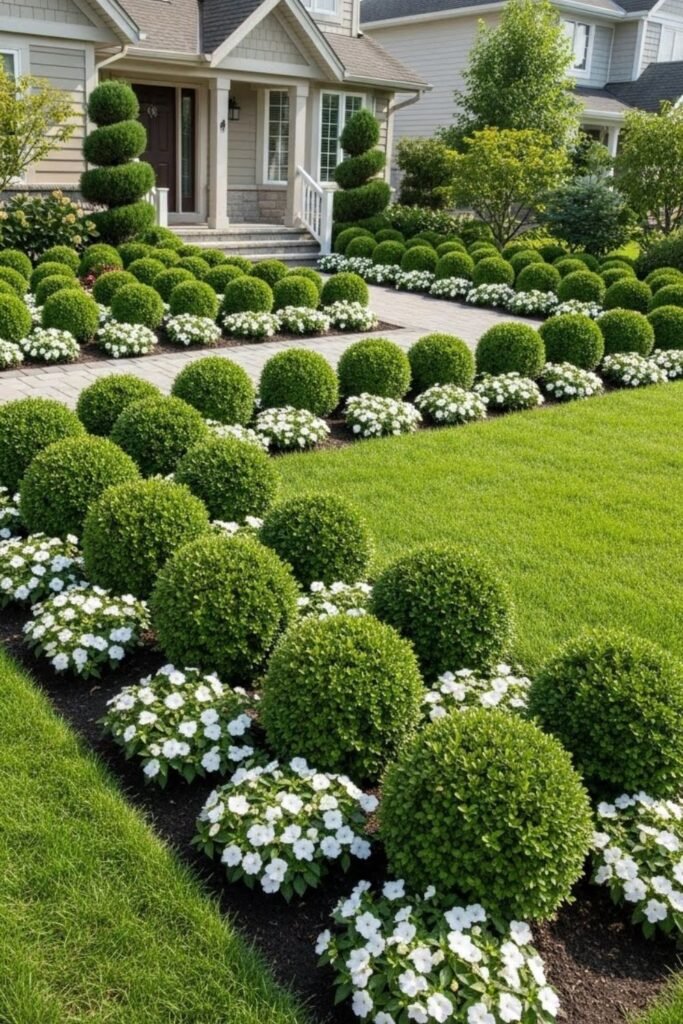
The difference between a front yard that looks planned and one that looks random is repetition.
I pick two or three plants I like and use them multiple times instead of trying to have one of everything. This creates rhythm and makes everything feel connected.
It’s also easier to care for fewer types of plants, and easier to buy replacements when something doesn’t make it through a hard winter.
Drought Smart
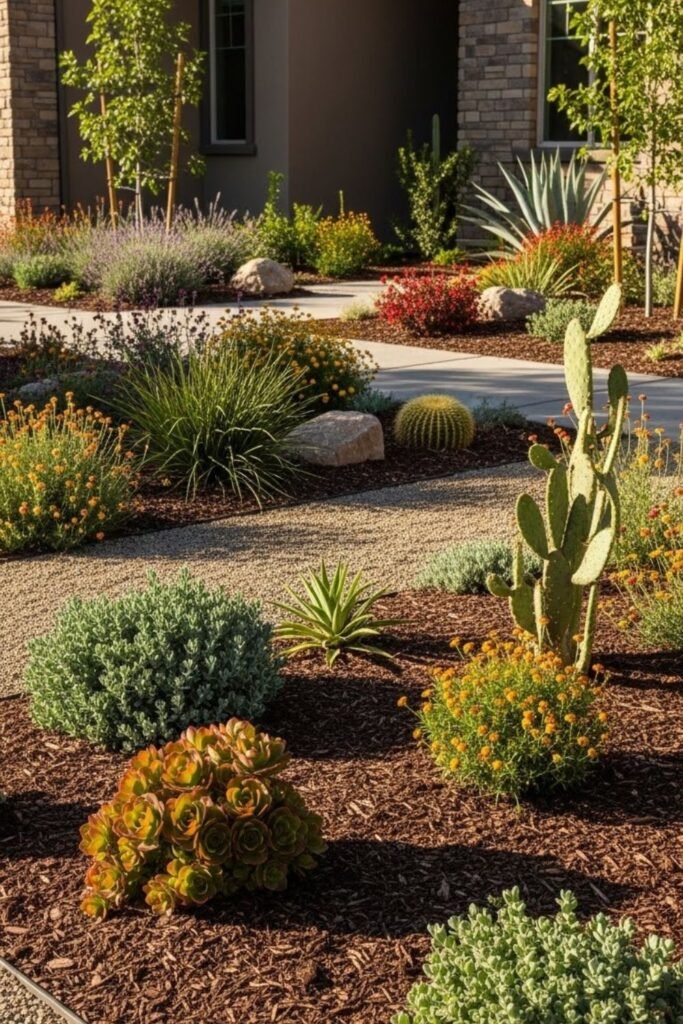
After three summers of watching expensive plants die because I went out of town during a heat wave, I switched to drought-tolerant everything.
Lavender, ornamental grasses, succulents — plants that actually prefer to be left alone most of the time.
I group them together so they’re not competing with plants that need more water, and I mulch heavily to keep moisture in the soil longer when it does rain.
Grass Movement
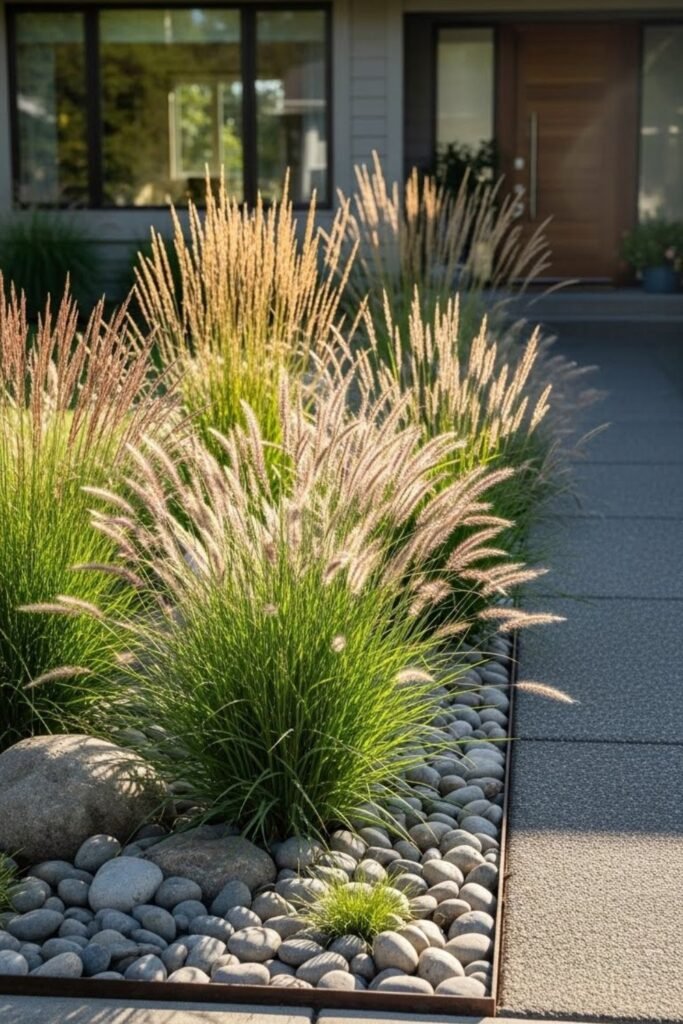
Ornamental grasses are the most underrated plant for front yards. They move in the wind, which makes everything feel alive even when there’s no color happening.
They grow fast, they don’t need perfect soil, they look good even when you forget about them for weeks, and they soften hard edges better than any shrub I’ve tried.
Clean Edges
Nothing makes a yard look unfinished faster than plants growing into the walkway and mulch spilling onto the grass.
I use brick or stone edging to create clear boundaries. It keeps mulch where it belongs and makes mowing easier because you’re not trying to trim around plant beds.
The whole space instantly looks more professional, like someone made actual decisions about where things should go.
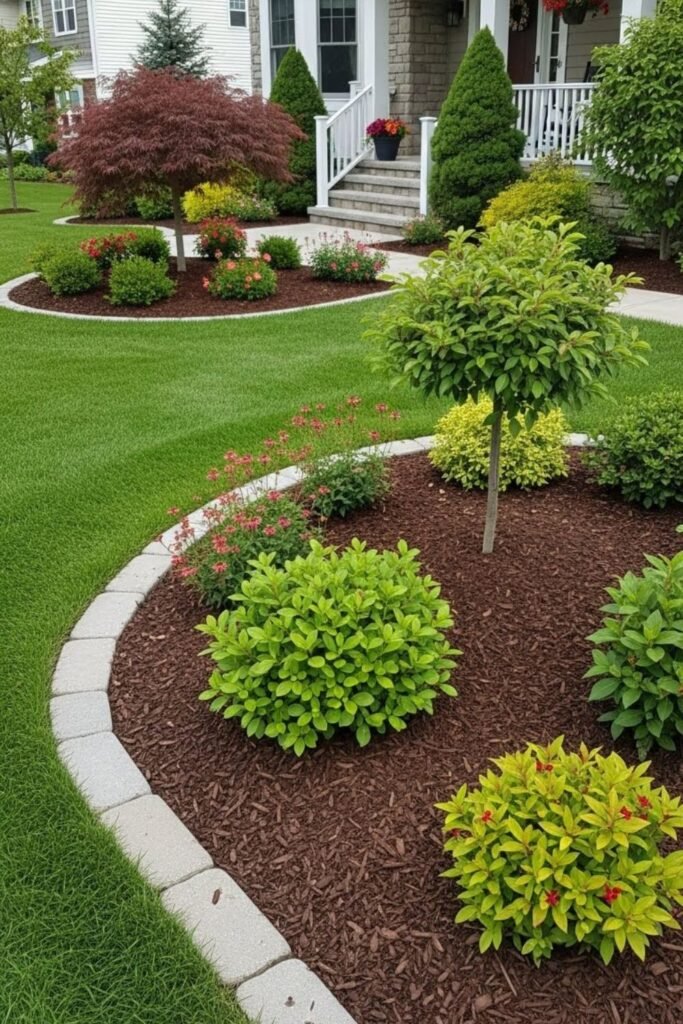
Shrub Focus
I gave up on annual flowers after realizing I was spending more time replanting than enjoying them.
Save this post for later ❤️
Flowering shrubs give you color for longer periods, come back every year, and don’t collapse after the first hard rain.
Azaleas, hydrangeas, even rose bushes if you get the disease-resistant varieties — they hold their shape and give you something substantial to build the rest of the design around.
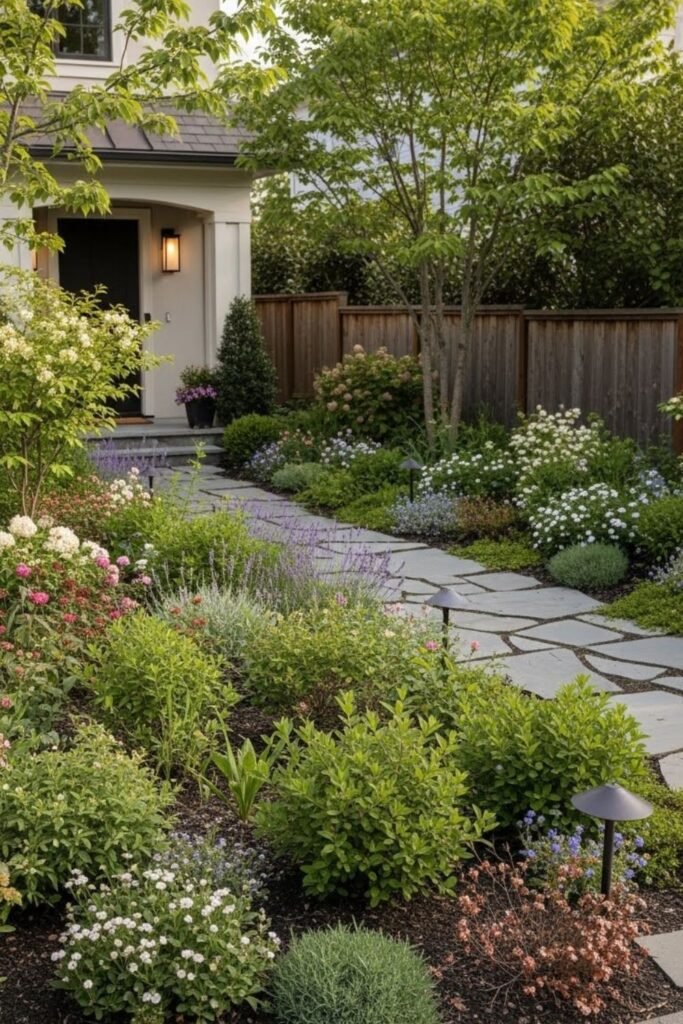
Balanced Layout
For the longest time my front yard felt lopsided and I couldn’t figure out why. Then I realized I had planted everything interesting on one side.
Balance doesn’t mean identical — it means the visual weight feels even. A large shrub on one side, a grouping of smaller plants on the other.
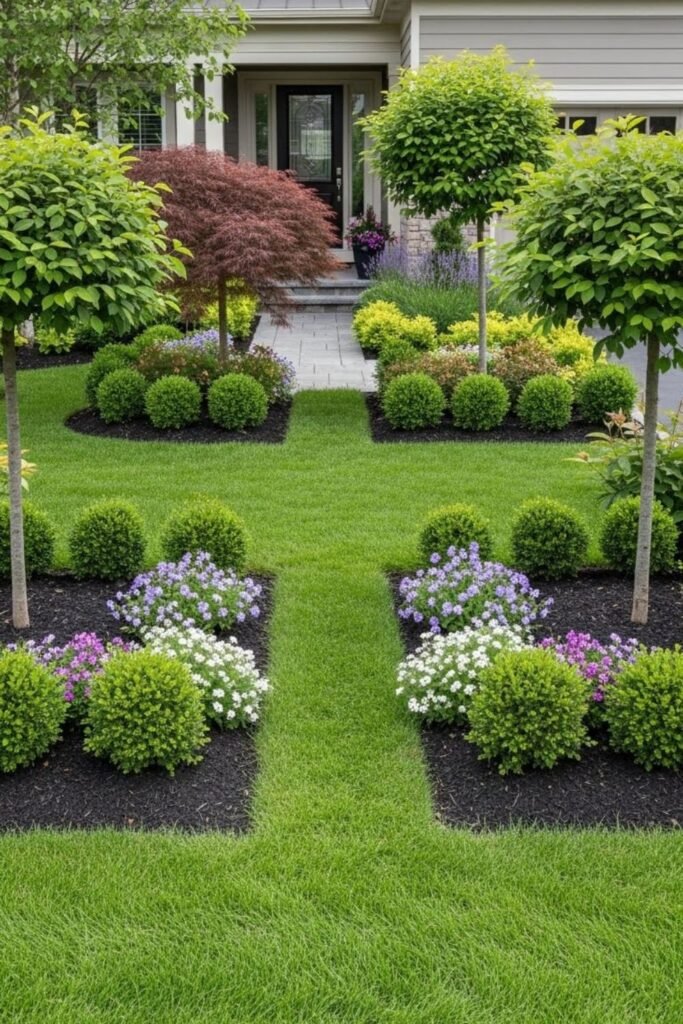
Statement Pots
Sometimes the fastest way to make a front yard look intentional is to add a couple of large planters in key spots.
Near the front door, at the corner of a path, flanking the driveway. Big pots filled with simple plants create focal points instantly, and you can change what’s in them seasonally if you want variety.
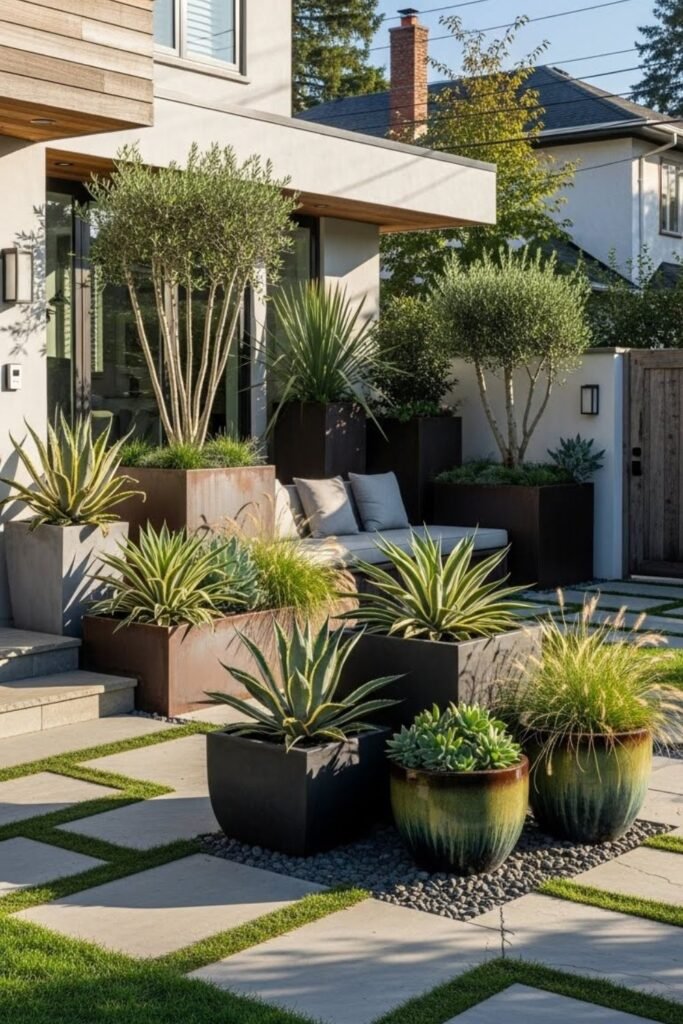
Height Layers
Flat plantings make everything look one-dimensional. I plant taller things toward the back and shorter ones in front, but not in a rigid line.
The goal is to create depth so your eye moves through the space instead of just skimming across the surface.
Even a small front yard feels bigger when the plantings have some vertical variation to them.
Tree Respect
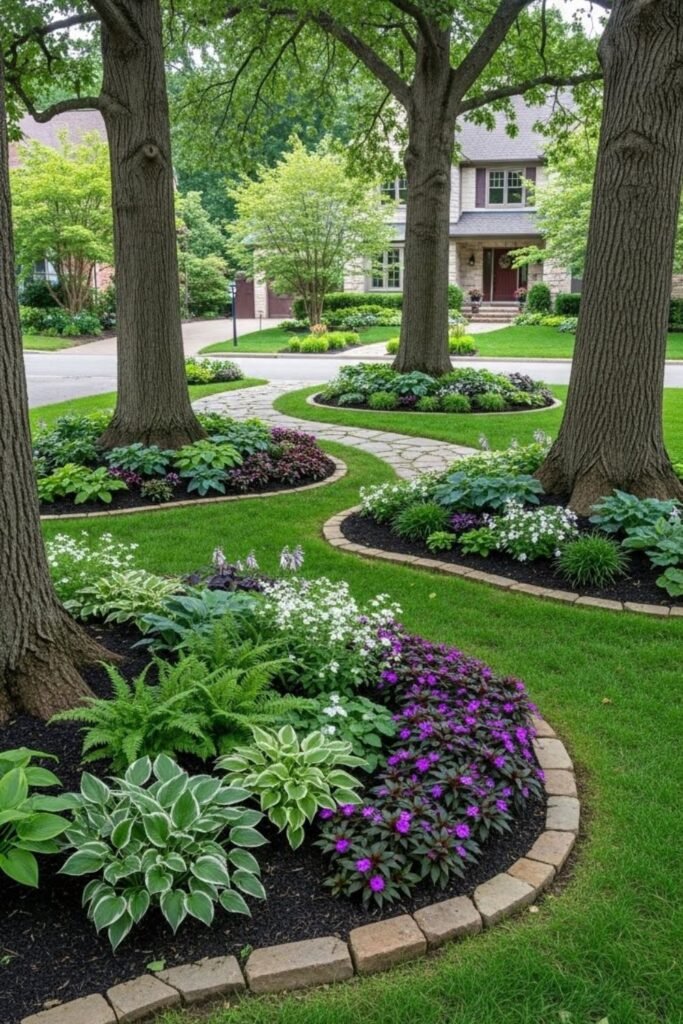
If you have mature trees, work with them instead of fighting them. I learned this the hard way trying to grow sun plants in shade and wondering why everything looked scraggly.
Plant shade-tolerant groundcover under trees, and use the tree canopy to frame views of the house.
Mature trees make your yard look established immediately — that’s worth more than any new planting you could put in.
Open Minimal
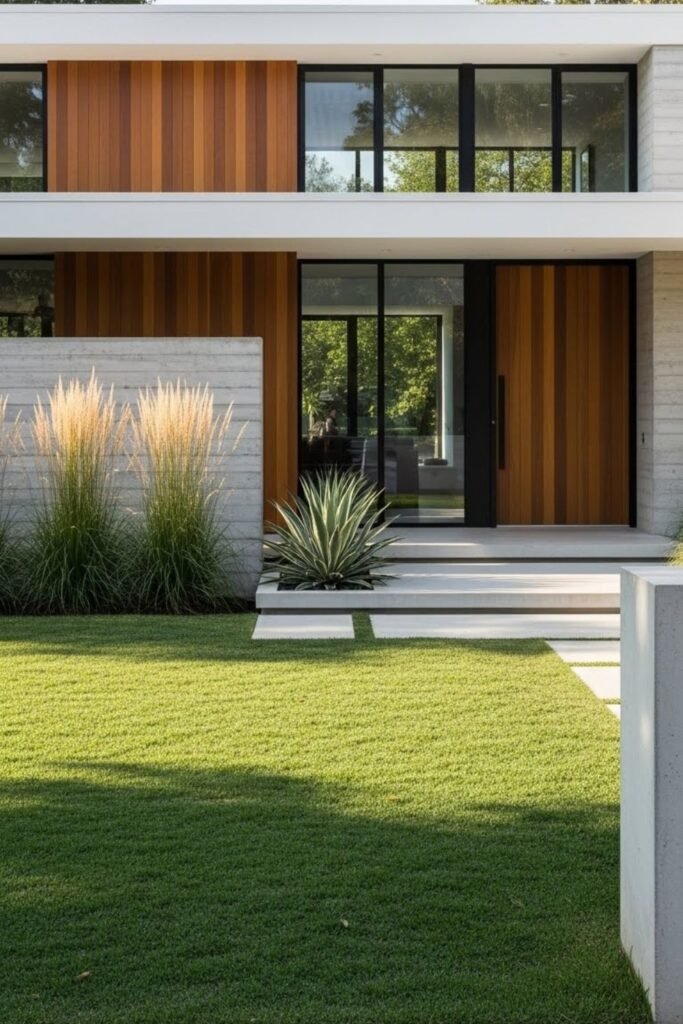
I spent years thinking more plants would make the front yard more interesting, when actually fewer plants, well-placed, looked much better.
Leave open space so the yard can breathe. Three strong plantings will always look more intentional than ten struggling ones.
Ground Cover
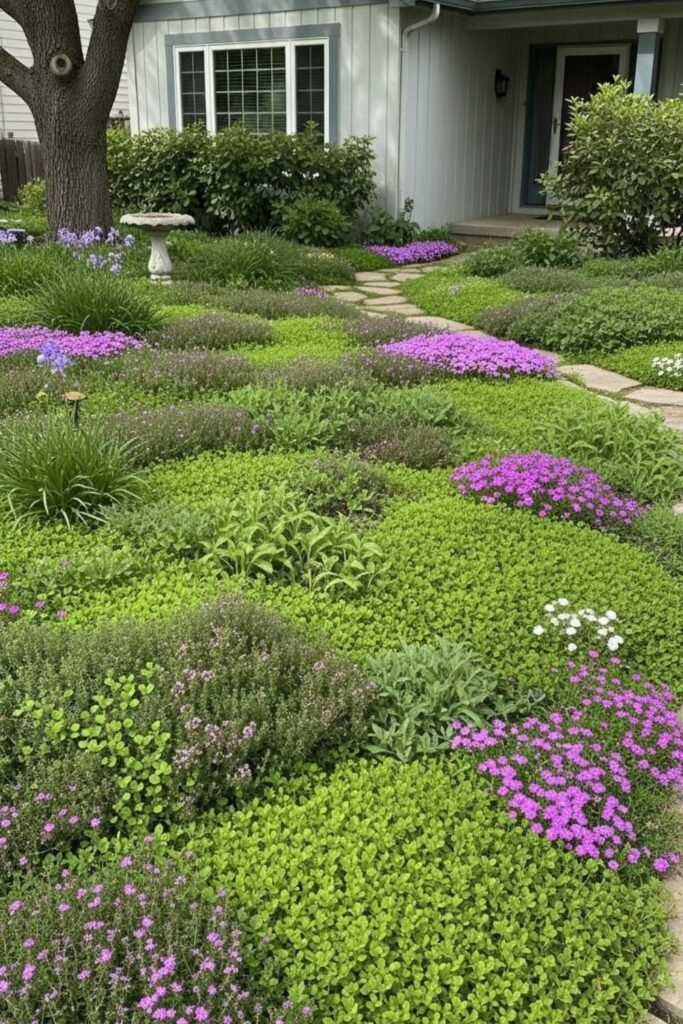
When grass won’t grow where you want it to grow, stop trying to make grass grow there.
Creeping thyme, ajuga, pachysandra — they spread naturally, stay low, don’t need mowing, and many of them flower.
They solve the ground-cover problem without creating new maintenance problems.
Texture Mix
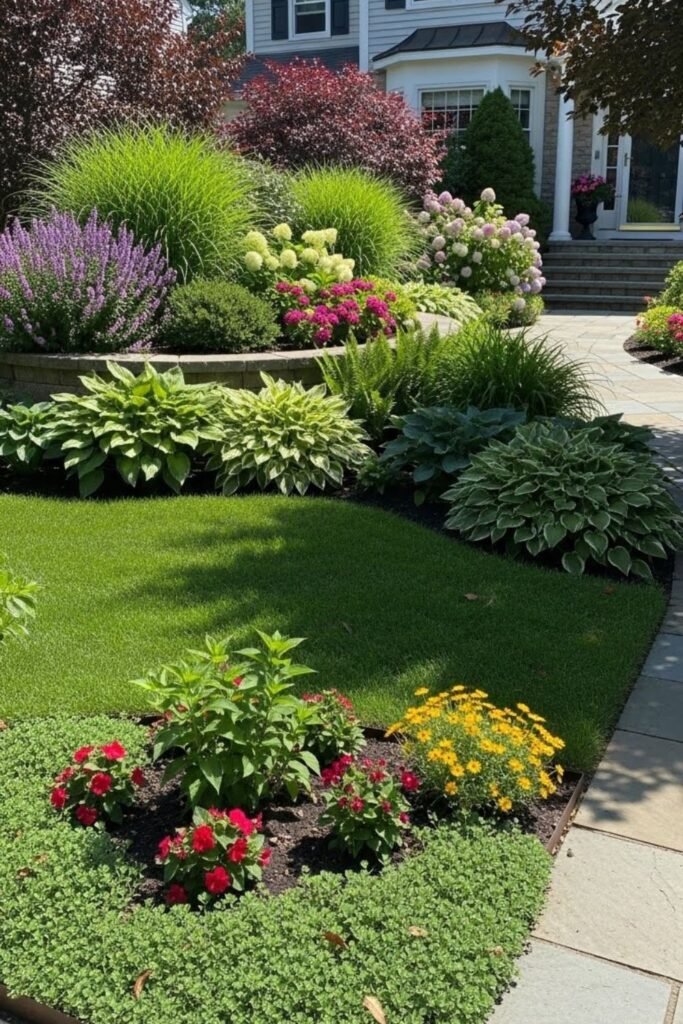
Color gets all the attention, but texture is what makes a yard interesting even when nothing’s blooming.
Smooth river stones next to rough bark mulch next to fine ornamental grass next to broad hosta leaves.
Your eye has something to engage with year-round, not just during the three weeks when everything happens to be flowering at the same time.
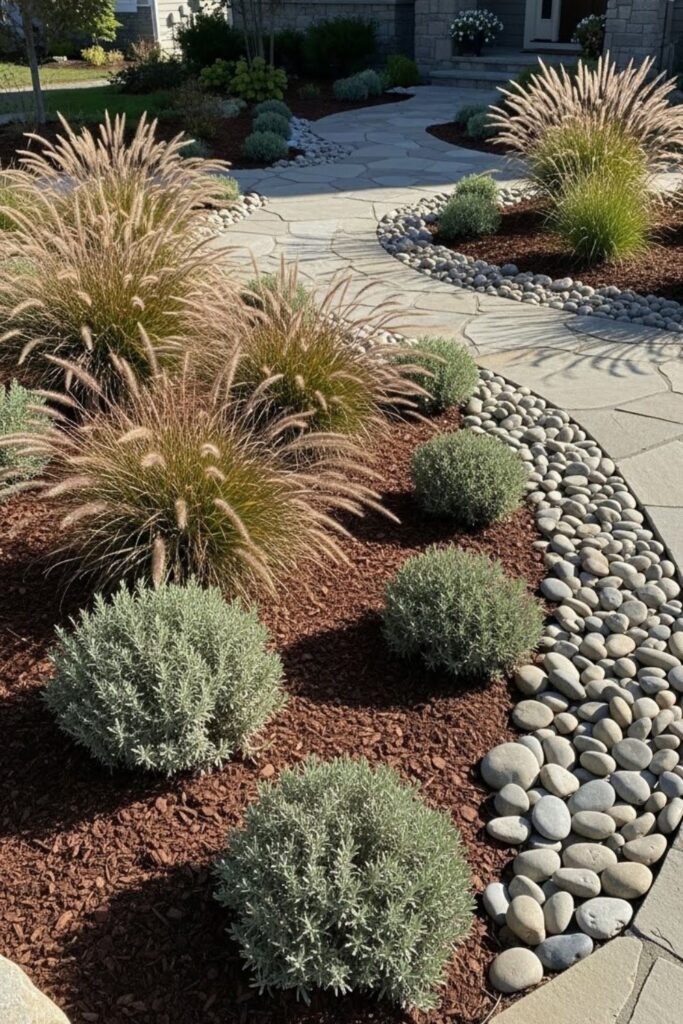
Busy Proof
I designed the current front yard assuming I might ignore it for weeks at a time, because that’s what actually happens.
Slow-growing plants, automatic irrigation on a timer, thick mulch to suppress weeds. The yard looks good whether I pay attention to it or not.
This is not about being lazy. It’s about being realistic about how much time you actually have for yard maintenance.
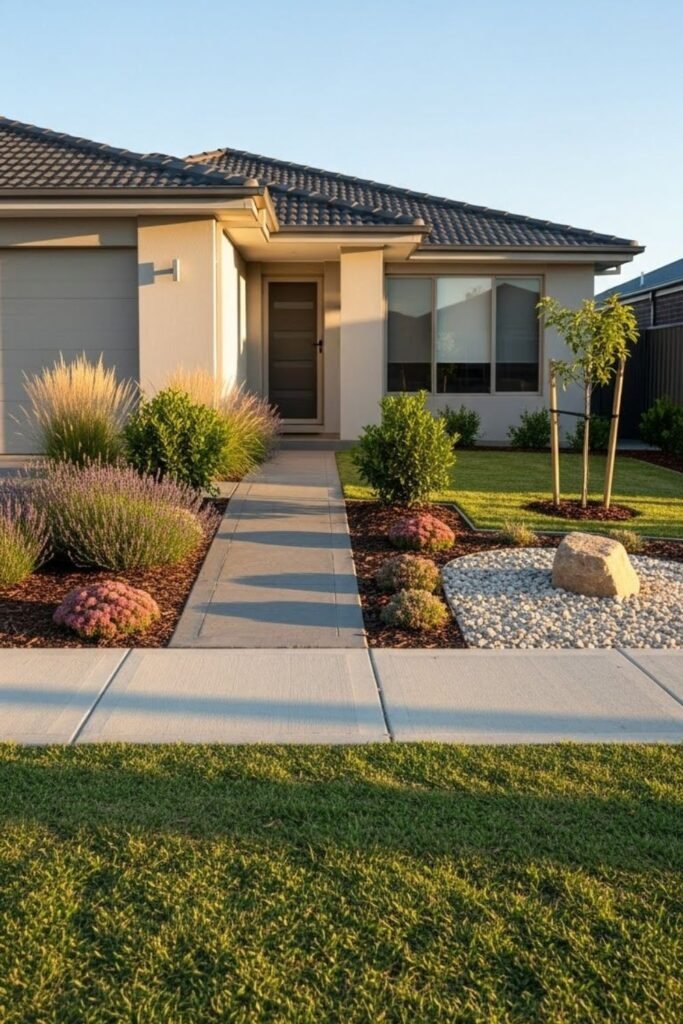
Window Frame
Plants should frame your windows, not block them. I keep plantings below window height in front and use taller plants at the sides for privacy.
This way you get soft landscaping around the house without making the interior feel dark or closed off.
The house looks settled into the landscape instead of like it was just dropped there.
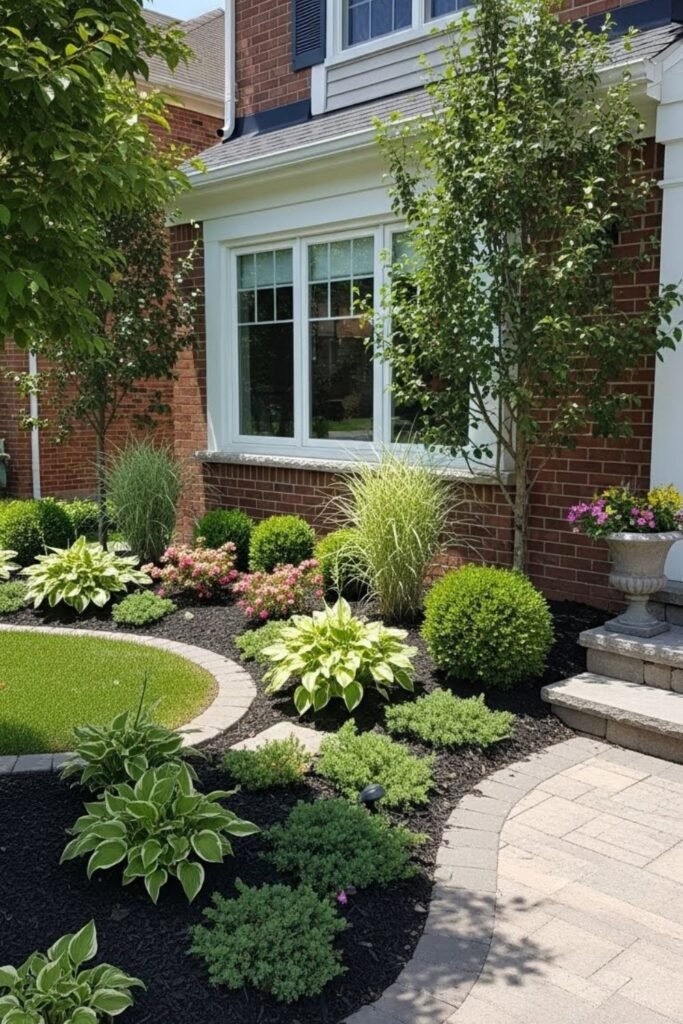
Year Interest
A front yard that only looks good for two months isn’t doing its job.
I mix plants that peak at different times — early spring bulbs, summer perennials, fall foliage, evergreens for winter structure.
Nothing dramatic, just enough variety that something is always happening even when the main show is over.
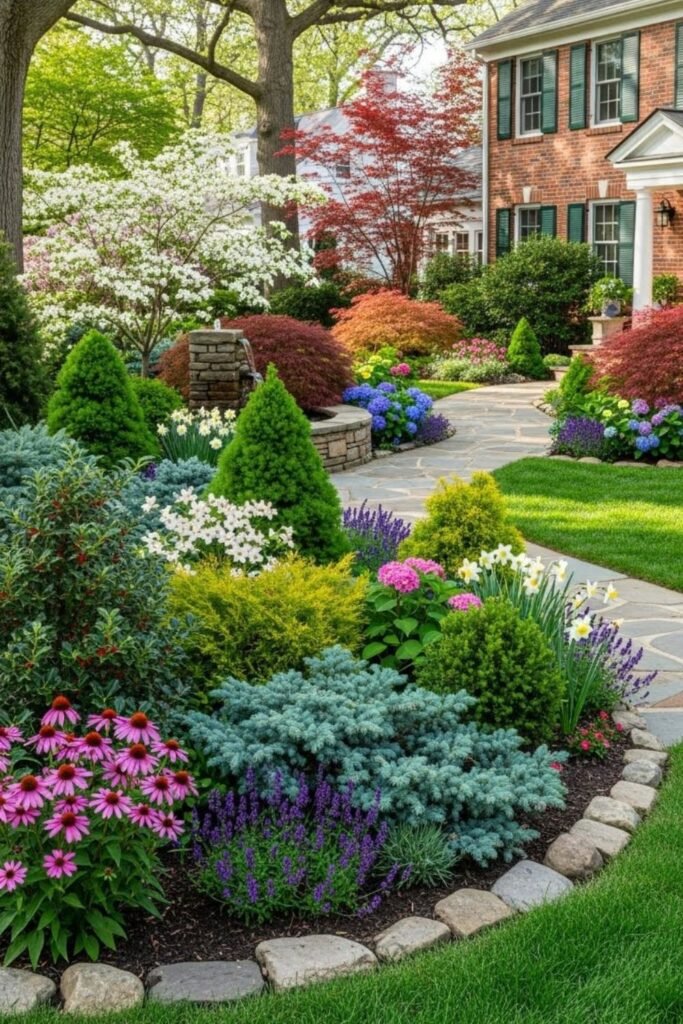
Soft Lighting
The front yard disappears at sunset unless you do something about it. Small solar lights along the path, a couple of low-voltage spotlights on key plants or trees.
Not for security — for mood. The yard becomes part of the evening instead of just emptiness between the street and the house.
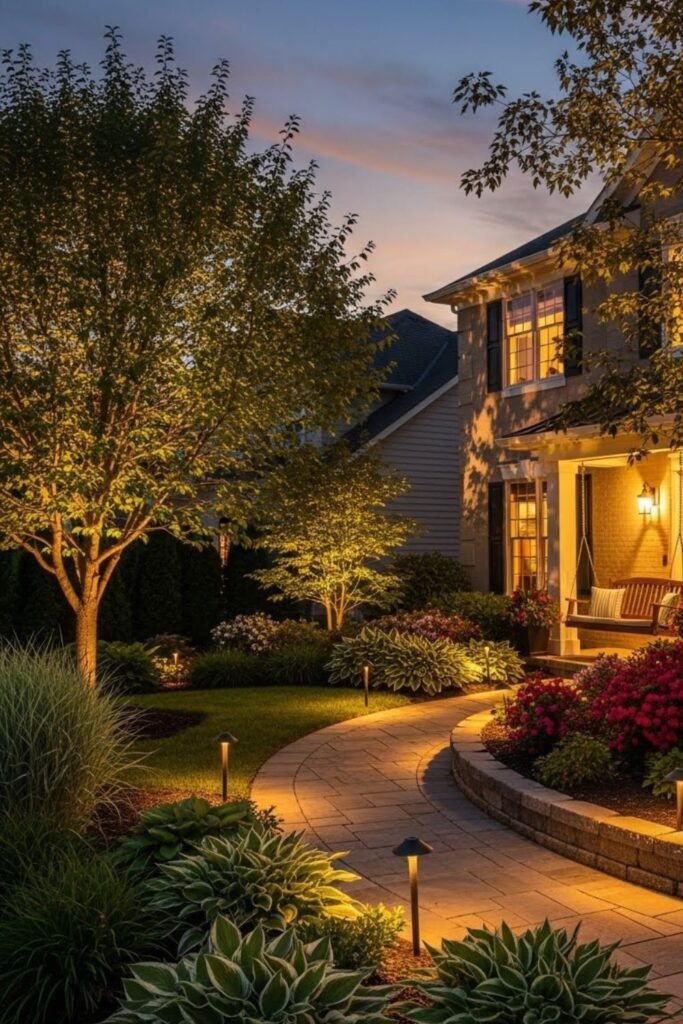
Guided Flow
People should know exactly where to walk without having to think about it. I design plantings so they naturally guide foot traffic toward the front door.
Plants create the boundaries, not fences or barriers. When the flow feels natural, visitors feel welcome instead of confused about where they’re supposed to be.
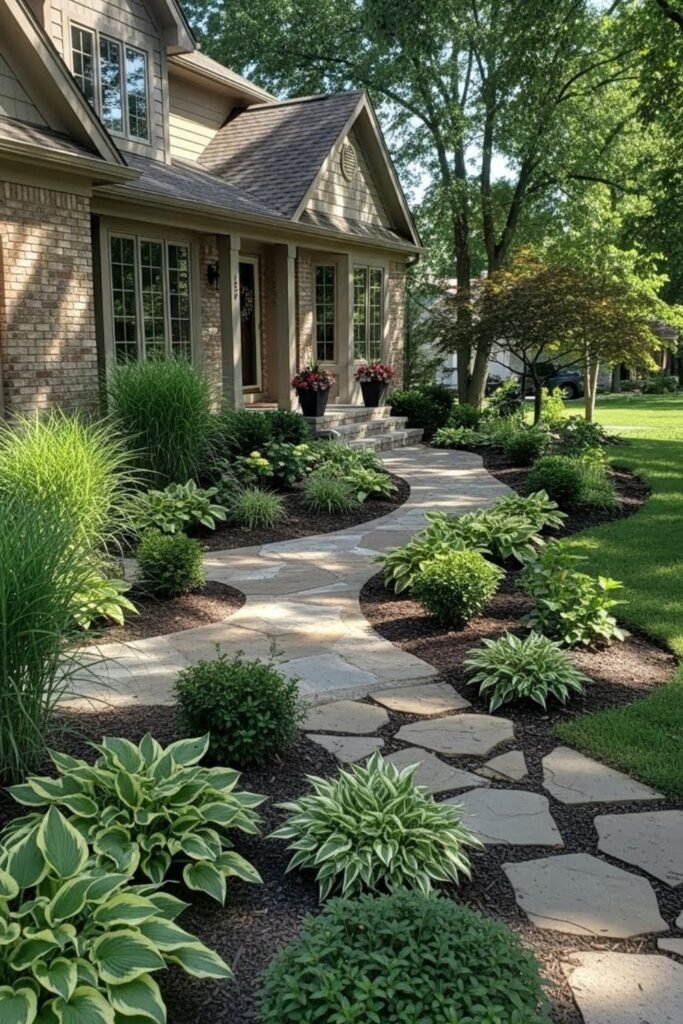
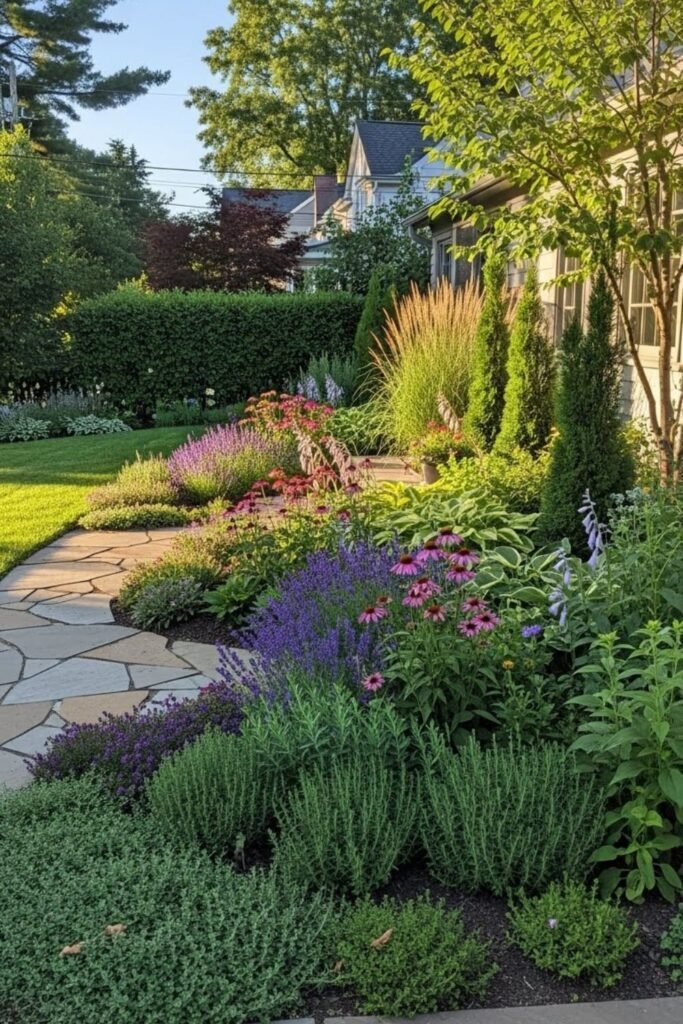
Privacy Layers
Privacy works better when it’s gradual instead of sudden. Low plants at the property line, medium shrubs closer to the house, a few taller elements where you really need screening.
This blocks sight lines without making your yard feel like a fortress. You maintain privacy while keeping the space open enough to feel welcoming.
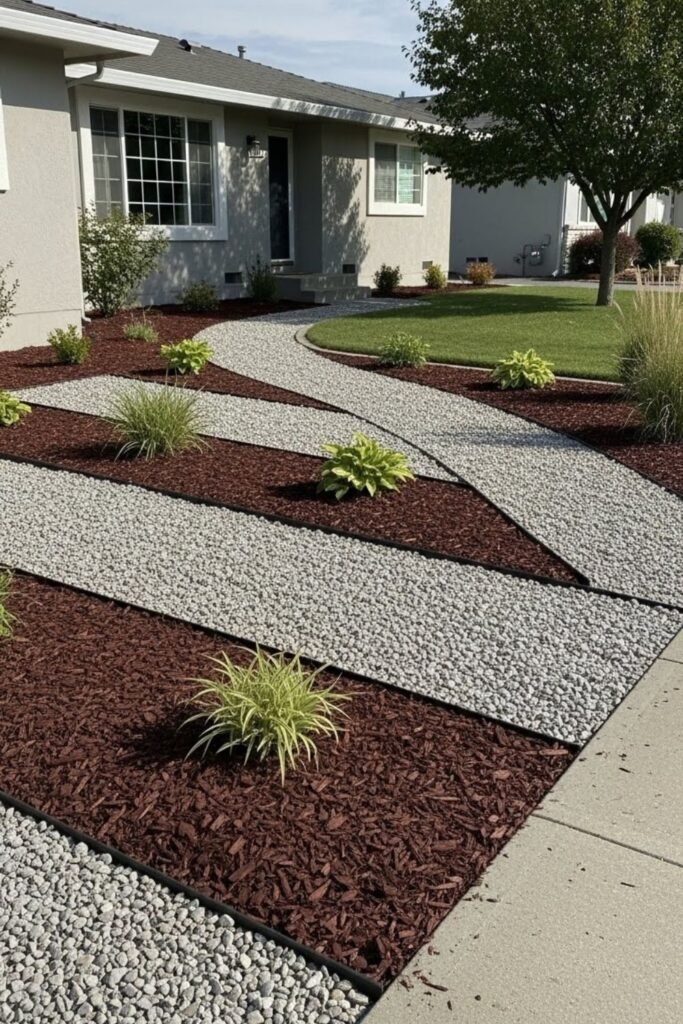
Budget Materials
You don’t need expensive materials — you need consistent materials. I pick one type of mulch, one type of stone, one style of edging, and use them throughout the space.
Repetition makes cheap materials look intentional. Mixing five different materials makes expensive materials look random.
Neat Growth
The biggest mistake I made early on was buying plants based on how they looked at the nursery instead of how big they’d get in five years.
I space everything based on mature size now, even though it looks sparse at first. In two years, you’re grateful for the room instead of constantly trimming things back.