Bird of Paradise Plants Are Stunning and Here’s Everything You Need to Know to Grow One Successfully

The Bird of Paradise arrives at your door, and suddenly your living room feels too small. Those leaves are bigger than you expected.
You set it in the corner and step back, but something’s off. It looks awkward, maybe too dramatic, and now you’re wondering if you made a mistake.
I’ve been there. Frank brought one home three years ago after seeing it at the hardware store, and I spent two weeks moving it around the house until it looked right. The thing is, these plants need the right spot or they just sit there looking out of place.
Here’s what I learned about making a Bird of Paradise work in your home, along with some ideas that actually make sense.
Where does a Bird of Paradise Plant Look Best Inside a Home?
Light first, everything else second. If you put this plant in a dim corner because it looks decorative, you’re setting yourself up for disappointment.
Near a south-facing window works best, but east or west will do if that’s what you have. The leaves need bright light to stay upright and healthy-looking.
I keep ours next to the sliding door in the living room where it gets morning sun and stays out of the walkway. The height balances our low sectional without crowding the TV area, and when people come over, it’s the first thing they notice. In a good way.
Save this article for later! 👇👇
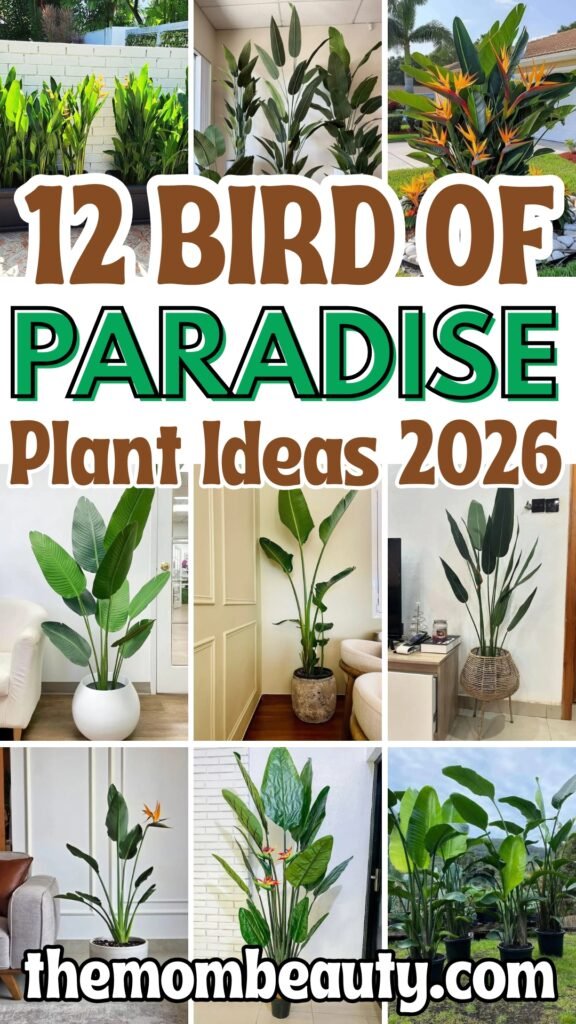
Can Bird Of Paradise Plants Be Used In Outdoor Decor Ideas?
Yes, but don’t treat it like a regular garden plant. This isn’t something you tuck in with your petunias.
It works on patios or protected outdoor spaces where the light is bright but not harsh all day. Wind will shred those big leaves fast, and temperatures below 60 degrees make it unhappy.
I’ve seen neighbors try to use them as regular landscaping plants, and by fall they look rough. If you want it outside, think of it as a temporary accent, not permanent landscaping
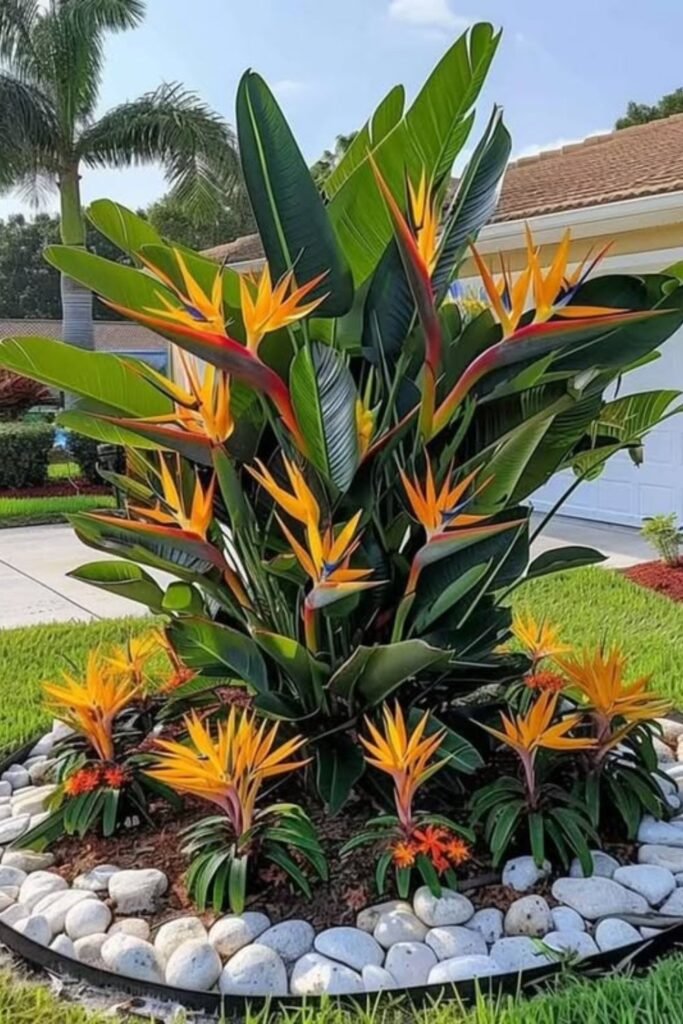
Tropical Anchor
Sometimes one dramatic plant works better than five small ones. This grouping creates a focal point without looking busy.
The key here is keeping everything else simple. No competing colors, no extra decorations, just clean lines and that bold foliage.
Plant them close enough that they read as one unit, but leave space for air circulation. I learned that lesson the hard way with my tomatoes.
Privacy Planters
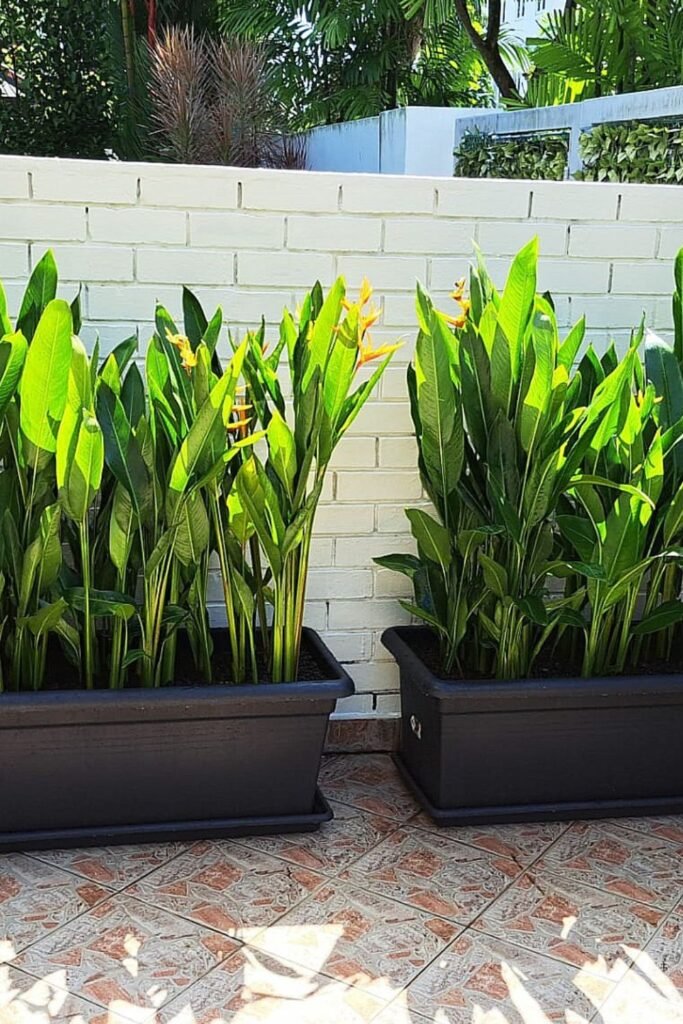
This is smart. Instead of building a fence or installing lattice, you get privacy and something beautiful at the same time.
The planters need to be deep enough for root growth, which means they’re not cheap, but they’ll last longer than the plant will. Use good potting soil and make sure there’s drainage.
Frank always says measure twice, buy once, and that applies to containers too.
Scale Play
Different heights make the arrangement feel natural instead of store-bought. You don’t need three identical plants.
Start with one mature plant for height, then add smaller ones around it. They’ll grow into the space over time, and meanwhile you get that layered look without waiting two years.
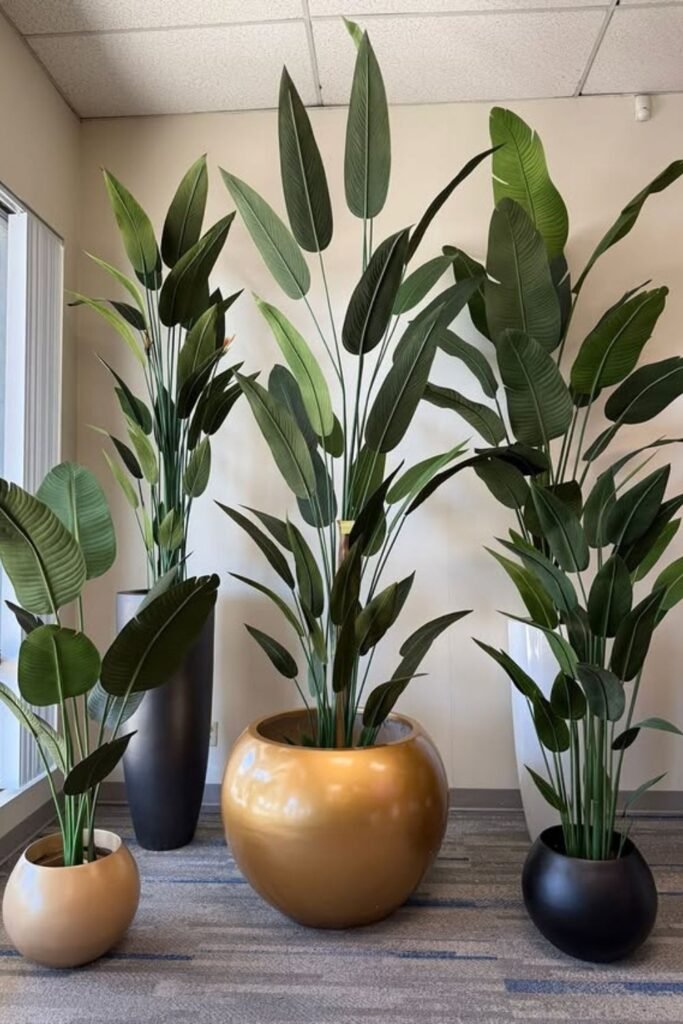
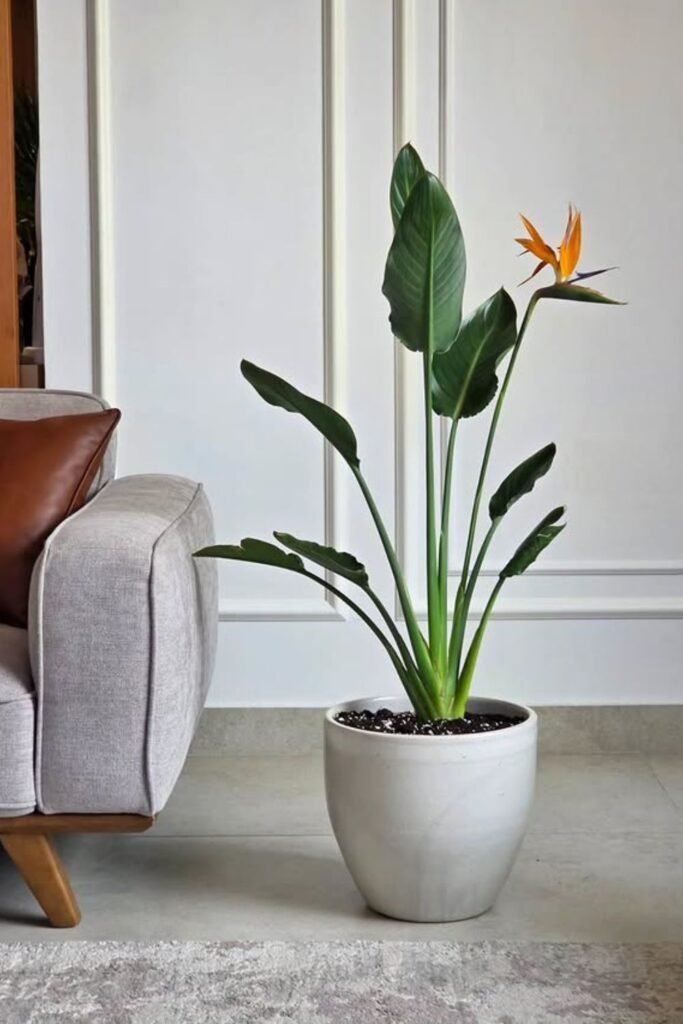
Clean Corner
This is how I have ours set up, and it works. The white pot keeps things simple, and there’s enough space between the plant and the sofa that nobody feels crowded.
The mistake I see people make is pushing it right into the corner. Pull it out at least a foot so the leaves can spread without hitting the walls.
Also, that indirect light from the window is perfect. Direct afternoon sun through glass can actually scorch the leaves.
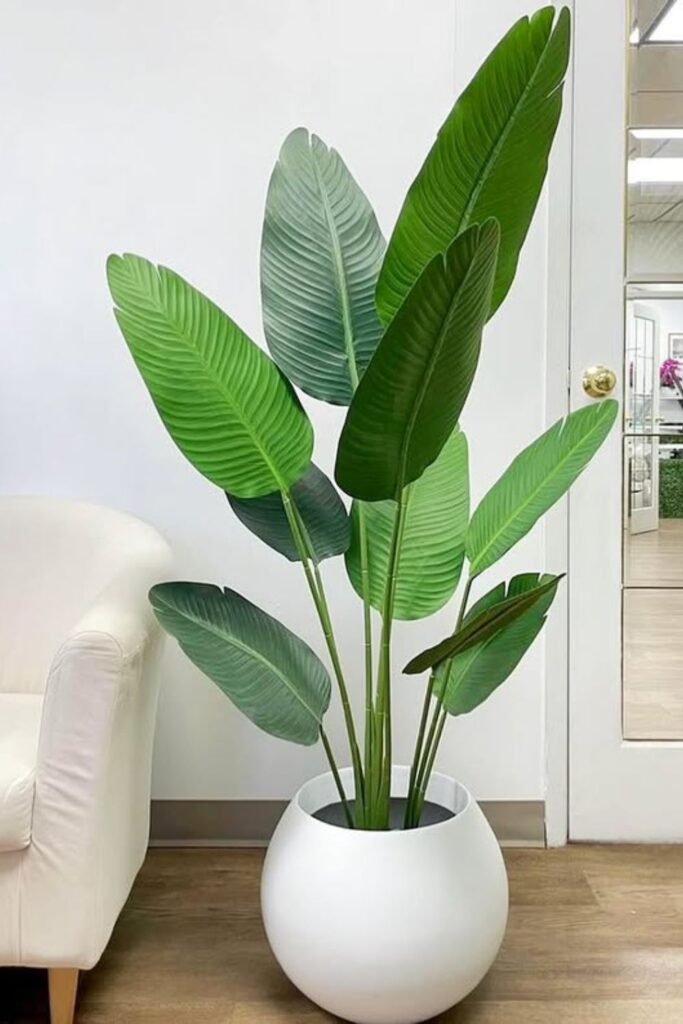
Vertical Focus
Narrow spaces benefit from plants that grow up, not out. This setup works in hallways, between furniture, or beside dining areas where floor space is limited.
The textured pot adds interest without being distracting, and the plant stays contained instead of sprawling.
Save this post for later ❤️
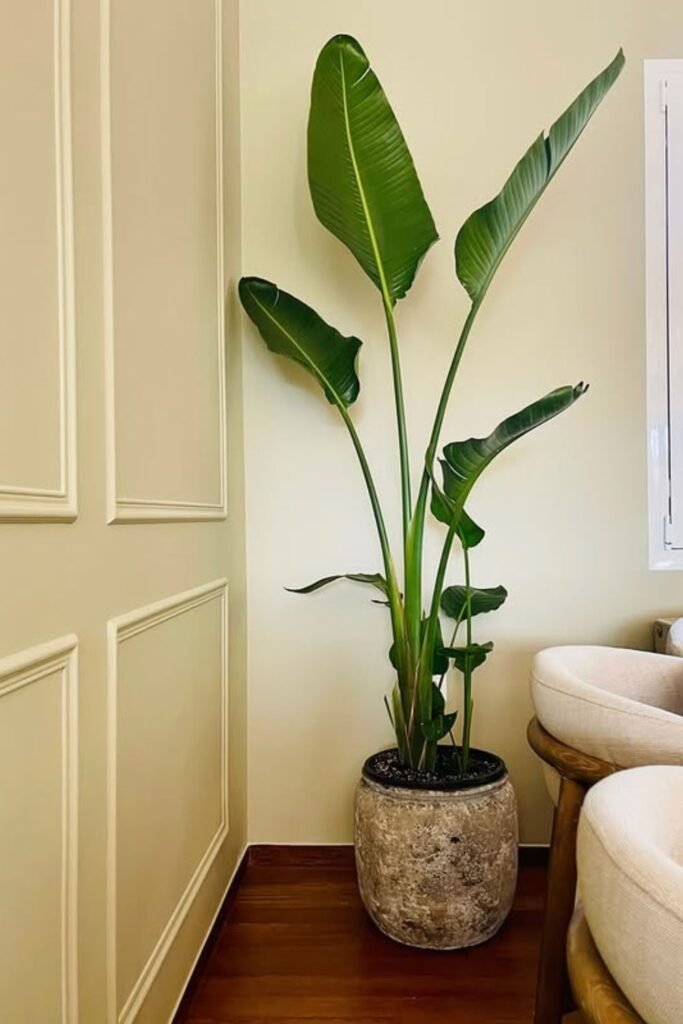
Warm Texture
Woven planters like this soften the dramatic leaves without competing with them. I prefer this to the stark white pots you see everywhere.
The natural texture works especially well if your room has a lot of hard surfaces – tile floors, painted walls, metal fixtures. It adds warmth without adding clutter
Just make sure there’s a waterproof liner inside. Trust me on this one.
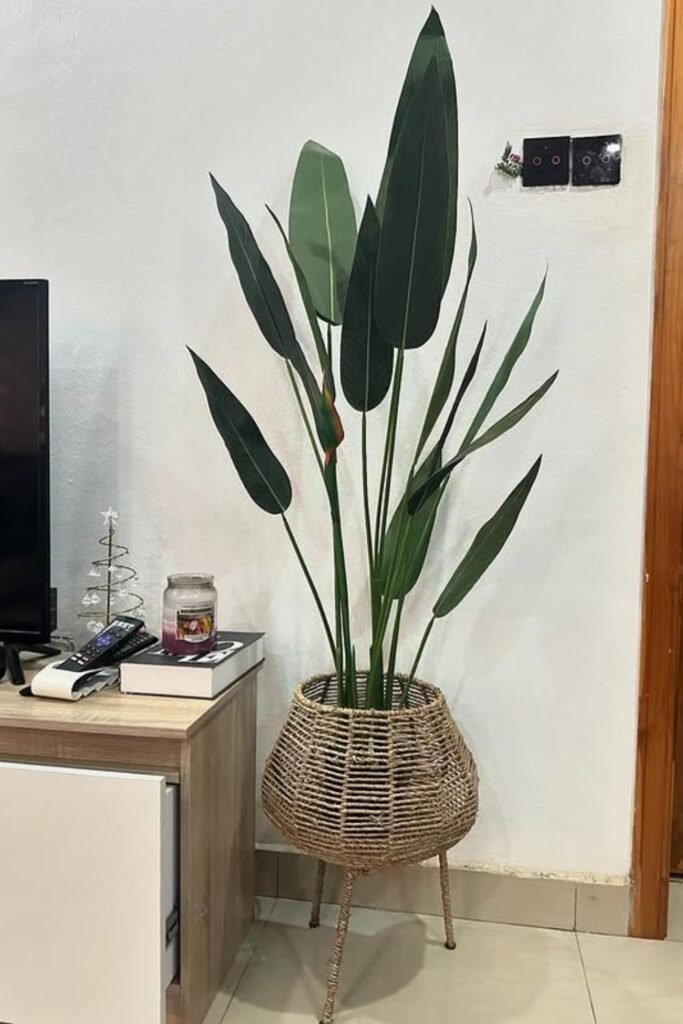
Garden Cluster
This is what you do when you want impact. Multiple plants create a lush backdrop that feels intentional, not accidental.
Start with containers if you’re not sure about permanent placement. You can always transplant later once you know they’re happy in that spot.
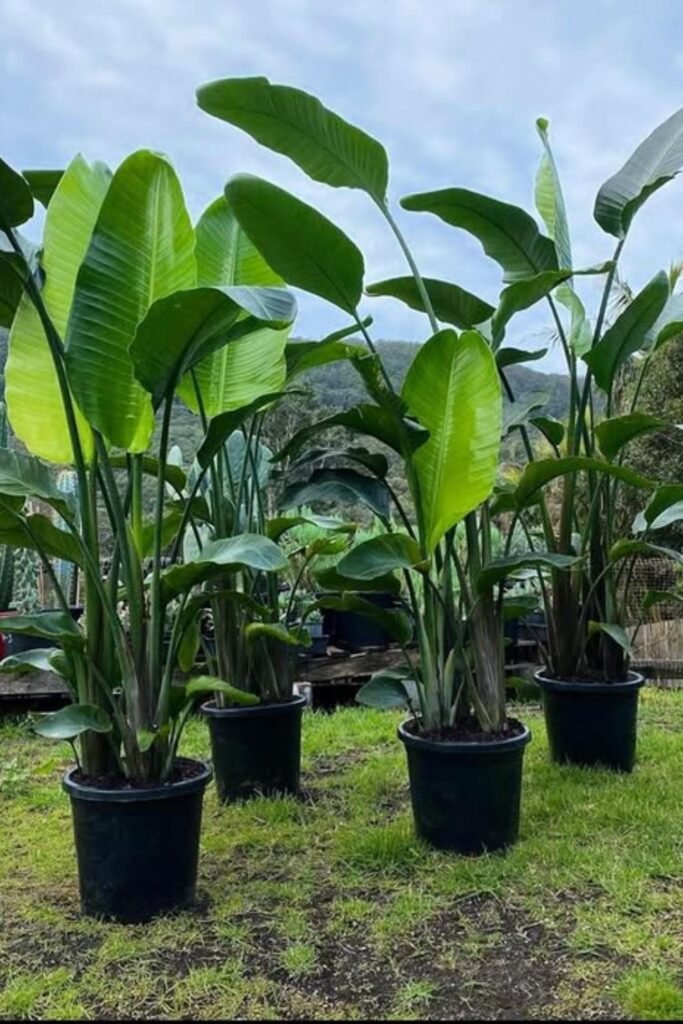
Entry Statement
First impressions matter, and this plant makes a good one. Near an entryway, it signals that someone lives here who pays attention to their space.
The upright growth keeps walkways clear, and when it blooms, you get that pop of orange without needing to buy fresh flowers every week.
Just make sure it’s getting enough light in that spot. Dark entryways kill houseplants faster than anything else.
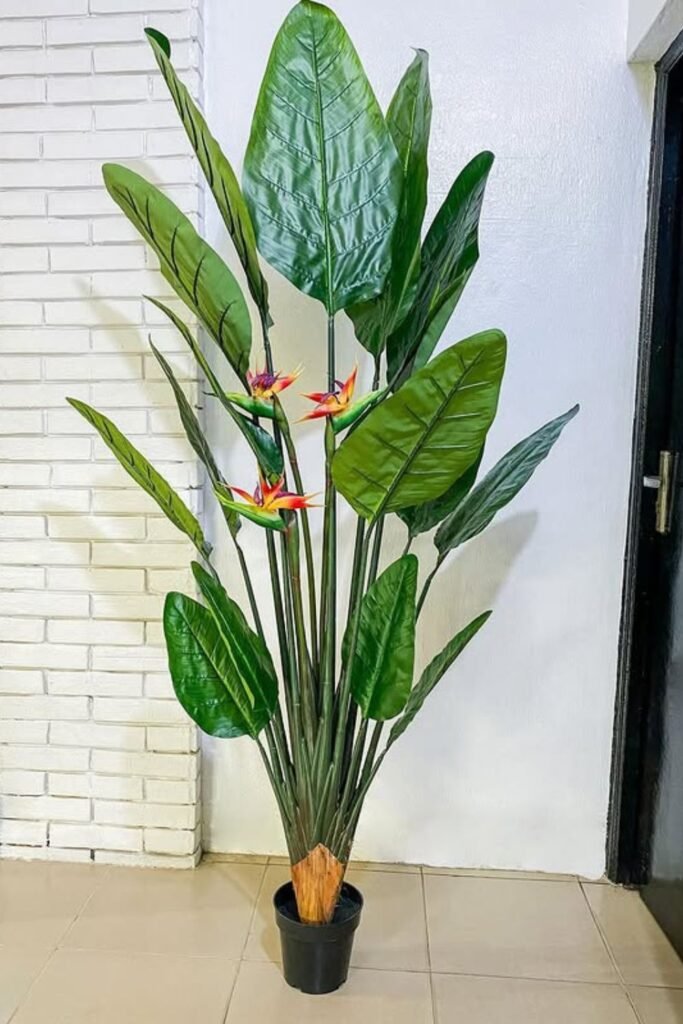
Soft Contrast
Sometimes you don’t want drama, you want elegance. The clean white walls let the plant be the star without competing backgrounds.
The single bloom is perfect here – enough color to catch your eye, not so much that it overwhelms the calm feeling of the room.
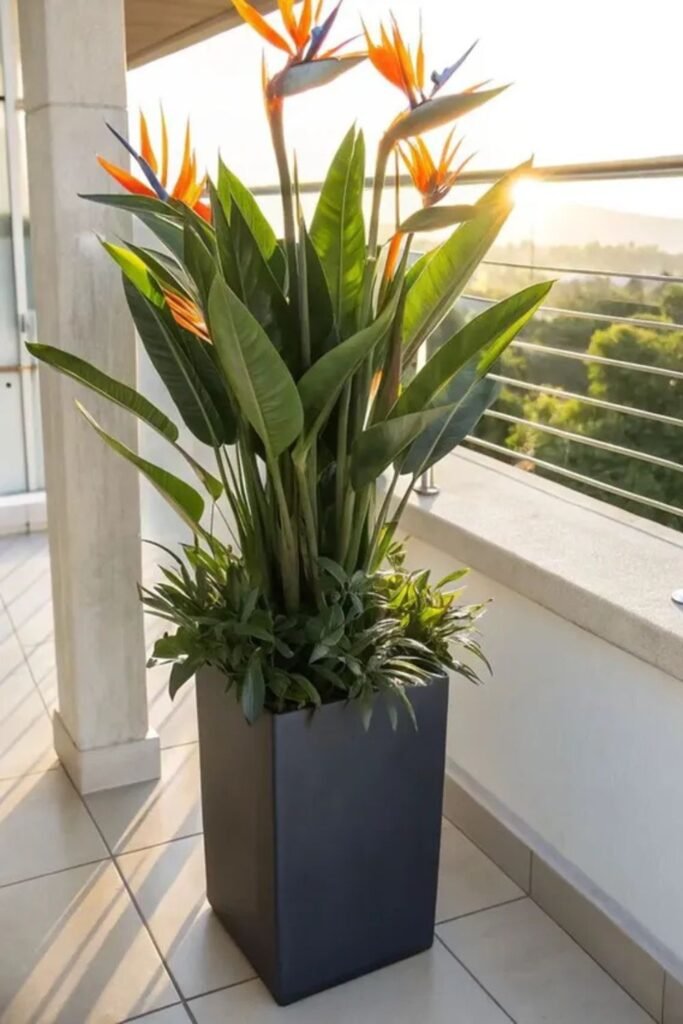
Balcony Glow
Morning light brings out the best in these plants. If you have a balcony that gets sun in the early part of the day, this could work beautifully.
The tall planter keeps the leaves upright, and the smaller plants at the base fill in any empty spots without crowding the main plant.
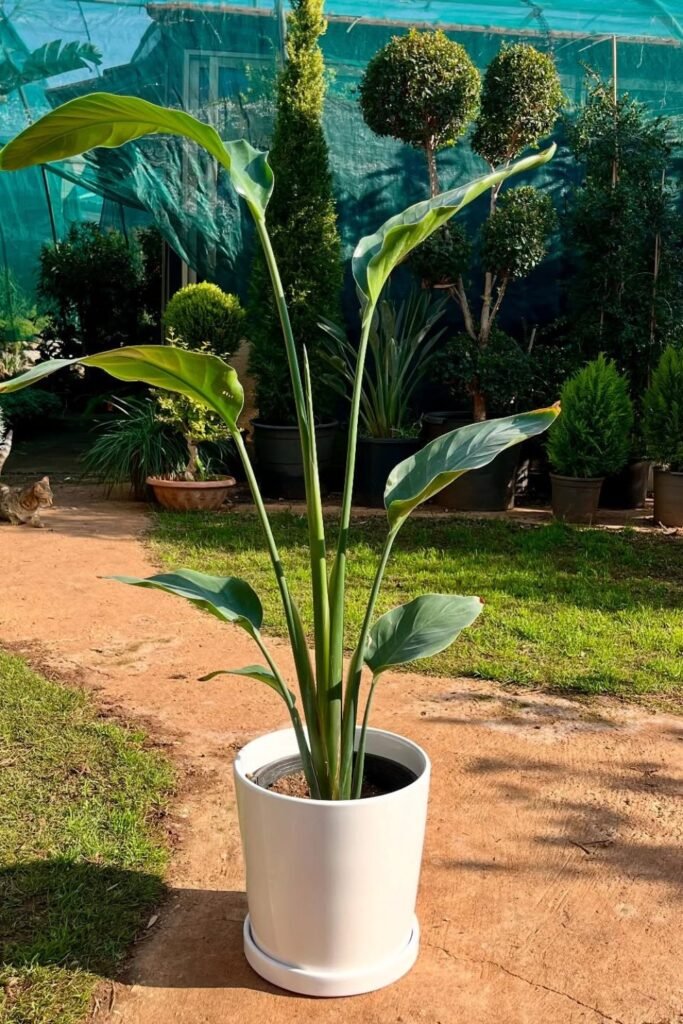
Nursery Start
Starting small gives you control over the final size and shape. This young plant will eventually need a bigger home, but for now it’s manageable and you can move it around until you find the perfect spot.
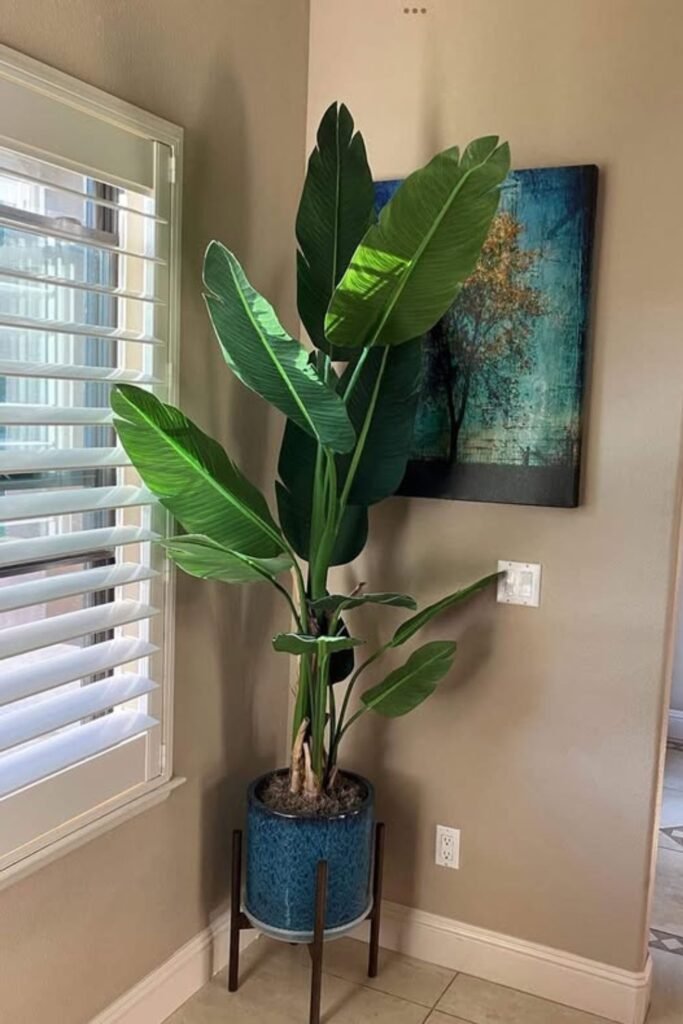
Hallway Lift
Empty hallways feel like wasted space, but furniture doesn’t always fit. A tall plant like this makes the area feel intentional.
The plant stand lifts it closer to the window light and keeps the leaves off the floor where they might get damaged by foot traffic.
FAQs
Can a Bird of Paradise survive in homes without direct sunlight?
It can survive, but don’t expect it to thrive. If your brightest window only gets indirect light, that’s workable, but rotate the plant regularly so all sides get some exposure.
The leaves will stay green and healthy, but flowering might not happen. For some people, that’s fine – the foliage is dramatic enough on its own.
How much space should I leave around a Bird of Paradise indoors?
More than you think. I give ours about 18 inches on all sides, and it still occasionally brushes the wall when the leaves unfurl.
When it’s squeezed between furniture, it starts growing lopsided as it reaches for light and space. Better to give it room from the start than try to reshape it later.
I’ve spent over four decades building a marriage, raising a family, and learning what truly matters along the way. I write about relationships, home, and navigating life’s later seasons with grace, honesty, and a little humor. My goal is to share the kind of steady, real-life wisdom that helps you feel grounded, encouraged, and a little less alone.