Garden Corner Seating Ideas That Turned My Most Neglected Outdoor Spot Into My Favorite Place to Sit

I used to walk out to our back garden and stare at that awkward corner by the fence, knowing it could be something useful but having no idea what. Frank kept suggesting we just throw some gravel down there and call it done.
The problem isn’t that small gardens don’t have room for seating — it’s that most people put furniture where it looks right instead of where it works.
I spent three summers moving a folding chair around our yard before I figured out that corners actually solve more problems than they create.
These corner seating ideas work because they use space that’s usually wasted anyway, and they keep your garden from feeling like a furniture showroom.
What Type Of Seating Works Best In Small Garden Corners?
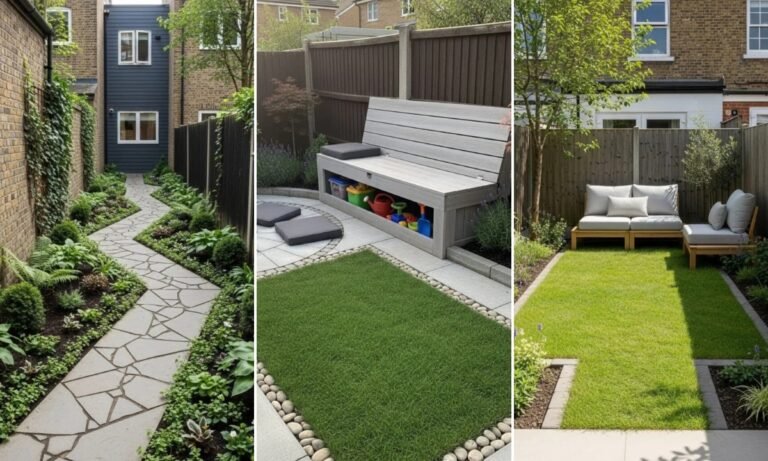
Built-in benches make the most sense if you’re not planning to move. I had Frank build ours right into the corner where two fence lines meet, and it’s been there for eight years without shifting an inch.
L-shaped seating follows the natural lines of a corner, which means you’re not fighting the space or leaving weird gaps.
Lightweight chairs work if you actually move furniture around, but be honest about whether you really do that or just think you will.
The main thing is pushing whatever you choose as close to the corner as possible. Those extra few inches in the middle of the garden matter more than you’d think.
Save this article for later! 👇👇

How Can Plants Be Used To Define A Garden Seating Corner?
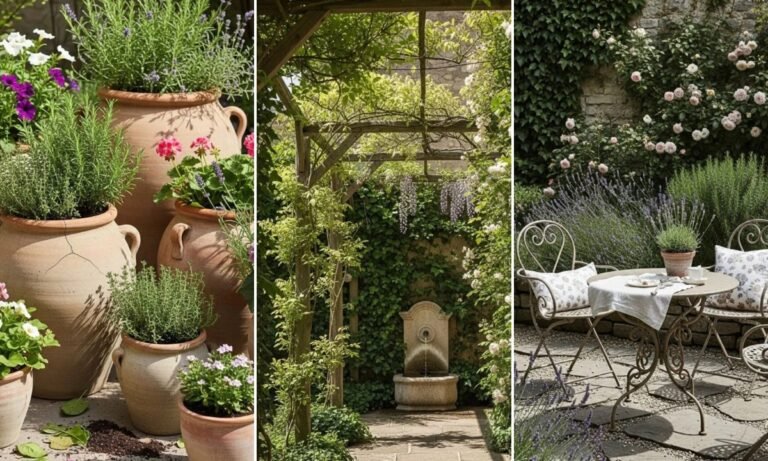
Plants do the work of walls without the heaviness. I put three large terracotta pots behind our corner bench — the ones that have been out there since 2019 and show it — and filled them with something tall enough to block the neighbor’s kitchen window.
Low planters around the sides soften everything without boxing you in, but don’t overdo it. Two types of plants maximum, or it starts looking like a garden center.
The goal is making the seating feel like it belongs there instead of like you just dragged a chair outside and hoped for the best.
Hidden Storage
Frank built our corner bench with a hinged top because I was tired of tripping over garden gloves and extra cushions.
That storage space swallows everything — pool toys when the kids were younger, Frank’s extension cords he leaves everywhere, the garden hose attachment I can never find when I need it.
It’s probably the most practical thing we’ve ever added to the garden. The seating looks clean, nothing’s cluttering up the shed, and I don’t have to make three trips to put away one afternoon’s worth of outdoor projects.

Low Seating
There’s something about sitting closer to the ground that makes a small garden feel bigger. We tried this with some outdoor cushions on a low wooden platform Frank threw together from leftover deck boards.
It’s more casual than regular chairs, which means people actually relax instead of perching like they’re ready to leave.
Good for evening conversations when you want to stay outside longer than planned

Planter Borders
I like raised planters because they create boundaries without feeling like walls. Our corner has three rectangular planters that Frank made from cedar fence pickets — nothing fancy, but they’ve held up through four winters.
The planters make it obvious where the seating area starts and ends, which keeps the space from feeling random.
Plus you get more growing space without digging up the lawn, which was never going to happen at our house.

Vertical Planters
When floor space is tight, growing upward makes sense. I mounted three simple wooden planters on the fence behind our seating area and filled them with trailing plants that don’t need much attention.
The fence looks softer, the corner feels more private, and I didn’t lose any ground space for walking or chairs.
It took Frank maybe two hours to mount them and they’ve been there for six years without causing problems, which around here counts as a major success.

Brick Seating
Frank suggested brick seating because he was tired of furniture that shifts every time the wind picks up. He built a simple brick bench into our corner using leftover bricks from a neighbor’s demolished patio.
I softened it with a wooden top and thick cushions so it doesn’t feel like sitting on a wall.
The thing is completely immovable, which I thought I’d hate but actually love

Floating Bench
Frank mounted a bench directly to the fence because I wanted the ground underneath clear for sweeping. It’s just a simple wooden seat supported by metal brackets, nothing complicated.
Having that floor space open makes the corner feel less crowded, and I can hose down the area without moving furniture.
The bench is solid enough for two people and high enough that sitting feels normal, not awkward.

Pergola Cover
We added a simple pergola above our corner seating three summers ago when the afternoon sun started getting too intense.
It’s just four posts and some cross beams, but it changes how the space feels — more like a room, less like you’re just sitting in the yard.
Frank strung some lights across the top, and now it’s where we end up most evenings without planning to.

Fold Bench
My friend Donna has one of those wall-mounted benches that folds down when she needs it. It’s perfect for her small patio where space does double duty.
Most of the time the corner stays open for her grandkids to play, but she can pull the bench down when she wants to sit with her morning coffee.
The mechanism is simple and it’s held up for three years of regular use.

Daybed Corner
When comfort matters more than looking formal, a weatherproof mattress in a corner works surprisingly well. I’ve seen this done with a simple frame and cushions that can handle rain.
It’s the kind of seating that invites you to actually stay outside for an hour instead of just checking on things.
Not what most people picture when they think garden furniture, but if you actually want to relax outdoors rather than just have somewhere to sit

Pallet Build
Frank made our first corner seating from shipping pallets he got free from work. Cut them to fit the exact space, stacked them for height, and sealed everything with deck stain.
Thick outdoor cushions fixed the comfort problem. The whole project cost maybe forty dollars and gave us custom-sized seating that actually fit our weird corner.
Save this post for later ❤️
It’s rough-looking but sturdy, and after seven years of weather it’s held up better than some store-bought furniture we’ve had.

Concrete Edge
Our neighbor built concrete seating into his raised garden beds and it’s the most practical thing I’ve seen. The seating edge doubles as a border for his vegetable plot.
He softened it with cushions that he brings in during winter, but the concrete part handles everything weather throws at it without shifting or rotting.
It’s not fancy but it works, and after five years it still looks exactly like it did when he finished it, which is more than I can say for most outdoor furniture.

Tall Grasses
I planted three clumps of fountain grass behind our corner bench because the neighbors could see right into our seating area from their kitchen window.
The grasses block the view without feeling like a wall, and they move in the breeze which keeps the corner from feeling static.
They’re tall enough for privacy but don’t block all the light, and they’ve spread just enough over four years to fill the space properly without taking over.

Bistro Setup
A small round table and two metal chairs fit neatly into our corner without overwhelming the space. I chose the smallest set I could find — the table’s maybe thirty inches across.
Perfect for morning coffee or lunch outside when the weather’s good. The chairs stack when we’re not using them.
It’s not where you’d put six people, but for everyday use it works better than a big table that dominates the whole garden.

Sunken Seating
My cousin lowered her corner seating area by maybe eight inches and it completely changed how private the space feels. She dug out the area, added retaining blocks, and built the seating right into the walls.
Stepping down into it makes it feel separate from the rest of the garden without actually blocking anything. The steps are wide enough to be safe but shallow enough that they don’t feel dramatic.
It’s more work than most corner seating projects, but if you want something that feels designed rather than placed

Curved Bench
Frank made our second bench with a gentle curve instead of sharp angles, and it softened the whole corner. The curve guides you naturally from the path to the seating without feeling forced.
It’s more work to build than a straight bench, but it makes the transition into the corner feel smooth instead of abrupt.
Good for narrow gardens where flow matters more than maximizing seating space.

Fire Feature
We added a small fire bowl to our corner seating area two years ago and it completely changed how much we use the space. Nothing fancy — just a metal bowl on a simple stand.
Fire gives you a reason to sit outside when it gets cool, and people naturally gather around it without you having to arrange conversations.
Frank was skeptical about the safety aspect, but we keep a small bucket of sand nearby and haven’t had any problems. The kids love it, especially for making s’mores when friends come over.

Trellis Shade
I mounted a simple wooden trellis above our corner bench and let climbing jasmine grow over it. Takes three seasons to really fill in, but now it provides just enough shade without blocking the view completely.
The jasmine smells good in spring and the trellis gives structure to the corner even when the plants are bare in winter.
More natural-looking than a solid roof, and you still get the benefit of partial shade during the hottest part of the day.

Modular Blocks
My neighbor uses foam blocks covered in outdoor fabric that she can rearrange depending on who’s coming over. Usually they’re pushed tight into the corner, but she can pull them apart for more people.
Each block works as a seat or a footrest, and she’s stacked them before to make a higher surface for setting drinks.
The covers are removable for washing, which matters when you have kids who spill things regularly.

Rustic Timber
Frank made our current bench from rough cedar posts he found at a lumber yard sale. It’s chunky and uneven, but it fits the casual feeling of our garden better than something too polished.
Paired with canvas cushions, it looks like it’s been there for decades even though we built it last spring.
The wood will weather to gray over time, which is fine with us. We’re not trying to maintain something that looks new forever.

Side Shelves
Frank built narrow shelves into the arms of our corner bench because I got tired of holding my coffee cup while trying to read outside.
Nothing elaborate — just wooden ledges wide enough for a mug or a book. They don’t stick out far enough to catch clothing or get in the way.
Small detail, but it makes the seating more comfortable for actual daily use instead of just looking nice.

Statement Plant
Sometimes I keep everything simple and let one large plant do most of the work. We have a Japanese maple in a big terracotta pot near our corner seating that’s been there for six years.
The tree provides some shade, the pot adds structure, and I don’t have to manage multiple plants or worry about everything looking coordinated.
One strong focal point keeps the corner from feeling scattered while still giving it personality.

FAQs
How do I stop a small garden seating corner from feeling cluttered?
Use fewer pieces, not smaller ones. I see people trying to fix small spaces by buying miniature furniture, but that just makes everything look like a dollhouse.
Build storage into whatever seating you choose so loose items disappear instead of sitting around on surfaces. And push everything as close to the actual corner as physics allows — those few extra inches in the walking area make the whole garden feel bigger.
Can garden corner seating still work if my space gets very little sunlight?
Low light doesn’t mean the space is useless. Our corner gets maybe three hours of direct sun on a good day, and it’s still where I have my morning coffee most days.
Choose plants that actually thrive in shade instead of fighting it, use light-colored cushions or wood to brighten things up, and accept that you’re creating a cozy spot rather than a sun-drenched one. Different doesn’t mean worse.
I’ve spent over four decades building a marriage, raising a family, and learning what truly matters along the way. I write about relationships, home, and navigating life’s later seasons with grace, honesty, and a little humor. My goal is to share the kind of steady, real-life wisdom that helps you feel grounded, encouraged, and a little less alone.