The Old-Fashioned Skills From My Great-Grandmother That I Still Do

There are things I do in my kitchen, my laundry room, and my sewing corner that I learned not from a book or a YouTube video, but from watching a woman who never once thought of herself as someone with skills worth passing down. She just did what needed doing. No fuss about it either, which I still admire. My great-grandmother kept a household running the way you keep a garden going… quietly, consistently, with a kind of practical knowledge that lived in her hands more than her head. I’ve thought about her a lot over the years, and I’ve noticed that many of the things she did without thinking are the very things I reach for when I want to feel grounded.
This list is my small attempt to honor what she knew. Some of it is about saving money, some of it is about slowing down, and some of it is honestly just about the satisfaction of doing a thing well. If any of it sounds familiar to you, I think you’ll understand exactly what I mean. Take a look below and see what stirs something up.
Baking Bread Without a Recipe or a Scale
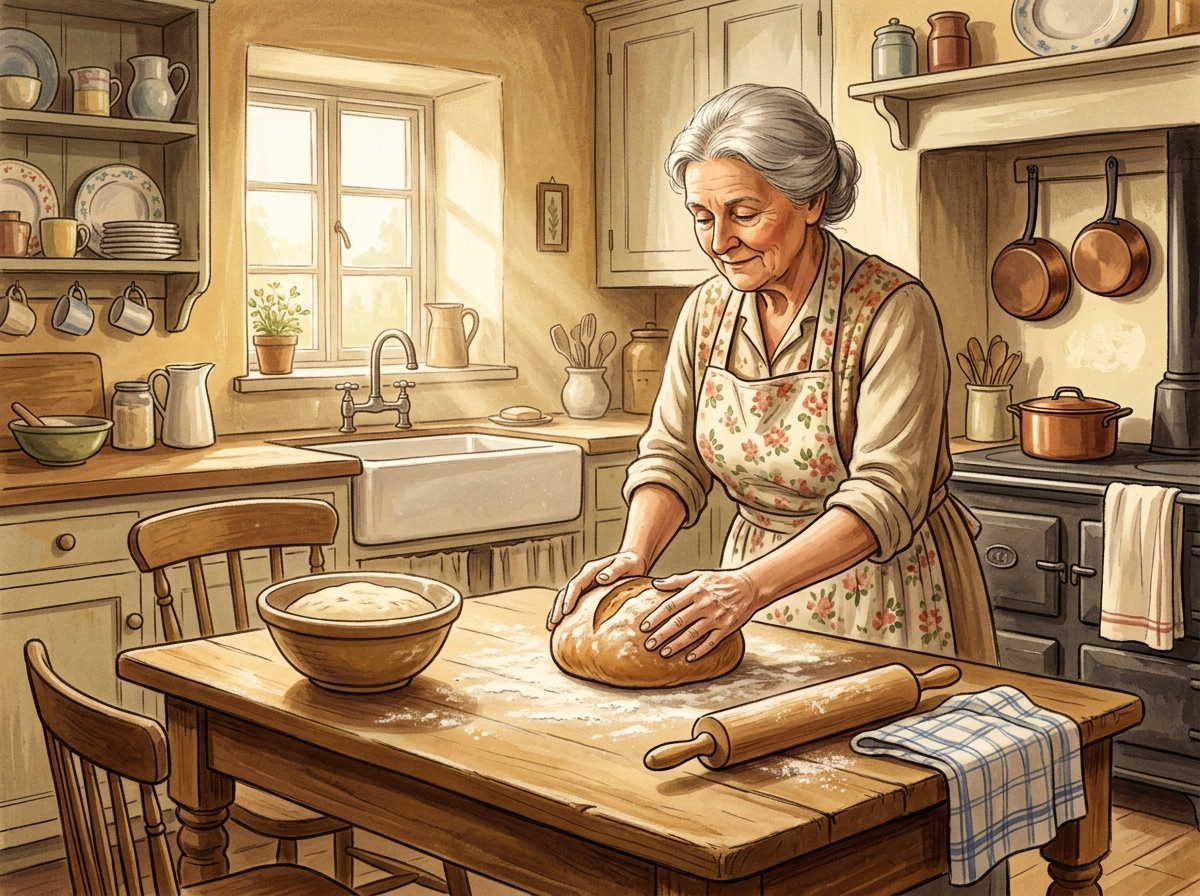
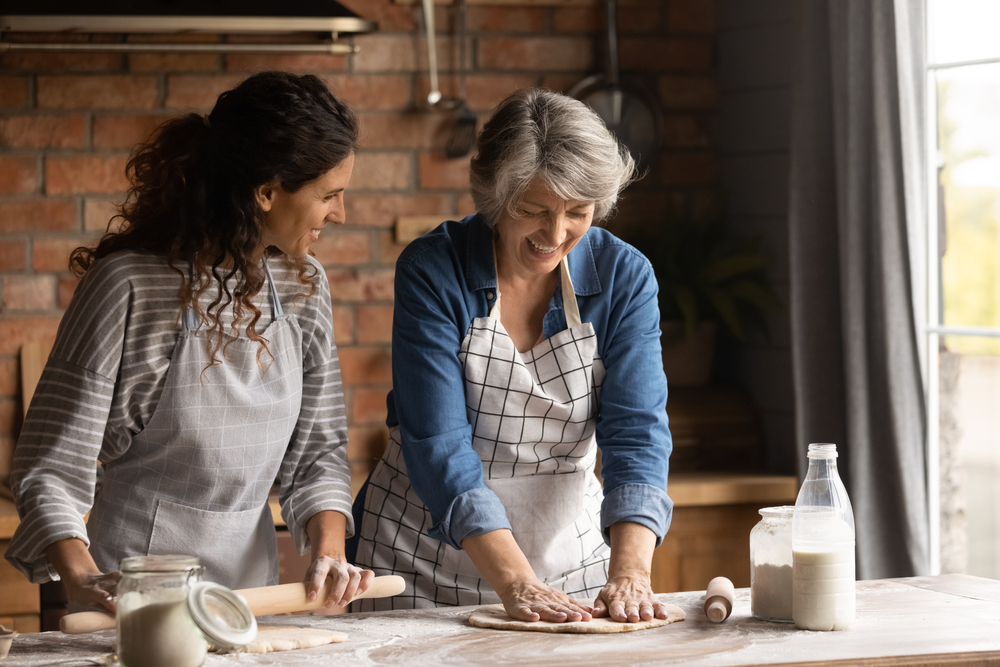
There is something that happens when you bake bread often enough that your hands start to know the dough before your brain catches up. My great-grandmother never measured flour with anything other than her palm and her judgment, and I remember thinking as a child that it seemed like magic. It took me awhile to realize it was just repetition, the kind that builds a quiet confidence you can’t get from following instructions. The feel of dough that needs more flour, or the way a loaf sounds hollow when it’s done, are things no recipe can fully teach you.
Starting without a recipe feels scary at first, and honestly, a simple written guide is a fine place to begin. But the real skill is in learning to pay attention to how the dough behaves on a cool morning versus a humid afternoon, to how your particular oven runs a little hot. Once you stop watching the clock and start watching the bread, something shifts. That’s when it becomes yours. And if the kitchen smells like warm flour and yeast, well, you’re probably doing something right lol
The Lost Art of Darning Socks So Well Nobody Notices
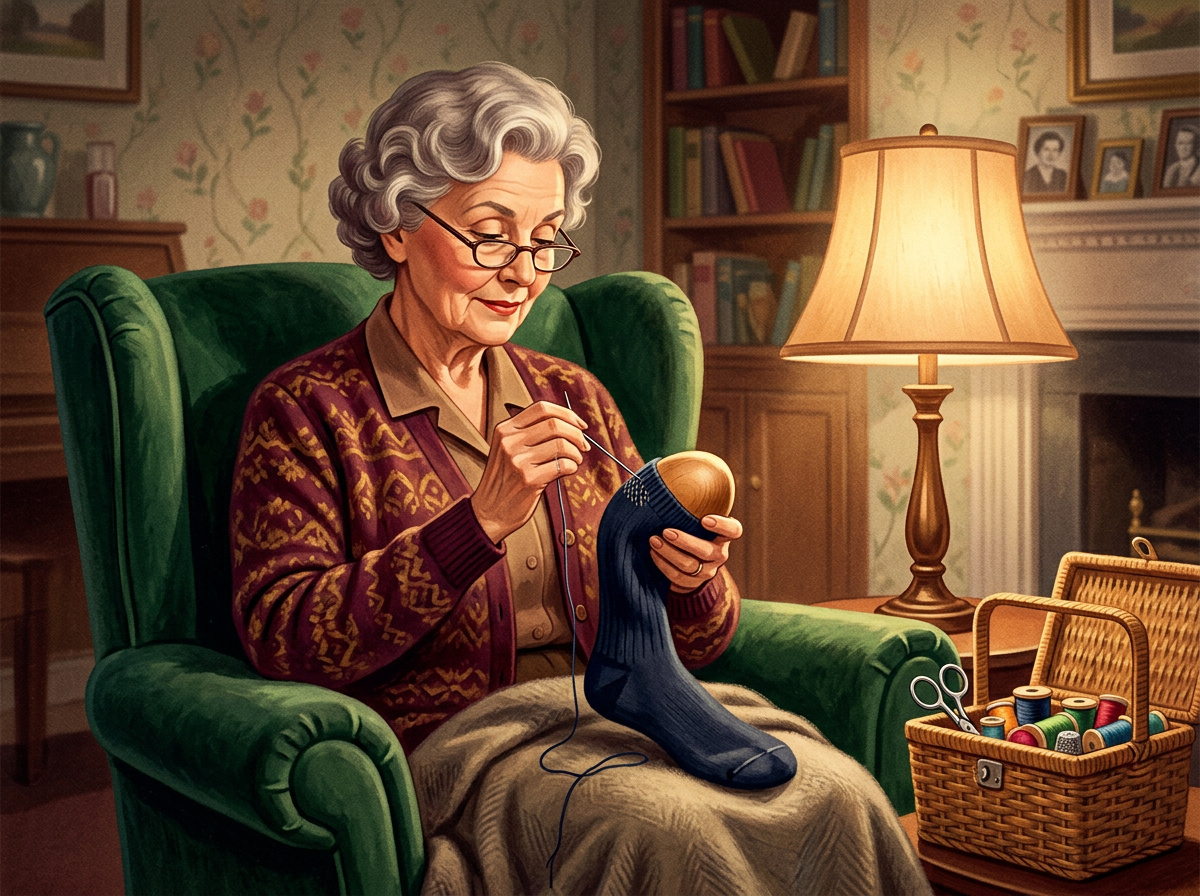
Darning is one of those skills that sounds fussy until you actually try it, and then it starts to feel almost meditative. My great-grandmother had a wooden darning egg that I still own, and she used it with the same ease most of us use a stapler. A proper darn, done with the right weight of thread and a little patience, disappears into the fabric and you genuinely cannot tell where the hole was. That is the goal, and it is more achievable than it sounds once you understand the basic weaving technique.
The reason I still do this, honestly, is not just frugality, though that matters too. It’s that a good pair of wool socks deserves better than the bin after one thin spot appears. There is also something satisfying about repairing something with your own hands and putting it back into use. Nothing wasteful about that. My goodness, we used to understand this better, I think. If you have never darned before, a simple YouTube search will show you the stitch, and a wooden darning mushroom is a small, inexpensive thing worth having in your mending basket.
She Never Bought Broth, and Neither Do I
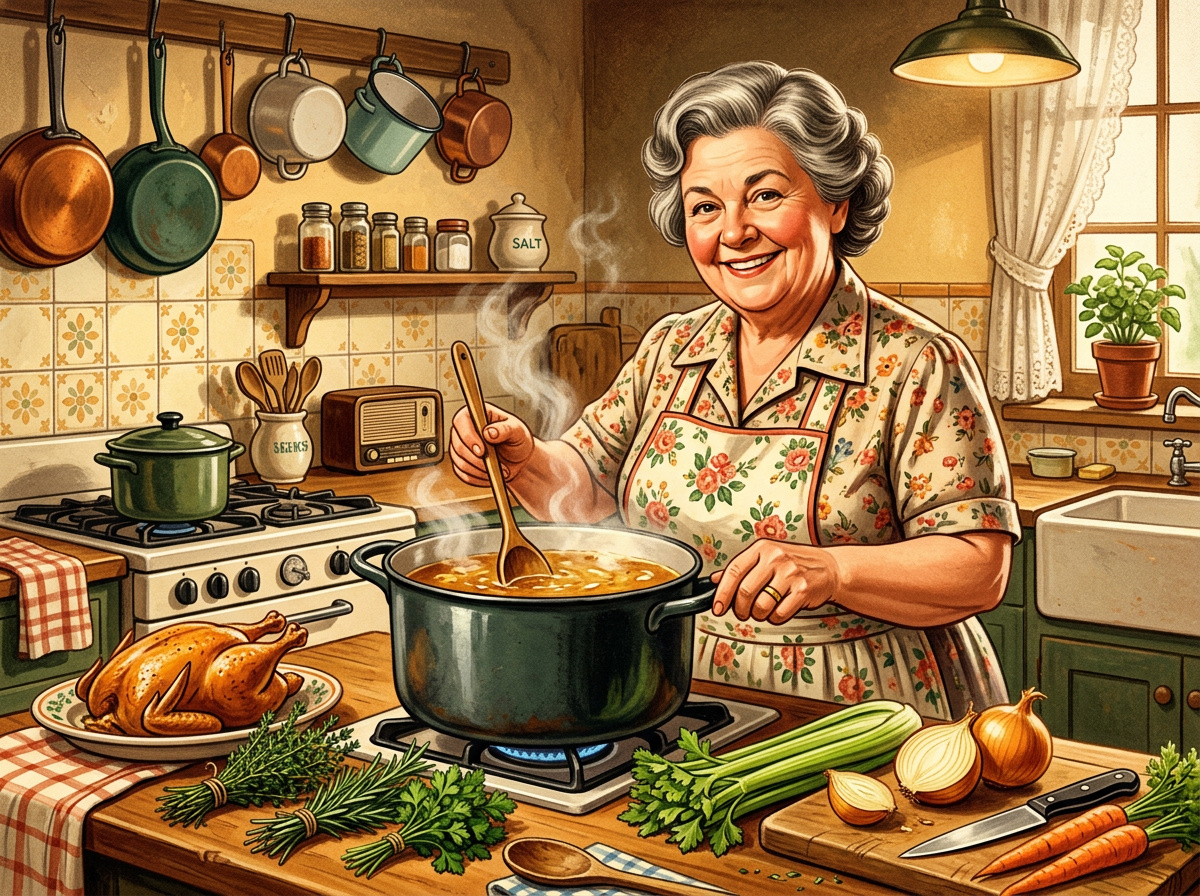
I genuinely cannot remember the last time I bought a carton of stock from the grocery store, and that feels like something worth saying out loud. My great-grandmother kept a small pot going on the back of the stove whenever there were bones or vegetable trimmings to use, and the smell of it is one of my clearest kitchen memories. Homemade broth is not just thriftier than store-bought – it is richer, more gelatinous, and deeply more flavorful in a way that makes everything you add it to taste more like itself.
The method is simple enough to do without thinking once you’ve done it a few times. Roasted chicken carcass, a few celery tops, half an onion, a bay leaf, a little cold water, and time – that’s really most of it. I keep a bag in the freezer for vegetable scraps, onion skins, carrot peels, and parsley stems, and when it’s full, I make a pot of vegetable broth. Nothing goes to waste… or at least, very little does if I’m paying attention. It’s one of those habits that once you start, you wonder what took you so long.
Putting Up Tomatoes in August, One Jar at a Time
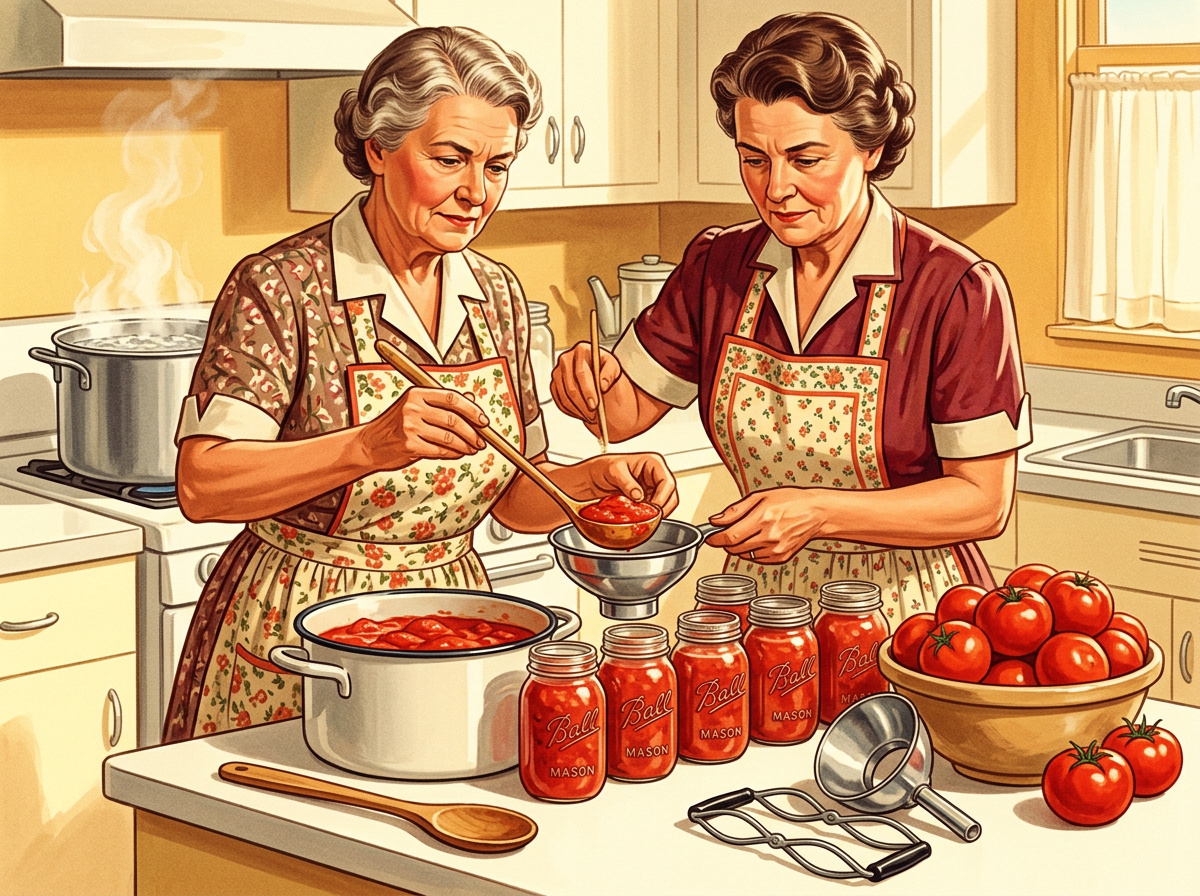
There is a week every August when my kitchen smells exactly like hers did, and I look forward to it all year. Canning tomatoes is one of the most satisfying preserving tasks I know, partly because August tomatoes are extraordinary and partly because opening a jar of them in February feels like a small act of time travel. My great-grandmother put up dozens of quart jars every summer, and while I don’t do quite that many, even a modest batch – ten or twelve jars – carries you a long way through the colder months.
If you’ve never canned before, whole or crushed tomatoes in a water bath canner are genuinely one of the safest and most forgiving places to start. The acidity of tomatoes makes them well-suited to home canning, and the technique, once learned, becomes almost routine. It does take a full day, or close to it, and it is warm, steamy work. But there is something my great-grandmother understood that I’ve come to understand too – that putting food by for winter is not a chore so much as a form of care. For yourself, for your household. It feels good in a way that is hard to explain.
Hanging Laundry Outside Even When a Dryer Is Available
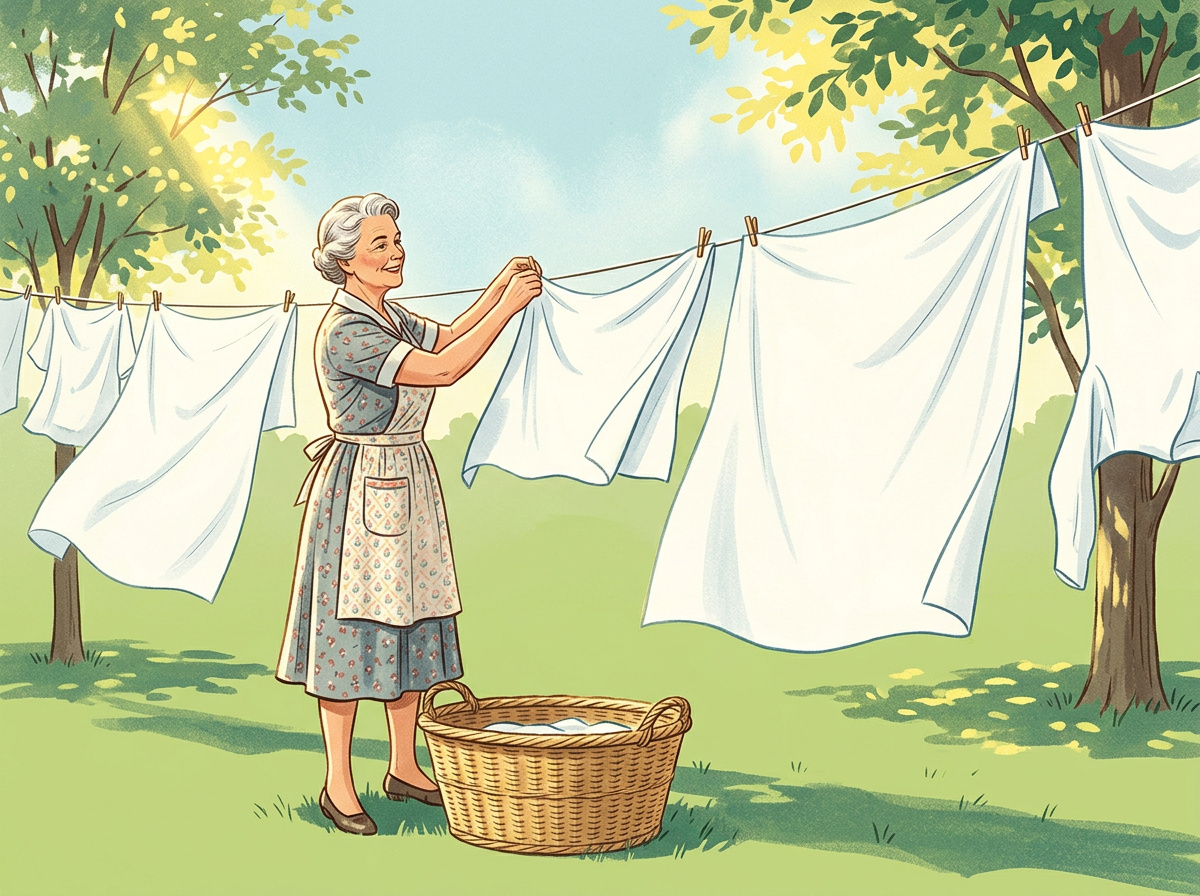
I have a perfectly good dryer and I use it in winter without any guilt at all. But from late spring through early fall, most of our laundry goes on the line, and I’ve never stopped appreciating what that does for fabric. Line drying is gentler on clothing than heat drying – it fades things less, preserves elastic, and extends the life of good pieces considerably. My great-grandmother’s linens lasted for decades, and I think the way she cared for them had everything to do with that.
There’s also something harder to name – the smell of sheets that have dried in actual sunlight and outdoor air is one of life’s quiet pleasures. Honestly, no fabric softener comes close. My great-grandmother had a specific way she hung things – sheets folded over the line to dry evenly, cotton shirts hung by the hem to avoid shoulder bumps, dark colors in the shade. Small things, learned over time. I still hang shirts by the hem. It’s the kind of detail you pick up from watching someone who did it every week of her adult life, and once you know it, you never forget.
What Her Button Tin Taught Me About Waste
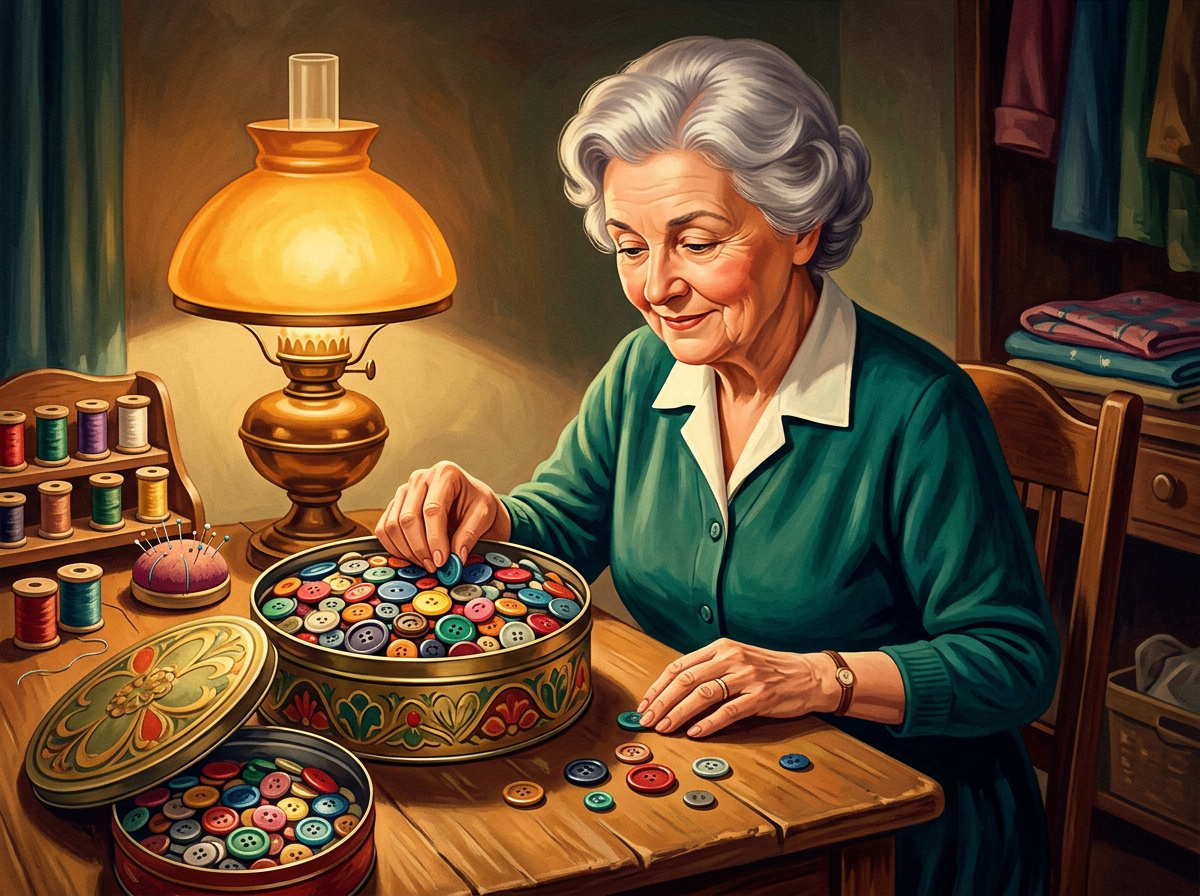
My great-grandmother had a large biscuit tin filled entirely with buttons, and going through it as a child felt like treasure hunting. Every button had come from something worn out – a coat, a blouse, a good wool cardigan that had finally given up. Before a garment was thrown away, every useful thing was removed first. Buttons, zippers, hooks and eyes, even patches of good fabric. Nothing left a household that could still serve a purpose somewhere. That is a discipline I find increasingly hard to argue with, the older I get.
I keep my own button collection now, and I use it regularly – replacing a lost button on a jacket, swapping plain buttons for something more interesting on a thrift store find. It costs nothing and it extends the life of things you already own. But beyond the practicality, there is something my great-grandmother’s tin quietly modeled: the idea that objects deserve a little more consideration before they’re tossed out. I still have buttons I have no earthly use for, but I keep them anyway. Just incase.
Growing a Kitchen Garden in a Tiny Backyard
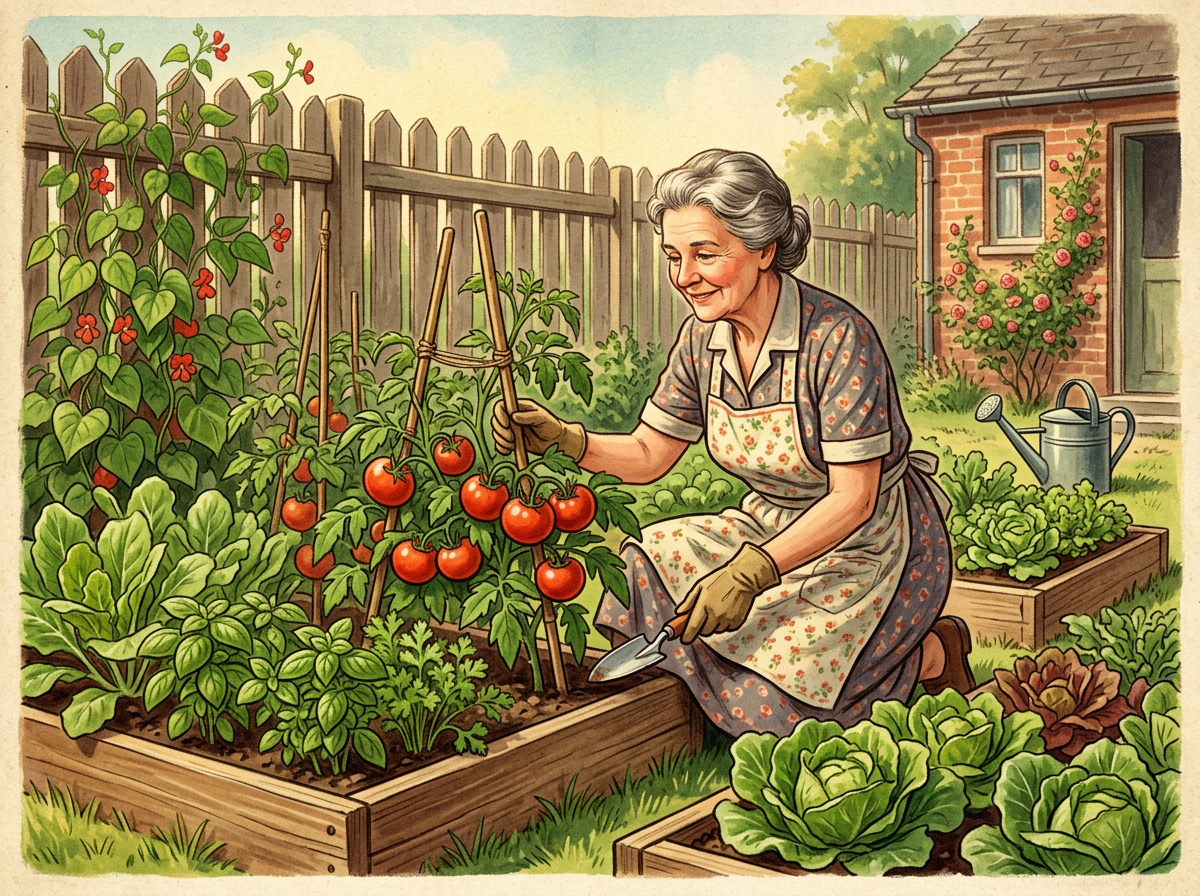
My great-grandmother didn’t have much space either, and I used to wonder how she got so much out of a narrow strip of yard behind a small house. The answer, I’ve come to understand, is that she thought in terms of what she actually used, not what looked impressive. Herbs along the fence. A few tomato plants. Pole beans going vertical instead of sprawling. She grew with purpose, not ambition, and nothing was wasted.
I do the same thing now in a backyard that most people would call too small to bother with. And honestly, even a few pots of basil and a climbing cucumber can change how you cook all summer. The key she seemed to follow was planting close to the kitchen door so that grabbing a handful of something fresh felt easy enough to do every single day. Convenience is what makes a kitchen garden actually work. Nobody wants to march across the yard in house slippers just for three basil leaves, lets be honest lol
Rendering Lard the Old Way (and Why It Tastes Better)
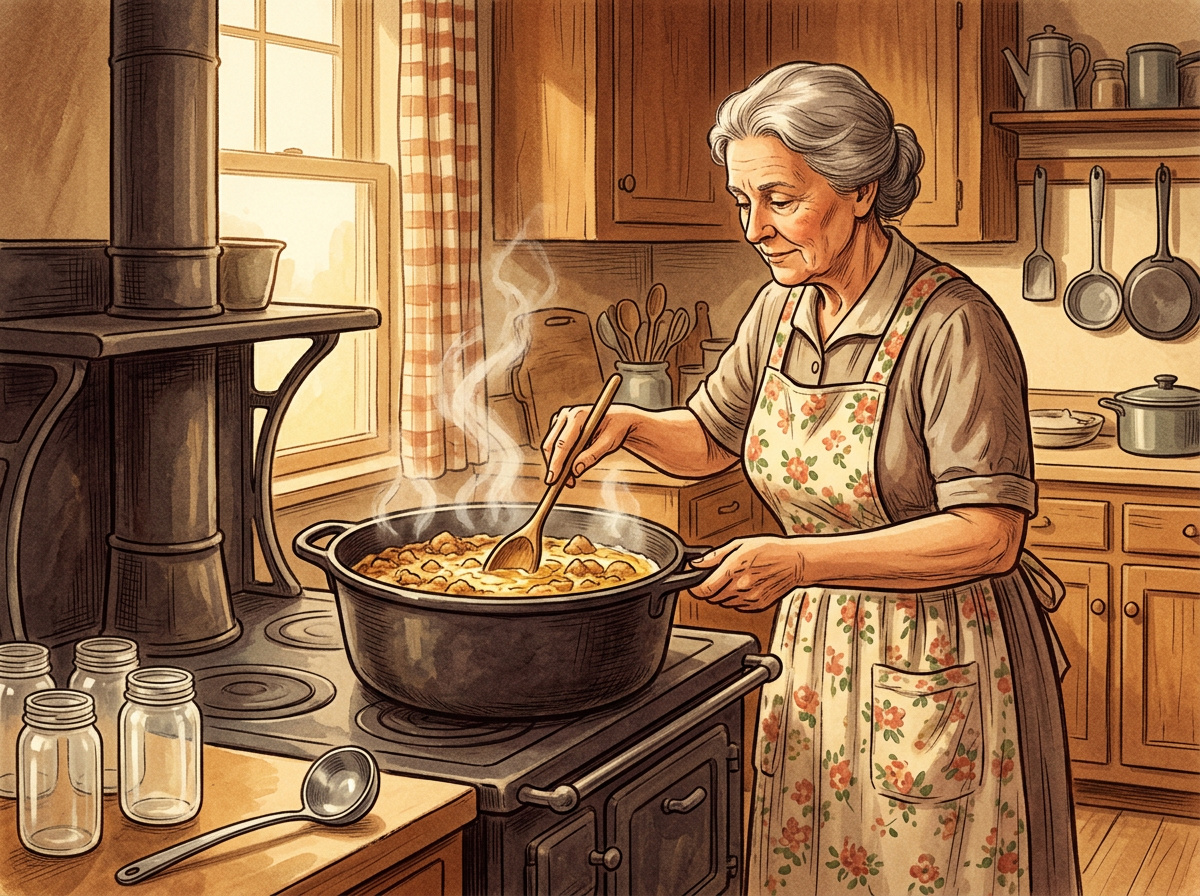
I know lard has a reputation problem, and I understand why. But it took me a while to realize that the white blocks sold in grocery stores are not really the same thing as home-rendered lard, which is pale, clean-smelling, and remarkably delicious. My great-grandmother rendered her own from pork fatback on the stovetop, low and slow, and the smell that filled the kitchen was nutty and gentle, nothing like what people imagine when they wrinkle their noses at the word.
Rendered lard makes pie crust flakier than anything butter alone can manage. It’s what I use for frying eggs when I want them to taste the way eggs used to taste. The process itself is simple – just fat, a heavy pot, and patience – and you end up with both the lard and cracklings, which my great-grandmother considered a cook’s reward for doing the work. I still do too.
Reading the Sky Before Deciding to Start a Project Outside
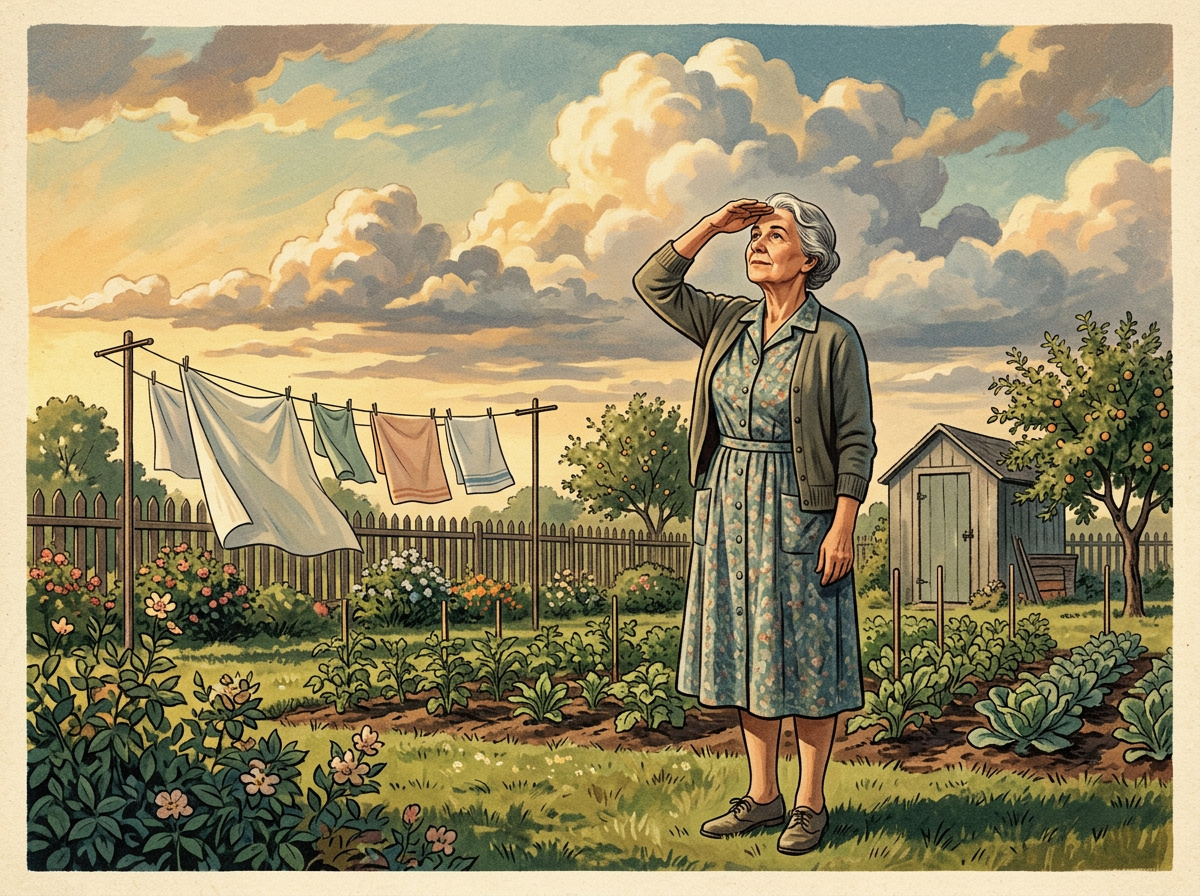
This one sounds almost quaint until you’ve hung a full line of laundry only to have it soaked by an afternoon thunderstorm, or started whitewashing a fence in weather that turned humid before you’d finished the first section. My great-grandmother watched the sky the way some people check their phones now – habitually, and with real attention. She knew what a certain kind of morning haze meant by noon, and she planned her day around what she saw, not what she hoped for.
I’ve picked up enough of this to feel it’s genuinely useful. A ring around the moon the night before, a red sky at dawn, the way the leaves on certain trees flip over before rain – these aren’t superstitions so much as observations accumulated over time. Weather apps are helpful, but they don’t always catch what a practiced eye can. There’s a quiet confidence that comes from knowing how to read what’s already in front of you.
She Could Sew a Dress From a Flour Sack
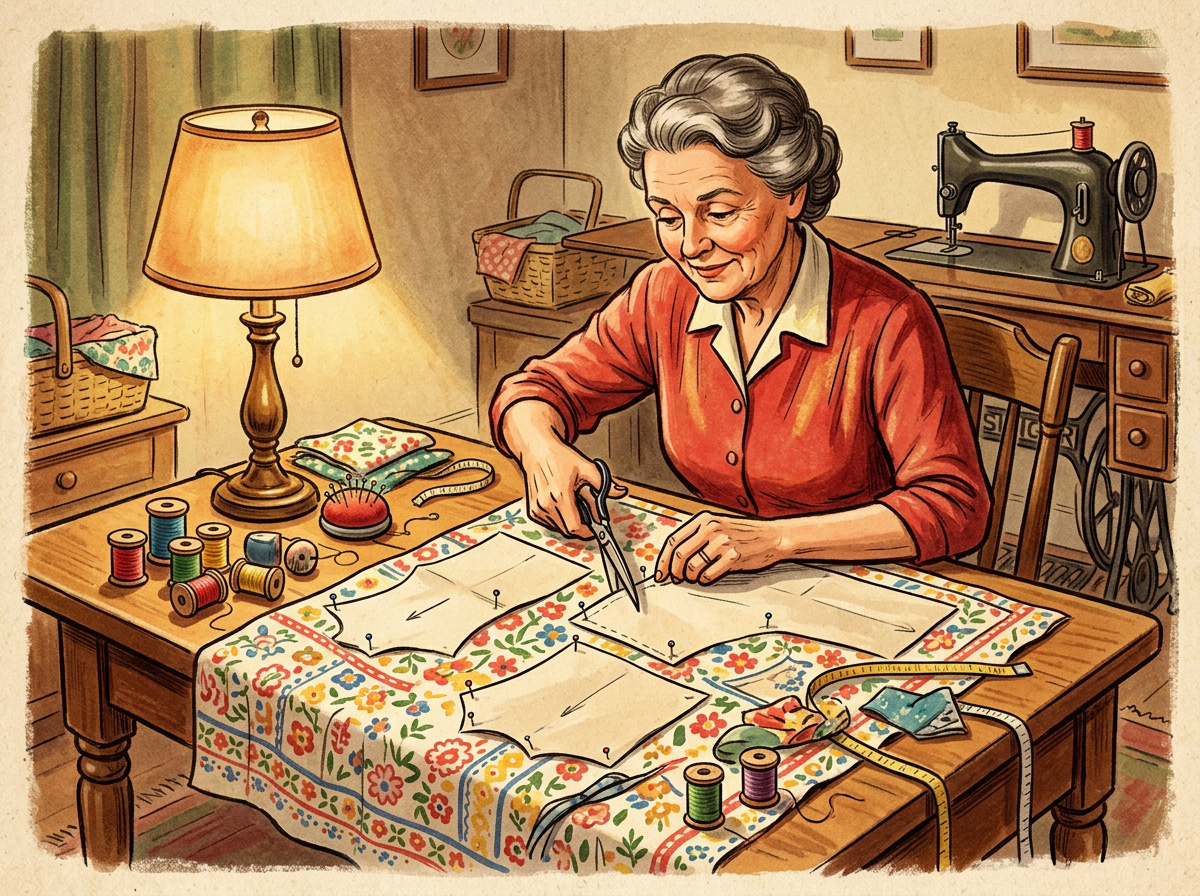
Flour used to come in printed cotton sacks, and mills eventually started using cheerful patterns precisely because they knew women were sewing with them. My great-grandmother kept every sack, washed and folded, and she could look at a stack of them and already see a garment taking shape. That kind of spatial and creative thinking – seeing potential in what others see as scraps – is something I’ve tried to carry forward, even if my materials are different now.
I don’t sew from flour sacks, but I do sew from remnants, from thrifted fabric, from pieces of worn clothing that still have good yardage in them. The principle is the same. She taught me, without ever meaning to teach me anything, that a good sewer thinks in transformation. The fabric in front of you is not what it is – it’s what it could be. That shift in perspective is genuinely useful, and I find myself applying it far beyond the sewing room.
Save this post for later ❤️
Making Vinegar From Apple Scraps Instead of Tossing Them
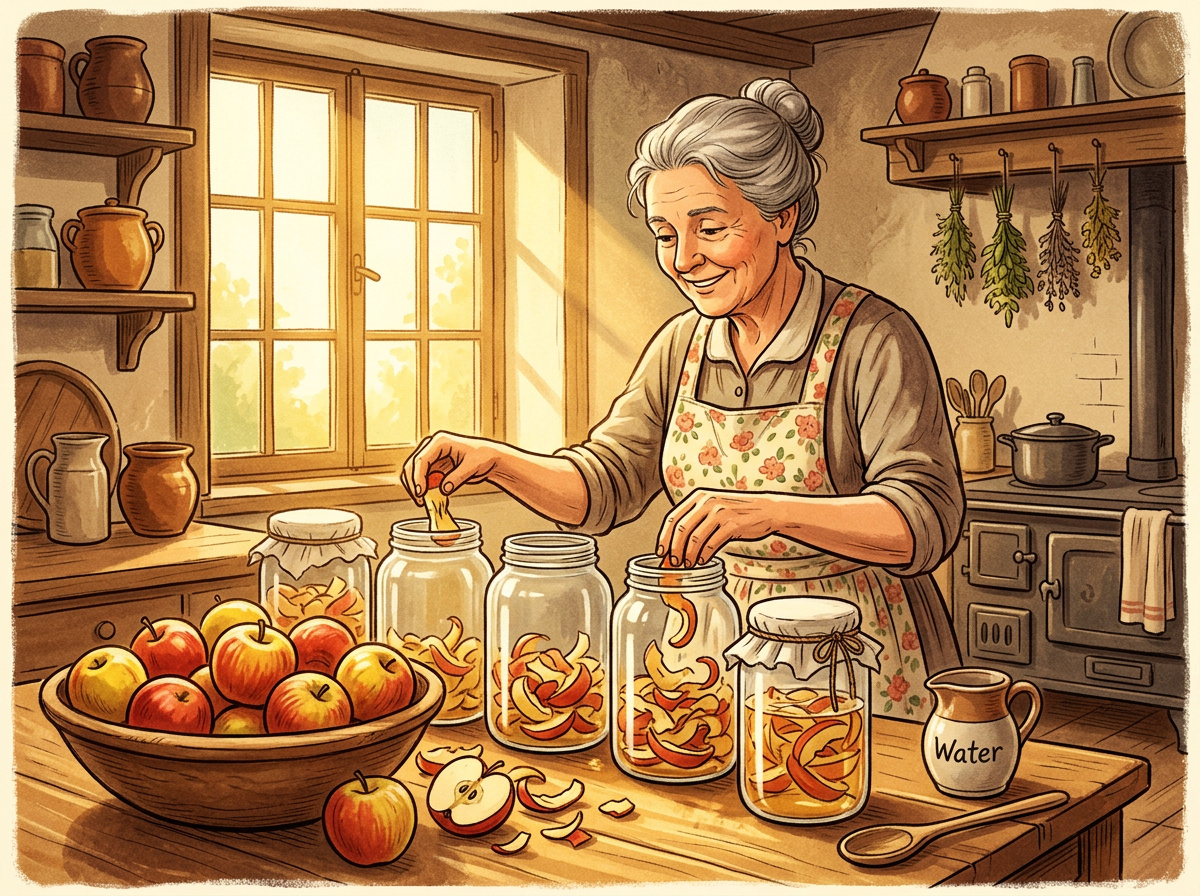
Every fall when I peel and core apples for applesauce or pie, the scraps go into a jar with water and a little sugar instead of into the compost. It takes a few weeks and almost no effort, and what you end up with is real apple cider vinegar – cloudy, tangy, with that live mother that people now pay a premium for at health food stores. My great-grandmother made it as a matter of course, not as a wellness practice. She just hated throwing away anything that still had use in it.
The process is forgiving and slow in the best way. You cover the jar with cloth, stir it occasionally, and let time do the work. I use the finished vinegar in salad dressings, for cleaning, for a rinse after washing my hair. It’s one of those things where the making of it feels almost as good as the having of it – a small, satisfying loop that starts with apple peels and ends with something genuinely useful.
The Specific Way She Kept a Cast-Iron Skillet Perfect
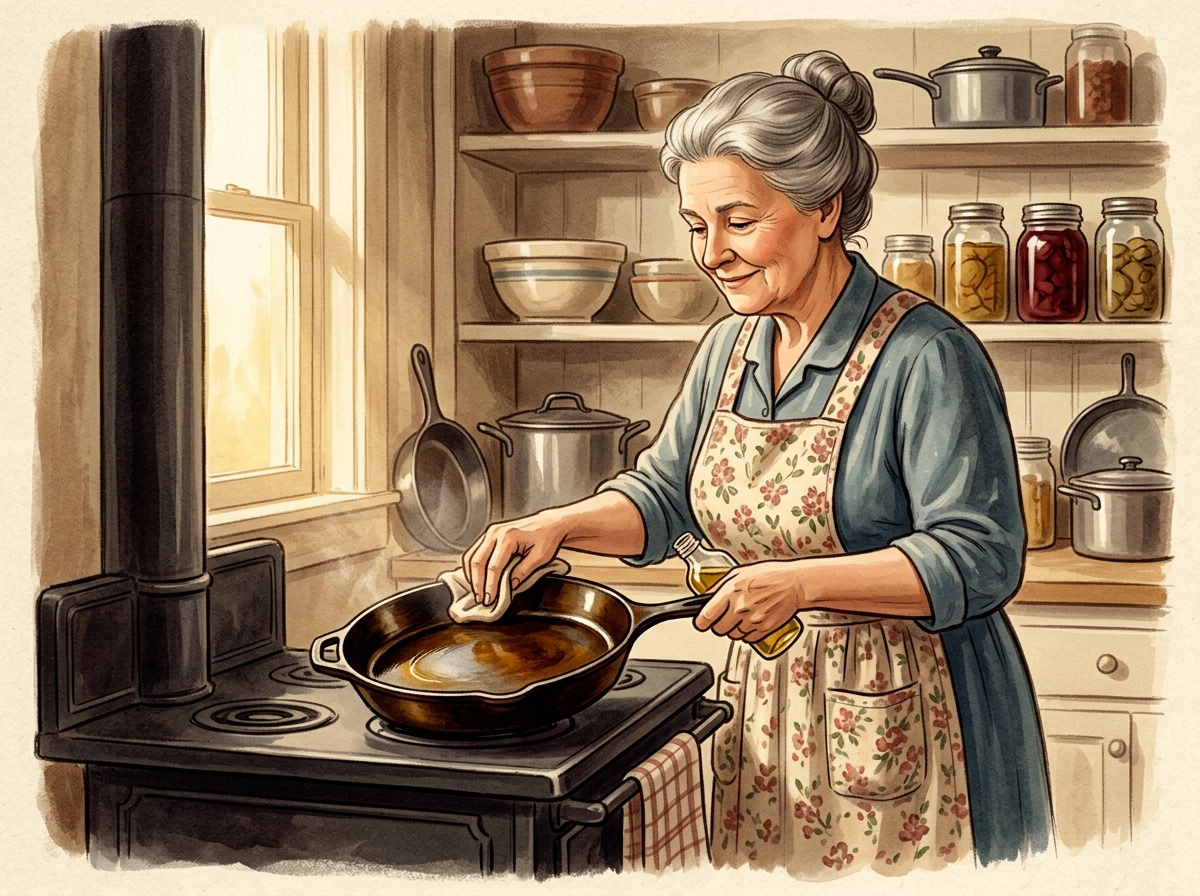
I inherited a cast-iron skillet that is older than I am, and the reason it still cooks beautifully is that my great-grandmother treated it with a kind of consistent, unhurried care that I’ve tried my best to continue. She never soaked it. She dried it over the heat, not with a towel. She rubbed a thin layer of fat into it while it was still warm, every single time. That routine is simple, almost automatic, and is exactly why the surface is as smooth and dark as it is after all these years.
Cast iron responds to habits more than to products or techniques. The people who have trouble with it are often trying to fix it all at once rather than just caring for it steadily over time. My great-grandmother didn’t think of seasoning as a project. It was just what you did after you cooked. Wipe, dry, oil, done (and don’t leave it soaking in the sink, unless you want every old woman in your family haunting you). I’ve found that framing it that way makes the whole thing feel less fussy and much more sustainable, which is probably how she thought about most things, honestly.
Pickling Cucumbers Without a Single Packet Mix
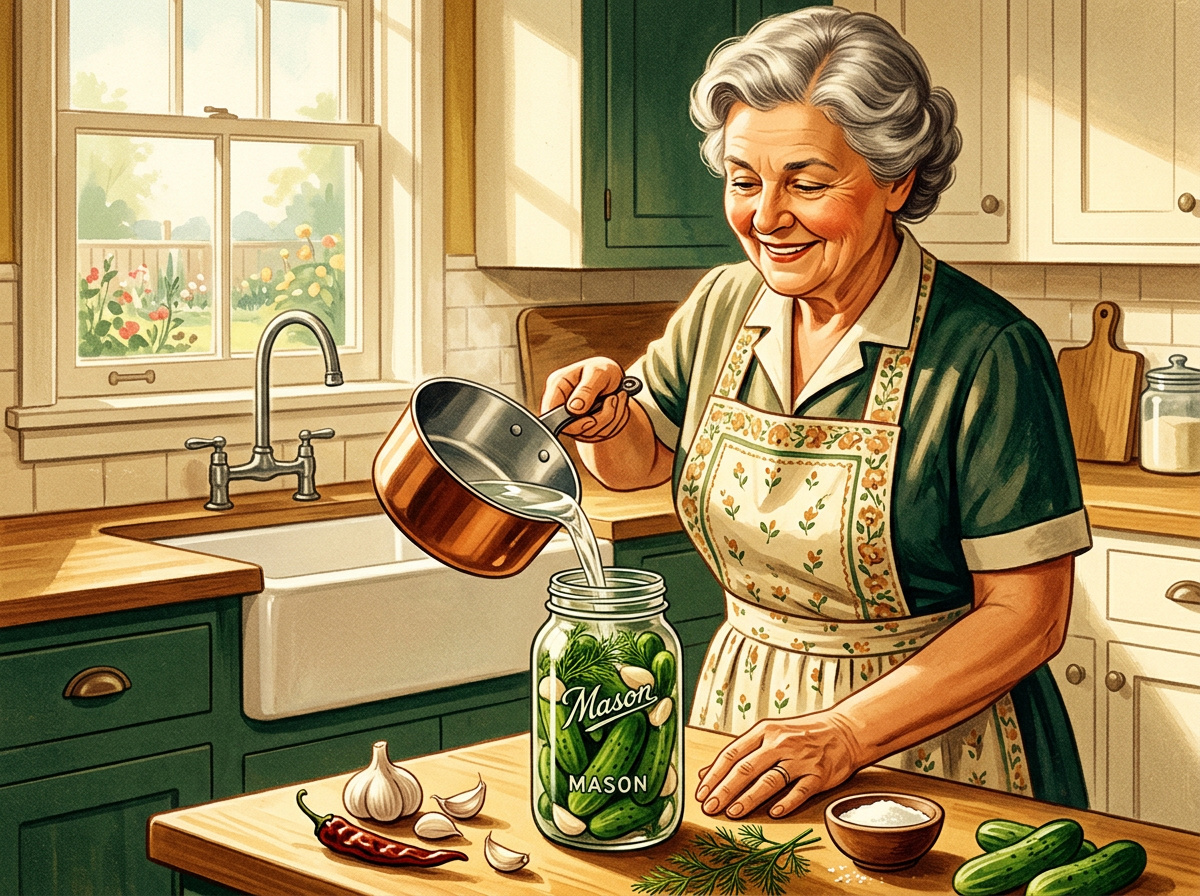
My great-grandmother would have found those little foil seasoning packets genuinely puzzling. She knew what went into a brine because she had made it enough times that it lived in her memory like a phone number you never have to look up. A good pickle brine is just vinegar, water, salt, and whatever aromatics you have on hand – dill, garlic, a dried pepper, maybe a grape leaf to keep things crisp. That’s honestly all there is to it, and once you’ve done it a few times, you’ll wonder why it ever felt complicated.
What I’ve come to appreciate most is how much room there is to adjust things to your own taste. A packet gives you one result, every time. Making your own means you can go garlicky one year and heavy on the dill the next. I’ve also found that using a cold brine for refrigerator pickles is a wonderful starting point if hot water bath canning still feels like a stretch. You get crisp, flavorful pickles in a couple of days, no special equipment required, and the satisfaction is very real.
Knitting by Feel, Not by Pattern
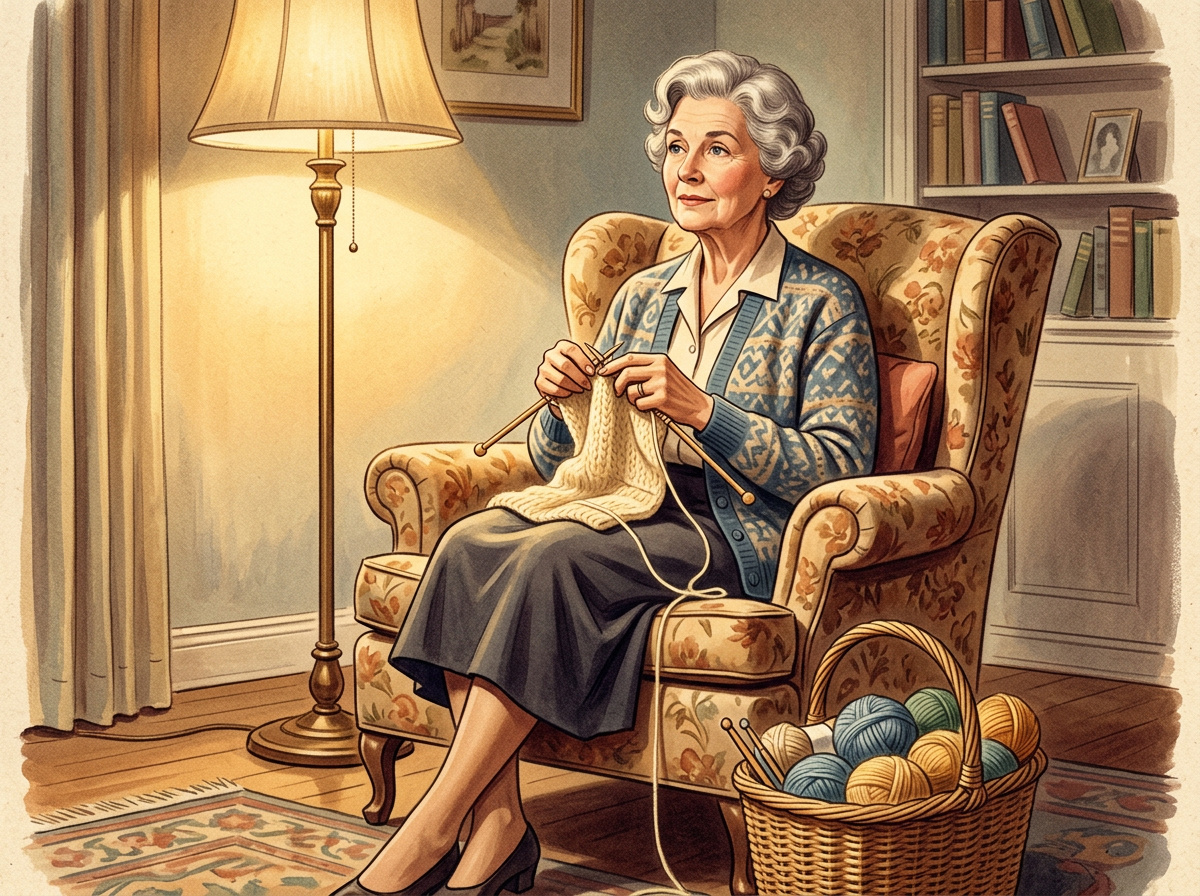
I want to be clear that I do use patterns, especially for anything with shaping or sizing that really matters. But my great-grandmother knitted the way she did most things – by feel, by memory, by a kind of quiet attention that didn’t require instructions written down on paper. She could cast on a pair of mittens or work up a dishcloth without so much as a glance at anything. That kind of knitting, the simple, rhythmic, almost meditative kind, is something I’ve tried to hold onto, and it has made me a much calmer knitter overall.
What I’ve noticed is that once you really internalize the basic stitches, your hands start to work independently in a way that frees your mind entirely. A stockinette hat, a simple ribbed scarf, a basket-weave dishcloth – these things don’t need a pattern, they need practice and a little trust in yourself. Starting with something small and familiar, something you’ve made before, is a good way to find that rhythm. It’s one of the most genuinely relaxing things I do, and it costs almost nothing if you’re working with stash yarn.
Saving Seeds From This Year’s Garden for Next Spring
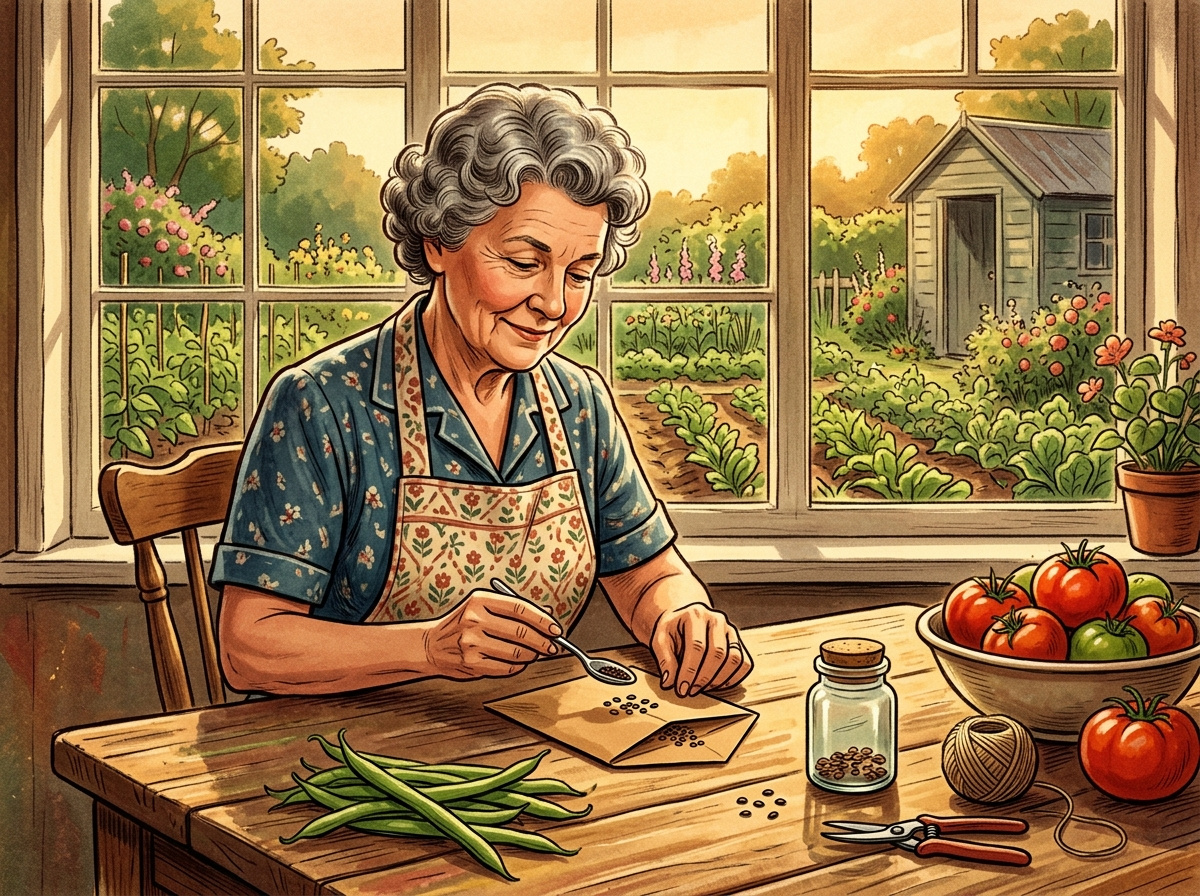
There is something quietly radical about not buying seeds every single year, though I doubt my great-grandmother thought of it that way. She just saved what she had because it was the sensible thing to do, and because she knew that the tomatoes she’d grown last summer would give her tomatoes she could count on next summer. Seed saving closes a loop that modern gardening tends to break, and once you start doing it, even in a small way, it changes how you see your garden entirely – less like a purchase and more like a conversation that continues from year to year.
The easiest seeds to start with are the ones that practically save themselves: dried beans left on the vine, lettuce that has bolted, tomatoes from your best-producing plant of the season. For tomatoes specifically, the fermentation method – letting the seeds sit in a little water for a few days before rinsing and drying them – is worth learning once and then you’ll do it every year without thinking. Store seeds in paper envelopes in a cool, dry place, label them clearly with the year, and you’ll go into spring feeling more prepared than a seed catalog could ever make you feel.
Hand-Washing Delicates in a Basin, Not a Machine
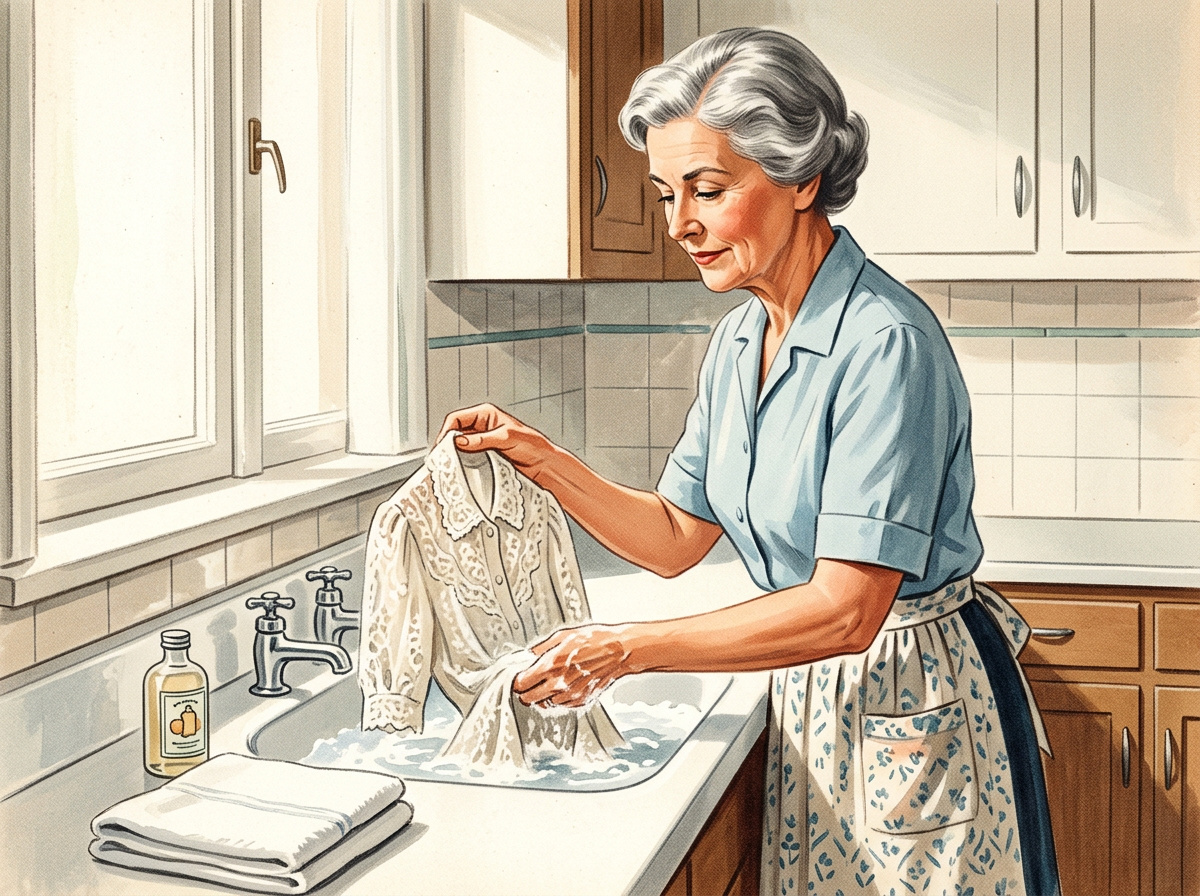
I’ve lost enough blouses and cardigans to a washing machine to have learned this lesson properly, and I think of my great-grandmother every time I fill the basin with cool water and a small squeeze of gentle soap. She didn’t have a machine for much of her life, so hand-washing wasn’t a special-occasion thing for her – it was just laundry. But the care she brought to it was something I noticed even as a child. Delicate fabrics genuinely last longer when they’re handled gently by hand, and once you get into the habit, it takes maybe five minutes and feels almost soothing.
The things most worth hand-washing are anything labeled delicate or dry-clean-only that you suspect could tolerate gentle water, silk or silk-like blouses, lace, wool knits that you don’t want to shrink, and anything with embellishments that a machine drum would catch and pull. The method is simple: cool water, a small amount of soap, a gentle press and soak rather than any scrubbing or wringing, and then a careful roll in a clean towel before laying flat to dry. It’s one of those small things that makes good clothes last years longer than they otherwise would.
Knowing When Food Has Turned Without Reading a Label
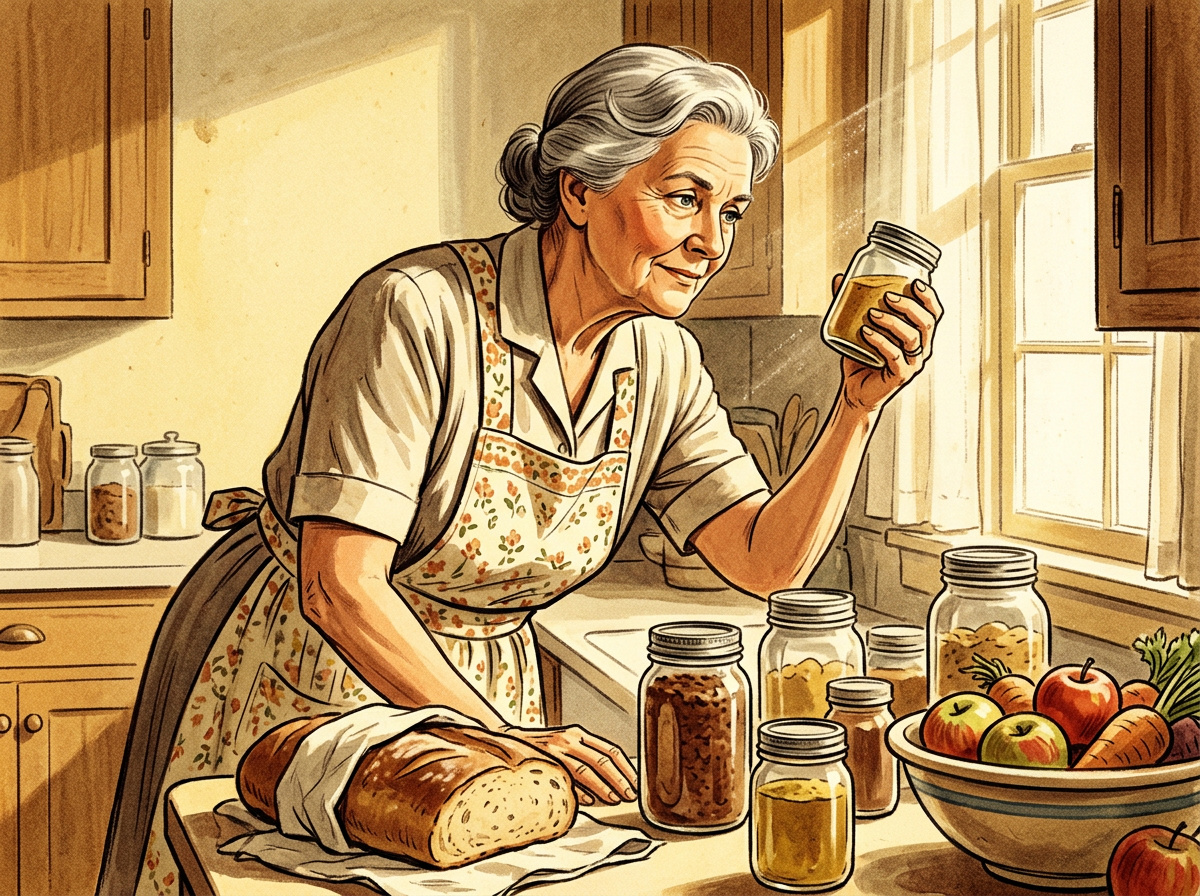
Expiration dates are a relatively modern invention, and my great-grandmother navigated without them entirely. She used her nose, her eyes, and a kind of accumulated knowledge about how things behave when they start to go. I remember watching her smell milk, press the surface of bread, and check the color of leftover broth with a matter-of-fact confidence that I found impressive even as a child. Learning to trust your senses around food is genuinely useful and not at all dangerous when you understand what you’re actually looking for, which is something most of us were never really taught.
The basics are worth knowing clearly: sour or off smells, visible mold, slimy textures on meat or produce, and any unusual color changes are real signals, not just guidelines. A best-by date on a can of beans, on the other hand, is mostly about quality, not safety. Dry goods, hard cheeses, and many condiments last considerably longer than their labels suggest. Learning the difference between food that is genuinely spoiled and food that is simply past its prime has saved me a lot of money over the years, and it has made me a more confident and less wasteful cook, which I think would have pleased her very much.
She Could Stretch One Chicken Into Four Meals
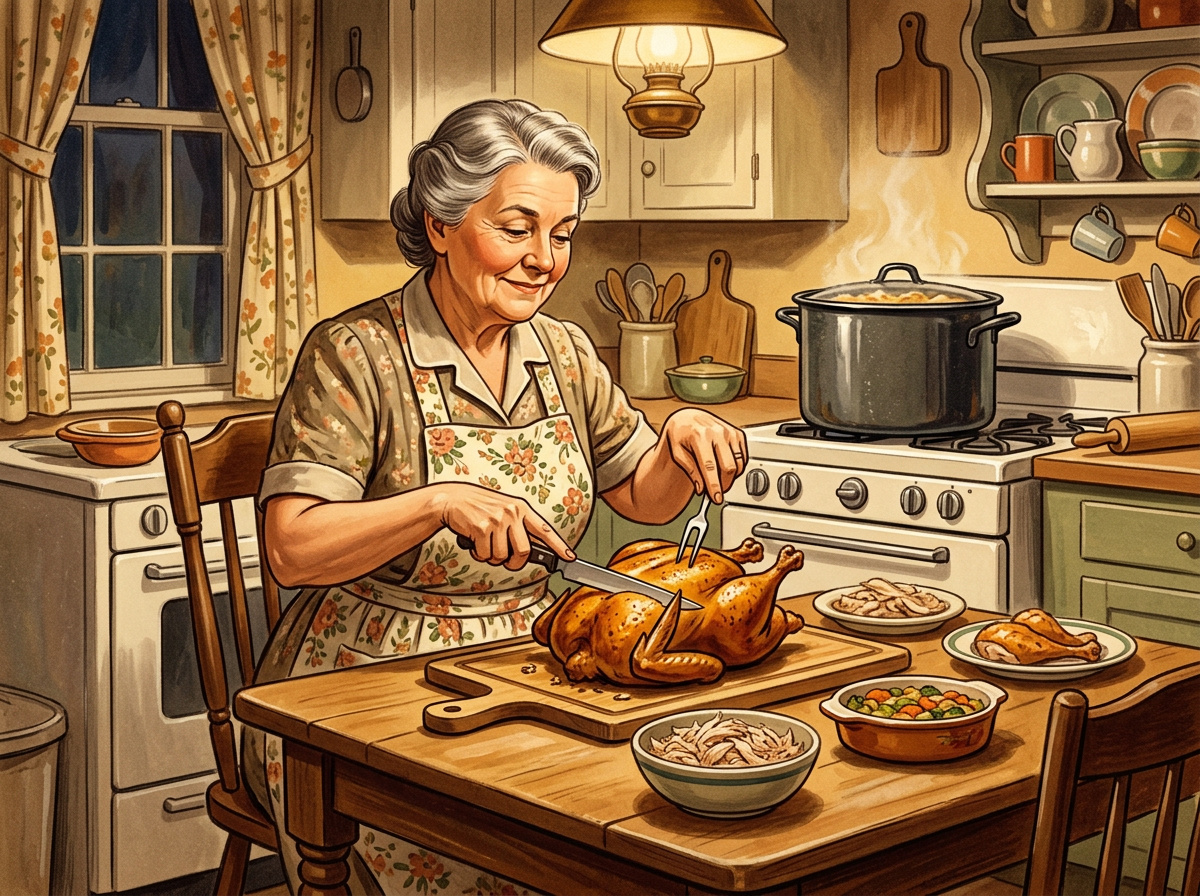
This is probably the skill I admire most, and also the one I work hardest to keep up. My great-grandmother could take a single chicken and feed her family across most of a week without anyone feeling shortchanged. It started with a roast, of course – and a well-roasted chicken is already its own reward. But from there, the leftover meat became a pot pie or a soup, the carcass went straight into a pot of broth, and that broth became the base for whatever came next. Nothing was wasted, and nothing felt like leftovers in the way we tend to mean that now.
What made it work was thinking about the chicken as a system rather than a single meal. The key is to strip the carcass while it’s still slightly warm – you get more meat off the bones that way – and to start the broth the same day rather than letting the carcass sit in the refrigerator until you lose momentum. From a good-sized bird, you can reasonably get a roast dinner, a pot of soup, a skillet hash or sandwich filling, and a rich broth that makes the next week’s cooking taste considerably better. It takes a little planning, but it’s one of the most satisfying things I do in my kitchen, and it still makes me feel, in the best possible way, like her.
Making Soap From Ash and Fat, Start to Finish
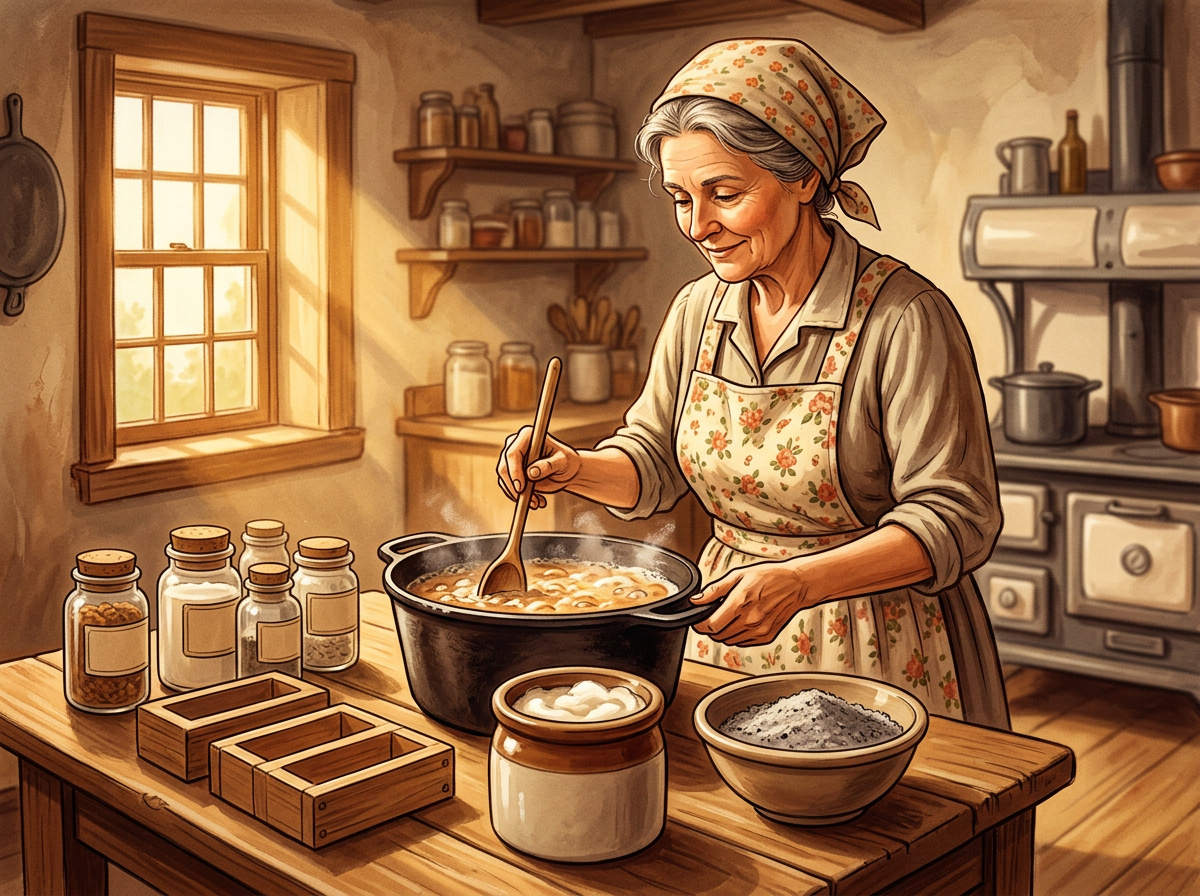
My great-grandmother made soap the way she made most things – out of what was already there. Ash from the woodstove, fat saved from cooking, water, and patience. It sounds almost primitive until you hold a bar that actually works and realize it took nothing you didn’t already have. I’ve been making a simpler version for years now, using wood ash lye water and rendered lard, and the process still feels like something worth knowing. It takes time and attention, especially when you’re working with lye, but it isn’t mysterious once you’ve done it a few times.
What I love most about it is the honesty of it. You know every single thing that went into it. No long ingredient list, no fragrance you can’t identify, nothing you’d have to look up. My great-grandmother’s soap was plain and it lasted. The bars I make cure for several weeks on a wooden rack in my laundry room, and they outlast anything I’ve bought from a store. It’s one of those skills that feels a little old-world but makes complete, practical sense once you start.
Writing Letters Worth Keeping, Not Just Sending
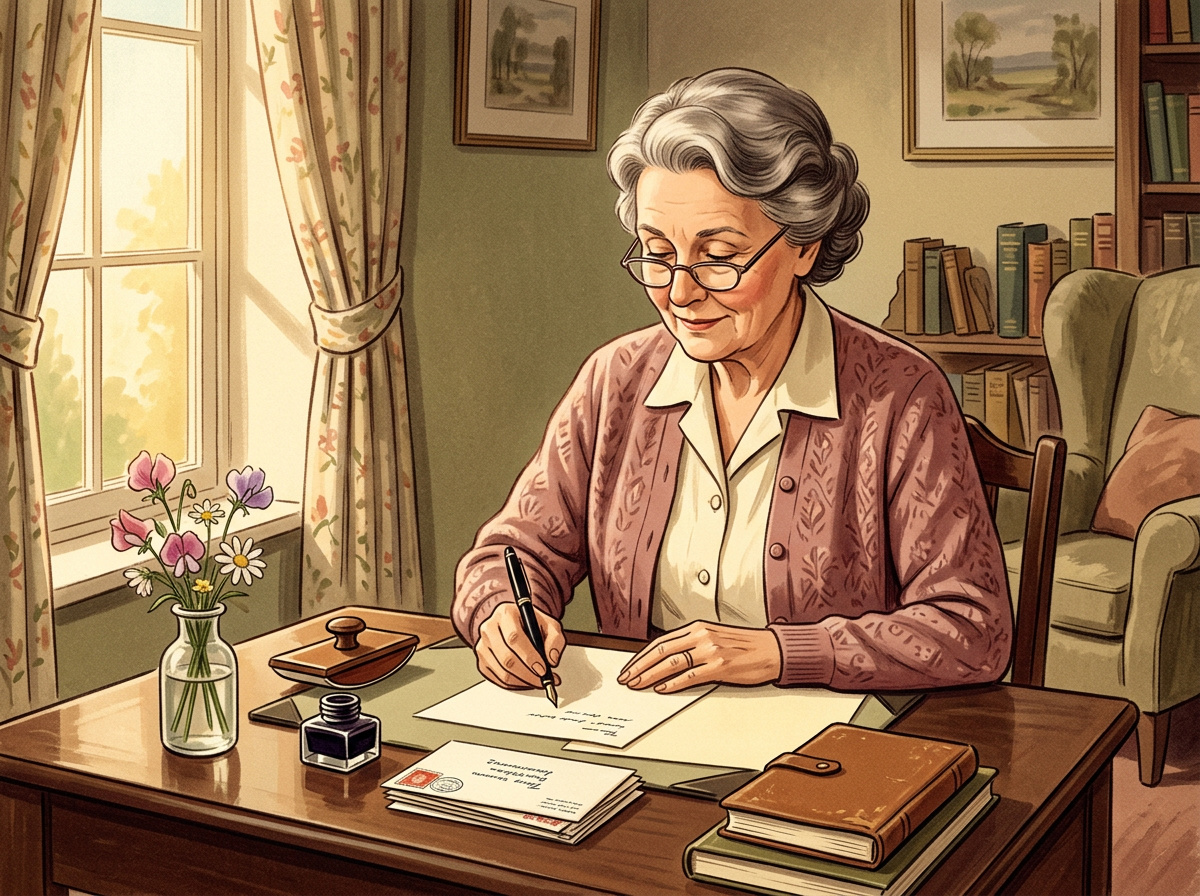
My great-grandmother wrote letters that people held onto. I know because a few of them still exist, tucked into an old cigar box that found its way to me. They aren’t dramatic or beautifully literary. They’re just honest, specific, and warm in a way that makes you feel like she’s sitting across from you. She wrote about small things – the garden, the weather, a neighbor’s new baby – and somehow those small things added up to a life. She understood, without ever naming it, that a letter is a record of a moment, not just a message.
I still write letters by hand, not for every occasion but for the ones that deserve it. A birthday, a hard loss, a thank-you that actually means something. It takes longer than a text and that’s exactly the point. The slowness is what makes it feel like care. I’ve noticed that people respond to a handwritten letter differently than to anything sent quickly, and I think it’s because they can feel the time in it. That’s a thing my great-grandmother knew without having to think about it, and it’s one I’m glad I didn’t let go of.