Small Patio, Big Dreams — The Garden Inspiration I Keep Coming Back To

I walked onto my patio this morning with my coffee and realized something. After three years of moving pots around, buying more plants, trying different arrangements, the space still felt off.
It wasn’t the size that bothered me. It was that everything sat on the ground, spreading outward instead of growing up, making the whole area feel crowded even when it wasn’t.
Small patios work best when you think vertically and leave breathing room. It took me longer than it should have to figure that out.
Here are 26 ways to make a small patio garden actually work — ideas I’ve tested myself or watched neighbors get right after years of getting it wrong.
How Do You Make A Small Patio Garden Look Bigger?
The floor is not your friend when space is tight. Every pot that sits directly on the patio surface makes the walking area smaller and the whole space feel closed in.
Use wall shelves, plant stands, or hanging baskets to lift plants off the ground. When you look across the patio and see clear floor space, it immediately feels larger.
Stick to the same pot style throughout so everything feels intentional. Three matching planters always look more spacious than seven different ones, even if the seven are smaller.
Save this article for later! 👇👇
Can You Grow Vegetables In a Small Patio Garden?
Yes, but you have to be picky about what you grow. Cherry tomatoes in deep pots, herbs along a wall, lettuce in shallow containers — these give you food without taking over.
The mistake is trying to grow everything. Pick three vegetables you actually eat regularly and give them proper containers and the sunniest spots you have.
I’d rather have fresh basil and perfect cherry tomatoes than a bunch of struggling plants that produce nothing.
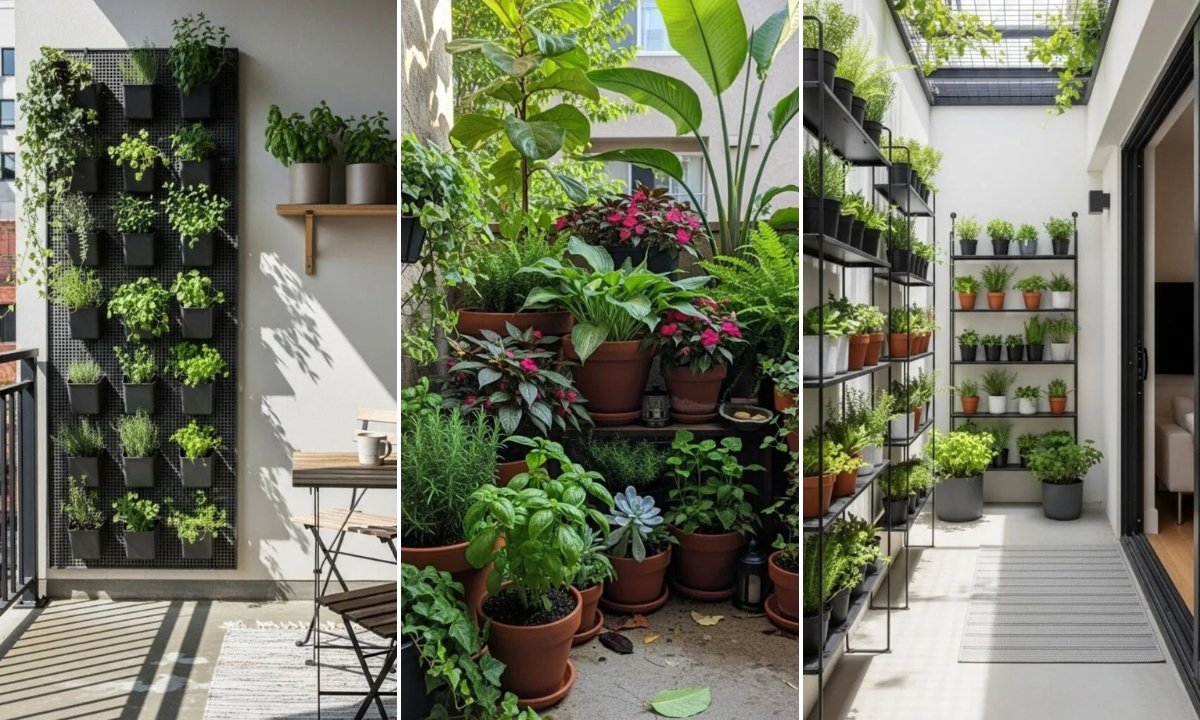
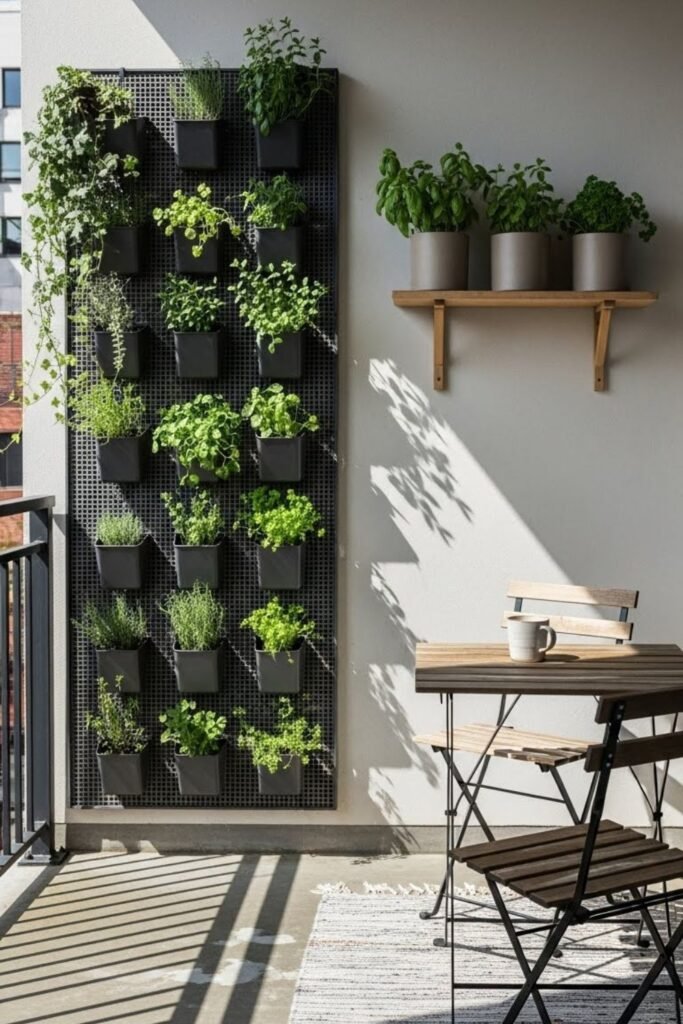
Herb Wall
This is where I started because herbs give you results fast and don’t need much space. I mounted a narrow shelf on the wall and lined it with small terracotta pots.
Basil, mint, and parsley grow reliably if you pinch the flowers and water when the soil feels dry an inch down. Having fresh herbs right outside the kitchen door changed how I cook — no more dried basil from a jar.
The shelf keeps the floor clear and makes watering simple since everything’s at eye level.
Green Corner
I gave up trying to spread plants around evenly and pushed everything into one corner instead. Tall plant in back, medium ones in middle, small pots in front — like stadium seating.
This leaves three-quarters of the patio completely open, which makes it feel bigger than when I had pots scattered everywhere. The corner becomes a proper garden zone, and the rest stays functional.
Frank said it looked like I actually planned it, which I took as a compliment.
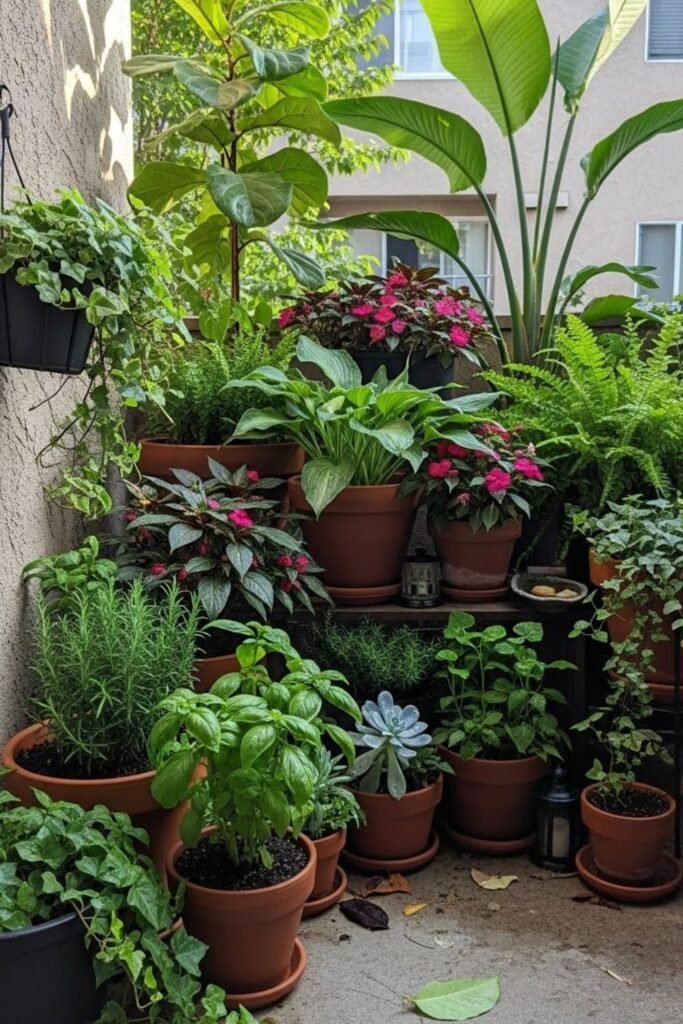
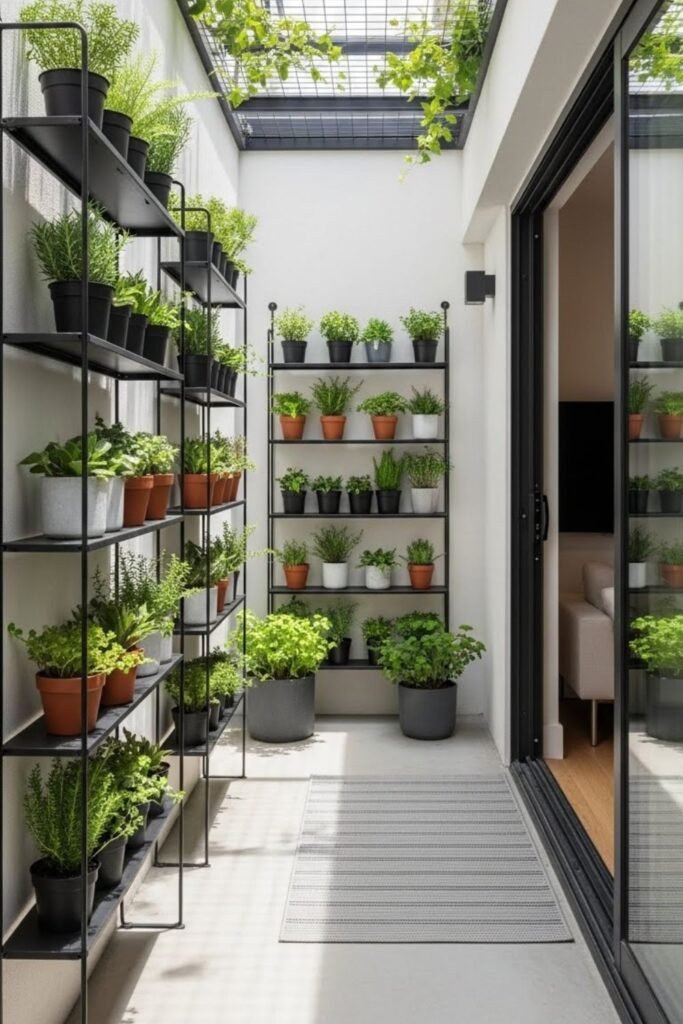
Slim Shelves
When the patio is narrow, you need furniture that doesn’t stick out. I use a ladder-style shelf that’s only about eight inches deep but holds six pots vertically.
Plants grow up instead of spreading out, and I can still walk past without turning sideways. The key is keeping all the pots the same size so it looks clean rather than cluttered.
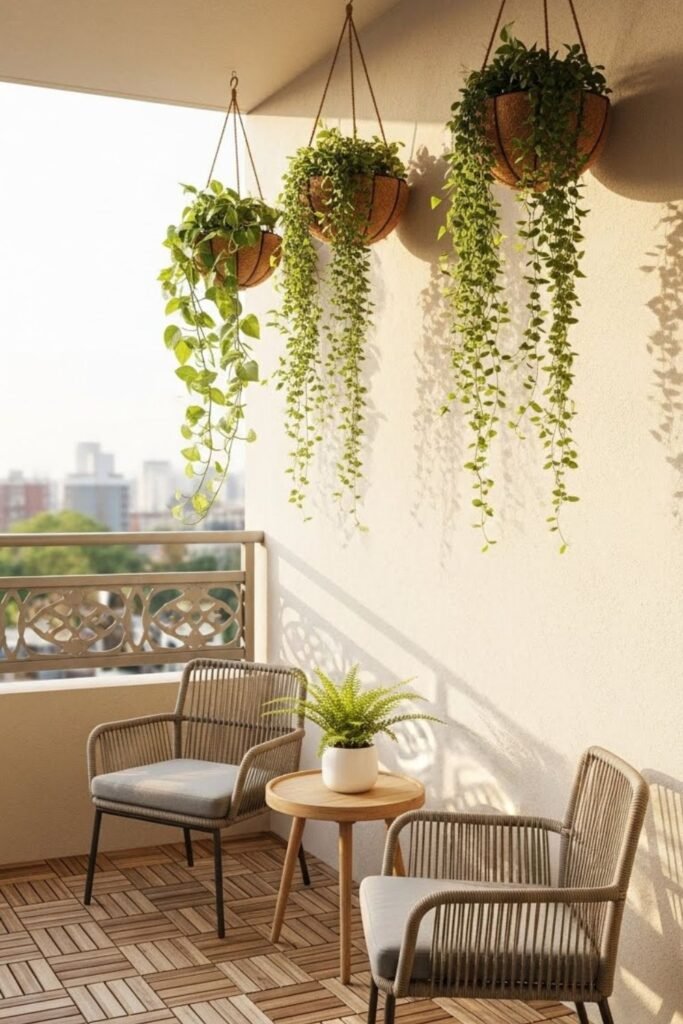
Hanging Line
I hung three matching planters in a straight line from the overhang, about seven feet up. Keeps the floor completely clear and adds greenery at eye level when you’re sitting.
Trailing plants work best — I use pothos and spider plants that don’t mind if I forget to water for a few days. The line looks intentional, not random like hanging baskets sometimes do.
Watering means dragging a step stool outside twice a week, but it’s worth it for the floor space.
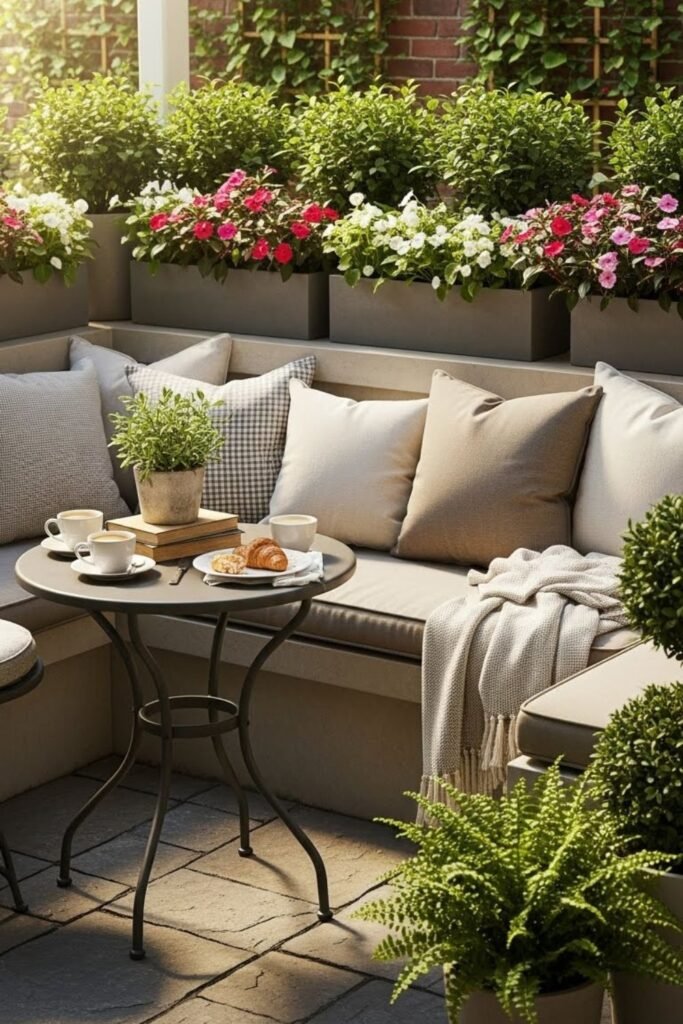
Built Seating
Frank built me a bench with storage underneath, and I line planters along the back edge. The bench gives me somewhere to sit while the plants create a green backdrop without blocking the view.
I keep the plants compact so they don’t grow over the bench and make it uncomfortable to use. The storage holds extra pots, tools, and bags of soil.
It’s functional seating and a garden display at the same time, which makes the small space work harder.
Shade Garden
My patio gets morning sun but is shaded by 2 PM, which I thought meant no garden. Turns out plenty of plants prefer that.
Ferns, peace lilies, and caladiums do fine in partial shade and actually look better than the sun plants I kept trying to force. I use light-colored pots to brighten the space and keep everything spaced apart so air moves through.
Shade plants tend to have interesting leaves rather than flowers, which gives the patio a calmer feel than all those bright annuals I used to buy.
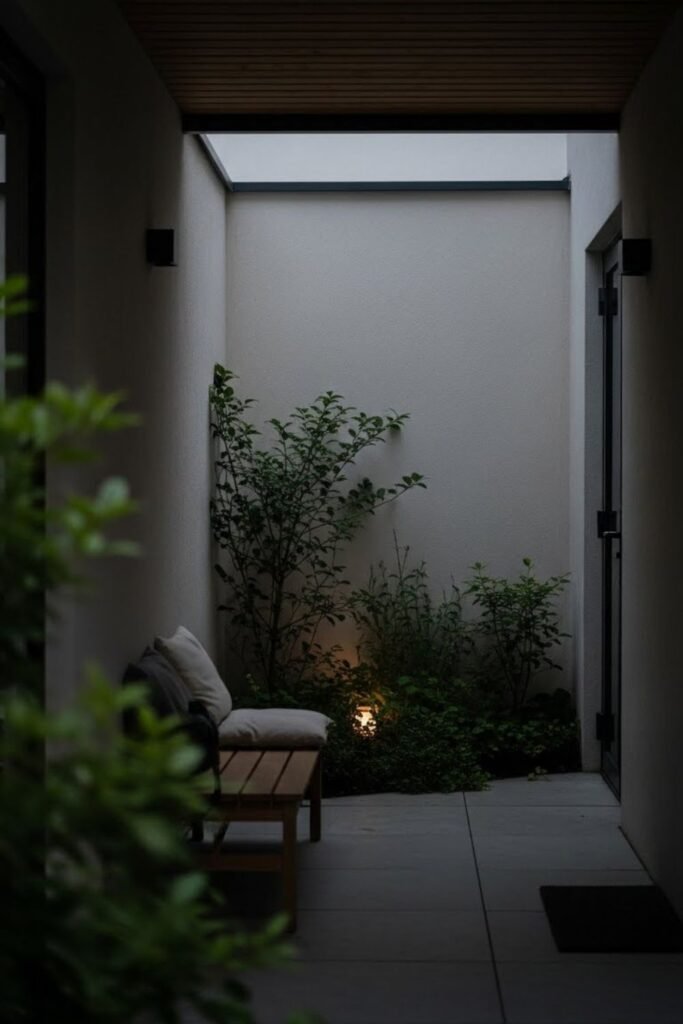
Neutral Minimal
I stopped buying colorful pots and switched everything to white and natural clay. Sounds boring, but it makes the plants the star instead of competing with them.
Three types of plants, same pot style, repeated at different heights. The eye can rest instead of bouncing around trying to take everything in.
Minimal doesn’t mean empty — it means every choice is deliberate.
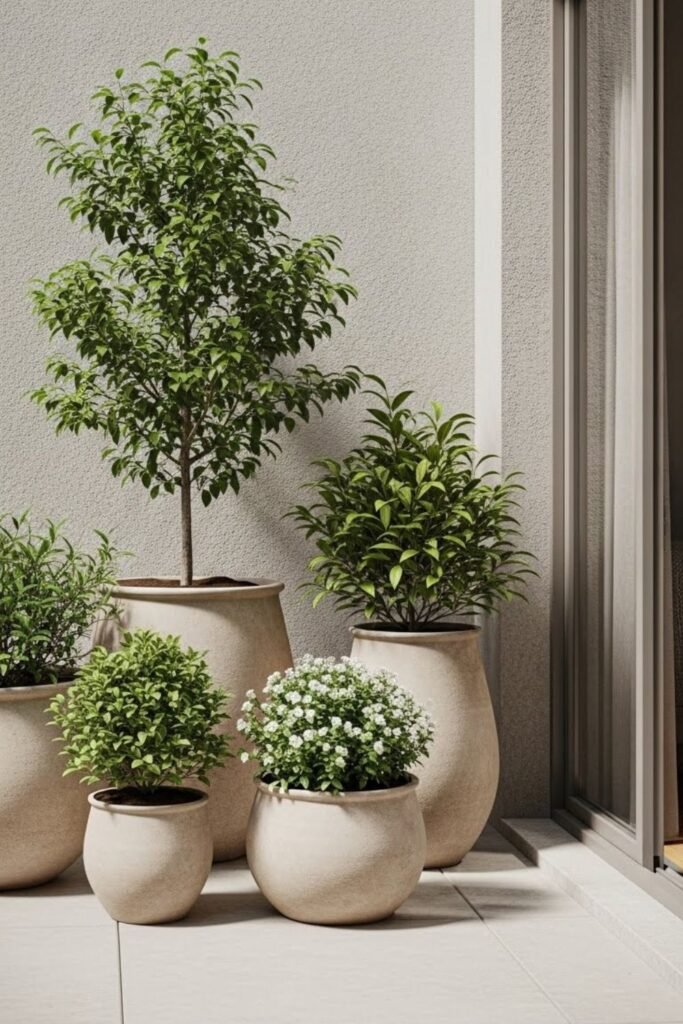
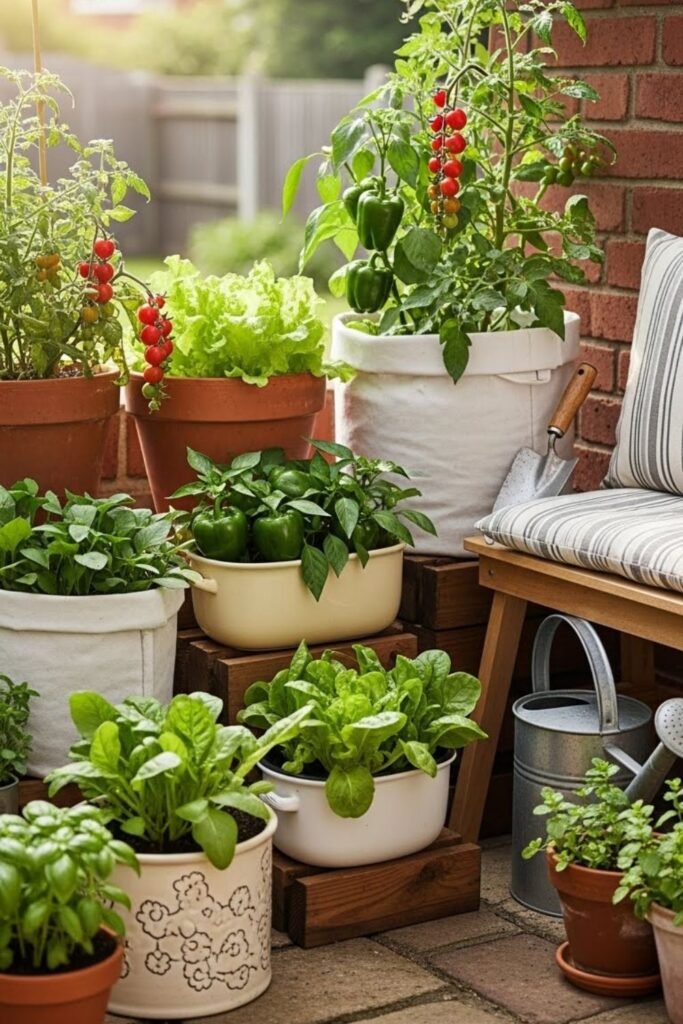
Edible Pots
If I’m using space for plants, they might as well feed me. Cherry tomatoes in a deep planter, peppers in medium pots, lettuce in a shallow window box.
I put them where they get the most sun and water consistently — vegetables are less forgiving than decorative plants if you forget. But there’s something satisfying about making dinner with ingredients from right outside the door.
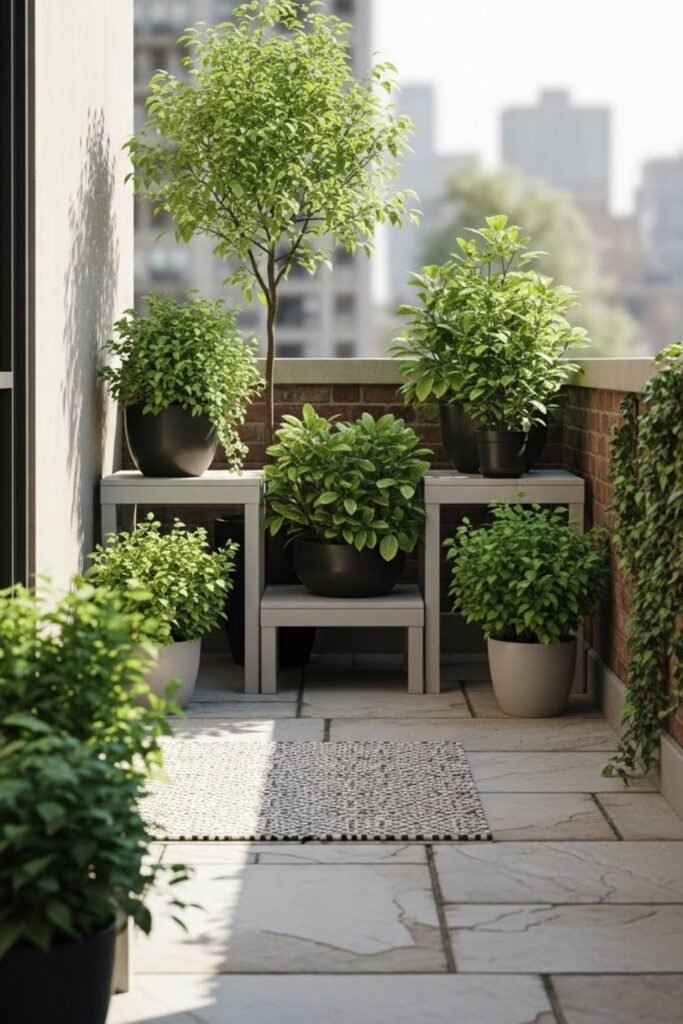
Raised Stands
Plant stands lift everything off the ground and create different levels without using wall space. I keep the tall stands in corners and shorter ones toward the middle.
Air flows underneath, which plants like, and you can see clear floor space, which makes the patio feel larger. I learned to put heavier pots on shorter stands so nothing tips over in wind.
This works especially well when you want plants but also need to be able to walk around freely.
Cozy Lights
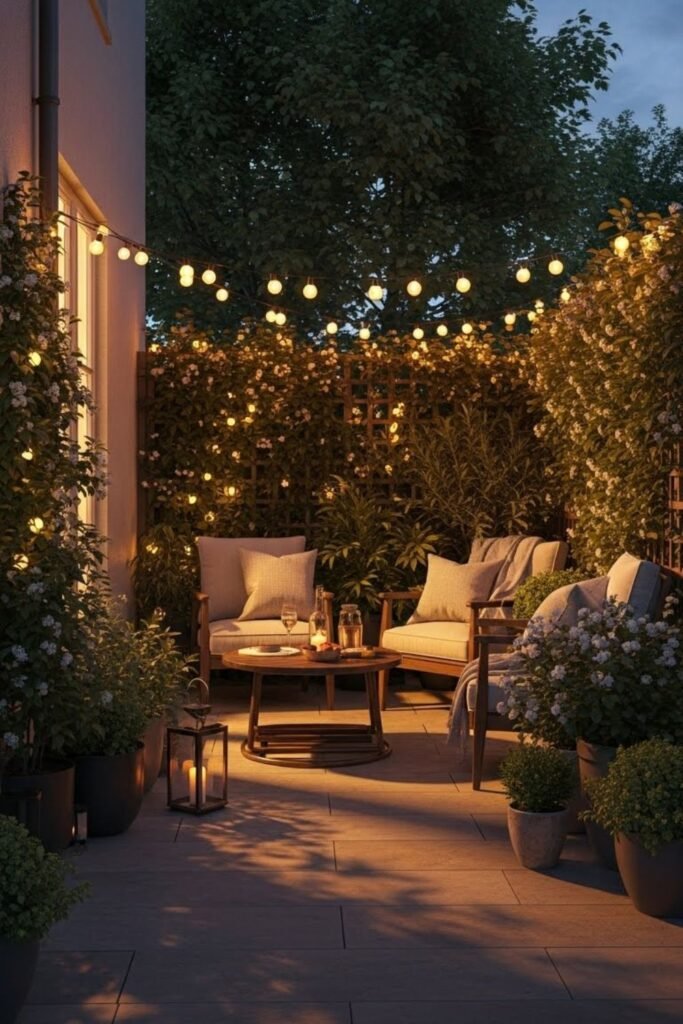
String lights make a bigger difference than I expected. I weave them around the plant shelves and along the railing so the greenery frames the light naturally.
Warm white bulbs soften everything and make the patio feel welcoming after sunset instead of just a daytime space. I avoid the bright white LED ones — they’re too harsh for a small area.
Now I actually use the patio in the evenings instead of just looking at it through the window.
One Focus
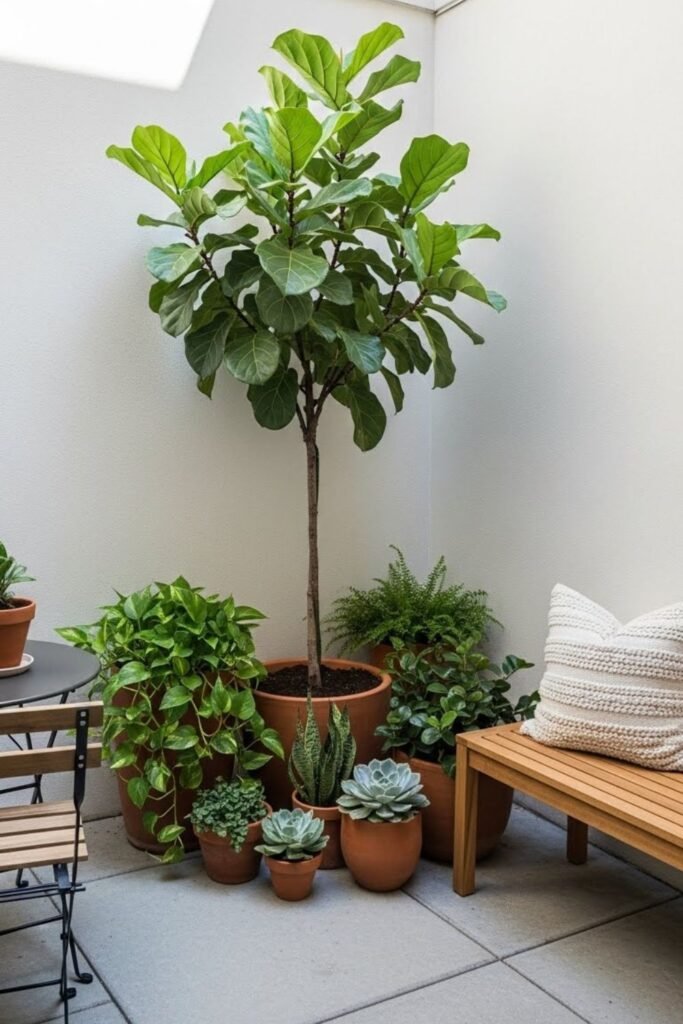
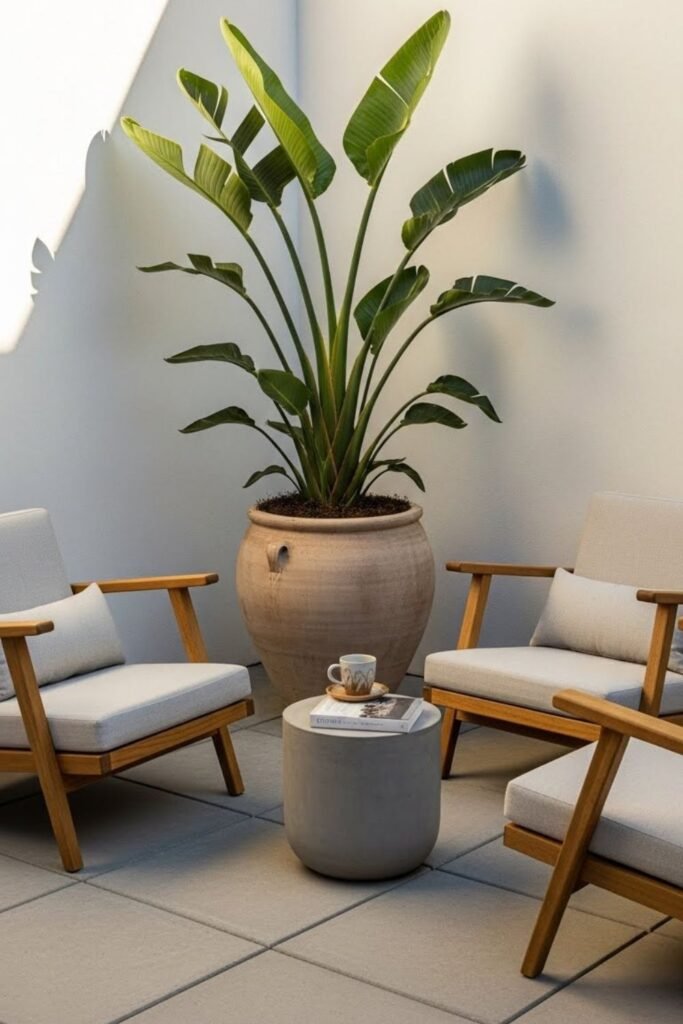
Sometimes the best approach is choosing one beautiful plant and building everything else around it quietly. I have a large fiddle leaf fig in a substantial pot, and the smaller plants just support it without competing.
This stops me from buying every plant that catches my eye and gives the patio a clear focal point. Maintenance is simpler because I’m not juggling twelve different care requirements.
Save this post for later ❤️
Railing Garden
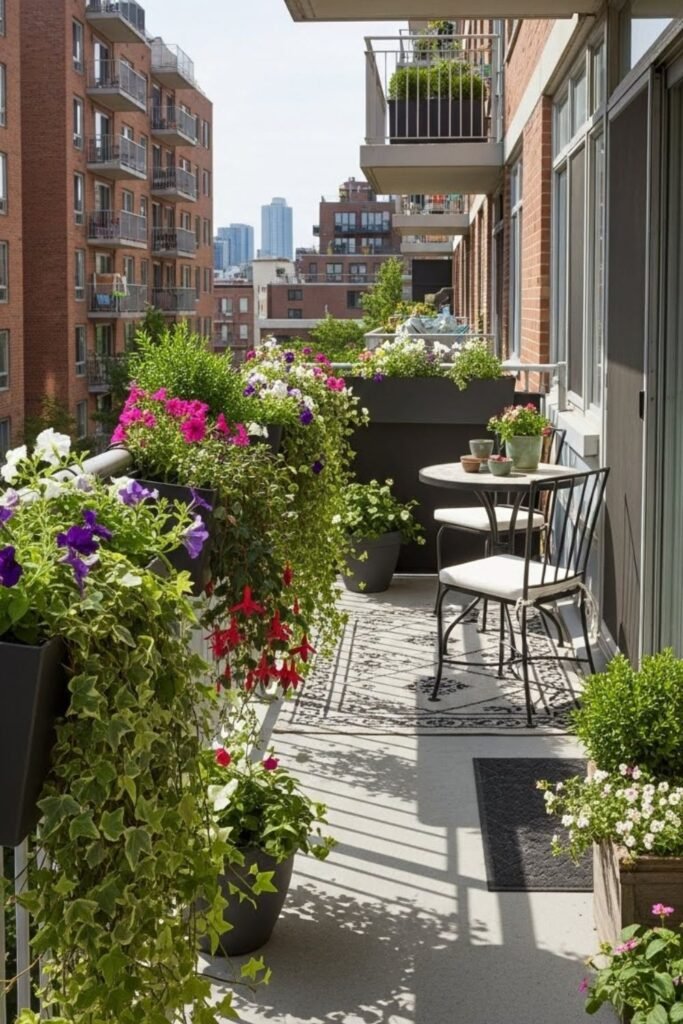
The railing was wasted space until I attached planter boxes along it. Plants grow outward instead of into the walking area, and I get privacy screening as a bonus.
Herbs work particularly well here — easy to reach for cooking and they don’t mind being a bit exposed to wind. Trailing plants soften the hard lines of the railing.
Installation took Frank about an hour with basic brackets, and now I have garden space that doesn’t take up floor room.
Zen Calm
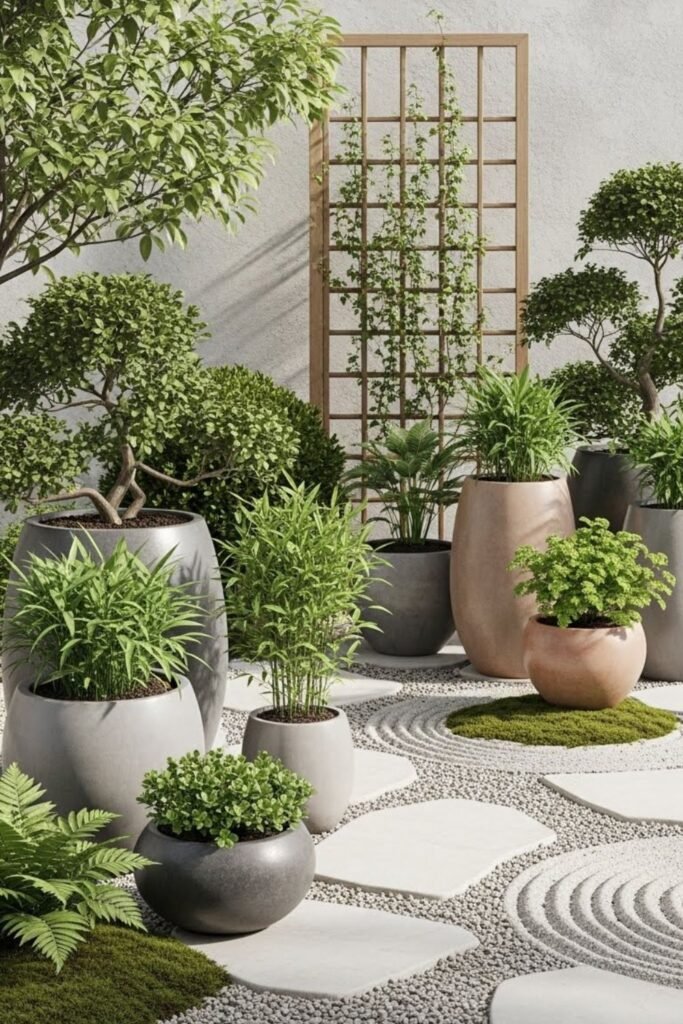
When life feels hectic, I want the patio to feel peaceful. Simple plants, neutral pots, plenty of open space. Nothing wild or demanding attention.
I stick to plants with soft, rounded shapes and avoid anything spiky or aggressive-looking. The goal is a space that slows you down rather than stimulating you more.
Budget DIY
Good planters are expensive, so I make my own from things I already have or can buy cheap. Old colanders with coconut fiber liners, wooden crates with plastic inserts, even large yogurt containers if they’re going somewhere they won’t be seen.
The key is making everything match somehow — same paint color, similar heights, or consistent styling. DIY doesn’t have to look homemade if you’re thoughtful about it.
I spent forty dollars on my first patio garden setup instead of four hundred, and it looked just as intentional.
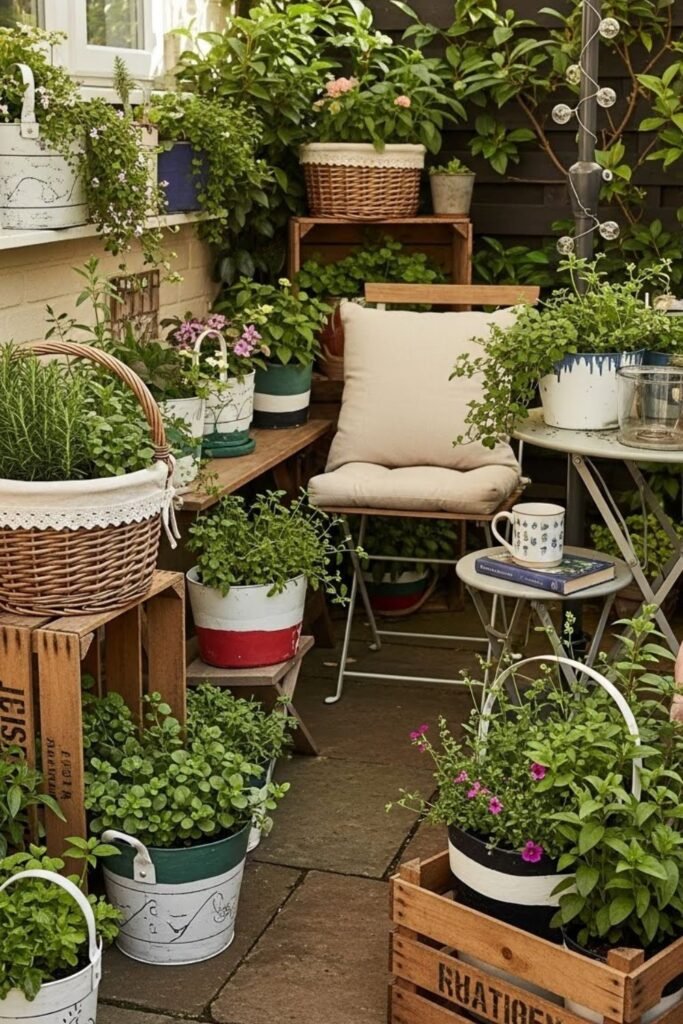
Climbing Greens
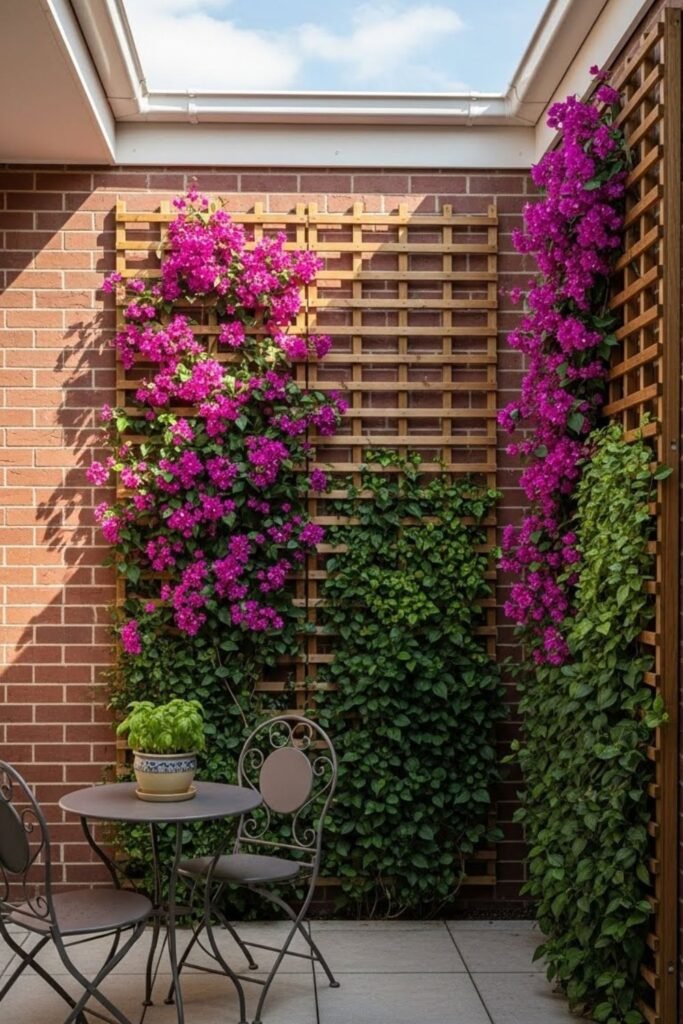
Vertical growth makes so much sense for small spaces — why didn’t I think of it sooner? I use a trellis against the wall and train clematis up it.
The plant stays in one modest pot but covers several square feet of wall space. I chose a variety that blooms reliably but doesn’t grow so fast it takes over.
Climbing plants add height and softness without using precious floor space.
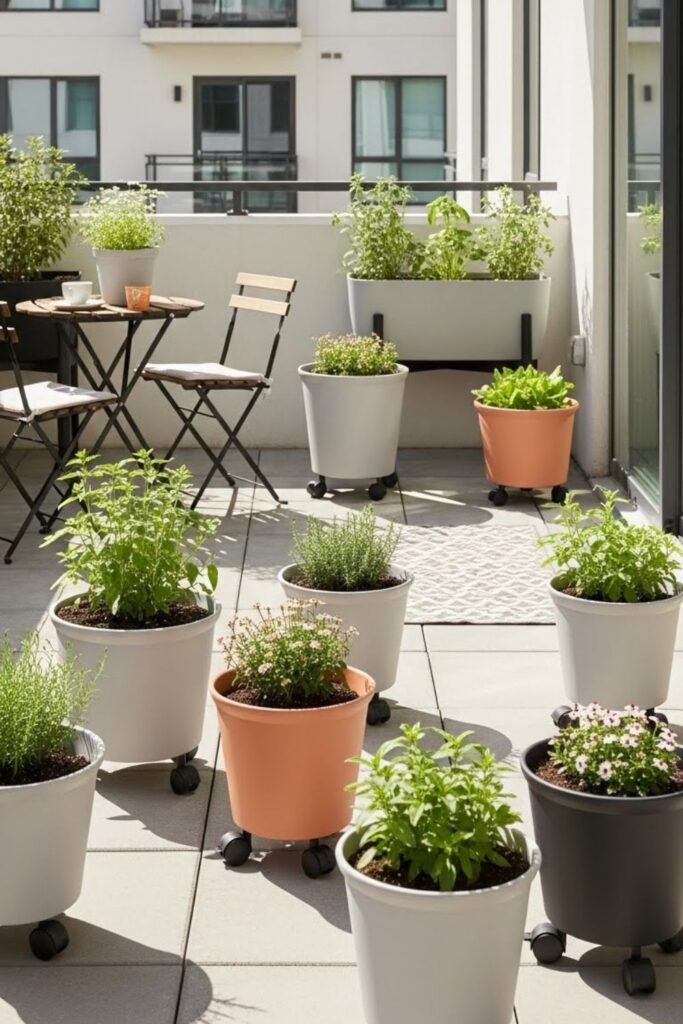
Portable Setup
I use lightweight pots and rolling plant caddies so I can move everything around when needed. This matters more than you’d think — sometimes you need to shift things for weather, or access something behind them, or just try a different arrangement.
Portable also means I could take the garden with me if we ever moved, though I hope we won’t.
Morning Coffee
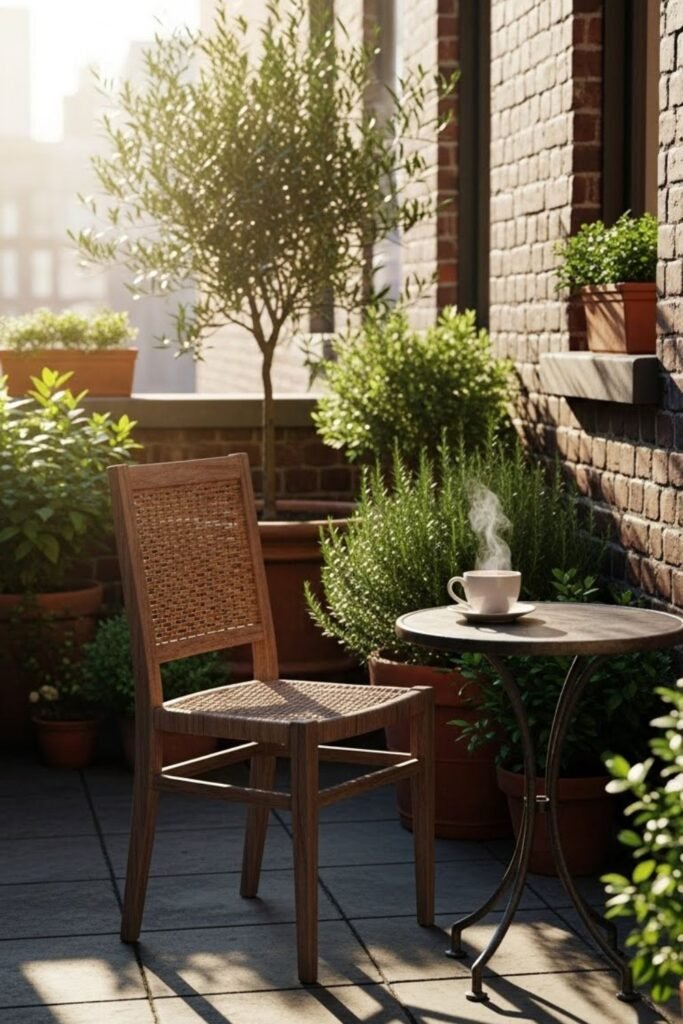
I set up the patio so I can sit with my coffee before the day starts. One comfortable chair, a small side table, and plants that frame the view without crowding the seating area.
The plants are chosen for calm rather than drama — soft leaves, gentle colors, nothing that demands attention when I’m trying to ease into the day.
Ten minutes outside with coffee and plants is better than rushing straight from bed to kitchen to car.
Color Theme
I picked one color — soft blue-green — and repeat it in pots, cushions, and plant choices. Not everything matches exactly, but there’s a thread that connects it all.
When colors are controlled, the space feels larger because your eye isn’t jumping around trying to process different bright elements. The plants can be the variety instead of the pots.
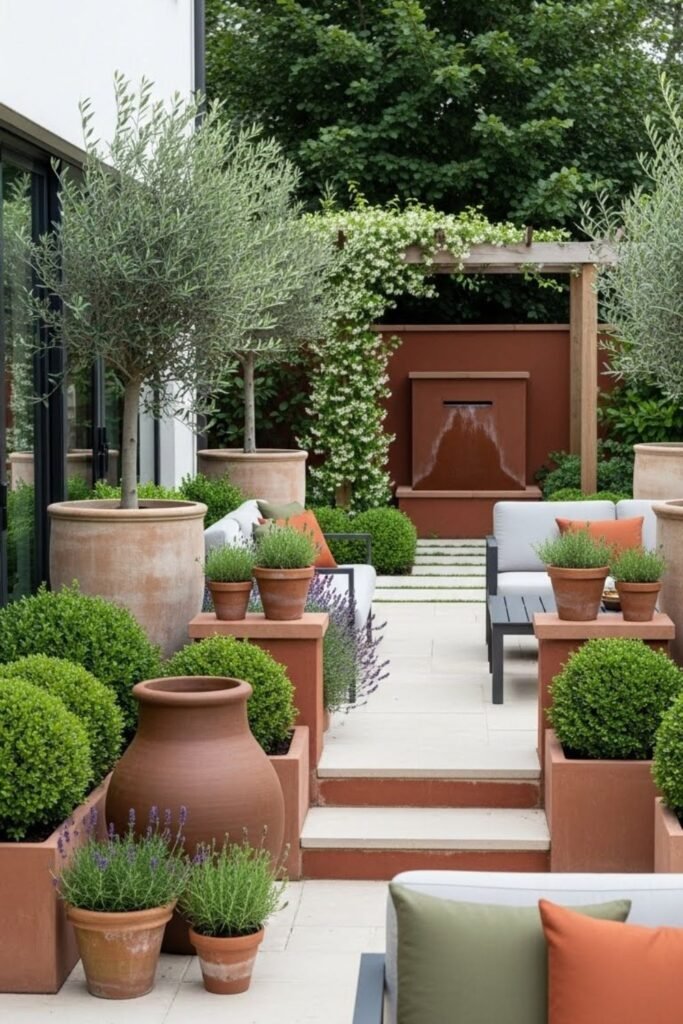
Easy Care
I don’t have time to fuss with finicky plants, so everything I grow now is basically bulletproof. Succulents, snake plants, pothos — things that forgive me when I forget to water for a week.
This doesn’t mean boring. These plants come in different shapes, sizes, and colors. They just don’t punish you for having a life beyond gardening.
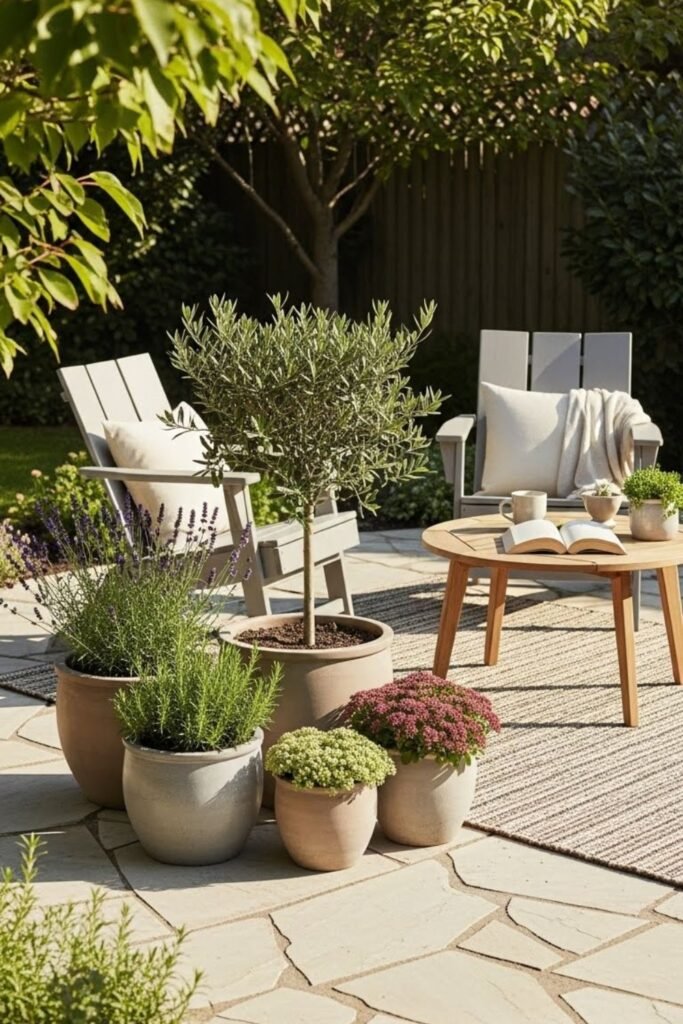
Hanging Only
What if nothing touched the floor at all? I hung baskets at three different heights and kept the entire floor clear. The patio feels twice as big and the plants get good air circulation.
Watering requires a step stool, but it’s worth it for the floor space. This works especially well if you need room to move around but still want greenery.
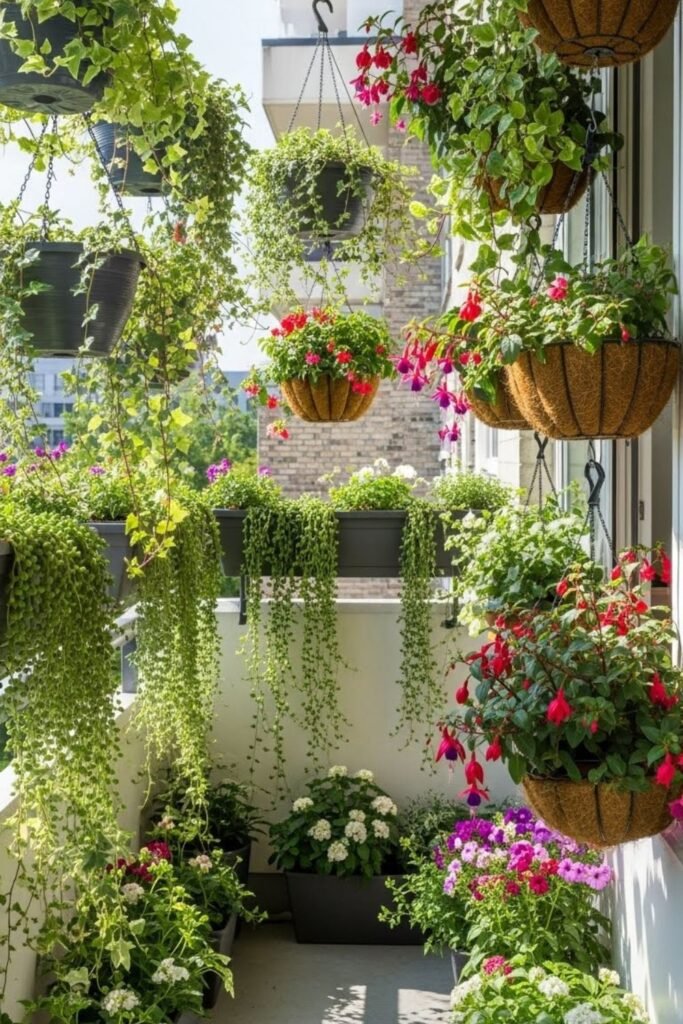
Family Safe
When grandchildren visit, I need plants that won’t hurt them if they get curious. No thorny roses, no toxic leaves to put in mouths, no top-heavy pots that tip easily.
Soft-leaf plants, secure containers, and everything low enough that kids can explore safely. The garden becomes part of their outdoor experience instead of something they have to avoid.
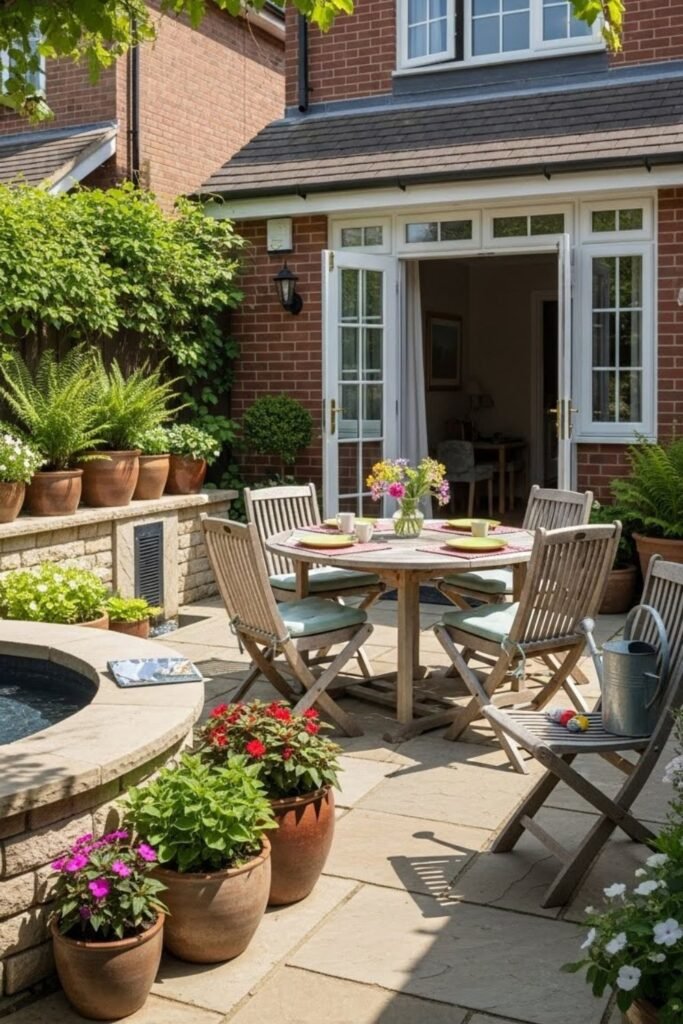
Seasonal Switch
I gave up trying to make one planting work year-round. Instead, I rotate plants based on seasons — cool-weather greens in fall and winter, heat-loving herbs and flowers in summer.
The pots and layout stay the same, but the contents change. This keeps the patio interesting throughout the year and gives me better results than forcing plants to survive conditions they don’t like.
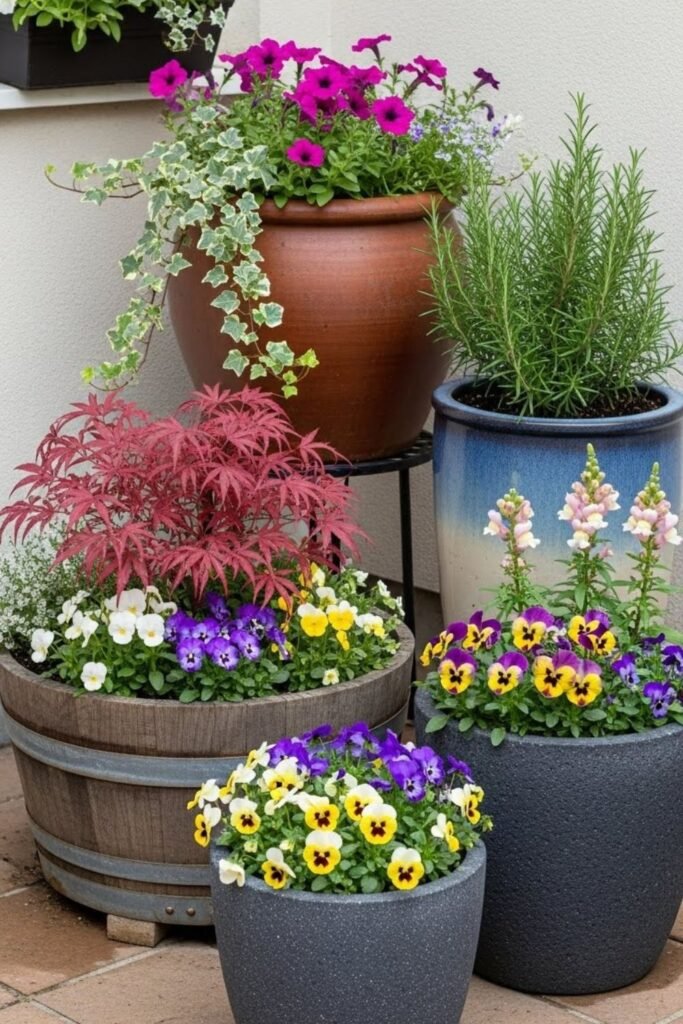
Wood Touch
Natural wood softens a patio in a way that plastic and metal don’t. I use wooden plant stands and a small wooden stool that doubles as extra seating.
The wood doesn’t need to match perfectly — different tones still work together if the style is similar. It adds warmth without taking up much space or costing much money.
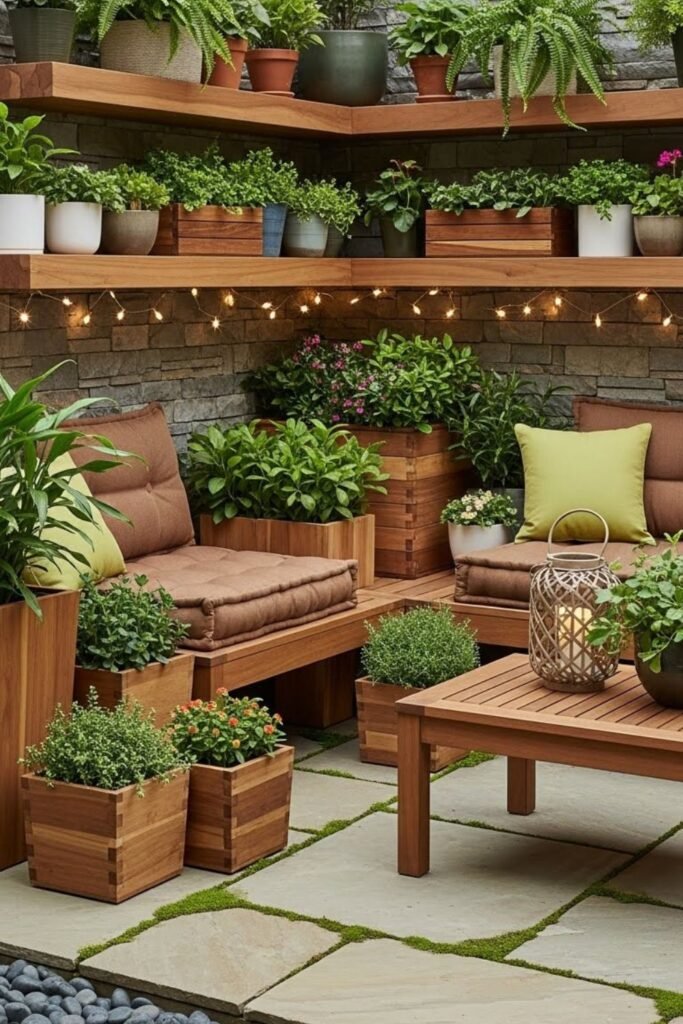
Salad Space
I dedicated the sunniest corner to salad greens — lettuce, arugula, spinach in shallow containers that don’t take up much room. Fresh greens grow fast and you harvest them young, so they never get out of control.
It’s satisfying to walk outside and cut enough greens for lunch. The containers are shallow enough to fit on narrow shelves, and succession planting means I have fresh greens most of the year.
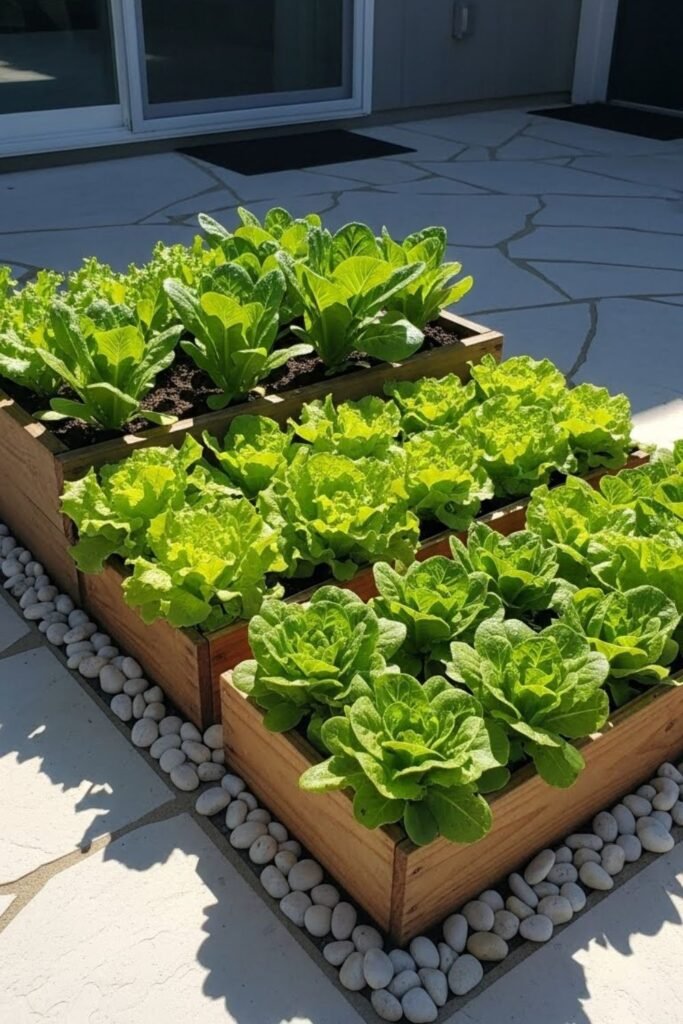
Narrow Layout
Long, skinny patios are tricky because if you put plants on both sides, there’s no room to walk. I line everything along one edge and leave the other side completely open.
The walking path makes the space feel longer, and plants get more light when they’re not crowded together. Taller plants go in the corners where they won’t block the middle views.
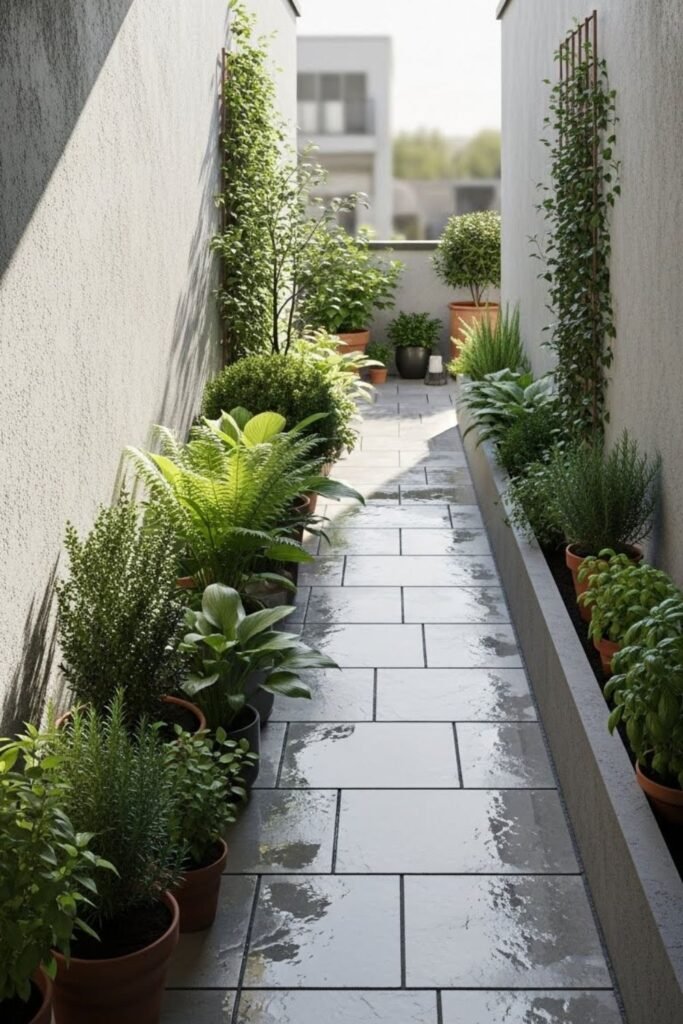
Statement Plant
Sometimes one dramatic plant does more for a space than twelve small ones. I chose a large monstera in a beautiful pot and kept everything else simple and supportive.
This approach eliminates decision fatigue — I don’t have to worry about balancing different plants or creating complex arrangements. The statement plant carries the visual weight, and smaller plants just fill in quietly.
FAQs
I’ve spent over four decades building a marriage, raising a family, and learning what truly matters along the way. I write about relationships, home, and navigating life’s later seasons with grace, honesty, and a little humor. My goal is to share the kind of steady, real-life wisdom that helps you feel grounded, encouraged, and a little less alone.