Drought Tolerant Landscaping Ideas That Look Lush and Beautiful Even When It Hasn’t Rained in Weeks

Your yard turns brown every summer no matter how much water you pour on it. The sprinklers run constantly, the water bill climbs, and you’re still staring at dead patches by August.
Meanwhile, the city sends notices about water restrictions, and you’re caught between a dying lawn and doing the right thing.
You don’t want a yard that looks like a parking lot, but you also can’t keep throwing money at grass that won’t cooperate.
Here are 24 practical ways to build a yard that stays attractive without constant watering — ideas that work in real life, not just on Pinterest.
How Can You Design a Beautiful Yard With Minimal Water Use?
Stop thinking more water equals a better yard. I learned this after three summers of watching my neighbor’s sprinkler system run twice a day while her lawn stayed patchy and brown.
The trick is grouping plants that want the same amount of water, so you’re not drowning some while others shrivel up.
Use mulch to trap moisture in the soil, and choose plants with deep roots — they handle heat better than anything with shallow, needy root systems.
When you plan before you plant instead of just buying what looks pretty at the nursery, your yard actually cooperates.
Save this article for later! 👇👇
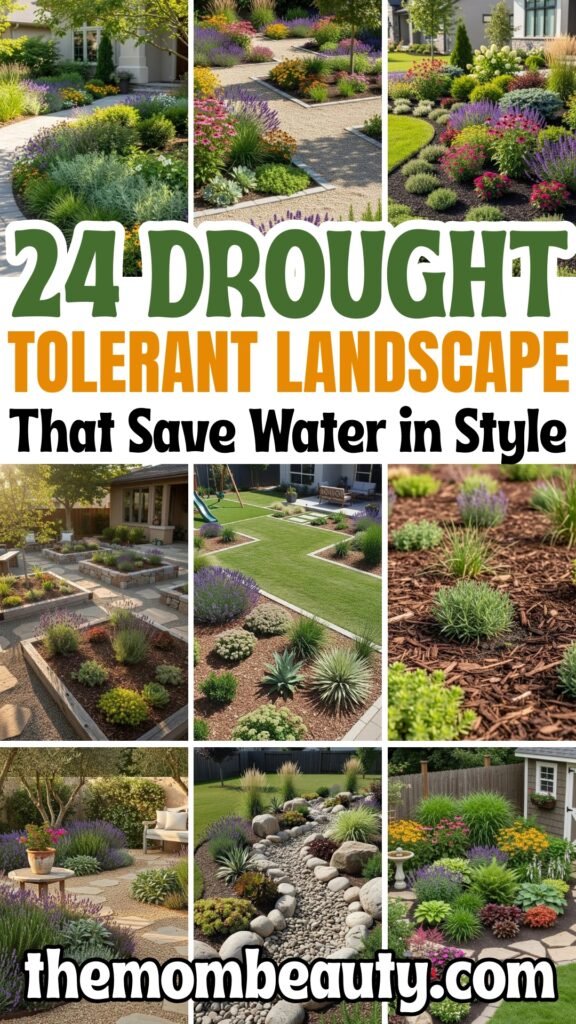
What Grasses Work Best For Drought Tolerant Landscaping?
If you insist on having grass, pick the right kind instead of watering the wrong kind more often. Drought-tolerant grasses send roots deep, which means they can survive longer without you standing out there with a hose every evening.
Warm-season varieties generally handle heat better and need less babying once they’re established.
But honestly, you don’t need grass everywhere — keep it where you actually walk or where kids play, and let the rest be something else.
This cuts your watering, reduces the weekend mowing ritual, and you still get green space where it matters.
Layered Beds
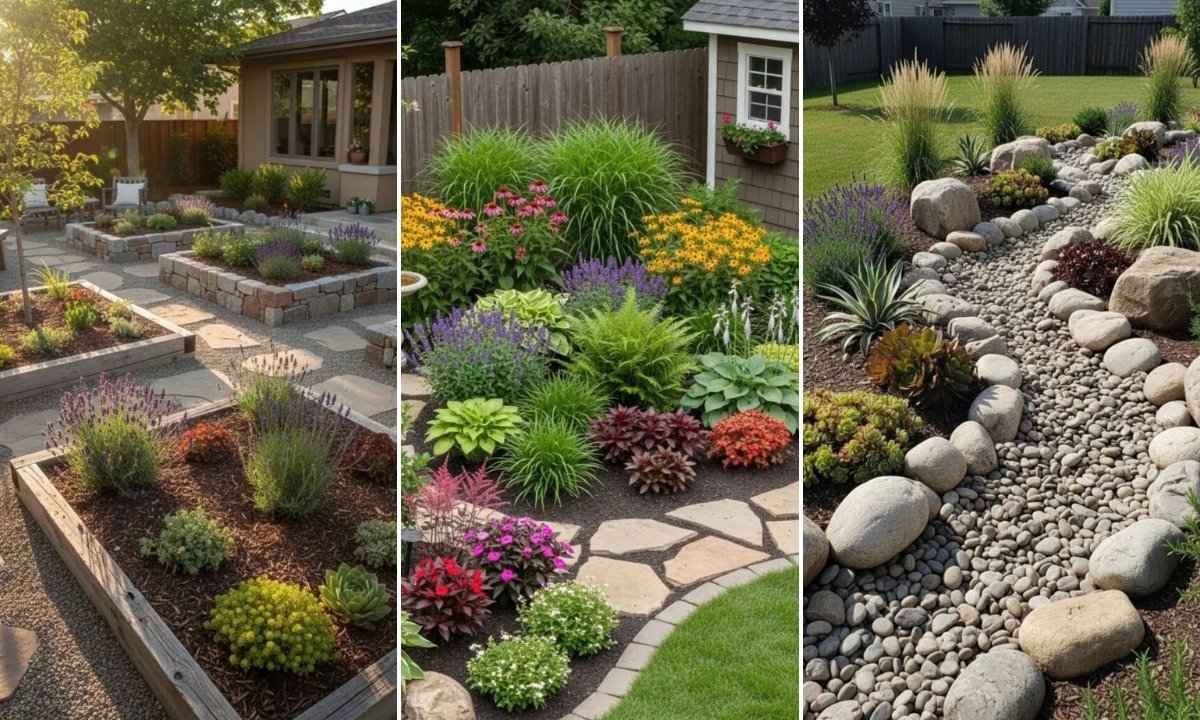
I got tired of watching grass struggle, so I started pulling it out and making planting beds instead. I dig up sections of turf, shape them into soft curves, then layer different plants by height — tall shrubs in back, shorter perennials in front, ground covers filling the gaps.
Beds hold moisture better than lawn because the plants shade each other and the soil doesn’t bake in direct sun all day.
Add a thick layer of mulch and water usage drops fast. The yard looks intentional instead of like you gave up on it.
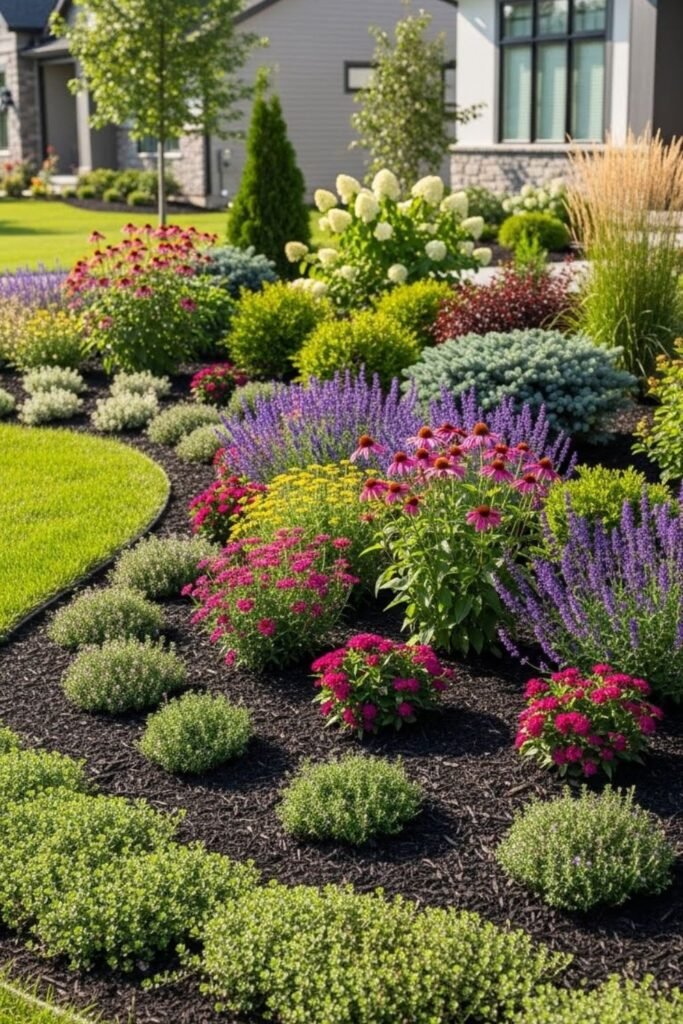
Gravel Paths
Paths make any yard feel more finished, so I replace strips of thirsty grass with gravel walkways. I put down landscape fabric first, then spread decomposed granite or pea gravel, and plant tough bloomers along the edges.
Water goes straight to the plant roots instead of pooling in puddles or running off onto the sidewalk.
Your shoes stay cleaner, weeds have a harder time taking hold, and the whole space looks more thought out. At night, you can add simple solar lights that actually show up against the light-colored gravel.
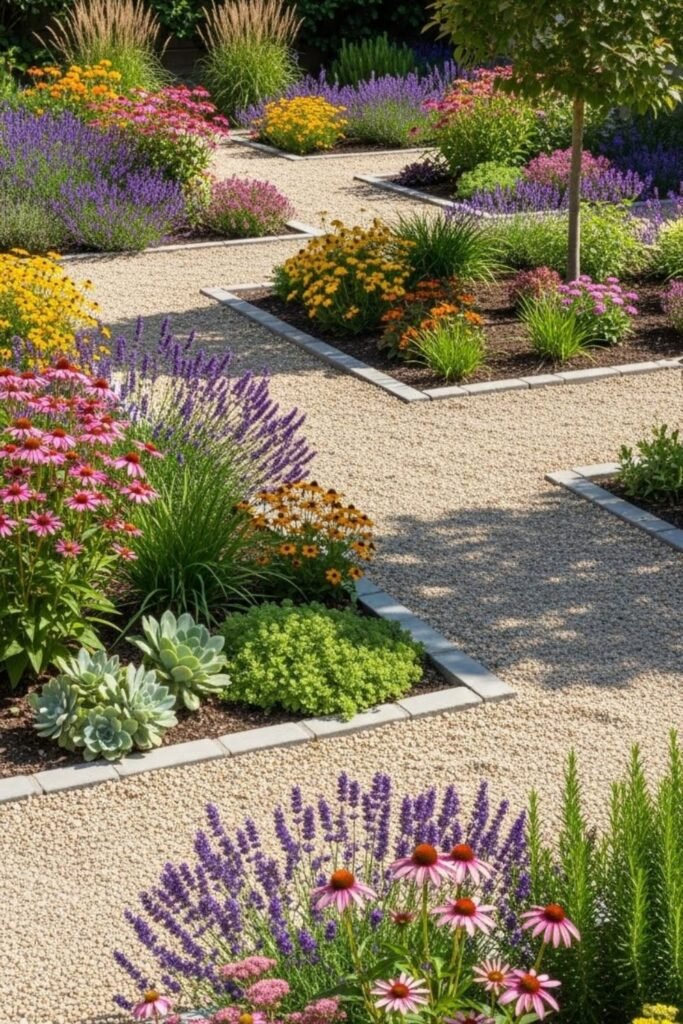
Native Borders
The edges of your yard decide whether it looks messy or planned, so I replace lawn borders with native plants. I pick shrubs and flowers that grow naturally in this area, space them close enough to fill in, and follow the natural lines of the property instead of forcing straight edges everywhere.
Borders stop water overspray, cut down on mowing time, and actually protect the soil.
Once the roots settle in, you barely need to water them, and the boundary stays neat without constant trimming or feeding.
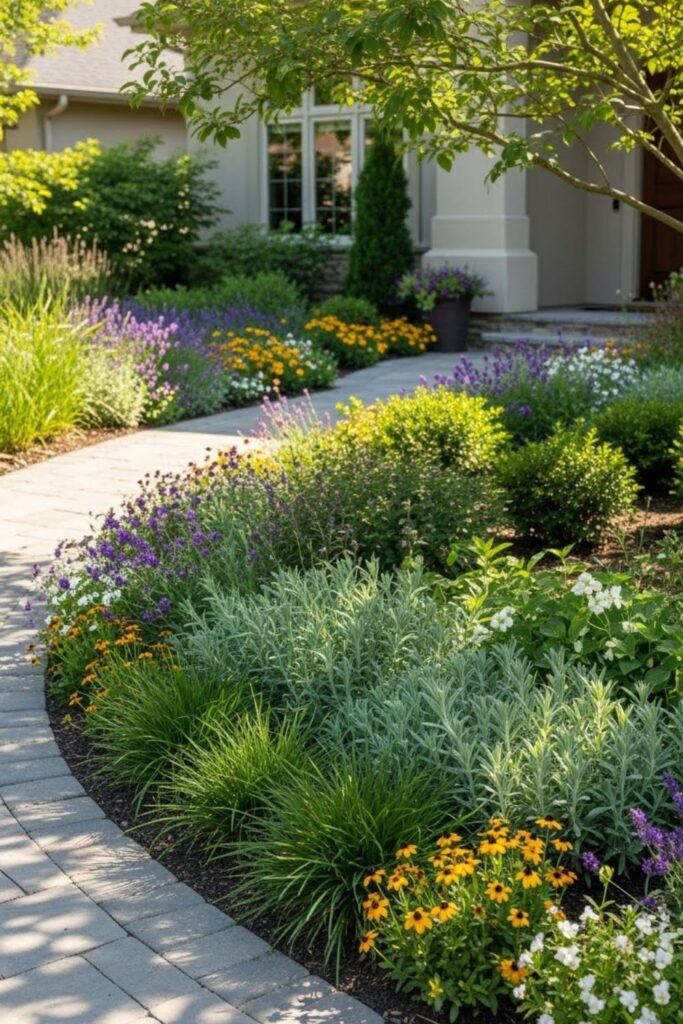
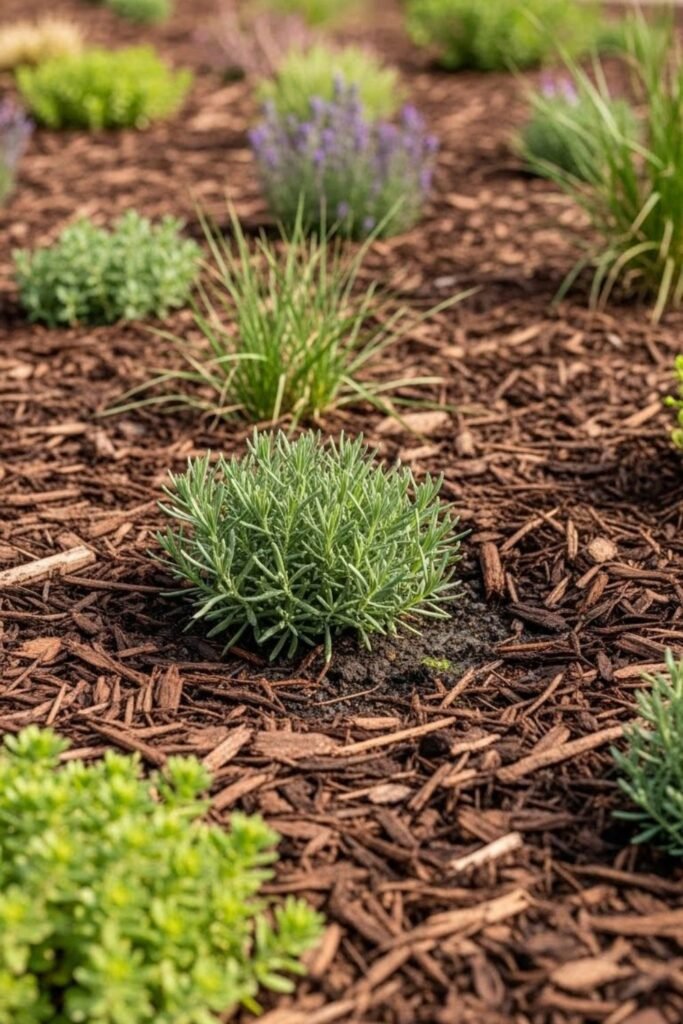
Mulch Zones
Heat steals moisture before plants can use it, which is why I build wide beds and cover them with a thick blanket of bark mulch or compost. I water deeply once, then let the mulch do its job.
Mulch keeps roots cool, blocks weeds, and stretches every drop of water. Plants establish faster, and you reach for the hose less often.
You’ll need to replenish it once a year, but that beats running sprinklers constantly and still watching things die.
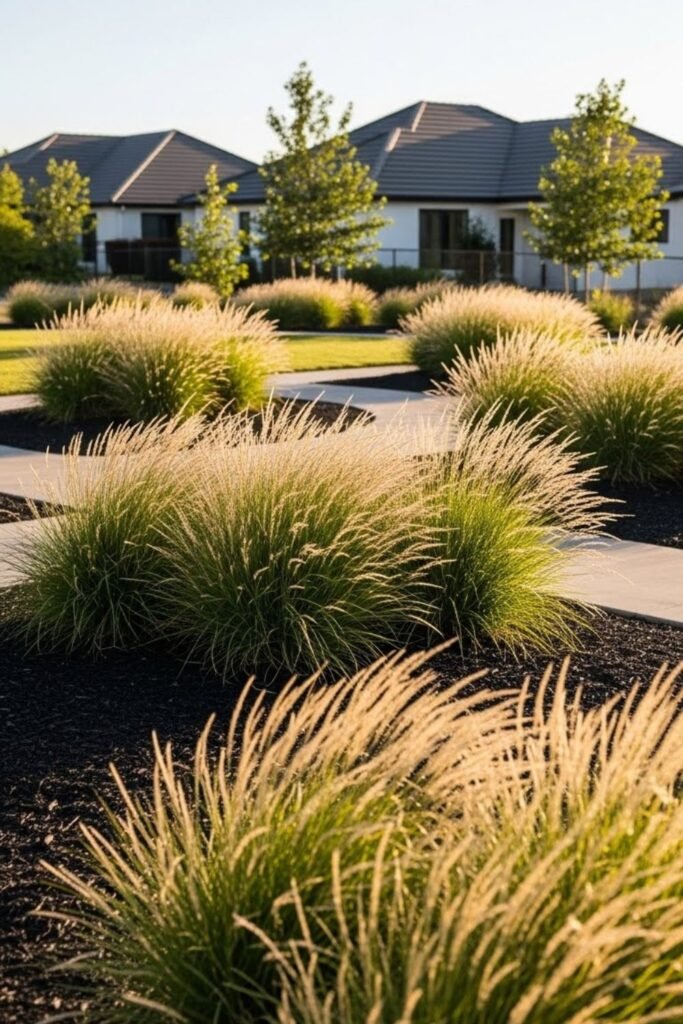
Ornamental Islands
I like movement in the yard, so instead of scattering plants randomly, I cluster ornamental grasses into island groupings. Tall blades sway in the breeze, catch morning light, and handle heat without demanding constant water.
I space the clumps wide apart, mulch heavily between them, and let air move through. When all the plants in an island have similar water needs, irrigation becomes simple.
Seasonal cutbacks are quick, and the texture carries the yard when flowers fade.
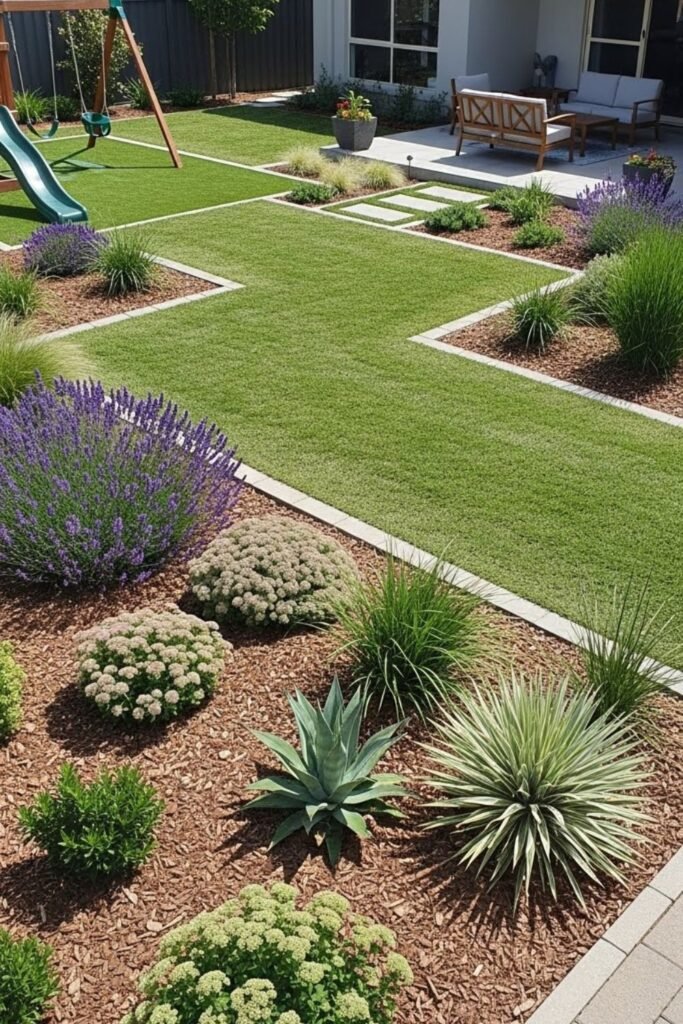
Lawn Zones
I gave up on perfect turf everywhere and started keeping grass only where feet actually land. Play areas get green space, main walkways get green space, spots where the dog likes to lie down get green space. Everything else becomes planting beds or hardscape.
This cuts water use dramatically because you’re only irrigating areas that serve a real purpose.
Mowing takes half the time, you’re not constantly repairing dead spots, and the yard feels intentional instead of like you’re just maintaining something out of habit.
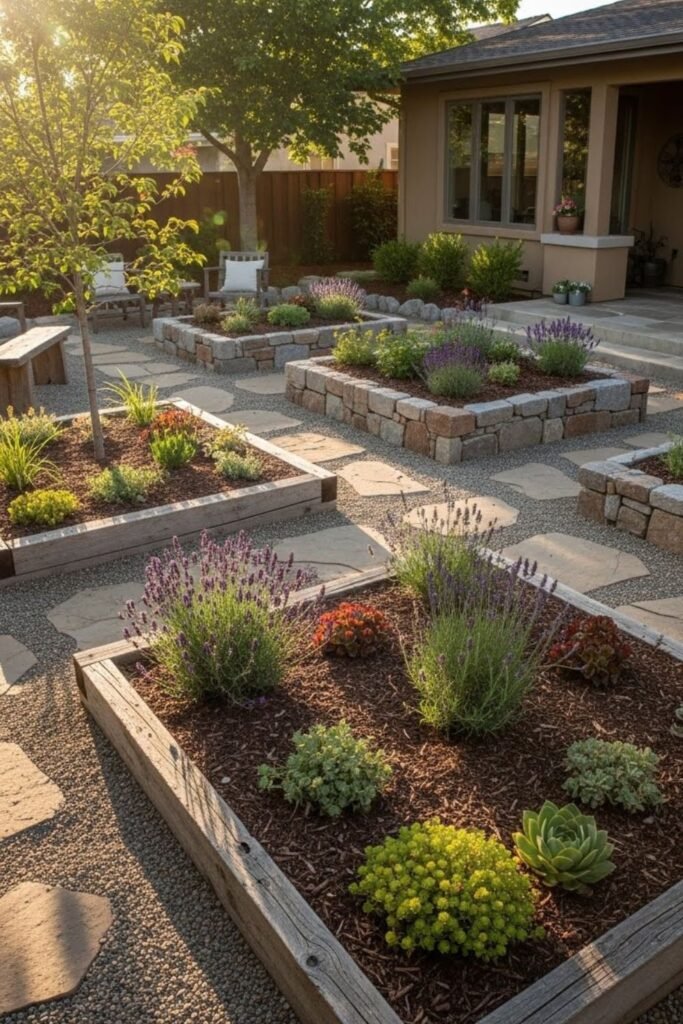
Raised Sections
Raising planting areas just slightly above grade changed everything for me. Elevated beds drain better, warm up earlier in the season, and accept deep watering without water running off onto the driveway.
I shape gentle edges with a shovel, bring in amended soil to fill them, then plant tough varieties that can handle the improved drainage.
Roots grow stronger, puddles don’t form, and watering becomes more precise. Raised areas also protect plants from foot traffic and give the whole space more structure.
Sun Grouping
I learned to map sun exposure first and plant second. Full-sun lovers go in the hot spots, shade plants get tucked under trees or against north-facing walls, and watering schedules finally make sense.
Grouping prevents the constant stress of plants that are never quite getting what they need. I spend a Saturday morning with a notebook, tracking which areas get sun when, and plant accordingly.
Results show up fast — leaves stay firm instead of wilting, blooms last longer, and you stop constantly replacing things that were doomed from the start.
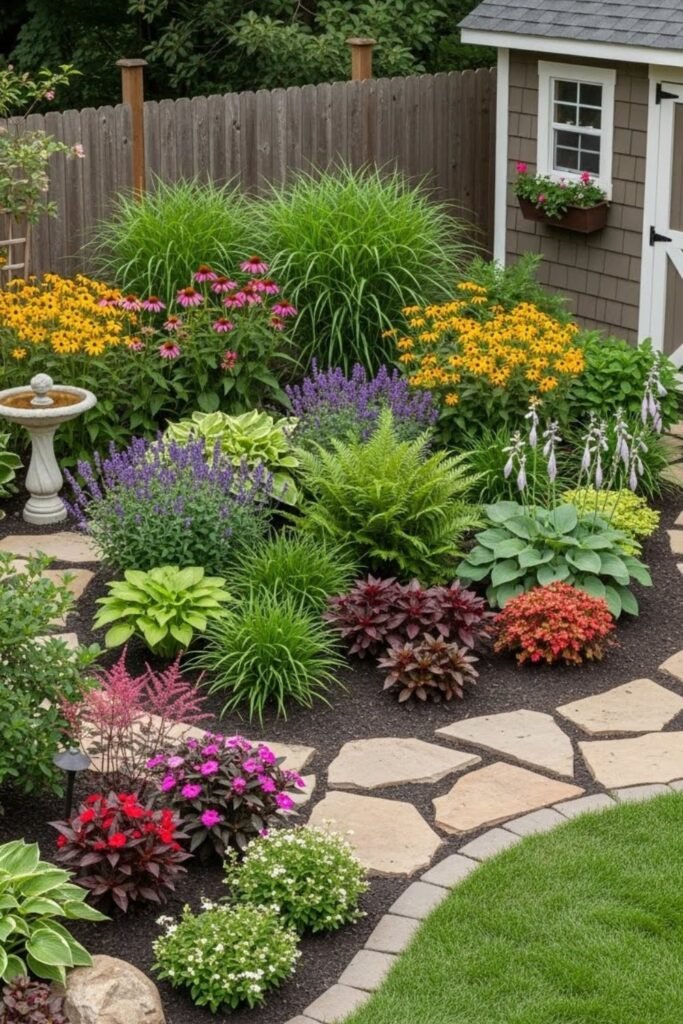
Rock Balance
Too many rocks makes a yard feel harsh and empty, so I balance stone with living plants. I place larger boulders for structure and weight, then soften the edges with drought-tough greenery that won’t demand constant water.
Rock absorbs heat during the day, but plants help cool things down. Water stays focused at the root zones instead of spreading everywhere uselessly.
The balance keeps maintenance simple while giving the yard visual weight that holds up through heat waves and long summers without turning into a moonscape.
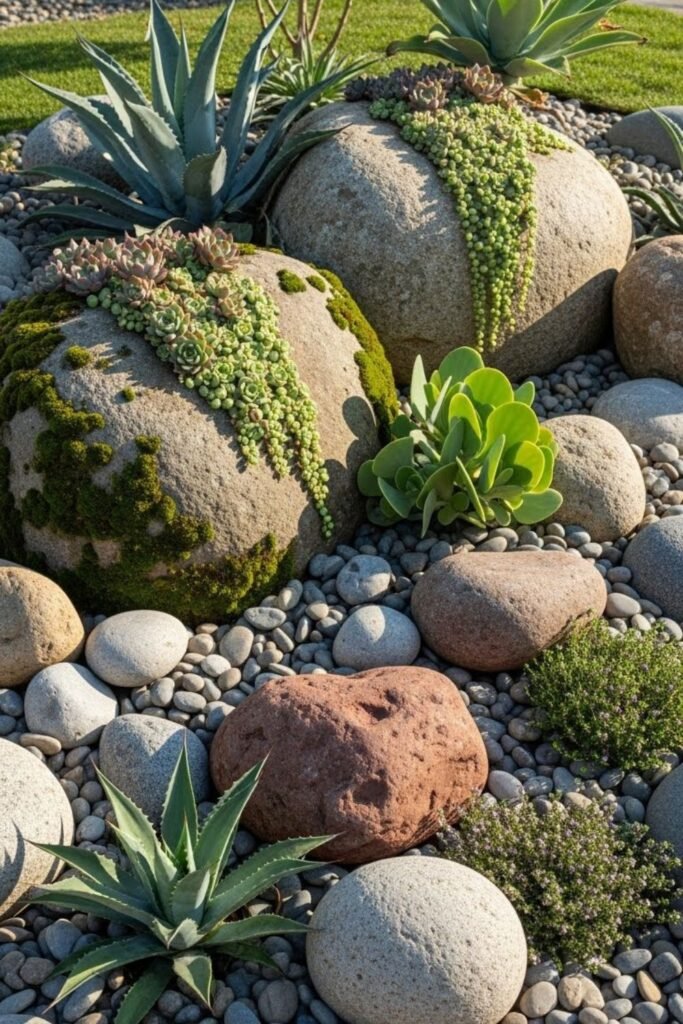
Seating Shade
I plan seating areas first, then build the planting around them. Shade trees, tall shrubs, and low-water plants surround the spots where people actually sit and spend time.
Shade naturally lowers soil temperature and reduces water loss. The seating areas stay usable longer into the hot months, and plants thrive with less stress.
Designing around how people actually use the space creates purpose, keeps irrigation targeted, and turns the yard into something you use instead of just maintain.
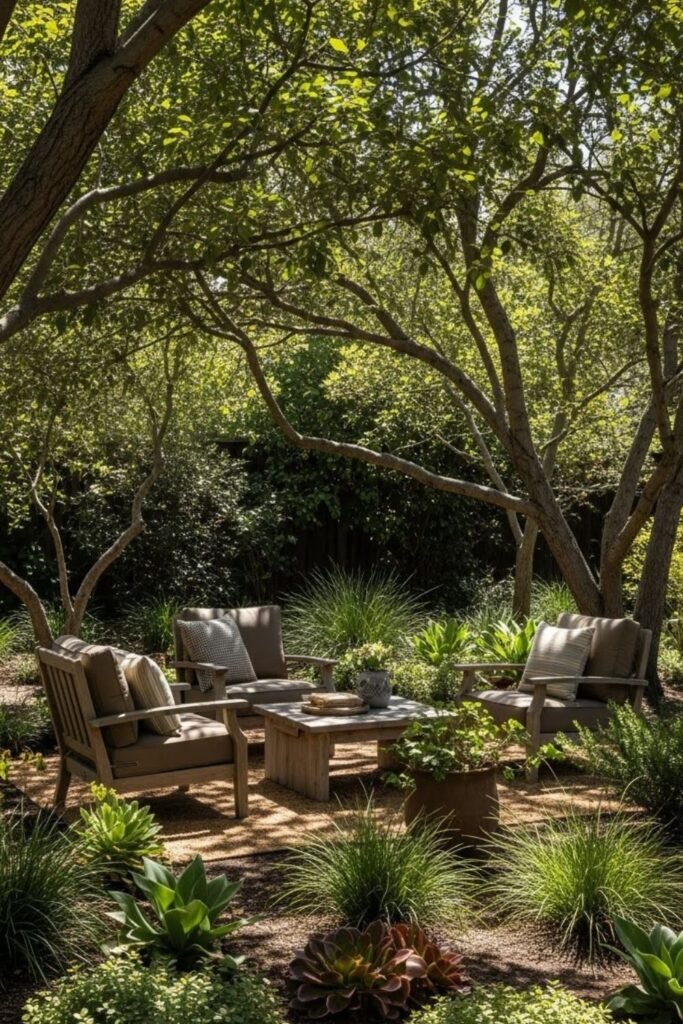
Save this post for later ❤️
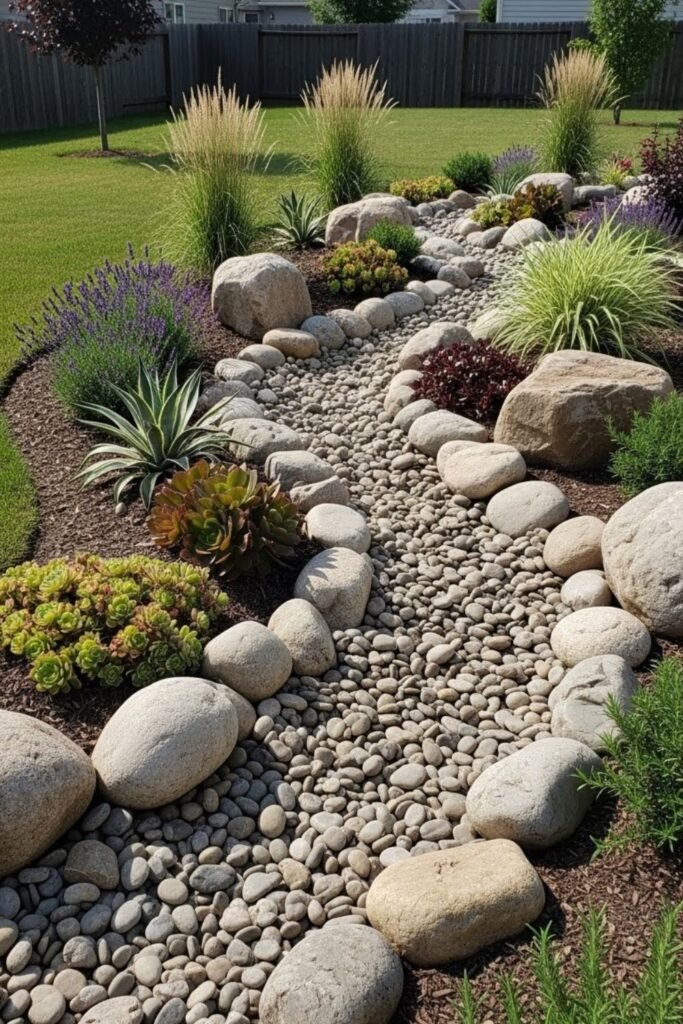
Dry Channel
We don’t get much rain, but when we do, the runoff has nowhere to go and just washes soil away. I shape a dry creek bed using stones and drought-resistant plants to guide water naturally through the yard.
The channel prevents erosion, protects plant roots, and captures moisture where it can actually do some good.
During dry months, it adds texture and interest to the landscape. During storms, water slows down and soaks in instead of washing away topsoil and leaving ruts.
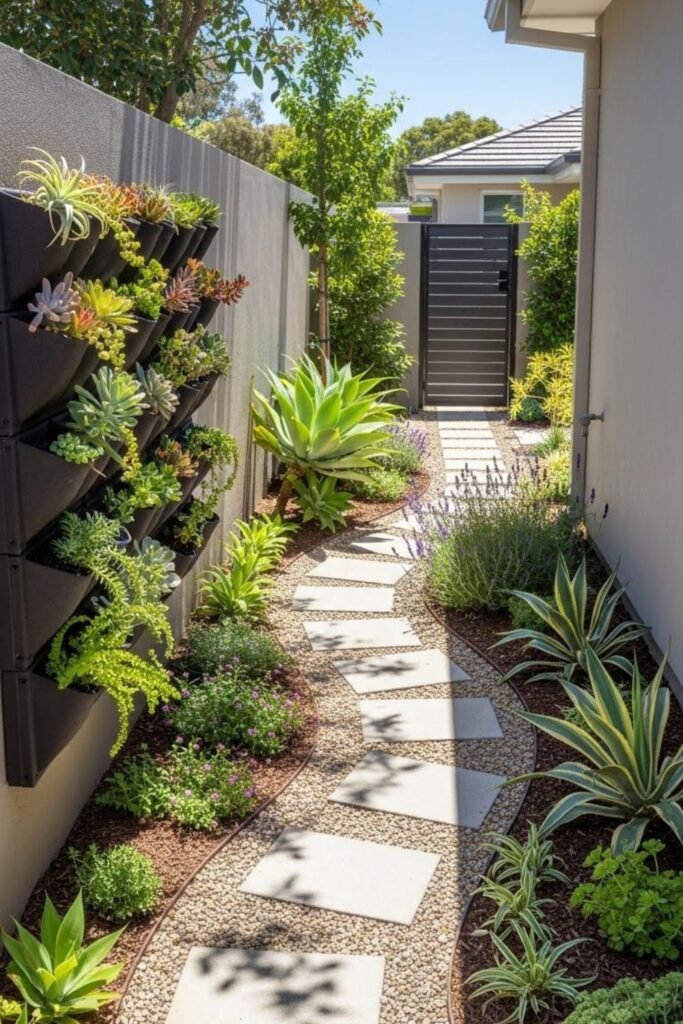
Side Spaces
Those narrow strips between houses always seemed like wasted space until I started treating them like real parts of the yard. I fill them with slim, upright drought plants — things like upright rosemary, ornamental grasses, and ground covers that don’t need much width to look good.
Watering becomes simple and targeted. Weeds lose their foothold, pathways stay clear, and forgotten strips start earning their keep.
Side yards add value to the property, improve airflow around the house, and reduce overall irrigation needs without extra effort.
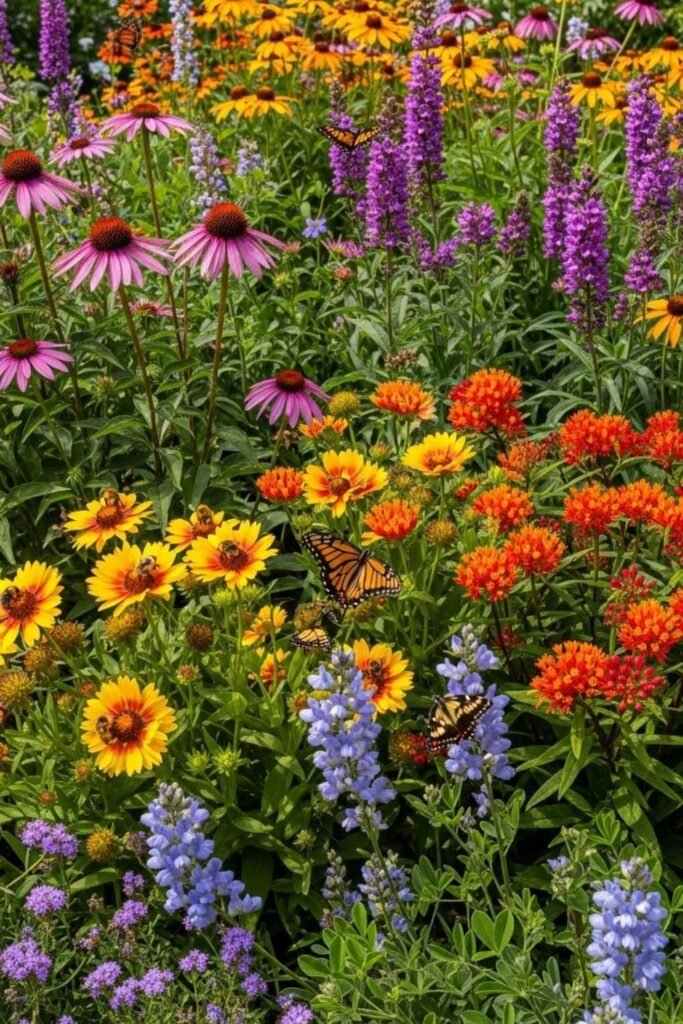
Pollinator Patch
The bee situation worried me enough to rethink my plant choices, so I carved out a section for low-water flowers that actually attract pollinators. Native blooms bring life to the yard without extra watering once the roots settle in.
I group colors together, stagger bloom times so something’s always flowering, and leave space for butterflies and bees to move around comfortably.
Water use drops naturally because these plants evolved to handle local conditions — they don’t panic during heat waves or when you forget to water for a week.
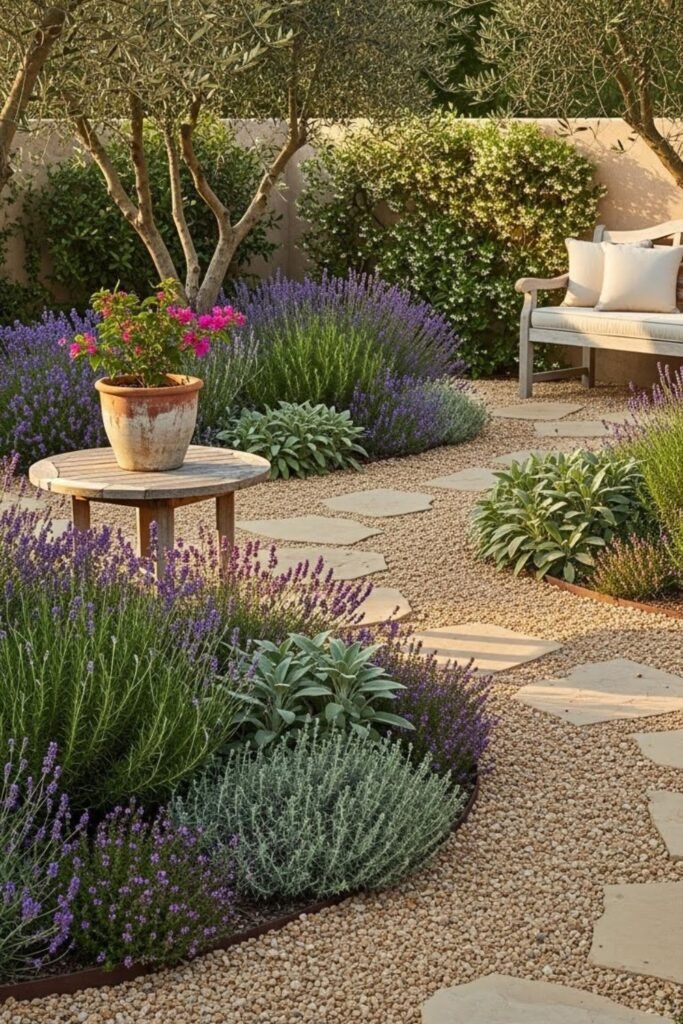
Mediterranean Style
A trip to Italy shifted how I think about hot-weather planting. I started choosing herbs, silvery shrubs, and plants with that Mediterranean look — olive-toned leaves, woody stems, and textures that handle sun without looking stressed.
The soil drains well, I water deeply but infrequently, then step back and let them do their thing.
This style looks relaxed but polished, works beautifully in heat, and rewards patience with plants that get better with age rather than more demanding over time.
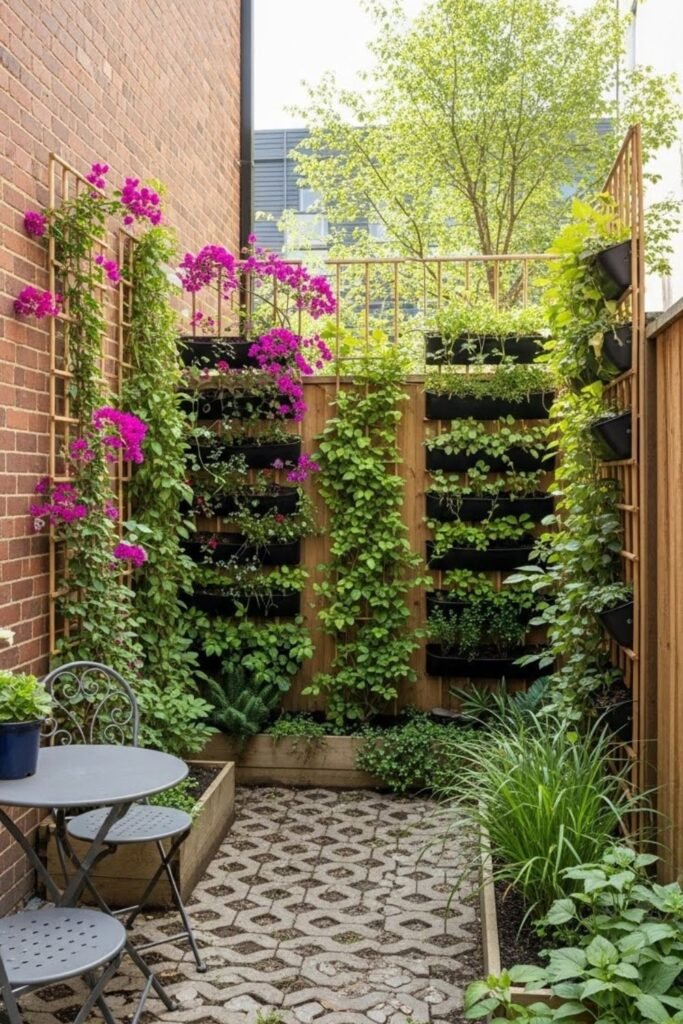
Vertical Focus
Small yards forced me to think upward instead of outward. I use walls, trellises, and narrow supports to grow drought-tough vines and climbers that don’t take up floor space but still add green.
Ground space stays open, watering stays targeted on the specific root zones, and airflow improves around the plants.
Plants growing up walls also shade the building surface, which lowers heat buildup. The yard feels larger without demanding extra irrigation, and vertical elements turn plain fences into living features.
Privacy Screens
Close neighbors made privacy essential, but I didn’t want to build more fencing. Instead, I planted drought-tolerant screening plants — dense shrubs that create barriers and need less long-term care than constantly maintaining wood or vinyl.
I stagger different heights, mulch deeply around the bases, and water slowly during the first year while roots establish.
Once they’re settled, watering needs drop significantly, and the yard feels calm and enclosed without the expense or maintenance of building structures.
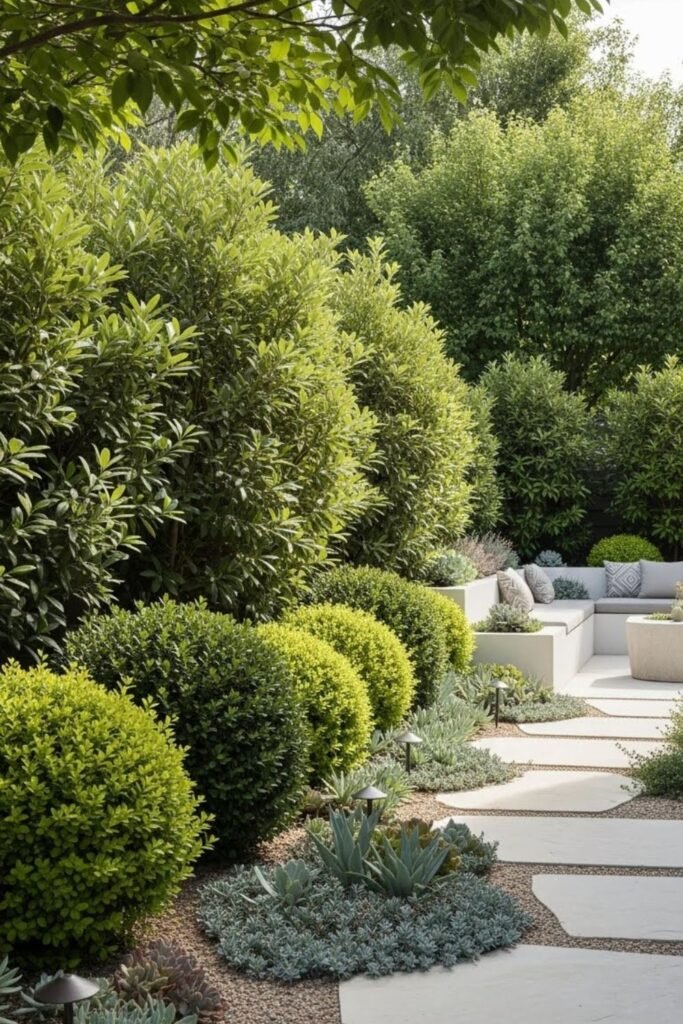
Ground Covers
Bare soil dries out fast and looks unfinished, so I rely on heat-resistant ground covers to knit the surface together. Spreading plants shade the soil, protect roots, and slow evaporation better than mulch alone.
I plant them close together, water deeply at first to get them established, then back off and let them spread.
Weeds have no room to take hold, soil stays cooler longer, and the yard looks finished without daily watering or constant trimming.
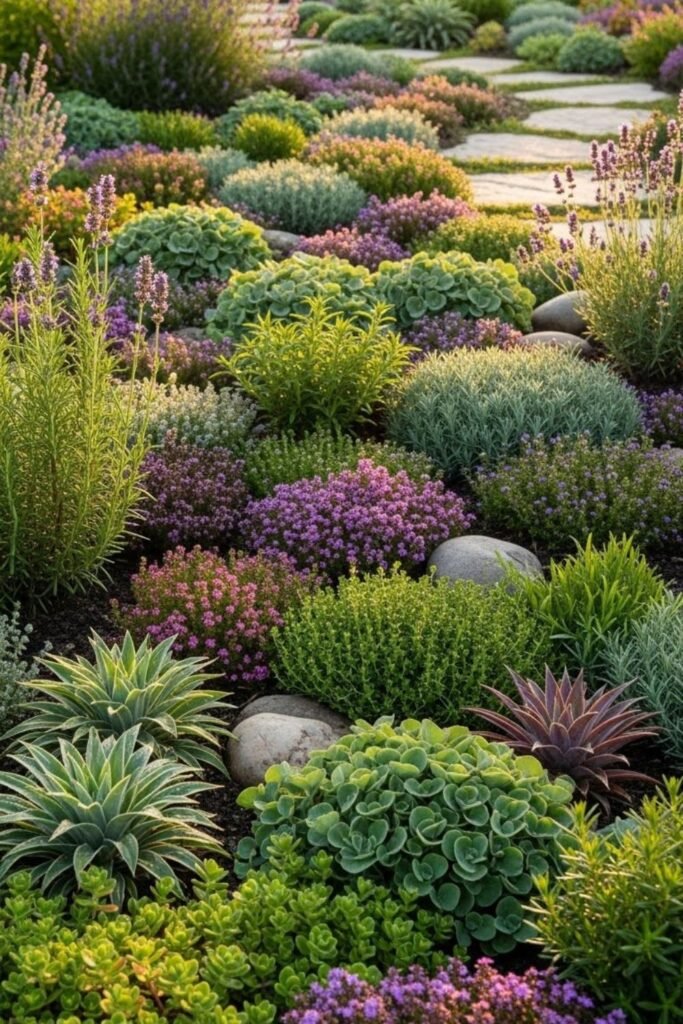
Play Spaces
Kids need room to run, which made me rethink water use around play areas. I keep grass only where active play happens and surround it with drought-tolerant plants that can handle the occasional ball or tricycle.
Shade trees help lower temperatures around play equipment, and mulched edges handle high-traffic zones without turning to mud.
Water goes exactly where family activity demands it, while the rest of the yard saves water and maintenance without sacrificing outdoor fun.
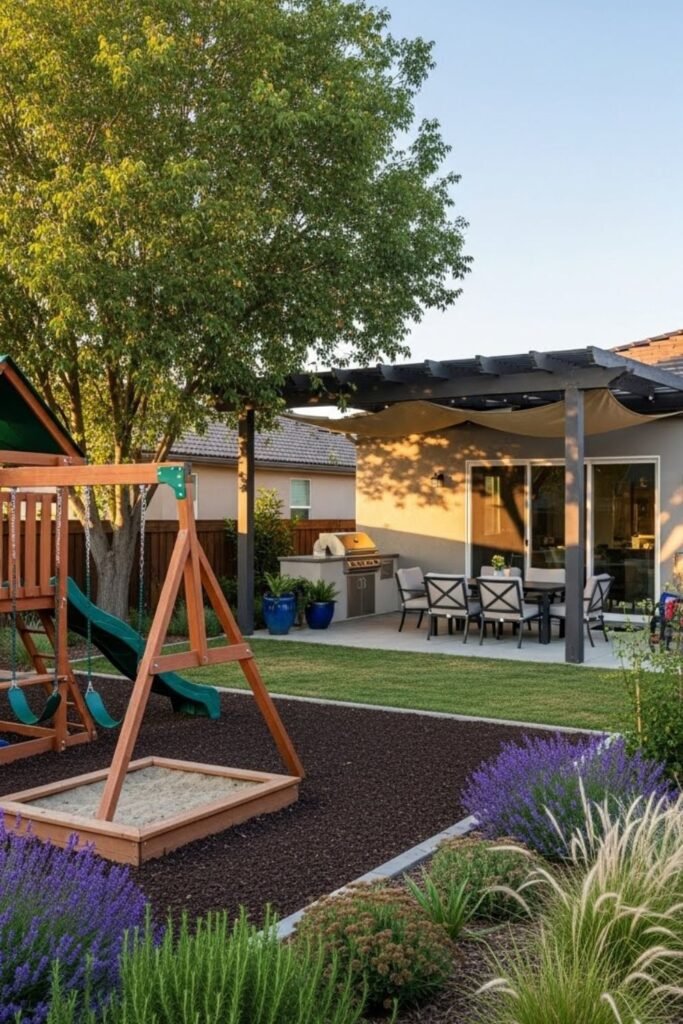
Sloped Ground
Our slope used to wash away every time it rained, leaving ruts and bare spots that took months to recover. I finally planted for erosion control instead of fighting gravity with more water.
Deep-rooted, drought-tough plants hold soil in place and slow runoff. I plant in staggered rows, mulch heavily, and water deeply until roots get established.
The slope stabilized, maintenance dropped to almost nothing, and watering became predictable instead of a constant emergency.
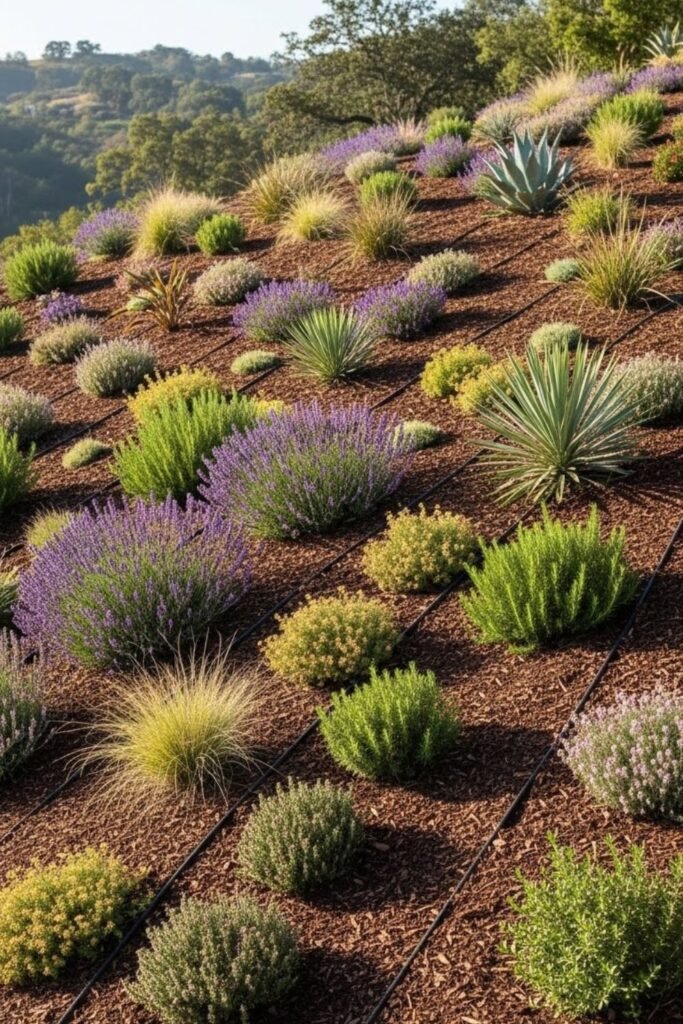
Containers Work
Pots let me control exactly what each plant gets without wasting water on areas that don’t need it. I choose drought-tolerant plants, use containers deep enough for good root development, and water only when the soil actually needs it.
Containers can move with changing sun patterns, get rearranged when something isn’t working, and refresh spaces quickly without digging up the whole yard.
This approach adds greenery where in-ground planting isn’t practical while keeping water use tight and maintenance manageable.
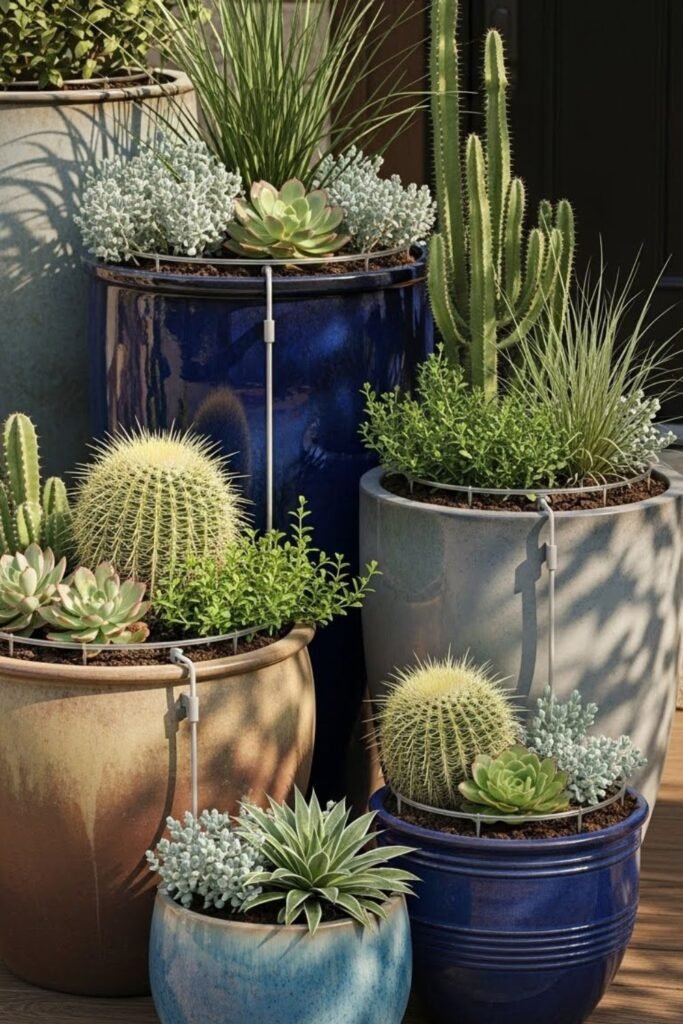
Minimal Lines
Clean, simple layouts use water more efficiently than busy, complicated designs. I strip the yard down to essentials, define clear edges, and rely on mulch and plant texture for visual interest rather than trying to cram in every plant I like.
Fewer plant types mean simpler irrigation and stronger visual impact. I space plants for good airflow, not tight crowding.
Mistakes become obvious quickly, so you can fix them before they become expensive problems. The yard reads calm and handled heat gracefully.
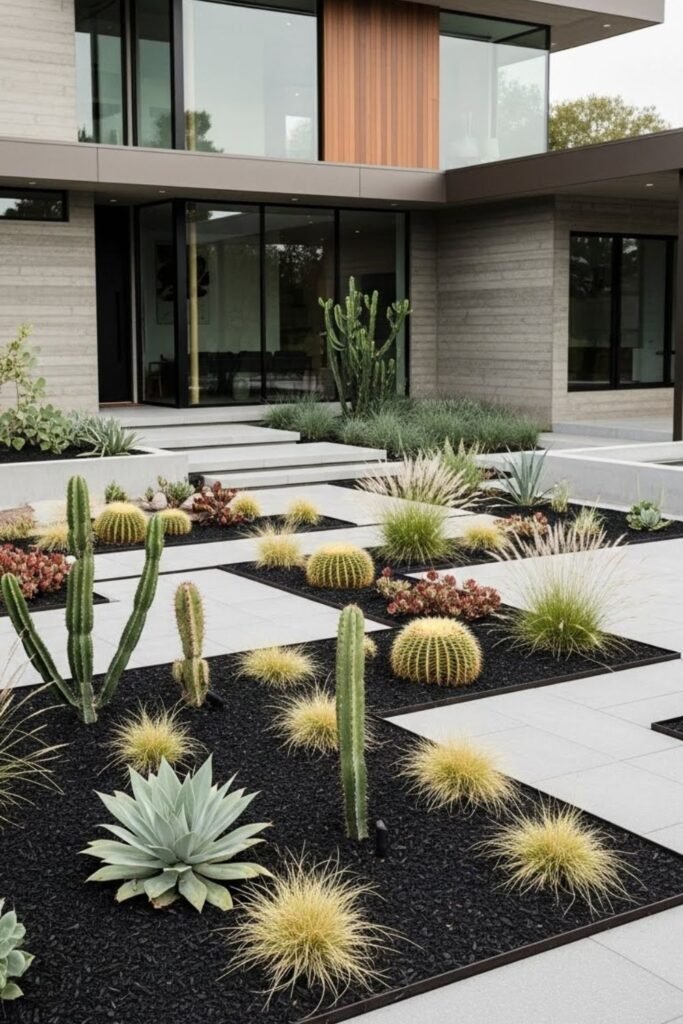
Edible Herbs
Cooking made me realize I should grow what I actually use. Herbs like rosemary, thyme, and oregano thrive with little water and get better with regular harvesting — the more you cut, the bushier they get.
I plant them near the kitchen door for quick access, mulch around the bases, and water sparingly once they’re established.
Fresh herbs improve the food, reduce grocery trips, and the plants stay attractive year-round while using minimal water. It’s practical beauty that actually serves daily life.
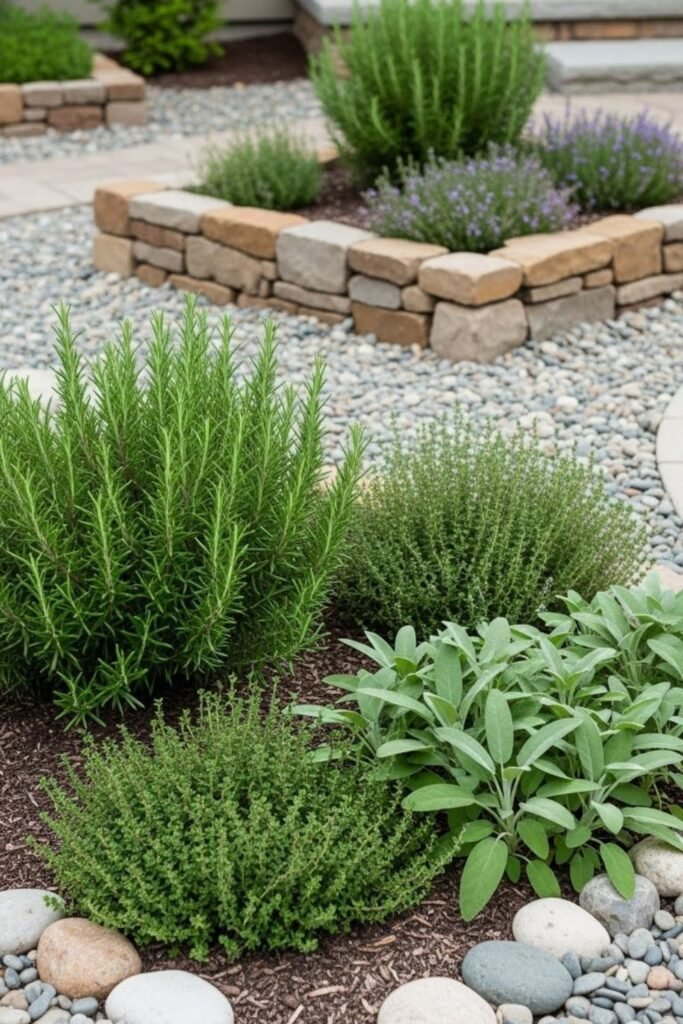
Wind Layouts
Strong afternoon winds dry out plants faster than sun alone. I plan plantings to block those gusts using tough shrubs in staggered rows that create windbreaks without looking like a fortress.
Wind protection keeps moisture where plant roots can reach it instead of letting it blow away.
I follow actual wind patterns, not guesswork, when deciding where to put barriers. Once plants are sheltered, they establish quicker and irrigation becomes predictable rather than a daily emergency.
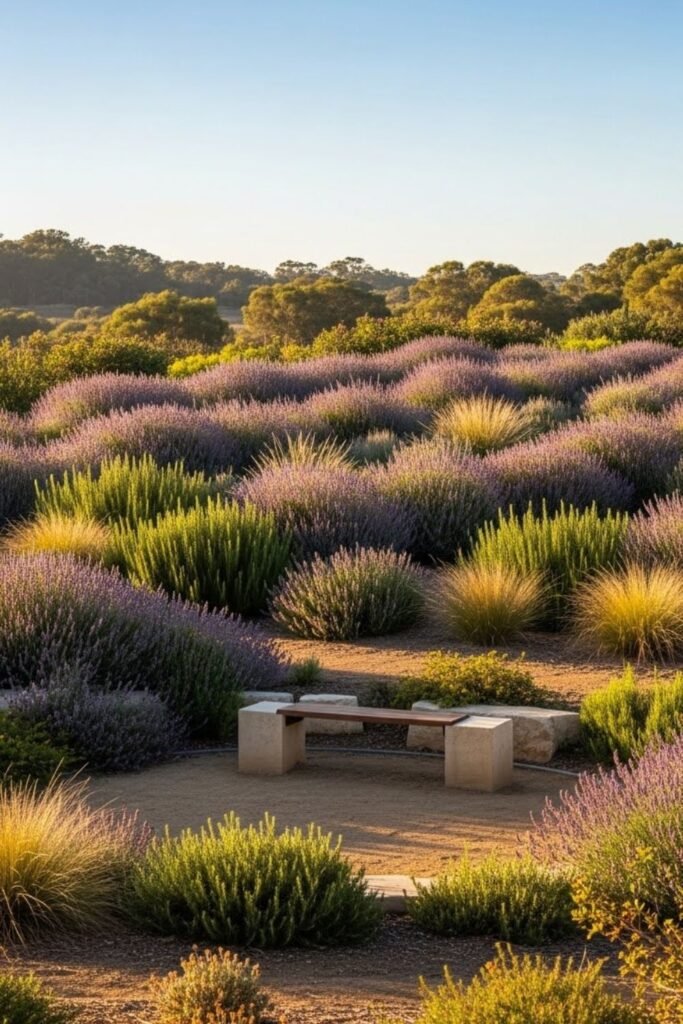
Seasonal Color
People
I’ve spent over four decades building a marriage, raising a family, and learning what truly matters along the way. I write about relationships, home, and navigating life’s later seasons with grace, honesty, and a little humor. My goal is to share the kind of steady, real-life wisdom that helps you feel grounded, encouraged, and a little less alone.