Rain Gardens Are Having a Moment — and Honestly, I Get It Now

I notice the same puddle forming after every storm, right where I don’t need standing water making everything muddy and unusable. Frank keeps saying we need French drains, but I’m not tearing up the yard for pipes when there’s a simpler way.
Most people assume you need major construction to fix water problems, but a rain garden handles runoff naturally without concrete or complicated systems.
The right plants in the right spot can absorb excess water and actually improve how your yard looks instead of fighting against it.
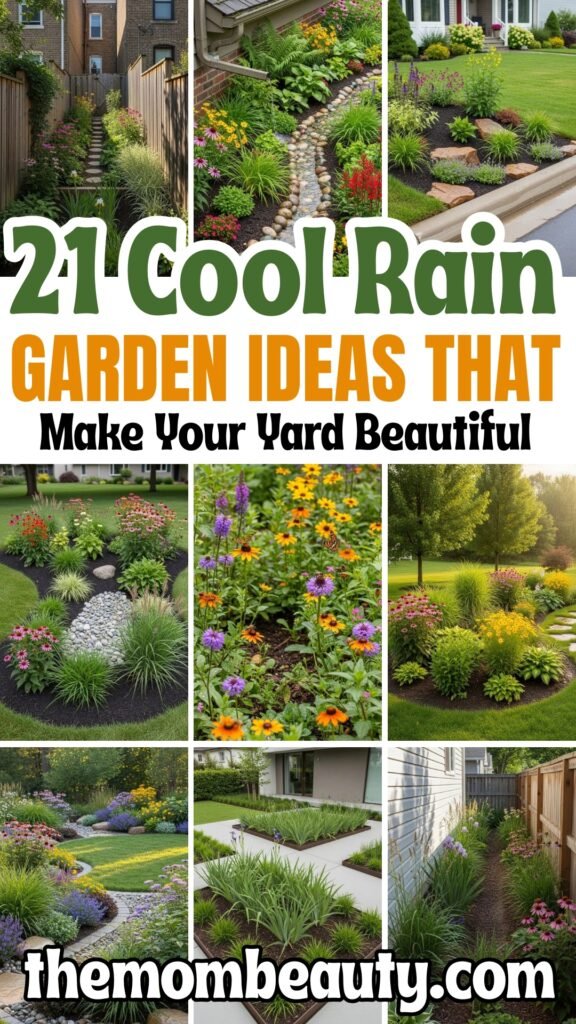
Here are 21 rain garden ideas that work without breaking the budget or requiring a landscaping crew.
Where Is the Best Place to Build a Rain Garden?
Watch your yard during the next downpour and you’ll see exactly where water wants to go. That’s your answer, not some spot you think looks better.
Keep it at least ten feet from your house foundation so you’re solving a problem, not creating one.
If water shoots out of your downspout and carves a path through the lawn, put the garden there. Work with what’s already happening instead of fighting it.
Save this article for later! 👇👇
What Plants Grow Best in a Rain Garden?
Rain garden plants need to handle feast or famine — soaked after storms, then dry for weeks. That rules out anything fussy or high-maintenance.
Native plants adapted to your area handle these swings without dying on you, and they don’t need fertilizer or constant attention.
Put the water-loving plants in the center where it’s wettest, and drought-tolerant ones around the edges where it drains first.
Strong roots matter more than pretty flowers. Save the delicate stuff for containers.
Curb Runoff
The street dumps water right into my front yard every time it rains hard, which makes the entrance area look sloppy and creates muddy patches near the driveway.
I dug a shallow depression about fifteen feet from the street where water naturally collects and planted it with sedge grass and native bunch grasses that don’t mind getting their feet wet.
Now the runoff has somewhere intentional to go instead of spreading everywhere. The grass stays cleaner and the whole front looks more purposeful.

Downspout Control
Our downspout used to dump water directly onto the lawn, creating a muddy trench that never quite dried out. I got tired of stepping around it and decided the water needed somewhere better to go.
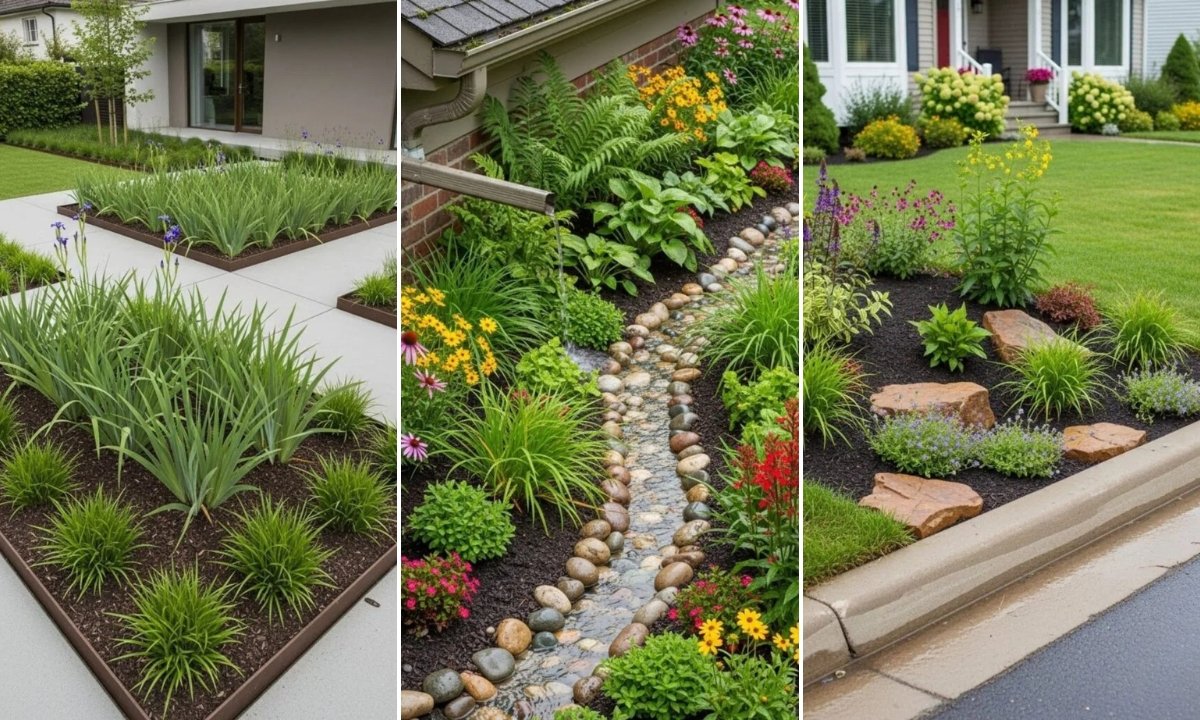
I positioned a kidney-shaped rain garden about six feet from where the water hits the ground and laid smooth river rocks to guide the flow without eroding everything. Blue flag iris and cardinal flower handle the wet conditions, and black-eyed Susan fills in around the edges.
The whole system works automatically now — no more muddy patches or standing water that breeds mosquitoes.

Urban Space
Small yards can’t waste space on problems, but they still need drainage solutions. This narrow rain garden fits along a fence line where water was pooling anyway.
I kept it simple — just a long, shallow swale planted with three types of plants instead of trying to cram in too much variety. Switchgrass provides height, wild bergamot adds summer color, and creeping phlox fills the gaps.
Even ten feet of rain garden makes a difference when water has nowhere else to go.

Backyard Fix
The low spot behind our house stayed soggy for days after every rain, which meant we couldn’t use that part of the yard when we actually wanted to be outside.
Instead of fighting it, I made it deeper and wider, then filled it with plants that could handle the wet-dry cycle. Louisiana iris goes in the center, surrounded by native sedges and finished with little bluestem around the edges where it drains fastest.
Now it’s a feature instead of a problem area we avoid.

Pollinator Haven
I wanted to fix the drainage problem and support bees and butterflies at the same time, so this rain garden focuses on native flowers that bloom in succession from spring through fall.
Wild columbine starts things off early, followed by purple coneflower and bee balm in summer, then finished with New England aster. The water comes and goes naturally, but the blooms keep pollinators fed all season.
I never use chemicals here — the whole point is creating safe habitat while managing runoff.
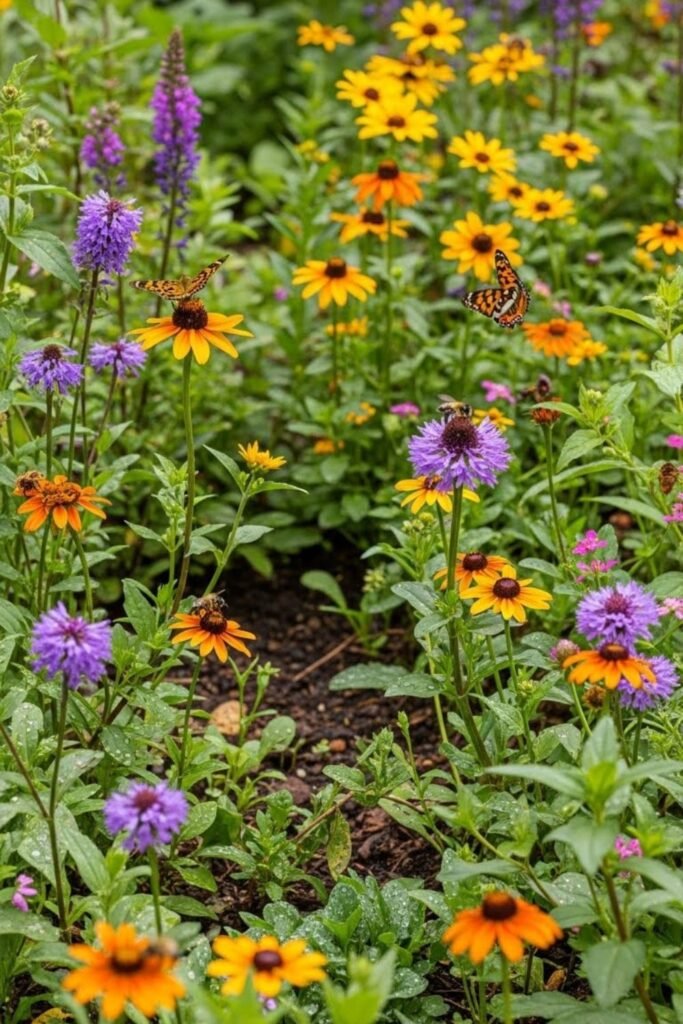
Easy Care
Some weeks I barely have time to water the containers on the patio, let alone maintain complicated garden beds. This rain garden runs itself once established.
I chose prairie dropseed, wild ginger, and coral bells — all natives that spread slowly and don’t need deadheading or dividing. A thick layer of shredded bark mulch keeps weeds down and holds moisture during dry spells.
The only maintenance is cutting everything back in late winter, and even that can wait if life gets busy.
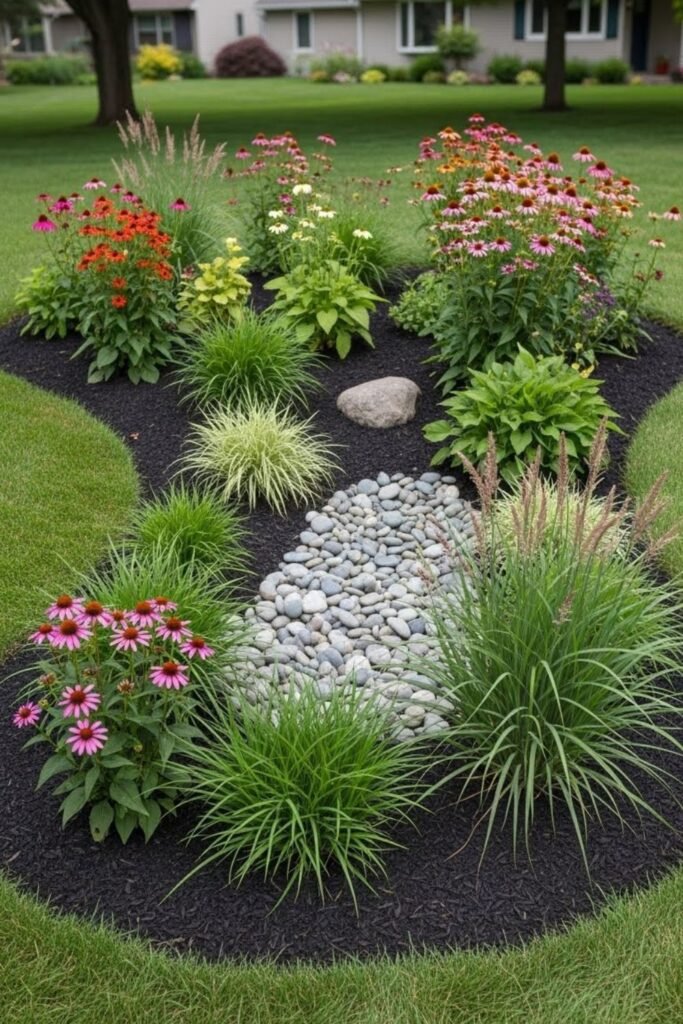
Stone Edge
Using fieldstone around the edges gave this rain garden structure and prevents erosion when water rushes in during heavy storms.
The stones slow down the flow and guide water where I want it to go instead of letting it carve random channels through the soil. I kept the plantings soft to balance all that hard edging — feather reed grass, astilbe, and wild geranium.
It looks intentional even when it’s dry, which matters since rain gardens spend most of their time not holding water.

Side Space
The narrow strip between our house and the neighbor’s fence was always the forgotten part of the yard until water started collecting there and refusing to drain.
I turned it into a long, thin rain garden that catches runoff from both the roof and the neighbor’s driveway. Tall plants go toward the back to maintain privacy — red twig dogwood and elderberry — with shorter groundcovers in front.
Now that dead space actually serves a purpose and looks better than empty mulch.

Clay Solution
Heavy clay soil means water sits on top instead of soaking in, which defeats the whole purpose of a rain garden. I learned this the hard way after my first attempt failed completely.
The solution was breaking up the clay with a pickaxe (Frank’s job), mixing in two yards of compost, and choosing plants with strong roots that could gradually improve the soil structure.
Blue flag iris and swamp milkweed don’t mind heavy soil, and their roots help break it up over time. Progress is slow but steady.
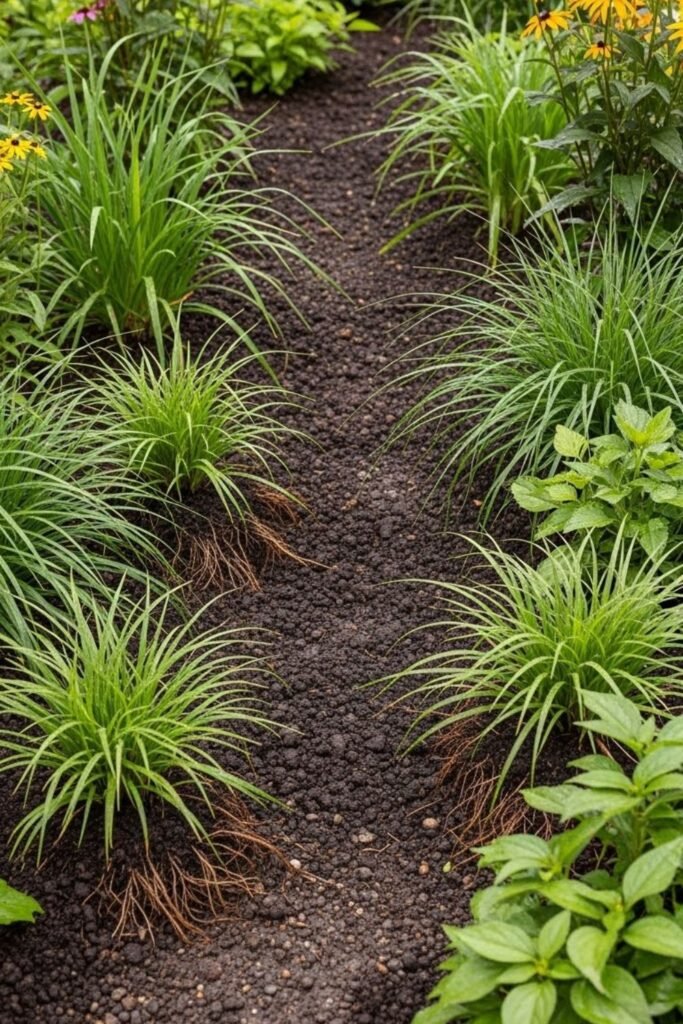
Shade Garden
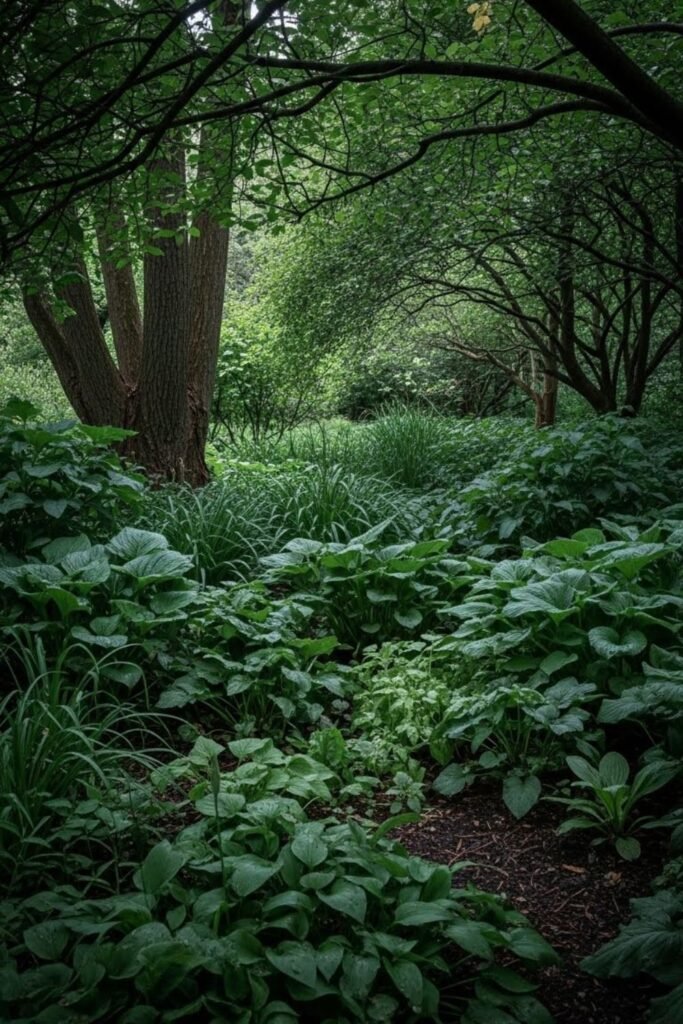
The area under our oak tree stays damp and shady, which most plants hate but rain garden plants can actually handle.
I focused on shade-tolerant natives that don’t mind wet feet — wild ginger, coral bells, and Christmas fern. The tree’s root system helps with drainage, and the shade keeps everything from drying out too fast between rains.
It’s become one of the most peaceful spots in the yard, especially on hot summer days when everywhere else feels baked.
Save this post for later ❤️
Clean Lines
I prefer structured gardens over cottage garden chaos, so this rain garden uses geometric shapes and ordered plant groupings.
Three types of plants arranged in blocks instead of mixed randomly — ornamental grasses for structure, perennials for color, and ground covers to fill gaps. The shape is a simple oval with clean edges maintained by steel edging.
It handles water just as well as a wilder design but fits better with our house’s architectural style.

Creek Style
Heavy rains used to carve ugly channels through our sloped backyard, so I decided to make them look intentional instead of fighting the erosion.
This rain garden follows the natural drainage path with smooth stones creating a dry creek bed that fills during storms. Native sedges and rushes line the banks, softening the rock work without hiding the water flow.
When it’s dry, it looks like a landscape feature. When it’s working, you can actually watch the water movement, which is oddly satisfying.

Kid Safe
Grandchildren visit regularly, which means avoiding anything with thorns, toxic berries, or deep water that could be dangerous.
This rain garden stays shallow with gentle slopes and soft-textured plants that can handle some trampling. Lamb’s ear, purple coneflower, and bunch grasses are all child-friendly and recover quickly from soccer balls or curious hands.
The kids actually like helping me weed it, though their definition of weeds doesn’t always match mine.

Budget Build
Not everyone can spend hundreds on landscaping, but drainage problems don’t care about your budget.
I made this rain garden work for under sixty dollars by keeping it small, using native plants from the conservation district’s annual sale, and reusing stones from an old flower bed. The key was choosing plants that spread naturally to fill in gaps over time.
Wild bergamot and black-eyed Susan cost three dollars each as seedlings but covered twice the space within two years.

Slope Control
Our backyard slopes toward the house, which sends every drop of rain straight toward the foundation during heavy storms.
I interrupted that flow by digging a rain garden about halfway down the slope where water naturally wants to slow down. Deep-rooted native plants like prairie sage and purple prairie clover hold the soil in place while absorbing runoff before it gains dangerous speed.
Frank was skeptical until the first big storm proved it worked — no more water rushing past the patio doors.

Wild Color
I got tired of looking at the same boring landscape all year, so this rain garden changes with every season.
Spring brings pale yellow wild columbine and fresh green sedge grass. Summer explodes with purple coneflower, red bee balm, and orange butterfly weed. Fall finishes strong with deep purple New England asters and golden rod.
Even winter has interest from seed heads and ornamental grass plumes that catch snow.

Wildlife Support
The bird feeder brings cardinals and blue jays to the yard, but they need more than seeds to really thrive.
This rain garden provides berries from elderberry and dogwood, nesting material from native grasses, and water sources from temporary puddles after rain. I let plants go to seed instead of deadheading everything, which feeds birds through fall and winter.
The whole system supports wildlife while handling runoff — two problems solved with one solution.
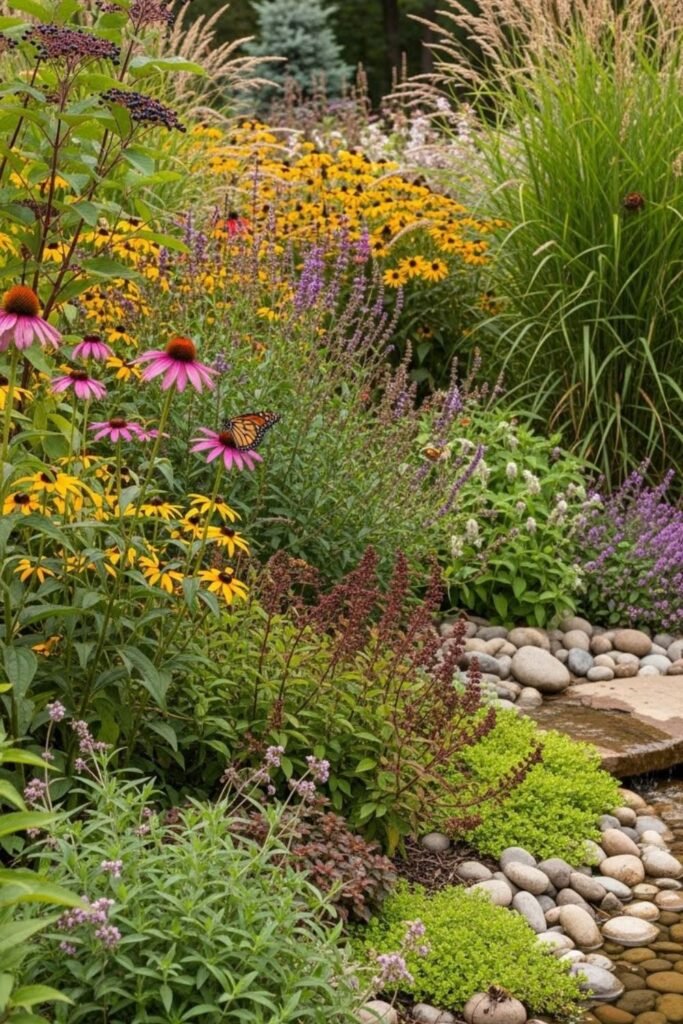
Path Integration
The flagstone path from the driveway to the back gate always had drainage issues where water would pool and make walking treacherous after storms.
I designed this rain garden to run alongside the path, catching runoff before it reaches the walkway. Low plants near the path maintain visibility and safety, while taller perennials toward the back provide screening and visual interest.
Now the path stays usable even after heavy rain, and the garden adds color along a route we use every day.
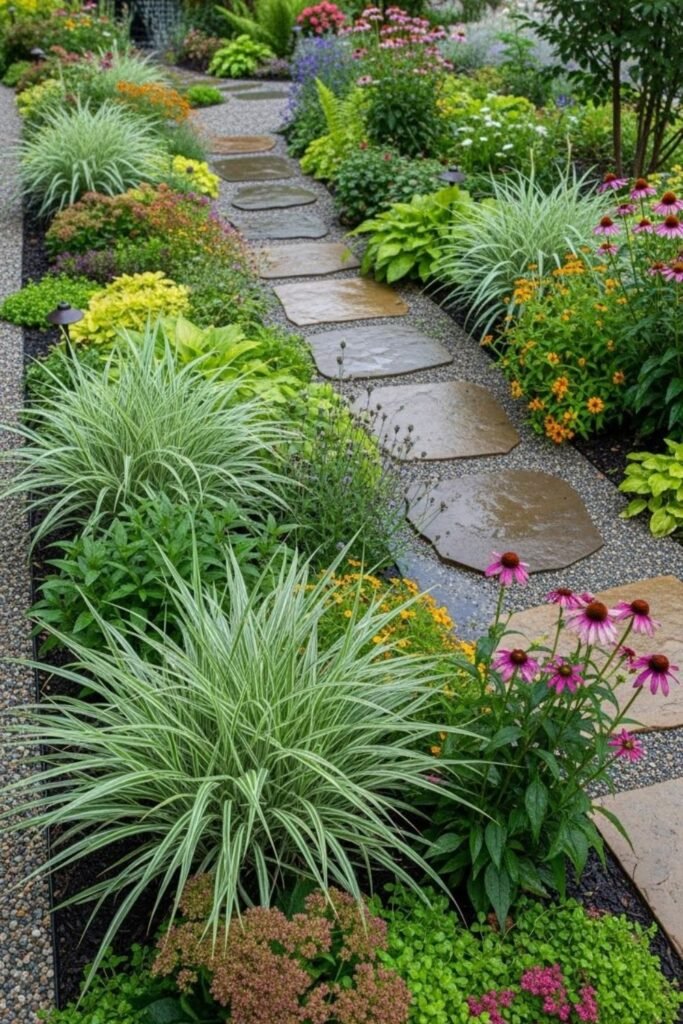
Decor Feature
Just because it’s functional doesn’t mean it has to look utilitarian. This rain garden sits prominently near the front entrance where it needs to handle water and look good doing it.
I chose plants for their form as much as their function — fountain grass for vertical accent, coral bells for colorful foliage, and creeping phlox for groundcover that blooms pink in spring. A few well-placed boulders add structure without feeling heavy.

Beginner Start
The idea of creating a rain garden felt overwhelming until I realized I could start small and learn as I went.
This simple design is just eight feet long and three feet wide at the deepest point, planted with three reliable natives — switchgrass, purple coneflower, and wild bergamot. Success came quickly, which gave me confidence to tackle bigger projects.
Sometimes starting simple is the only way to actually start at all.

Storm Ready
Living in an area that gets sudden, intense thunderstorms taught me that rain gardens need to handle extremes, not just gentle spring showers.
I made this garden wider and deeper than typical recommendations, with reinforced stone edges and clear overflow channels so water never backs up dangerously. Plants with extensive root systems like prairie sage and wild rye anchor everything during heavy flow.
After three seasons of testing, it’s handled everything nature has delivered without damage or failure.

FAQs
Will a rain garden work if my yard already drains poorly?
Poor drainage means you need to fix the soil before planting anything, not after. If water sits for more than 24 hours after rain, the ground is too compacted or clay-heavy for a standard rain garden.
Break up the hardpan, mix in compost, and consider raised edges so water doesn’t just sit there breeding mosquitoes. Skip this step and you’re building a swamp, not a garden.
How long does a rain garden take to start working properly?
Water flows where you direct it from day one, but the plants need time to establish roots that really improve soil structure and absorption.
Expect the first year to be about survival and establishment. By the second growing season, you’ll see real improvement in how quickly water soaks in and how well everything holds together during storms.
I’ve spent over four decades building a marriage, raising a family, and learning what truly matters along the way. I write about relationships, home, and navigating life’s later seasons with grace, honesty, and a little humor. My goal is to share the kind of steady, real-life wisdom that helps you feel grounded, encouraged, and a little less alone.