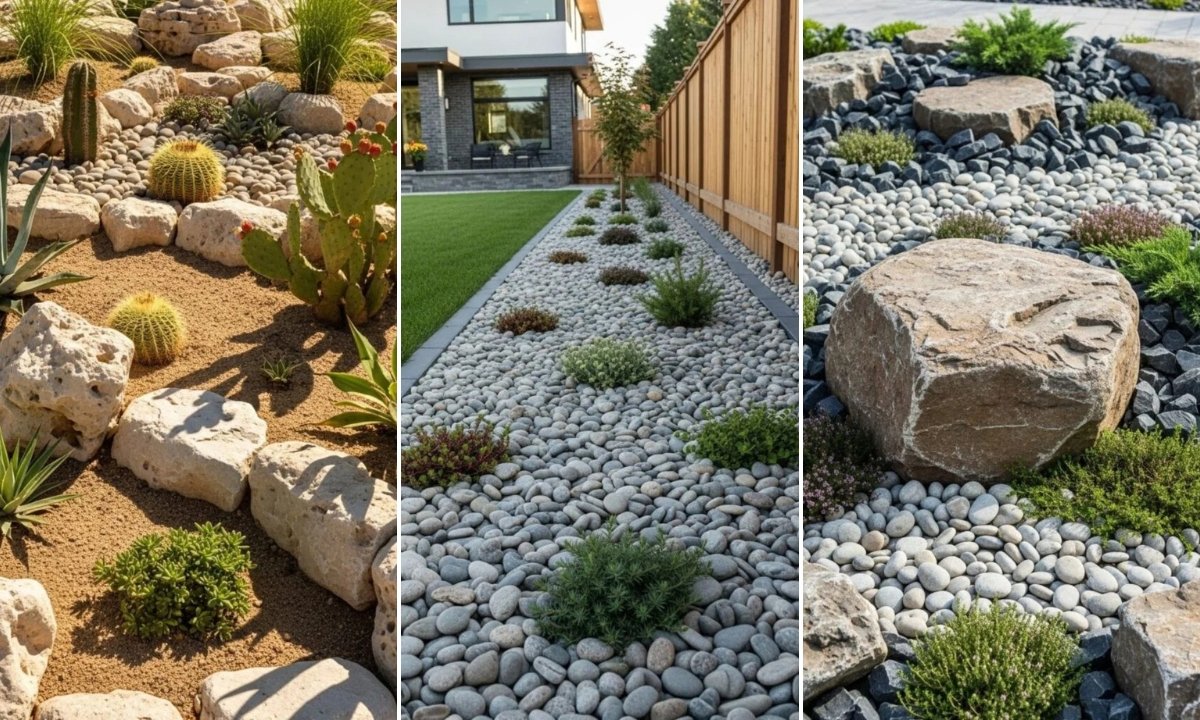
Why I Finally Stopped Fighting My Yard and Started a Rock Garden

The corner of my backyard used to be where I went to feel discouraged. Scraggly grass that never looked right, weeds that came back no matter what I tried, and this persistent feeling that I was missing something obvious.
Then I stopped trying to make it into something it wasn’t. Some spots just want to be rock gardens.
A rock garden handles difficult spaces without demanding constant attention. Here are 23 ways to design one that actually works in 2026.
How Do You Design a Low-Maintenance Rock Garden?
The secret is working with your problem areas instead of against them. I learned this after three summers of fighting a slope near our fence that Frank kept saying we should “just leave alone.”
Pick the spot where nothing else thrives. Clear it properly once, then let the rocks do the heavy lifting.
Place your biggest stones first so everything else has something to relate to.
Use three plant types, maximum. When you try to include everything you like, you end up with more work than you started with.
Save this article for later! 👇👇
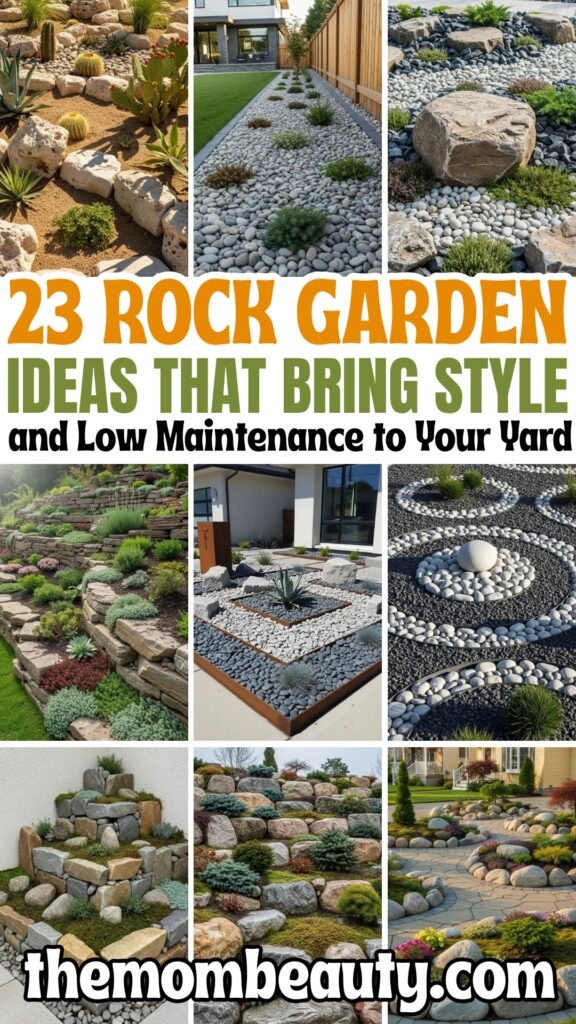
What Are Creative Ways to Mix Plants and Stones in a Rock Garden?
The best rock gardens I’ve seen don’t try to balance stones and plants equally. The rocks carry the design, and plants soften the edges where it feels right.
Set your stones, then tuck plants into the gaps that make sense. Repeat the same plant in three or four spots so your eye has somewhere to rest.
Empty space isn’t something to fix here. It’s part of what makes a rock garden feel calm instead of cluttered, and that’s worth remembering when you’re tempted to add just one more thing.
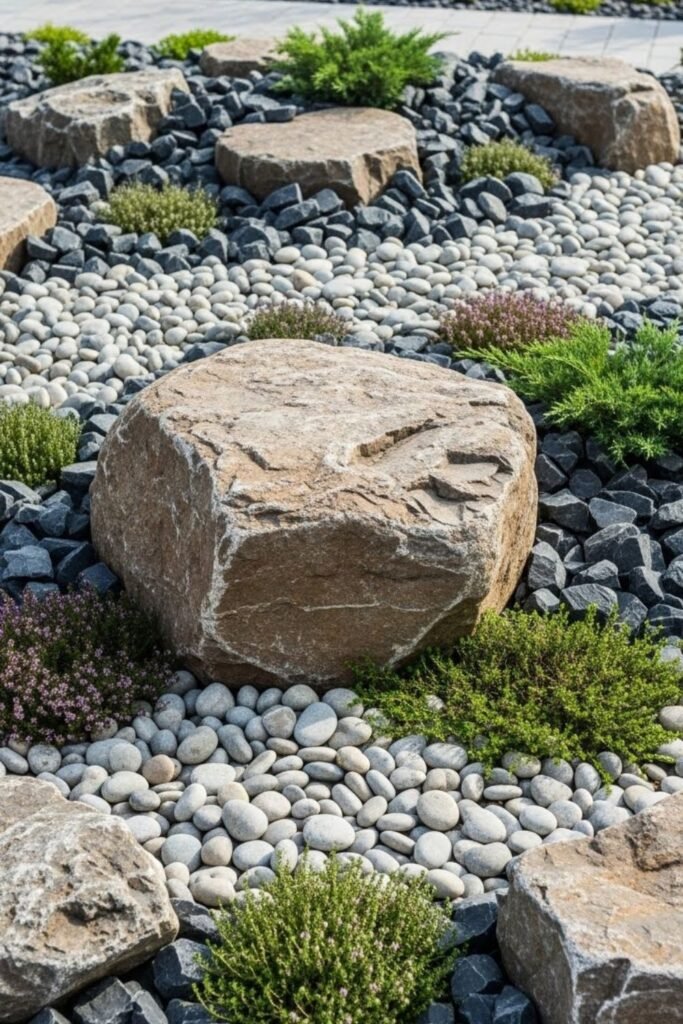
Single Boulder
One substantial rock placed slightly off-center gives the whole space purpose. I found a limestone boulder at the landscape supply place in 2019 and still think it was the best forty dollars I’ve spent on the yard.
Everything else supports it without competing. Smaller stones, a few low plants around the base, space to let it breathe.
This works when you want impact without fuss or when you’re tired of spaces that demand weekly attention just to look intentional.
Side Strip
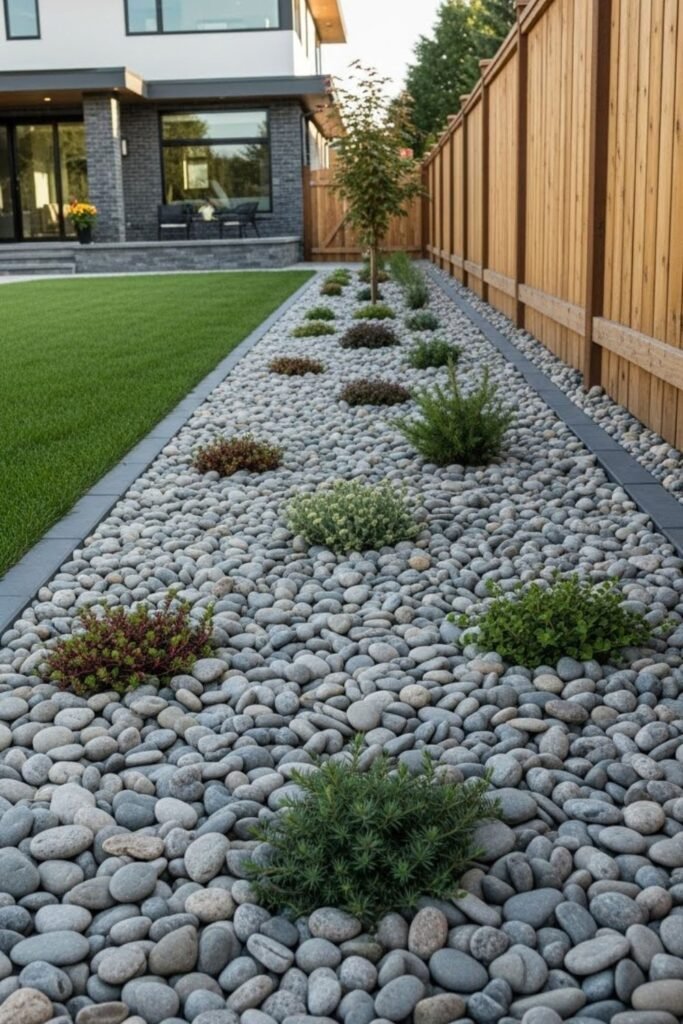
That narrow strip between the fence and the walkway used to collect dead leaves and make me feel like I was failing at something basic. Turns out it just wanted to be a rock garden.
I kept the height low and used stones that were roughly the same size. Plants spaced wider than you’d think, because growth happens whether you plan for it or not.
Now that strip looks like it has a job instead of like something I’m neglecting.
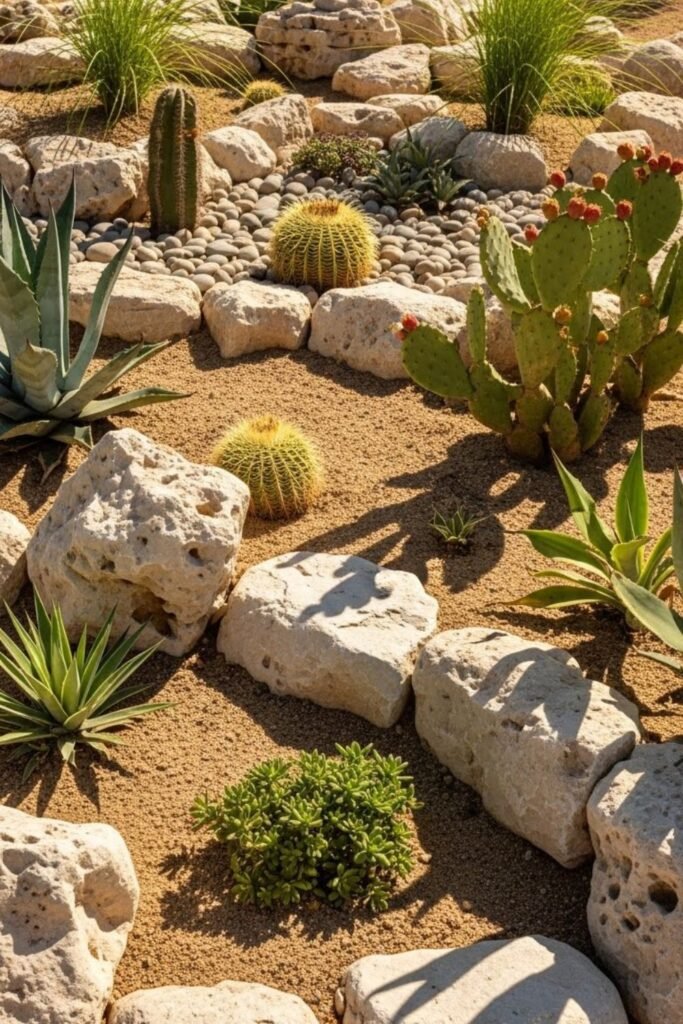
Dry Climate
Heat changes everything. I rely heavily on stone coverage and exactly three types of plants that laugh at drought conditions. Rocks hold whatever moisture there is and protect roots from the worst of summer.
Group plants instead of scattering them—watering becomes simple, and you can focus attention where it matters.
Light-colored stones help too. They don’t absorb heat the way dark ones do, which means less stress on everything around them during the July weeks when you question all your life choices.
Natural Slope
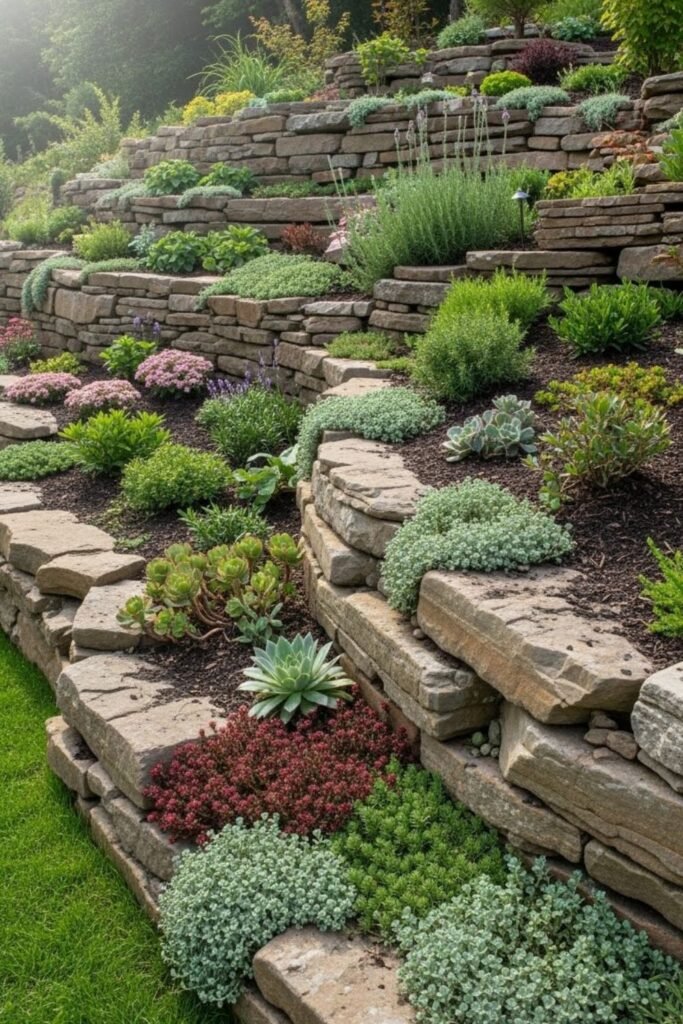
Frank was right about working with the slope instead of trying to level it. Bigger stones go lower to hold everything in place, smaller ones higher up to draw your eye along the natural line of the land.
Plants settle into the gaps and help stabilize things over time. What used to look like an unfinished thought now looks like we planned it that way.
Clean Edges
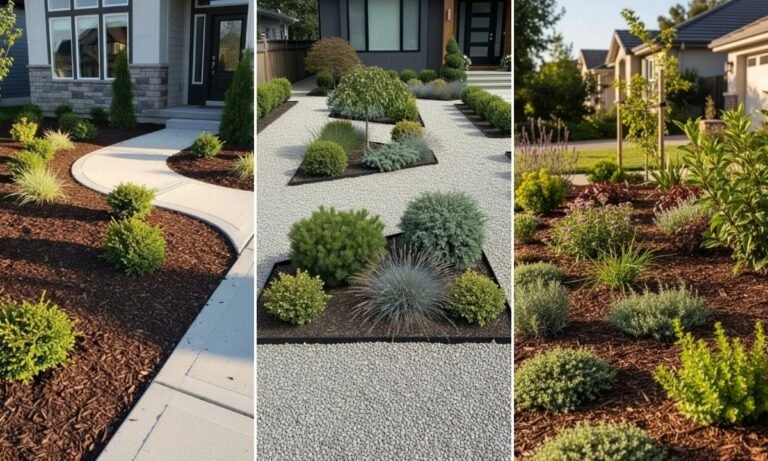
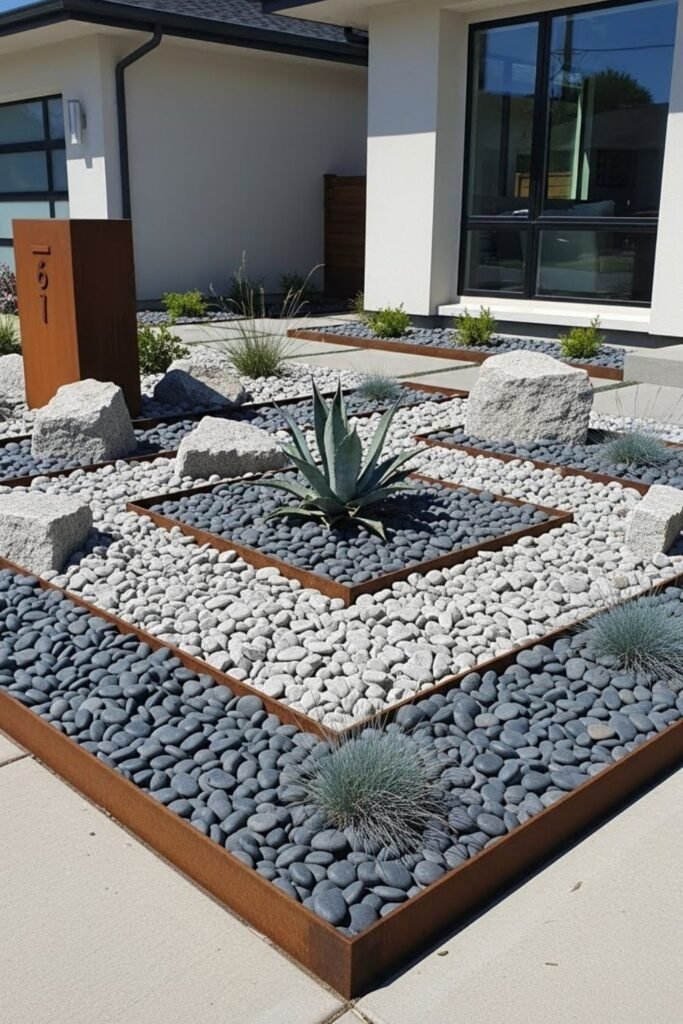
Defined borders make everything look more intentional, especially from the street. I used metal edging along the front garden and it changed how the whole yard feels. Rocks stay where you put them, maintenance becomes predictable.
Keep stone sizes consistent inside the border so your eye can rest. A few compact plants near the corners prevent it from looking harsh.
This approach photographs well if that matters to you, and it definitely helps with curb appeal when you’re thinking about these things.
Two Materials
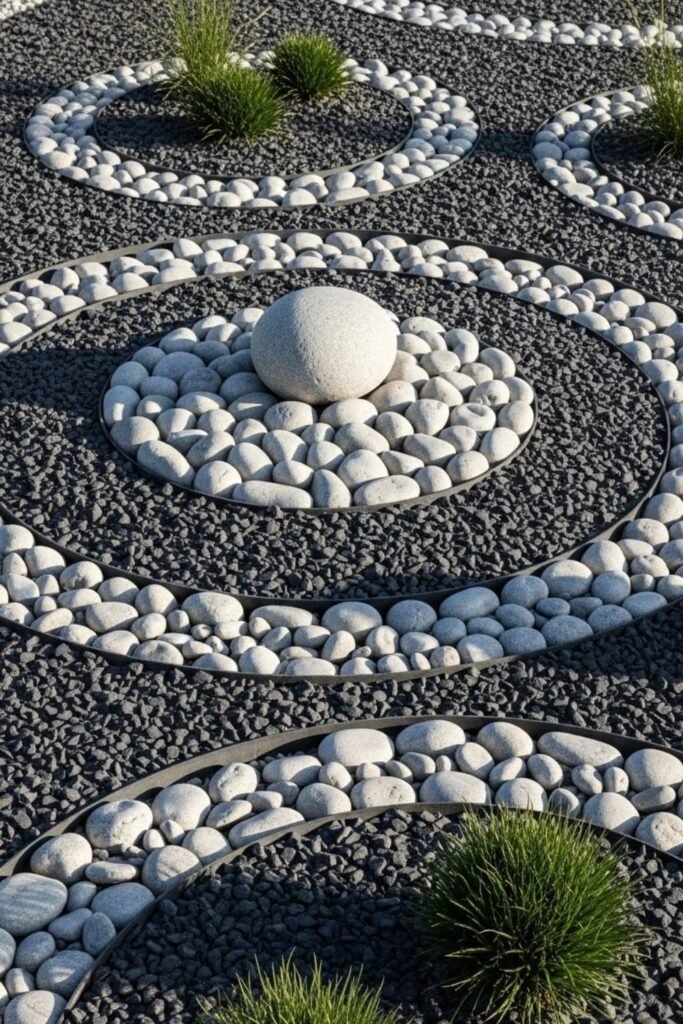
I’ve learned not to overthink material choices. Pick one main stone and one accent—river rock and slate, or decomposed granite and boulders. Resist the urge to add a third texture because it always complicates things more than it helps.
Plants stay minimal and match the scale of your materials. The result feels deliberate, costs less to build, and gives you fewer decisions to second-guess later.
Shaded Garden
Shade forced me to give up on flowers and focus on what actually works in low light. Texture, shape, contrast—these things don’t depend on sun to look good.
Dark stones with light-colored plants, or the reverse. Space rocks closer together to reduce exposed soil where weeds love to settle. Moisture lasts longer here, so watering becomes less of an issue.
The garden stays quiet and polished even when nothing is blooming, which happens more often than you’d think.
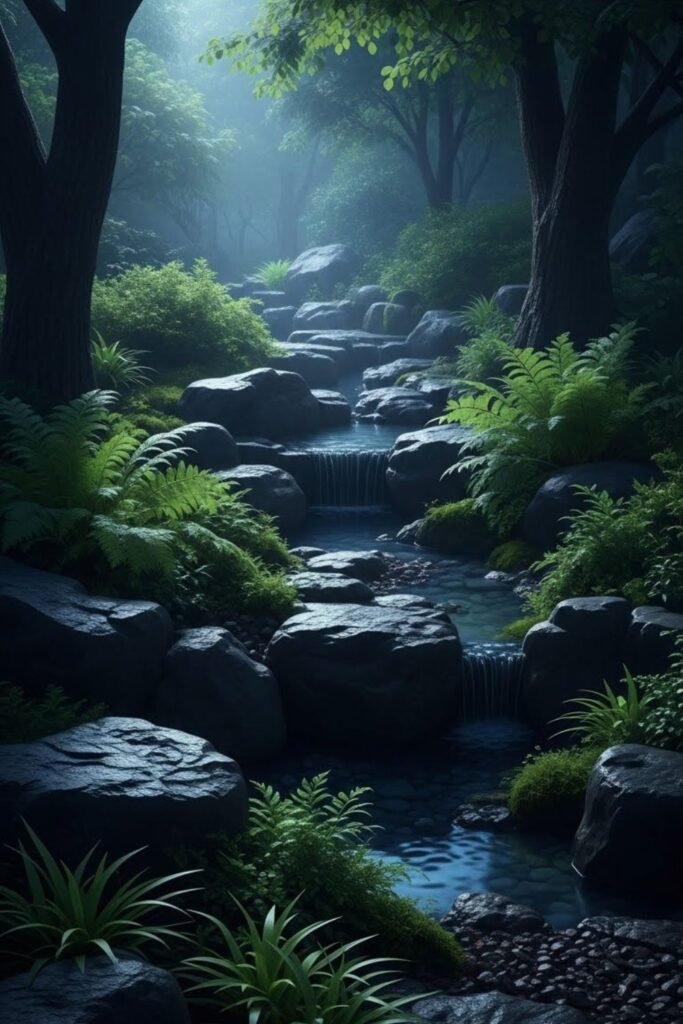
Kid Safe
Rounded river stones instead of anything with sharp edges. Low, stable placement so nothing tips over when someone’s running through.
Wide paths, flexible plants that bend instead of break, and no precarious stacking that makes you nervous every time children are outside.
Safety and good design aren’t opposites. They just require thinking about how spaces actually get used instead of how they look in pictures.
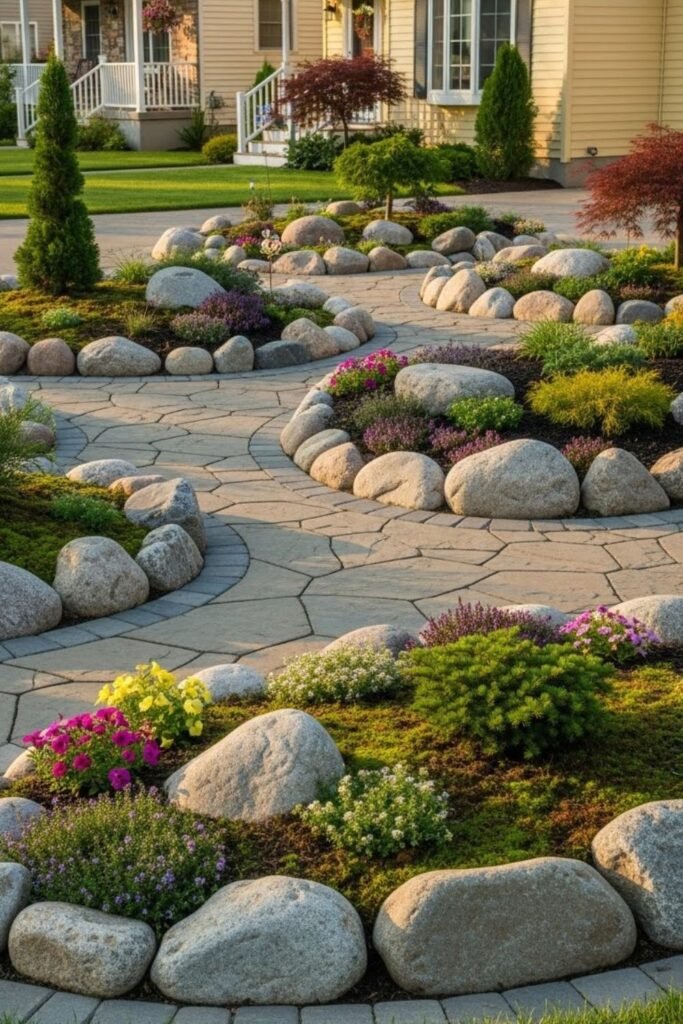
Year Round
Structure matters more than flowers when you want something that looks finished in February as well as June. Plan the stone layout to stand on its own, then add plants that keep their shape.
Generous spacing so nothing looks crowded when plants fill out. Evergreens or slow grasses that don’t disappear for half the year.
Snow, rain, heat waves—the garden still feels intentional instead of abandoned, and that’s worth planning for.
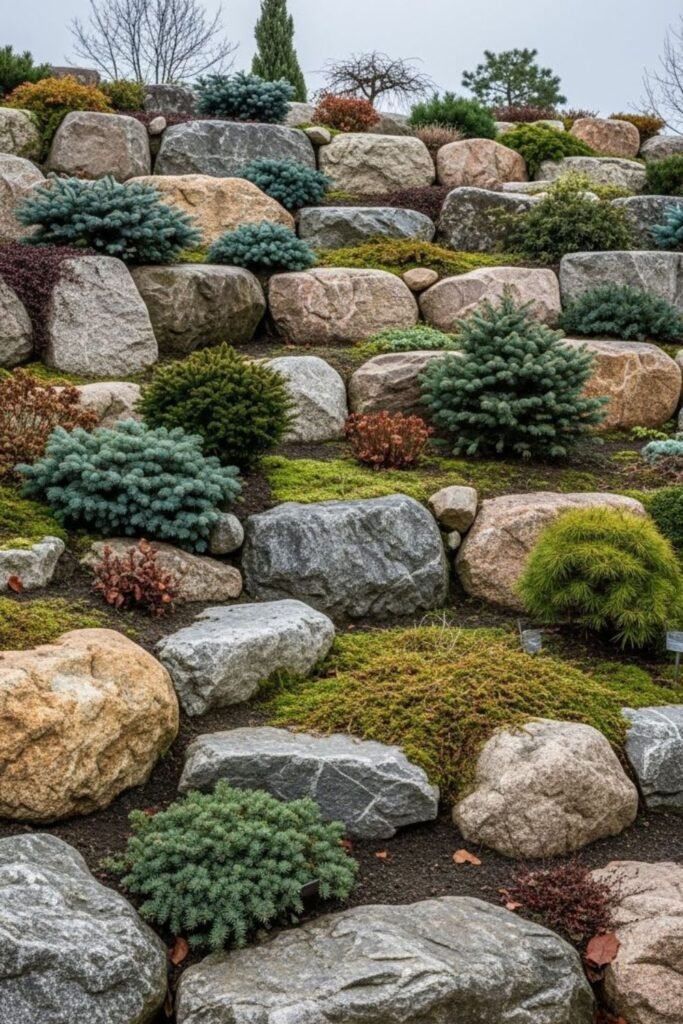
Corner Space
That awkward corner where the fence meets the house used to collect random garden tools and make me feel disorganized just looking at it.
Angled stone placement pulls your attention inward instead of emphasizing the corner itself. Keep it low so it doesn’t block anything important. One or two plants to soften the hard lines.
Now it looks intentional instead of forgotten, which is sometimes all you need from a space.
Save this post for later ❤️
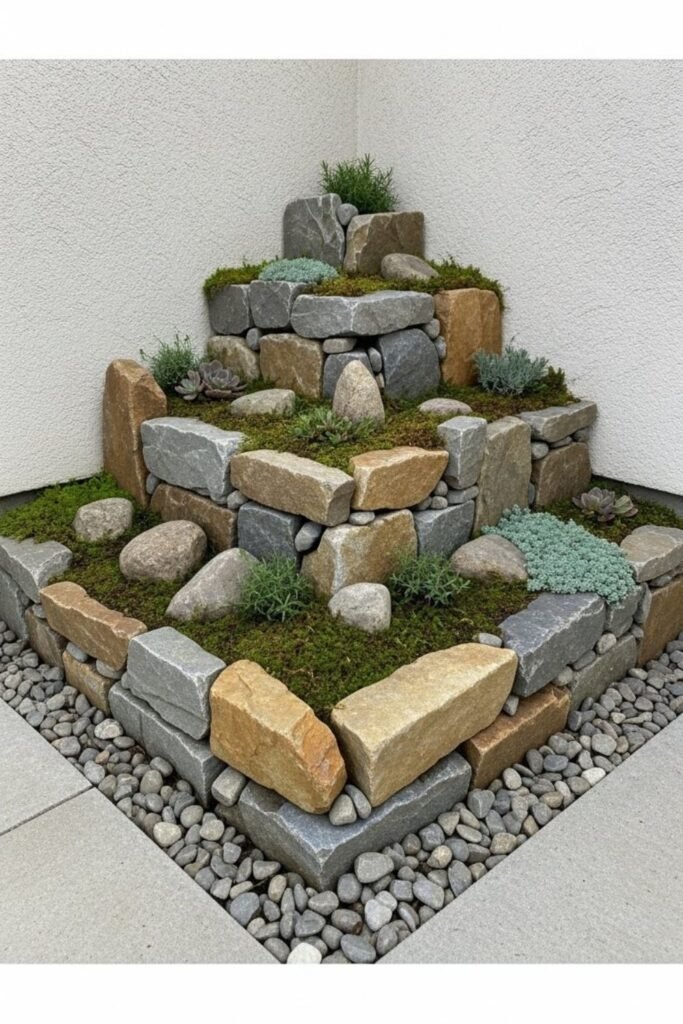
Texture Focus
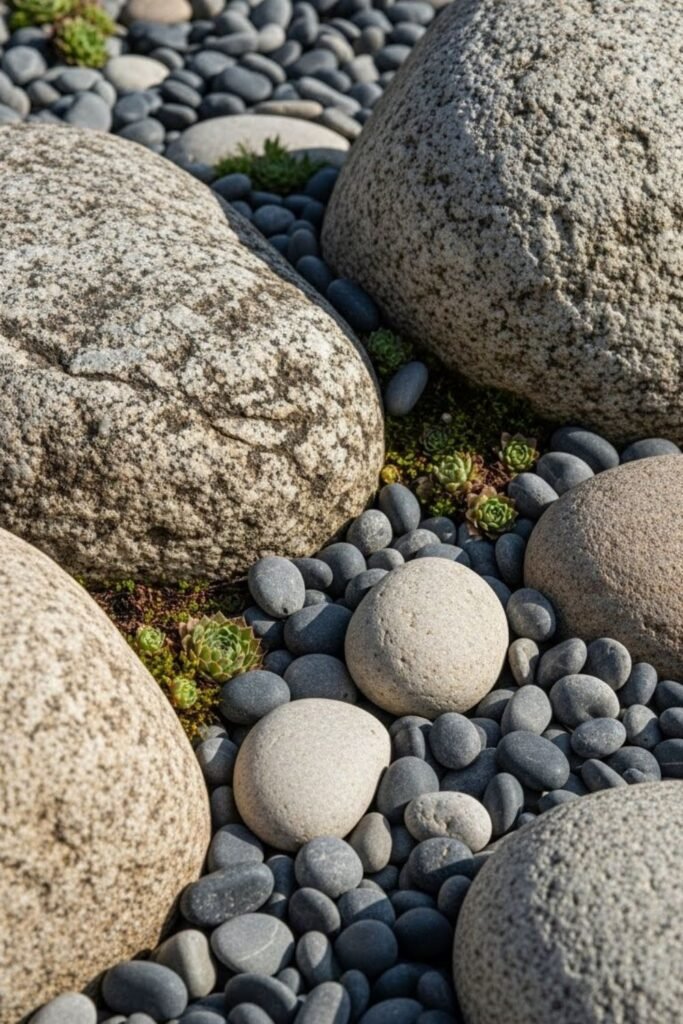
Rough stones next to smooth ones create more visual interest than any color combination I’ve tried. The eye keeps moving naturally, plants can stay simple, and it works even when you’re not in the mood for weekly garden maintenance.
Mix flat slabs with rounded rocks. Let texture be the star instead of trying to make plants do all the work.
Hidden Pockets
I used to think every gap needed to be filled until I realized that small spaces between stones protect plant roots from wind and heat while keeping growth controlled.
Plants peek out instead of taking over. Maintenance stays minimal because weeds have trouble establishing in tight spots. The garden ends up feeling layered, like it developed over time rather than being installed over one weekend.
Weed Control
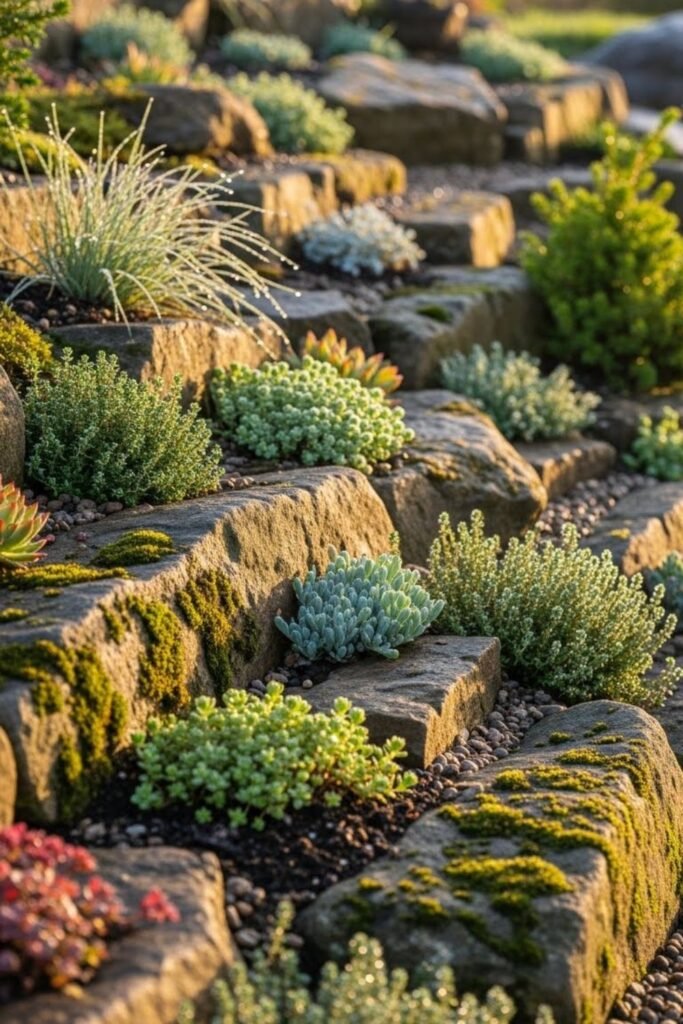
Dense stone coverage blocks light, tight joints leave no room for unwanted growth. The key is preparing the base properly—compact gravel before placing rocks, and be realistic about plant choices.
Fewer plants mean less disturbed soil, which weeds love. Problems never start instead of having to deal with them later, and that makes all the difference when you want to skip yard work for a few weeks without consequences.
Beginner Build
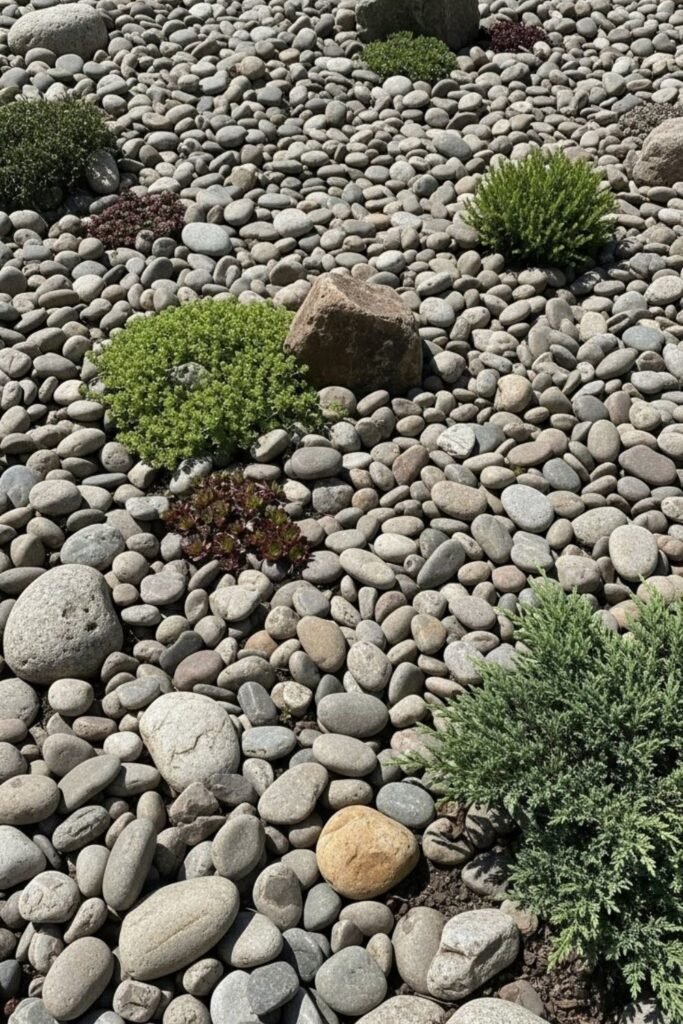
Start smaller than you think you want to. Simple layouts teach you about balance without overwhelming decisions or costly mistakes. Easy stones, basic tools, a forgiving plan that doesn’t require precision.
Measure less, adjust more. Progress feels steady instead of stressful, and confidence grows as the space takes shape. Anyone can build something solid with patience and realistic expectations about what a weekend project actually looks like.
Lawn Blend
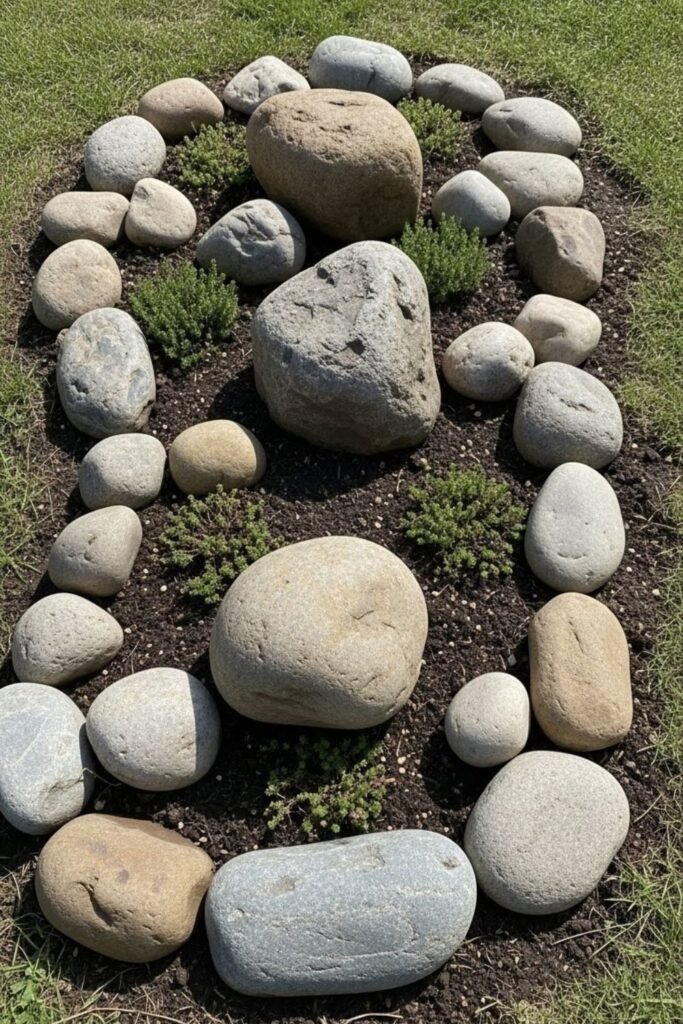
Soft transitions avoid that harsh line where garden meets grass. Sink rocks slightly so mowing stays manageable. Plant choices stay low and flexible, never stiff or formal.
The garden feels connected to the rest of the yard instead of like a separate project you haven’t quite figured out how to integrate.
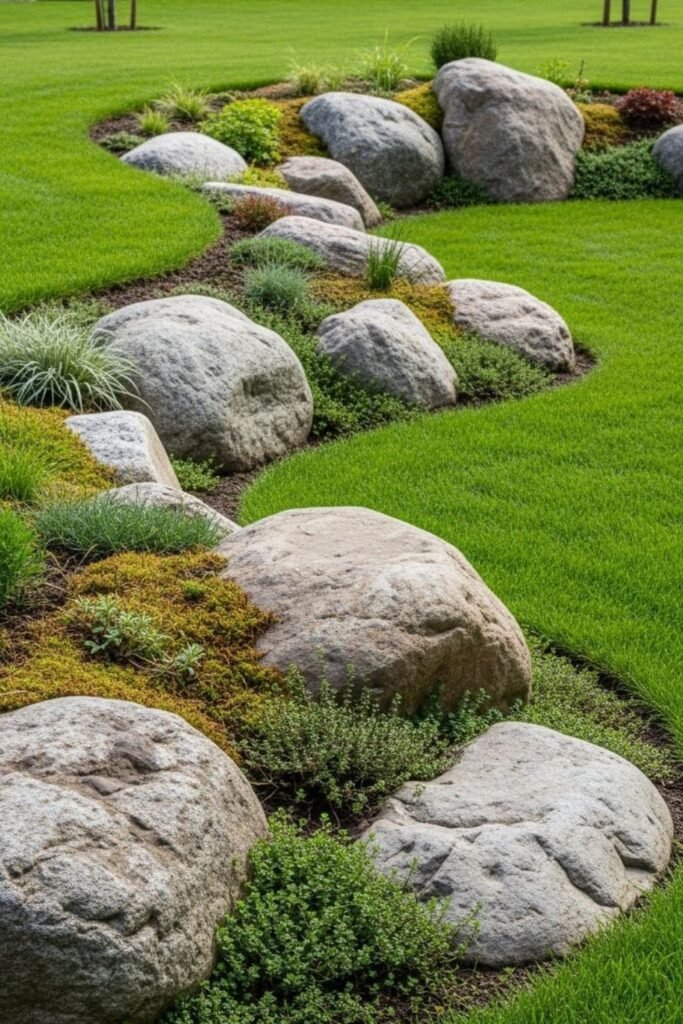
Pattern Repeat
Consistent spacing creates rhythm without effort. Place similar stones at regular intervals, let the eye rest, let plants echo that pattern instead of fighting it.
The design feels intentional even when simple. Repetition forgives small flaws and suits anyone who wants order without constant adjustments or second-guessing placement decisions.
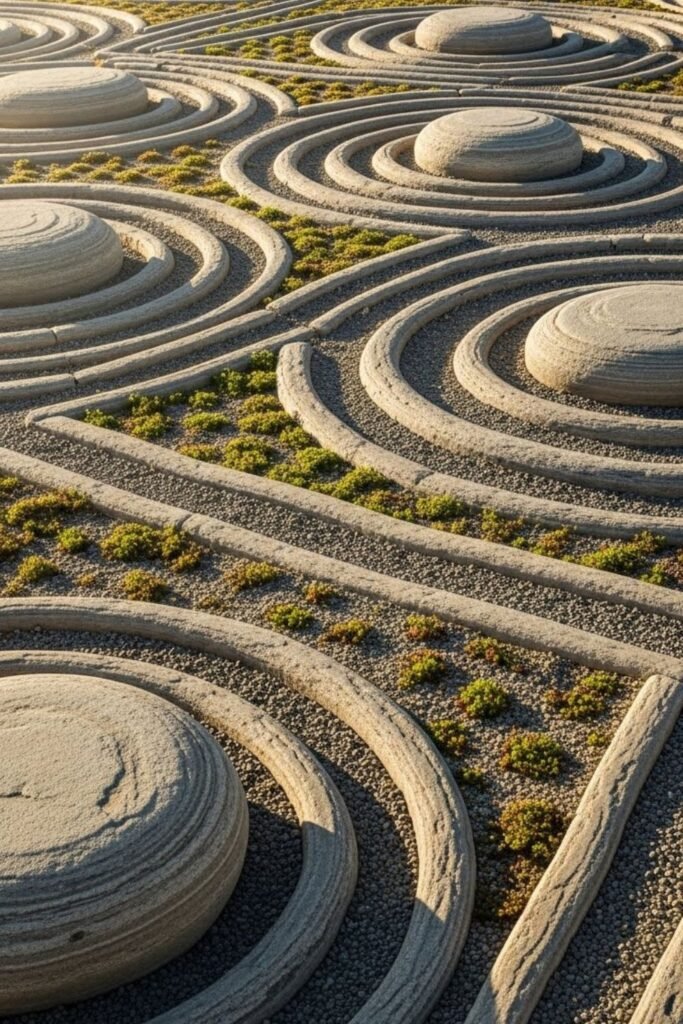
Stepping Zones
Flat stones spaced naturally invite movement without forcing a path. Keep surrounding rocks low so footing feels safe, tuck plants away from walking areas.
This makes the garden interactive instead of just something to look at from a distance. Movement feels natural, maintenance stays simple, and the space becomes something you experience rather than just admire.
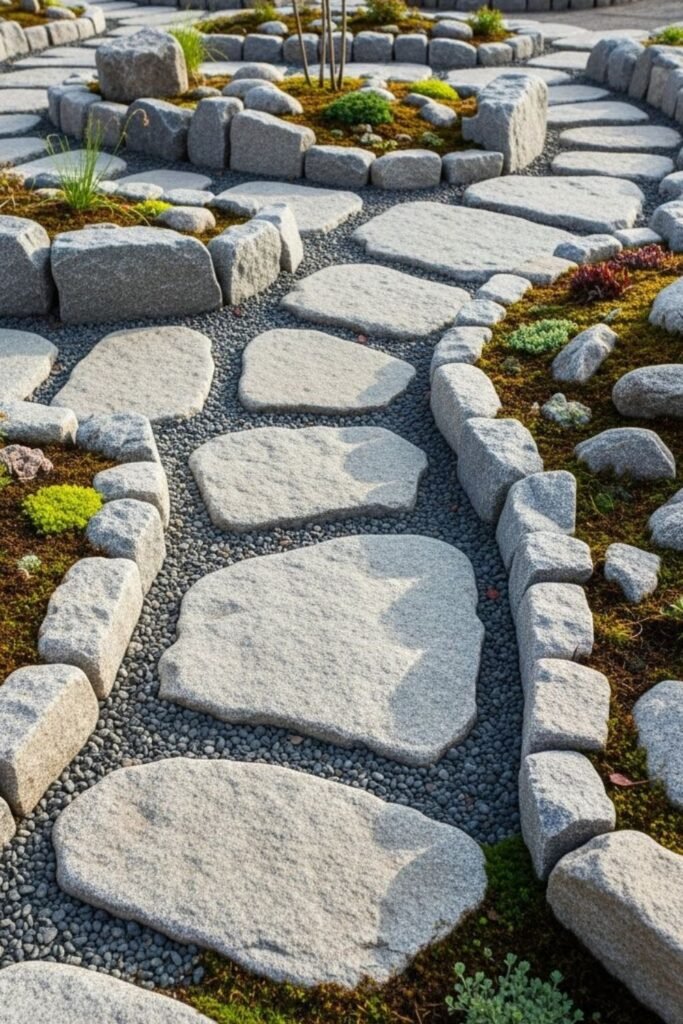
Low Profile
Everything close to the ground feels more relaxed. Low plants spread instead of reaching up, which means less trimming and better sight lines. Rocks stay partially buried so nothing looks stacked or unstable.
This setup handles wind better and stays neat longer. Perfect for small yards where height can feel overwhelming or anywhere you want calm instead of drama.
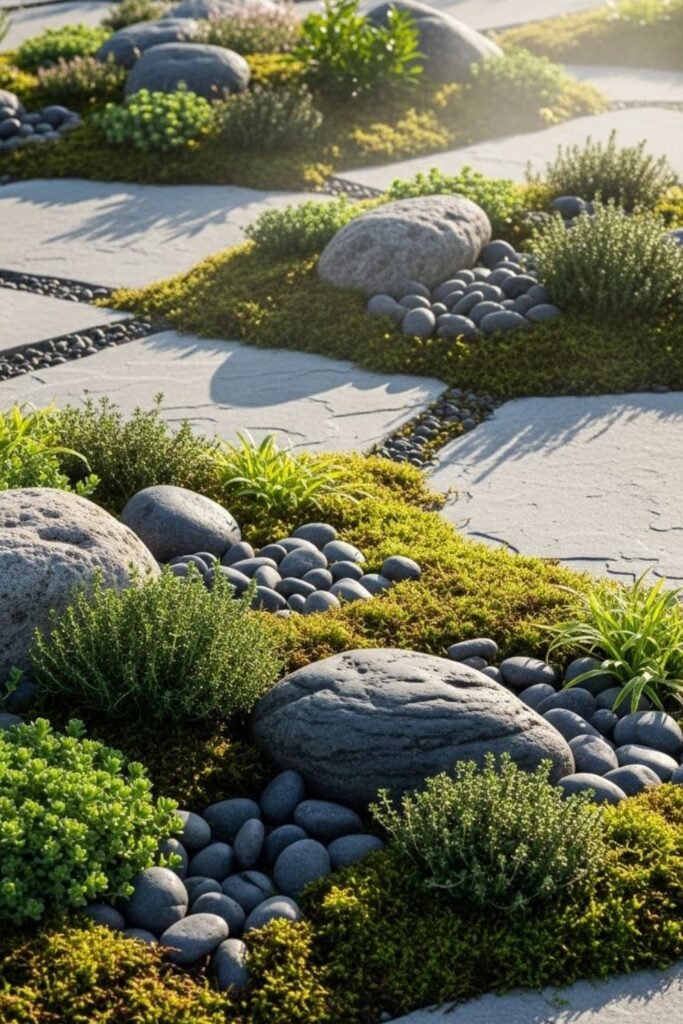
Front Appeal
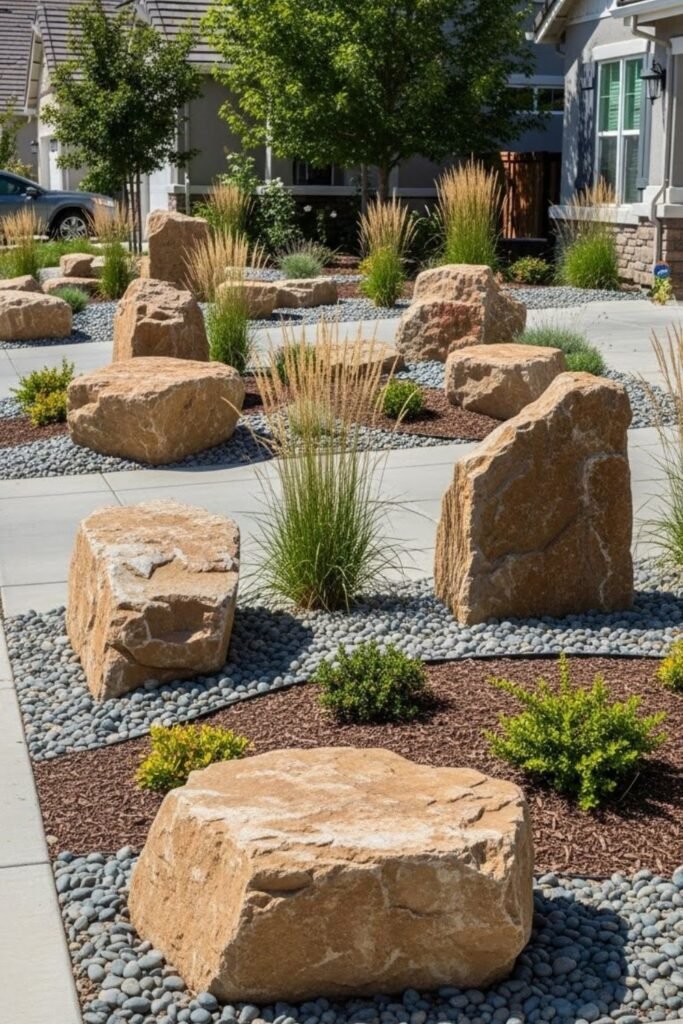
First impressions count, whether we like it or not. Design for the view from the street—bold rock shapes that read clearly from a distance, plants that stay simple and repeat often.
Keep everything low enough to avoid blocking windows or walkways. Minimal maintenance because front yards shouldn’t require weekly attention to look presentable.
Depth Play
Mixing stone sizes creates layers the eye can explore. Large rocks ground the space, medium and small stones fill gaps naturally. Avoid perfect symmetry so it doesn’t feel staged.
Plants weave between levels instead of sitting on top. Even small gardens feel bigger and more interesting this way, without adding complexity or extra maintenance.
No Replant
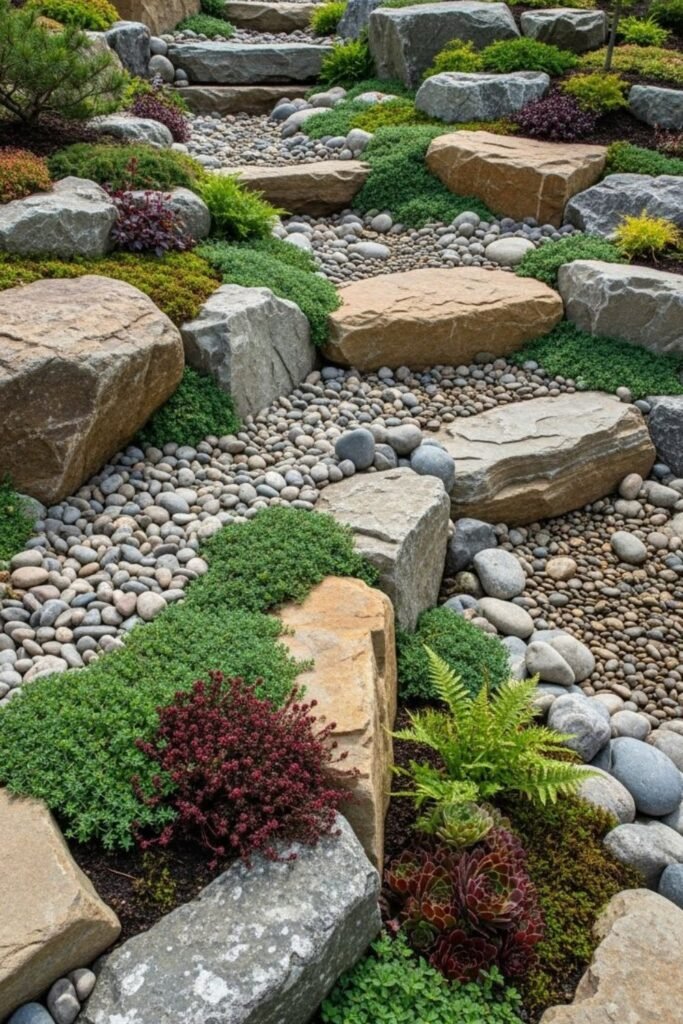
Design around plants that stay put. Growth stays slow and predictable, rocks carry the visual weight, and nothing feels temporary once everything settles in.
This works when you want consistency without reworking the space every season or worrying about what needs replacing next year. Set it up right once, then let it be.
Hillside Look
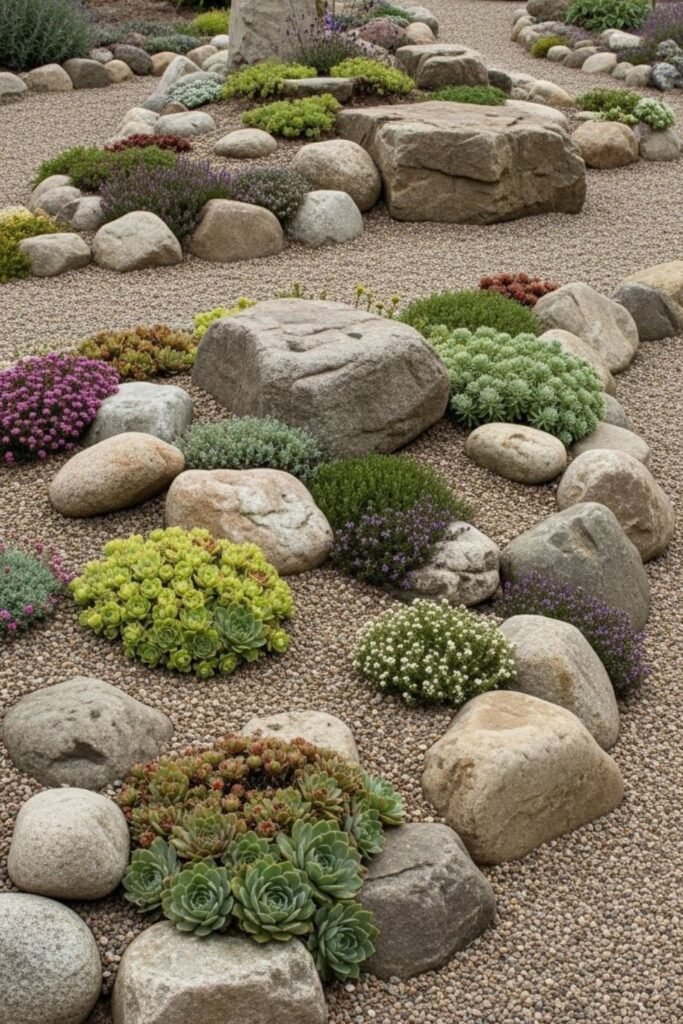
Uneven spacing, irregular stone angles, gentle height changes—let nature guide placement instead of fighting it. Avoid straight lines completely, let gravity have a say in how things settle.
Plants tuck into natural dips instead of being placed on top. The result feels like it’s been there for years rather than like something you installed last weekend.
One Plant
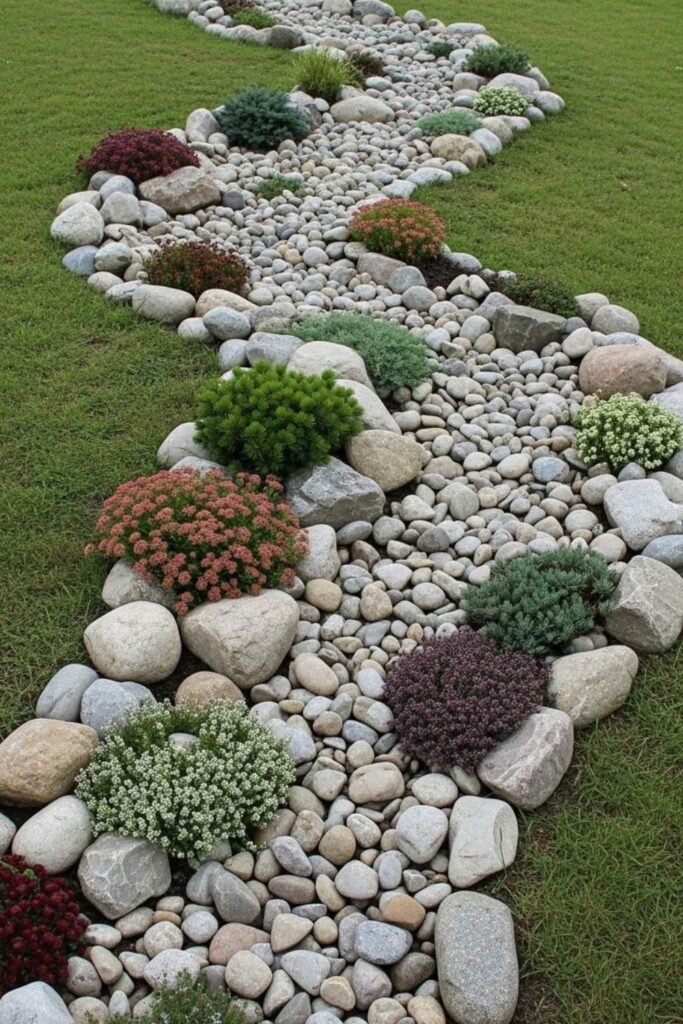
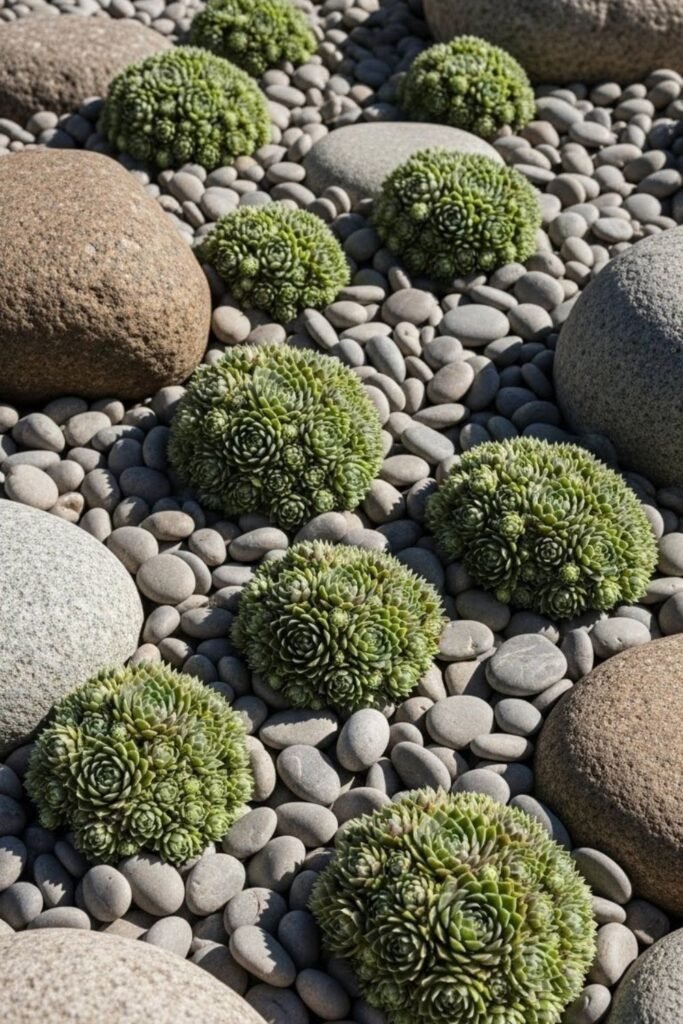
Using one plant type throughout creates instant harmony. Repetition feels calm instead of boring when paired with varied stone sizes. Maintenance becomes predictable because every plant needs the same care.
Visual clutter disappears. The space feels intentional without requiring you to remember which plants need what kind of attention throughout the year.
FAQs
Do rock gardens actually save time, or is that a myth?
They save time when designed correctly, but you can absolutely create more work for yourself if you’re not thoughtful about it. When stones do most of the visual work and plants are chosen for low maintenance, there’s genuinely less watering, trimming, and replanting.
Skip the base preparation or choose fast-growing plants, and you’ll be back to weekly maintenance faster than you’d think.
What’s the biggest mistake people make when building a rock garden?
Trying to fill every inch. Rock gardens need empty space to work visually and practically. Pack in too many elements and you create more hiding spots for weeds, more plants competing for attention, and more things that need ongoing care.
Leave breathing room. The design will settle naturally, and maintenance stays manageable.
I’ve spent over four decades building a marriage, raising a family, and learning what truly matters along the way. I write about relationships, home, and navigating life’s later seasons with grace, honesty, and a little humor. My goal is to share the kind of steady, real-life wisdom that helps you feel grounded, encouraged, and a little less alone.