Kitchen Plants That Actually Thrive in There and Make the Whole Room Feel Alive

I brought a spider plant into my kitchen three years ago. It looked perfect on the counter next to the coffee maker — until I actually started cooking.
Within two weeks, the tips were brown and the whole thing looked defeated. It wasn’t me. It was the kitchen.
Most plants can’t handle what happens when you’re actually making dinner — the heat, the steam, the way cooking oil gets into everything.
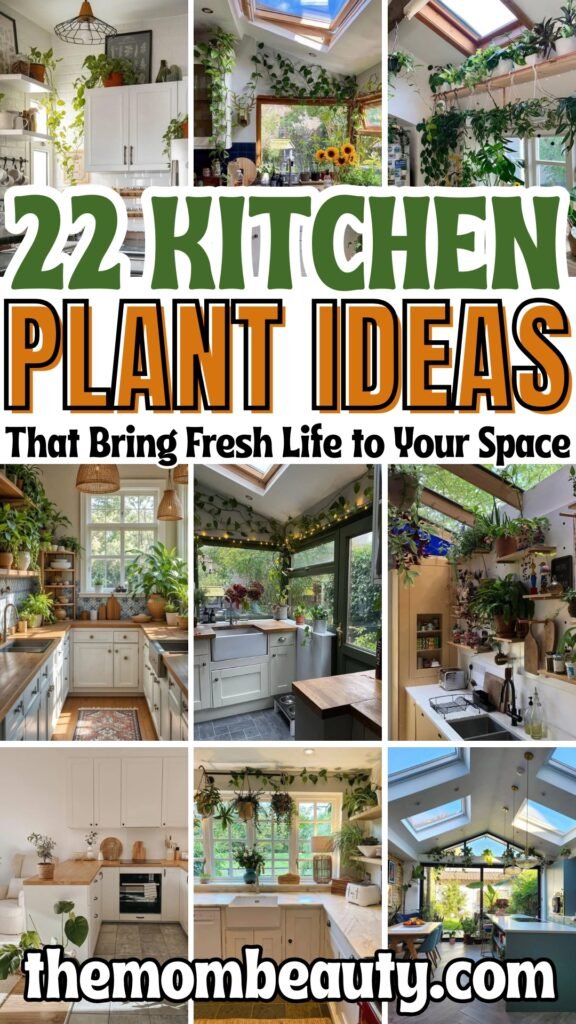
Here are 24 ways to put plants in your kitchen that actually work with how you cook and live.
No more dead leaves to sweep up.
What Plants Actually Survive Heat, Steam, and Cooking Smells in a Kitchen?
Every time you brown onions or boil pasta, the temperature jumps ten degrees and humidity spikes. Then it all dries out again within an hour.
That kind of back-and-forth kills delicate plants fast. The ones that survive have thick, waxy leaves and roots that don’t panic when conditions change.
Pothos, snake plants, and spider plants handle this better than ferns or anything with paper-thin leaves.
Once you stop fighting the kitchen environment and start working with it, keeping plants alive becomes straightforward instead of frustrating.
Save this article for later! 👇👇
Hanging Layers
I learned this from watching my friend Donna struggle with her kitchen plants for months. The counter ones kept dying, but the one hanging pot by her window kept growing.
Light comes from above in most kitchens, so hanging plants get what they need without taking up the space you actually use for cooking. Steam rises past them instead of sitting on the leaves.
Use the kind of hooks that screw into ceiling beams — not the suction cup ones that fail when the pot gets heavy. Space them so air can move between plants, because trapped humidity causes more problems than it solves.
Pothos and heartleaf philodendron don’t care if your kitchen gets hot at dinner time. They just keep growing.

Cabinet Climbers
That empty space above your cabinets collects dust anyway. Put a plant up there and at least it’s doing something useful.
Trailing vines look better than tchotchkes, and they’re far enough from the stove that cooking heat won’t fry them. The warm air that rises actually helps them dry out at the right pace instead of staying soggy.
Push the pot back far enough that you can’t see it from below — just the trailing green. Guide the vines along the cabinet edges with small clips if you want them neat, or let them fall naturally if you don’t mind a little wildness.
This works especially well if your cabinets don’t go all the way to the ceiling.

Window Vines
If your sink sits under a window, you’ve already got the best plant spot in the kitchen. The light is steady, the humidity from washing dishes actually helps, and you’re right there to notice if something needs water.
Let vines frame the window instead of hanging straight down into your dish-drying space. A small hook on each side of the window frame gives them somewhere to go that looks intentional.
Pothos handles the occasional splash from the faucet just fine. In fact, it seems to like it.
This is one of those setups that makes doing dishes feel less like a chore.
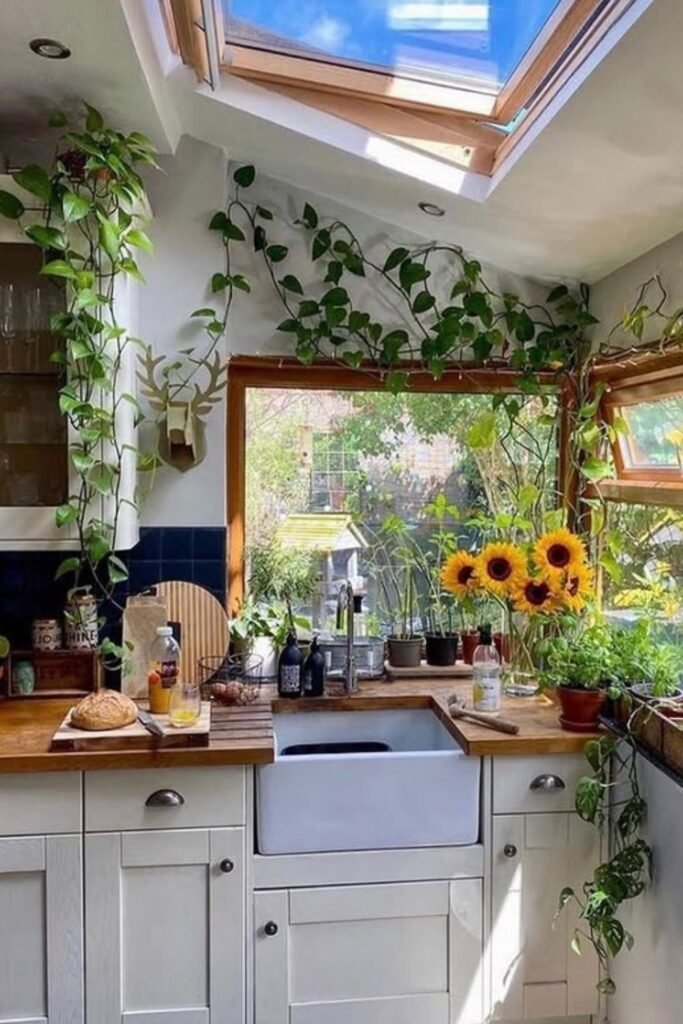
Sink Greens
The area around the sink stays slightly more humid than the rest of the kitchen, which most plants appreciate. It’s also where you’re standing with water in your hands, which makes watering less of a production.
Use a heavy ceramic pot that won’t tip if you bump it while reaching for the dish soap. Keep it close enough to benefit from the extra moisture but not so close that it gets splashed every time you rinse a glass.
Rubber plants and monstera deliciosa like this spot because they appreciate steady humidity without sitting in wet soil.

Vertical Living
Wall space costs nothing and gets you out of the way of actual cooking. A simple wooden shelf or metal grid gives plants what they need without taking up counter real estate.
Small pots work better than large ones for wall mounting — they dry more evenly and don’t put as much stress on your hardware. Mix upright plants with trailing ones so you get layers without it looking like a craft project.
The key is not to pack too many plants into one area. Air needs to move around them, especially when you’re cooking and the humidity spikes.
Snake plants and small pothos varieties handle this setup well.

Corner Trails
Corners are the forgotten spaces in most kitchens, but they’re often where light hits without the chaos of daily cooking getting in the way.
A trailing plant in the corner near a window gets steady light and can grow as long as it wants without draping into your prep space. The corner protects it from the worst of the heat and steam, but it still gets enough warmth to grow steadily.
Let the vines follow the wall or ceiling line instead of trying to make them hang perfectly straight.
This works best if your corner gets morning or afternoon light, not the harsh midday sun that can scorch leaves.

Ceiling Greens
Light from above changes everything for plants. If you have a skylight or high window, putting plants closer to it makes more sense than trying to get them to grow in whatever light filters down to counter level.
Broad-leafed plants do well up high because they can spread out and catch light efficiently. The warmth up there helps them dry out properly between waterings, which prevents the root rot that kills so many kitchen plants.
Check them more often for water, though. Heat rises, and soil dries faster when it’s closer to the ceiling.

Window Hangings
Hanging plants directly in front of windows gives them the most light while keeping them out of your cooking workspace entirely. The plants get what they need, and you get your counter space back.
Use lightweight pots and choose plants that look good trailing downward. Keep them high enough that steam from cooking doesn’t settle on the leaves and cause problems.
This setup works especially well if you have a wide kitchen window that gets good light most of the day.
Save this post for later ❤️

Island Anchor
Kitchen islands often feel like they’re missing something. A single substantial plant can anchor the space without getting in the way of prep work or seating.
Keep the plant far enough from the stove that direct heat won’t stress it, but close enough to benefit from the general warmth and light. Use a heavy pot so it won’t tip or slide when people are moving around the island.
Broad-leafed plants like rubber trees or large pothos work well here because they create presence without being fussy about conditions.

Shelf Canopy
Open shelving above eye level creates a natural growing zone where plants can spread without interfering with daily kitchen work. The height keeps them away from splashes and steam while still letting them benefit from the kitchen’s warmth.
Mix different sized pots and trailing plants with more upright ones. This creates depth without looking like you just lined up plants in a row.
If you have under-cabinet lighting, even better. Plants love consistent light more than bright light that comes and goes.

Hanging Ferns
Ferns are supposed to be difficult, but they actually like kitchen humidity better than the dry air in most other rooms. The key is keeping them away from direct heat while letting them enjoy the gentle moisture that cooking creates.
Hang them where light is bright but indirect, and where steam can rise around them without settling on the fronds. Boston ferns and maidenhair ferns both do well in this kind of setup.
A quick mist after you’ve been cooking helps them settle into the evening.

Ceiling Trail
If you have exposed beams or a dropped ceiling element, trailing plants can turn that architectural feature into a growing zone. The height keeps plants completely out of the cooking area while still making them part of the kitchen.
Train vines to follow the beam line rather than dropping straight down. This keeps them out of your way and looks more intentional than random trailing.
Trim them occasionally so they don’t get so long that they cast shadows on your work surfaces.

Herb Wall
Fresh herbs make more sense than decorative plants if you actually cook. A wall rack keeps them organized and at eye level where you can see when they need attention.
Basil, thyme, rosemary, and parsley all handle kitchen conditions well, and they’re useful enough that you’ll actually take care of them.
Use terracotta pots that dry out properly between waterings. Herbs hate sitting in soggy soil more than they mind drying out occasionally.
Position the rack where it gets indirect light, not directly above the stove where heat will stress the plants.

Island Herbs
If your island gets good natural light, it can support a small herb garden without interfering with prep work. Keep the pots toward the edge that’s farthest from the stove.
Rotate them every few days so they grow evenly. Pinch them often — herbs grow better when you use them regularly, and you’ll have fresh seasonings right where you need them.
Mediterranean herbs like rosemary and thyme prefer slightly drier conditions, which makes them perfect for kitchen islands where they might get forgotten for a day or two.

Dining Green
The dining side of the kitchen usually gets good light without the direct heat and chaos of the cooking area. A floor plant here softens the transition between spaces.
Choose something substantial enough to anchor the corner but not so large that it crowds the dining table or blocks traffic. Rubber trees, fiddle leaf figs, or large snake plants all work well here.
Keep the pot slightly away from the wall so air can circulate behind it, especially if you have radiators or heating vents nearby.

Floor Pots
Sometimes the simplest approach works best. Floor plants in the kitchen work when they’re positioned away from the main traffic patterns but still close enough to light.
Grouping two or three plants together creates a sense of abundance without cluttering the space. Larger plants handle kitchen conditions better because their root systems stay more stable and they don’t dry out as quickly.
Keep them away from heat vents and leave enough space around them that you can clean and sweep easily.

Window Jungle
If you have a large window or bay window area, don’t try to use just part of it for plants. Go all in and create a proper growing zone.
Mix hanging plants at different heights with floor and tabletop plants to create layers. The plants will help each other by creating humidity and sharing light.
This approach only works if you commit to it fully — one or two plants in a big window look lost, but a full collection looks intentional and lush.

Arch Vines
If your kitchen opens to other rooms through an archway or wide opening, that transition space becomes a natural place for vines to climb and trail.
The plants get light from multiple directions and stay out of the direct cooking zone while still being part of the kitchen atmosphere.
Use small hooks or clips to guide growth along the arch line. Pothos and philodendron are flexible enough to follow architectural lines without breaking when someone brushes past them.

Light Beams
Exposed ceiling beams become natural plant supports when you let vines use them as a growing framework. This keeps plants completely out of the work zone while letting them spread as much as they want.
Train vines horizontally along the beam rather than letting them drop straight down. This creates a canopy effect without blocking your view or interfering with cooking.
The heat that rises from cooking actually helps plants positioned this high, giving them the warmth they need to grow steadily without the stress of direct heat.
I’ve spent over four decades building a marriage, raising a family, and learning what truly matters along the way. I write about relationships, home, and navigating life’s later seasons with grace, honesty, and a little humor. My goal is to share the kind of steady, real-life wisdom that helps you feel grounded, encouraged, and a little less alone.