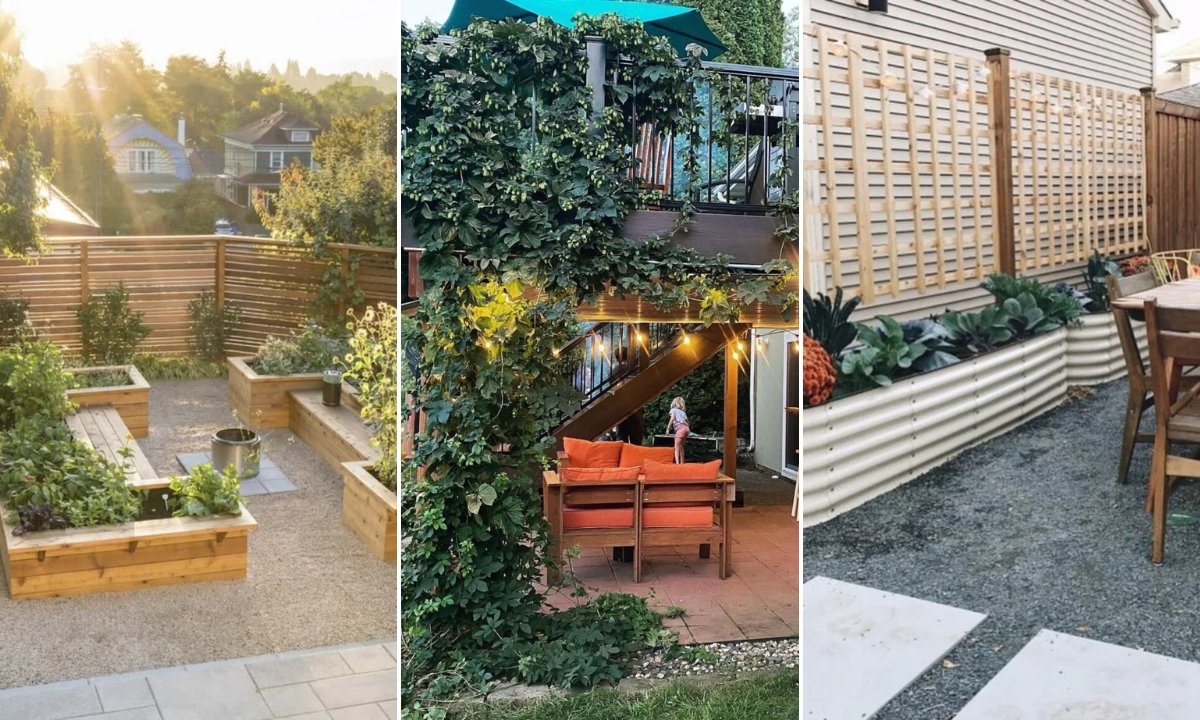
Edible Landscaping Ideas That Make Your Yard Beautiful and Actually Useful at the Same Time

I spent years avoiding any kind of food garden because I kept picturing crooked tomato rows and that scraggly look vegetable gardens get by August. My neighbor Linda had one — it started neat in spring and turned into something that belonged behind a barn, not next to her pretty deck furniture.
The problem isn’t wanting to grow food. It’s that most people think you have to choose between a garden that looks good and one that actually feeds you.
But once you stop treating food plants like they need to live separately from everything else, your whole yard starts working better.
These 24 ideas prove you can grow food without your yard looking like a farm project that got out of hand.
Let me show you what I mean.
What Is Edible Landscaping, and How Is It Different From a Vegetable Garden?
The difference is simple: edible landscaping puts appearance first, then finds ways to make pretty plants useful. A vegetable garden does the opposite — production first, then you hope it doesn’t look terrible.
When you treat food plants like any other landscape element, they follow the same rules. You arrange them for color, texture, and form. You prune them to keep their shape.
The harvest becomes a bonus, not the whole point.
My friend Donna figured this out after three failed vegetable gardens. Now she has a rosemary hedge along her front walk, bay trees flanking her patio, and blueberry bushes mixed into her flower beds. Her neighbors compliment her landscaping. They don’t even realize half of it is food.
Save this article for later! 👇👇

Vertical Vines
Frank built me a simple pergola over our back patio three years ago, and I immediately started training grape vines up the posts. By the second summer, we had shade overhead and actual grapes hanging down.
The vines don’t take up any floor space, which matters when you have a small patio and need room for the table and chairs. Hardy kiwi works the same way, or even pole beans if you want something annual.
You need strong support — mature vines get heavy. But once they’re established, they give you privacy, food, and cooling shade all in the same footprint.
I guide the new growth each spring and do light pruning in winter. That’s about it.

Trellis Greens
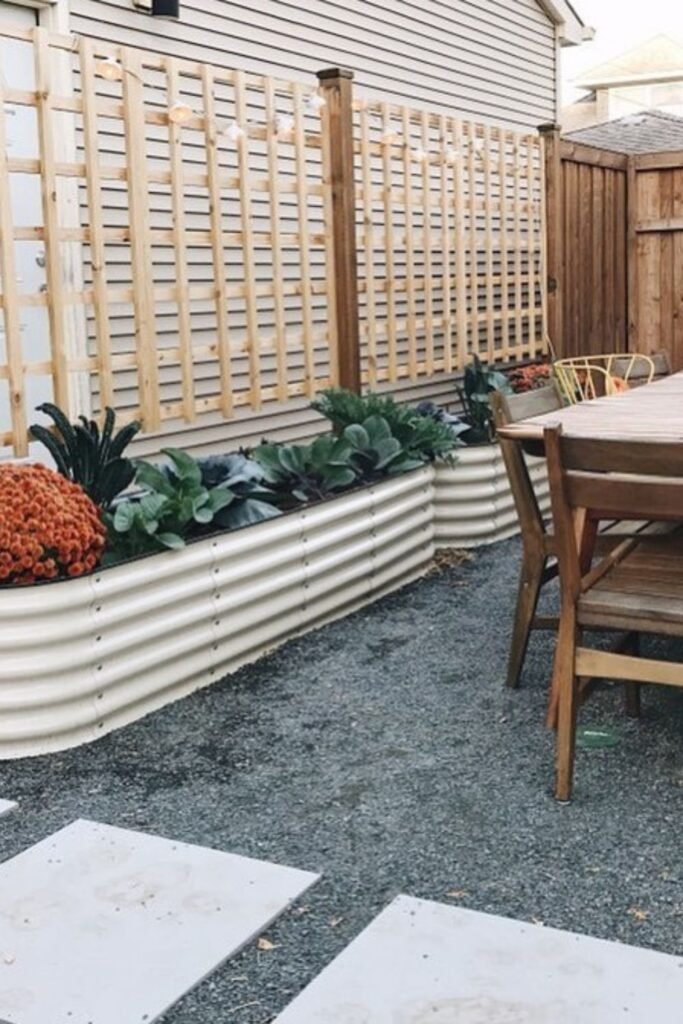
I have a narrow strip along my side fence that used to collect weeds and nothing else. Now it’s a raised bed with a trellis behind it — lettuce and spinach in front, snap peas climbing up the back.
The whole setup is maybe eighteen inches wide, but it produces enough salad greens for most of our meals from March through November. The trellis keeps everything contained and gives the climbing plants somewhere to go besides sprawling into the walkway.
I planted it once and harvest it constantly. The greens keep producing as long as you keep cutting, and the peas give you something to look at while they climb.
Simple cedar boards for the bed, basic wire mesh for the trellis. Nothing fancy, but it looks intentional.
Framed Beds
There’s something about matching raised beds that makes even vegetables look like they belong. Four rectangular boxes arranged with gravel paths between them — it’s the kind of setup that makes visitors assume you know what you’re doing.
I keep herbs in one bed, lettuce and greens in another, tomatoes and peppers in the third, and I rotate the fourth depending on the season. The uniform height and clean lines make it feel designed, not improvised.
The gravel paths were Frank’s idea, and I resisted at first because it seemed like extra work. But he was right — they keep your shoes clean, define the space, and you never have to worry about mud.
Start with two beds if four feels like too much. You can always add more later, and they’ll match perfectly.

Edible Arches
Walking under something always feels different than walking around it. I have a metal arch over the path between my main beds, and I trained grape vines to cover it completely.
Now there’s this moment every time you walk through — you’re under a canopy of leaves, with clusters of grapes hanging down if you look up. It turns a simple garden path into something that feels special.
The arch itself was maybe forty dollars from the hardware store. Nothing fancy. But once the vines took over, it became the focal point of the whole garden.
You could use jasmine or hardy kiwi or even annual beans if you want something that changes each year.

Espalier Trees
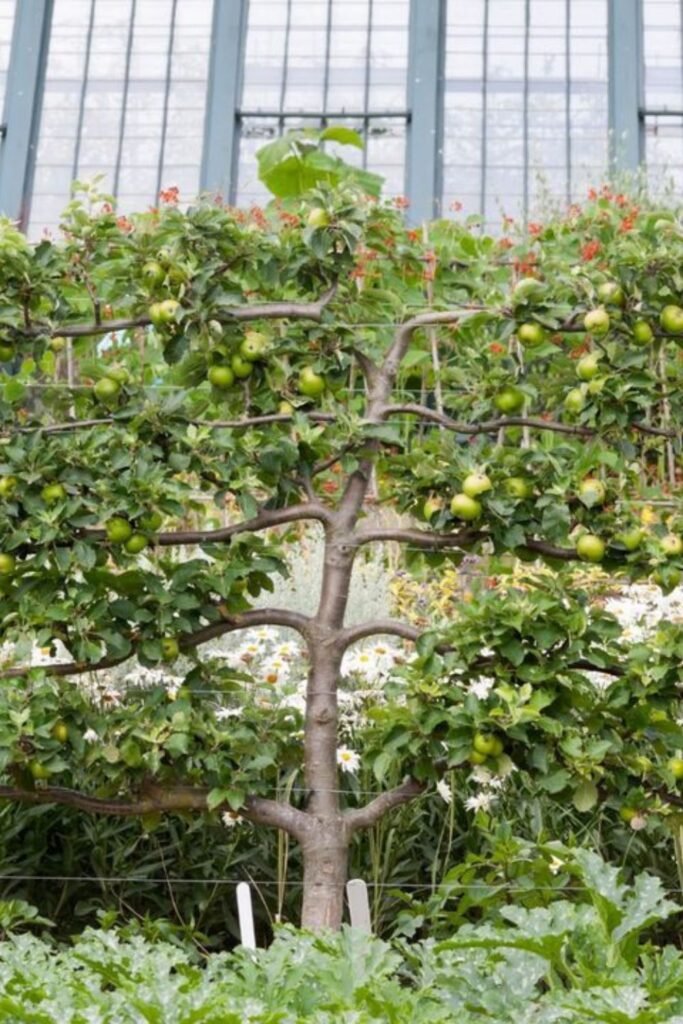
I’ll be honest — I thought espalier was one of those things only serious gardeners with too much time would attempt. Then I saw an apple tree trained flat against my neighbor’s south-facing fence, and it looked so clean and deliberate that I had to try it.
Training a fruit tree flat against a wall or fence keeps it narrow, gives you better fruit, and looks like garden art instead of just another tree.
You need horizontal wires spaced about eighteen inches apart, and you have to start when the tree is young. But once you get the basic shape established, maintenance is just tying new growth and pruning what doesn’t fit the pattern.
My pear espalier takes up maybe two feet of depth along a ten-foot fence section, and it produces more fruit than a full-size tree would because every branch gets sun.
Living Pergola
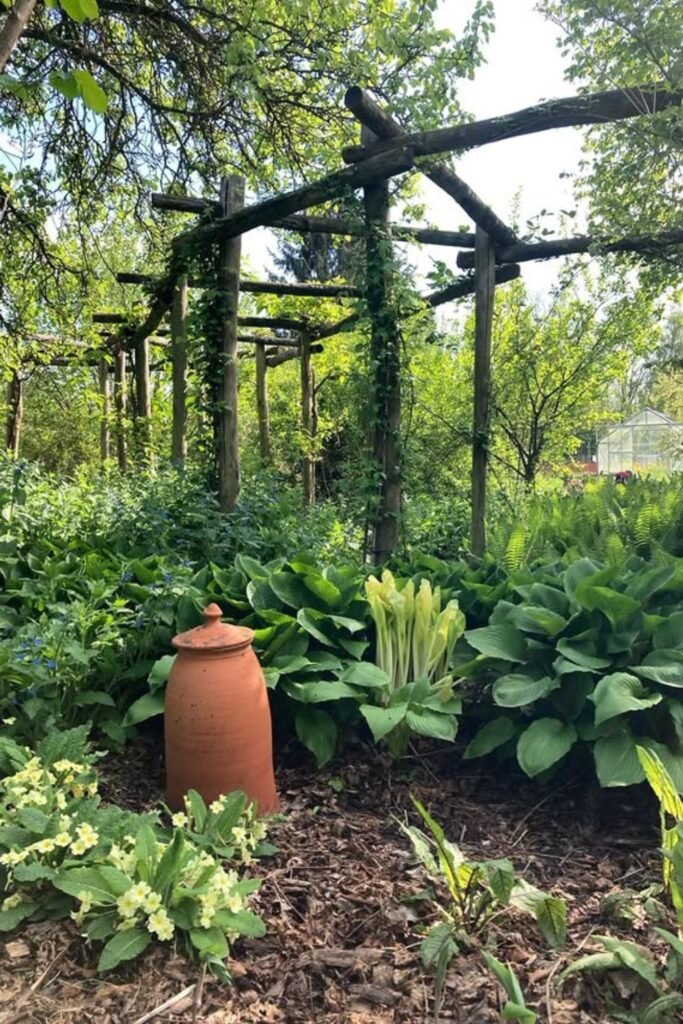
A pergola covered with edible vines gives you an outdoor room that feeds you. Frank and I built ours from cedar posts and beams — nothing complicated, just a basic rectangle with cross pieces on top.
I planted hardy kiwi at each corner and trained them up and across the beams. By the third year, we had enough shade for outdoor dining even in July, and the kiwis were producing fruit.
Underneath, I grow shade-tolerant herbs like mint and lemon balm. The whole structure creates this cool, green space that feels separate from the rest of the yard.
The key is choosing vines that can handle your climate and training them early so they grow where you want them, not everywhere they want to go.
Garden Cottage
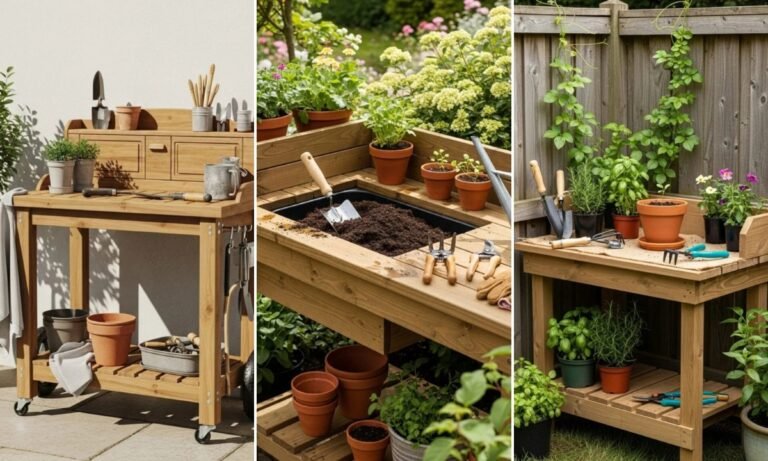
Having a small shed or storage area right in your garden changes how you use the space. Everything you need is right there — tools, watering can, harvest basket, that pair of garden gloves you can actually find.
I have a simple wooden storage bench surrounded by raised beds, and it’s become the center of all my gardening activity. I sit there to sort seeds, rest there when I’m weeding, store everything there when I’m done.
The beds around it are planted with herbs and flowers — things that look good even when they’re not producing much, and things I use regularly enough that I don’t mind walking out there every few days.
Low picket fencing keeps the dogs out without blocking the view. The whole setup feels like a working garden that still looks neat from the house.

Save this post for later ❤️
Edible Hedges
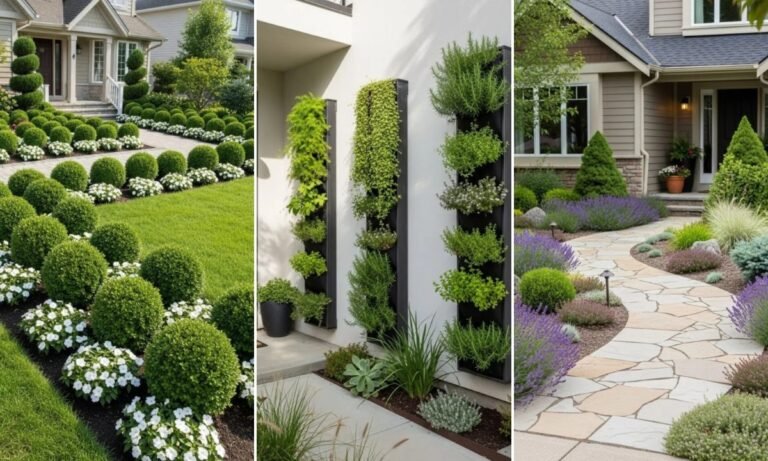
Instead of planting boxwood or privet for a hedge, why not plant something you can actually use? I have a rosemary hedge along my front walkway that’s been there for eight years, and it looks exactly like what you’d expect from a formal hedge — except it smells incredible and I can cut sprigs for cooking.
Blueberry bushes work the same way if you keep them pruned. Bay laurel if you live where it’s hardy. Even lavender, though that gets more informal as it ages.
The trick is choosing plants that actually want to be shaped and keeping up with regular trimming. You’re not just harvesting for food — you’re pruning to maintain the hedge form.
My rosemary hedge has never once looked like a food garden. It just looks like good landscaping that happens to be useful.
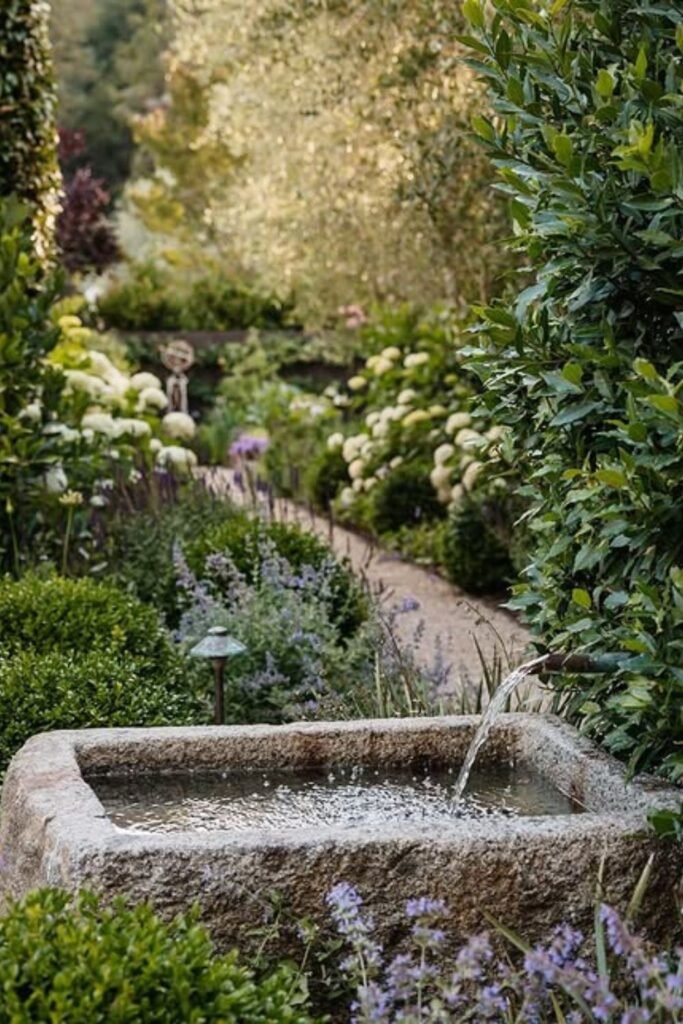
Front Harvest
Growing food in your front yard only works if it looks like it belongs there. I learned this the hard way when I tried to grow tomatoes in a patch near my front steps. They looked exactly like what they were — vegetables where vegetables don’t usually go.
But herbs and edible flowers are different. Chives look like ornamental grass. Sage has beautiful silvery leaves. Swiss chard comes in colors that put most ornamental plants to shame.
I mixed these into my front foundation planting, and the only people who notice are the ones I tell. Everyone else just thinks I have a nice perennial border.
The key is treating them like landscape plants first. Place them for color and texture, prune them to keep their shape, and harvest becomes just another form of deadheading.

Raised Geometry
Sometimes the most practical solution looks the most elegant. I have four identical raised beds arranged in a square with paths between them, and wooden obelisks in the center of each bed for vertical growing.
The repetition makes it feel designed instead of random. Each bed has a different purpose — one for lettuce, one for herbs, one for tomatoes and peppers, one that I rotate seasonally.
The obelisks handle beans, peas, small melons, whatever needs to climb. They’re tall enough to be interesting but not so tall they overwhelm the space.
Frank built the beds to match exactly — same height, same materials, same dimensions. That uniformity is what makes the whole thing look intentional rather than cobbled together over time.

Terraced Abundance
Our backyard slopes down from the house, and for years that just meant complicated mowing and erosion problems after every big rain. Building terraces changed everything.
Three levels of wooden retaining walls, each about eighteen inches high, with wide planting areas between them. The top level is herbs and flowers, the middle is vegetables, the bottom is fruit bushes and perennials.
Water moves naturally down from level to level, and each terrace is easy to reach for planting and harvesting. The slope that used to be a problem became the most interesting part of the yard.
Frank started at the bottom and worked up, which he says is the only way to do it properly. Each wall supports the one above it.

Productive Borders
The strip along our back fence used to be dead space — too narrow for lawn, too shady for most flowers, just a place where weeds collected. Now it’s lined with blueberry bushes, bay trees, and fig trees that give us fruit and privacy at the same time.
Fruit trees love having a fence or wall behind them. The reflected heat helps them ripen, and they’re easier to train and prune when they have something to grow against.
I planted the larger trees first, then filled in with herbs and smaller plants in front. Everything is edible, but it looks like a designed border planting.
The path along the front keeps everything accessible, and a simple drip irrigation line handles most of the watering.

Orchard Grids
If you have the space for it, there’s something deeply satisfying about walking through evenly spaced fruit trees. My sister-in-law has a small orchard — twelve apple trees in three rows of four — and it feels calm and orderly in a way that random plantings never do.
The key is measuring twice and planting once. Each tree is exactly fifteen feet from its neighbors, which gives them room to mature without crowding but keeps the space feeling connected.
She keeps the grass mowed between them and has a simple drip line to each tree. Annual pruning keeps them manageable, and the harvest is predictable because she knows exactly what she has.
It’s the kind of setup that looks better as it ages, not worse.

Pocket Forest
This approach turns a small area into something that feels like a miniature ecosystem. I have a circular space about twenty feet across where I planted a dwarf apple tree in the center, surrounded by blueberry bushes, with herbs and edible groundcovers filling the spaces between.
Each layer does something different — the tree provides structure and height, the shrubs give substance and seasonal interest, the herbs offer fragrance and frequent harvest, and the groundcovers keep weeds out while producing their own small crops.
A curved path lets you walk through without stepping on anything, and a small bench makes it a place to sit, not just work.
It’s become my favorite part of the garden because it feels complete in a way that single plantings never do.

Disguised Edibles
Sometimes the best edible landscaping doesn’t announce itself. I gradually replaced plants in my front foundation beds with edible alternatives, and most people never notice the difference.
Blueberry bushes instead of azaleas — they have similar form and seasonal color. Rainbow chard instead of coleus — more dramatic foliage and it lasts longer. Sage instead of lamb’s ear — same silvery texture, better scent.
The key is matching the form and function of what you’re replacing. If you need something round and low, find an edible plant that grows round and low. If you need tall and narrow, find something edible that fills that role.
I made the changes one plant at a time, so the overall design stayed consistent while becoming more useful.

Garden Retreat
Our gazebo was Frank’s retirement project — nothing fancy, just a simple octagon with a peaked roof. But once I started growing food around it, it became something special.
Grape vines climb the posts and provide dappled shade inside. Containers of herbs and lettuces sit around the perimeter where I can reach them easily from the built-in benches.
It’s where I have my morning coffee when the weather’s nice, and where I end up when I need to shell peas or clean vegetables. Having the food right there makes those tasks feel pleasant instead of necessary.
String lights and a small side table make it usable in the evenings, and the vines provide enough privacy that it feels separate from the rest of the yard.

Circular HarvestI’ve spent over four decades building a marriage, raising a family, and learning what truly matters along the way. I write about relationships, home, and navigating life’s later seasons with grace, honesty, and a little humor. My goal is to share the kind of steady, real-life wisdom that helps you feel grounded, encouraged, and a little less alone.
I’ve spent over four decades building a marriage, raising a family, and learning what truly matters along the way. I write about relationships, home, and navigating life’s later seasons with grace, honesty, and a little humor. My goal is to share the kind of steady, real-life wisdom that helps you feel grounded, encouraged, and a little less alone.