Pothos Plants Are the Easiest Thing You’ll Ever Grow and Here’s How to Style Them Beautifully

I brought home a pothos plant last spring thinking it would just grow. It sat on the kitchen counter for months doing nothing while I waited for something to happen.
The leaves stayed small, the vines barely moved, and I started wondering if I’d somehow picked the one pothos that didn’t want to cooperate.
Turns out pothos isn’t particularly difficult, but it has preferences. Put it in the right spot and let it grow the way it wants, and you’ll see why people keep these plants for decades.
Here are nineteen ways to display pothos that actually work with how the plant grows instead of fighting against it.
Where Should You Place A Pothos Plant At Home For The Best Growth?
Bright indirect light makes the difference between a pothos that survives and one that thrives. I learned this after moving mine from that dim kitchen counter to the living room near our east-facing window.
East or north windows work best because you get steady light without the harsh afternoon sun that can burn the leaves.
Dark corners will keep your pothos alive, but the vines will stretch toward whatever light they can find and the leaves stay disappointingly small. Direct sun scorches them.
Find a spot with good air circulation but no cold drafts hitting the plant directly. That’s it.
Save this article for later! 👇👇
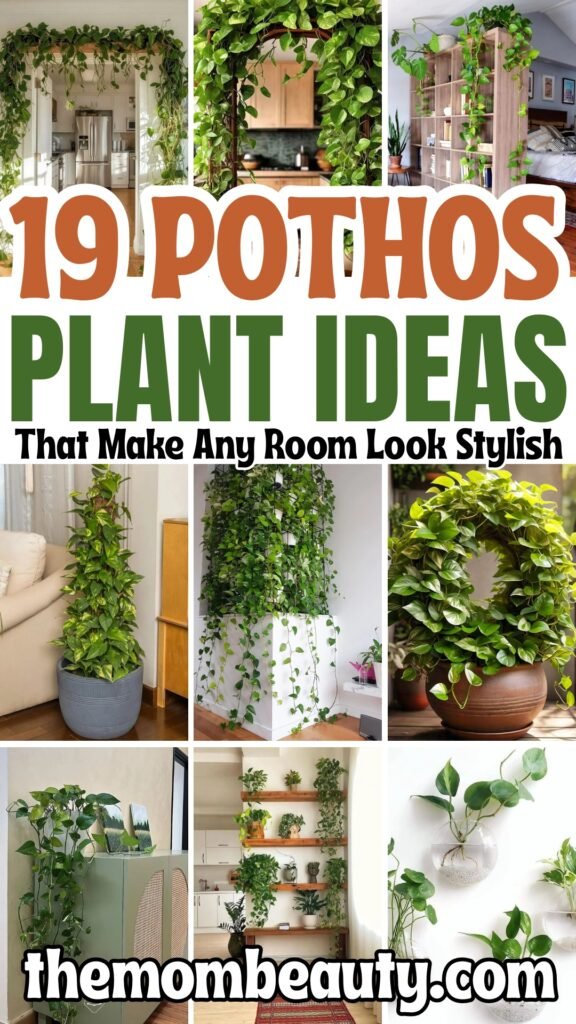
What Are The Most Creative Ways To Display Pothos Indoors?
Pothos wants to trail, climb, and spread. Work with that instead of forcing it into a neat little arrangement that goes nowhere.
Hang it where the vines can fall freely. Put it on shelves where it has room to spill over the edge. Guide it upward if you want bigger leaves.
Small spaces can handle pothos in glass containers with water — no soil required, and you can tuck them into corners that wouldn’t fit a regular pot.
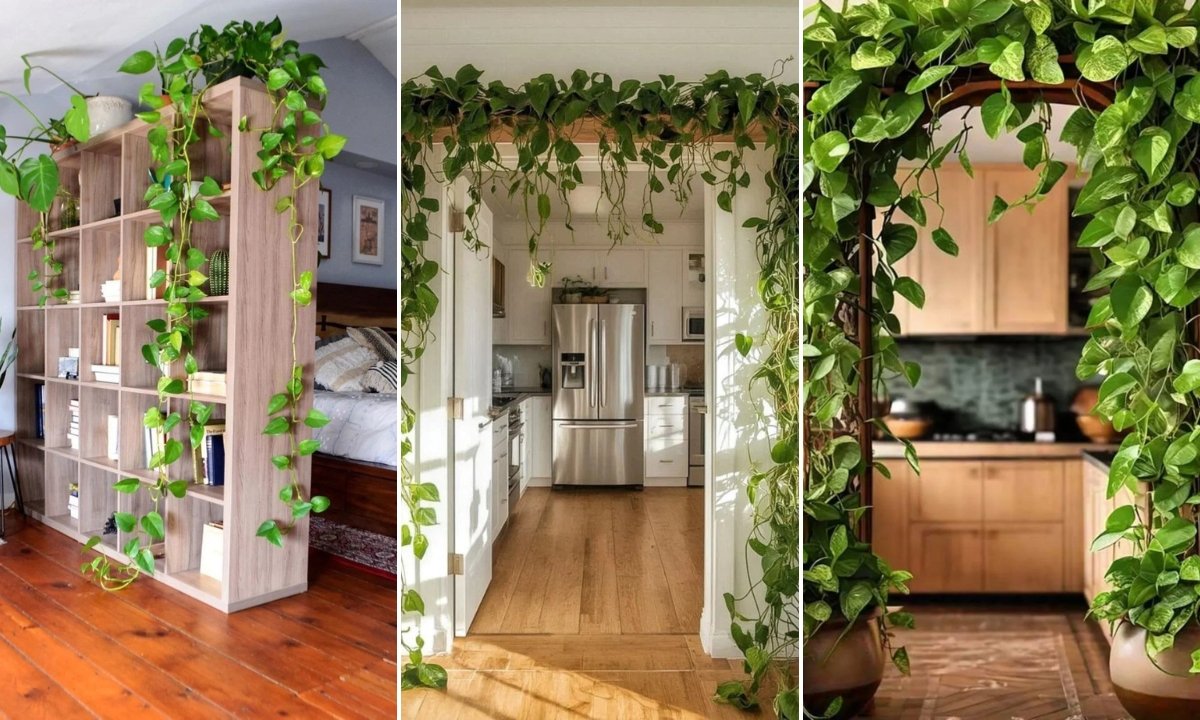
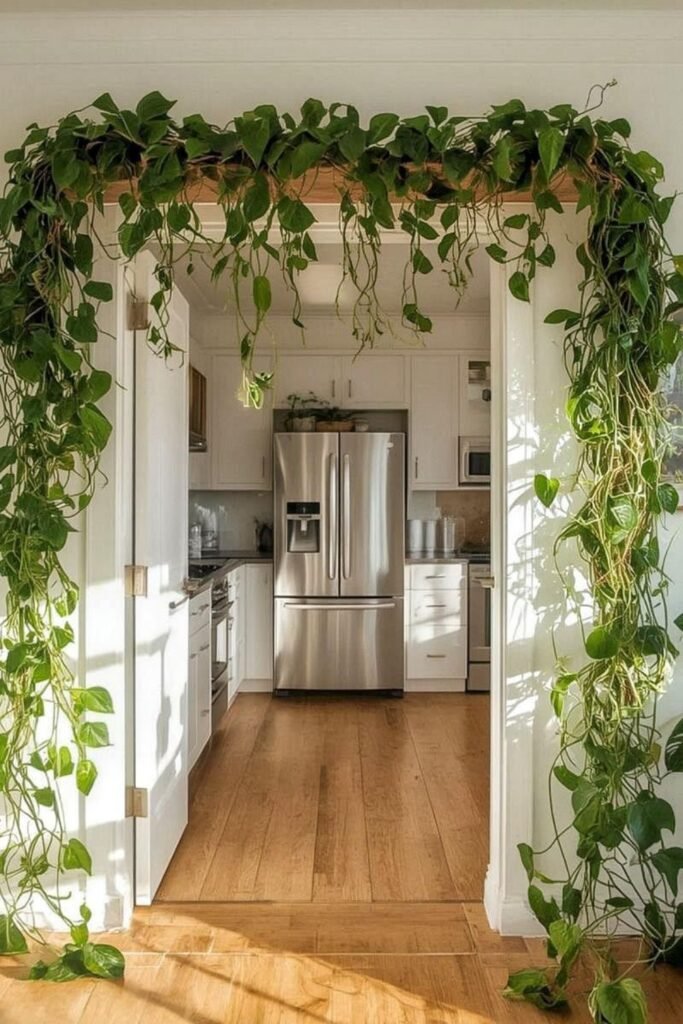
Doorway Vines
Train pothos across the top of a doorway so the vines frame both sides. This works particularly well between the kitchen and dining room where there’s good light flow.
Mount the pot above the door frame, guide the early growth across the top, and let gravity pull the rest down evenly. The trick is starting the training early before the vines get set in their ways.
Trim regularly or you’ll end up walking through a jungle every time you want dinner.
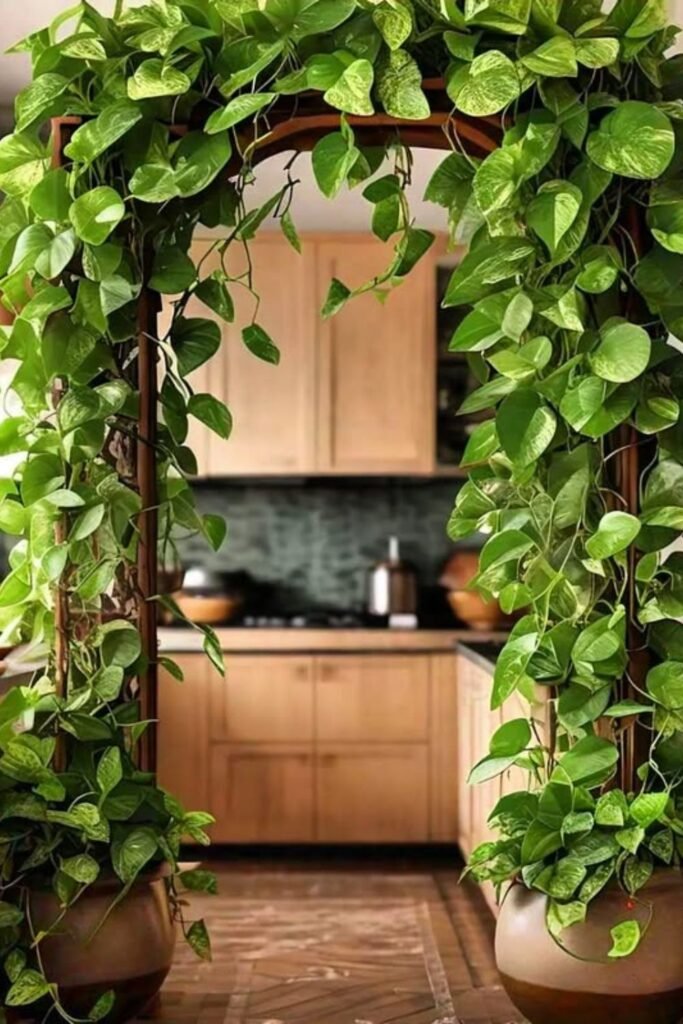
Arch Frame
Two pots on either side of a walkway can create an indoor arch if you train the vines to meet in the middle. I’ve seen this work beautifully in homes with open floor plans and plenty of natural light.
Use a simple frame or strategically placed hooks to guide the growth upward and across. As the plant climbs instead of trails, the leaves get larger and more impressive.
This takes patience — pothos doesn’t rush — but the payoff is worth it.
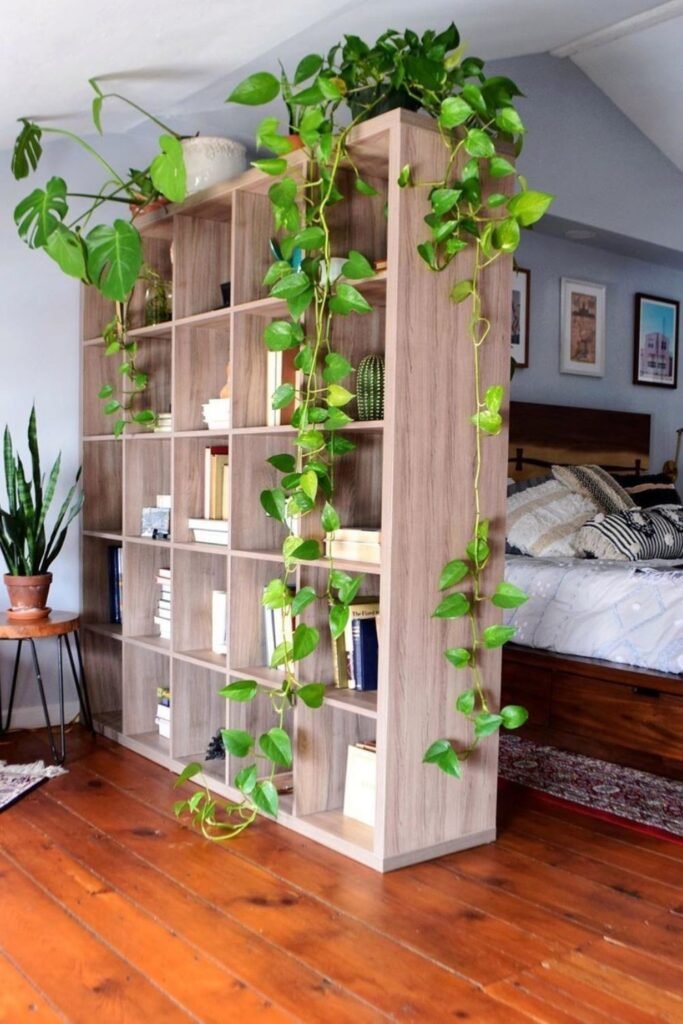
Shelf Trails
High shelves are perfect for pothos when floor space is limited. The plant gets good light and room to cascade without taking up surface area you actually need.
Place the pot toward the front edge so the vines can spill over naturally. Guide a few stems forward early on so the growth falls evenly instead of all heading toward the wall.
<Regular trimming keeps the plant full rather than letting it get thin and stringy as it reaches for the floor.
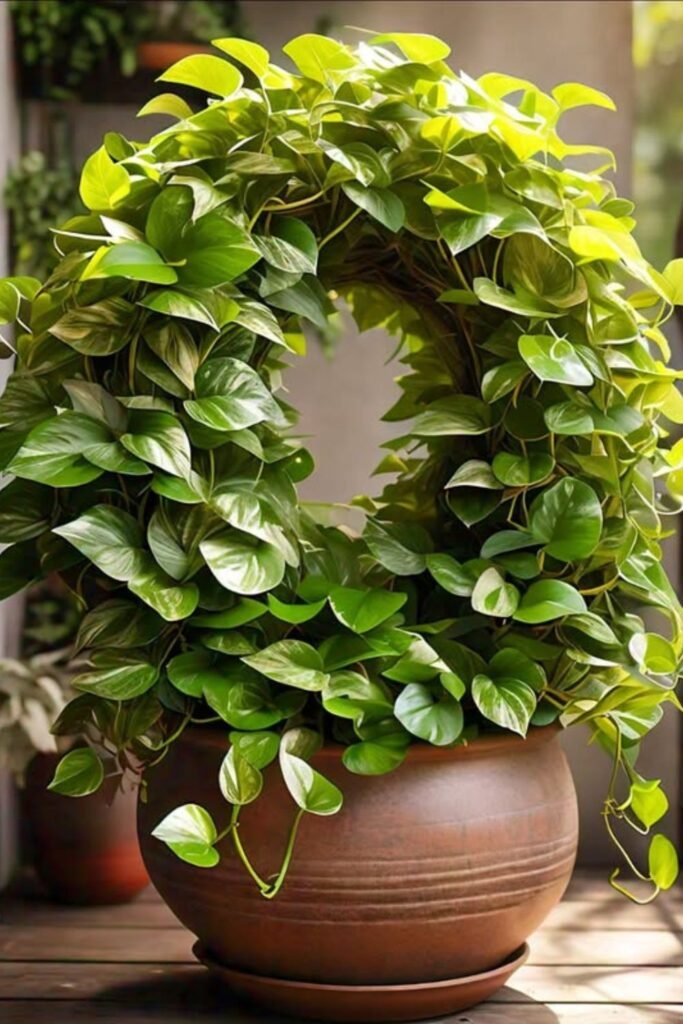
Living Wreath
Guide pothos vines in a circle around a simple frame for something that looks intentional rather than wild. This setup needs bright, even light from all directions or the plant will lean toward the strongest source.
Start with a young plant and gently train the vines back into the pot as they grow, forming the circle gradually. Turn the whole arrangement regularly so all sides get equal light.
Light pruning keeps the wreath dense instead of letting it develop long gaps.
Vertical Curtain
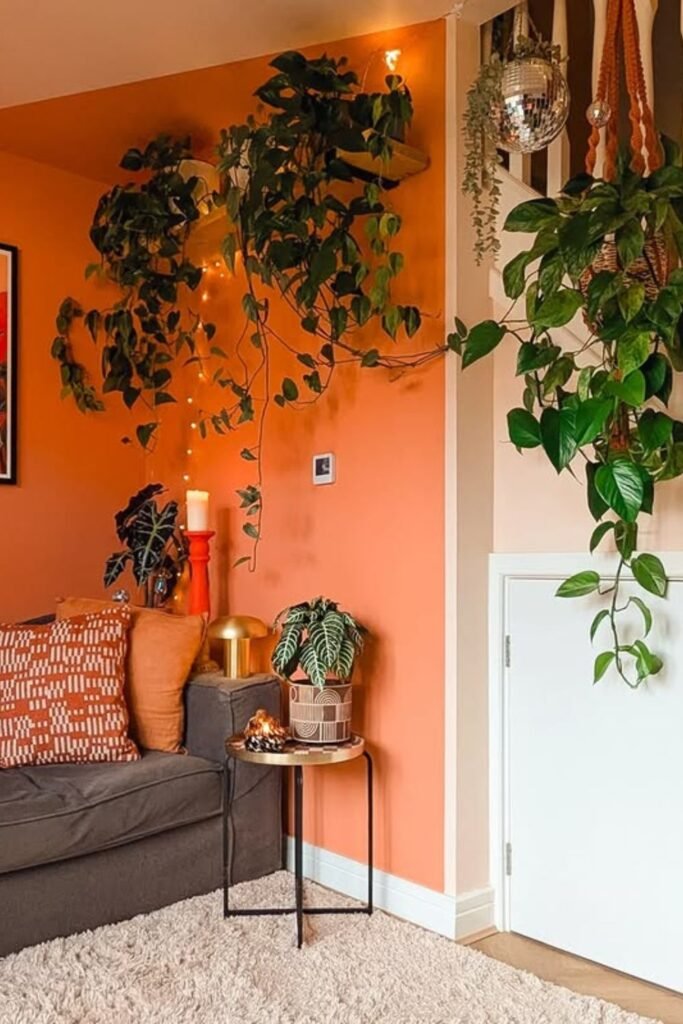
Let pothos drop straight down like a green curtain when you want to soften a blank wall or awkward corner. This works best where light comes from the side rather than above.
Put the pot on a high ledge or cabinet top and allow the vines to fall naturally. Don’t try to control the direction too much — pothos knows what it’s doing.
Trim the ends occasionally to prevent the top from getting thin as all the plant’s energy goes into length.
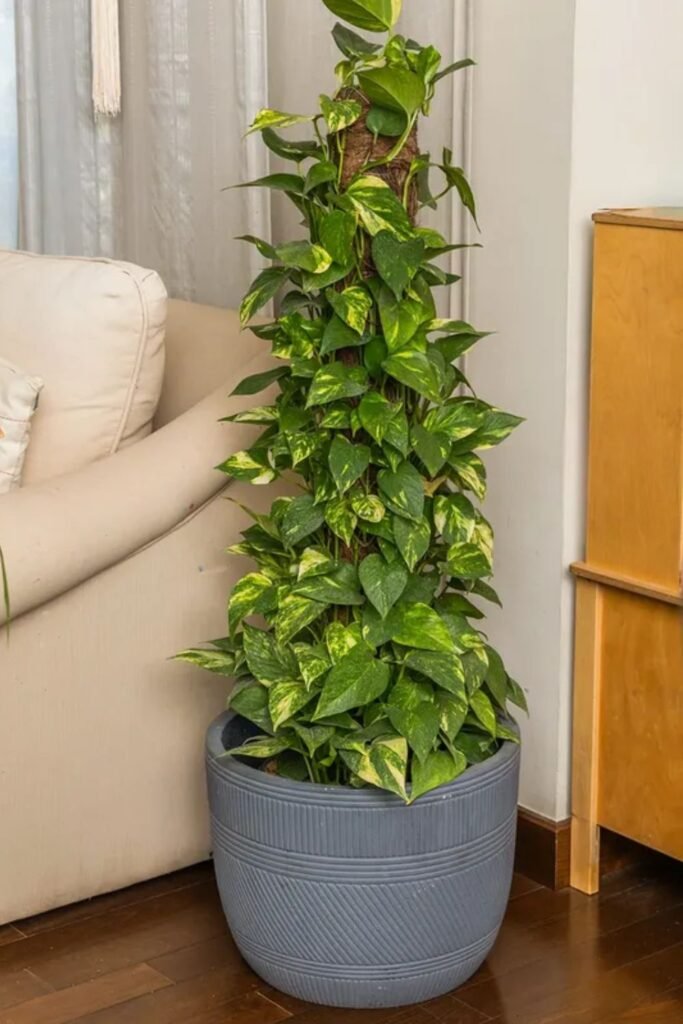
Moss Tower
A moss pole gives pothos something to climb, which encourages larger leaves and a more dramatic look than trailing varieties produce. The plant’s aerial roots will attach to the moist moss naturally.
Keep the pole slightly damp so the roots can grab hold easily. Tie new growth loosely to the pole until the plant learns to climb on its own.
This method takes more maintenance than letting the plant trail, but the results justify the extra work.
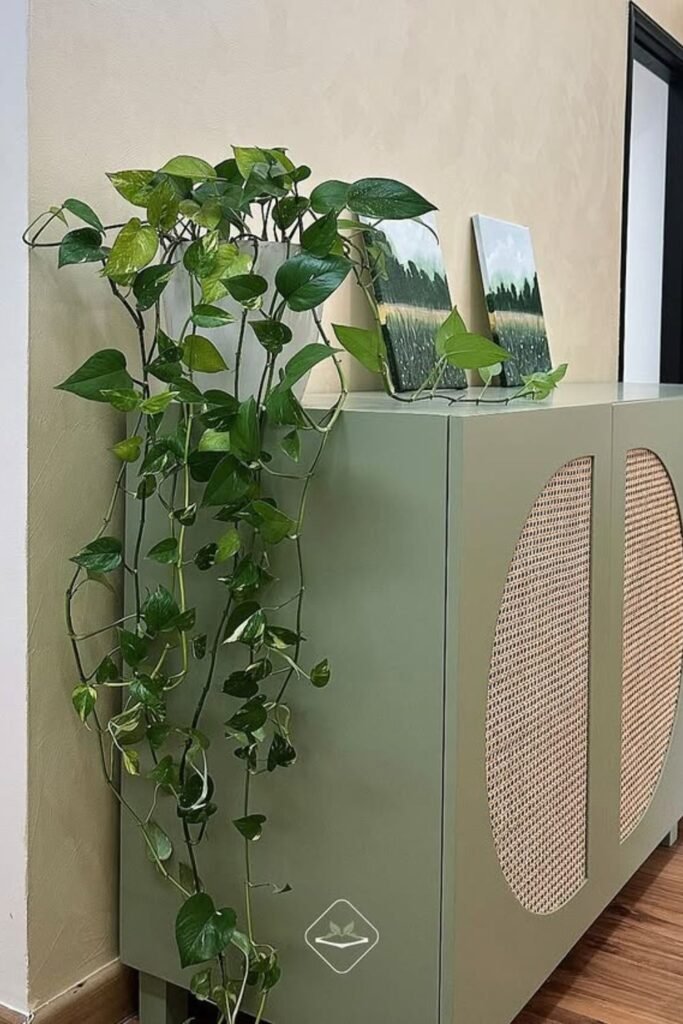
Cabinet Spill
Cabinet tops are natural spots for trailing plants, especially in living rooms where the furniture needs softening. The height keeps the plant out of the way while giving it room to cascade.
Position the pot slightly back from the edge so vines fall forward instead of pressing against the wall behind the cabinet.
Turn the plant every few weeks to prevent one-sided growth toward the nearest light source.
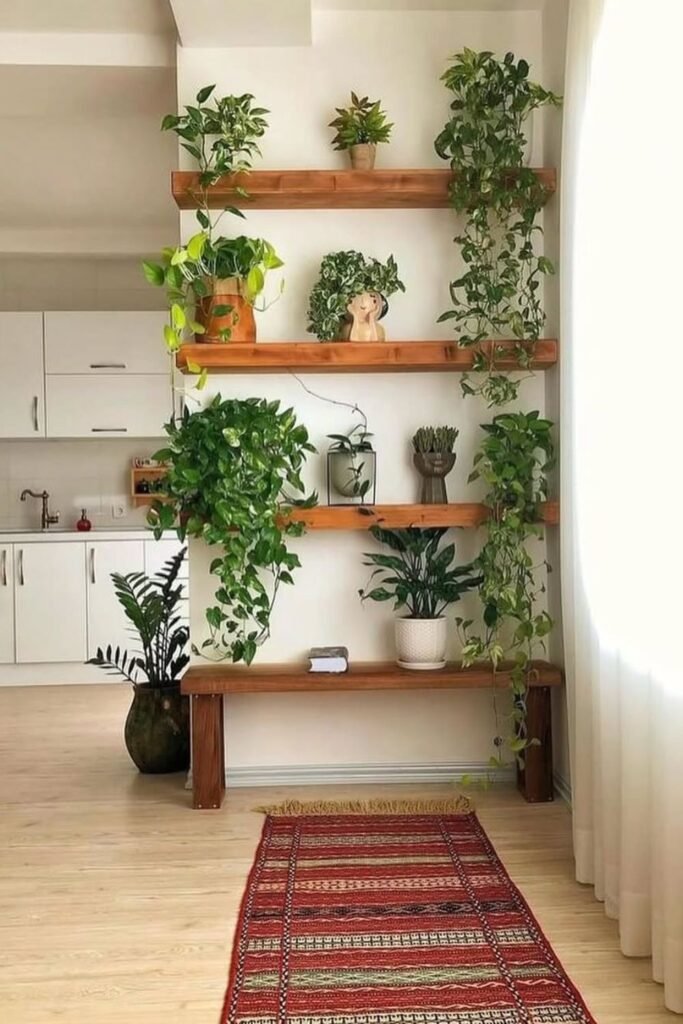
Layered Shelves
Multiple pothos plants on different shelf levels create depth and visual interest without overwhelming a space. The key is varying the sizes and letting some trail while others stay more compact.
Place fuller plants on lower shelves and trailing varieties higher up so the vines can cascade down between the levels. This guides the eye naturally downward.
Rotate and prune occasionally so each plant gets its fair share of light and space.
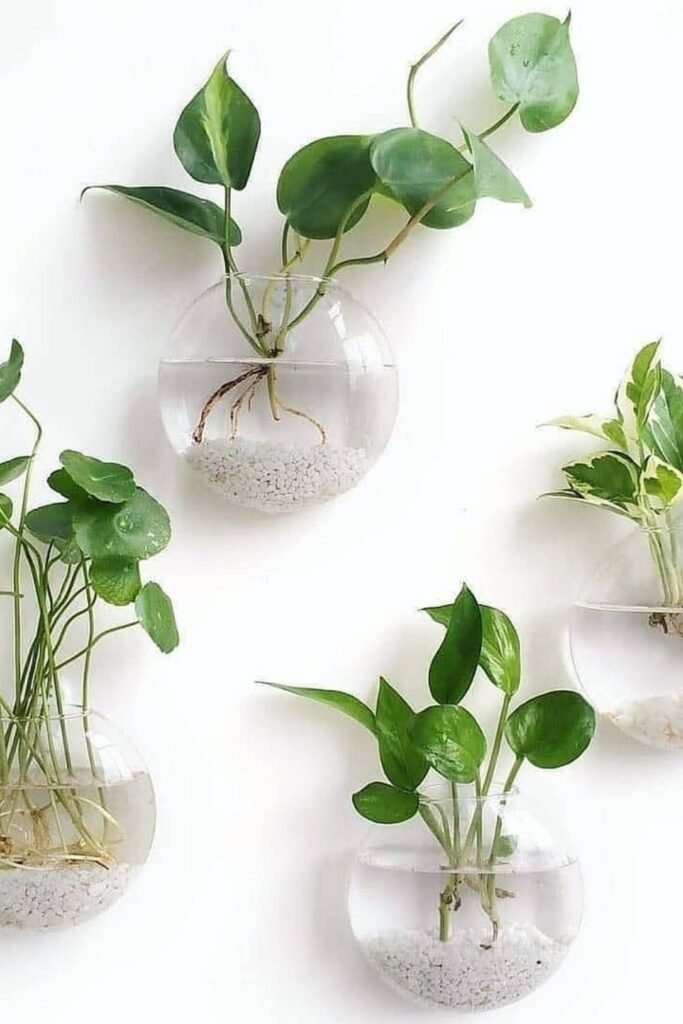
Water Globes
Pothos cuttings grow beautifully in water, and wall-mounted glass containers turn them into living art. This approach works particularly well in kitchens, bathrooms, or bright hallways where traditional pots might be impractical.
Save this post for later ❤️
Change the water weekly and rinse the roots occasionally to keep everything fresh and clear. The roots become part of the display, which is actually quite striking.
This setup keeps things clean, modern, and easy to manage when you don’t want the commitment of soil.
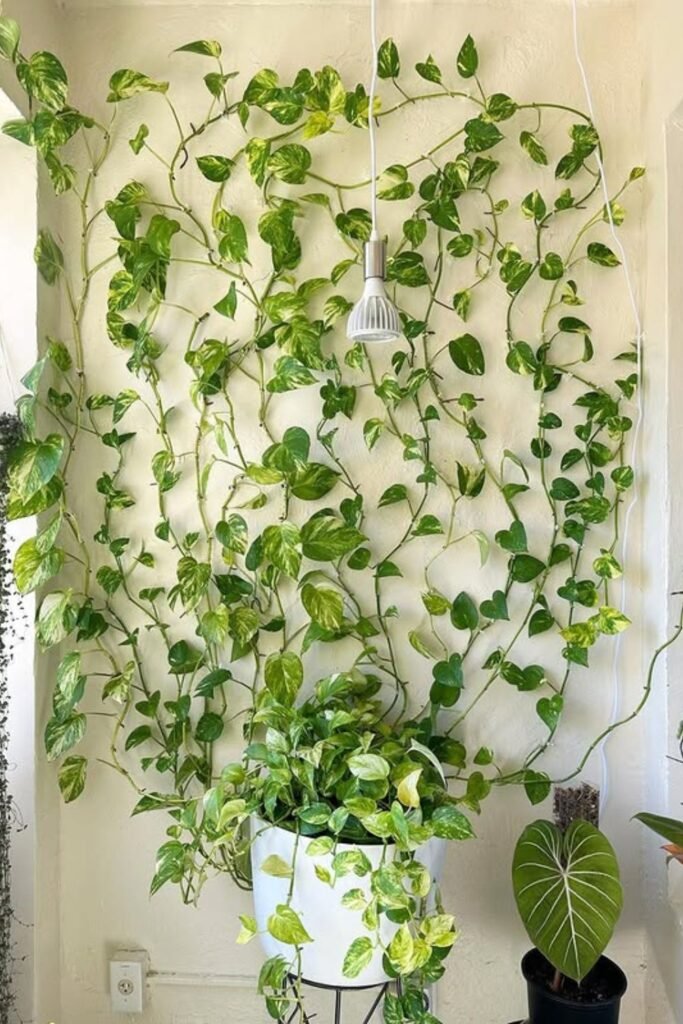
Wall Weave
Instead of letting pothos trail downward, train the vines horizontally across a wall to create living patterns. This takes patience and regular guidance, but the effect is worth it in the right space.
Use small, clear hooks spaced along the wall and guide vines slowly as they grow. The light needs to be fairly even across the entire surface or the plant will stretch toward the brightest spots.
Regular pinching keeps the coverage dense rather than letting the vines get thin and sparse.
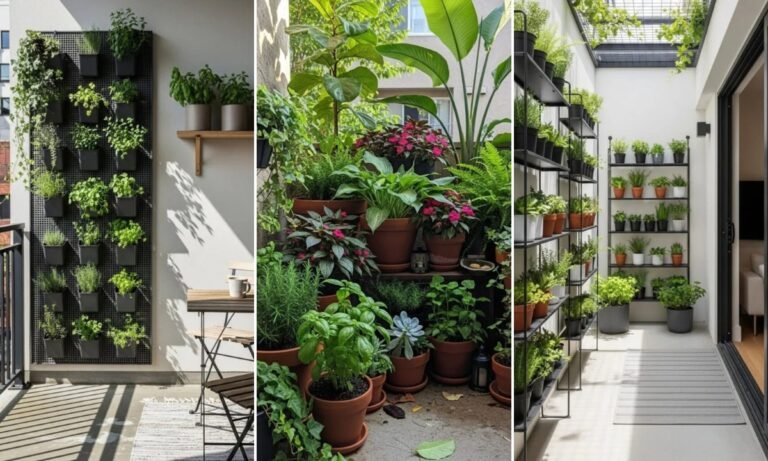
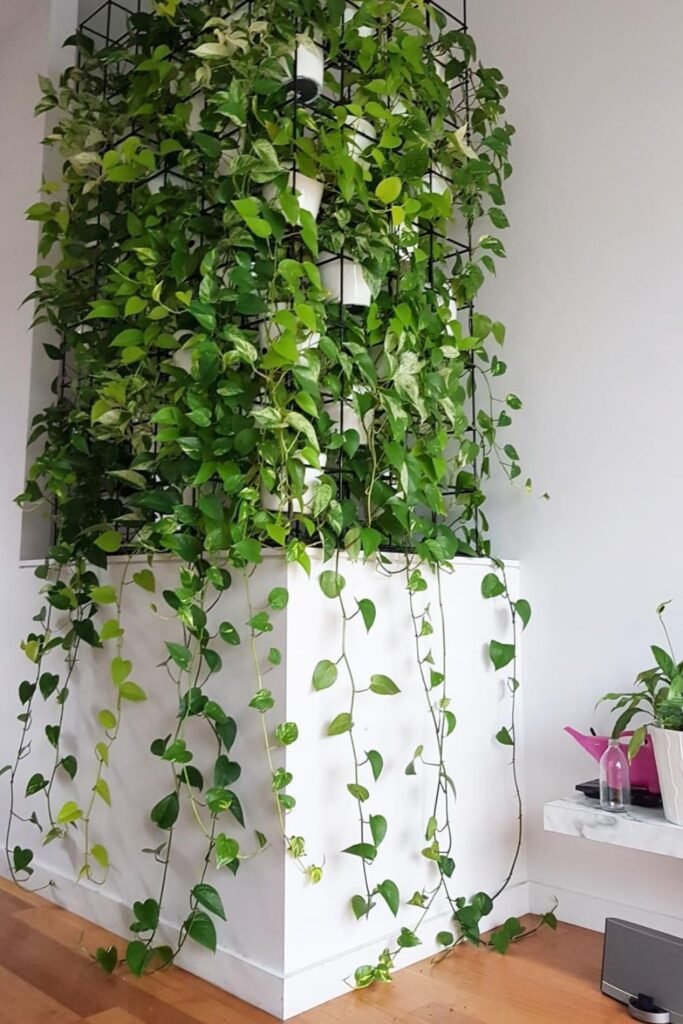
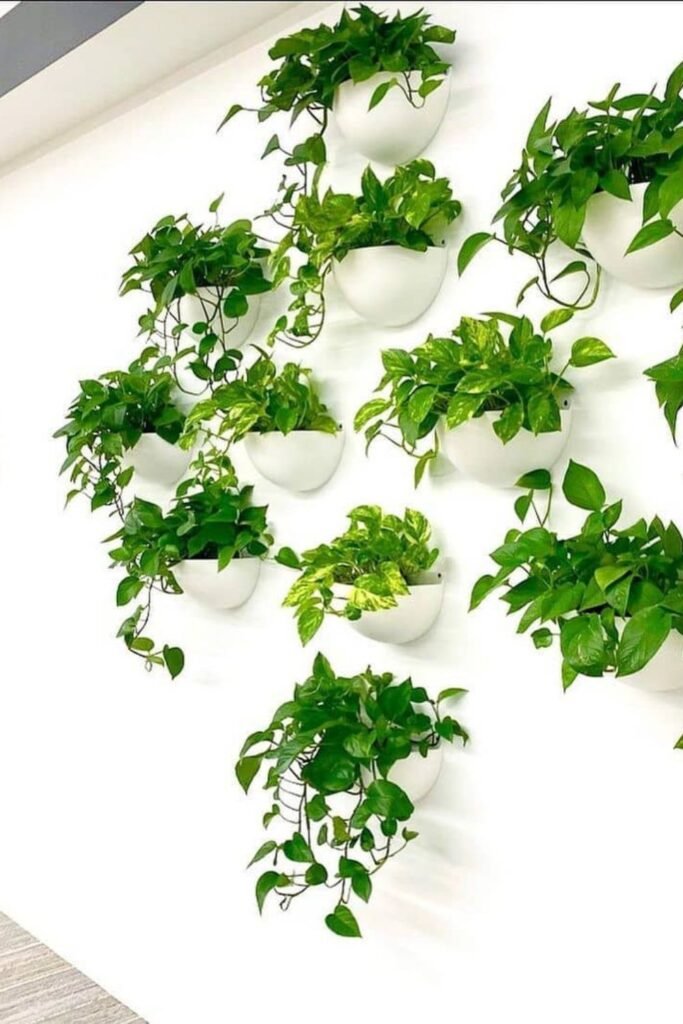
Floating Grid
Multiple wall planters create more visual impact than one large plant while avoiding the overwhelming jungle effect that happens when everything grows together.
Space them so each plant has room to trail without immediately tangling with its neighbors. This works best on walls that receive bright, even light throughout the day.
Trim regularly to maintain definition between plants and prevent the whole arrangement from becoming one heavy mass of greenery.
Corner Drift
Awkward corners benefit from pothos that grows outward rather than straight down. This softens hard angles without creating obstacles in walkways or seating areas.
Mount the pot high in the corner and gently train a few vines to follow the wall edges rather than dropping into the middle of the room.
Light pruning maintains an airy feel and prevents the corner from looking crowded or dark.
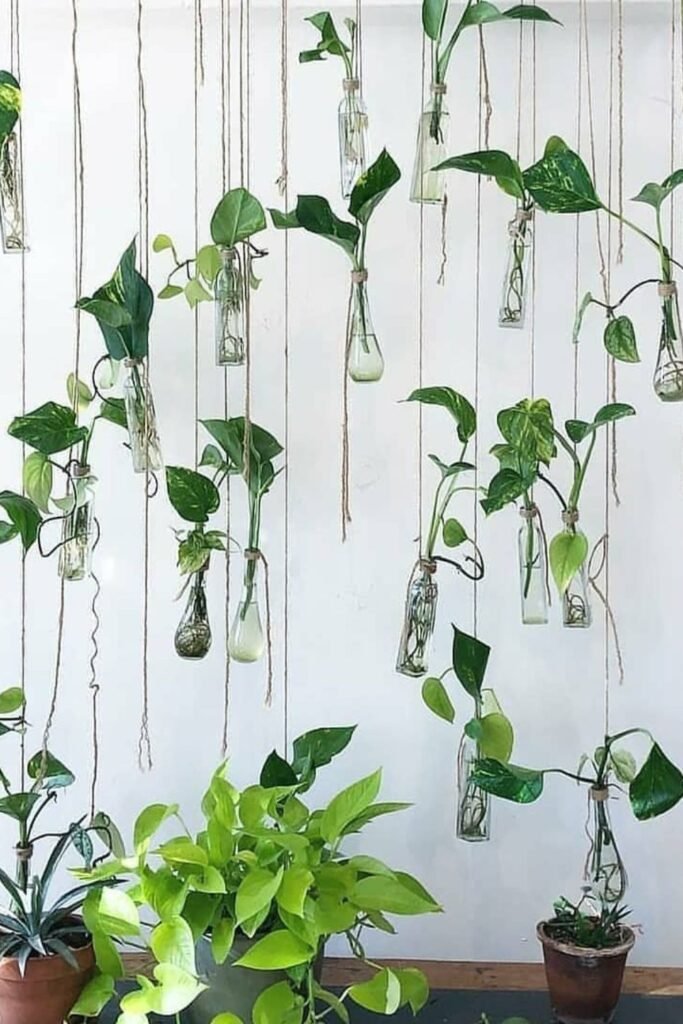
Hanging Cuttings
Small glass bottles with pothos cuttings can be suspended at varying heights to create a mobile-like display. This is particularly effective in bright rooms with high ceilings where the bottles can catch and reflect light.
Fill each bottle with water, add a cutting, and hang them where they won’t dry out too quickly. The different heights create visual rhythm without taking up any floor or surface space.
Change water regularly and you can multiply your plants indefinitely without ever buying soil.
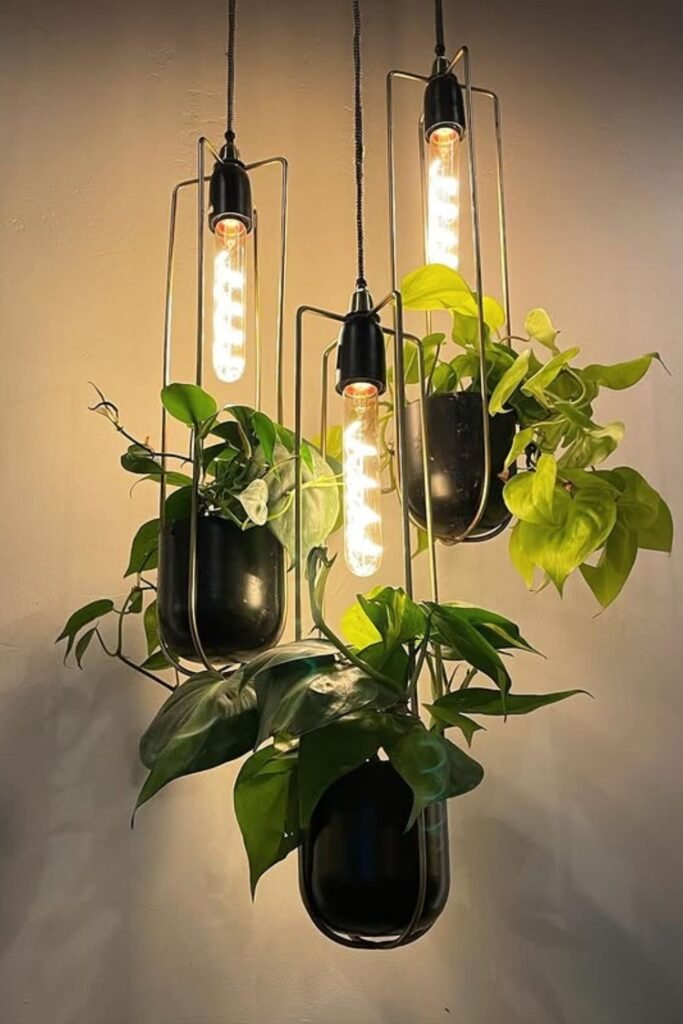
Light Fusion
Combining pothos with existing light fixtures creates atmosphere without adding separate decorative elements. This works in corners that feel dark but already have ambient lighting installed.
Use low-heat bulbs and leave enough space so the leaves don’t touch hot surfaces. The plant benefits from the extra brightness, and the light becomes more interesting with living elements around it.
Keep the heat controlled and this arrangement maintains itself beautifully.
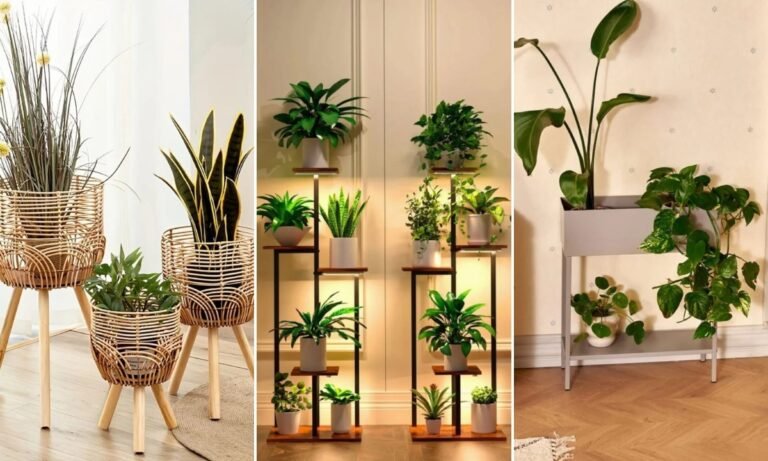
Tiered Stand
A plant stand with multiple levels lets you display different pothos varieties while managing light distribution efficiently. Upper plants catch more brightness while lower ones get gentle filtered light.
Place faster-growing or more light-hungry varieties higher up and slower growers below. This balances growth rates and prevents one plant from overshadowing the others.
Rotate the entire stand periodically so trailing vines don’t all lean toward the nearest window.
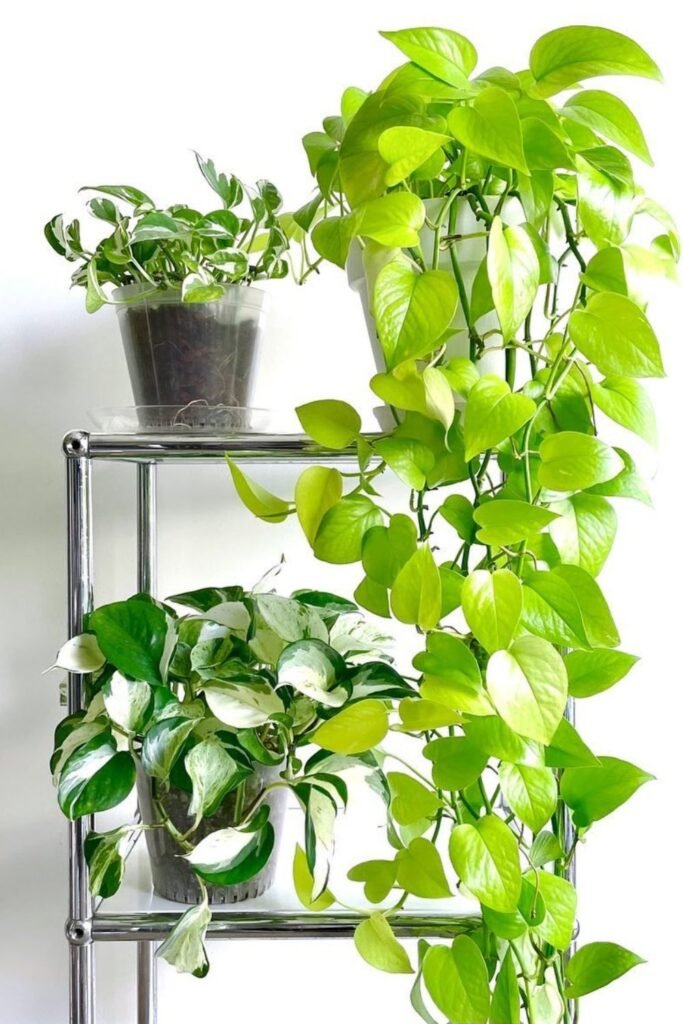
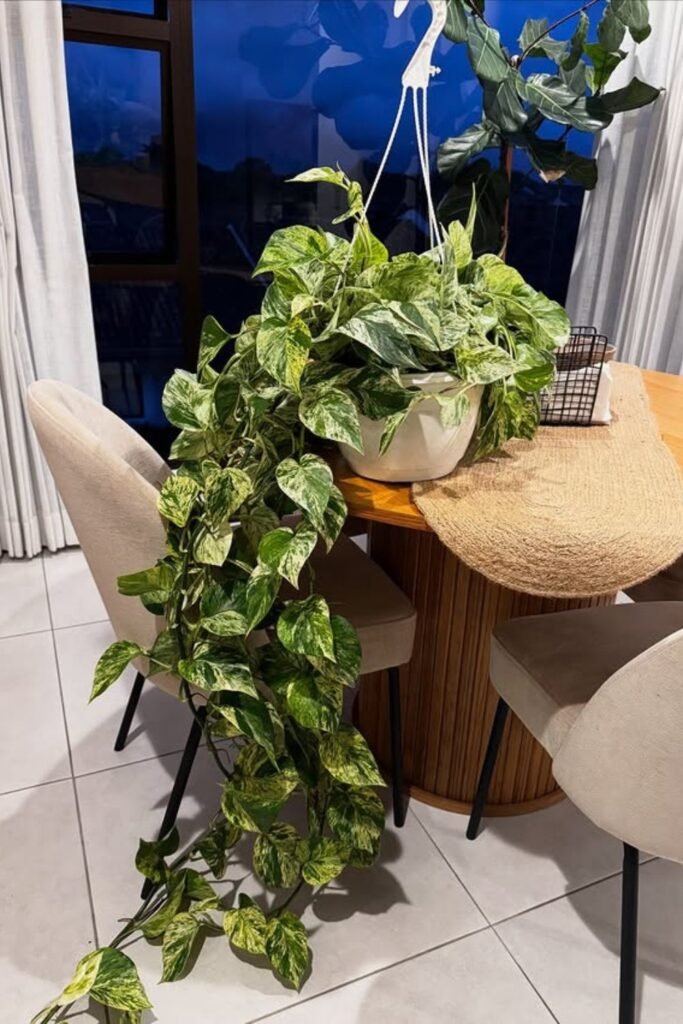
Table Cascade
Let pothos spill naturally across a dining or coffee table for greenery that feels relaxed rather than formal. This works best in areas where the table isn’t used for daily meals or constant activity.
Position the pot off-center so vines can trail freely without getting damaged by chairs or daily use. The setup should enhance the space without creating practical problems.
Trim occasionally to keep the length manageable and prevent stems from dragging on the floor where they’ll get damaged.
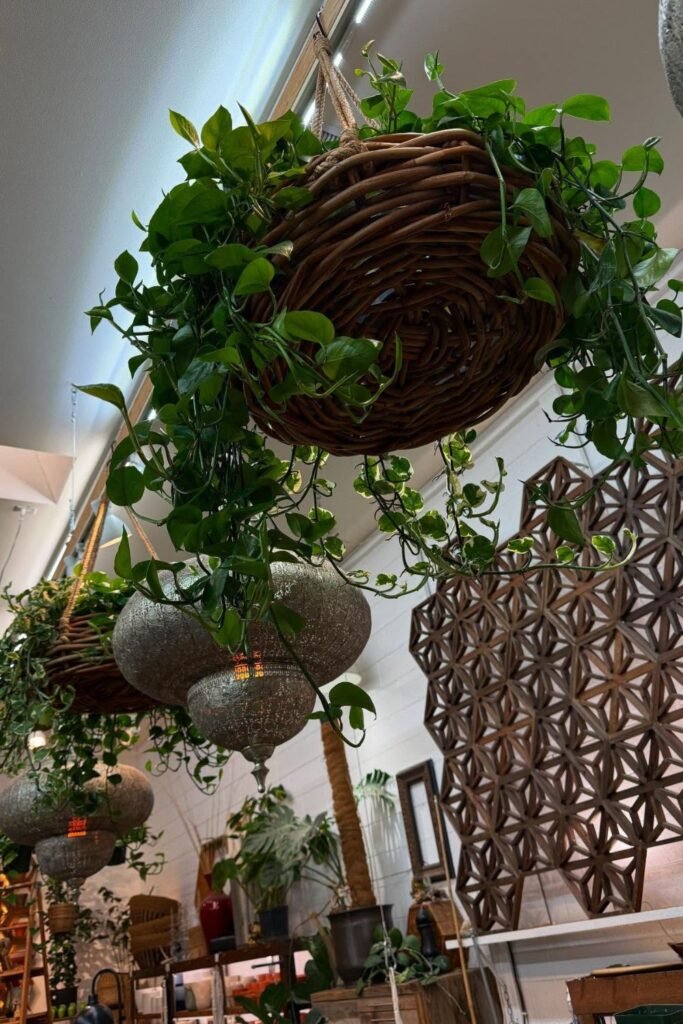
Hanging Canopy
Create a living ceiling by hanging multiple pothos baskets overhead instead of filling floor and wall space. This works beautifully in rooms with high ceilings and consistent indirect light from multiple directions.
Use wide baskets so the roots stay cool and moisture distributes evenly. Let the vines trail naturally, then trim only the longest strands to maintain fullness rather than length.
The effect is dramatic and creates vertical interest without sacrificing usable space below.
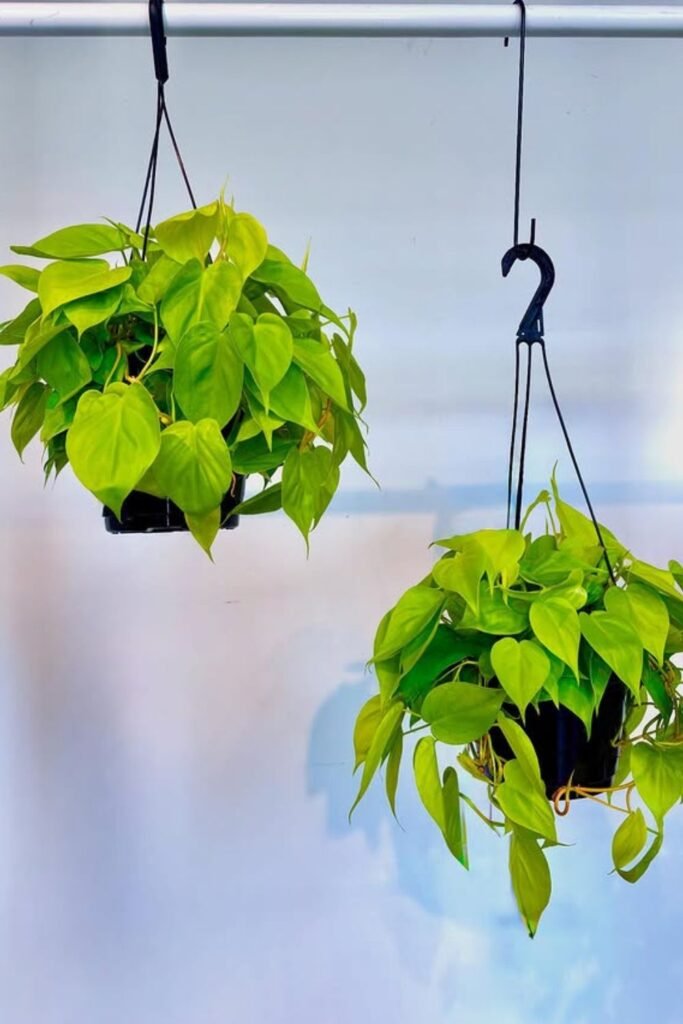
Twin Hang
Two matching hanging baskets create better balance than one statement plant while avoiding the crowded look that happens when you cluster too many plants together.
Keep the heights similar but allow slight spacing so each plant can breathe and develop its own character. This setup works particularly well framing windows or open walls where light hits both sides evenly.
Water and trim both plants similarly so one doesn’t overwhelm the other as they mature.
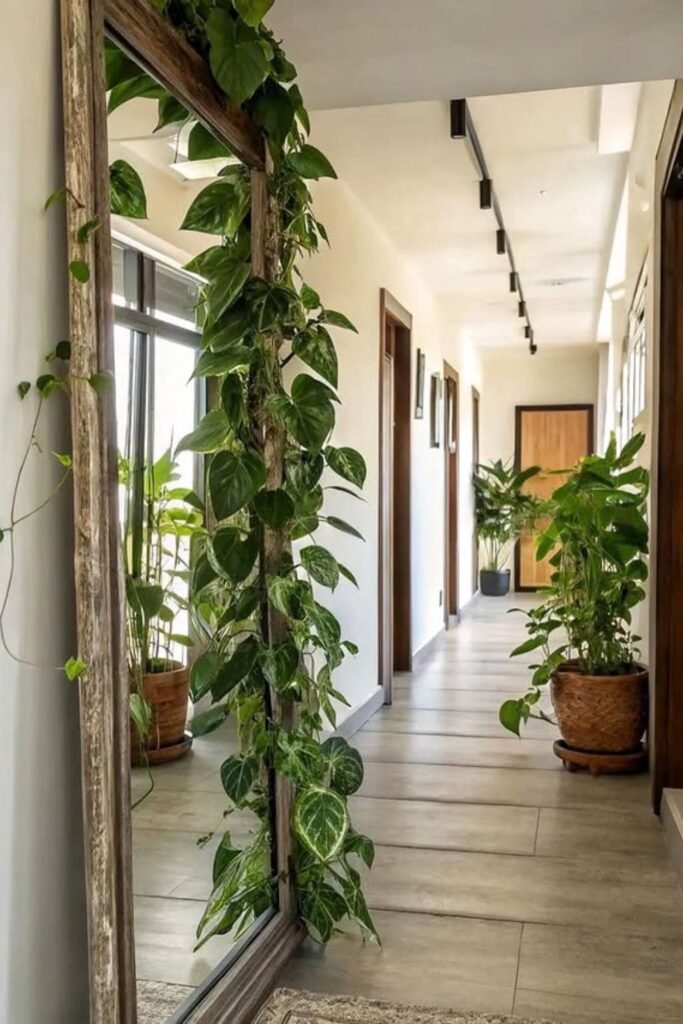
Mirror Climb
A hallway mirror becomes more interesting when pothos vines frame it naturally. The reflected light helps the plant grow evenly instead of leaning toward one side, and the mirror stays functional while gaining a living accent.
Place the pot at the base and guide a few vines up along the frame early in their growth. The rest will follow the established pattern.
Trim carefully to keep the mirror visible and functional while letting the greenery enhance rather than obscure the space.
FAQs
Can pothos grow well in low-light homes?
Pothos survives in low light, but you’ll get slow growth and smaller, less vibrant leaves. If your home doesn’t have bright windows, consider moving the plant closer to whatever natural light you do have.
Rotate the pot weekly so all sides get equal exposure, and don’t expect the dramatic growth you see in brighter homes.
How do you keep potI’ve spent over four decades building a marriage, raising a family, and learning what truly matters along the way. I write about relationships, home, and navigating life’s later seasons with grace, honesty, and a little humor. My goal is to share the kind of steady, real-life wisdom that helps you feel grounded, encouraged, and a little less alone.
I’ve spent over four decades building a marriage, raising a family, and learning what truly matters along the way. I write about relationships, home, and navigating life’s later seasons with grace, honesty, and a little humor. My goal is to share the kind of steady, real-life wisdom that helps you feel grounded, encouraged, and a little less alone.