Perennial Garden Ideas That Come Back Every Year and Get More Beautiful Each Time

Another March, another walk to that spot behind the fence where the dirt looks ready but nothing grows the way I picture it.
The plants I bought last spring are gone or barely hanging on, and I’m tired of starting over every year with things that need constant fussing.
What I want is simple: plants that come back, look decent without daily attention, and actually fill the space they’re supposed to fill.
These 24 perennial garden ideas will get you there without the guesswork or the disappointment.
What Are the Best Perennial Garden Ideas for Small Spaces?
Small spaces make you think you need to cram everything in, which is exactly backwards.
The trick is choosing perennials that grow up instead of out, and giving them room to do it properly.
Put the tall ones in back, keep the short ones up front, and repeat the same few plants instead of mixing in everything you see at the garden center.
When you limit your choices, the space feels bigger and stays manageable, and that’s worth more than variety for the sake of variety.
Save this article for later! 👇👇
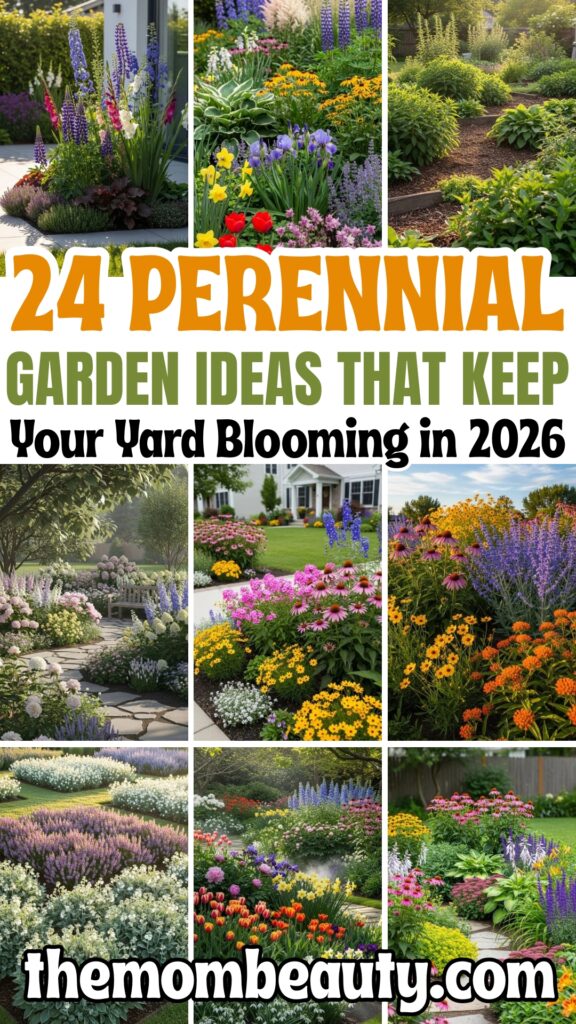
Which Perennial Plants Work Best in Full Sun Gardens?
Full sun gives you options, but only if you don’t fight the heat.
Group plants with similar needs together, give them enough space for air to move between them, and pick varieties that actually want that much sun.
Fighting your conditions is a losing game — work with what you have and let the tough plants carry the garden.
When everything is suited to the spot, you water less, worry less, and get better results than trying to baby plants that don’t belong there in the first place.
Year-Round Color
I used to chase every pretty flower until I realized I was creating my own disappointment. Now I think in seasons, not individual plants.
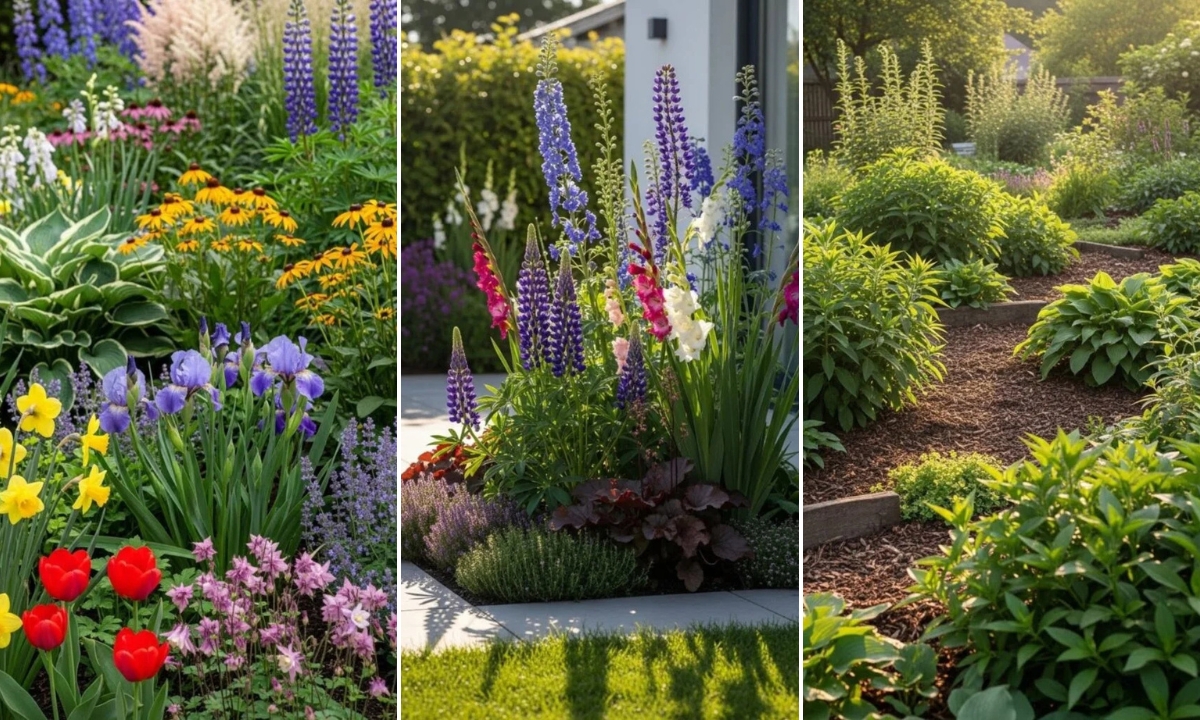
One early bloomer for spring, something reliable for summer heat, and a tough one that looks good into fall. When the timing overlaps, there’s always something carrying the show forward.
It’s not about having more plants — it’s about having the right ones at the right time, and that makes all the difference in a garden that works instead of disappointing you.
Vertical Growth
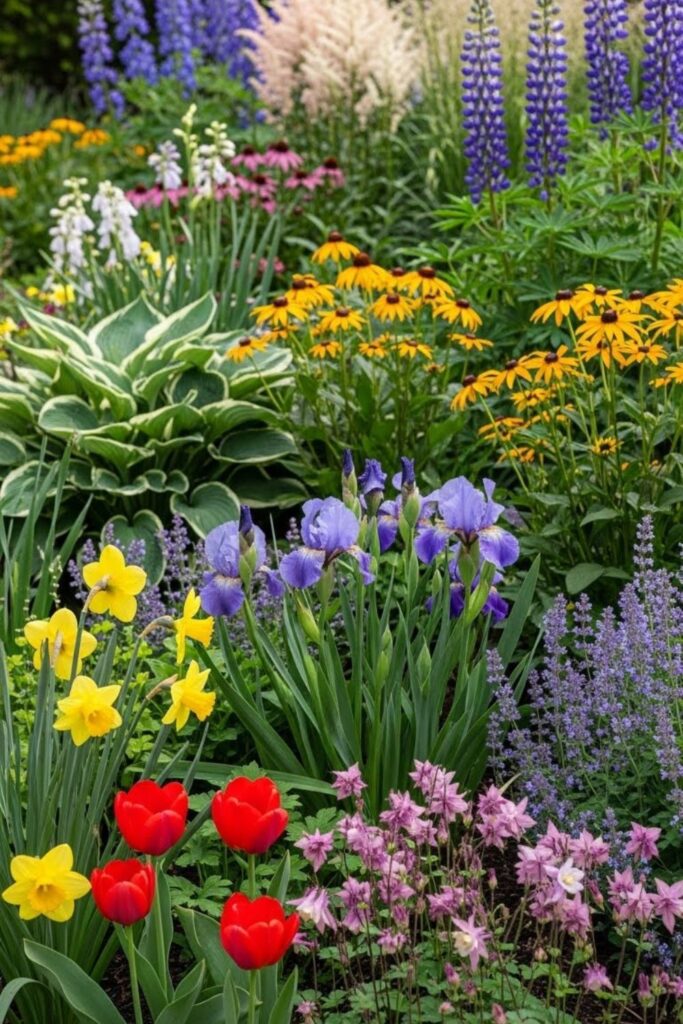
Limited ground space taught me to think upward. I look for perennials that stay narrow but grow tall, then place them where your eye naturally travels up the bed.
Height makes a small garden feel larger without cramming in more plants. You get presence without clutter, and fewer bare spots because vertical plants balance the whole composition.
No-Dig Setup
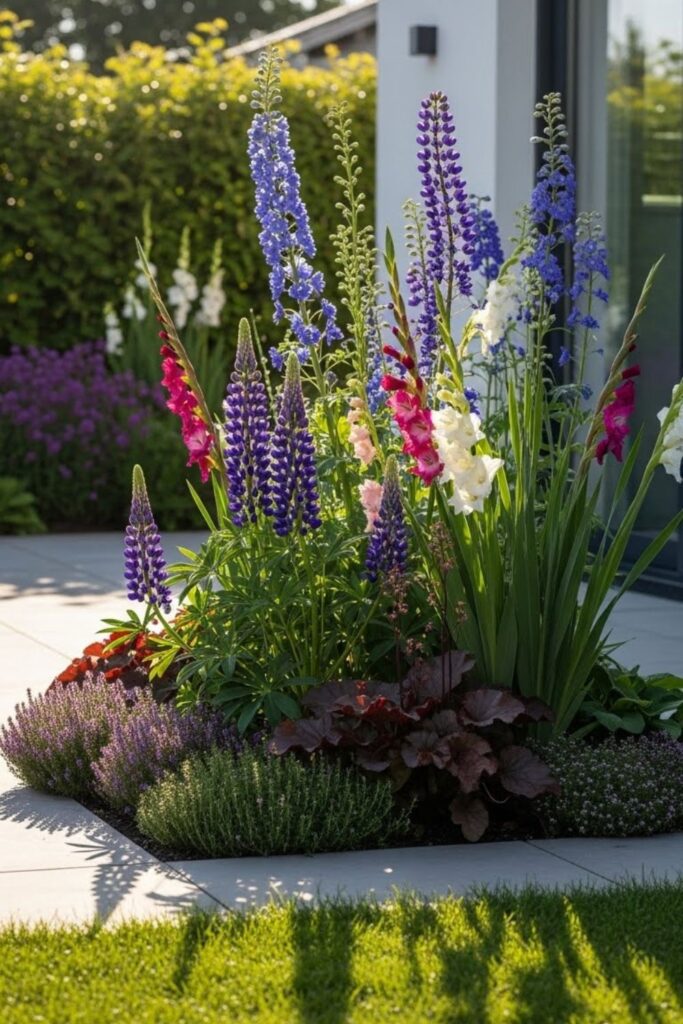
Skipping the digging changed everything for me. I layer compost on top and let the perennials settle into what’s there.
Roots find their way naturally, weeds slow down when you’re not disturbing the soil every season, and plants establish faster when you stop messing with what’s working. Less effort upfront, better results later.
Heat Ready
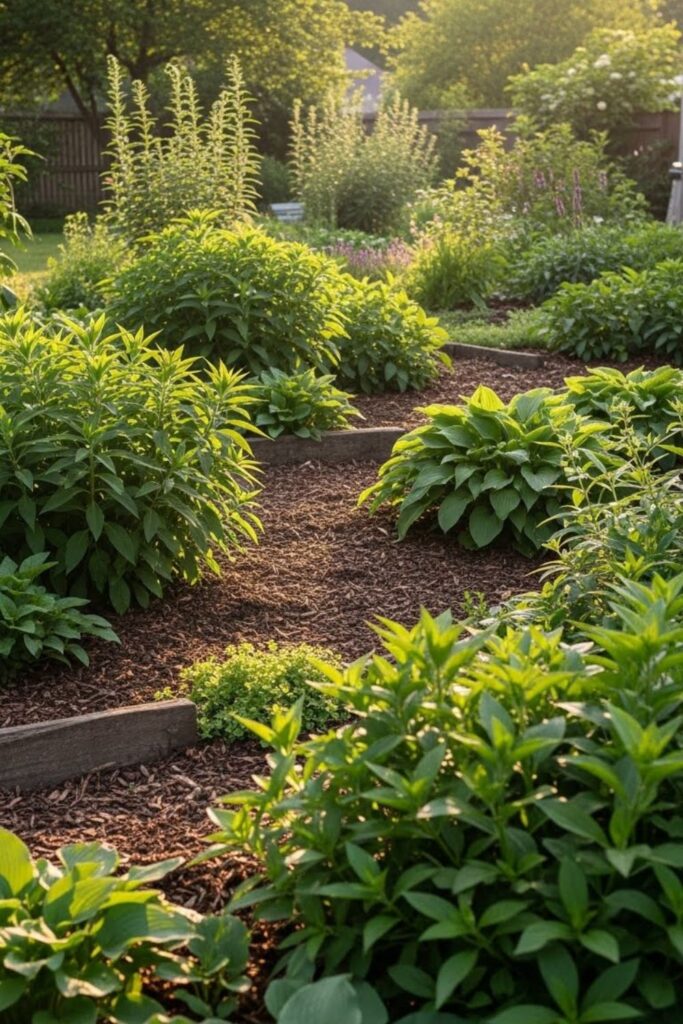
Summer heat doesn’t have to be your enemy. I group perennials that handle it well, water deeply but less often, and let them adapt instead of trying to pamper them through it.
Strong roots form when plants learn to cope. Once they settle in, blooms last longer and the stress disappears — yours and theirs.
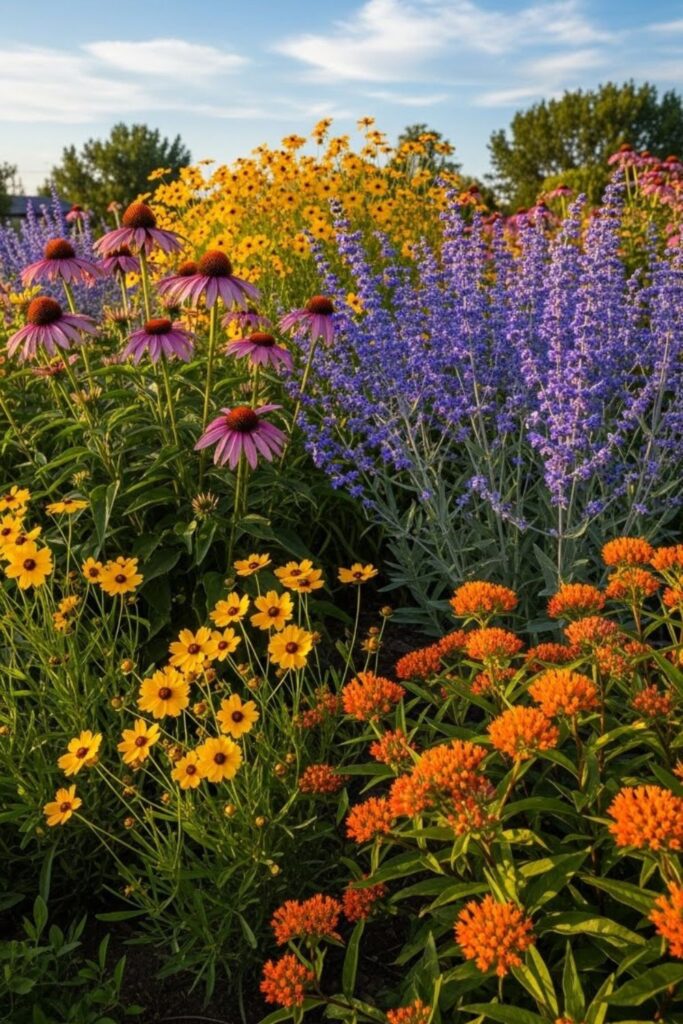
Street Appeal
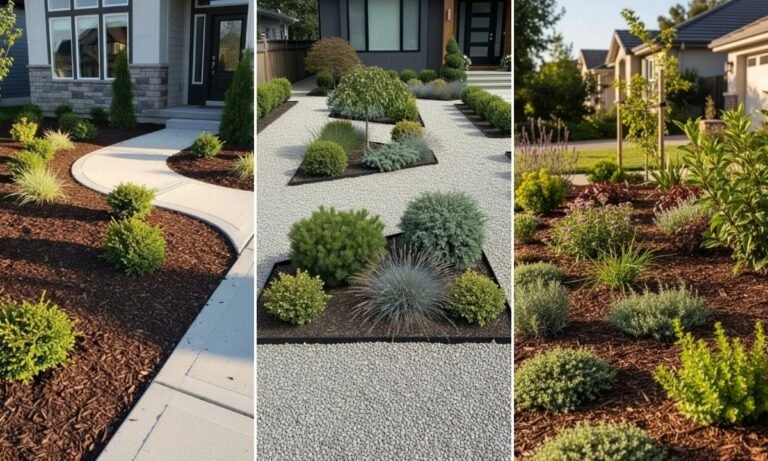
I plan the front garden from the sidewalk view first, not from inside the house. Reliable perennials go where they frame the approach instead of hiding it.
When plants stay upright instead of flopping over, the bed looks cared for without weekly maintenance. The whole house feels more welcoming before anyone reaches the front door.
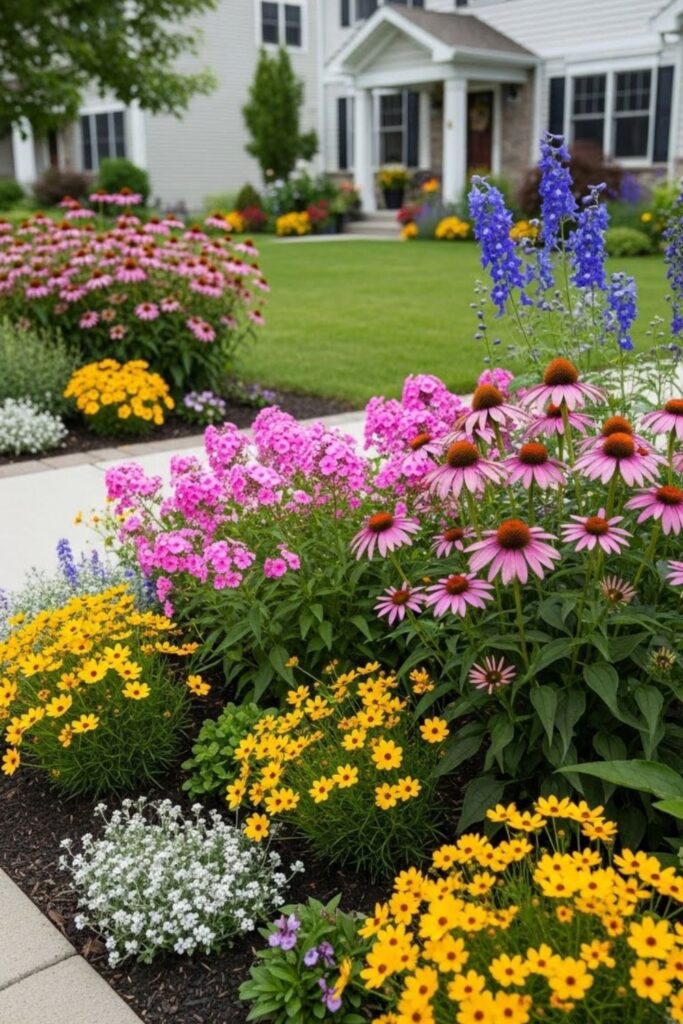
Calm Tones
Soft colors surprised me by how much they change the feeling of a space. I stick with gentle shades and steady shapes — nothing fighting for attention.
When the garden feels quiet, it becomes a place you want to pause. Loud contrasts are exhausting. Repeating tones create peace, and peace is what most of us actually need from a garden, not drama.
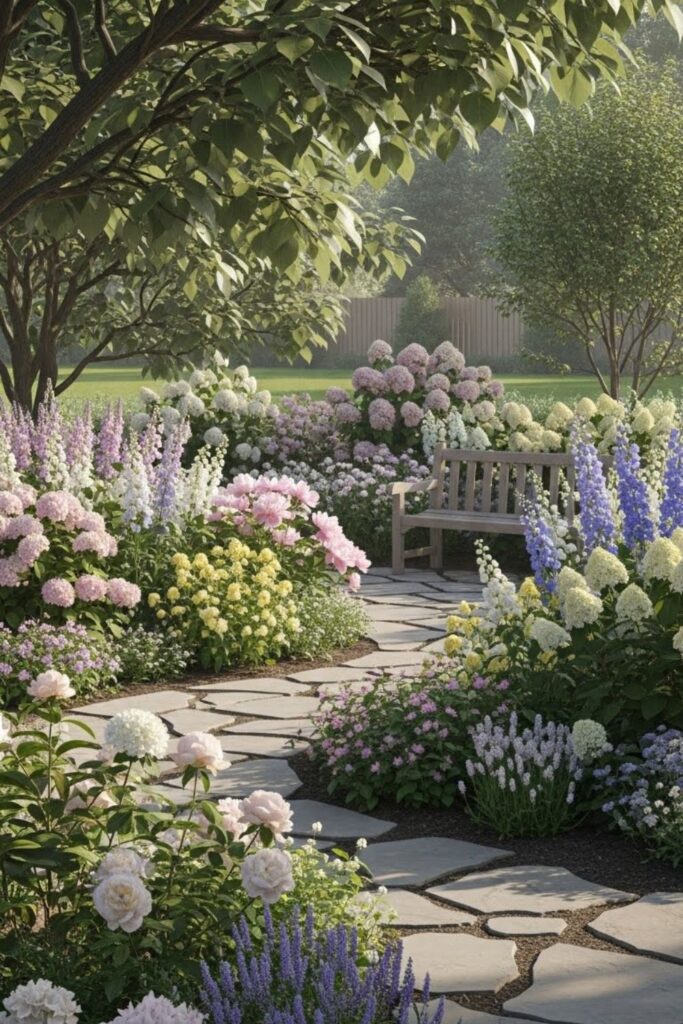
Three Plants
Limiting myself to three plants felt risky but solved everything. One for structure, one that blooms long, one that fills spaces. Each has a job.
When plants aren’t competing, they grow better. You spend less time adjusting and more time enjoying what actually works.
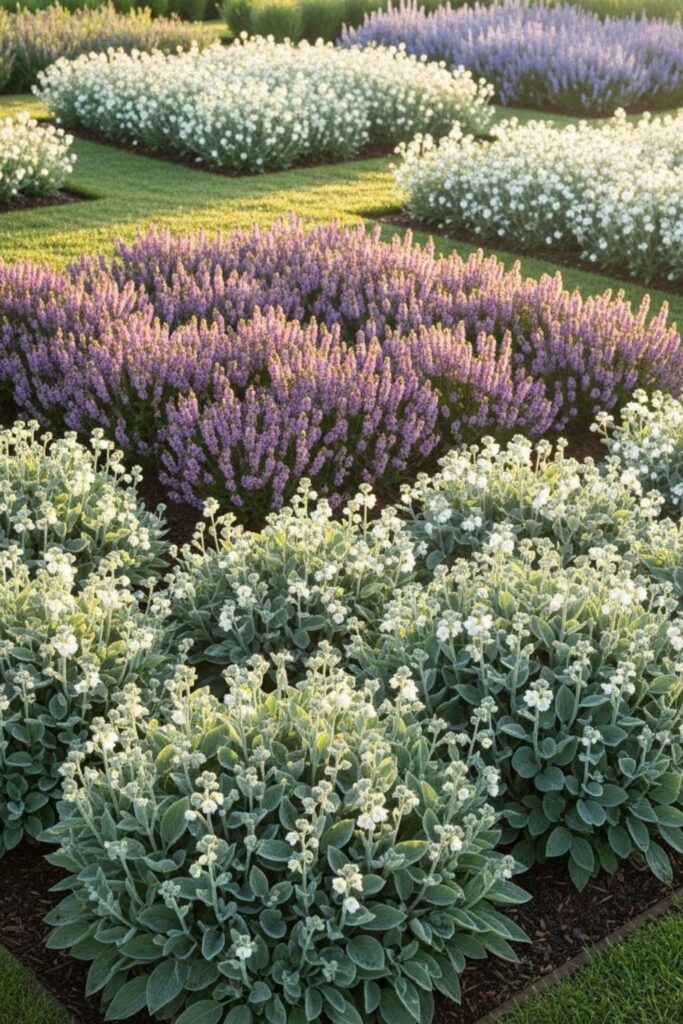
Bloom Stages
I stagger perennials so one starts blooming as another finishes. Gaps disappear without adding extra plants, and the bed feels alive longer.
If your garden looks great in June and dull by August, timing is the issue. Fix the sequence, and color takes care of itself through the whole season.
Beginner Proof
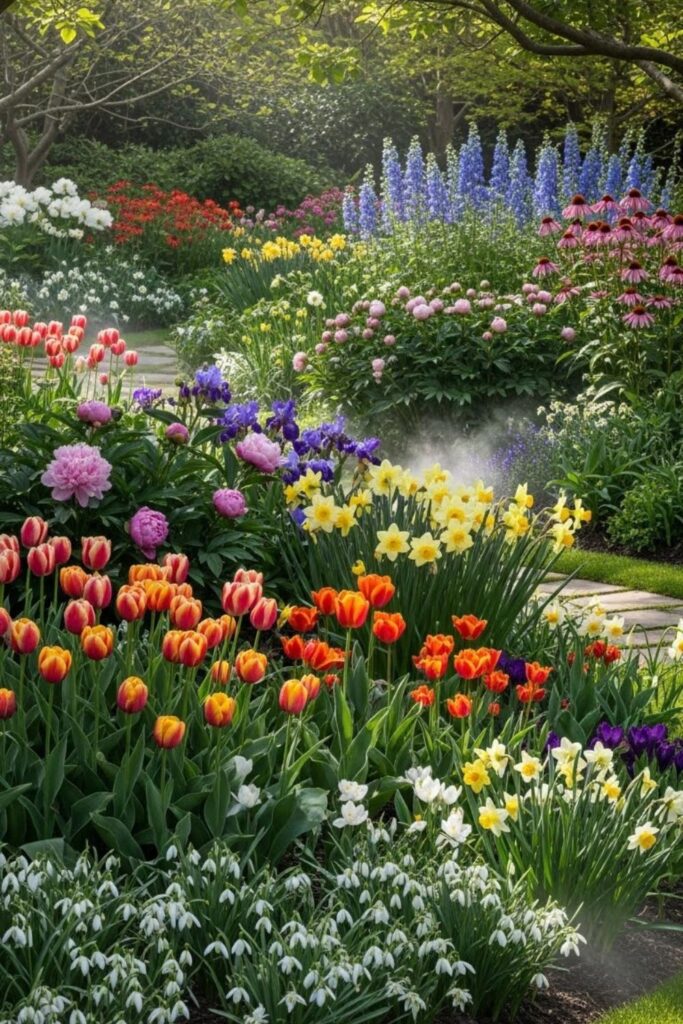
Starting out, mistakes happen, so I design with forgiveness in mind. Tough perennials that bounce back, generous spacing, and plants that match the conditions.
When the garden survives your learning curve, you stay motivated instead of giving up after the first bad season. Success builds confidence faster than perfection ever could.
Full Look
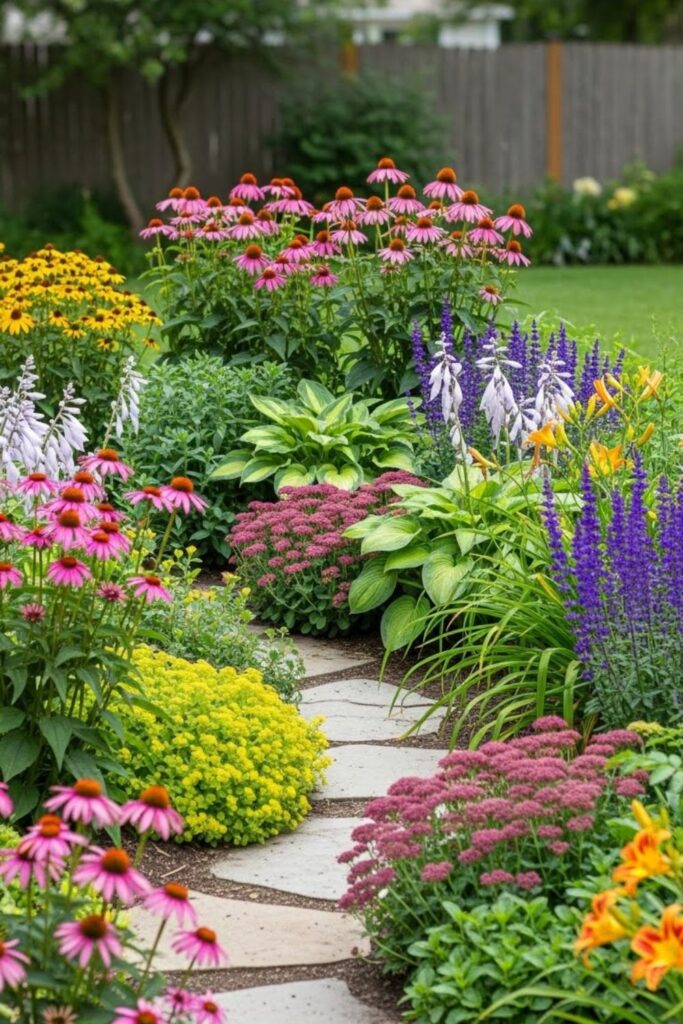
Empty gaps used to drive me crazy until I stopped overplanting. I focus on mature size, not how plants look the day I plant them.
Give them room, let time do the work, and fullness happens naturally. Crowding creates more problems than patience ever will — disease, watering issues, constant rearranging.
Soil Friendly
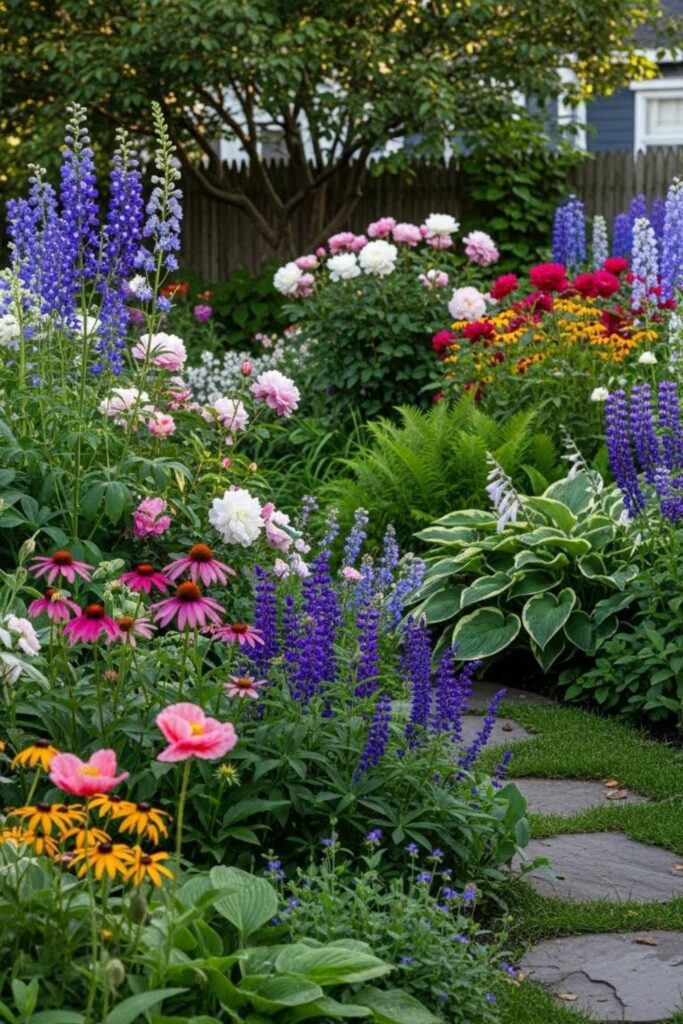
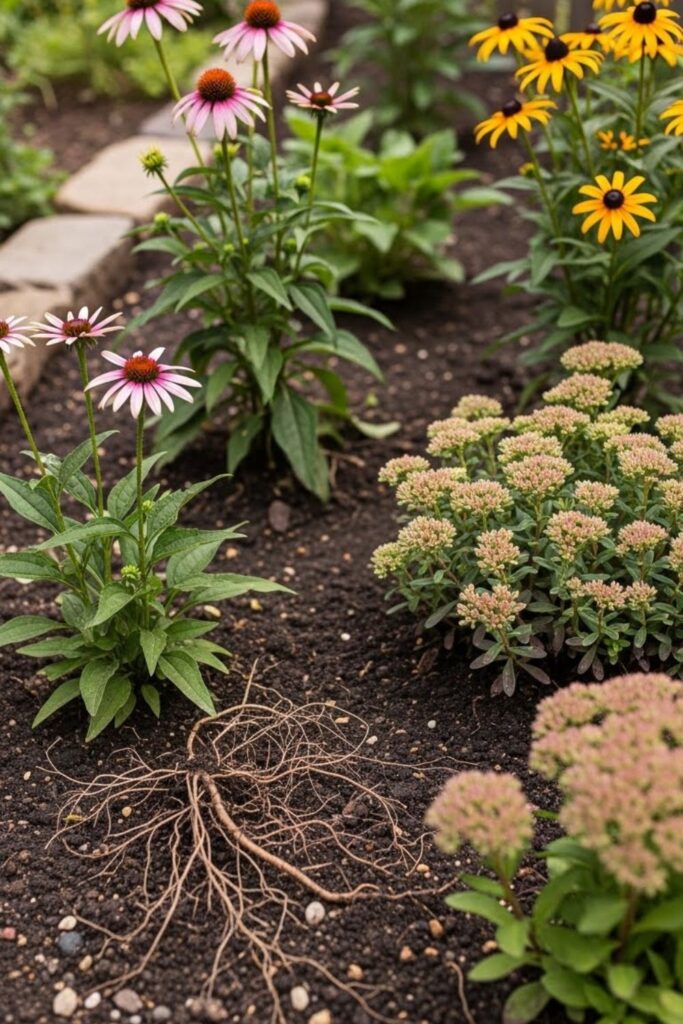
Poor soil taught me to work with what I have instead of fighting it. Tough perennials that adapt, not perfect conditions that cost a fortune to create.
When plants suit the soil, everything improves slowly on its own. You don’t need perfect dirt to succeed — you need compatible choices and patience.
Save this post for later ❤️
Long Bloom
Chasing nonstop flowers exhausted me until I simplified. Perennials known for extended blooming, minimal deadheading, and letting them do what they do well.
Color without commitment. The garden stays lively, your schedule stays flexible, and gardening becomes enjoyable instead of another task demanding constant attention.
Pollinator Balance
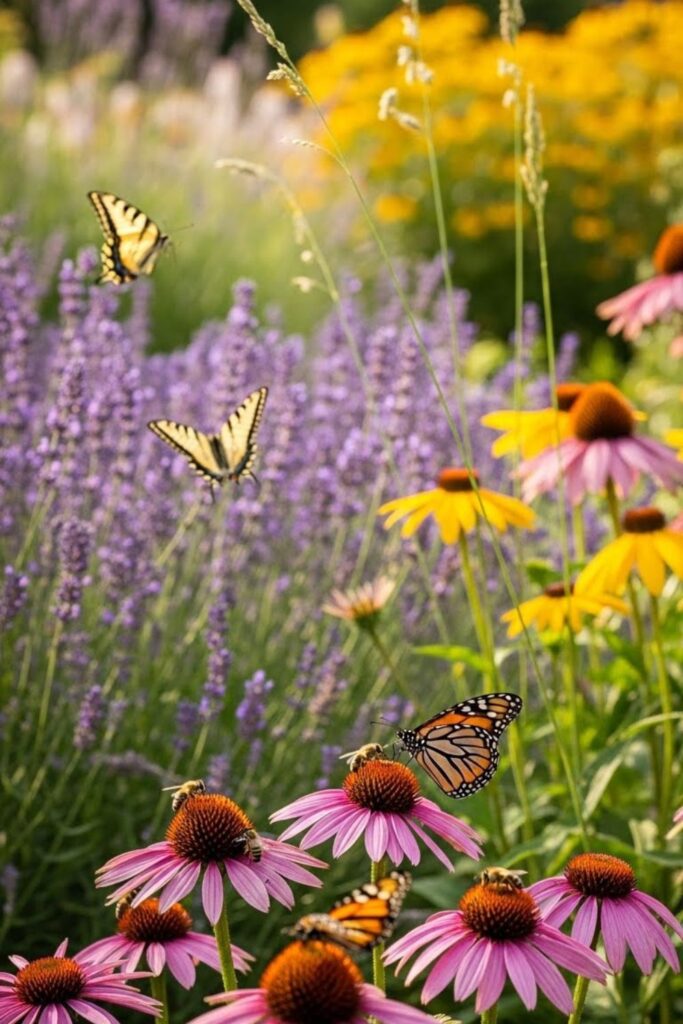
Watching bees struggle in our neighborhood made me rethink what I planted. Perennials that attract pollinators but keep their shape — wildlife benefits without the garden looking messy.
You get movement, life, and order together. The garden supports nature while still looking intentional, which makes it easier to live with every day.
Fading Beauty
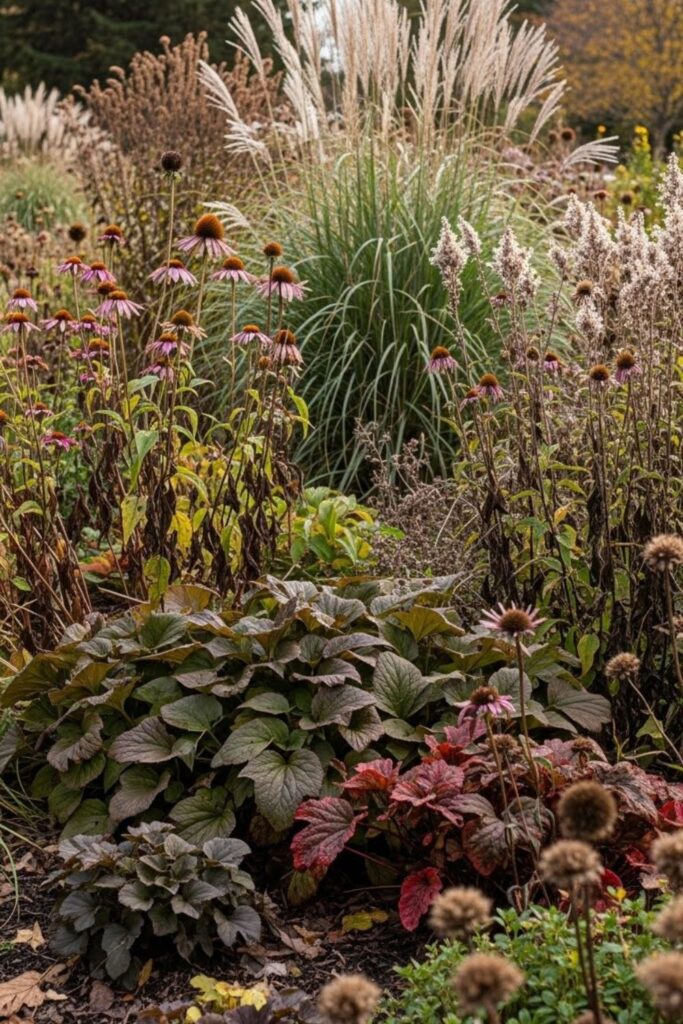
Flowers don’t last forever, so I plan for what happens after. Strong leaves, interesting seed heads, plants that stay attractive when blooms fade.
Structure takes over when petals fall, and the garden still feels complete. Visual interest shouldn’t end when flowering stops — that’s when good planning shows itself.
Narrow Paths
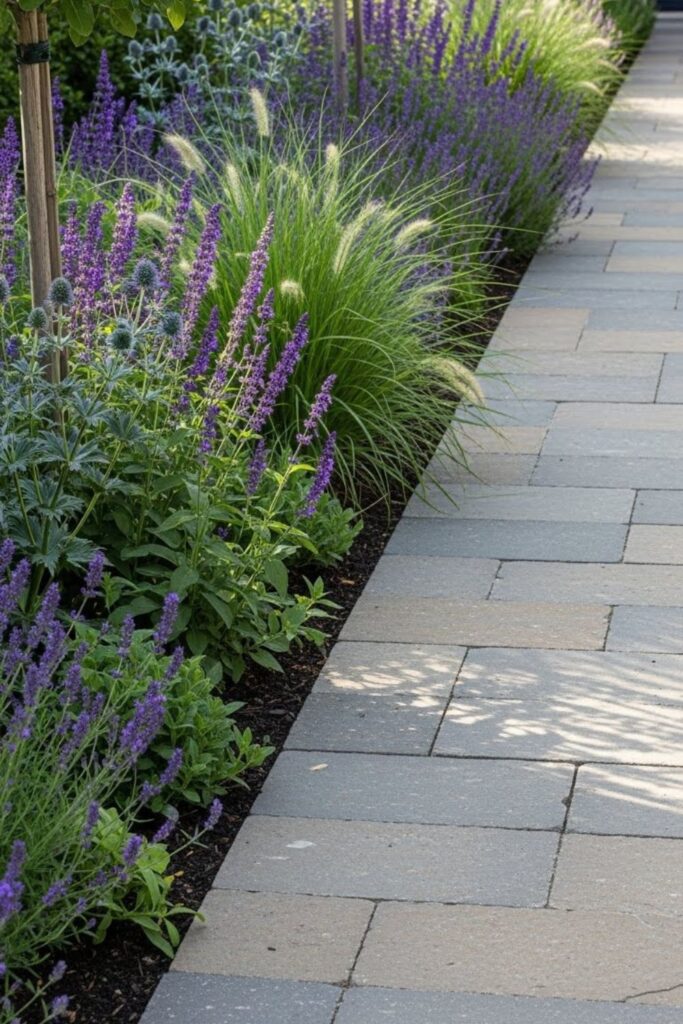
Tight walkways work when you choose plants that hold their shape. I line edges with perennials that don’t sprawl outward or flop into the path.
Softness without obstruction, and everything stays functional year-round. Smart plant choices keep paths clear without constant trimming or corrections.
Repeated Rhythm
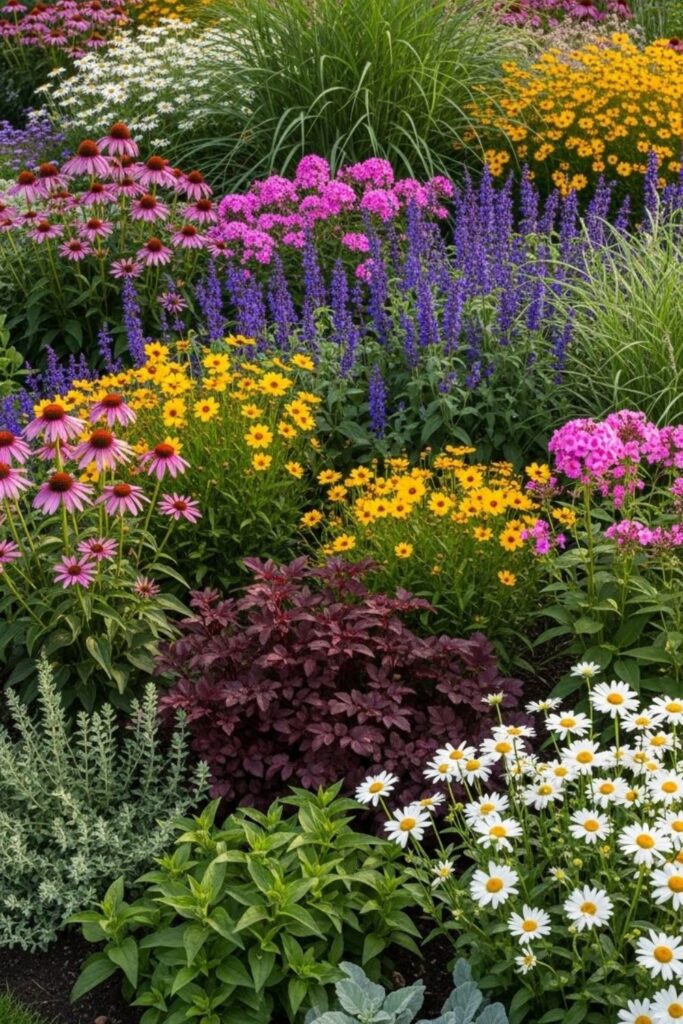
Too much variety made my garden feel chaotic until I tried repetition. The same few perennials placed throughout the bed so the eye flows naturally.
Patterns create calm, and calm makes maintenance predictable. You don’t need dozens of different plants to create interest — you need a few strong choices used well.
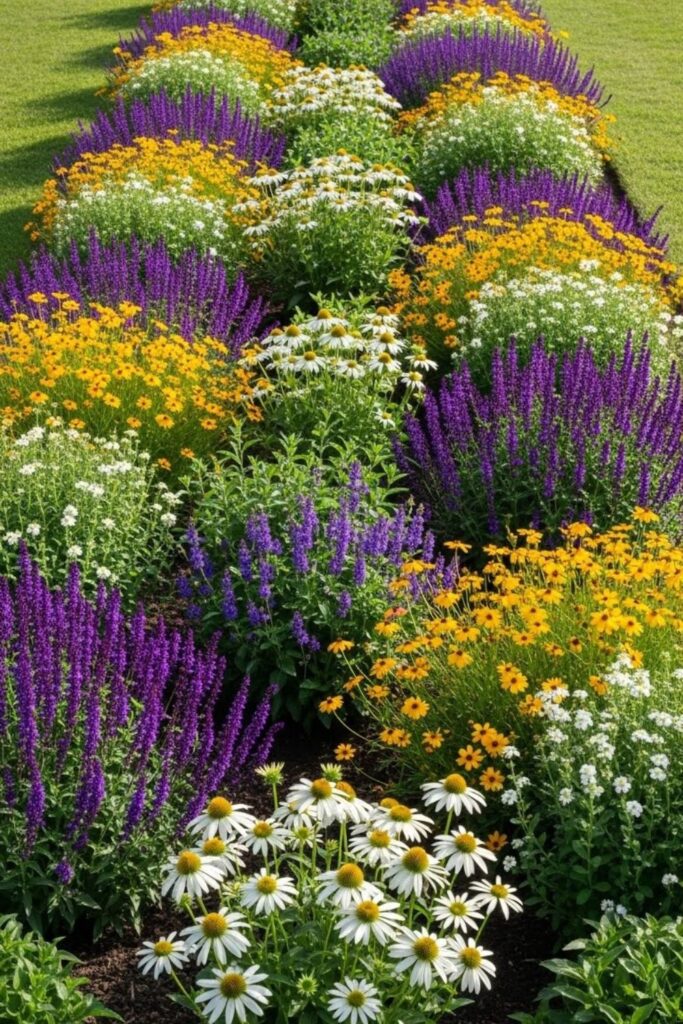
Yearly Growth
Patience pays off in a perennial garden. I let plants settle instead of moving them constantly, and roots stay undisturbed so they grow stronger every year.
If you keep rearranging, progress resets. Stability creates momentum, and over time maintenance drops while results improve.
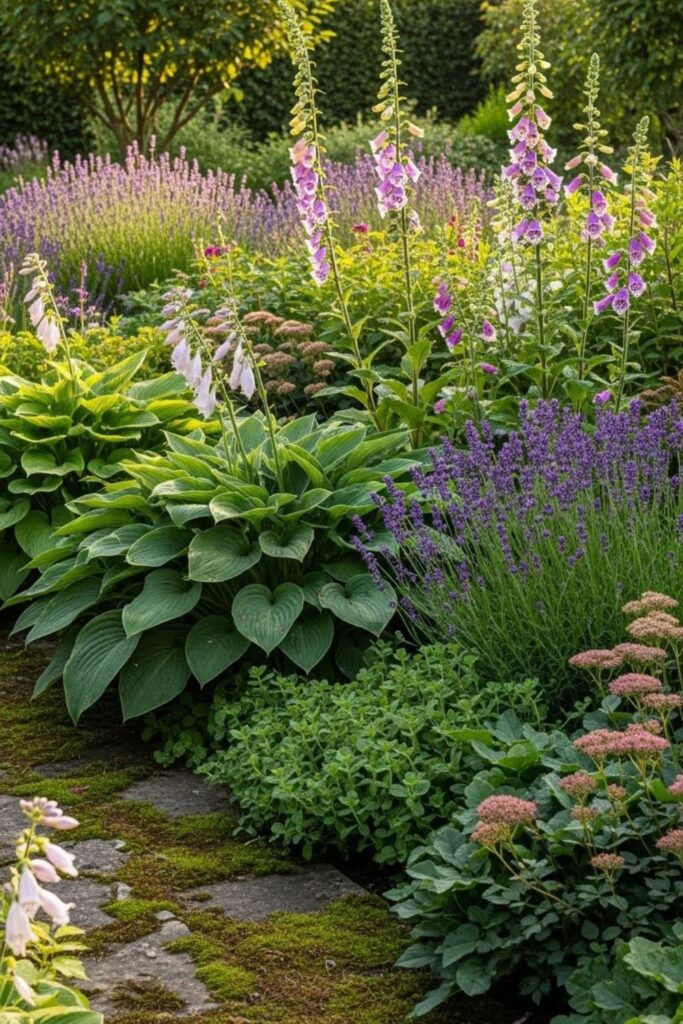
Morning Light
Early sunlight behaves differently than afternoon heat. I place perennials where they catch gentle morning sun but avoid the harsh later hours.
Growth stays balanced, stress stays low. If your garden looks great at dawn but wilted by lunch, light timing might be the fix you need. Match plants to morning exposure and bloom quality improves.
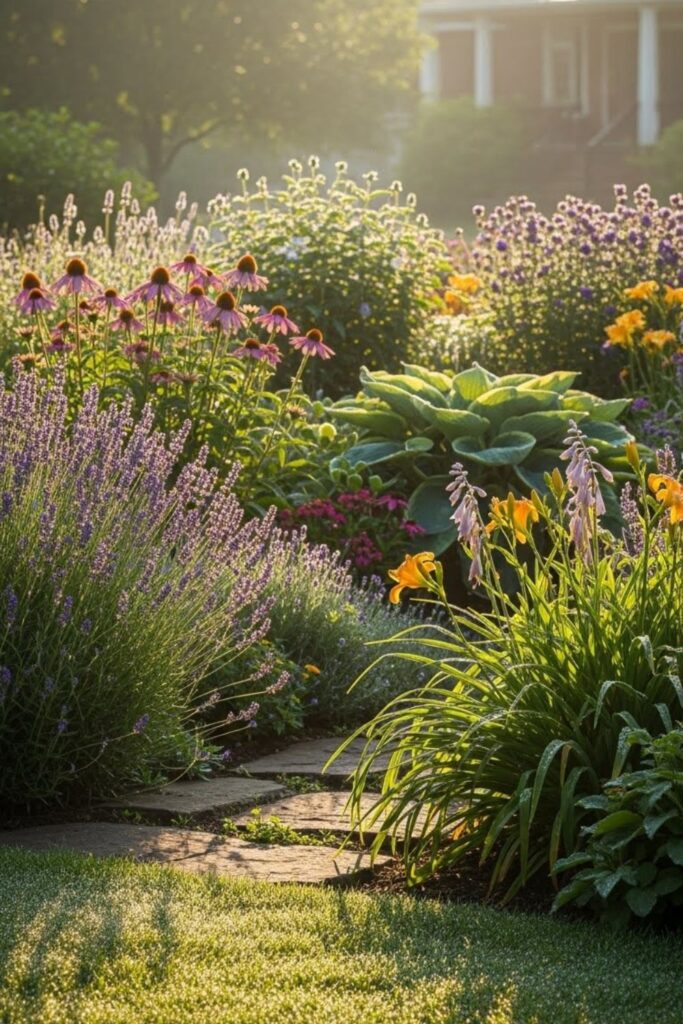
First Garden
Starting fresh means keeping it simple. Reliable perennials, limited choices, and quick wins that build confidence.
When you’re not overwhelmed by decisions, success comes faster. A first garden should teach you what works, not punish you for what doesn’t.
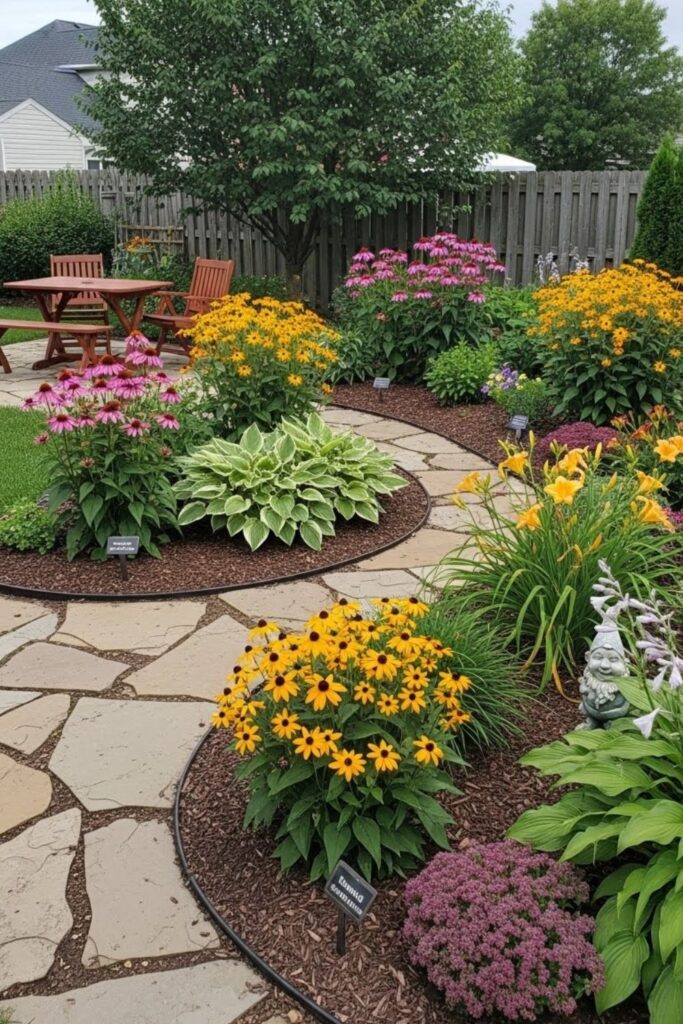
Weed Control
Constant weeding pushed me to rethink spacing. I use perennials that spread just enough to shade the soil — when ground stays covered, weeds lose.
More time enjoying, less time pulling. If weeds keep winning, bare soil is usually the reason. Let your plants do the work instead of fighting it yourself every weekend.
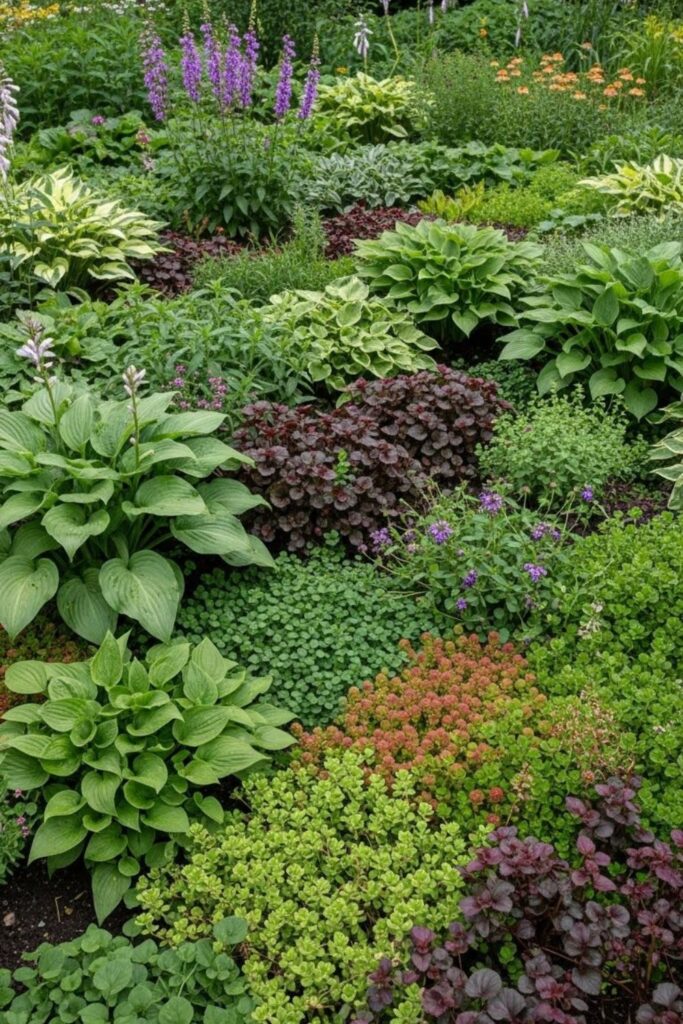
Seasonal Intent
Designing with intention means something looks good in every season, not just bloom time. Structure plants anchor the bed while seasonal interest rotates.
When winter comes, the garden still has shape. If your space feels abandoned half the year, seasonal planning is what’s missing.
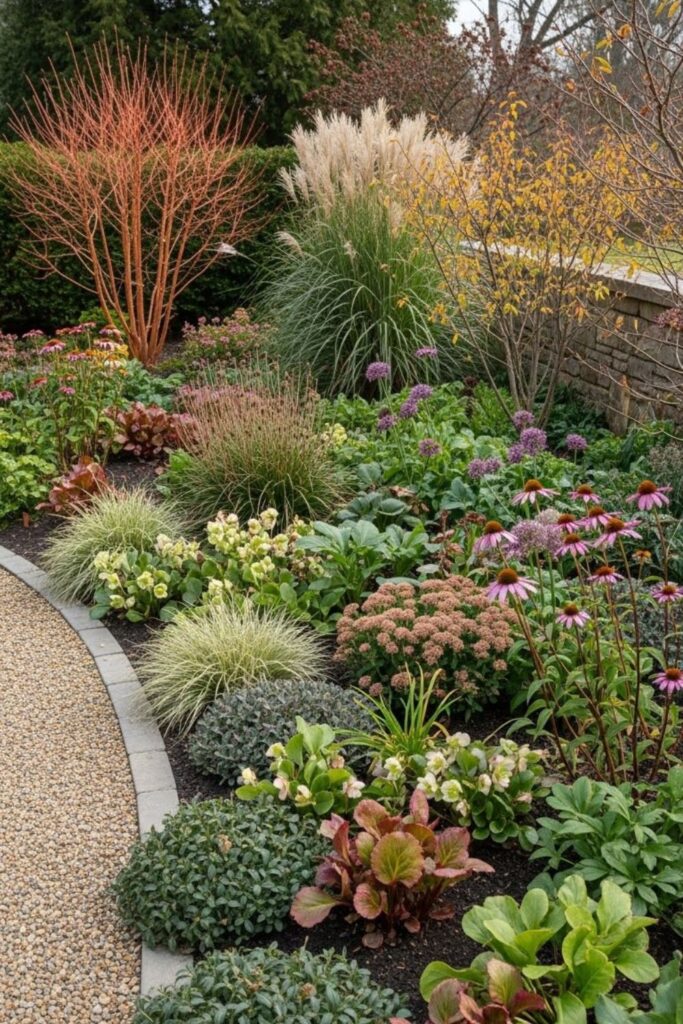
Sun Endurance
Hot sun used to mean daily watering until I regrouped everything. Full sun perennials with similar water needs, mulched deeply, and left alone to adapt.
Roots grow stronger, moisture lasts longer, and the garden handles intense heat without you hovering over it. Once established, plants rely on their own resilience.
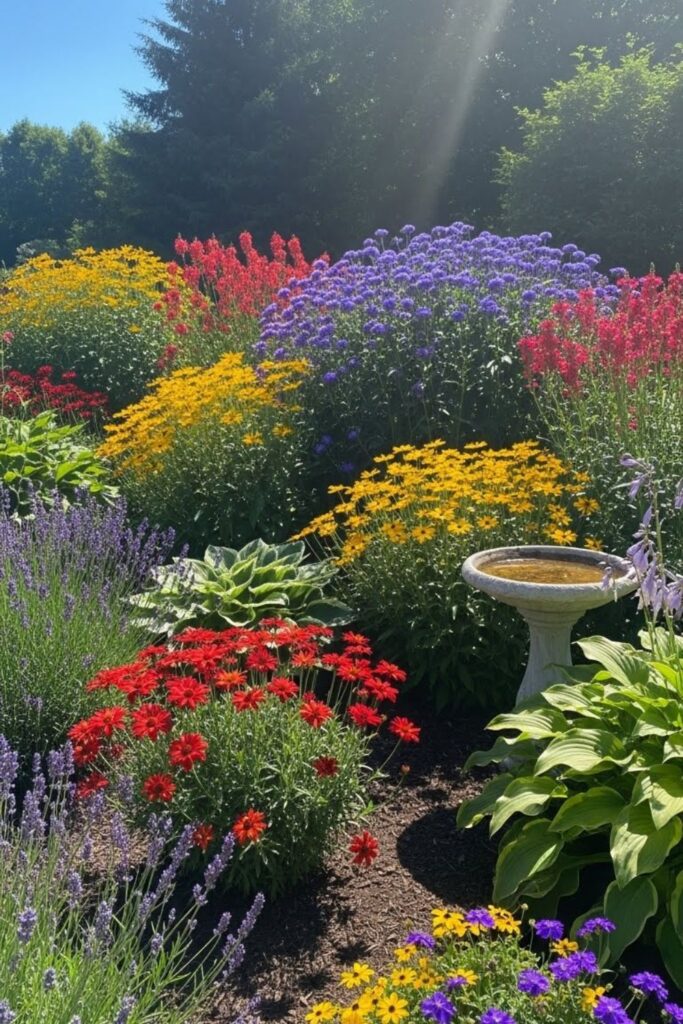
Plant Stability
Moving perennials every year slowed my progress more than any mistake ever did. I learned to stop rearranging once they settle.
Roots stay put, growth improves, maintenance drops.
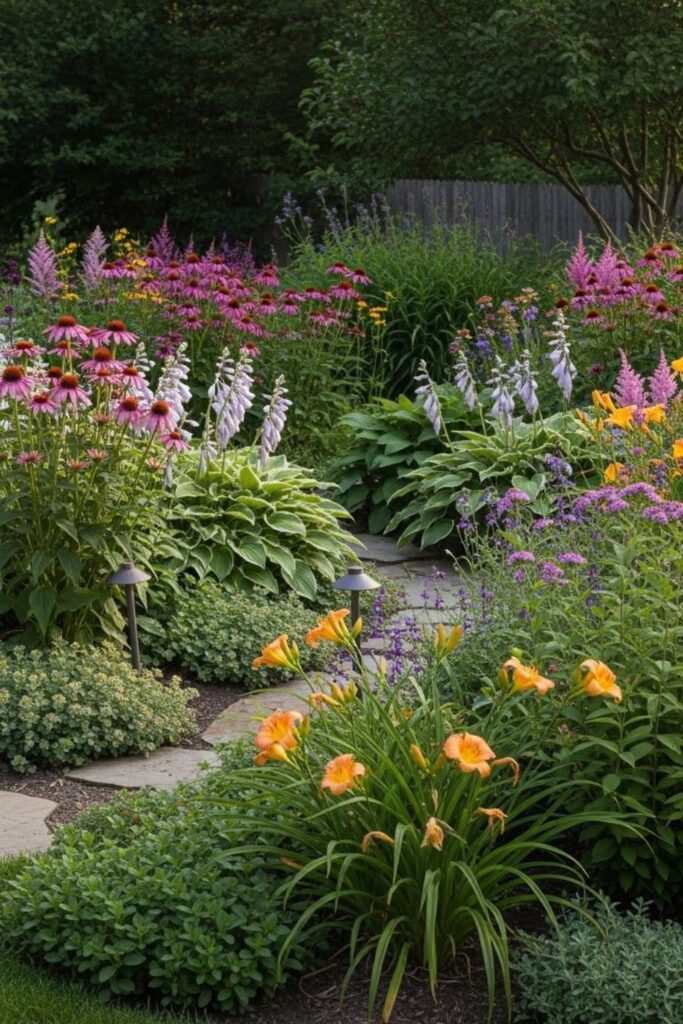
Foliage Focus
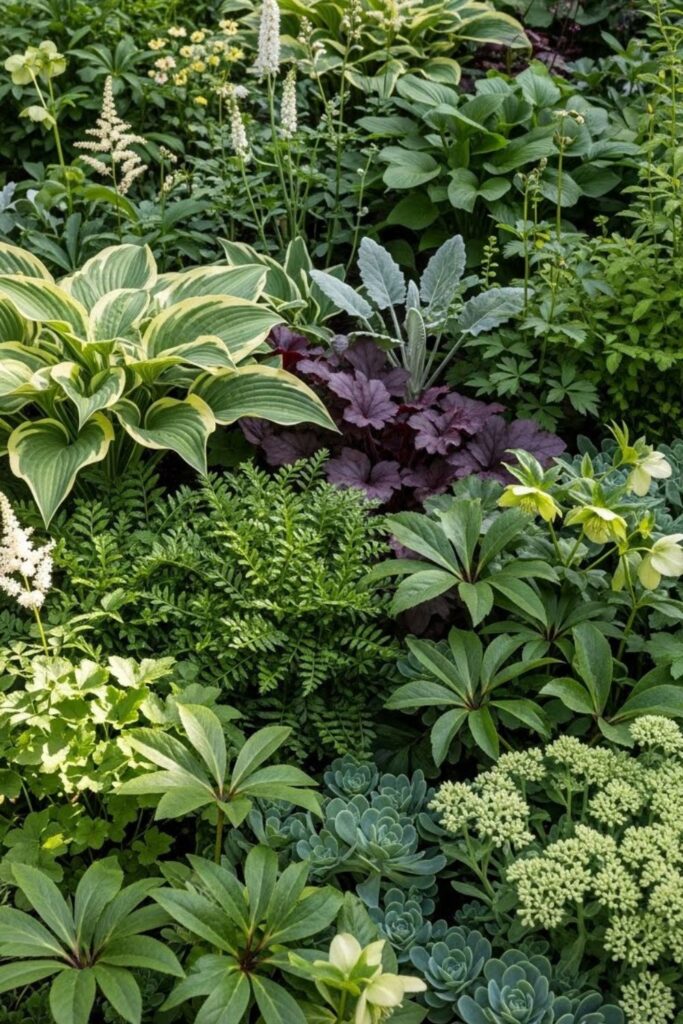
Choosing foliage over flowers felt wrong until the results proved it right. Leaf texture, color, and shape carry the garden when blooms fade.
Strong leaves keep everything grounded and reduce visual gaps. If your beds collapse after flowering, this is the fix you need — flowers become a bonus, not the foundation.
FAQs
How long does it take for a perennial garden to look full?
Don’t expect much the first season — that’s root growth time, not show time. By year two, plants start filling their space properly, and by year three you usually have something that looks established.
The waiting is worth it when you consider that a garden that took three years to mature will look better in year four than anything you replant every spring.
Can I mix perennials with different bloom times in one garden bed?
Yes, and you should. That’s how you avoid the problem of everything looking great for three weeks and boring for the rest of the season.
When one finishes blooming, another takes over. The key is spacing them so they each have room to do their thing without crowding, and placement so something is always carrying the visual interest forward.
I’ve spent over four decades building a marriage, raising a family, and learning what truly matters along the way. I write about relationships, home, and navigating life’s later seasons with grace, honesty, and a little humor. My goal is to share the kind of steady, real-life wisdom that helps you feel grounded, encouraged, and a little less alone.