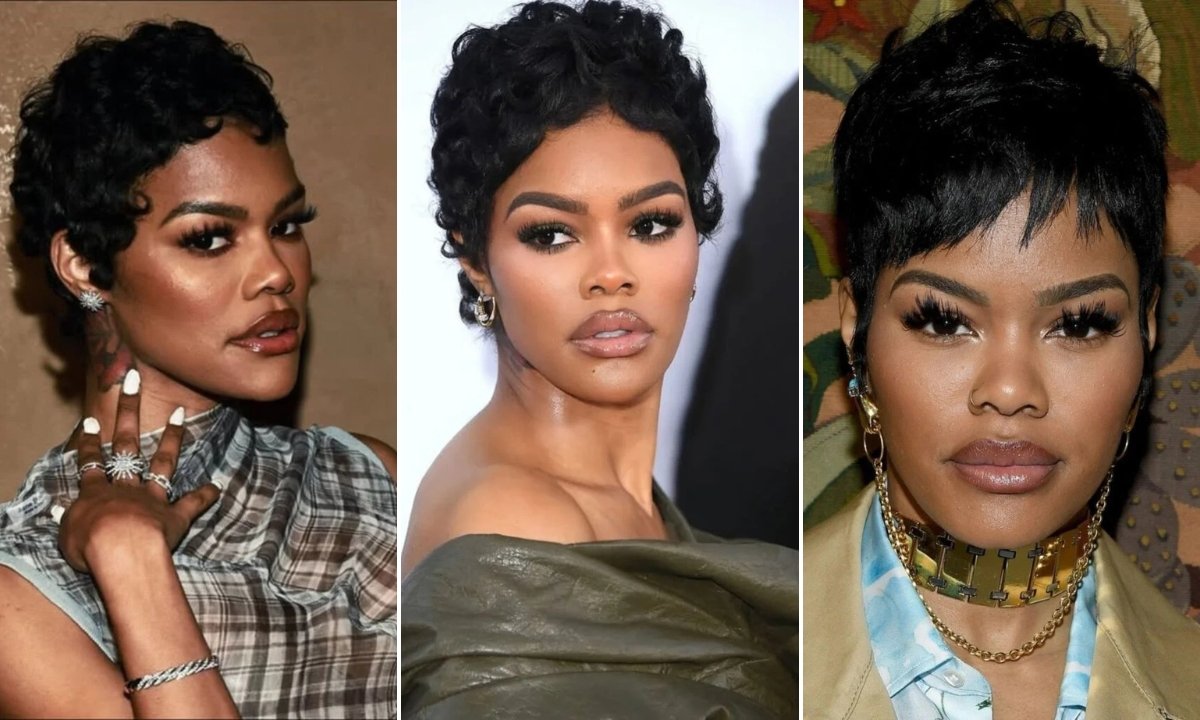
Teyana Taylor’s Pixie Is the Haircut That Lives Rent Free in My Head
I saw Teyana Taylor’s pixie cut on Instagram last week and immediately screenshotted it, which is basically my version of “I need to think about this seriously.” The texture, the way it framed her face… honestly, it looked effortless in that way that probably took three people and an hour to achieve.
But then the doubt creeps in. What if my face is too round? What if my hair won’t cooperate? What if it’s all wigs and I’m about to make a very expensive mistake?
Here are 20 Teyana Taylor-inspired pixie cuts that actually work on real hair, plus the styling reality check you need before booking that appointment.
Can a Pixie Cut Like Teyana Taylor’s Work On Natural Hair?
Yes, but only if you stop fighting your hair’s natural personality. I learned this the hard way after spending two years trying to make my waves look like someone else’s straight hair (spoiler: it never worked).
The secret isn’t length or product – it’s texture. When you work with your hair’s natural texture instead of against it, a pixie cut becomes easier, not harder.
Layers and subtle tapering let your curls or waves do the styling for you. Trying to force it straight is where most pixie cuts go wrong.
The best pixie cuts I’ve seen look like the person just ran their fingers through their hair and walked out the door. That’s not an accident.
Save this article for later! 👇👇
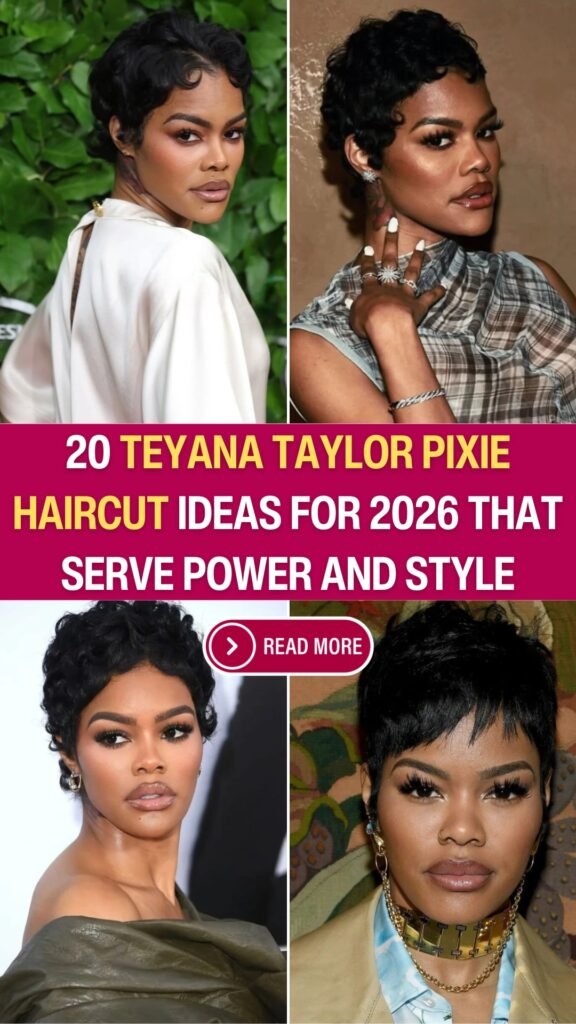
Why Does a Pixie Cut Suit Teyana Taylor’s Face Shape So Well?
Because the cut is doing all the work. Teyana has these incredible cheekbones, and a pixie cut basically puts a spotlight on them. The short sides keep her face from looking wide, while the textured top creates height.
That upward visual line makes everything look more proportional and refined. When a pixie cut looks “off” on someone, it’s usually because the proportions are wrong, not because they can’t pull it off.
It’s like good lighting for your bone structure. And honestly, once you see it work, you start to understand why some people become pixie cut evangelists.
Finger Waves
This is what happens when Old Hollywood meets modern convenience. The waves sit close to the head, which means they actually stay put instead of falling out by noon.
I use a light gel (nothing crunchy) and wrap sections around my finger while my hair’s still damp. A silk scarf at night keeps everything smooth.
It’s perfect for those mornings when you need to look put-together but only have ten minutes. The style holds its shape because it’s built into the cut, not forced on top of it.
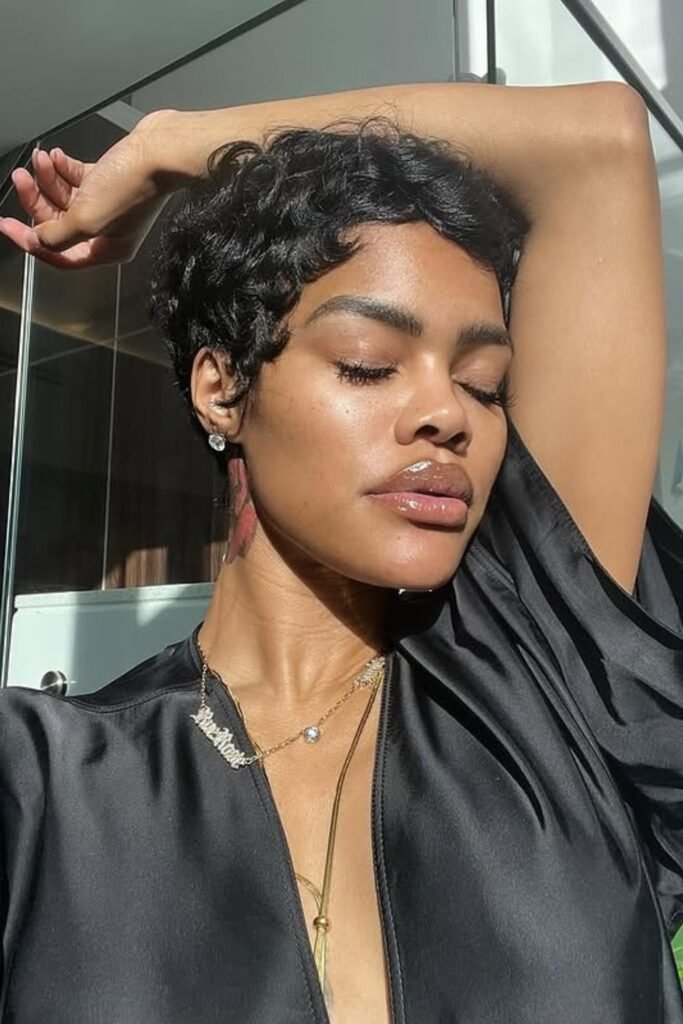
Textured Crop
This is for people who want short hair but are terrified of looking too severe. The soft waves keep everything approachable while the close crop stays clean.
A tiny bit of pomade worked through damp hair gives you that effortless texture. Not slick, just defined.
Perfect for busy mornings, hot weather, or when you’re tired of spending twenty minutes on your hair every day. Sometimes simple really is better.
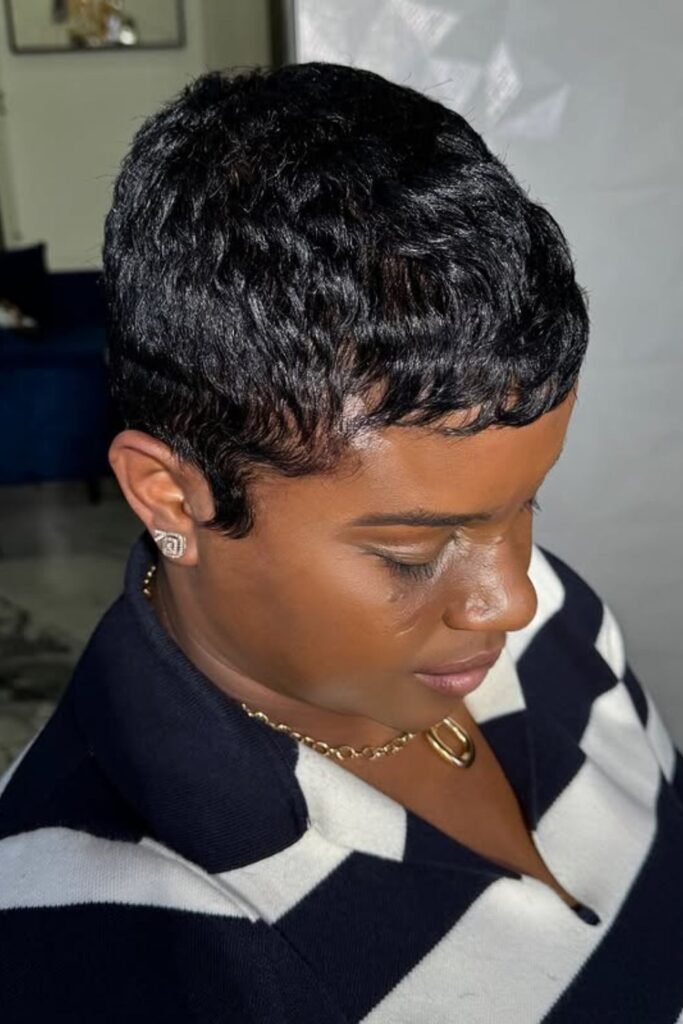
Kiss Curls
These little curls at the hairline completely change the whole mood. Instead of looking sharp or edgy, you get something romantic and intentional.
I curl just the front pieces with a small barrel iron, or sometimes I’ll twist them around my finger while they’re damp and let them dry that way.
It’s such an easy way to dress up a pixie cut for dinner out or when you want your hair to complement your makeup instead of competing with it.
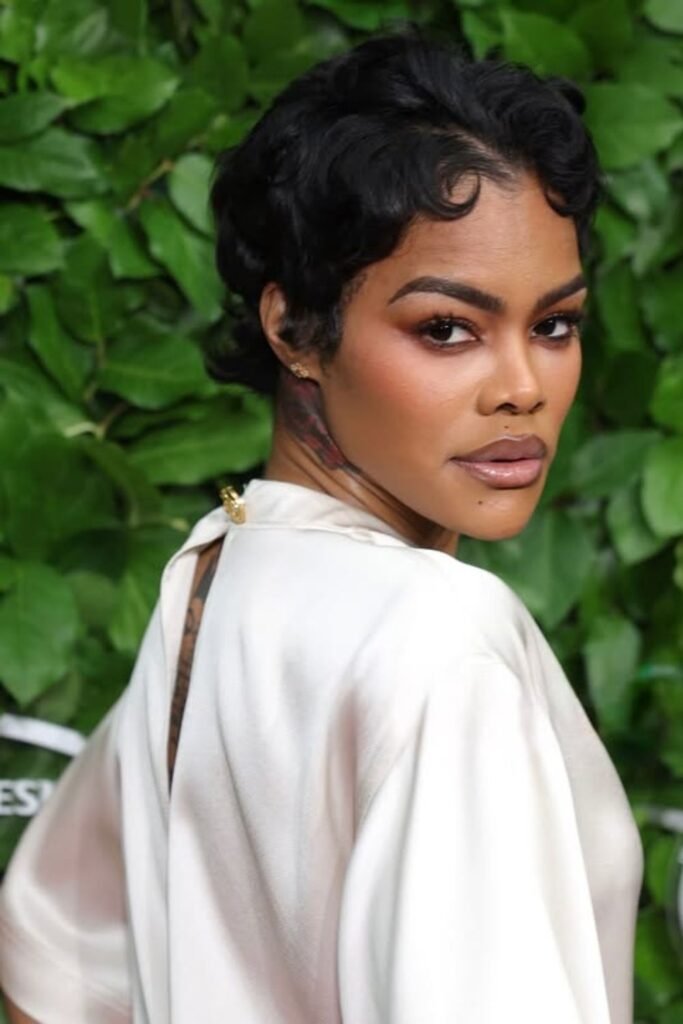
Tapered Pixie
Clean sides make short hair look intentional instead of grown-out. The tight taper around the ears keeps everything crisp while the top stays soft enough to touch.
Ask for clippers on the sides but scissors on top. It’s the difference between looking polished and looking like you’re ready for basic training.
This cut works beautifully with structured blazers, bold lipstick, or anytime you need to look like you have your life together (even when you don’t).
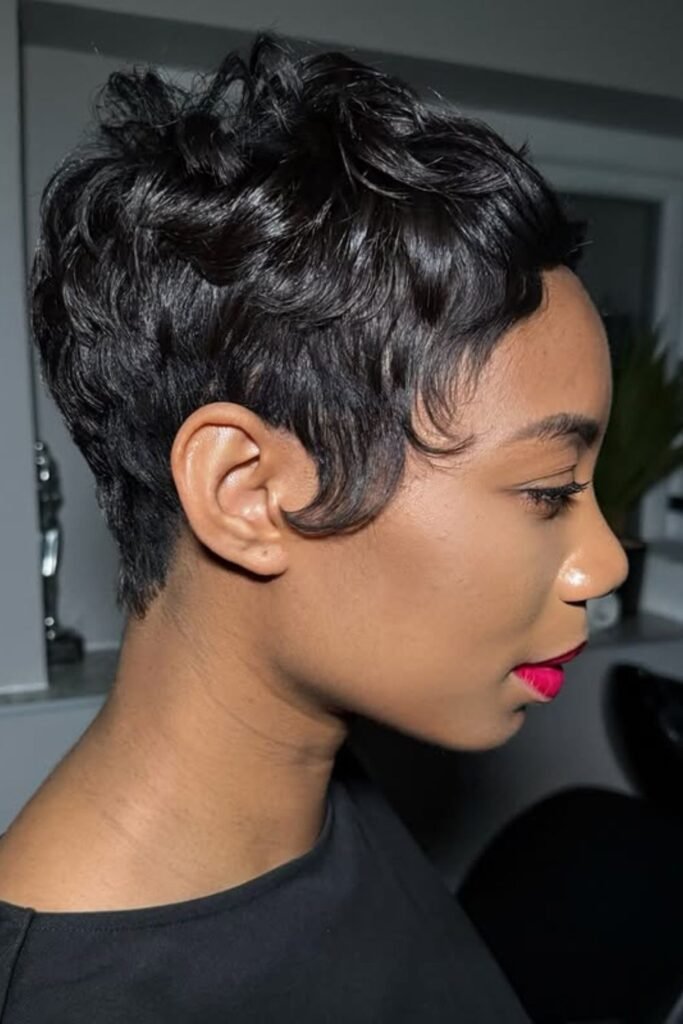
Curly Pixie
When you concentrate the curls at the crown instead of letting them spread everywhere, you get volume that lifts your face instead of overwhelming it.
Curl cream scrunched upward through damp hair keeps the top full without that dreaded triangle shape. The key is working with gravity, not against it.
This works especially well for evening looks, dramatic makeup, or when you want softness without losing definition. It’s feminine without being precious about it.
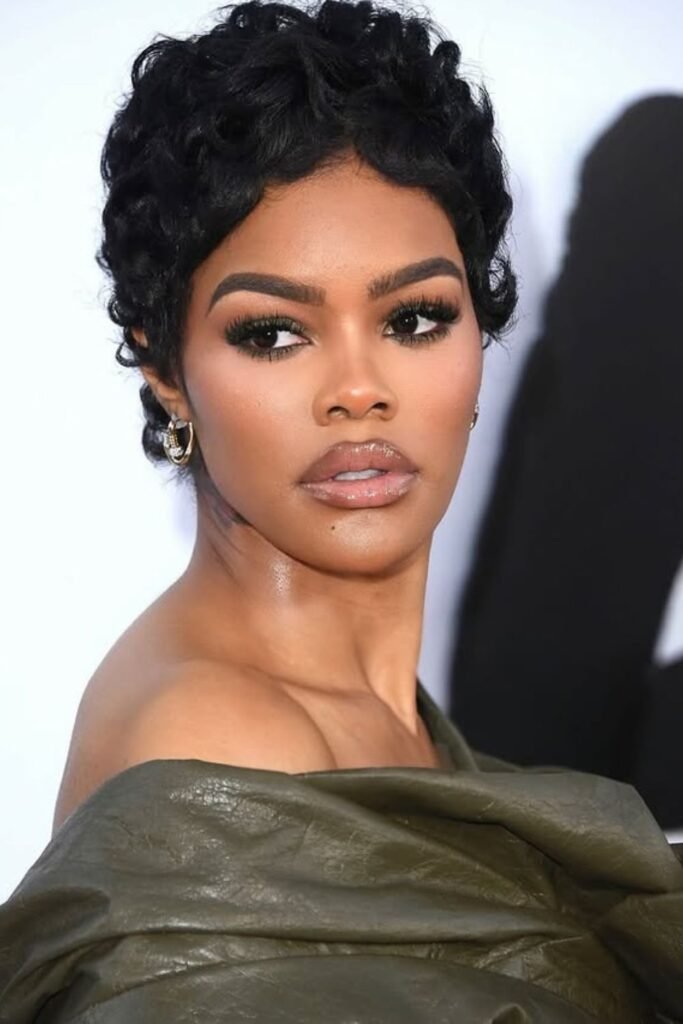
Defined Curls
Tight, intentional curls create a soft frame around your face without looking messy or undone. Each curl knows exactly where it’s supposed to be.
I work defining cream through damp hair with my fingers, then scrunch gently. No brushing, no combing once it’s set.
Perfect for photos, special occasions, or when you want your pixie to look polished and feminine. It’s the kind of texture that photographs beautifully.
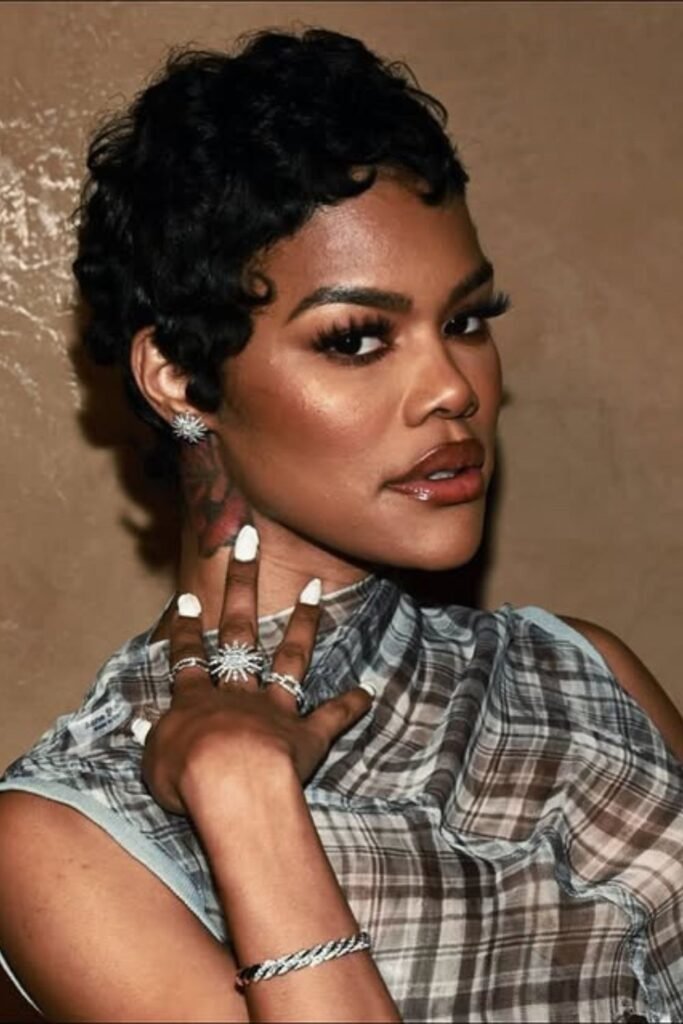
Sleek Pixie
Sometimes you just want nothing to distract from your face. This smooth pixie puts your skin, eyebrows, and bone structure front and center.
A small amount of lightweight pomade worked through dry hair gives you that clean finish without looking greasy or overdone.
Ideal for work environments, minimalist style, or those days when you want to look effortlessly put-together. Sometimes less really is more.
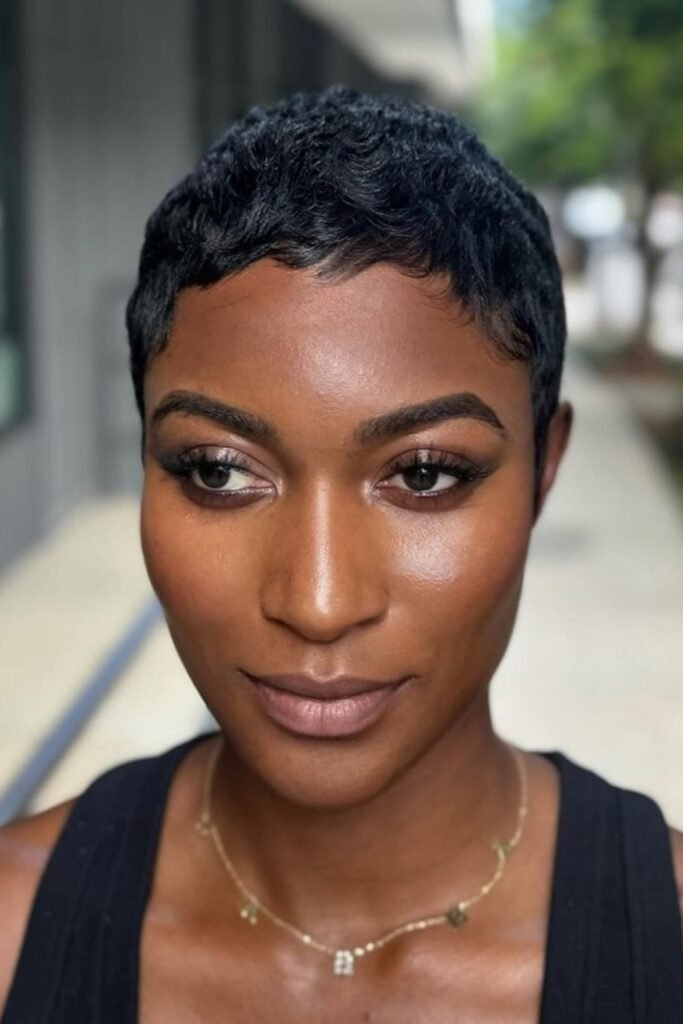
Choppy Fringe
Jagged bangs across the forehead soften a pixie cut while keeping it bold. It’s edge without trying too hard.
Point cutting or razor work creates that deliberately imperfect look. Matte paste keeps the pieces separated so they don’t clump together.
Great for creative types, fashion-forward looks, or when you’re bored with neat and tidy. Sometimes a little chaos is exactly what a pixie cut needs.
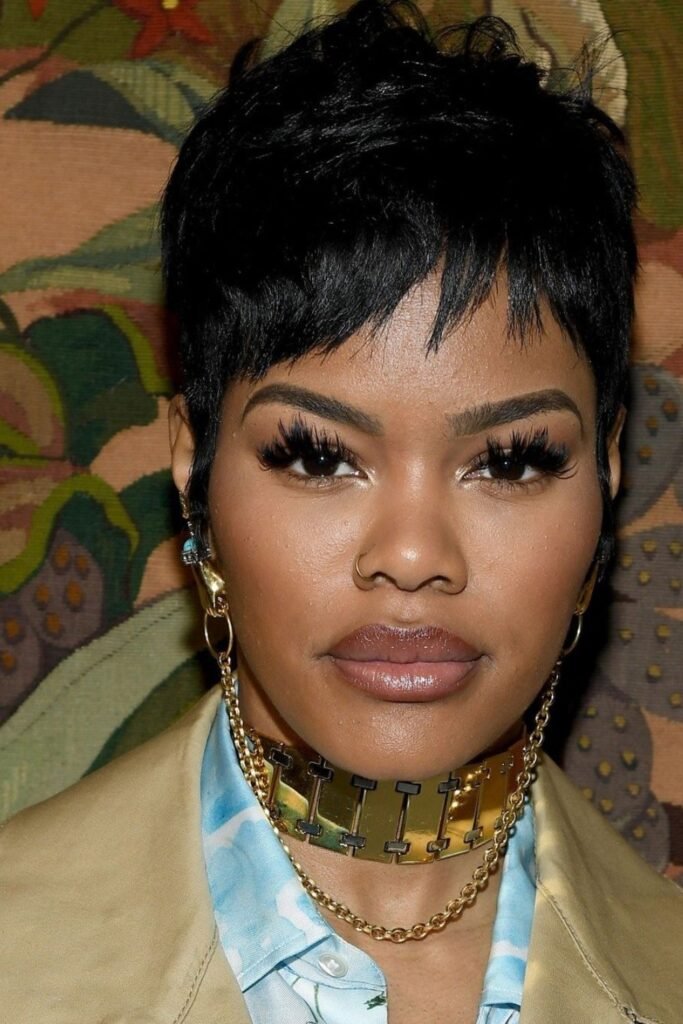
Side Sweep
A deep side part with longer front pieces instantly makes a pixie cut more dramatic and pulls focus to your eyes. It’s amazing how much difference direction makes.
I blow-dry the front forward first, then use a small round brush to sweep it across. Keeps it soft instead of rigid.
Perfect for date nights, statement earrings, or when you’re easing into shorter hair and want something that still feels feminine and familiar.
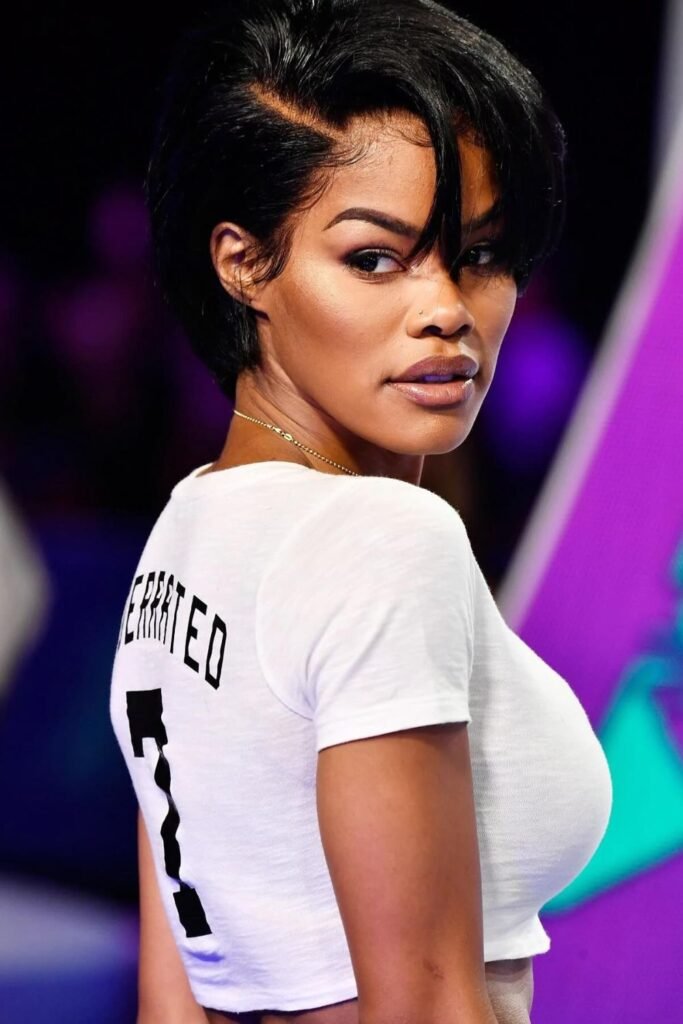
Save this post for later ❤️
Micro Layers
Tiny layers throughout the top break up any stiffness and let your hair move naturally without looking messy.
This needs to be done with scissors, not clippers, to keep the layers soft. For styling, I press a pea-sized amount of cream in rather than raking it through.
It’s the kind of cut that gets better as it grows out instead of worse, which is honestly worth the price of admission alone.
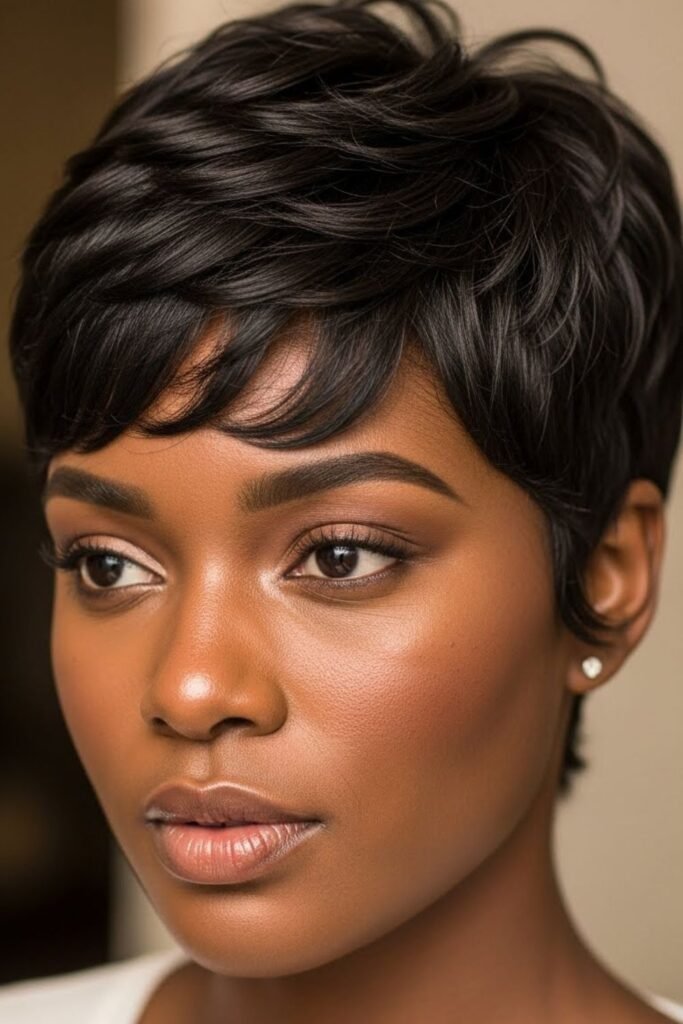
Soft Undercut
A subtle undercut tucked behind the ears removes bulk without announcing itself. You get the benefits without the statement.
Light clipper work keeps it low-key while making the top look fuller. Plus, less hair underneath means faster blow-drying, which is always a win.
Perfect for hot climates, thick hair that feels heavy, or anyone who wants the ease of short hair without the obvious “I just got an undercut” look.
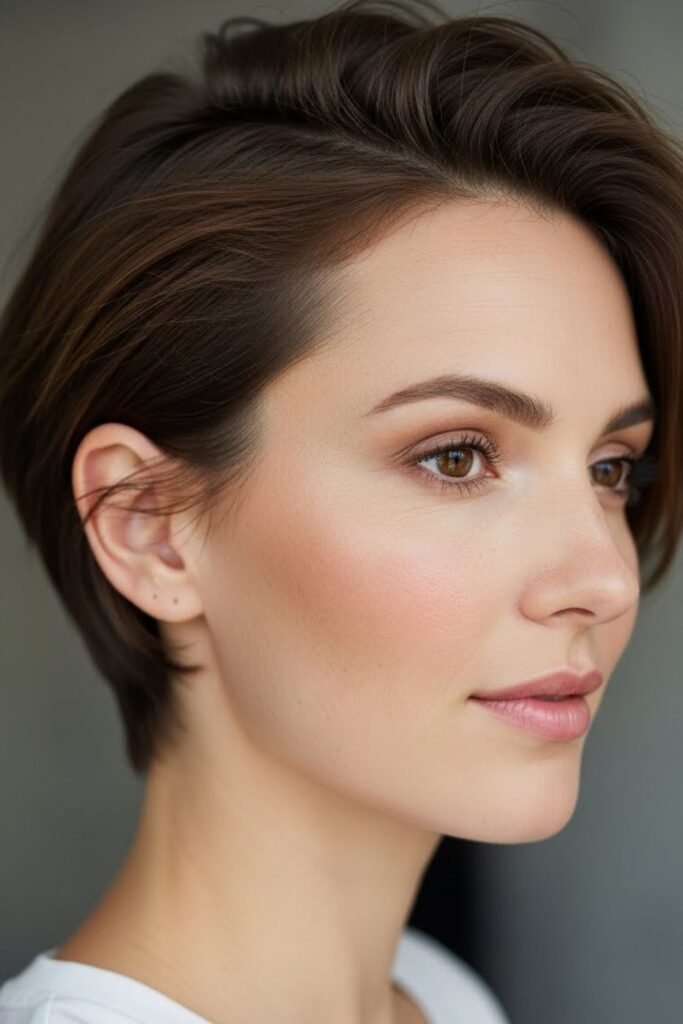
Rounded Silhouette
Instead of hugging the head flat, a rounded shape creates gentle curves that wrap around your skull. It’s softer and more flattering than you’d expect.
Scissor-over-comb technique keeps the curves soft and avoids harsh lines. The key is finger styling with minimal product so the natural roundness shows through.
This works especially well on round faces because it actually complements the shape instead of fighting it.
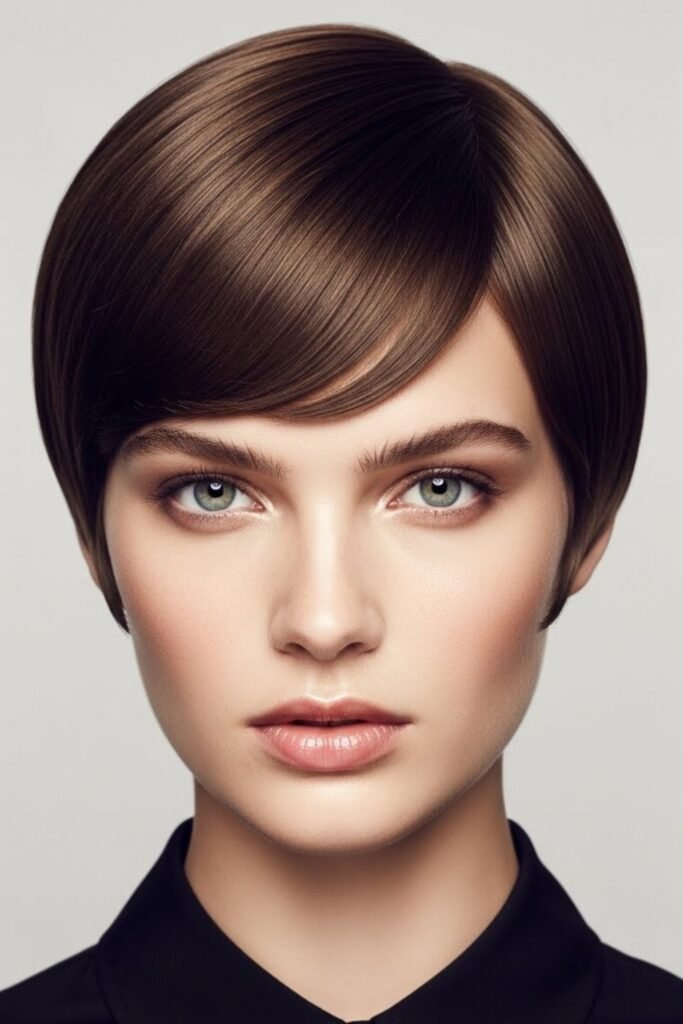
Feathered Ends
Light, feathery ends give movement to a pixie cut without thinning out the base. The weight stays where you need it, but the edges feel airy.
Point cutting or razor work on just the tips creates that feathered effect. The ends respond better to heat styling and product because they’re not blunt.
Fine hair avoids that stringy look, thick hair loses some heaviness, and everyone gets easier styling. It’s one of those techniques that just works.
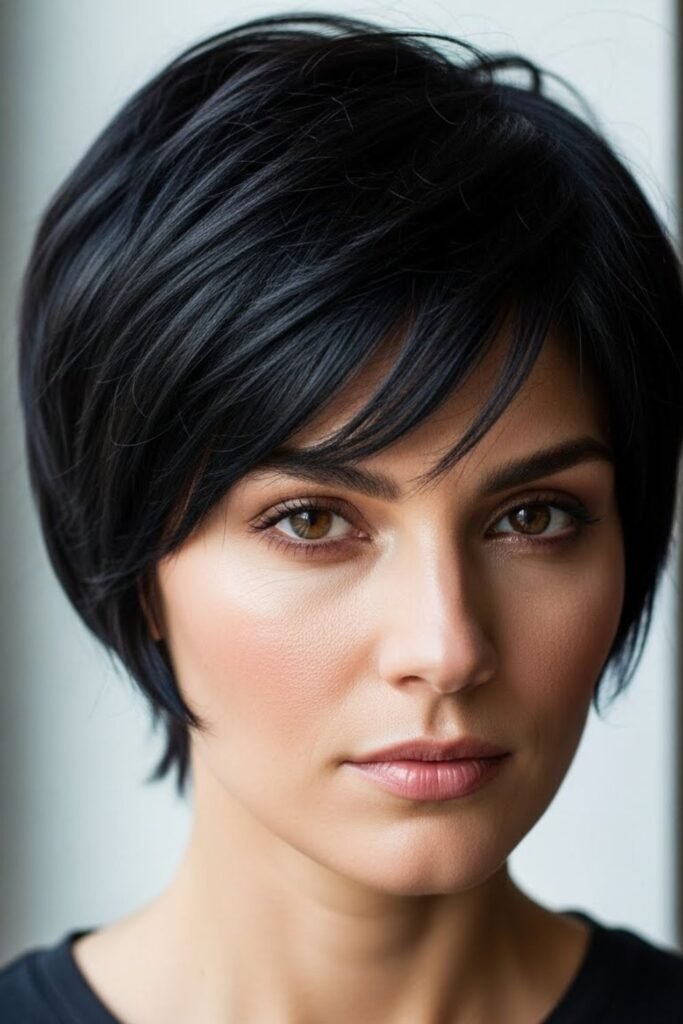
Crown Lift
Building height at the crown prevents that flat-to-the-head look that makes pixie cuts feel harsh. The lift happens in the cut, not the styling.
Sectioning the hair upward while cutting creates built-in structure. I start blow-drying at the crown and let the sides air dry, which emphasizes the height difference.
This technique elongates rounder faces and adds life to pixie cuts that have grown out a bit. Sometimes the solution is adding height, not length.
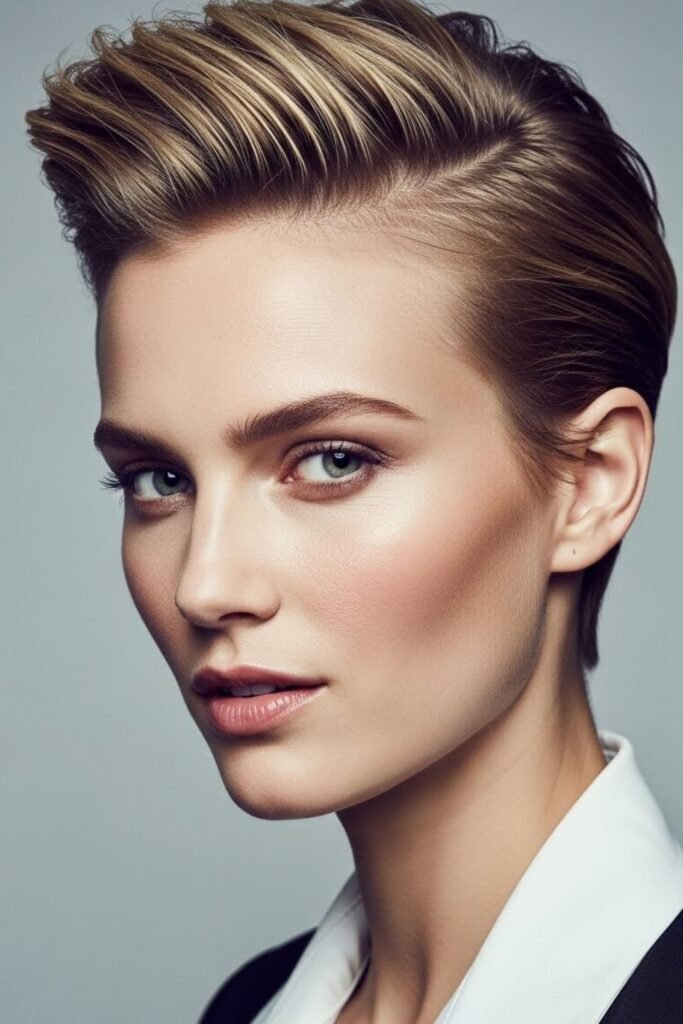
Soft Asymmetry
Perfect symmetry can make short hair look too rigid. A subtle length difference between sides adds interest without going full avant-garde.
One side lingers just slightly longer – barely noticeable until you turn your head. The difference should feel intentional but not dramatic.
It’s perfect for faces that seem too symmetrical or for minimalists who want just a hint of something unexpected.
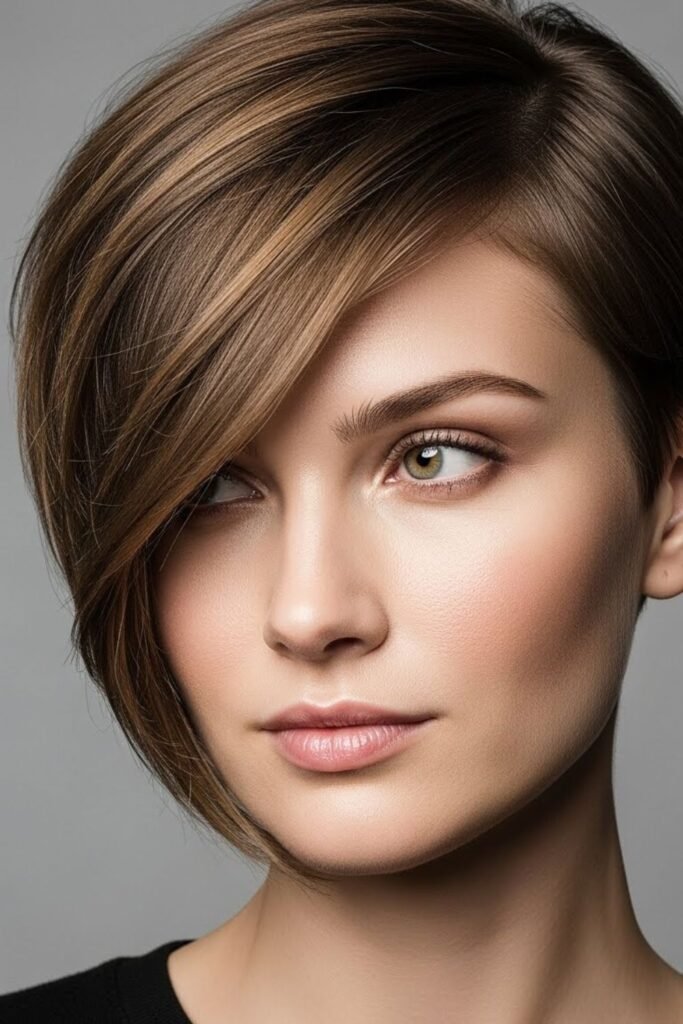
Blended Edges
Sharp lines around the ears and neckline make a pixie cut look dated fast. Blended edges soften those transitions so the cut grows out gracefully.
Smooth clipper-to-scissor transitions eliminate harsh stops. This approach makes styling easier and extends time between salon visits, which my wallet appreciates.
Essential for busy professionals, parents, or anyone who needs their haircut to look good for more than three weeks.
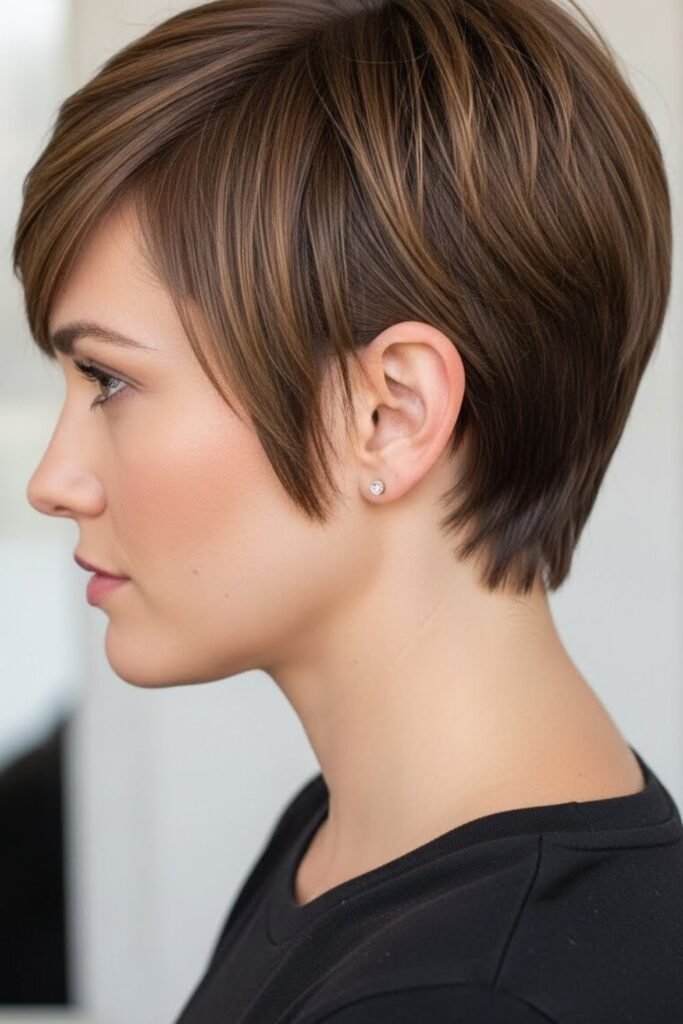
Airy Texture
Weightless texture keeps a pixie cut looking polished without feeling stiff or helmet-like. It’s all about removing heaviness while keeping the structure.
Thinning shears used sparingly create space for light to filter through the hair. I scrunch in lightweight mousse instead of trying to smooth everything down.
The result is movement that looks natural rather than engineered, which is exactly what you want from short hair.
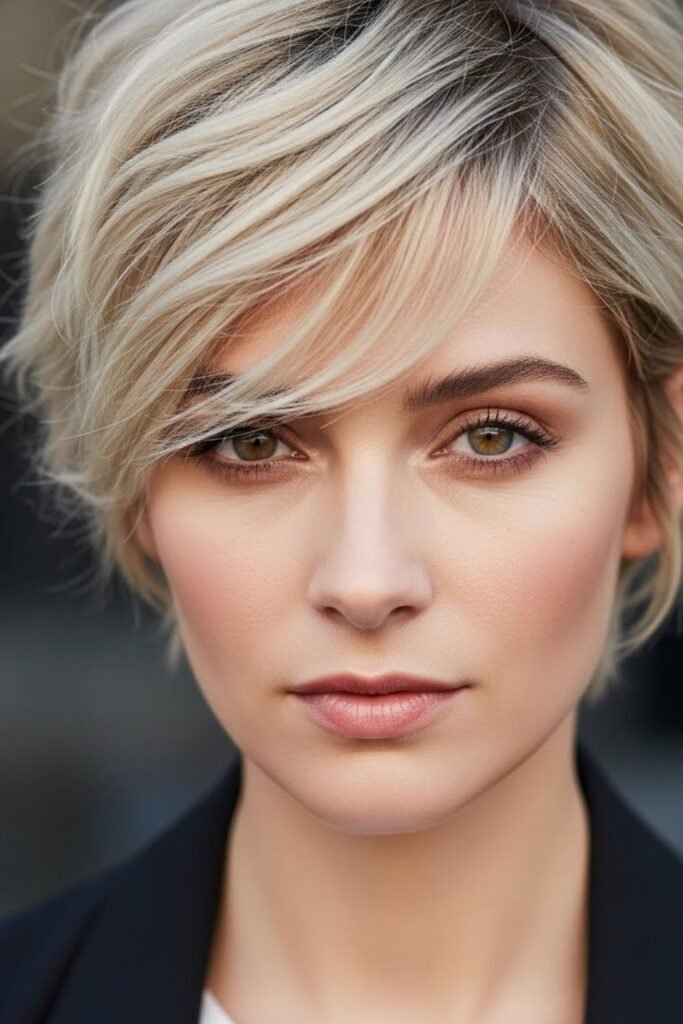
Natural Part
Fighting your hair’s natural growth patterns is exhausting. A part that works with your cowlicks instead of against them makes daily styling so much easier.
When the cut follows your hair’s grain, the part falls back into place after sleeping on it. No more wrestling with stubborn sections every morning.
Anyone who’s battled cowlicks knows that working with them is always better than working against them. Let your hair do what it wants to do.
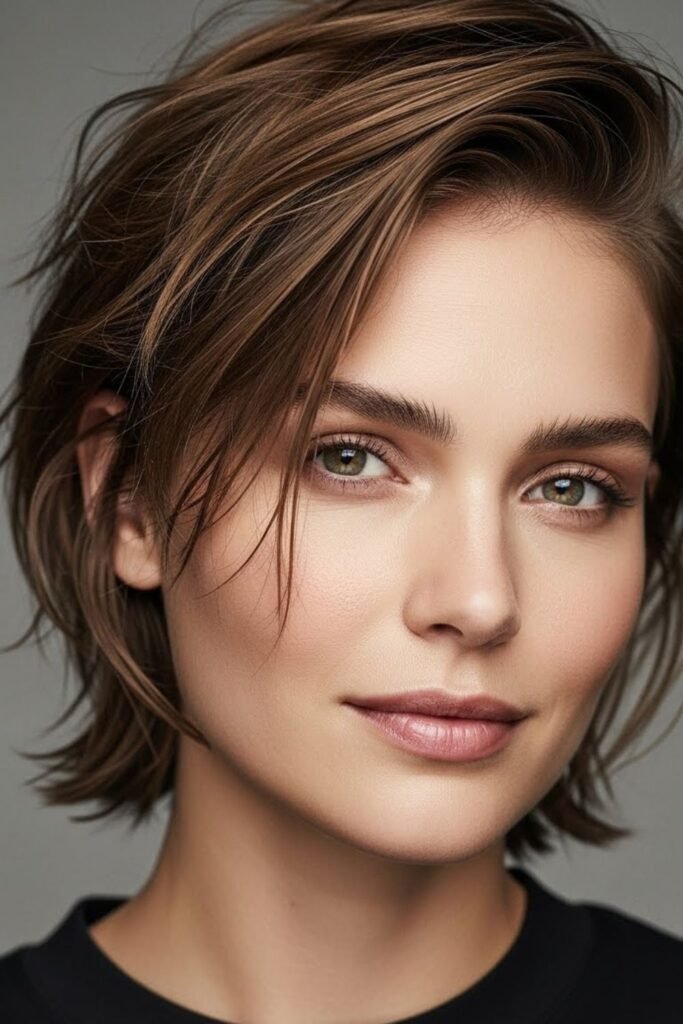
Grown Pixie
A pixie doesn’t need constant trimming to look intentional. Strategic layering lets you embrace slightly longer lengths without entering that awkward growing-out phase.
The styling can swing from polished to casual depending on your mood and what you have planned. It’s forgiving and versatile.
Perfect if you’re considering going shorter but worried about maintenance, or if you want the pixie aesthetic with a little more flexibility.
FAQs
Does a pixie cut still look good once it starts growing out?
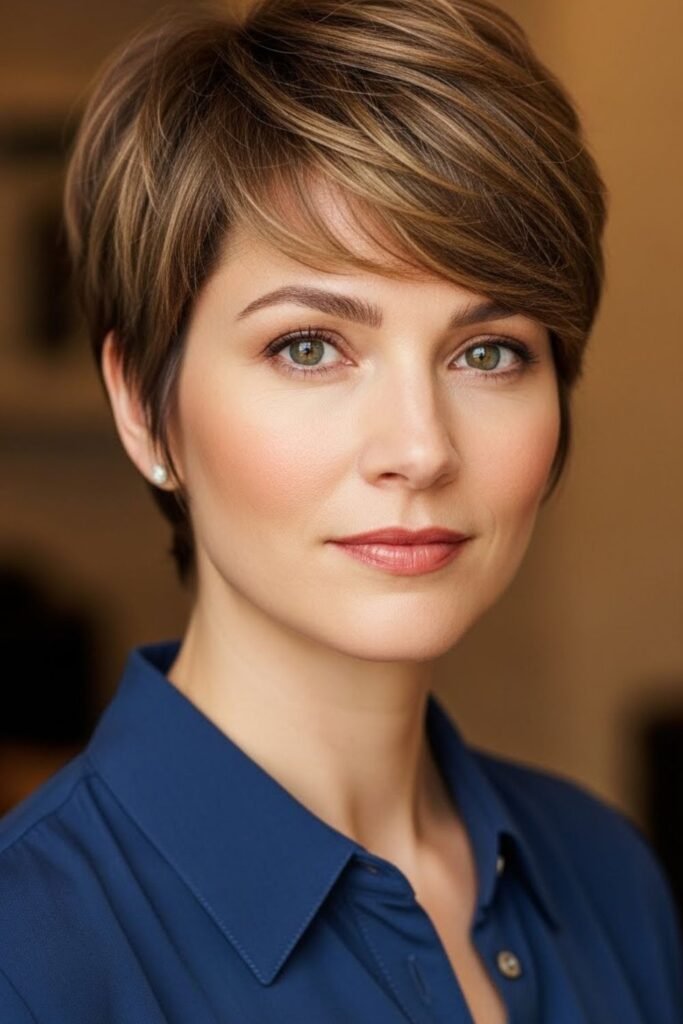
It can, if you’re strategic about it. The mistake most people make is cutting everything to the same length during the grow-out phase, which creates that dreaded bowl effect.
Keep softer layers on top and cleaner edges around the ears. The style evolves gradually into a short crop instead of going through that awkward in-between stage.
You’ll get a few extra weeks between appointments, and the transition feels intentional rather than like you’re just letting your hair grow wild.
How do you keep a pixie cut looking styled without using heat every day?
The secret is in the cut, not the styling. When the shape is right, finger styling while your hair is damp does most of the work.
A little cream or mousse sets the style, and sleeping with a satin scarf keeps everything in place. Heat becomes an option for special occasions, not a daily requirement.