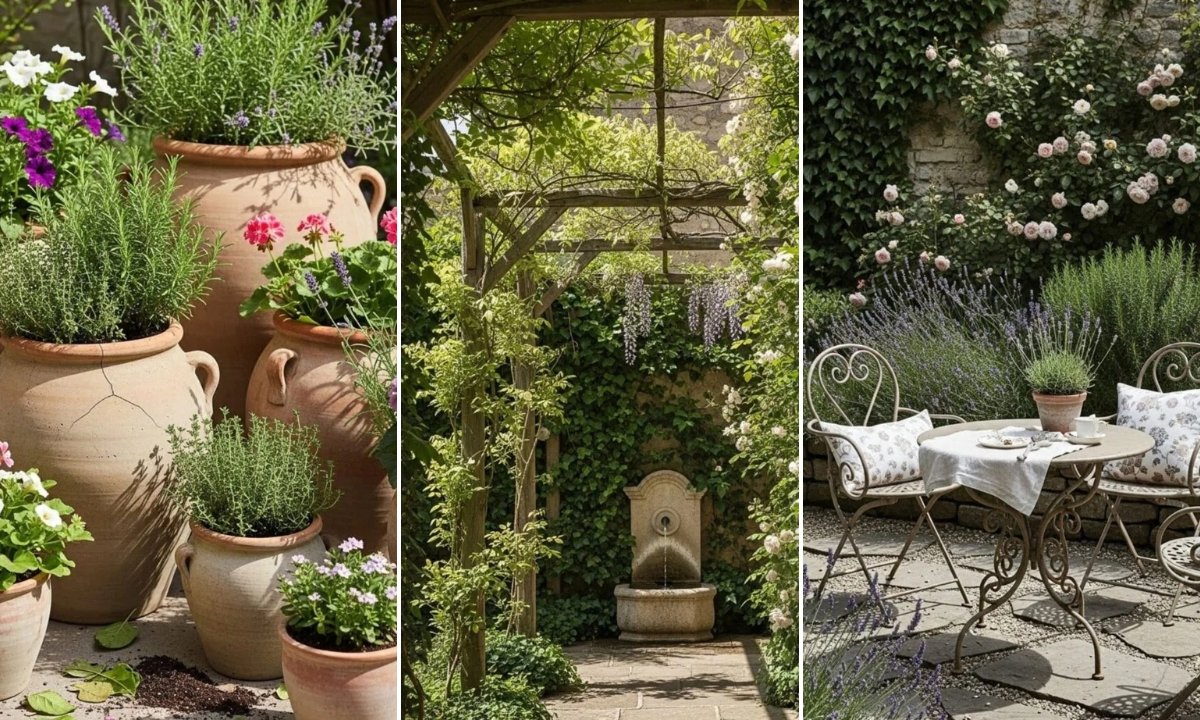
The French Country Patio Aesthetic Has My Whole Heart Right Now

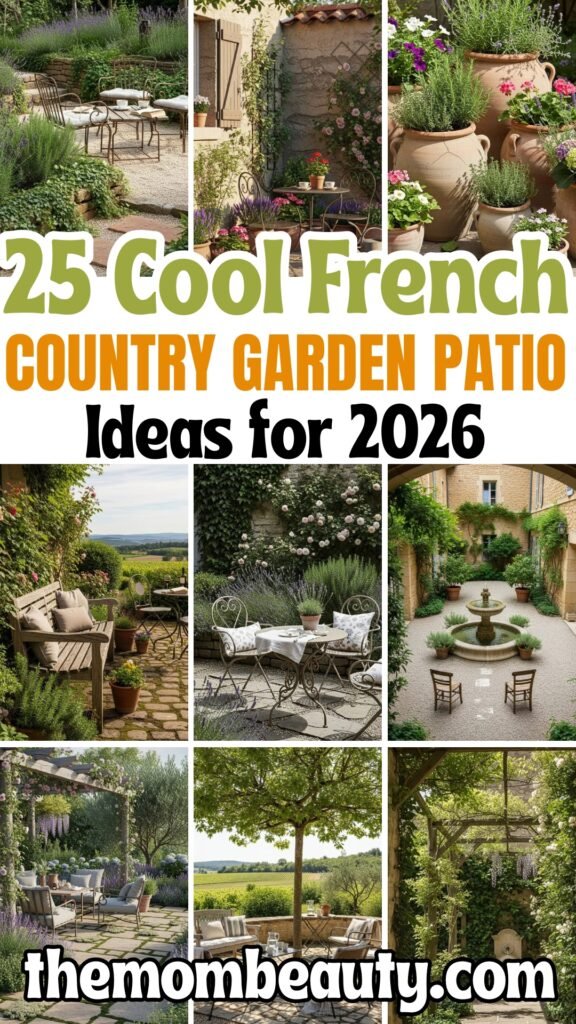
The French country patio photos you see online look expensive because they are. But that weathered, lived-in look you’re after doesn’t actually require the budget those pictures suggest. Thank goodness because some of those patios online cost more than my first car.
What stops most people isnt money — it’s not knowing which details actually matter and which ones are just pretty filler.
The real difference between a patio that feels French and one that just looks decorated comes down to understanding how these spaces are supposed to work, not just how they’re supposed to look.
Here are 25 French Country Garden Patio Ideas that work in small spaces, with realistic budgets, and without requiring you to tear up your whole backyard or spend 14 weekends covered in dust and regret.
How Do You Create a French Country Patio On a Budget?
Most people think they need antique stone and expensive ironwork. What you actually need is restraint and the right starting point.
Start with the ground — gravel or simple pavers change everything immediately. Then add one solid piece you’ll actually use, like a small table or a bench that can hold weight.
After that, plants do most of the work. Three terracotta pots, some herbs, and one climbing vine create more character than a dozen decorative pieces. The charm happens when you stop trying so hard to make it charming. Funny how that works lol.
Save this article for later! 👇👇
How Can Lighting Enhance a French Country Garden Patio?
Lighting either makes or breaks this whole thing. Harsh outdoor floodlights kill any chance of getting that French country feeling. It starts looking like a grocery store parking lot real fast.
Keep string lights low enough that you can almost touch them when you’re sitting. Too high and the space feels empty underneath. Too bright and you lose all the texture that makes weathered surfaces interesting.
Lanterns scattered around the edges cast better light than one central fixture. When the lighting is gentle, everything else — the worn wood, the plant shadows, the uneven surfaces — looks intentional instead of neglected.
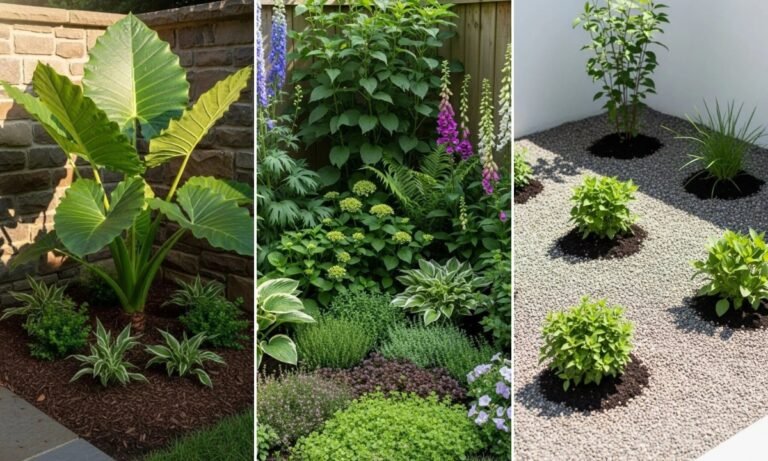
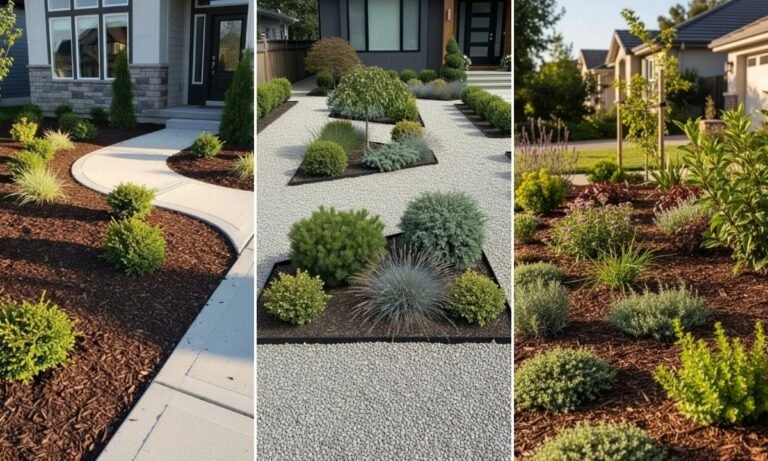
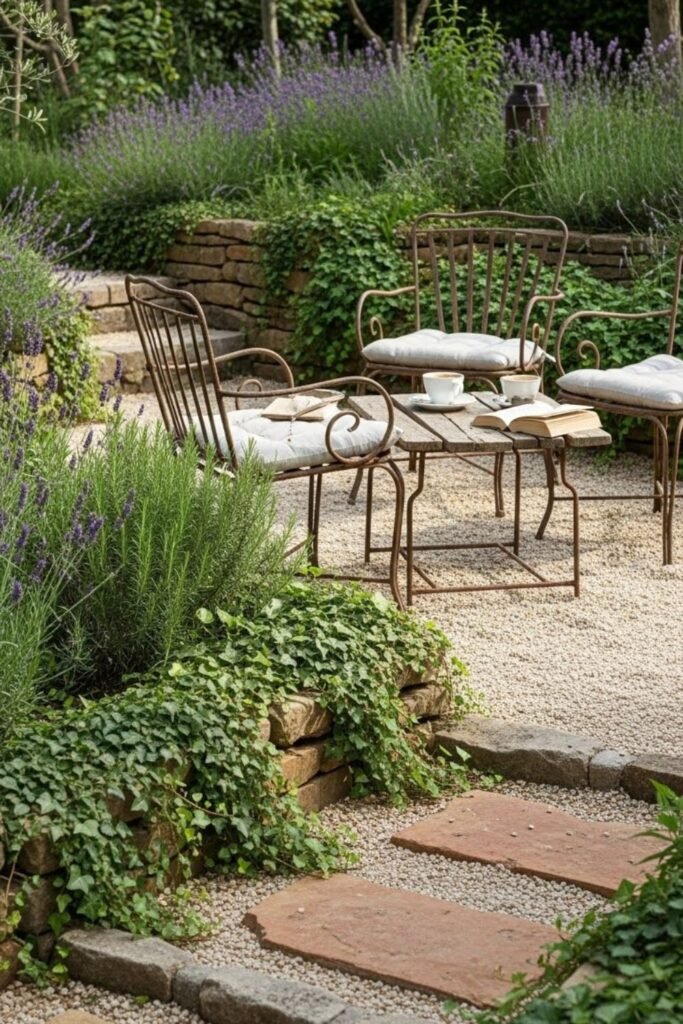
Gravel Borders
I learned this from watching how our neighbors handled their small courtyard. I used to slow down walking the dog just to stare at it honestly. The ground sets the tone for everything else, and gravel gives you that French base without the cost of proper stone.
Don’t make the edges too clean. Let the gravel fade into the garden beds naturally, and put plants right up against the border so nothing feels stiff or newly installed.
Once you have gravel down, everything you place on it looks deliberate. Furniture stops looking like it was just set there and starts looking like it belongs.
Bistro Corner
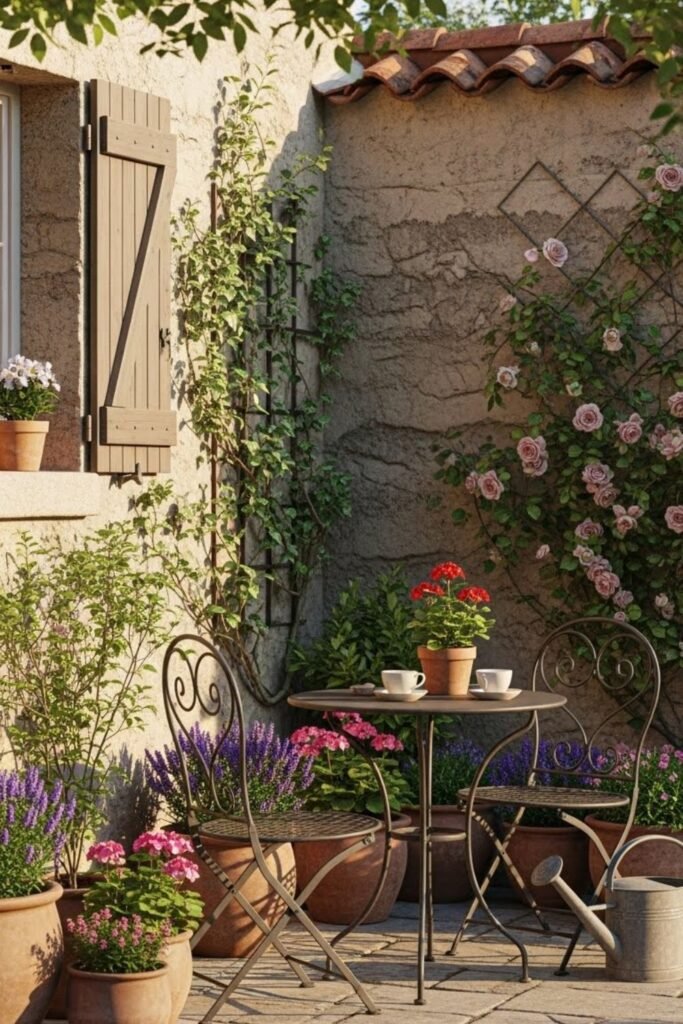
French patios aren’t about filling every inch of space. Pick one corner and make it work perfectly instead of spreading things around randomly.
A small iron table and two chairs tucked against a wall or hedge create that intimate feeling. When the seating area feels sheltered, people actually use it.
The rest of the patio can stay simple because you’ve given it one clear purpose.
Pot Clusters
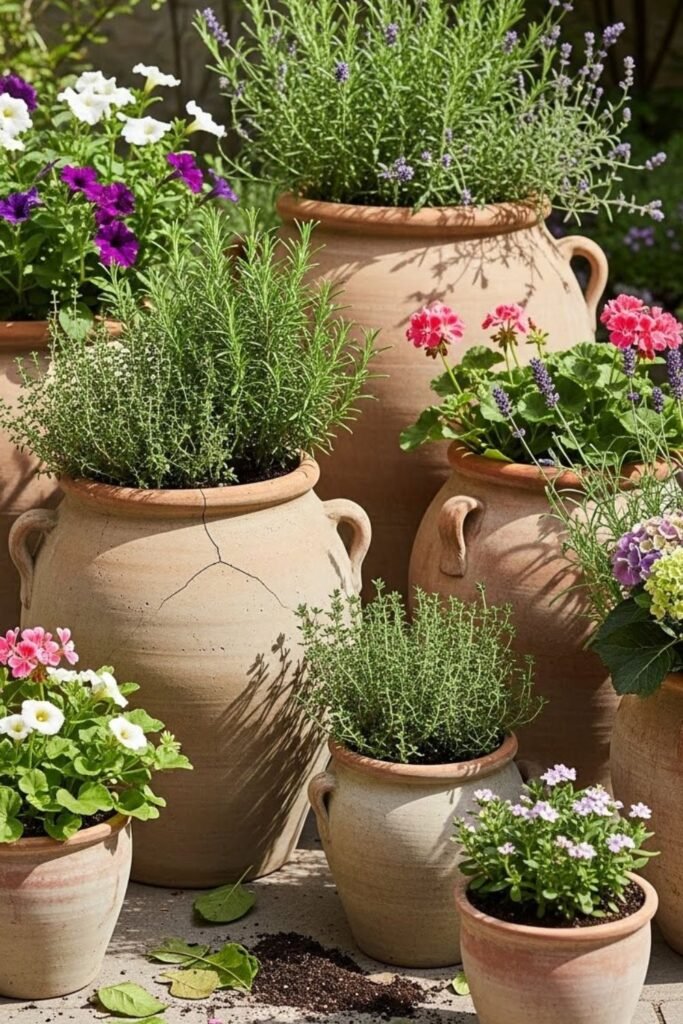
Groups of pots give you flexibility without the commitment of permanent planting.
I stick with terracotta in different sizes and arrange them in odd numbers — three small ones, one large one, five medium ones. The plants should be the stars, not the containers.
If something doesn’t work out, you can move it or replace it without undoing the whole design. That’s the kind of practical approach that actually makes sense for most people.
Wooden Seating
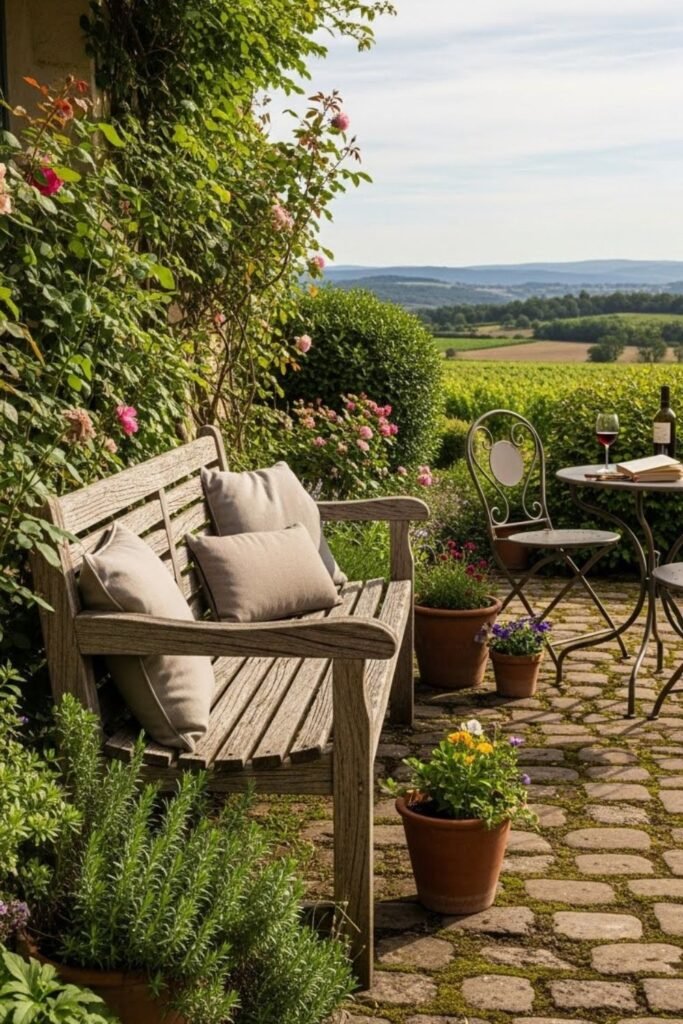
A simple wooden bench solves more problems than individual chairs. It doesn’t try to match anything, it can handle weather, and it gives you seating without crowding the space.
Place it along an edge rather than in the center. Add a cushion or let nearby plants soften it.
When space is tight, a bench keeps traffic flow open while still giving you somewhere to sit with your coffee or glass of wine.
Courtyard Focus
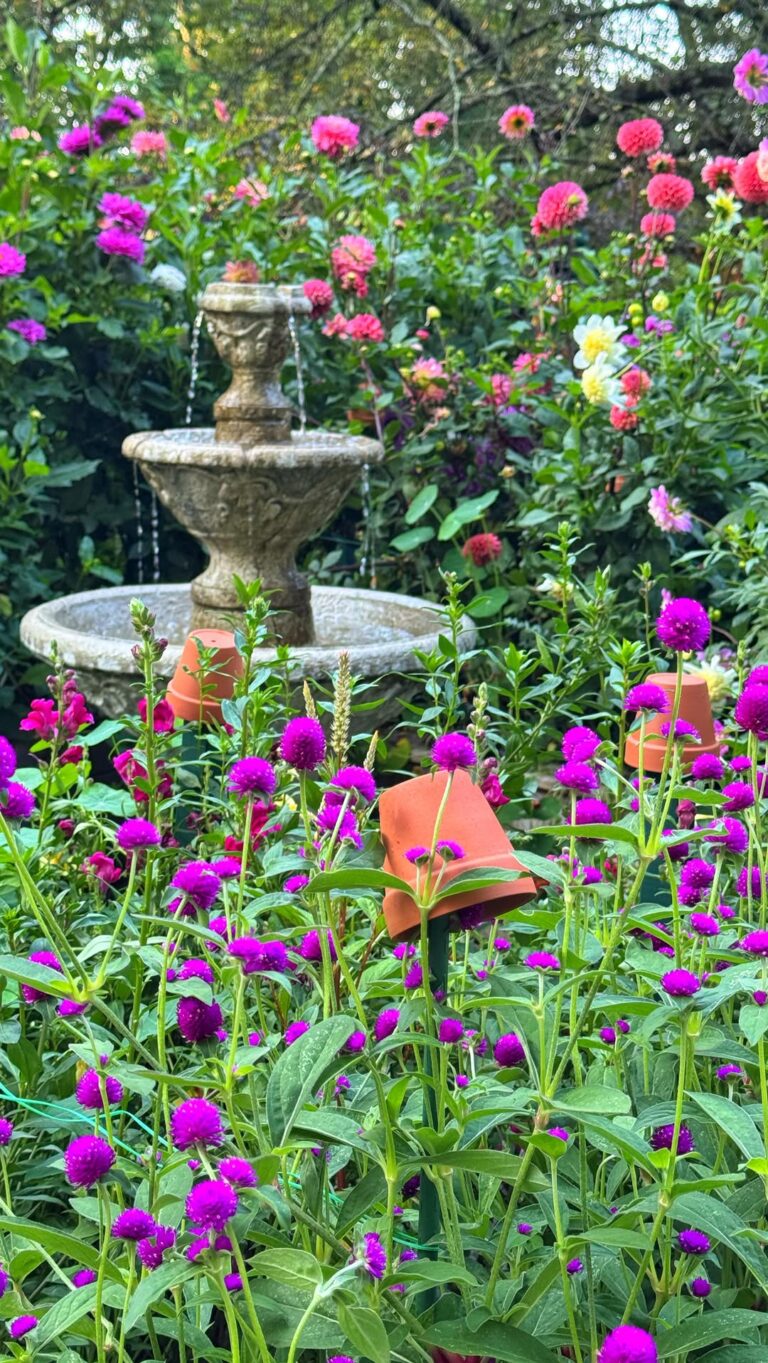
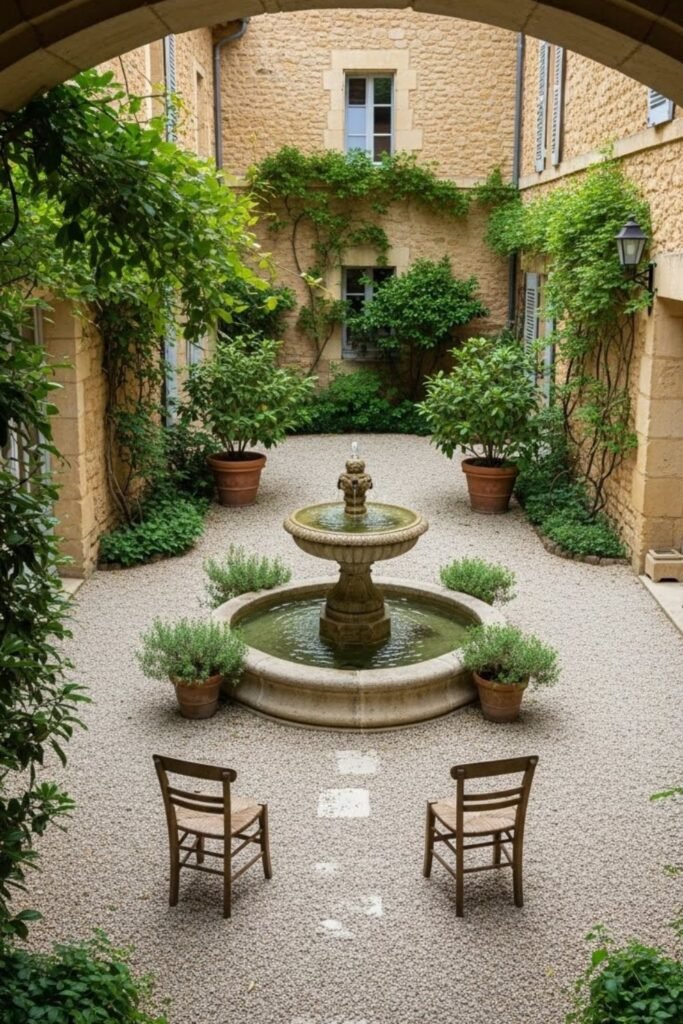
The best French patios have one thing that everything else quietly circles around. For me, that’s usually a small fountain.
Not because it’s fancy, but because the sound of water slows down the whole space. Chairs naturally face toward it, plants frame it, and suddenly the patio has a reason for being arranged the way it is.
That kind of focal point keeps everything from looking scattered, even when you haven’t spent much money on individual pieces.
Iron Pieces
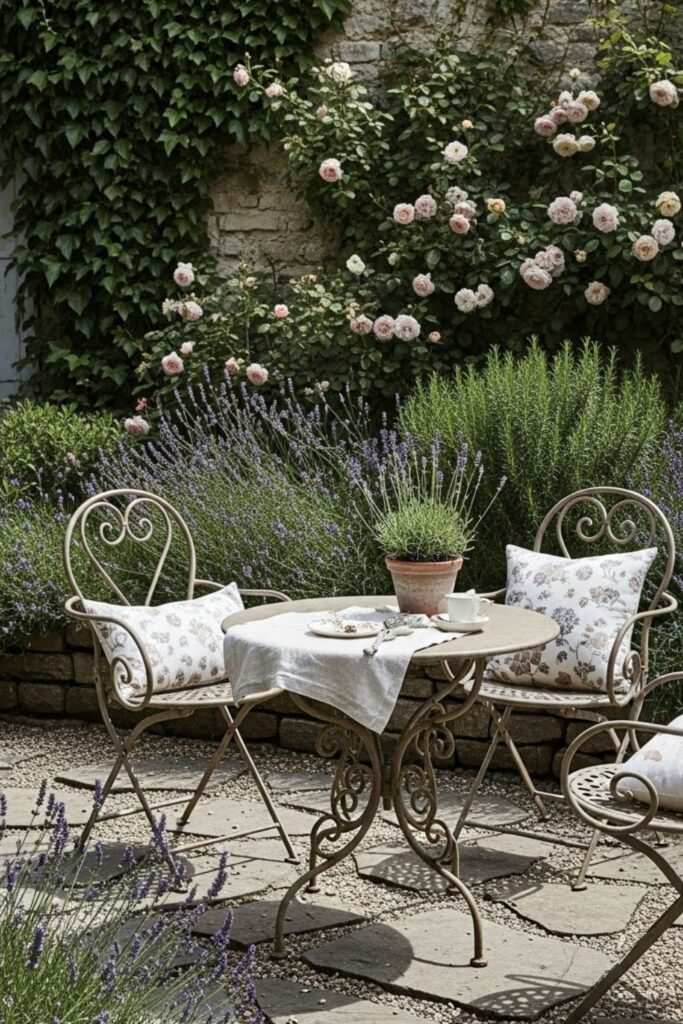
Iron furniture carries its own weight, literally and visually. You don’t need to decorate around it or dress it up — it already has character.
I balance the hardness with something soft nearby. Plants, fabric cushions, or even just the texture of gravel underneath.
Once you have one piece of good iron on the patio, everything else can be simple and it will still feel finished.
Climbing Greenery
Let the plants do the architectural work instead of building structures. Climbing vines add height and softness without blocking light or air circulation.
Give them simple support — wire, a trellis, even just the wall — and let them grow how they want to grow. Over time, they make the patio feel older and more settled.
That sense of age is what separates a French country patio from one that just has French country stuff in it.
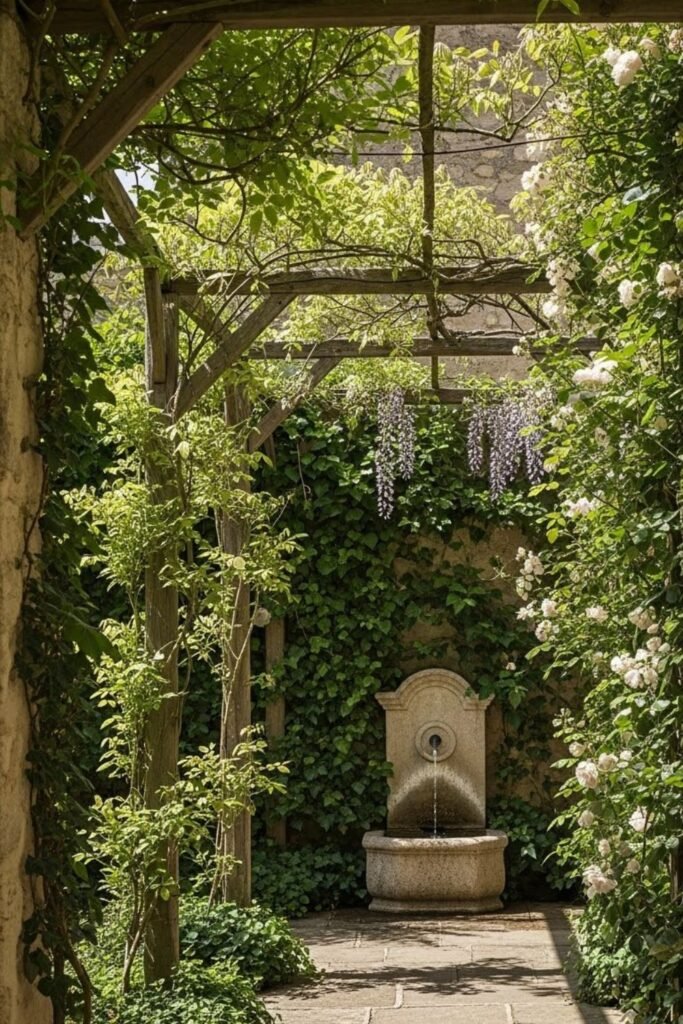
Loose Balance
Perfect matching makes everything look like a display. I put pots in uneven groupings and let the sizes vary from one side to the other.
Balance still matters, but it comes from weight and spacing, not identical pairs of everything.
When things aren’t perfectly symmetrical, the patio feels like it evolved over time instead of being installed all at once. That’s the difference between charming and sterile.
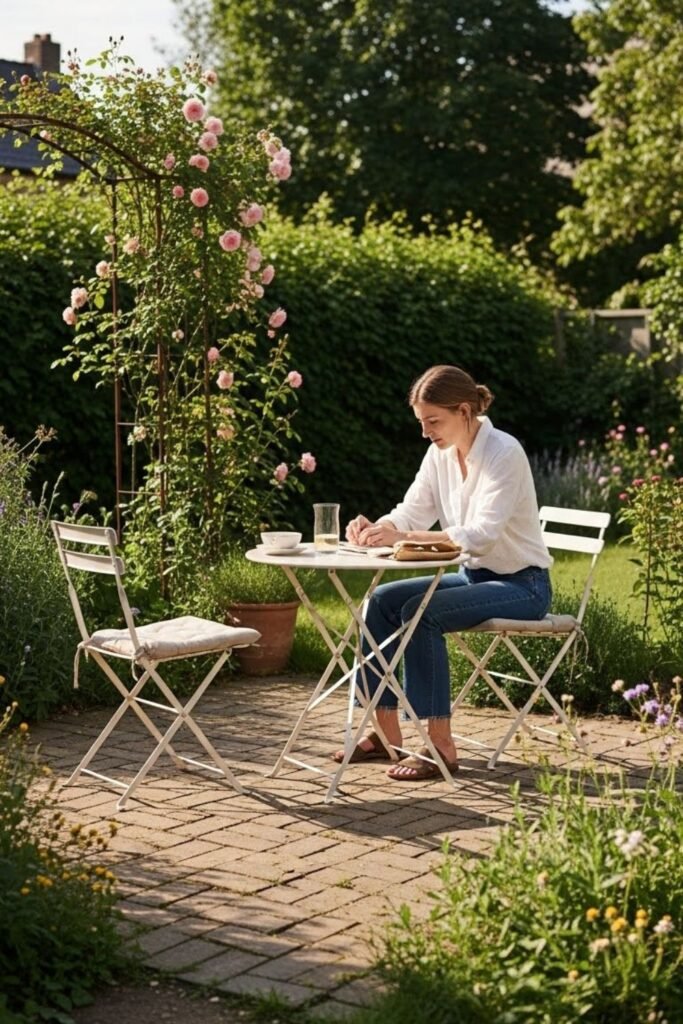
Tree Center
One tree in the right spot anchors the whole patio and gives it natural organization.
Seating circles around it, shade falls where it falls, and you have a focal point that doesn’t need maintenance or seasonal adjustments.
Even a small ornamental tree works as long as you give it space to breathe. Everything else becomes secondary, which keeps the design simple without being boring.
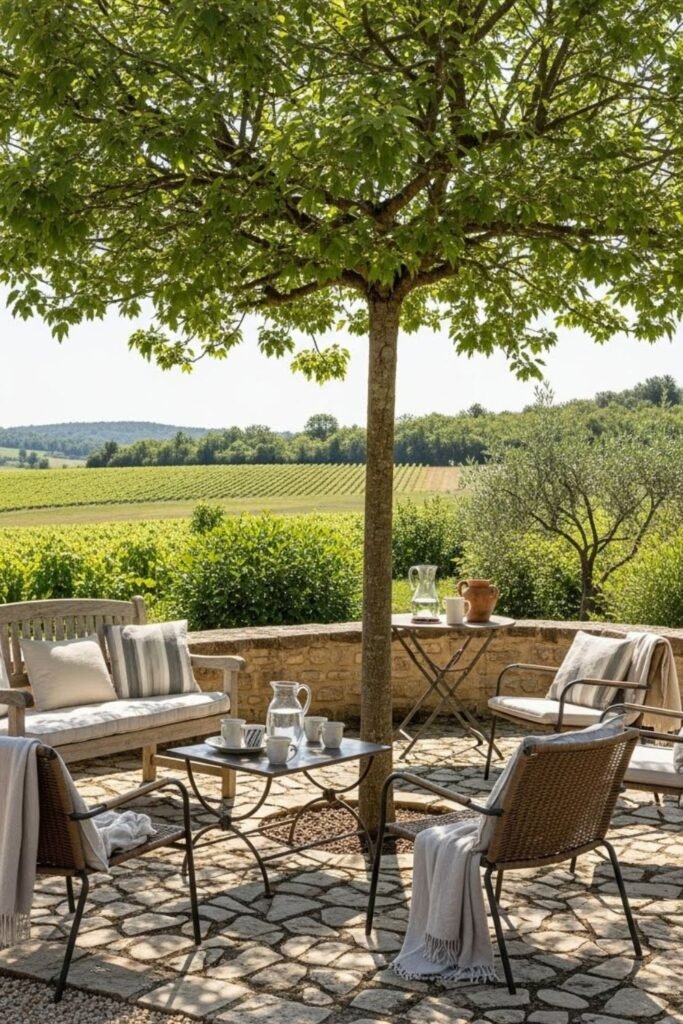
Soft Pavers
Stone pavers don’t need to look perfect to work well. Leave gaps between them. Nature is going to creep in eventually anyway, so you might as well let it.
Over time, the surface softens and loses that brand new installation look. You want it to feel settled, like it’s been there long enough to be part of the landscape.
French country isn’t about perfection — it’s about things looking comfortably weathered and well-used.
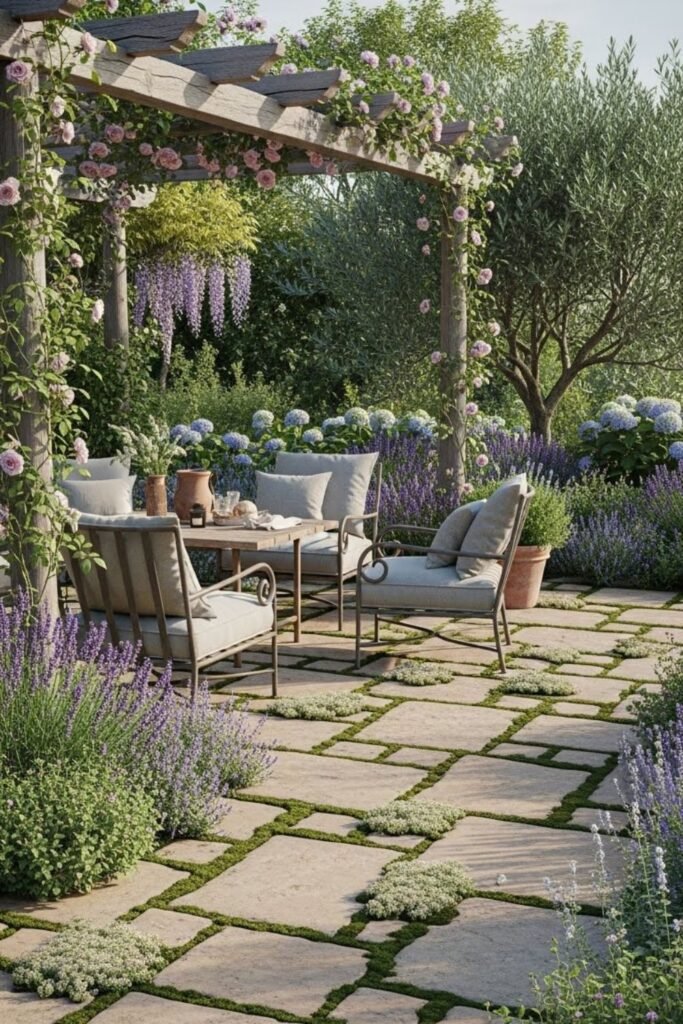
Container Patio
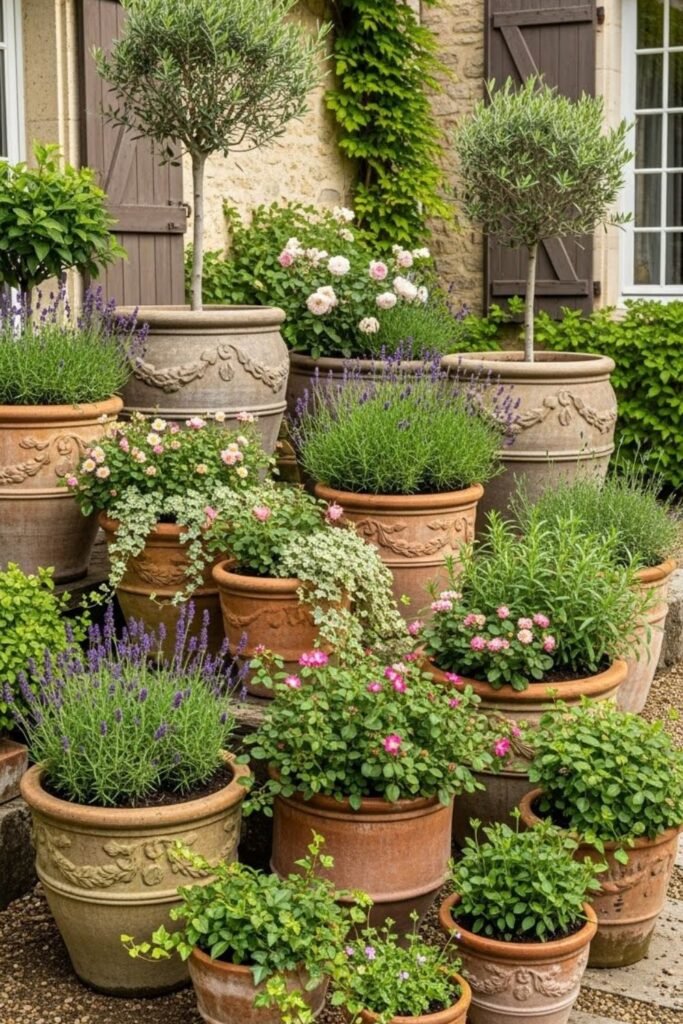
Sometimes the best approach is not changing the ground at all. Large containers can define the space while keeping everything movable.
This works especially well if you’re renting or if you’re not sure about the layout yet. Choose heavier pots so the space feels grounded, not temporary.
With the right plants, containers alone create structure and depth. You get the French country rhythm without permanent changes.
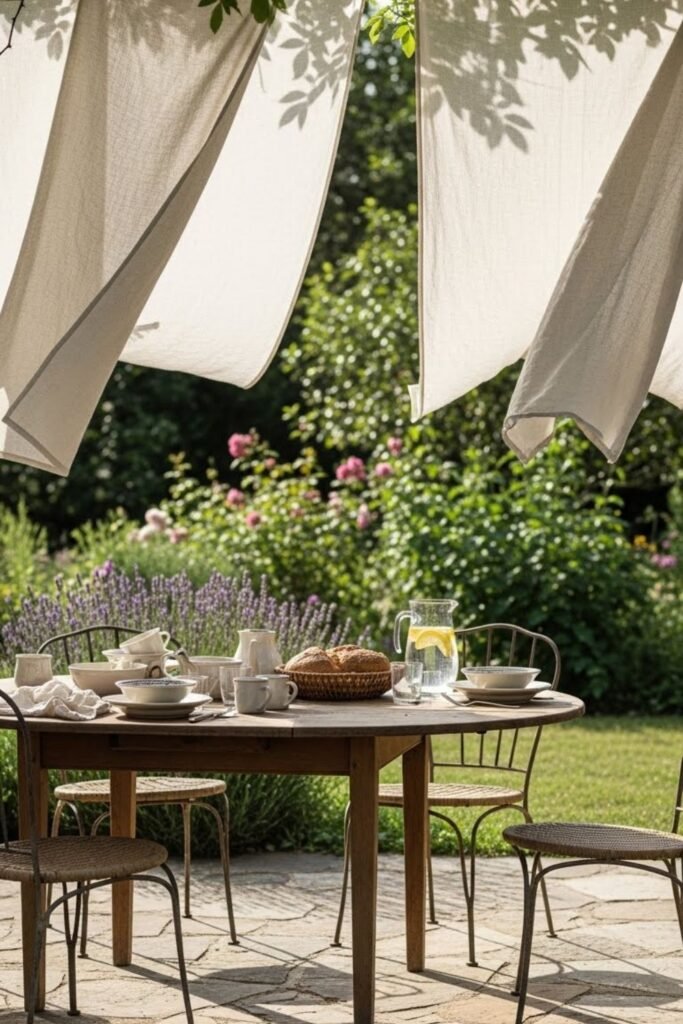
Fabric Shade
Fabric panels create shade without the weight or cost of permanent structures. Hang them where the afternoon sun hits hardest and let them move with the breeze.
Save this post for later ❤️
They filter light instead of blocking it completely, which keeps the garden view open.
There’s something about fabric that makes a space feel more temporary in a good way — like it’s meant to be enjoyed right now, not preserved forever.
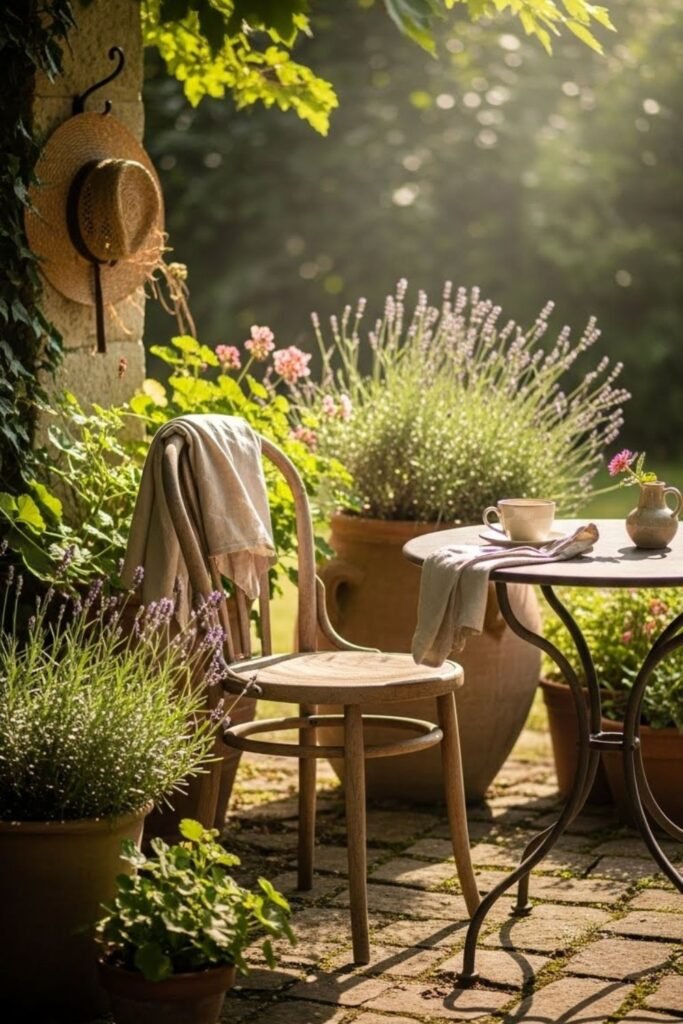
Morning Ritual
Design the patio for slow mornings instead of dinner parties. One comfortable chair, a small table for coffee, and gentle light.
When the space works for your daily habits, it stops feeling decorative and starts feeling necessary.
That’s when it becomes authentically French country — when it’s about how you live, not how things look. The charm follows naturally from the function.
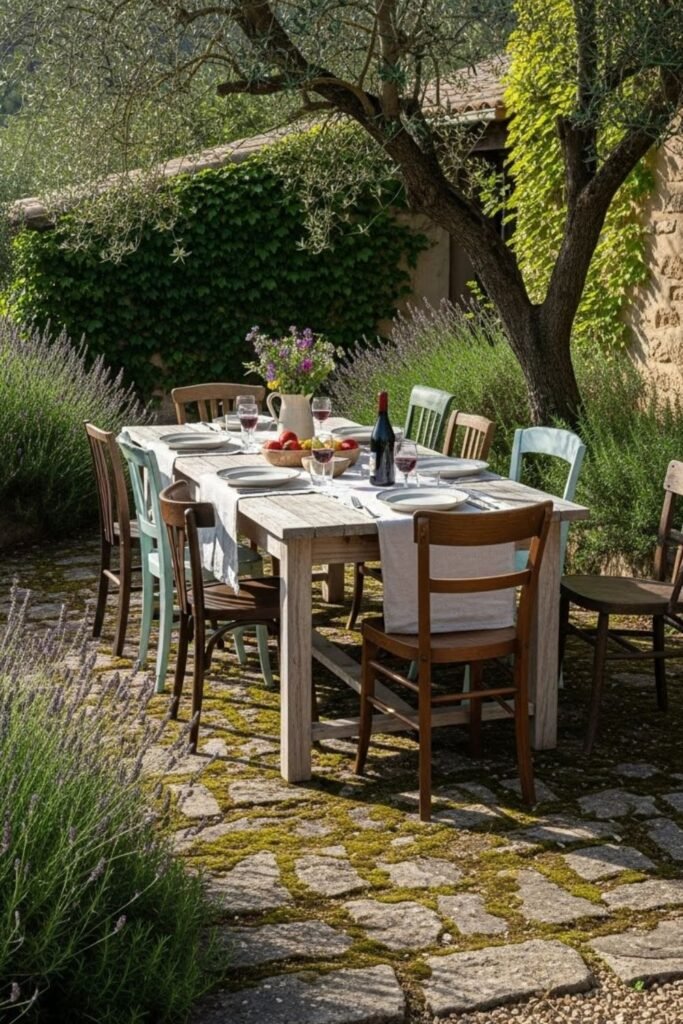
Rustic Dining
A weathered wooden table with visible character beats a perfect new one every time. Marks and imperfections add warmth that you can’t buy.
Chairs don’t need to match exactly as long as they’re solid and comfortable. Keep space around the table so people can move easily.
Once food and conversation happen here regularly, the patio develops its own personality. That’s worth more than any decorative element.
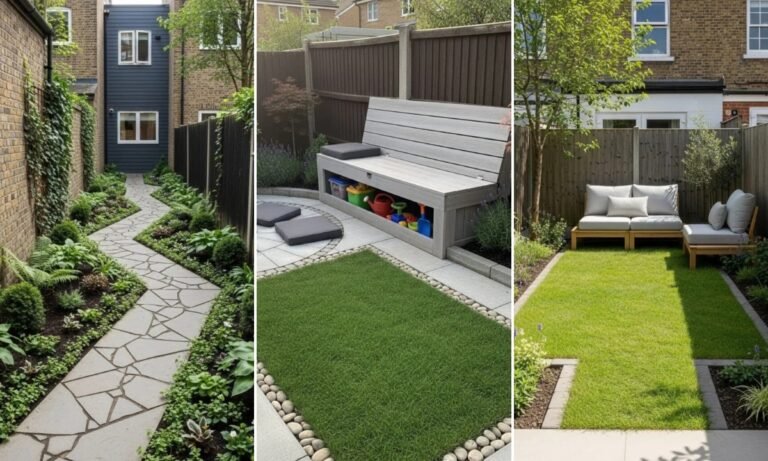
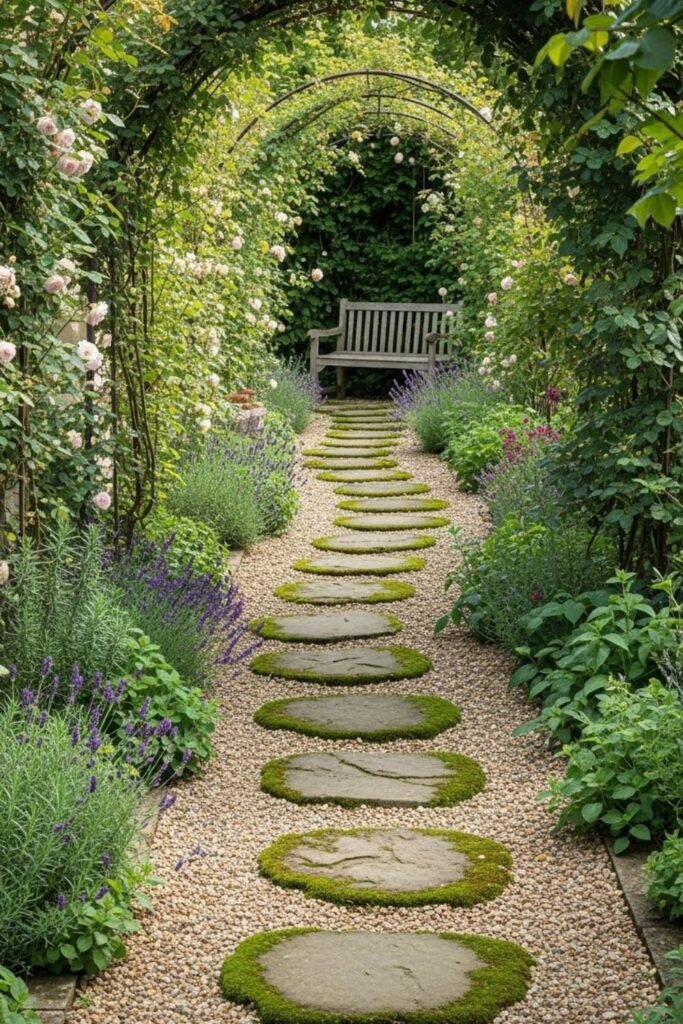
Narrow Walkway
Long, narrow spaces work better as paths than as sitting areas. Instead of cramming furniture in, let the space guide movement through the garden.
Pavers or gravel create the walkway, plants soften the edges, and maybe a bench at the end gives it purpose.
When narrow spaces flow naturally, they feel intentional rather than leftover. That’s often all they need.
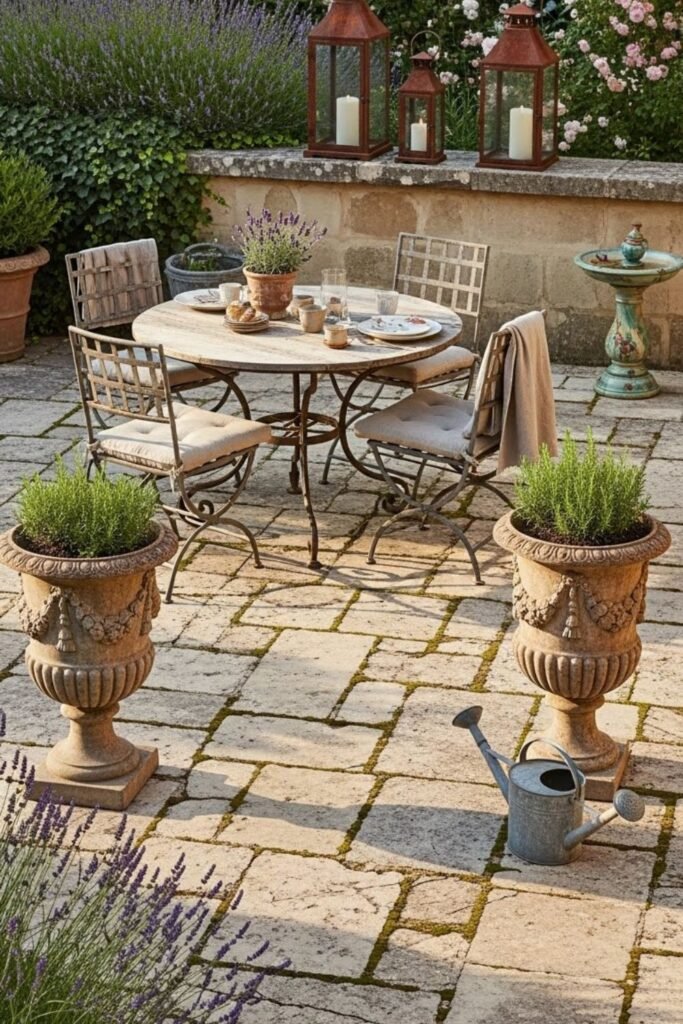
Aged Accents
Old accessories bring instant character. A stone planter, a worn urn, a simple lantern — each one hints at history without being obvious about it.
The key is using just a few pieces and giving them space to breathe. Too many and you get theme park, not authentic charm.
These items work because they suggest the patio has been here longer than it actually has. That sense of time passing is central to the whole aesthetic.
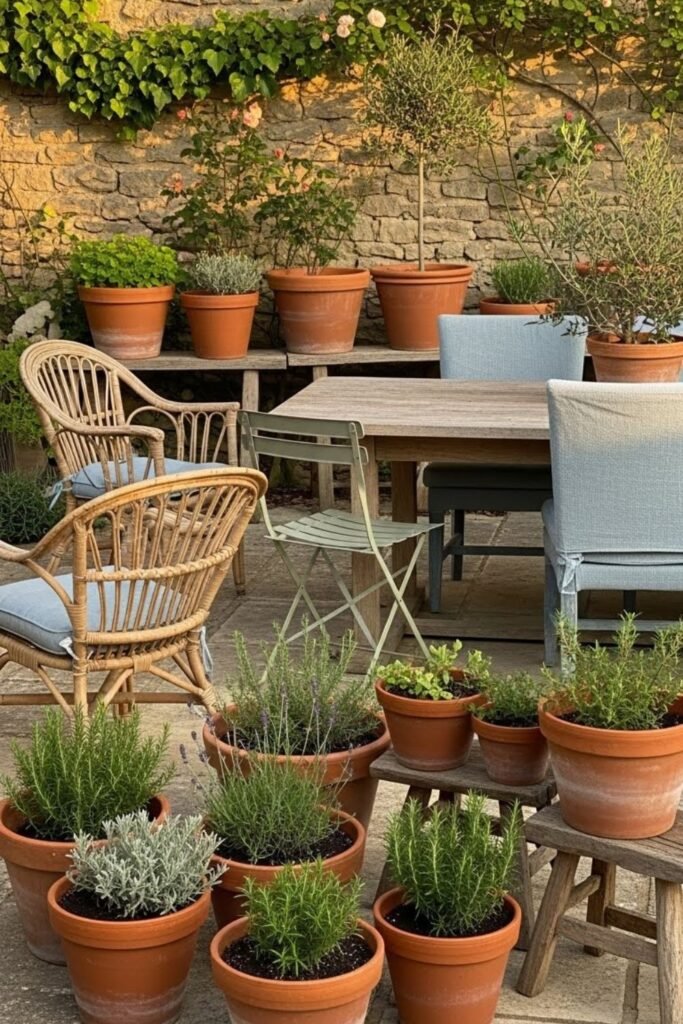
Simple Balance
You can balance one heavy element on one side with several lighter ones on the other. A large pot with a small tree might be balanced by three smaller pots and a lantern.
It’s about visual weight and spacing, not matching sets. When things feel evenly distributed, the patio relaxes.
This approach lets you use furniture and containers that don’t match but still belong together in some quiet, natural way. I love it!
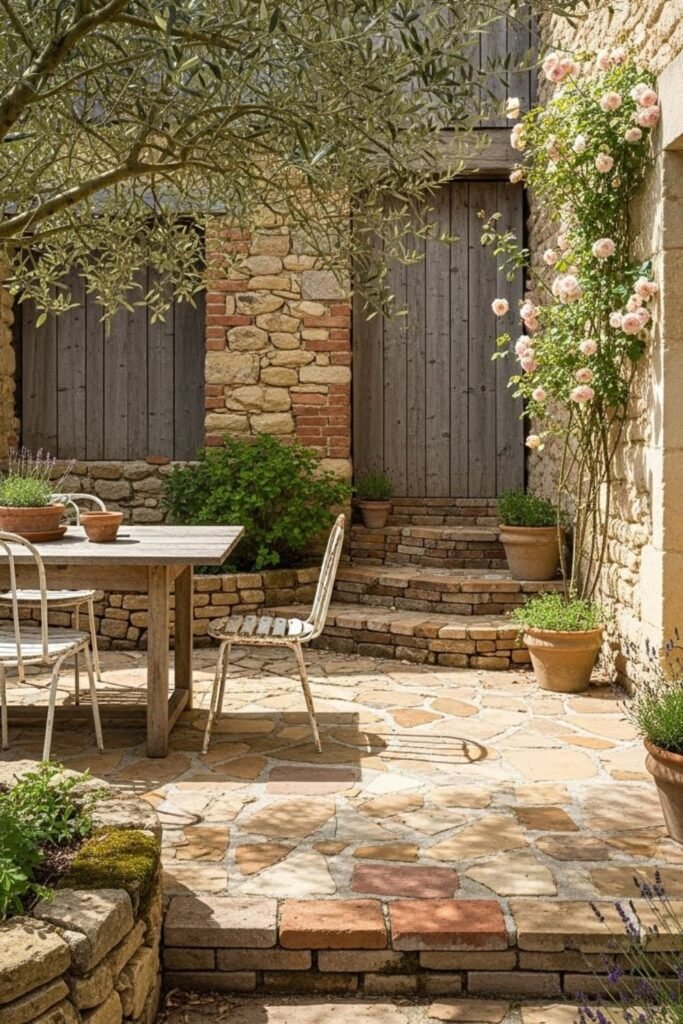
Reclaimed Materials
Salvaged stone, old bricks, reclaimed wood — these materials already have the character you’re trying to create. They come with stories built in.
Let the materials guide the design instead of forcing them into a predetermined layout. Sometimes the imperfections show you exactly where things want to go.
This keeps costs reasonable while adding authenticity that you simply cant fake with new materials, no matter how much you distress them.
Evergreen Ease
Evergreen plants keep the structure visible year-round, which means the patio feels complete even when seasonal plants are dormant.
Use them as the backbone, then add softer seasonal elements around them. This reduces maintenance while keeping the space full and interesting.
When the basic structure stays consistent, you don’t need to constantly rearrange furniture or décor. The patio becomes dependable.
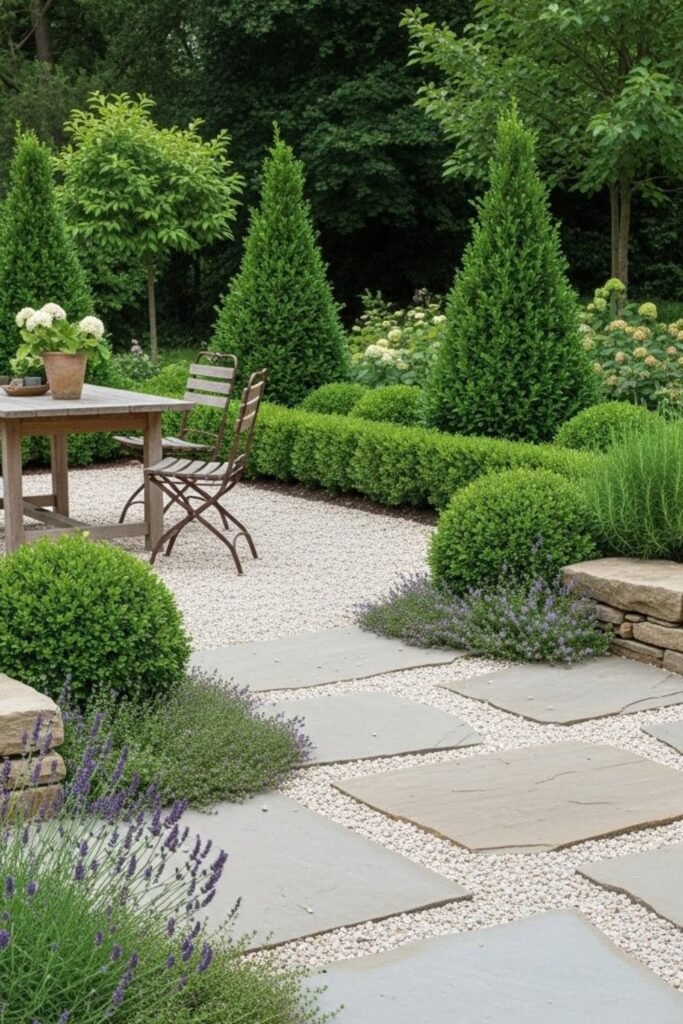
Collected Time
Don’t try to finish the patio all at once. Add pieces slowly and let the space develop over seasons.
This spring, maybe a new pot. Next fall, a bench. The following year, a small sculpture. This prevents overdecorating and keeps the space personal.
When items arrive over time, they tell a story. That gradual accumulation is part of what makes French country style feel authentic instead of purchased.
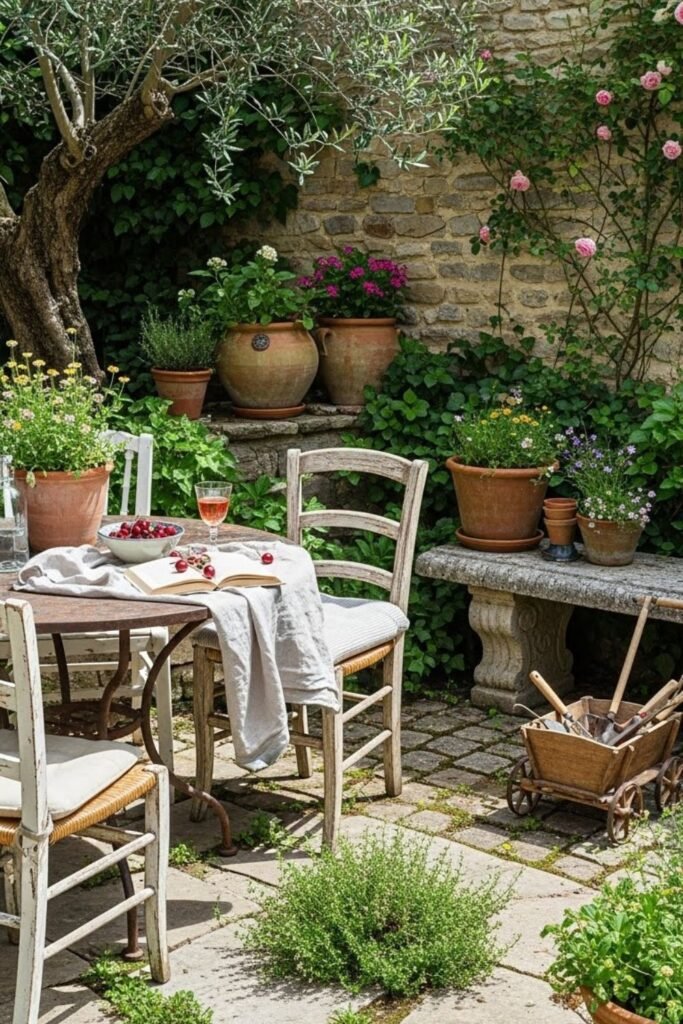
Vertical Focus
When floor space is limited, build upward. Tall planters, climbing vines, wall-mounted elements create depth without eating valuable square footage.
Once you have height, the patio feels layered and complete even if the ground level stays simple.
Don’t fill every inch of floor space with furniture. Let the vertical elements shine and the patio will feel more spacious and thoughtful.
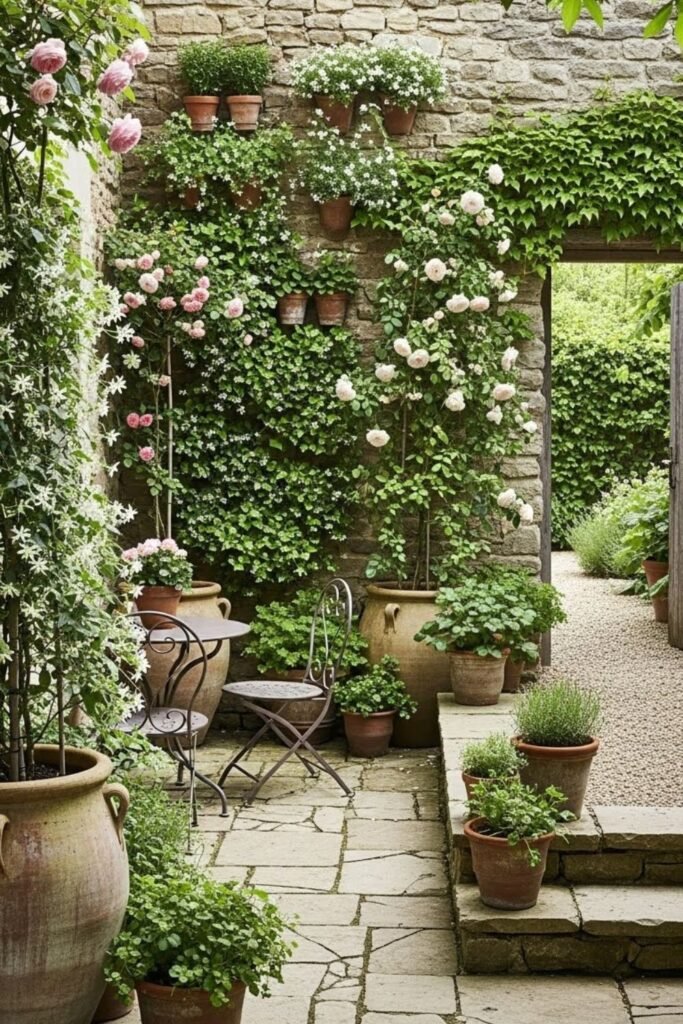
Evening First
Plan for evenings before you plan for daytime. Where will you sit after sunset? How will the lighting work? What will cast pleasant shadows?
Seating should face the softest light sources, not necessarily the best view. Plants with interesting textures matter more at night than bright flowers.
When a patio works well in the evening, it usually works even better during the day. But the reverse isn’t always true. My opinion, but still…
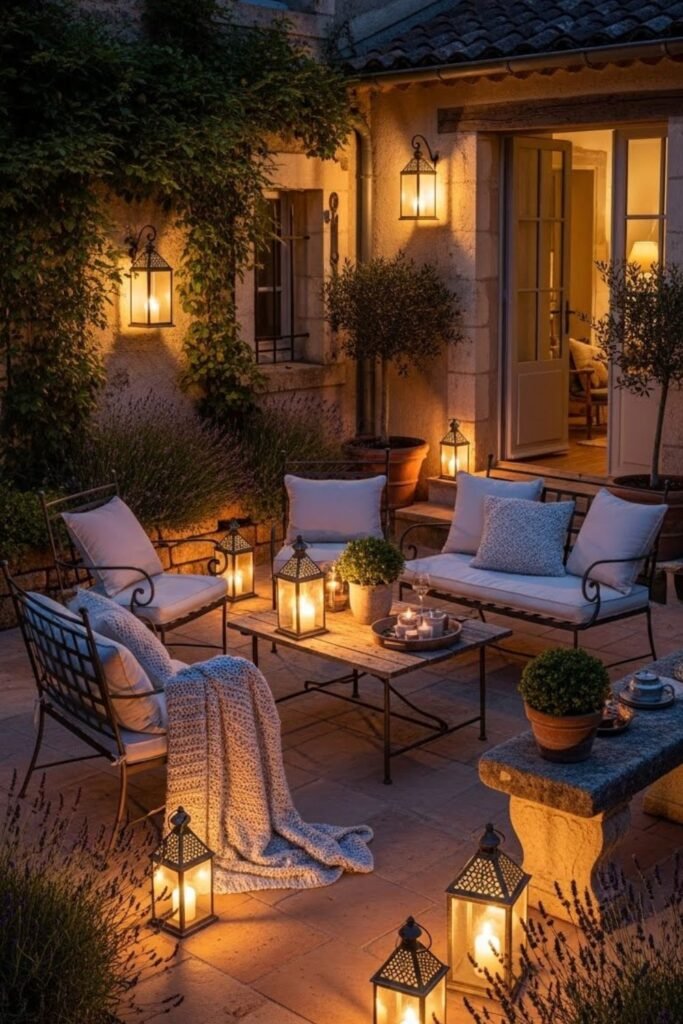
Green Enclosure
Create privacy with plants instead of fences. Layer greenery at different heights so the patio feels wrapped rather than walled in.
This approach maintains airflow while giving a sense of separation from the rest of the yard.
Leave some openings so the space doesn’t feel claustrophobic. The goal is shelter, not isolation. A patio like this feels peaceful because it’s defined softly.
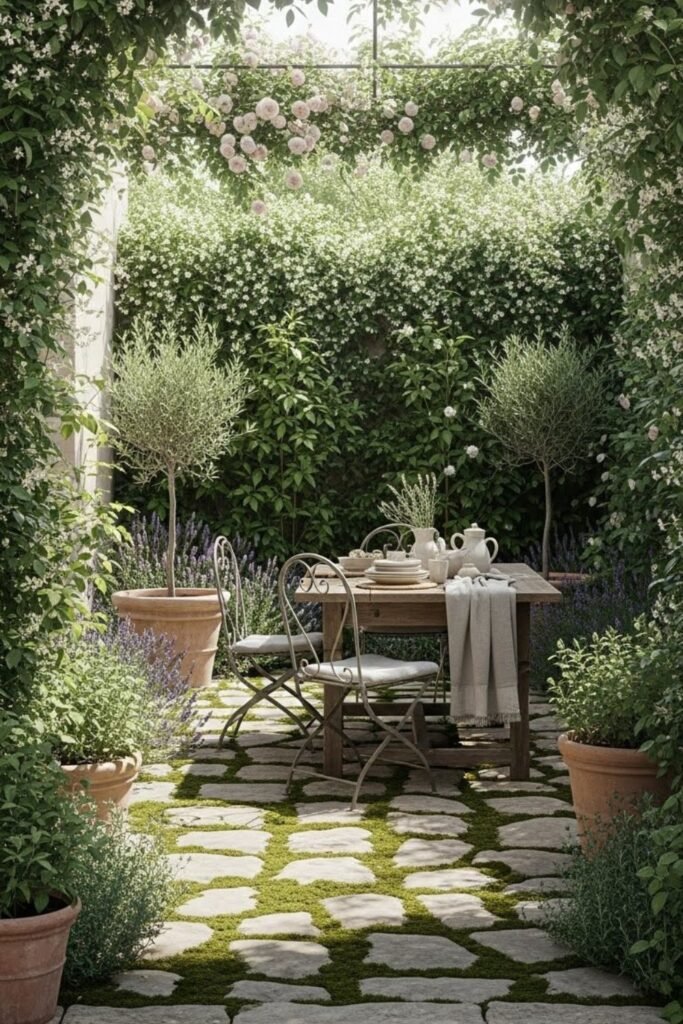
Seamless Garden
Avoid sharp transitions between the patio and garden beds. Let plants cross over the boundaries and gravel fade into soil naturally.
Position some pots partially in garden beds rather than strictly on paved surfaces. This removes that hard line where the patio “ends.”
When everything flows together, the space feels larger and more organic. You stop noticing where one area transitions to another, which makes the whole yard feel more integrated.
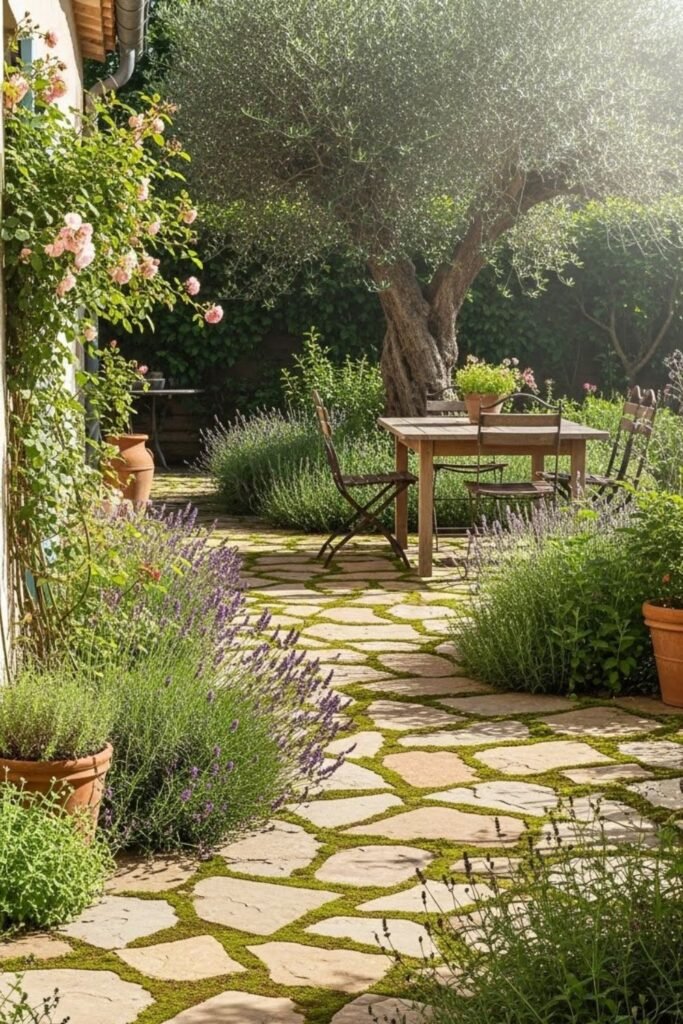
Three Essentials
Pick three things: one seating element, one plant grouping, one grounding feature like gravel or pavers. Everything else is optional.
This prevents clutter and forces you to choose pieces that actually matter. When too many elements compete for attention, the French country charm disappears entirely.
Three well-chosen essentials create more impact than a dozen random decorative pieces. The restraint is what makes it feel sophisticated instead of busy.
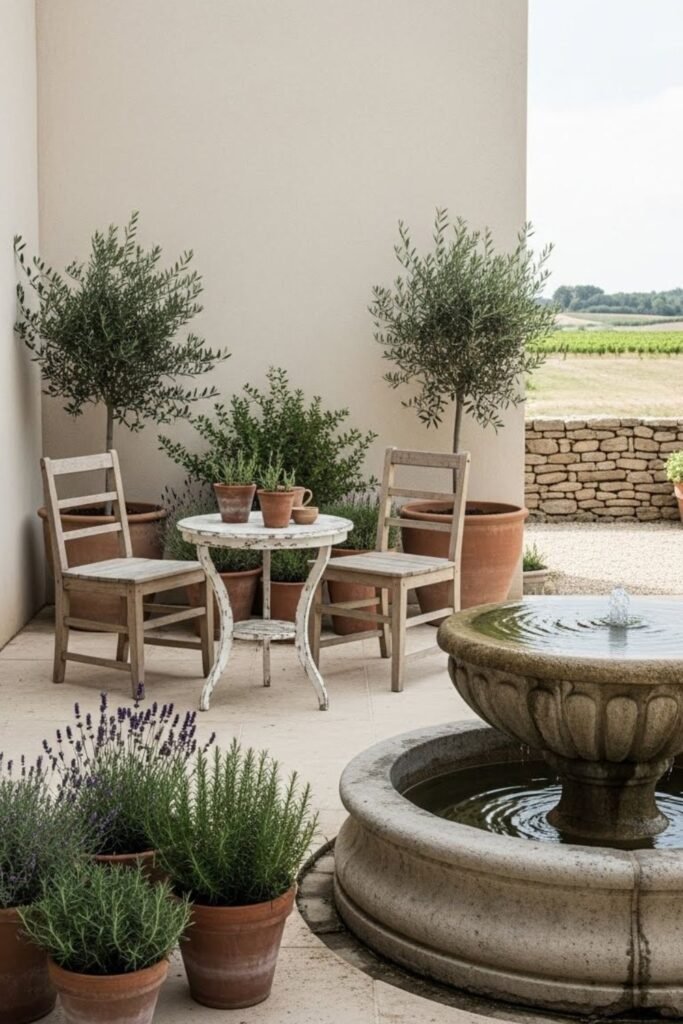
FAQs
Can a French country garden patio work in a small or modern backyard?
Yes, but you have to be strategic
I’ve spent over four decades building a marriage, raising a family, and learning what truly matters along the way. I write about relationships, home, and navigating life’s later seasons with grace, honesty, and a little humor. My goal is to share the kind of steady, real-life wisdom that helps you feel grounded, encouraged, and a little less alone.