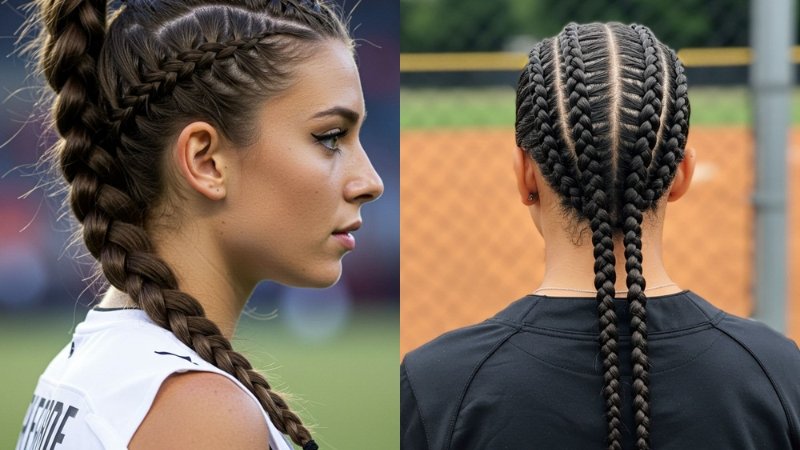
Softball Hairstyles Ideas That Actually Stay In Place Through Every Inning

I was watching my neighbor’s daughter at softball practice last week, and I couldn’t help but notice how many girls were constantly pulling their hair out of their eyes or retying ponytails between innings.
A good game-day hairstyle isn’t about looking cute in team photos — it’s about not thinking about your hair when you’re trying to catch a line drive.
The right style keeps everything secure, comfortable, and out of your face, whether you’re sliding into home or spending three hours in the dugout heat.
These 22 hairstyles work for the real demands of softball — sweat, movement, and those long tournament days where you need your hair to cooperate from the first pitch to the last.
Softball Hairstyles That Actually Work
1. Vibrant Braided Pigtails
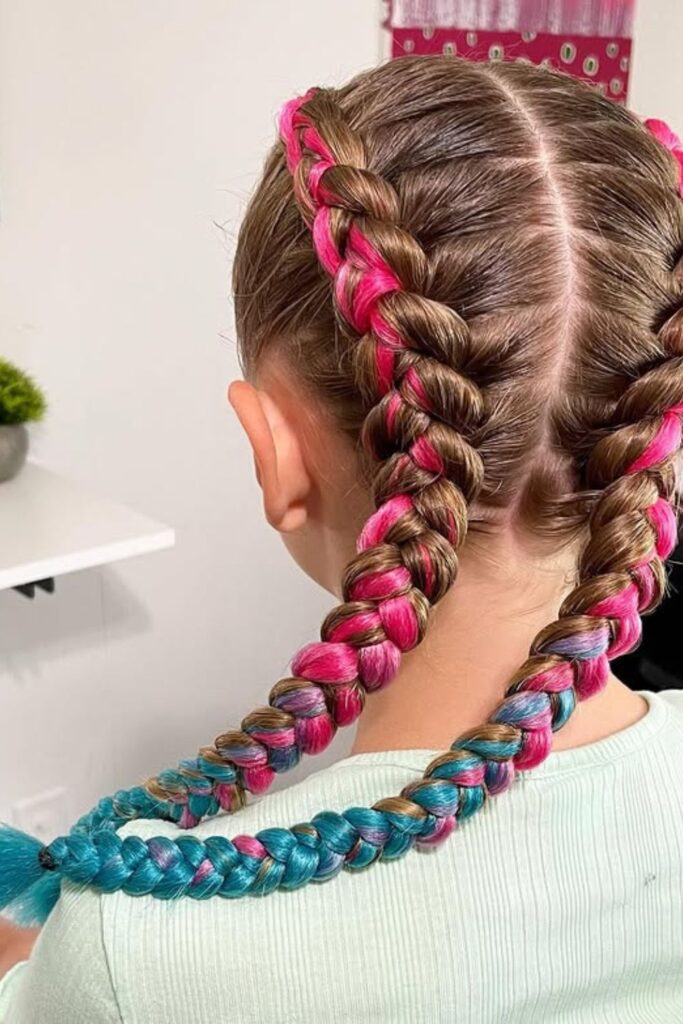
Dutch braids with bright pink and blue extensions might look like a lot, but they solve the biggest problem with regular pigtails: loose pieces.
The tight weave from the hairline down means nothing’s going anywhere, even during those sliding catches. The color extensions are woven right into the braid, so you don’t have to worry about them slipping out mid-game.
This works especially well for younger players who want something that feels special but won’t require constant maintenance from the sidelines.
2. Braided Ribbon Pony
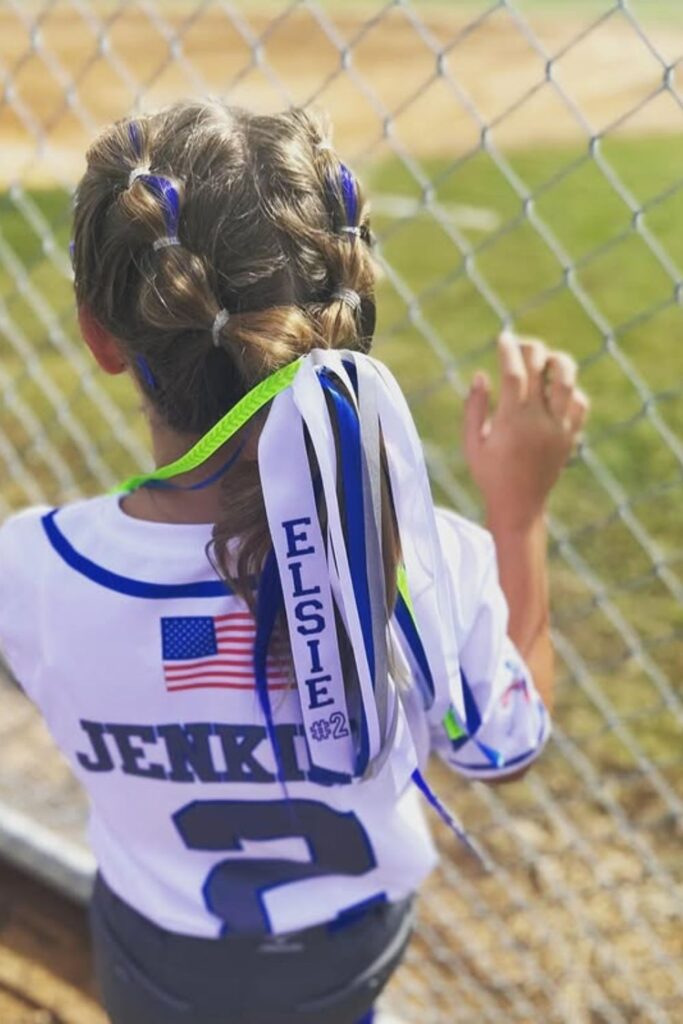
The half-braid with ribbon woven through gives you team colors without the commitment of temporary dye or extensions that might not match exactly.
Start with a Dutch braid from one temple, weave the ribbon in as you go, then secure everything in a ponytail. The curls at the bottom stay put better than you’d think — the braid creates tension that holds the style.
I like this one because the ribbon actually serves a function beyond decoration. It adds grip to fine hair that might otherwise slip out of the braid.
3. Bubble Braids Mohawk
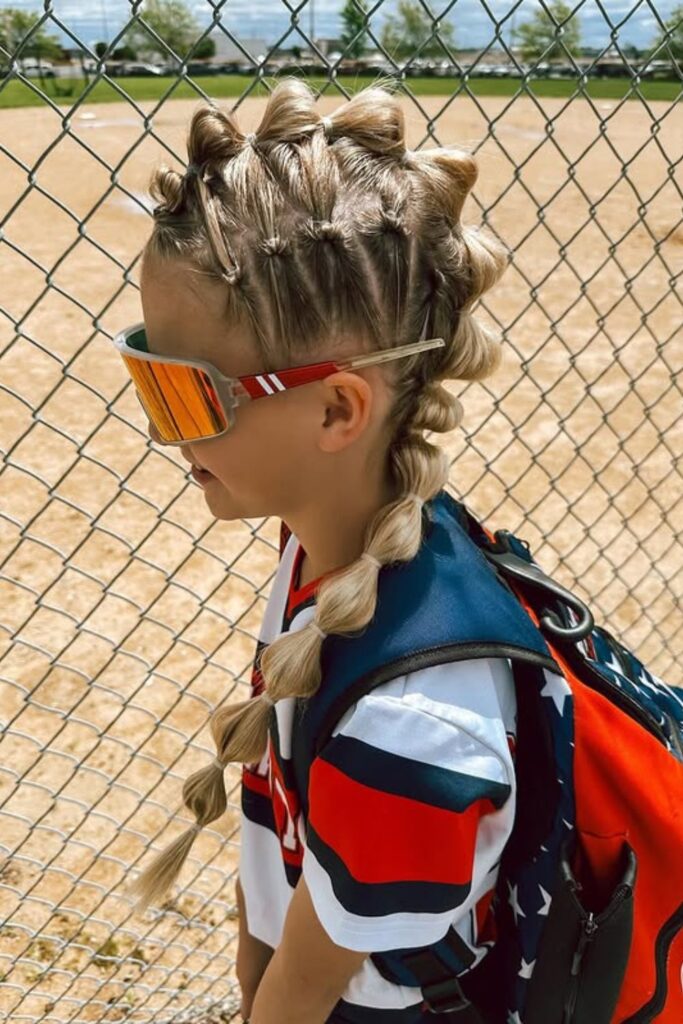
This looks complicated but it’s just multiple small ponytails secured close to the scalp, then bubble-braided down. The mohawk shape isn’t an accident — it keeps everything off the neck and ears.
You’ll need about fifteen small elastic bands and twenty minutes, but once it’s in, it’s in. The tight scalp sections mean no hair will work loose, even with a helmet.
Not for everyone, but if your daughter likes attention and has thick hair that needs serious containment, this delivers on both.
4. Sleek Side Dutch Braids
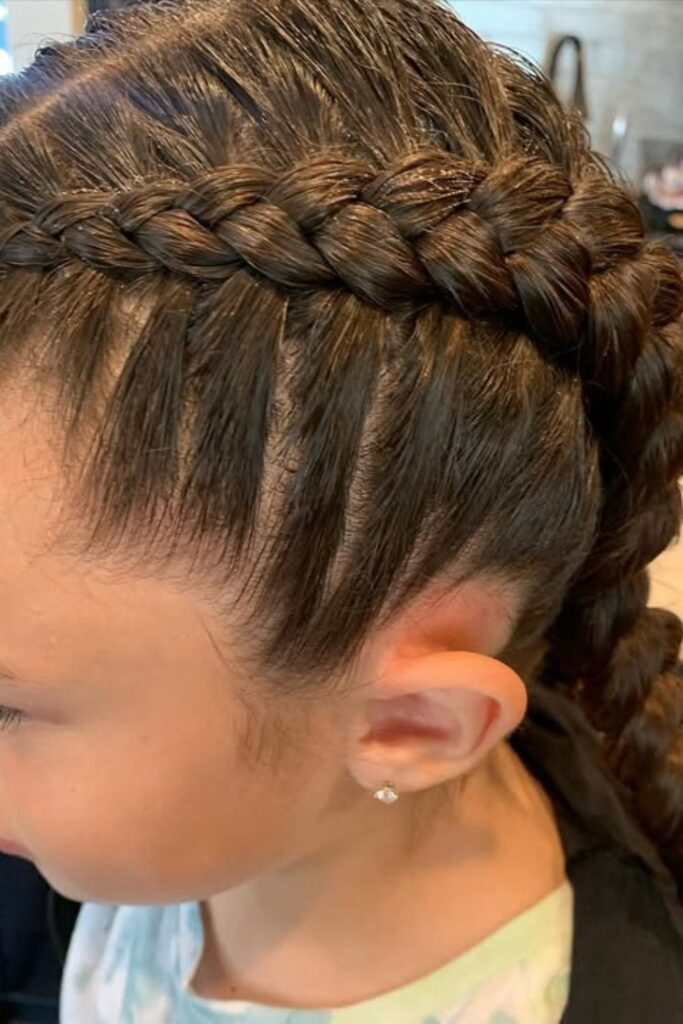
Double Dutch braids are the minivan of softball hair — not flashy, but they get the job done reliably every time.
The key is starting the braid tight at the scalp and keeping consistent tension all the way down. These follow the natural shape of the head, which means they don’t pull or create pressure points under a helmet.
This style works on every hair texture I’ve seen. Fine hair stays put, thick hair gets controlled, and curly hair lies flat. Takes about ten minutes once you get the hang of it.
5. Double Dutch Braids
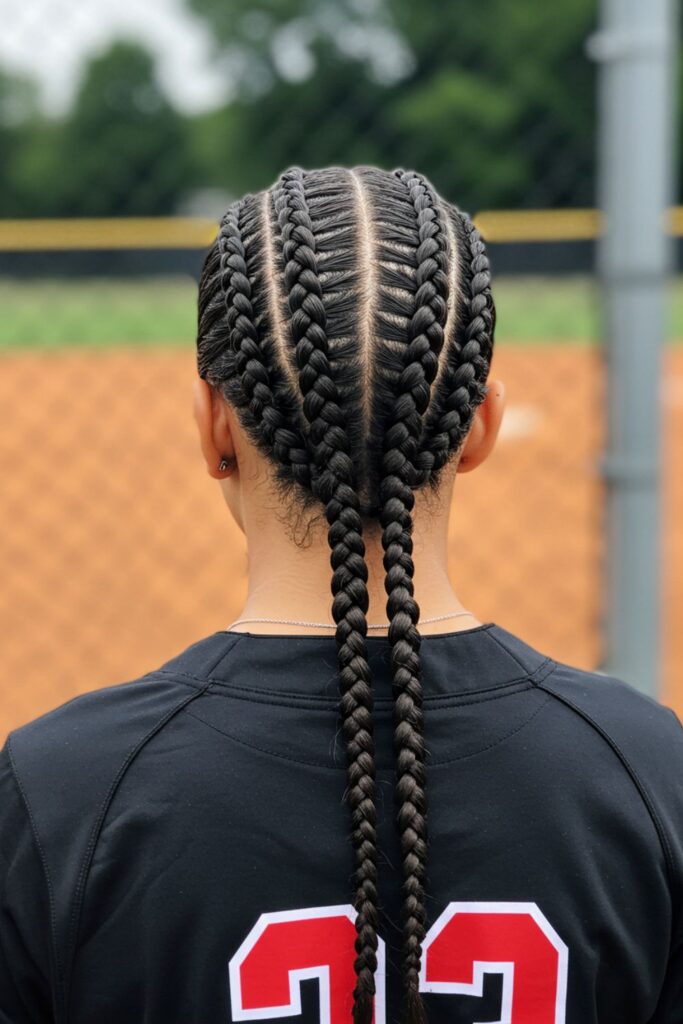
The standard for a reason. Two tight braids starting at the hairline, woven under instead of over so they lie flat against the head.
I’ve seen these survive double-headers in July heat, complete with diving catches and dugout celebrations.
6. Bubble Ponytail
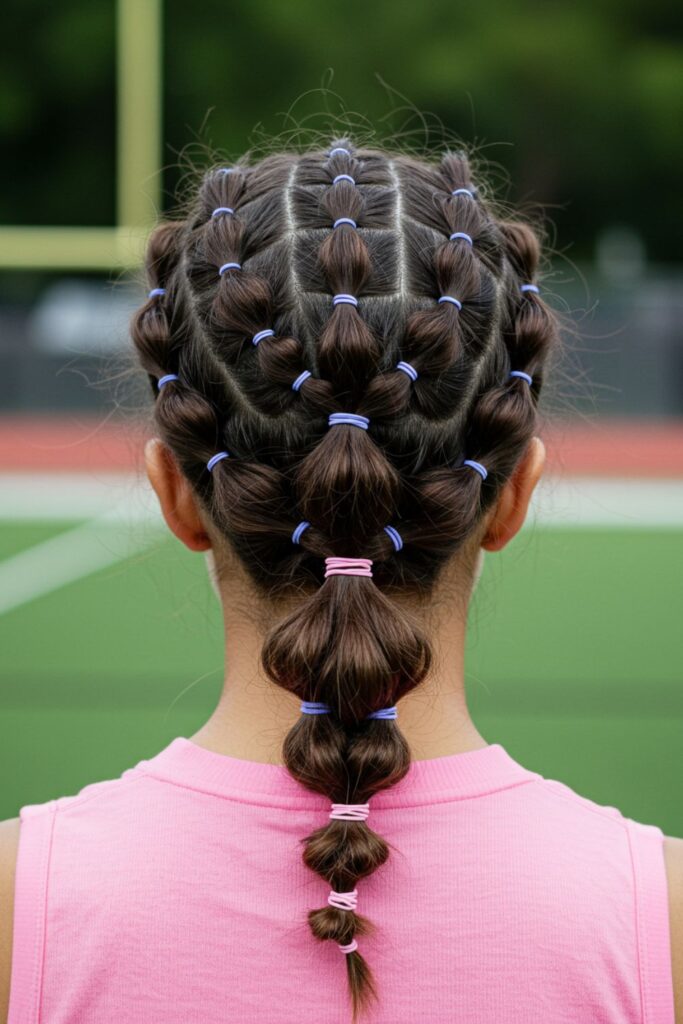
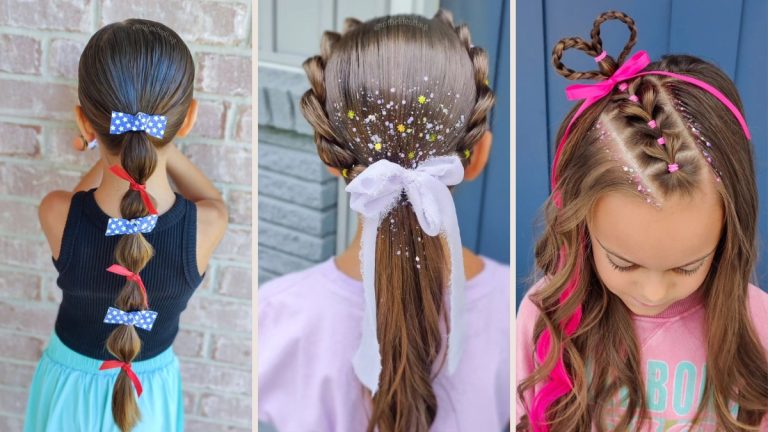
Take a regular ponytail and add small elastics every few inches down the length, then gently pull each section apart to create the bubble effect.
The multiple tie points prevent the whole style from coming undone if one elastic breaks. Plus, the bubbles keep long hair from tangling as much during play.
Works best with hair that’s at least shoulder-length. Shorter hair doesn’t have enough length to create the bubble sections properly.
7. Braided Ponytail
Start with a high ponytail, then braid the length. It’s simple, but the braid prevents that annoying thing where ponytails get stringy and separate during the game.
A three-strand braid works fine, but a fishtail braid grips better if you have the time. Both keep the ponytail compact and contained.
Add team ribbon around the elastic or weave it through the braid if you want the team color element. This style takes five minutes and lasts all day.
8. Ribbon-Tied Pigtails
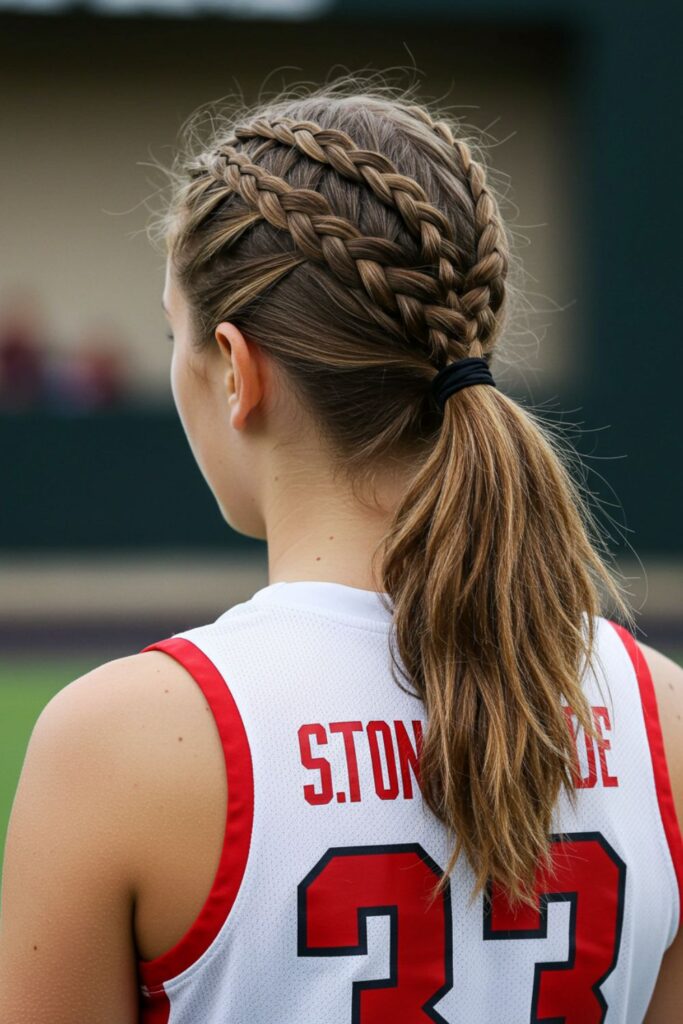
Two ponytails or braids secured with ribbon instead of regular elastics. The ribbon is wider than most hair ties, which distributes the pressure better and holds more securely.
Choose ribbon that matches your team colors — most craft stores carry it by the yard, and you can cut it to the length you want.
This works particularly well for younger players who might not sit still for complicated braiding but still want something that looks put-together.
9. Bubble Braid Pigtails
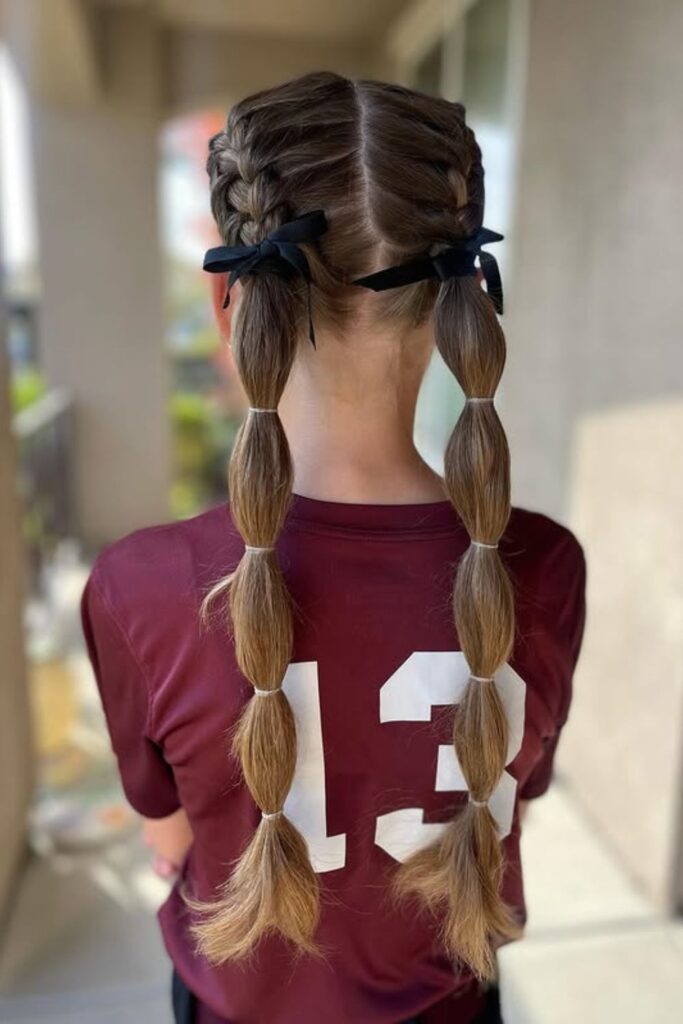
French braids that transition into bubble sections give you the security of braids at the scalp with the visual interest of bubbles at the ends.
Start with a regular French braid from the hairline down to about ear level, then switch to the bubble technique for the remaining length. The black ribbon details aren’t necessary but they do add a nice finishing touch.
This style holds up well under helmets because the braided top section lies flat, but the bubble ends move freely and don’t create pressure points.
10. Twisted Accent Braids
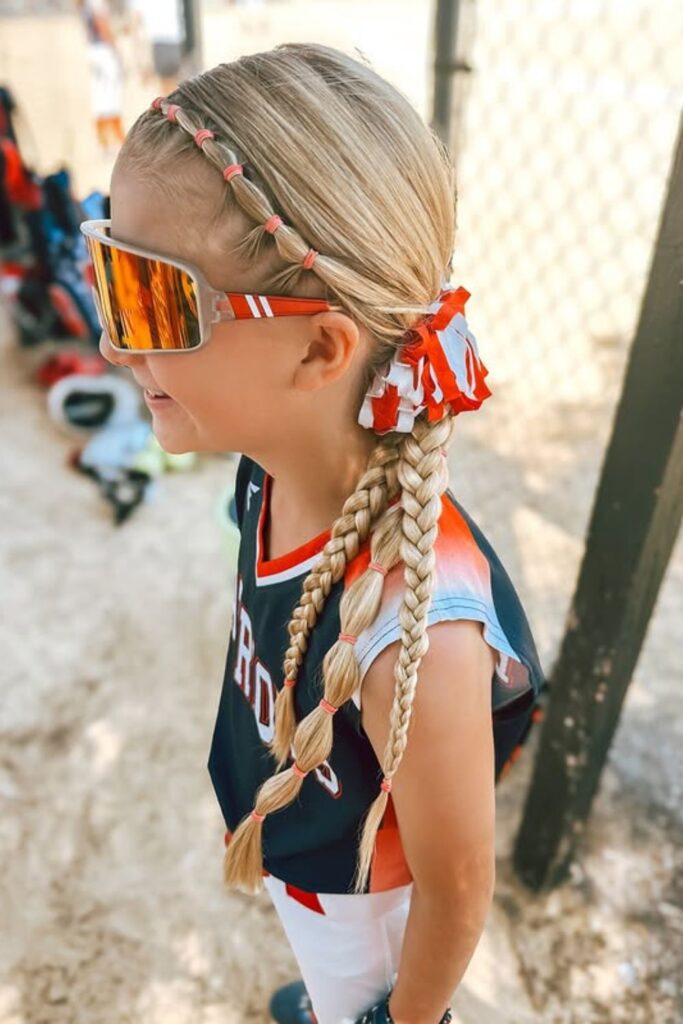
A low ponytail with small braids along the sides that feed into it. This gives you some of the security benefits of braids without the time investment of doing the whole head.
The side braids catch the pieces that usually fall out of a regular ponytail — those shorter layers around the face that are too short to stay tucked behind the ears.
The scrunchie isn’t just decorative. A fabric scrunchie holds better than a regular elastic and doesn’t cut into the hair as much, which means less breakage over a long season.
11. Sleek Braided Pony
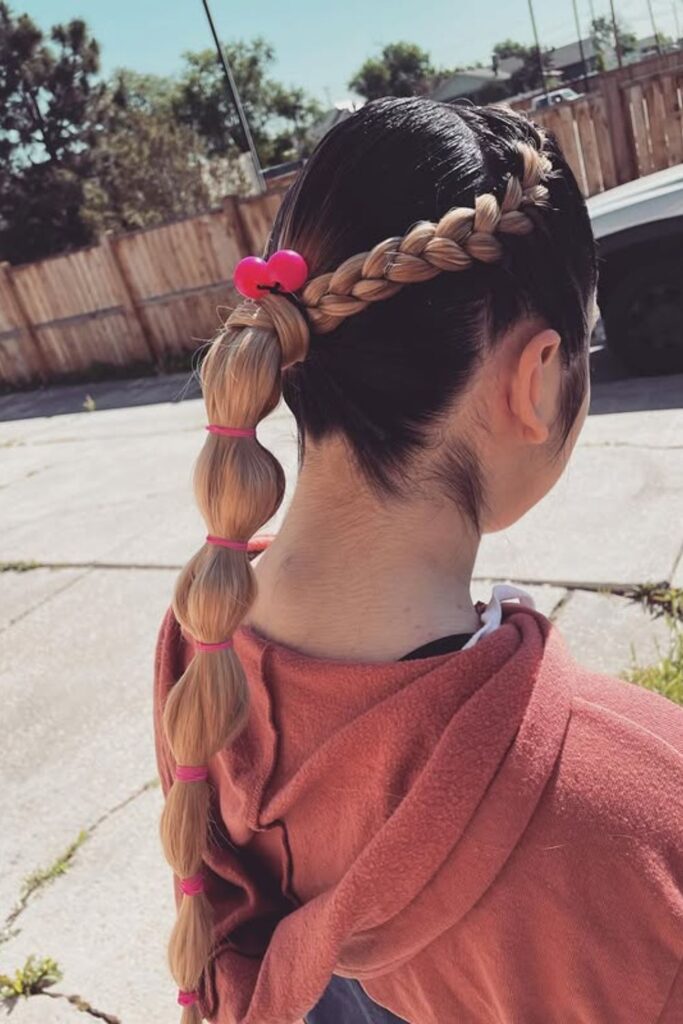
A side braid that wraps around the head into a high bubble ponytail. The braid section keeps the front secure, and the bubble ponytail prevents tangling in the length.
Save this post for later ❤️
This works especially well if you’re dealing with layers or shorter pieces that don’t want to stay in a regular ponytail. The wrapping braid catches everything and incorporates it into the style.
The bright colored elastics aren’t required, but they do make the bubble effect more visible. Choose colors that coordinate with your uniform.
12. Double Dutch Pigtails
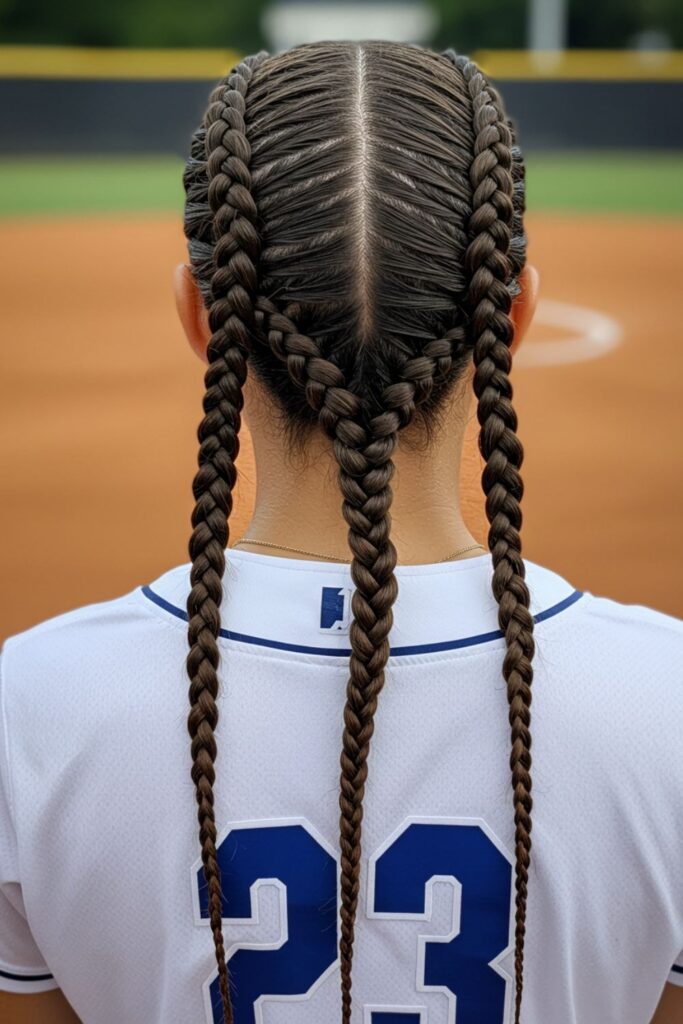
Dutch braids that end in bubble sections combine the best of both techniques. The tight braided top means nothing moves, and the bubble ends add visual interest without compromising function.
This is particularly good for thick hair that needs serious control. The double securing — first with the braid, then with the bubble ties — means this style will outlast most games.
13. Braided Bubble Pony
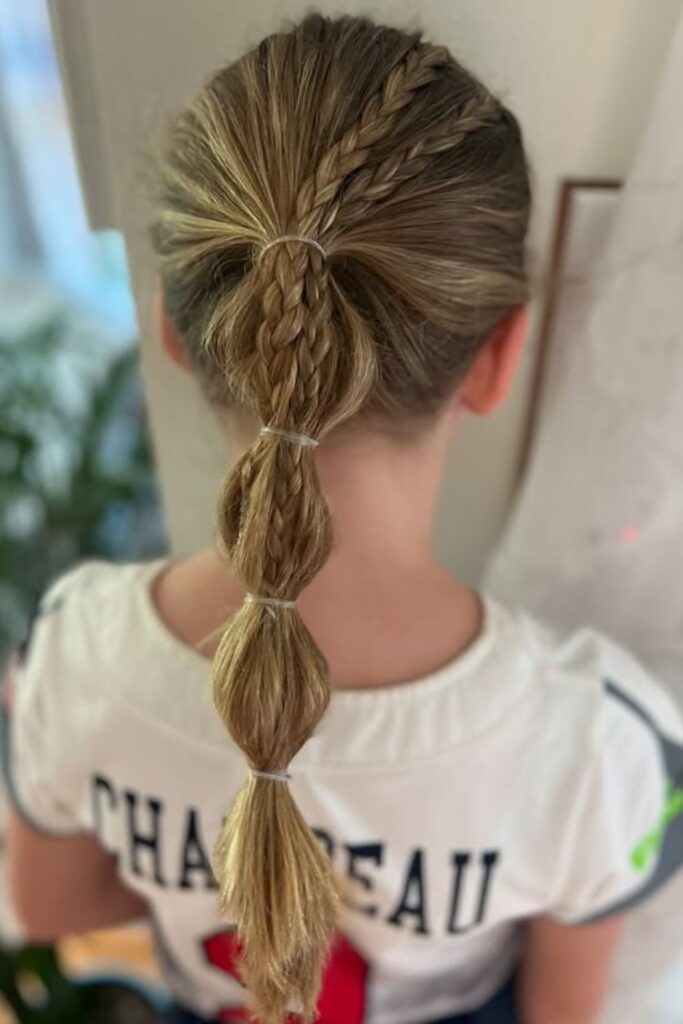
Small braids at the scalp that merge into a bubble ponytail. This gives you maximum security at the roots where you need it most, with movement and style in the length.
The individual braids take longer to do initially, but they last longer than a single larger braid. Each small section is independently secured.
This style works well for players who have trouble with flyaways or shorter layers that don’t want to stay put in simpler styles.
14. Multi-Braid Ponytail
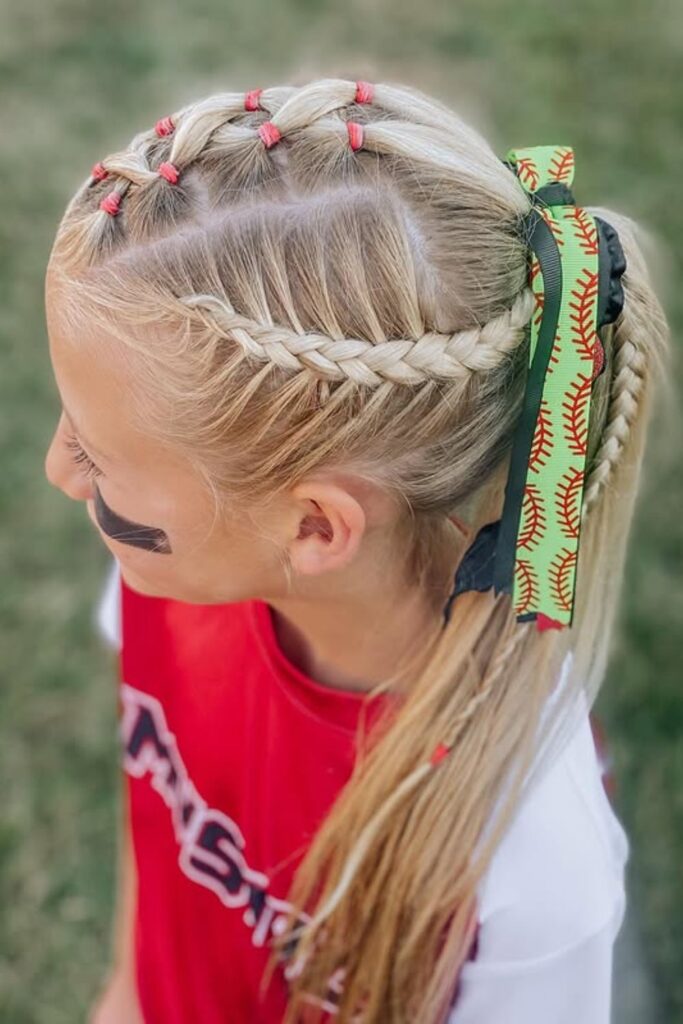
Several small braids and twists that all feed into one ponytail. This looks more complicated than it is — you’re just braiding different sections of hair before gathering them together.
The advantage is that each section is independently controlled, so if one piece works loose, it doesn’t affect the whole style.
The baseball ribbon is a nice touch, but any team-colored ribbon or even regular elastics will work fine. The important thing is the multiple securing points.
15. Pancaked Dutch Braids
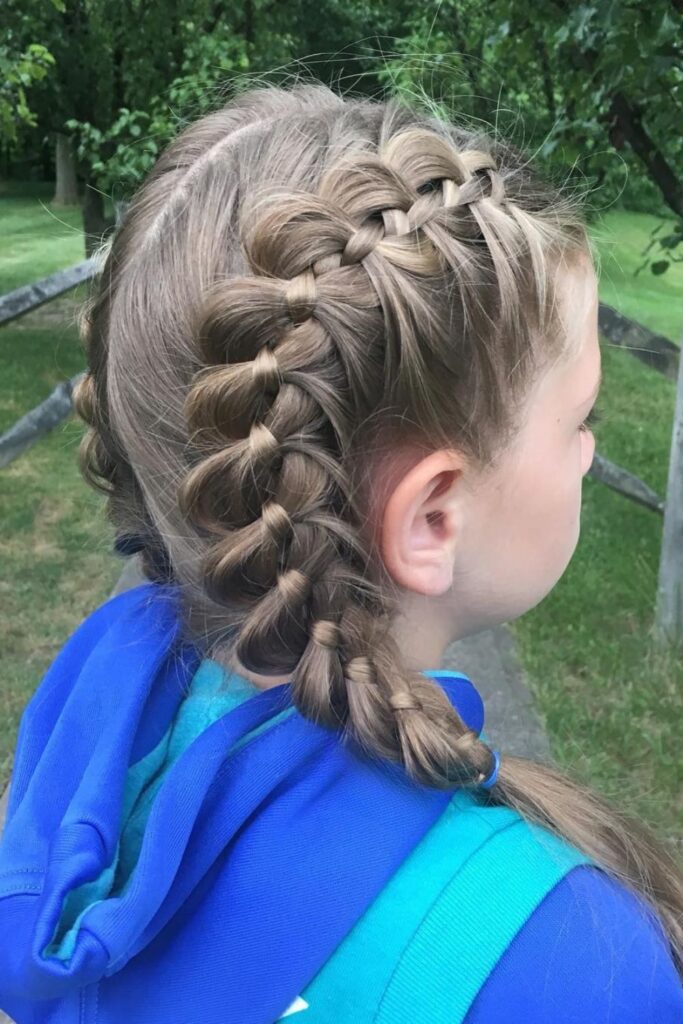
Regular Dutch braids, but after you finish braiding, you gently pull apart each loop to make them look fuller. It’s called “pancaking” because you’re flattening and widening each section.
The trick is to pull gently and evenly on both sides of each loop. Pull too hard and the braid falls apart. Don’t pull at all and it looks flat.
This technique works on any braid style, but it’s particularly effective on Dutch braids because the under-weaving creates more texture to work with when you pancake.
16. Faux Hawk Bubble Braid
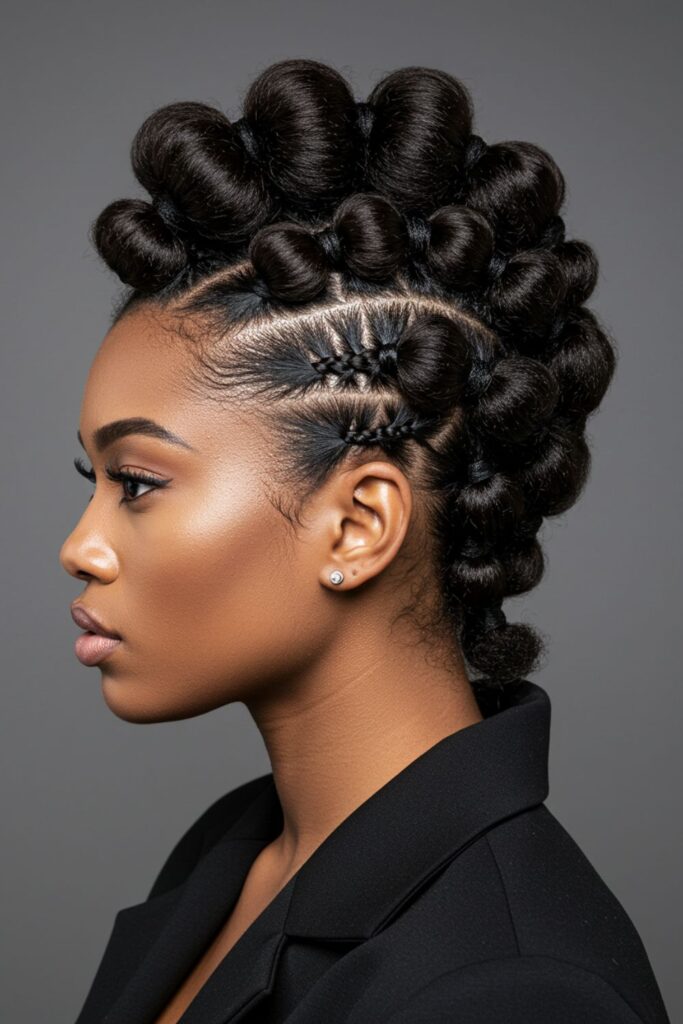
A line of small ponytails down the center of the head, each secured with an elastic and then bubble-braided. Creates a mohawk effect without actually cutting any hair.
Start at the forehead and work back, making small ponytails about two inches apart. Then add elastics down the length of each ponytail and gently pull apart the sections between elastics.
This style keeps absolutely everything off the face and neck, which makes it excellent for hot weather games.
17. Pancaked French Braids
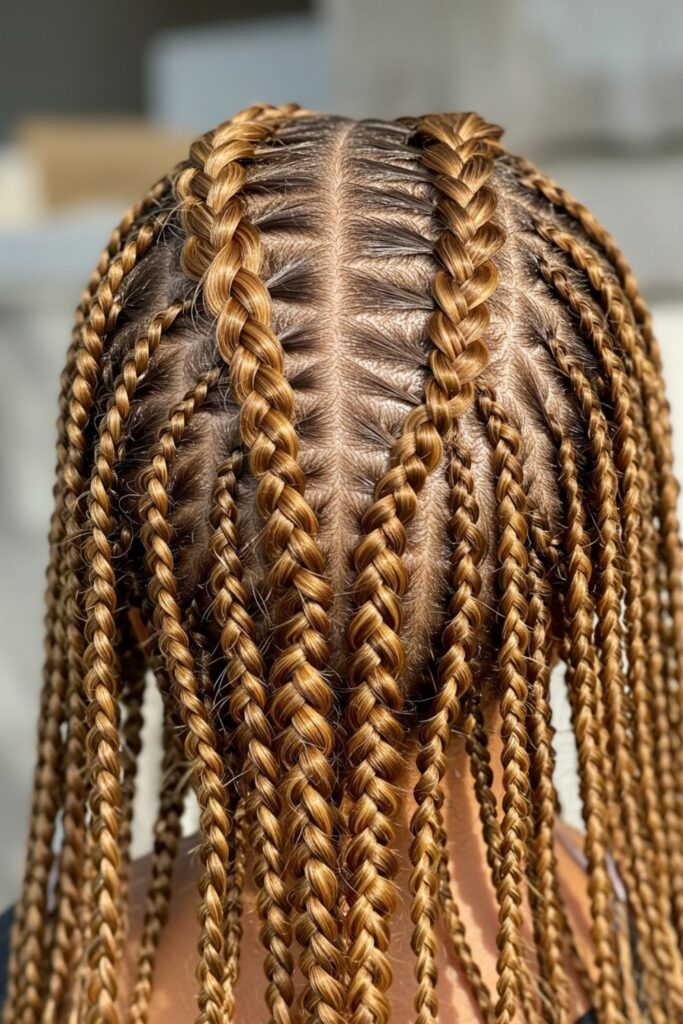
French braids with the pancaking technique applied. The key is to pancake as you go rather than waiting until the end — pull each section gently as you add it to the braid.
This creates more volume than regular French braids and helps fill in any gaps if the hair is fine or thin.
French braids already lie close to the head, so the pancaking doesn’t interfere with helmet fit. The extra volume is mostly visual.
18. Dutch Braid into Ponytail
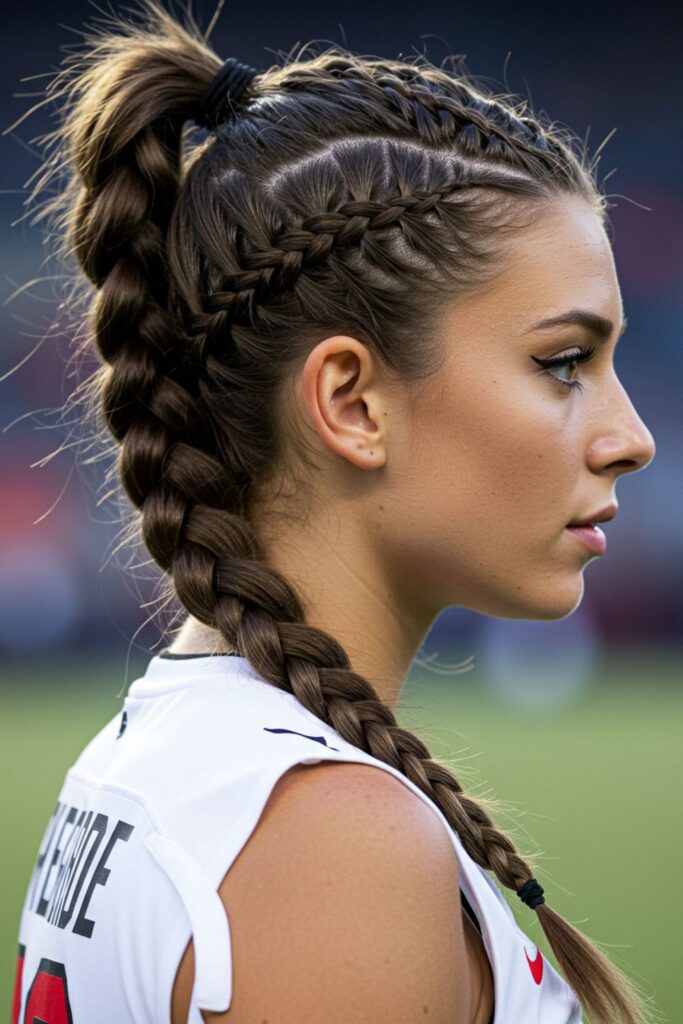
Start with a Dutch braid at the crown, then transition to a regular ponytail when you reach the nape of the neck. This gives you the security of a braid where you need it most, with the simplicity of a ponytail for the rest.
The braid section keeps flyaways under control, and the ponytail allows for natural movement during play.
This is a good compromise style for players who find full braids too restrictive but need more control than a simple ponytail provides.
19. Multi-Strand Braided Ponytail
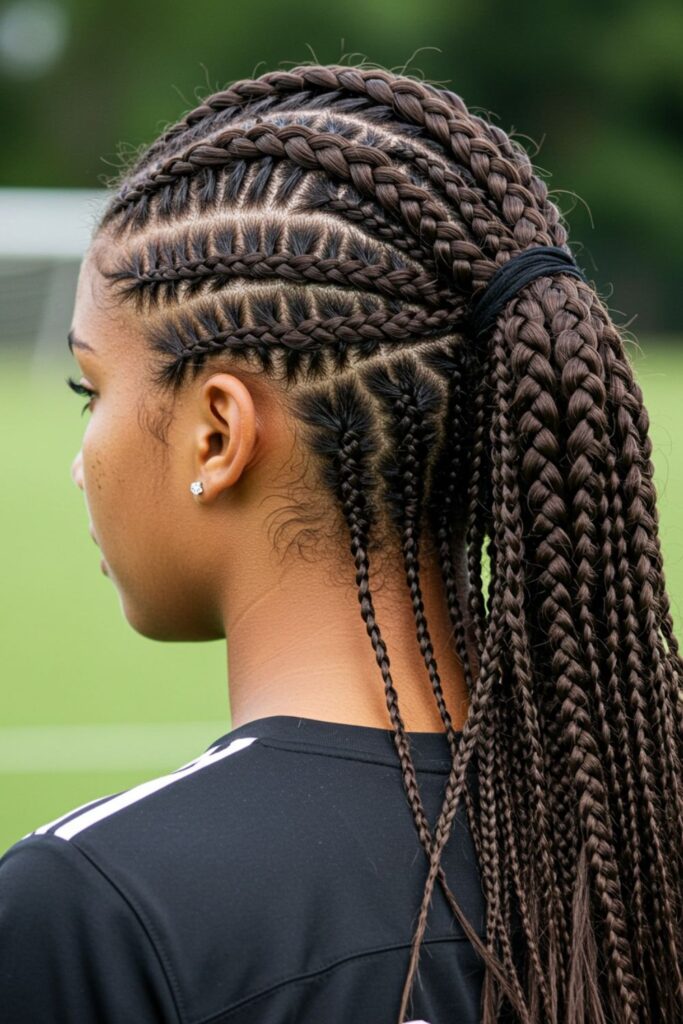
Instead of one large braid in the ponytail, this style uses several smaller braids woven together. More work upfront, but the multiple braids prevent the ponytail from separating during activity.
Each small braid acts as its own anchor point, so even if one comes undone, the others keep the style intact.
This technique works particularly well with thick or coarse hair that tends to overwhelm single-braid styles.
20. Twisted Rope Braids
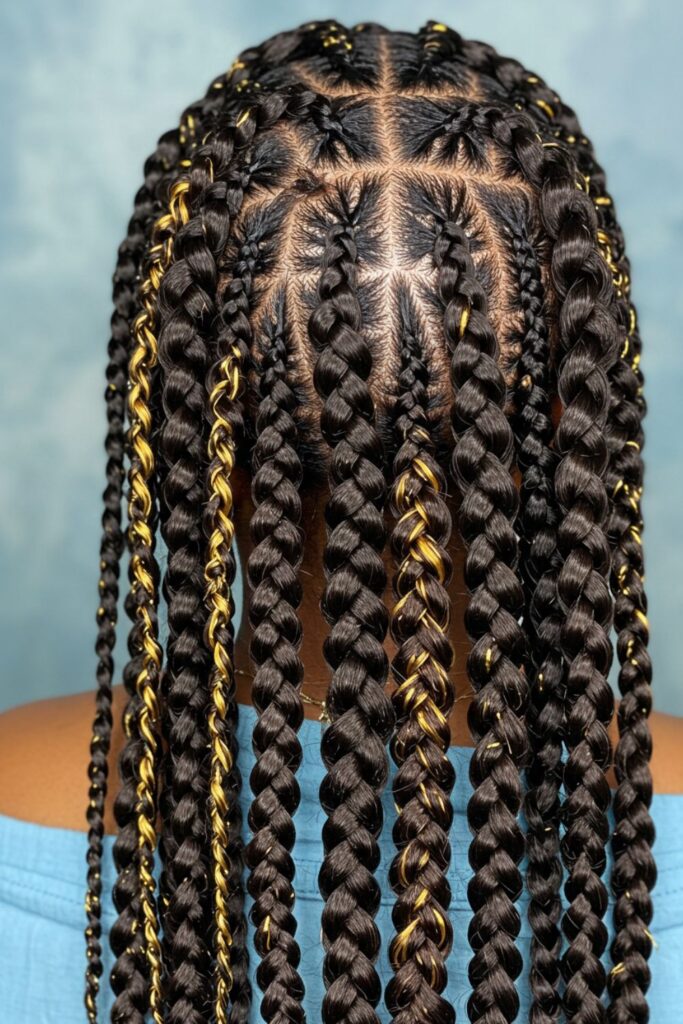
Divide the hair into two sections, twist each section in the same direction, then twist them around each other in the opposite direction. The opposing tensions lock the style in place.
This is faster than traditional braiding and creates a rope-like texture that holds well without being as rigid as a braid.
Rope braids work well on slightly damp hair — the moisture helps the twists hold their shape better.
21. Cornrow-Inspired Braided Pony
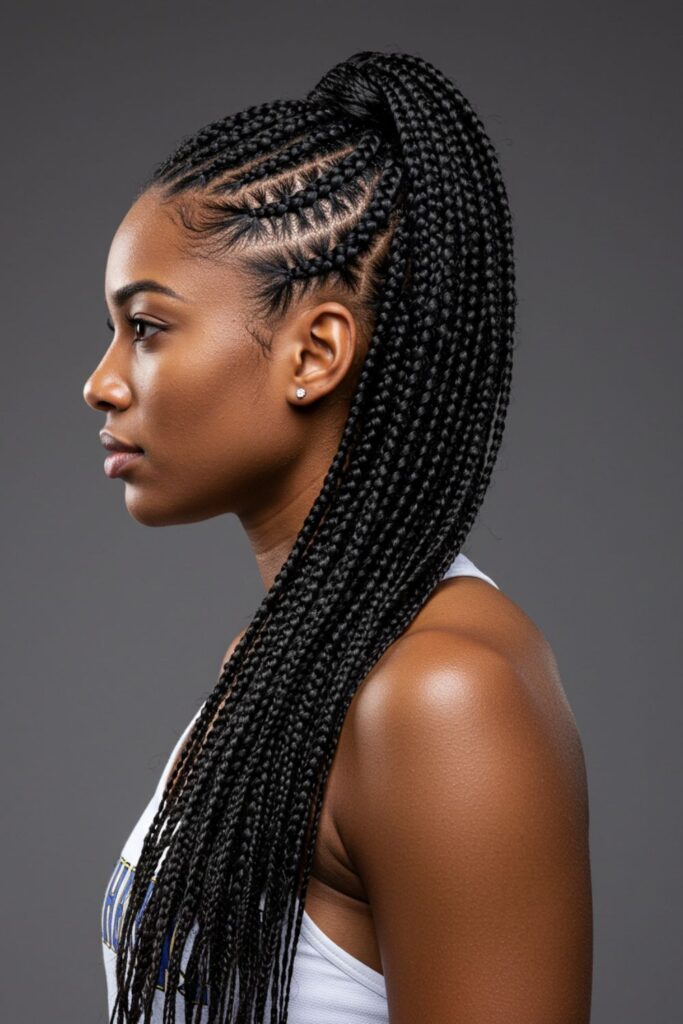
Small, tight braids close to the scalp that feed into a ponytail. This style provides maximum control for thick or curly hair that tends to expand in humid conditions.
The scalp-hugging braids eliminate frizz and flyaways completely, while the ponytail section allows for natural movement.
This style can last several days with proper care, making it ideal for tournament weekends.
22. Side Braid into Low Bun
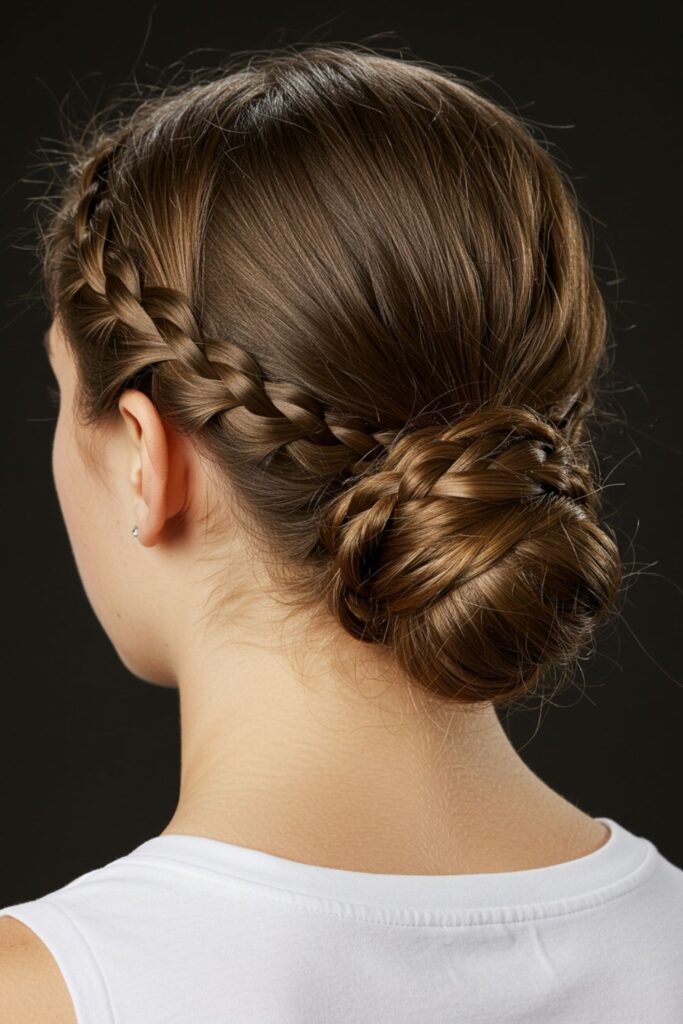
A side braid that transitions into a low bun at the nape of the neck. This keeps hair completely contained and works well under helmets because the bulk sits low on the head.
The braid prevents pieces from falling out of the bun, and the low placement means it won’t interfere with helmet fit or create pressure points.
This is particularly good for windy outdoor games where even secure ponytails can become distracting. Once it’s in a bun, it stays put.
I’ve spent over four decades building a marriage, raising a family, and learning what truly matters along the way. I write about relationships, home, and navigating life’s later seasons with grace, honesty, and a little humor. My goal is to share the kind of steady, real-life wisdom that helps you feel grounded, encouraged, and a little less alone.