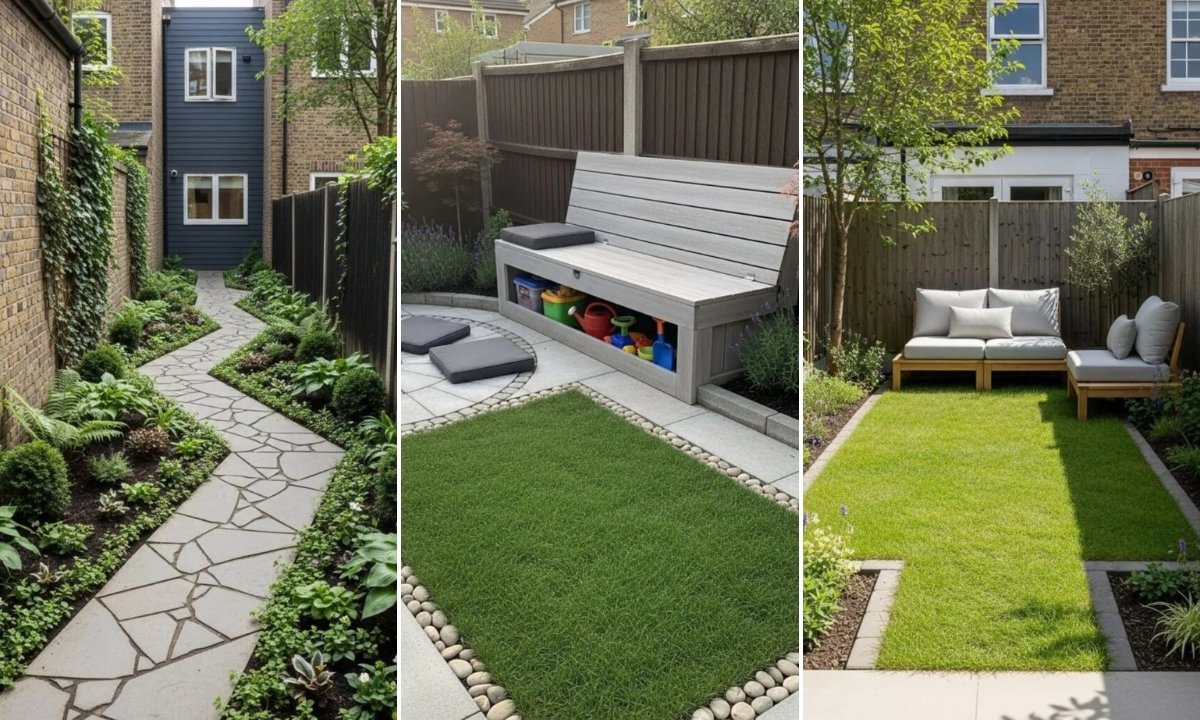
Small Back Garden, Lots of Potential — Here’s What We’ve Been Dreaming About

Most small gardens fail because they become places you look at through the window rather than actually use. The difference isn’t size — it’s that nobody made a clear decision about what the space was for.
The gardens I’ve seen work best had one thing settled early and everything else kept simple. Not 3 projects happening at once, just one thing done properly. Usually it meant taking something away rather than adding more. Here are some ideas that might help.
How Can I Design a Small Back Garden to Look Bigger?
The mistake is thinking a small space needs more careful arranging. You shift the bistro table to a different corner, rearrange the terracotta pots, try the chairs facing the other direction. It doesn’t work because the problem isn’t where things are — it’s that there are too many things fighting for the same patch of ground.
Clear the center completely. Seriously! Do it… Move everything to the edges like the seating against the fence, plants along the walls, and resist putting anything in the middle that doesn’t earn its place everyday. A garden with room to breathe reads as bigger than it is, and that’s not a trick. It just is bigger, functionally speaking.
Save this article for later! 👇👇
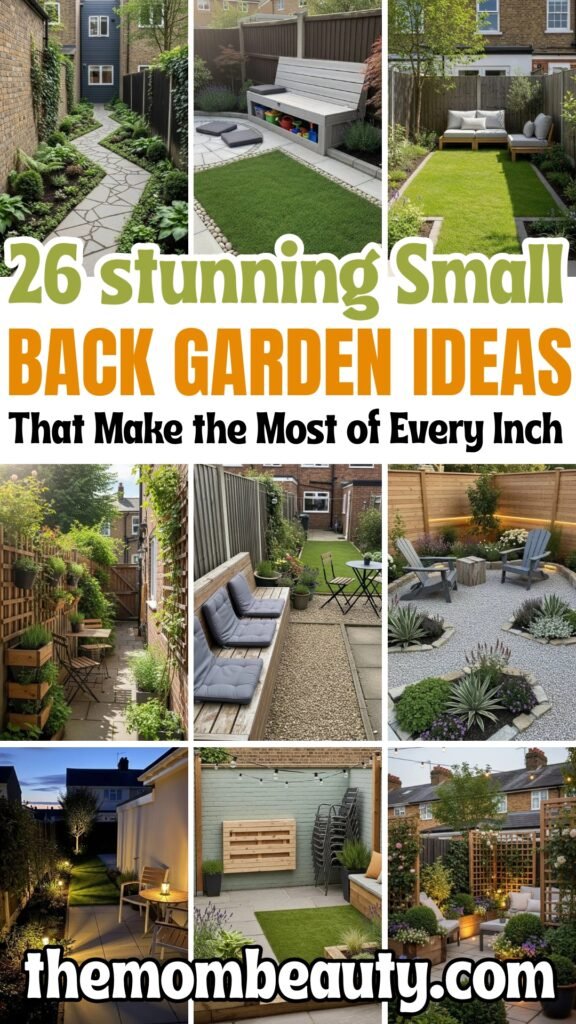
What Privacy Solutions Work in a Small Back Garden?
Here’s what nobody mentions about privacy: if you feel watched every time you step outside, you’ll eventually stop stepping outside. It’s not a conscious decision — the garden just becomes something you glance at while washing dishes, and that’s the end of it.
Solid fencing all around doesn’t solve this. It just makes a small space feel smaller while still leaving you exposed wherever the neighbors can actually see you. What works is screening the real sightlines and leaving everything else open. A trellis with climbing plants gives people something else to look at, lets light through, and after 2 seasons looks like it was always meant to be there.
Relaxation Zone
One comfortable chair. A small side table within easy reach. Positioned where the light is good and the space feels most open. That’s the entire brief and it’s somewhere to sit that isn’t also trying to be three other things.
Every outdoor space I’ve actually used over the years made this decision first: comfort before everything else. If sitting there feels good, you’ll go there. If it doesn’t, you won’t, no matter how much effort went into making it look right. Most gardens skip straight to the decorative decisions and wonder why nobody ever uses them.
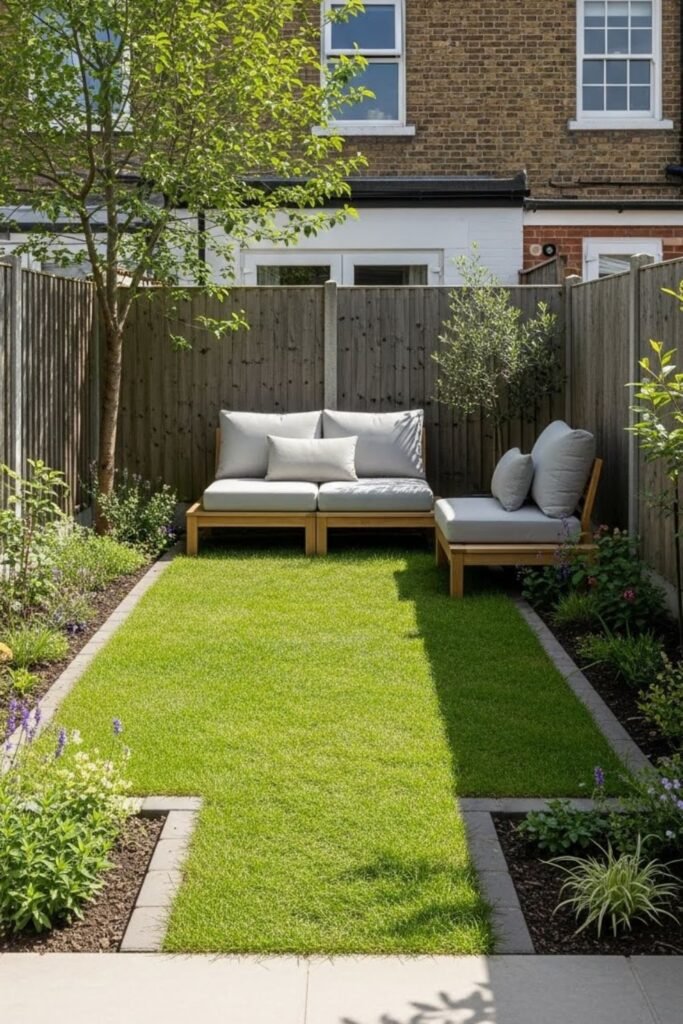
Hidden Storage
Small gardens collect clutter with impressive speed. One week everything looks fine, the next there’s a deflated football, 2 broken plant saucers, and that folding chair that hasn’t been folded since last summer. Nobody deliberately put these things there — they just accumulated.
A storage bench with a lift-up seat solves this without drama. Things disappear instead of sitting on the ground looking temporary for 6 months. Fewer loose objects means less visual noise, and less noise means you want to be out there rather than always meaning to tidy it up. It’s one of the simpler changes on this list and one of the most immediately noticeable.
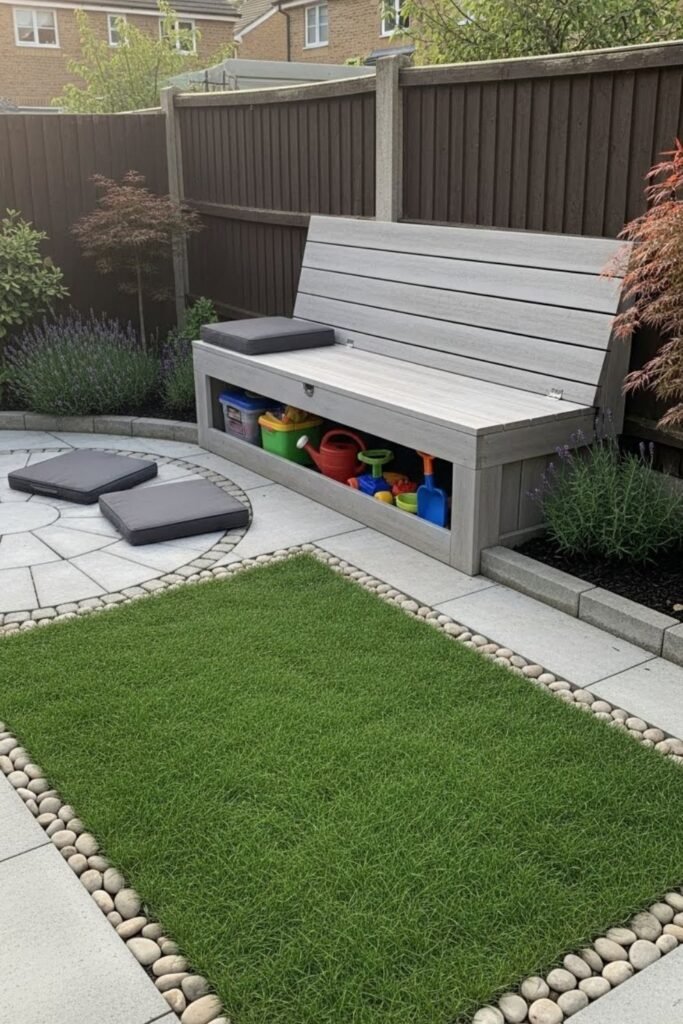
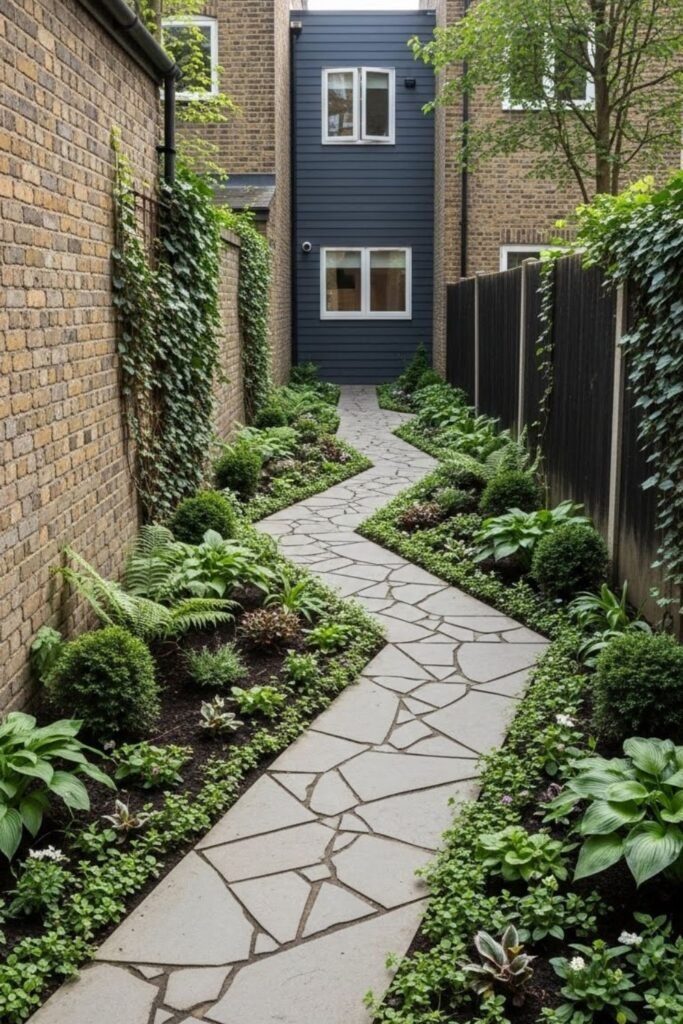
Diagonal Path
A straight path from back door to fence turns the garden into a corridor. Your eye follows it to the end and stops, which makes the space feel like something you walk through rather than somewhere you’d want to linger.
Angle the stepping stones — even gently — and the whole feeling shifts. It implies width that isn’t technically there and makes walking through feel less like moving from point A to point B. Add some low planting on either side so it looks deliberate rather than accidental. It’s one of the cheaper fixes here and makes itself felt immediately.
Gravel Base
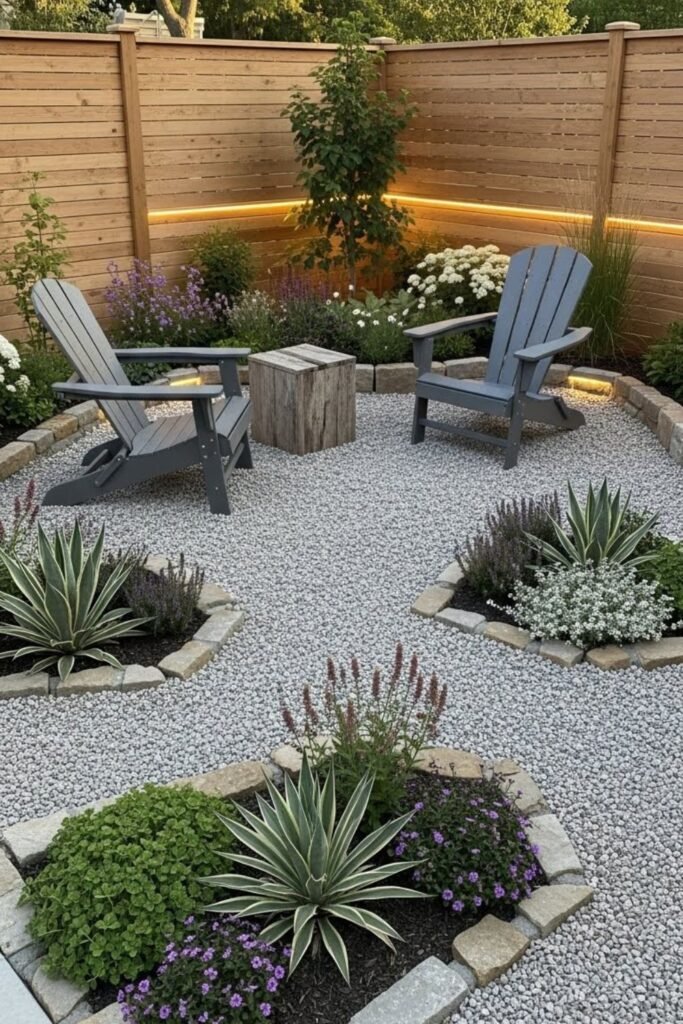
A small patch of grass sounds like a good idea until you’re maintaining it. Too wet half the year, scorched by July, needs edging constantly, and somehow takes up more mental space than everything else in the garden combined.
Gravel drains well, asks nothing of you, and stays presentable through most weather. Leave a few pockets for planting so the space keeps some softness, but let the gravel do the work. When the ground stops being a weekly obligation, everything else becomes more enjoyable.
Built Seating
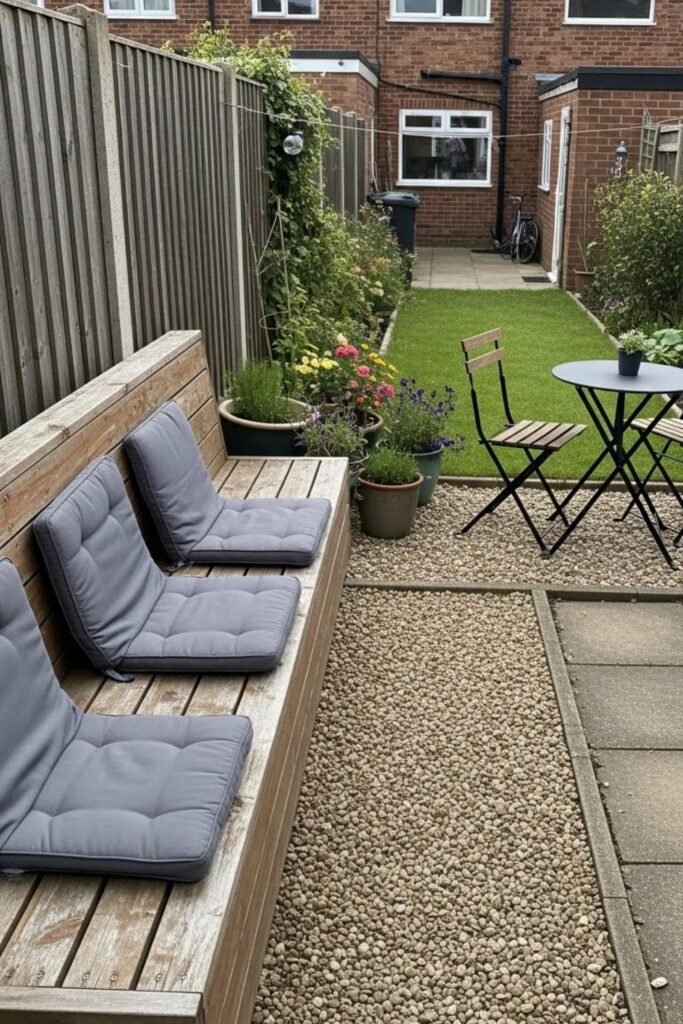
Movable chairs in a small space become a management project. Dragging them inside before rain, rearranging them when people come over, moving them again when you want to sweep. None of this was the point, but it becomes the point.
A bench built along the fence eliminates all of that. It sits against the boundary instead of taking up floor space, the walkable area stays clear, and you add cushions when you want comfort. No weekend furniture choreography. No storage concerns. The garden gets organized around something permanent, which makes every other decision easier.
Vertical Growth
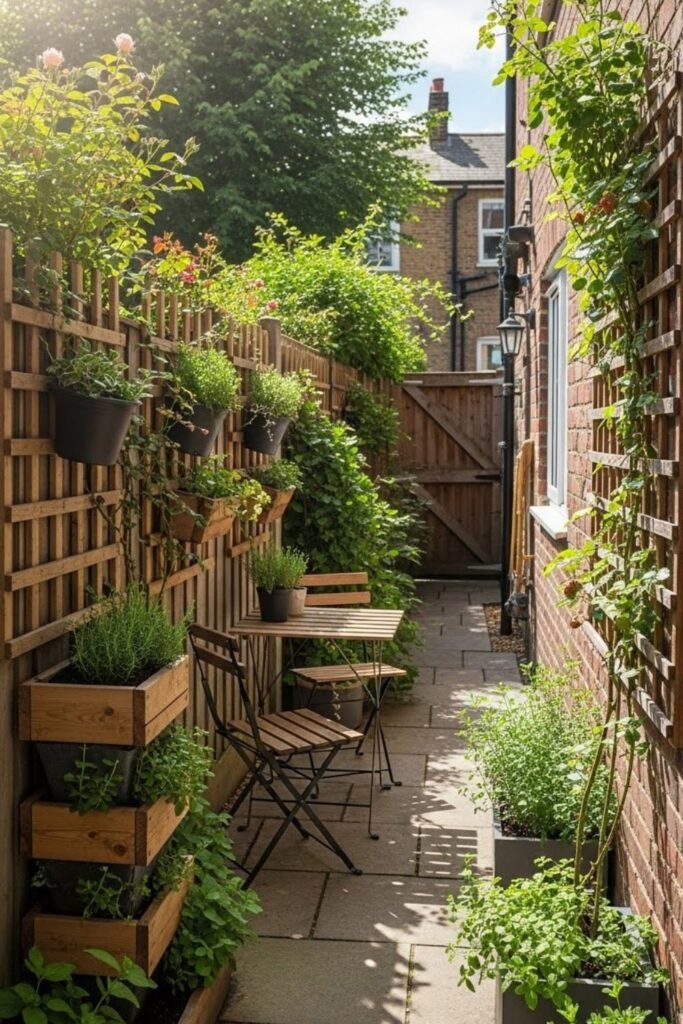
Everyone looks at the ground when they need more space for plants. The walls are right there.
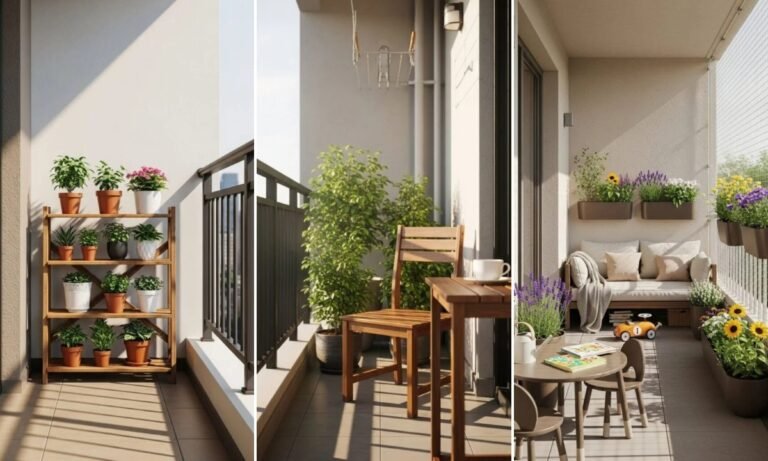
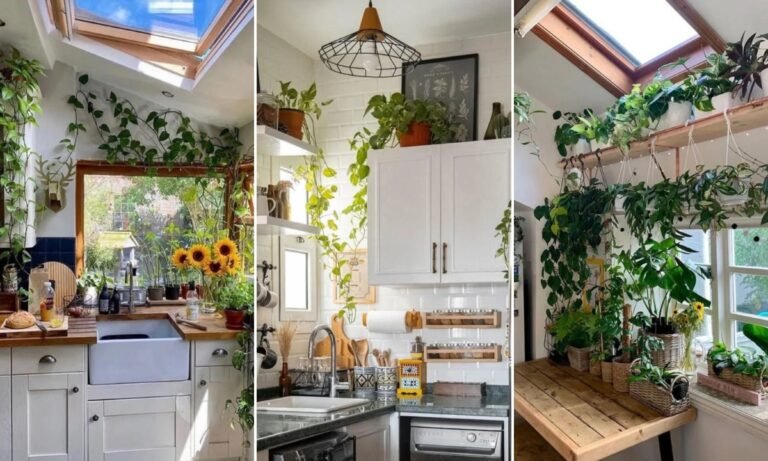
Wall planters, a simple trellis, brackets for hanging pots — move the greenery up and give the floor back to people. Keep plants narrow and spaced so light still filters through. The garden feels taller and less crowded simultaneously, and after a season you’ll wonder why those walls stayed empty for so long.
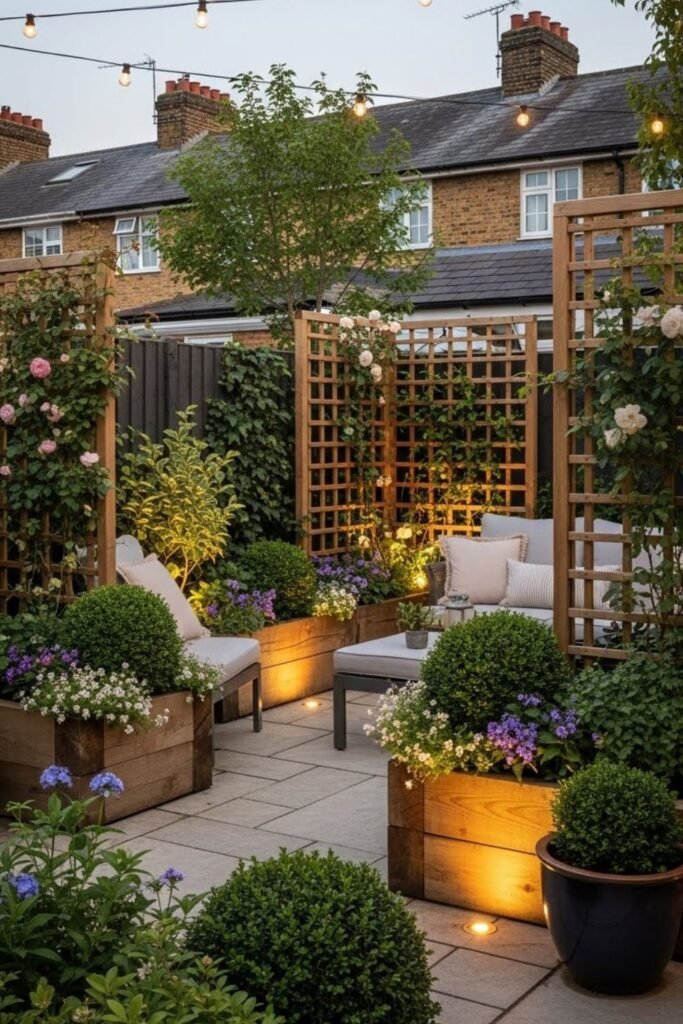
Layered Privacy
Layers beat a solid fence every time and look better doing it. Tall planters at the boundary, a trellis panel at eye level, climbing plants that fill in gradually — you’ve solved the privacy problem without boxing yourself in or losing the light.
Screen where the actual sightlines are and leave the rest open. A garden that breathes feels like yours in a way that a walled enclosure never does
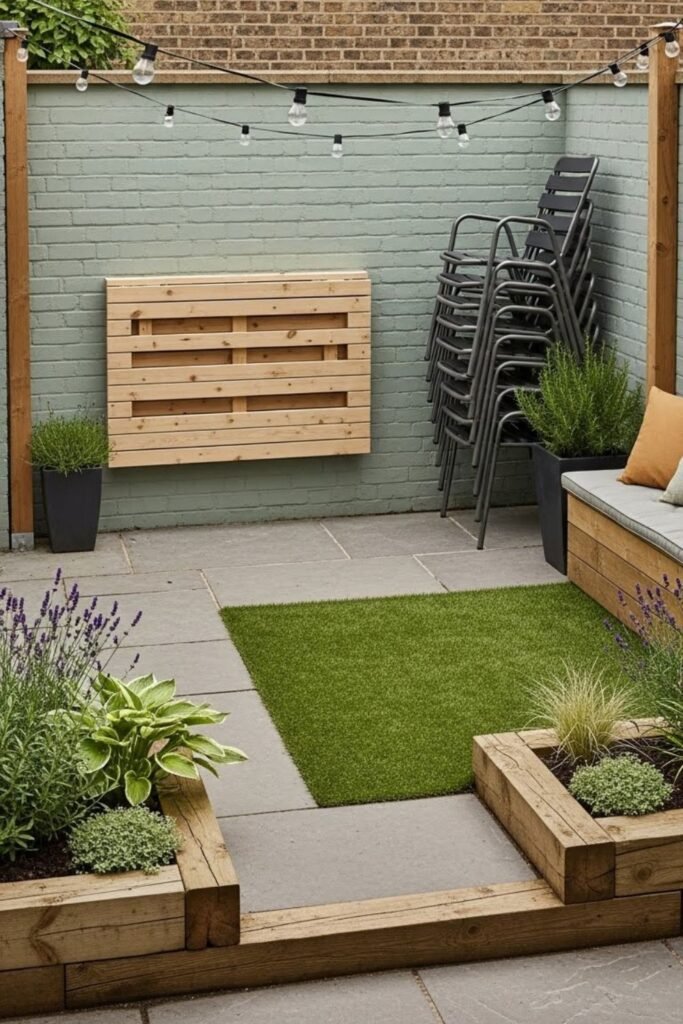
Fold-Away Dining
Eating outside is wonderful. A permanent dining table claiming a third of the garden for the 90% of the year when nobody’s having a meal out there is not wonderful.
A wall-mounted drop-down table and stacking chairs appear when you need them and disappear when you don’t. The garden handles two functions well instead of one function poorly. Hang the table on the fence between uses, store the chairs in the shed or under a storage bench cover, and there’s room to move around on ordinary evenings.
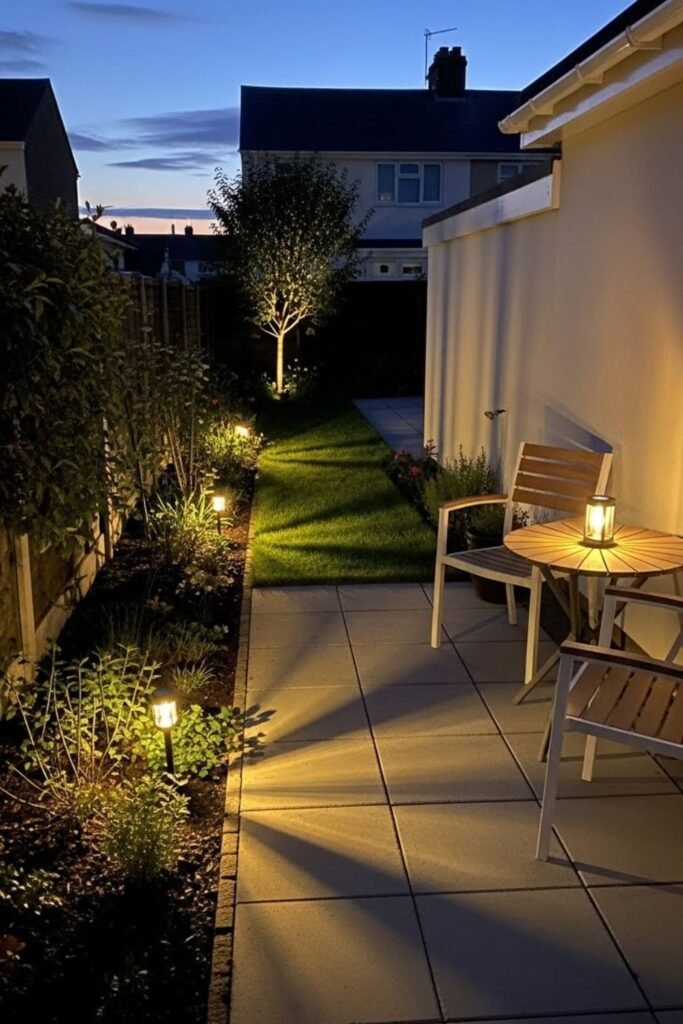
Cozy Lighting
A garden that’s pleasant at seven in the evening in June will sit unused at seven in the evening in October without decent lighting. Atmosphere after dark matters more than square footage — and atmosphere is mostly warm light placed thoughtfully.
Solar lights along path edges, something soft overhead, but never a single harsh central fixture — that somehow makes outdoor spaces feel worse than no light at all. Good lighting softens hard edges, makes the space feel larger than it is, and means sitting outside in September actually occurs to you rather than being automatically ruled out.
No Grass
Removing the lawn feels drastic until it’s done, then you stop thinking about it almost immediately because there’s nothing left to think about. No Saturday morning edging when you’d rather be reading. No brown patches appearing in August. No mud through the kitchen after every decent rain.
Paving or decking keeps the space usable year-round without asking anything of you weekly. Add containers for greenery without the maintenance schedule attached. The grass was the obligation — not the garden. Getting rid of it is where the actual garden starts.
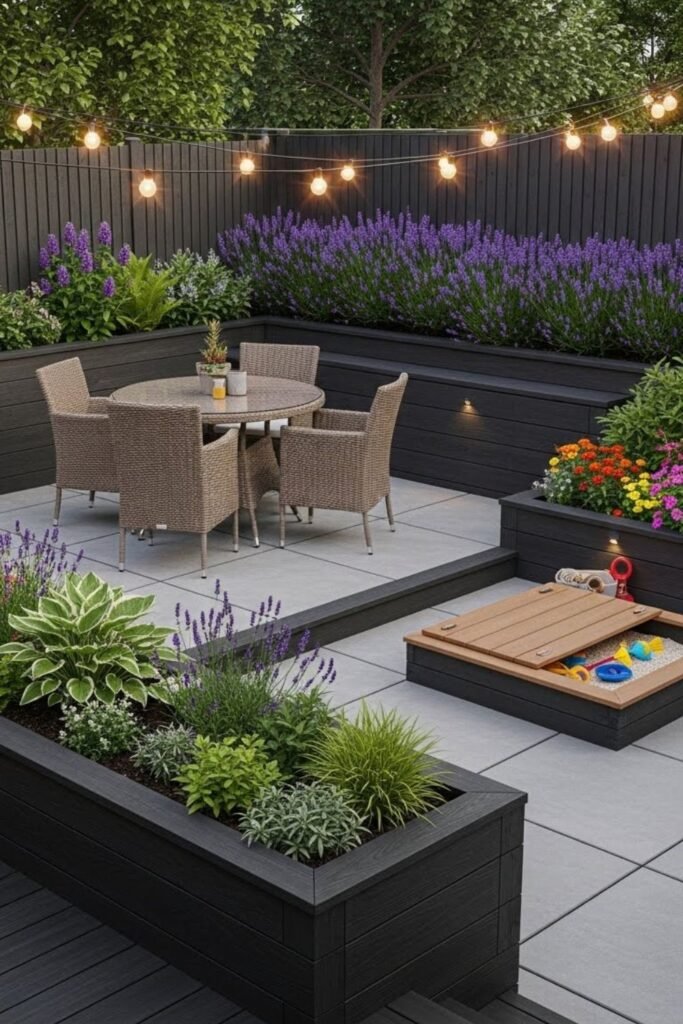
Flexible Zones
What you need from a garden in July is different from what you need in November. A space designed for only one season is a space you’ll quietly abandon once the clocks change.
Lightweight planters that can move, seating that doubles as surface space, nothing fixed unless it has to be. This isn’t indecision — it’s practical thinking. A garden that shifts across seasons doesn’t fight you, and there’s nothing wrong with it looking different in March than September.
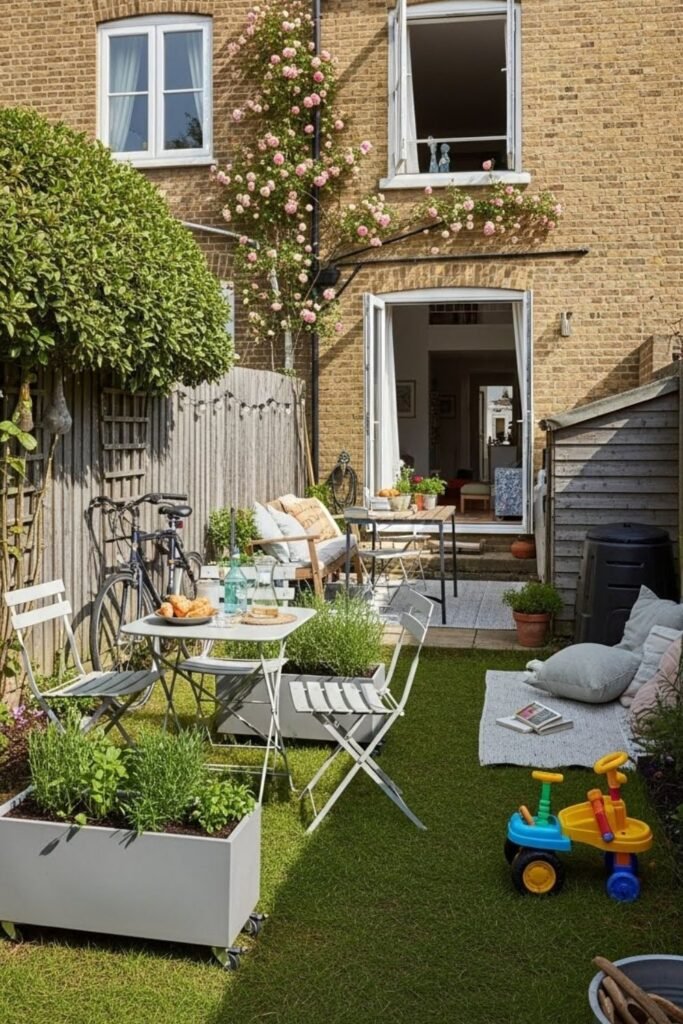
Morning Coffee Corner
One chair. A side table. A plant you chose deliberately rather than one that came home because it was reduced and you thought it might work somewhere. Put it where the morning sun hits first.
Save this post for later ❤️
There’s something useful about having one corner outside that belongs specifically to you — not to guests, not to anyone’s idea of how a garden should look. Somewhere to sit with coffee before the day starts making demands. Even a small garden with one clear personal purpose feels different from one that’s just out there waiting to justify itself.
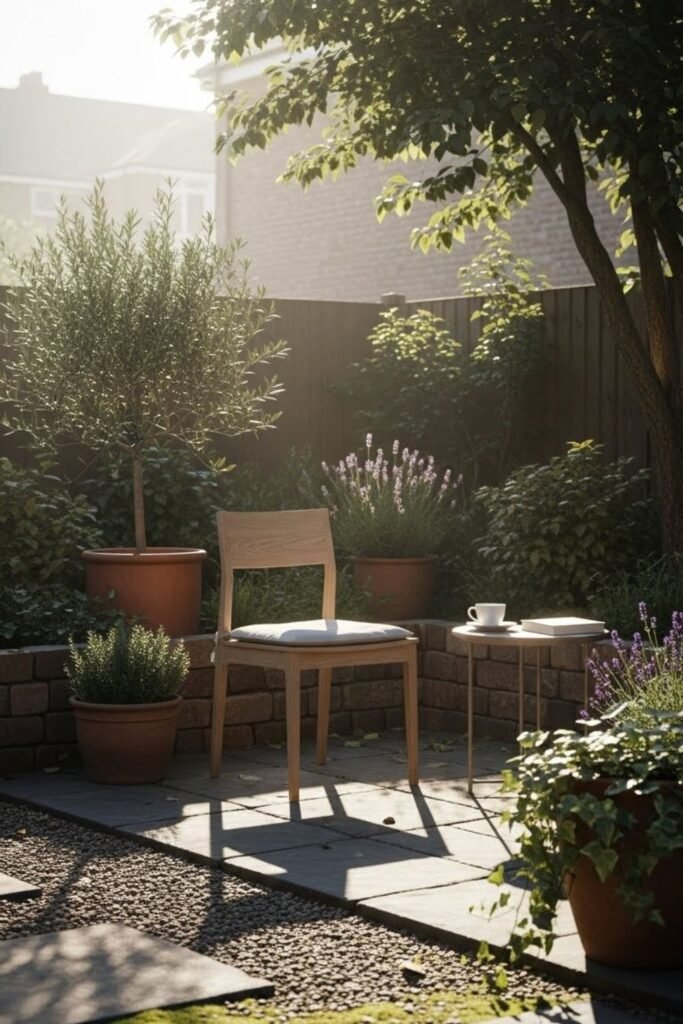
Compact Entertaining
Having people over in a small space isn’t about finding more room. It’s about fewer pieces doing more work. One table that handles dinner and drinks and whatever the evening becomes. Benches instead of individual chairs because more people fit without the space looking like a furniture showroom.
Keep movement paths clear — that single thing changes how a small garden feels when it’s full of people more than any decorative decision. Every item should earn its place. The ones that haven’t earned it belong inside.
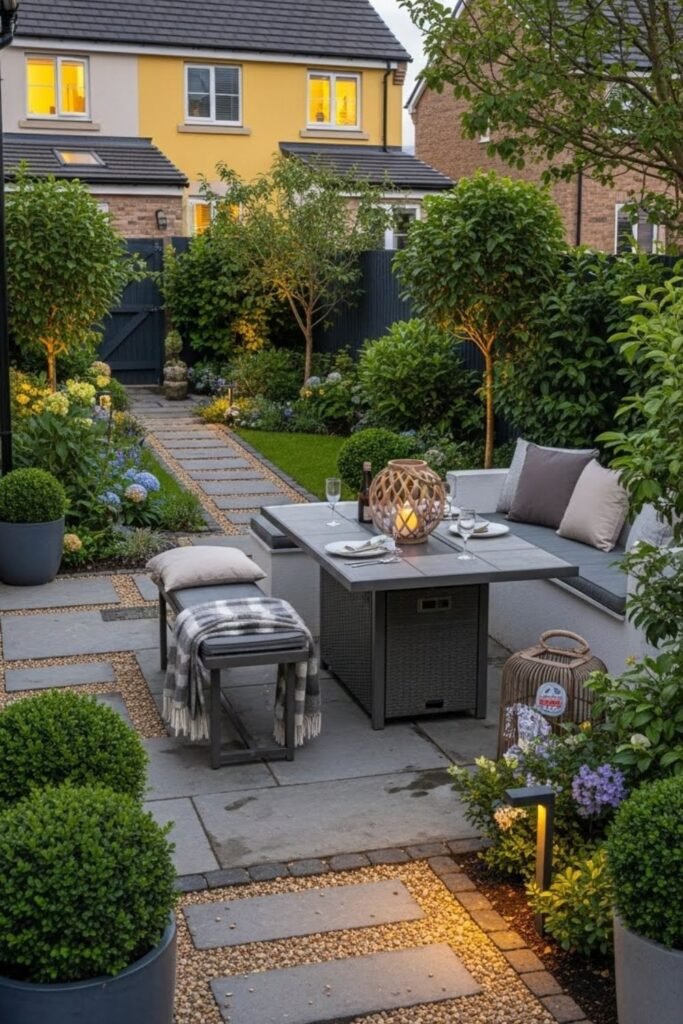
Rental-Friendly
Renting doesn’t mean accepting a garden that looks forgotten. It means the improvements need to come with you, which is actually a useful constraint rather than a limitation.
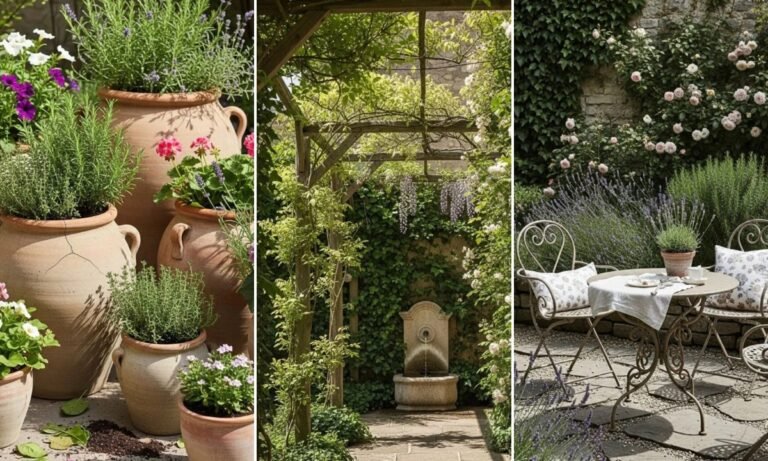
Clip-on trellis panels, freestanding wooden planters, an outdoor rug in a color you like — these shift the feeling of a space without a single screw hole. Three matching terracotta pots grouped by the door will do more than six mismatched ones scattered across the garden. You don’t need to own a place to make it worth being in.
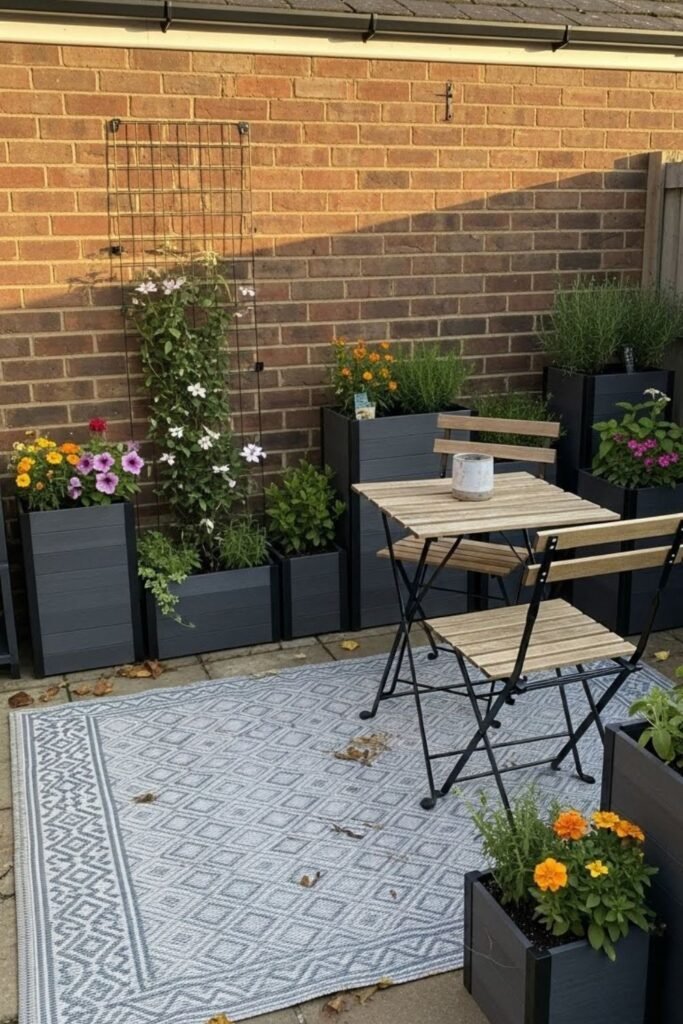
Plant Focused
More plants doesn’t equal a better garden. I’ve proved this repeatedly by cramming too many varieties into too small a space and then standing there puzzled when everything looked chaotic. One of everything creates a catalog, and catalogs are exhausting to look at and maintain.
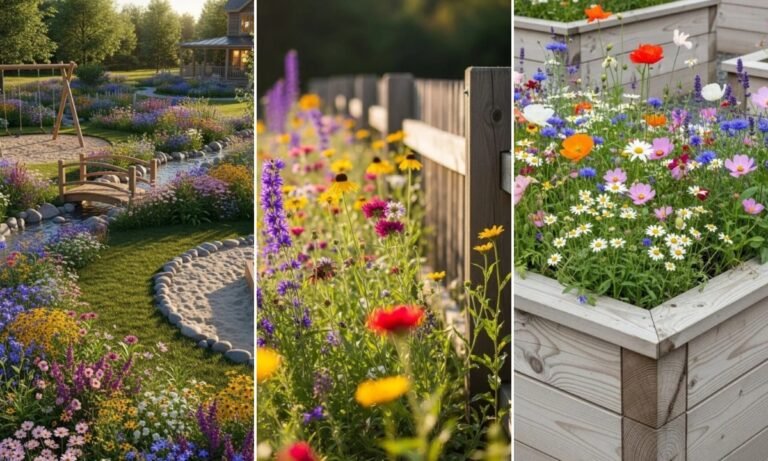
Fewer varieties, repeated with confidence, creates calm. Taller plants at the back, shorter ones forward, pots grouped rather than scattered. That basic order gives the eye somewhere to land instead of somewhere to hunt. Plants chosen deliberately always look more intentional than plants collected hopefully.
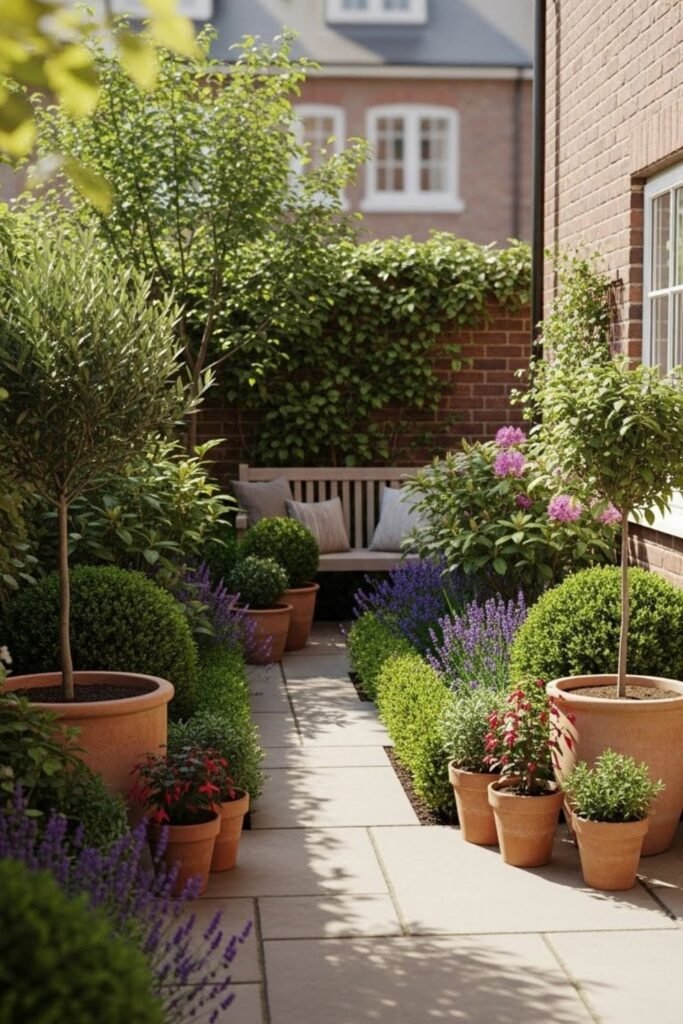
Minimal Materials
Choose three finishes and stick to them. That’s the rule. It sounds restrictive and is — which is exactly why it works.
Wood, stone, and green plants cover everything a small garden needs. Three materials means less visual confusion, and less confusion means the space reads as calm rather than assembled from whatever happened to be on sale. The hard part isn’t picking the three. It’s not buying the fourth when you spot something tempting at the garden center and convince yourself it’ll probably fit in.
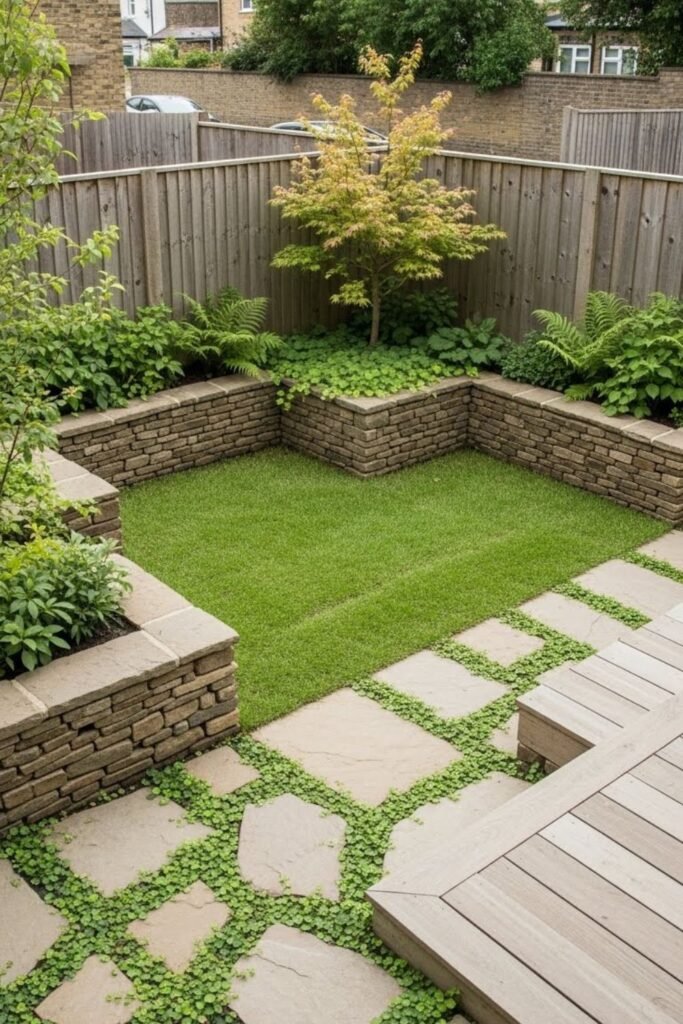
Open Center
Empty space is not failure. This took me longer than I’d like to admit to accept, but it’s the most useful thing on this list.
Push everything to the edges — seating against the fence, plants along walls, nothing claiming the middle. The garden immediately feels wider and more adaptable because an open center works for anything: a gathering, a quiet morning, children running through, just walking past without navigating around that side table that’s been there so long nobody remembers why.
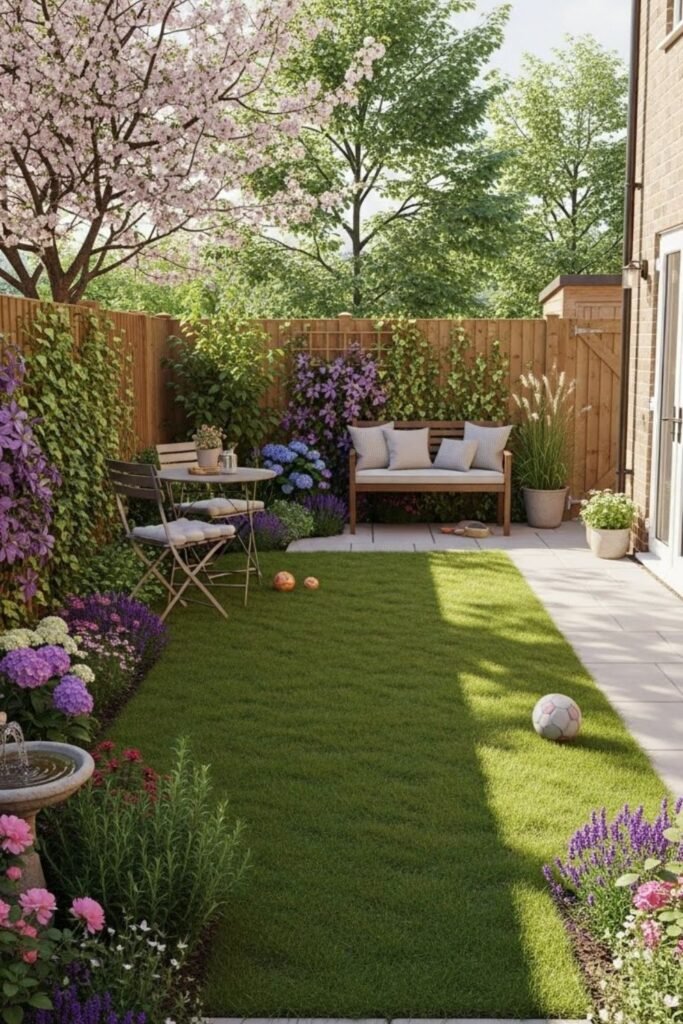
Private Corner
You don’t have to do something with every inch. The pressure to fill the whole garden is something the space creates on its own, and it’s worth resisting.
One corner with seating, plants behind it for softness, a trellis panel angled so the neighbors’ line of sight lands somewhere else. That’s enough. It doesn’t need to be the whole garden — just one spot that feels genuinely yours, that you’d choose to go to rather than always meaning to finish.
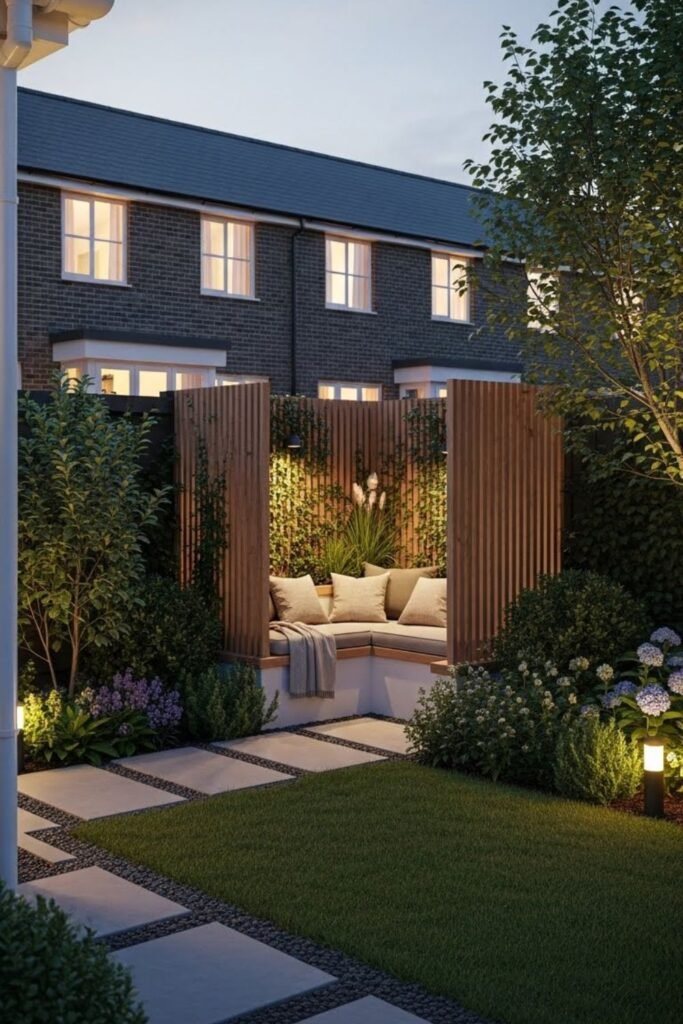
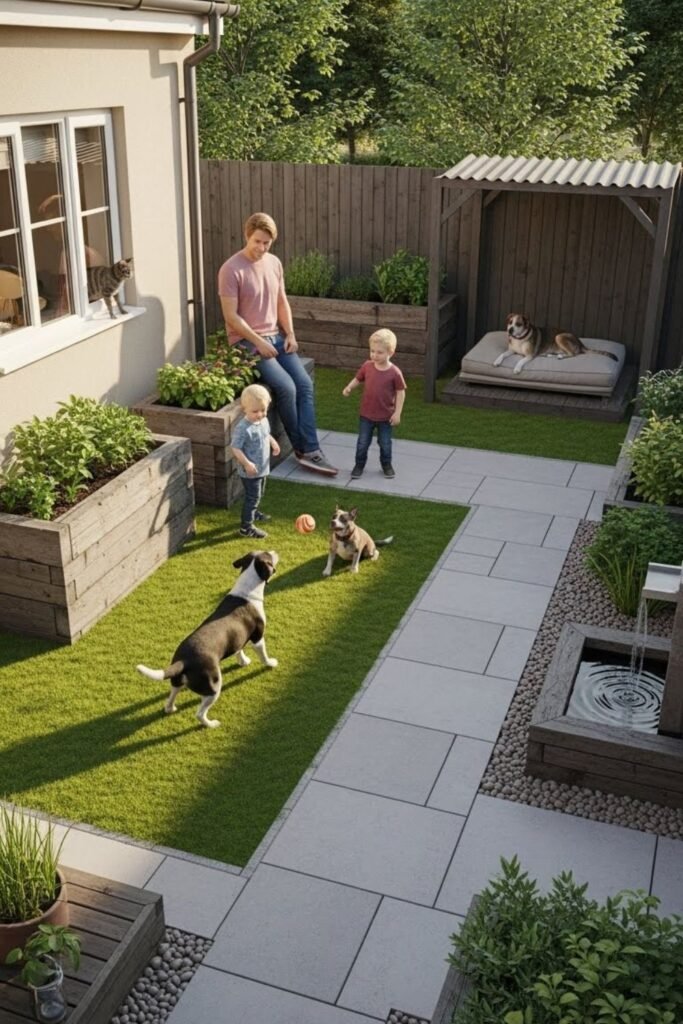
Pet Friendly
A garden shared with a dog is one where durability comes first and everything else is optional. Accept this early and the garden gets better quickly, because you stop designing around an ideal that won’t survive the first wet week in November.
Hard surfaces instead of grass means significantly less mud through the house. Raised planters keep plants out of reach and out of whatever running route the dog has claimed as their personal racetrack. Loose decorative items will be knocked over, so they live inside now. Clear paths let everyone move easily, including the dog who runs the exact same circuit at full speed regardless of new obstacles.
Budget Makeover
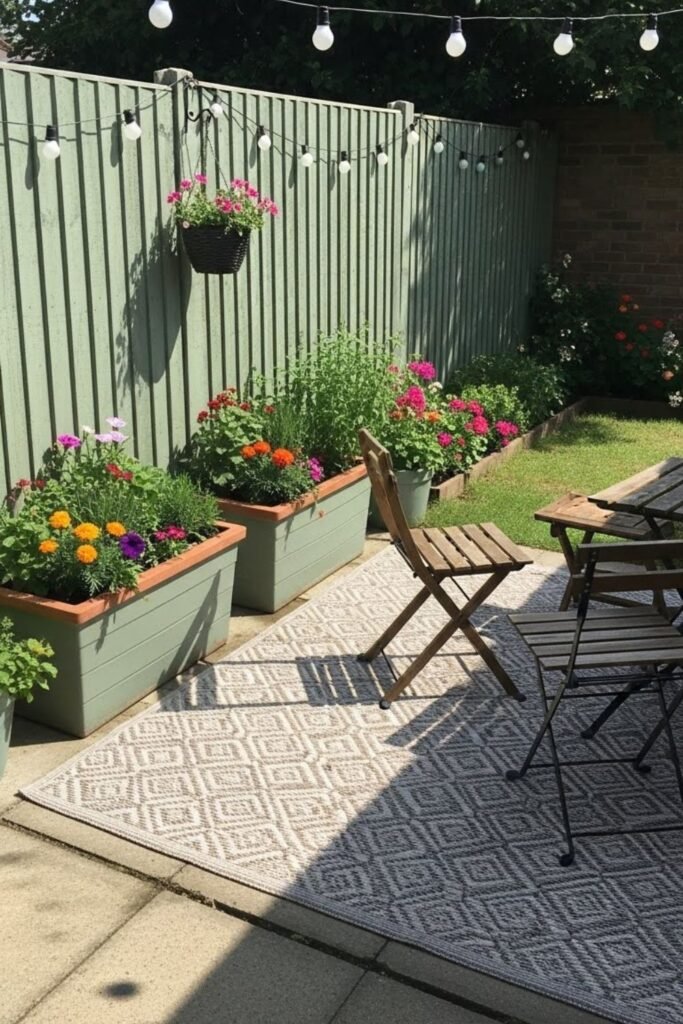
The biggest impact rarely comes from the biggest purchase. A statement planter dropped into a space where the basics aren’t right just highlights the underlying problems.
Paint the fence first. Add an outdoor rug that doesn’t look like it wandered out from the bathroom. Replace those seven mismatched pots — collected from different garden center visits over several years — with three matching ones in the same finish. Three matching pots do more for a space than seven random ones ever will, and I’ll defend that position completely. Fix what you see first before spending on anything else.
Shaded Retreat
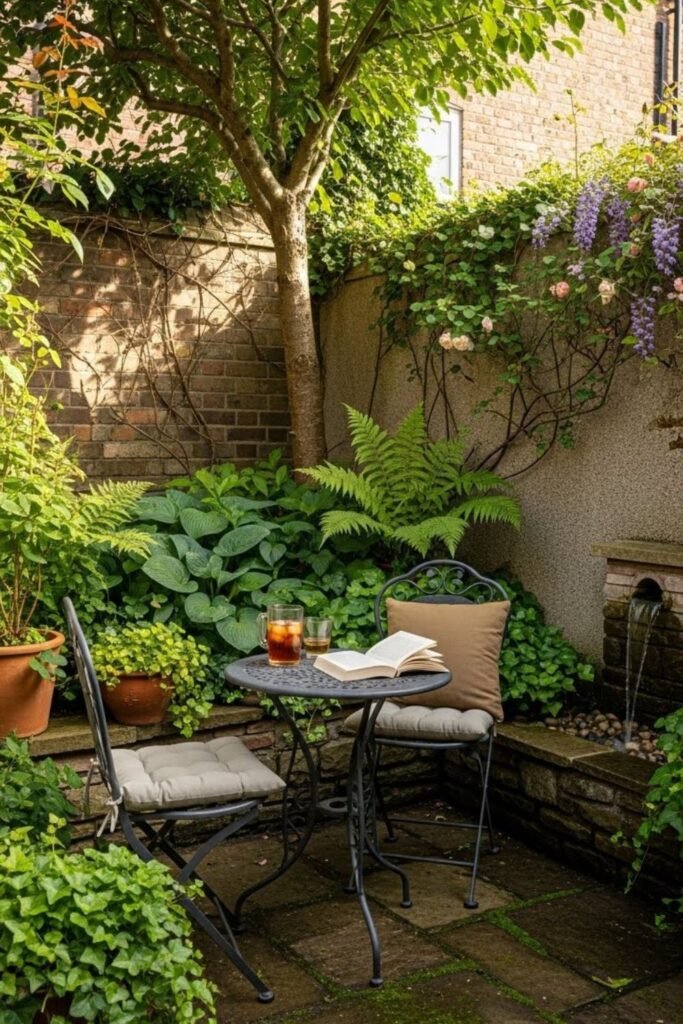
Shade isn’t a problem to work around — it’s something to design toward, especially if you want to sit outside in summer for longer than twenty minutes without it becoming an endurance test.
A large umbrella sounds practical until you’re repositioning it every hour as the sun moves, wrestling with it in every breeze, and watching it collapse at the worst possible moment. Plants or a well-placed screen do the same job more gracefully and don’t require management. A shaded seat is one that actually gets used.
Quiet Space
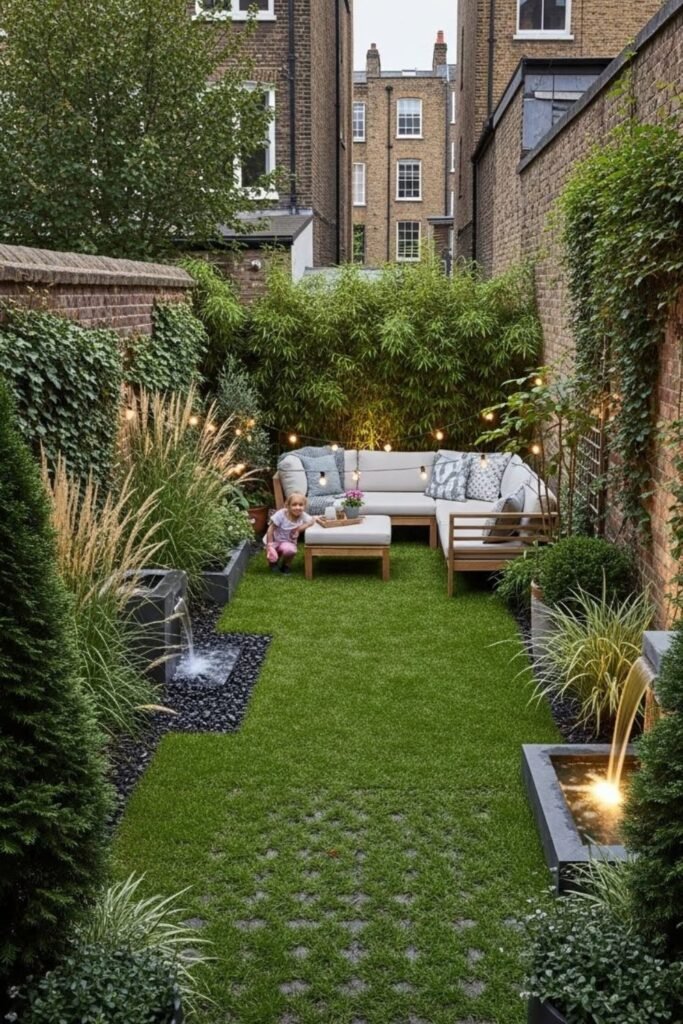
Sound gets ignored in garden planning, then you step outside and realize the hard paving is bouncing the neighbors’ conversation straight back at you and the whole space feels less peaceful than the kitchen.
Plants absorb sound in ways solid fencing doesn’t. Tall grasses along boundaries, dense planting where it makes sense, soft furnishings that work rather than just decorate — none of it dramatic alone, but together it makes a real difference to how the space feels.
Focal Point
Pick one thing to look at. Let everything else stay quiet.
A fire bowl, a statement planter, a well-chosen small tree — build around it and resist giving it competition. When something genuinely deserves attention, the rest of the garden relaxes around it. One strong choice carries the whole space further than six adequate ones, and there’s less to maintain when you’re not trying to make every corner interesting.
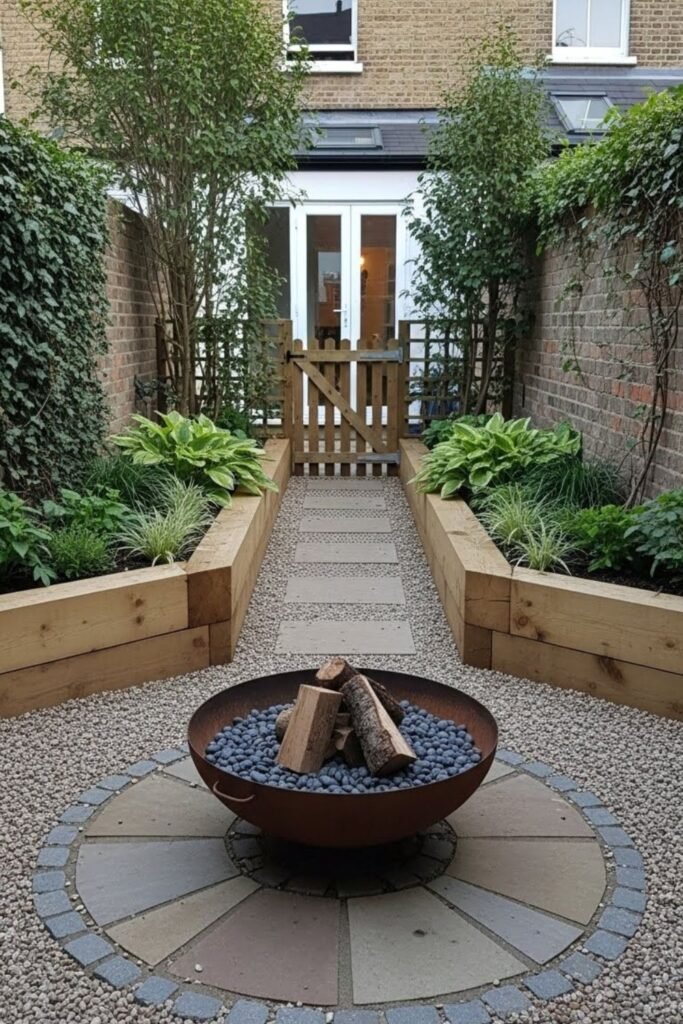
Smart Storage
Things multiply on the ground of a small garden with a speed that still baffles me. One trowel becomes a trowel, a split compost bag, muddy gloves, and some unidentifiable item that’s apparently been there since spring.
Storage benches, a tall slim cabinet against the fence, wall hooks that actually get used — give everything somewhere to go before the accumulation starts. When loose items disappear, the garden breathes immediately, and a space that’s easy to tidy is one you’ll actually tidy.
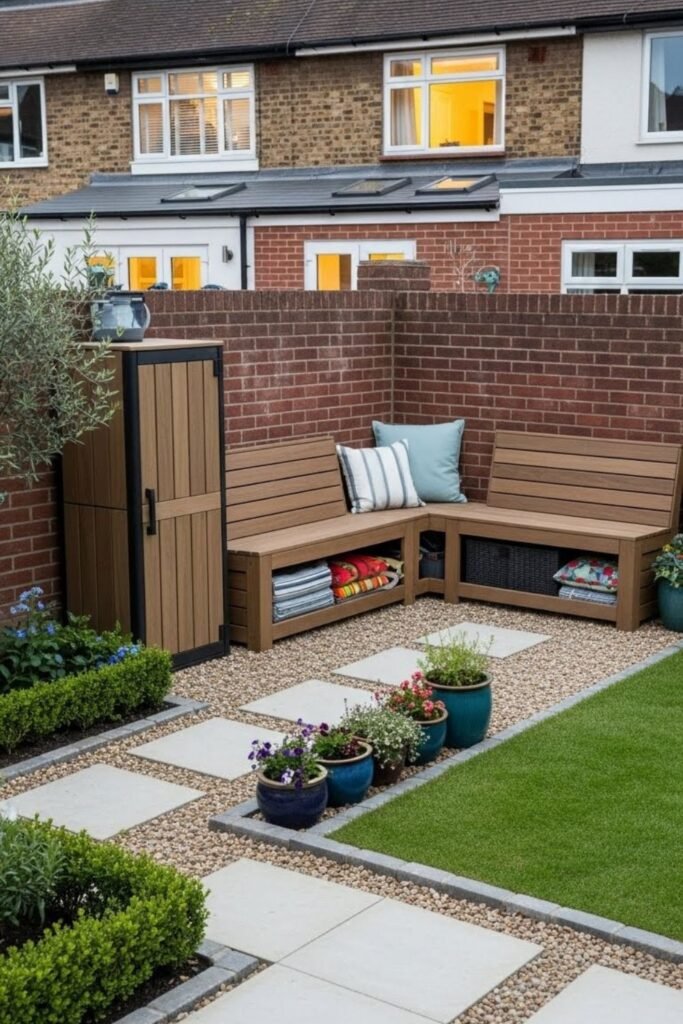
Seasonal Balance
A garden designed only for summer will disappoint you nine months of the year, and by December you’ll stop thinking of it as your space at all.
Evergreen plants hold structure when everything else dies back. Removable cushions and throws adjust comfort as temperature drops without permanent commitments. Put seasonal items away promptly — not in three weeks, now — so things don’t look abandoned when November arrives. When the garden still looks intentional in February, every warm day from March feels like a bonus.
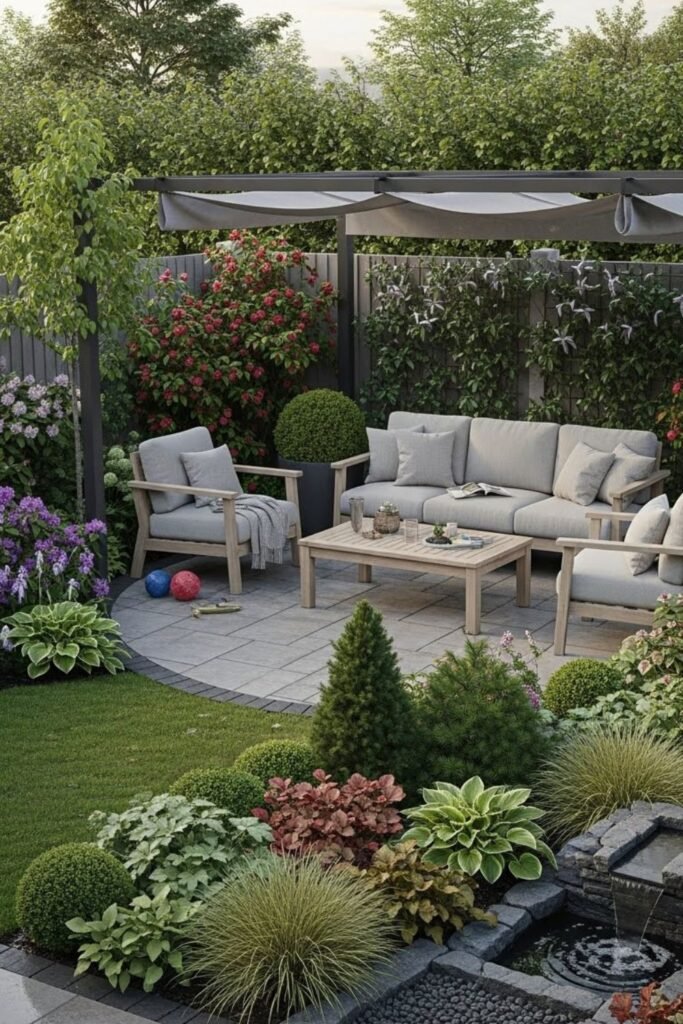
Daily Living
The gardens that get used most aren’t the prettiest ones — they’re the ones that ask the least of you on a Wednesday when you just want ten minutes outside without it becoming a project.
Easy access, clear paths, furniture already where it needs to be, nothing so carefully arranged that ordinary life threatens it. Most days are ordinary Wednesdays, and that’s what you should design for. When the garden works on a nothing day
I’ve spent over four decades building a marriage, raising a family, and learning what truly matters along the way. I write about relationships, home, and navigating life’s later seasons with grace, honesty, and a little humor. My goal is to share the kind of steady, real-life wisdom that helps you feel grounded, encouraged, and a little less alone.