An Italian Villa Wedding Theme Is the Most Romantic Thing I’ve Ever Seen and Here’s the Proof

I clicked through dozens of Italian villa wedding photos online last weekend (Daniel was traveling, Maya was finally asleep, and I had time to actually dream about things). My first thought was “this looks amazing,” followed immediately by “how does anyone actually plan this?”
Most of the inspiration posts I found were gorgeous but completely unhelpful when it came to the actual logistics. Like… is this a casual garden party or are we talking black-tie event pricing? Can you do this with 50 people or do you need 150 to make it work?
I spent way too much time down this rabbit hole, so I’m sharing what I learned about how Italian villa weddings actually work — the real costs, the decisions that matter, and what you need to know before you fall in love with the idea.
Because honestly, there’s a big difference between Pinterest inspiration and actually pulling this off.
By the time you finish reading this, you’ll know if this style actually fits your vision and your budget, not just your Instagram feed.
What Really Drives the Cost of an Italian Villa Wedding?
Here’s what I wish someone had told me upfront: the cost isn’t really about the flowers or the fancy linens (though those add up too). It’s about how these villas actually operate.
Most villas require exclusive use, which means you’re paying for the entire property for multiple nights — not just the wedding day.
Your guest count matters, but the number of event days matters more. Welcome dinner, wedding day, farewell brunch… each one needs staffing, catering, setup.
Then you have all the logistics nobody mentions in the pretty photos: rental companies bringing tables and chairs to remote locations, transportation for guests, sound restrictions (because these places have neighbors), and backup plans for rain that involve actual tents.
If you want to control costs, start with the big decisions first — how many days, how many guests, how much privacy you actually need.
Save this article for later! 👇👇
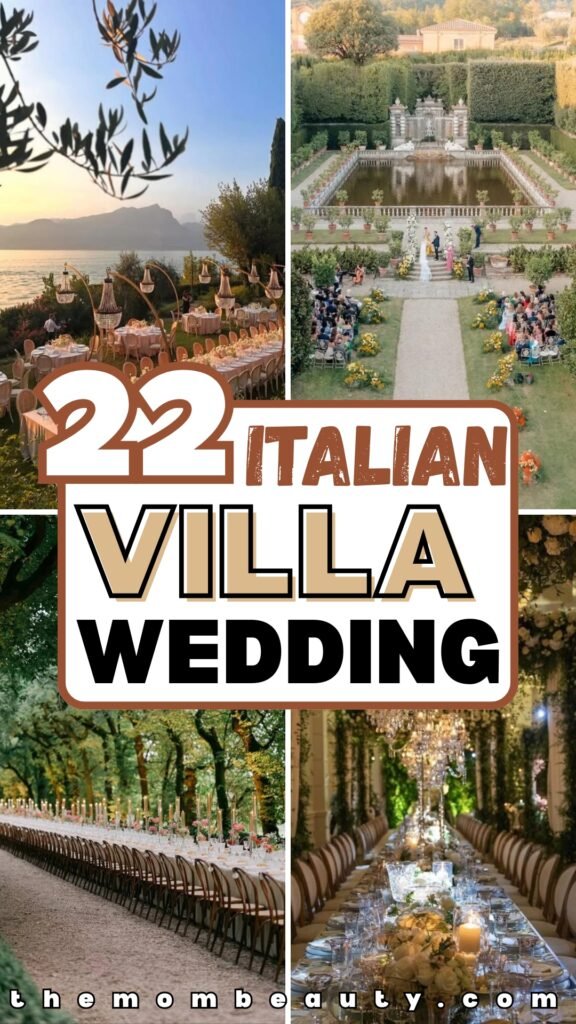
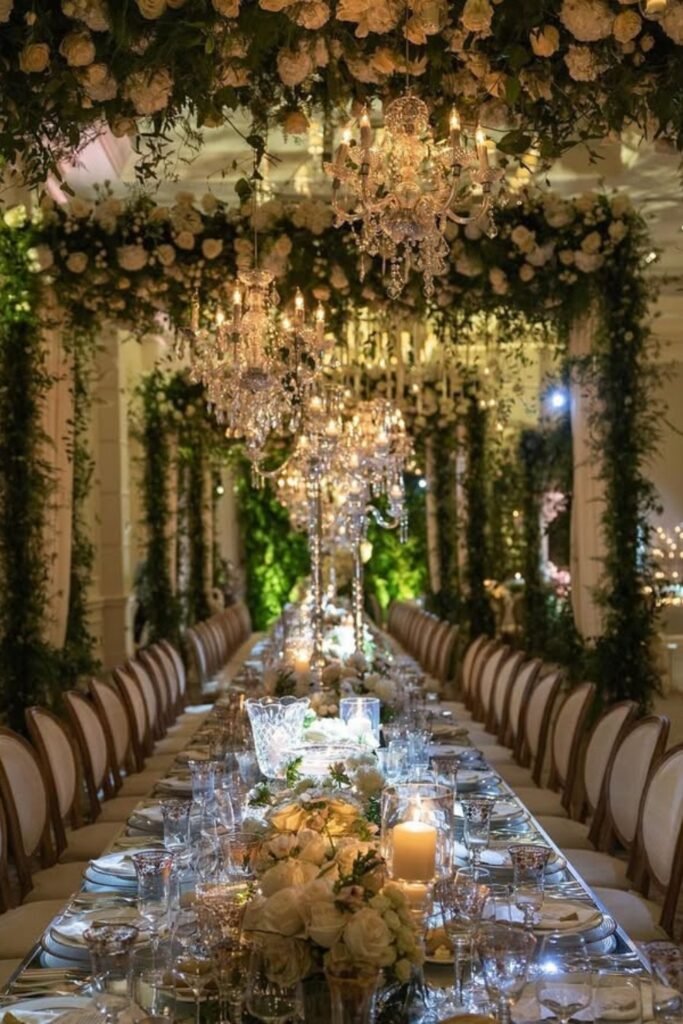
Overhead Drama
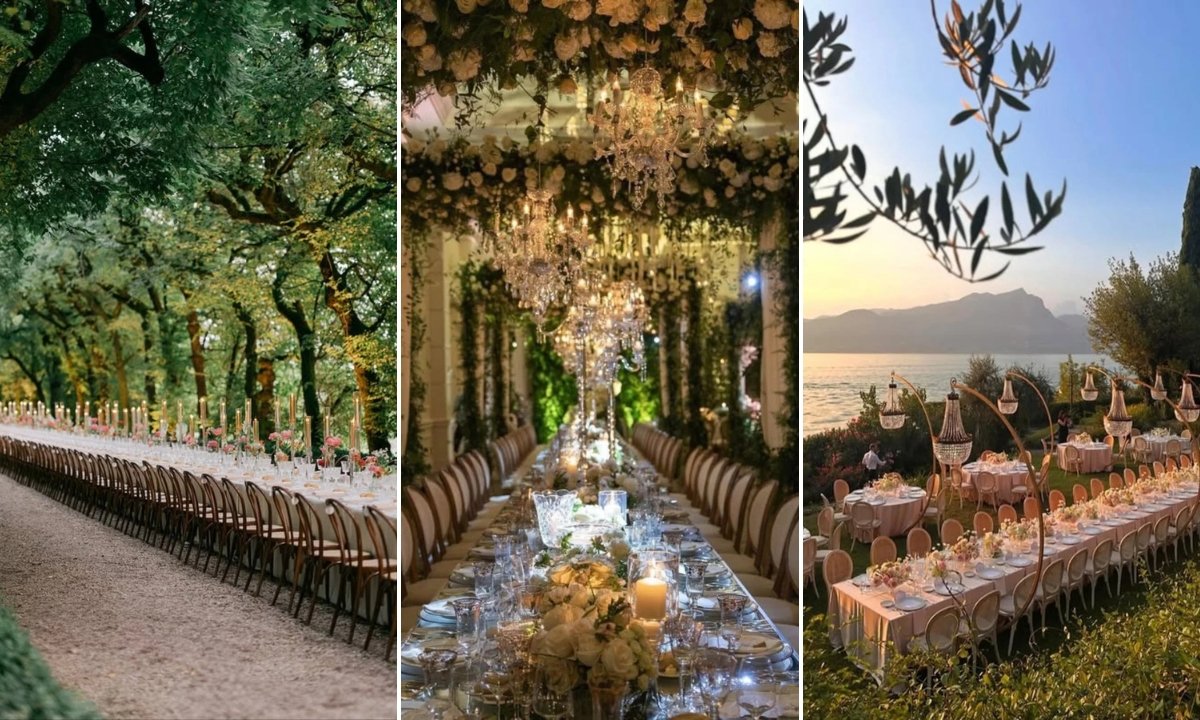
When your venue already has good bones, let the ceiling do the work. Florals and chandeliers hanging overhead create instant luxury without you having to transform every single table.
This setup makes even basic linens and chairs look intentional. It’s one of those tricks where you spend your money in one place and it makes everything else look more expensive than it was.
Works best in spaces with strong architecture and controlled lighting — you need the room to support dramatic installations without turning into visual chaos.
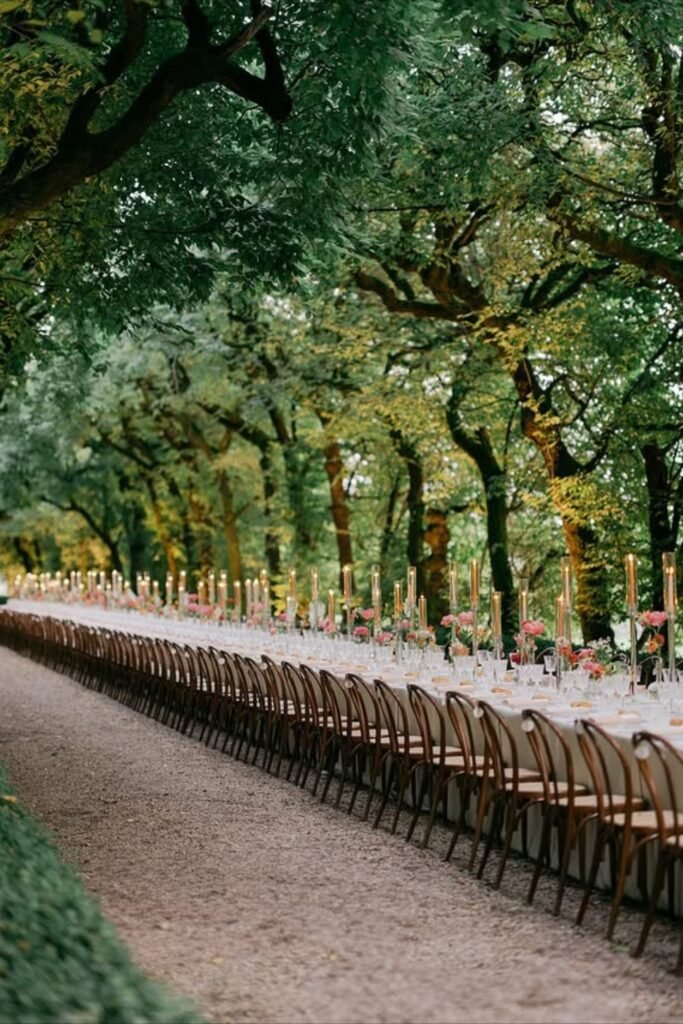
Tree-Lined Feast
Long tables under trees work when you commit to the length fully instead of trying to break it up into smaller sections.
There’s something about the rhythm of candles repeating down a long table that feels both intimate and grand. Plus, when you use mostly greenery instead of huge floral arrangements, it doesn’t compete with the natural setting.
This is perfect if your villa has mature trees that already create natural boundaries — you’re working with what’s there instead of building something new.
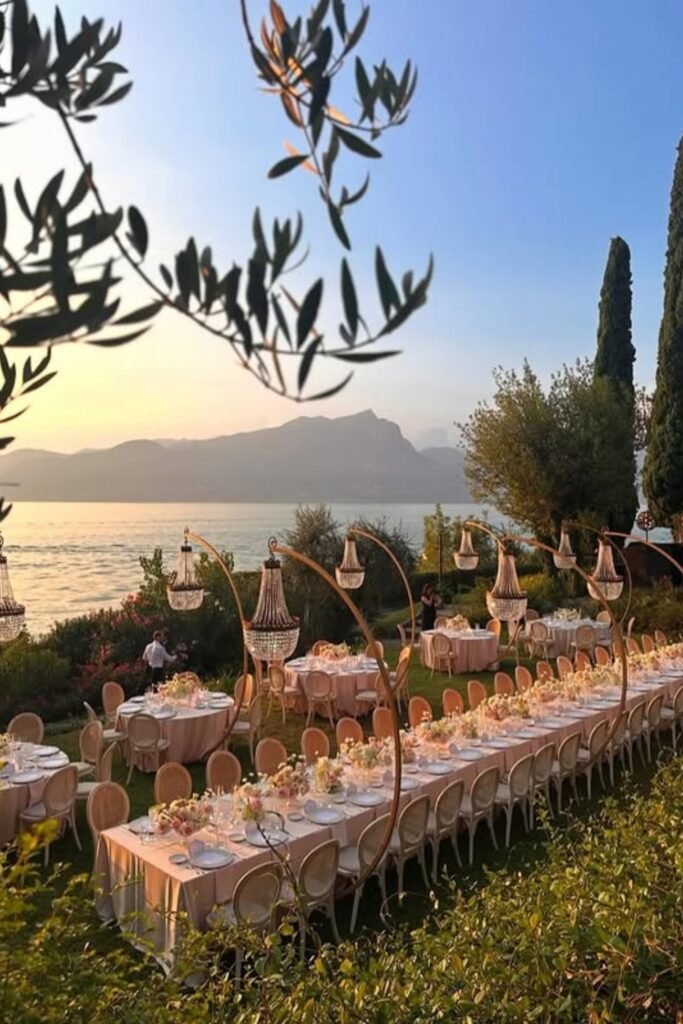
Lakeside Glow
When your backdrop is water and sky, the smart move is to keep everything else subtle and let the horizon do the dramatic work at sunset.
This is one of those setups that’s all about timing. Golden hour, reflections on the water, soft lighting — it creates romance without you having to engineer it with tons of decor.
Skip the over-the-top florals here. Your guests should feel like they’re part of the location, not distracted by styling.
Rustic Garden Tables
If your villa has that weathered stone and established gardens vibe, lean into it with warm lighting and table styling that feels lived-in rather than perfect.
This approach balances elegance with comfort — your guests can settle in for long dinners without feeling like they need to sit up straight the whole time. It’s fancy but not stiff.
Perfect for countryside locations where connection and conversation matter more than making a visual statement.
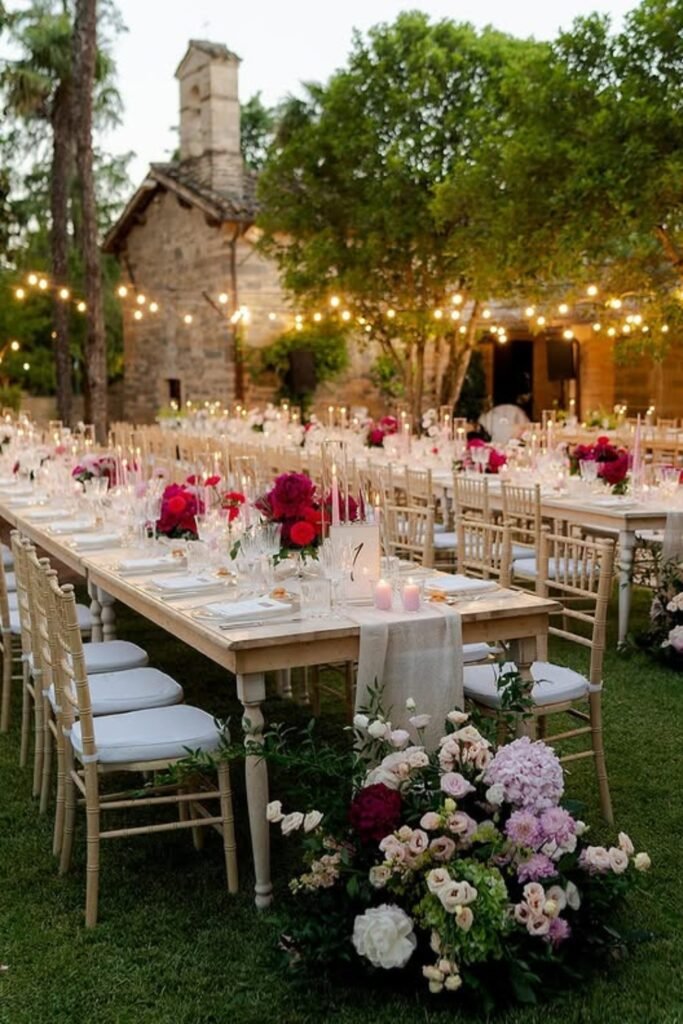
Courtyard Crystal Glow
Chandeliers in a historic courtyard are one of those “why didn’t I think of that” solutions — they add all the elegance through lighting instead of trying to compete with stone textures and architecture.
Keep the tables minimal when you go this route. Let the crystal details lead visually, and the space feels layered and romantic without being overwhelming.
This works beautifully for evening receptions when natural light fades and your lighting becomes the main atmosphere builder.
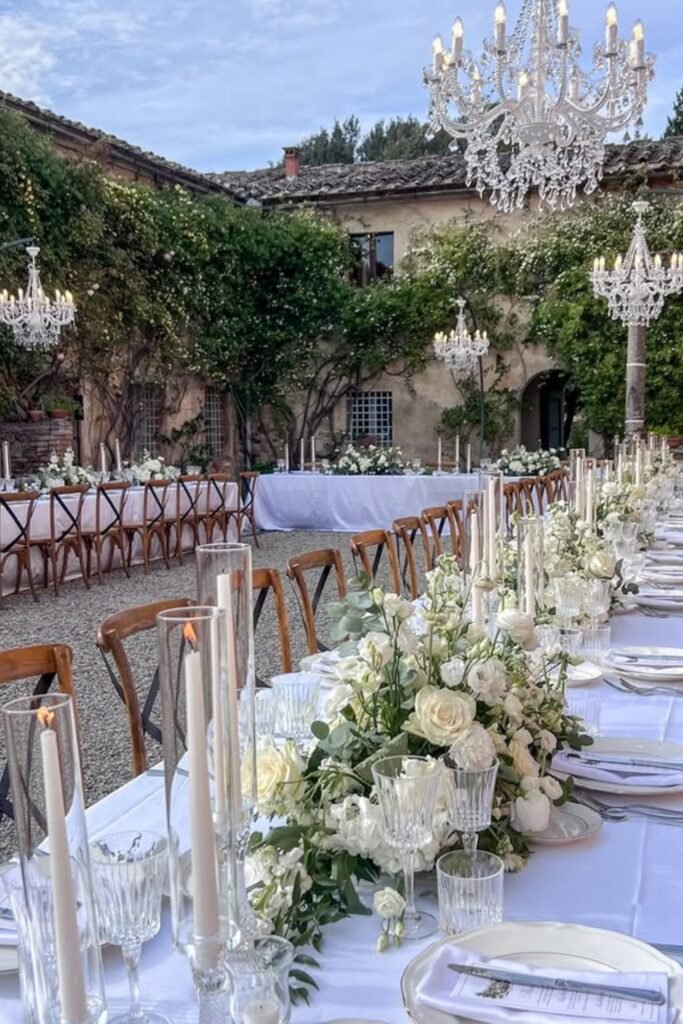
Soft Blush Romance
Blush florals have this way of softening grand villa spaces without making them feel less sophisticated. It’s like adding warmth to a room that could otherwise feel too formal.
This color palette keeps the European elegance while making long tables feel welcoming rather than intimidating
Especially beautiful in gravel courtyards where the gentle color contrast enhances all that aged stone and historic detail.
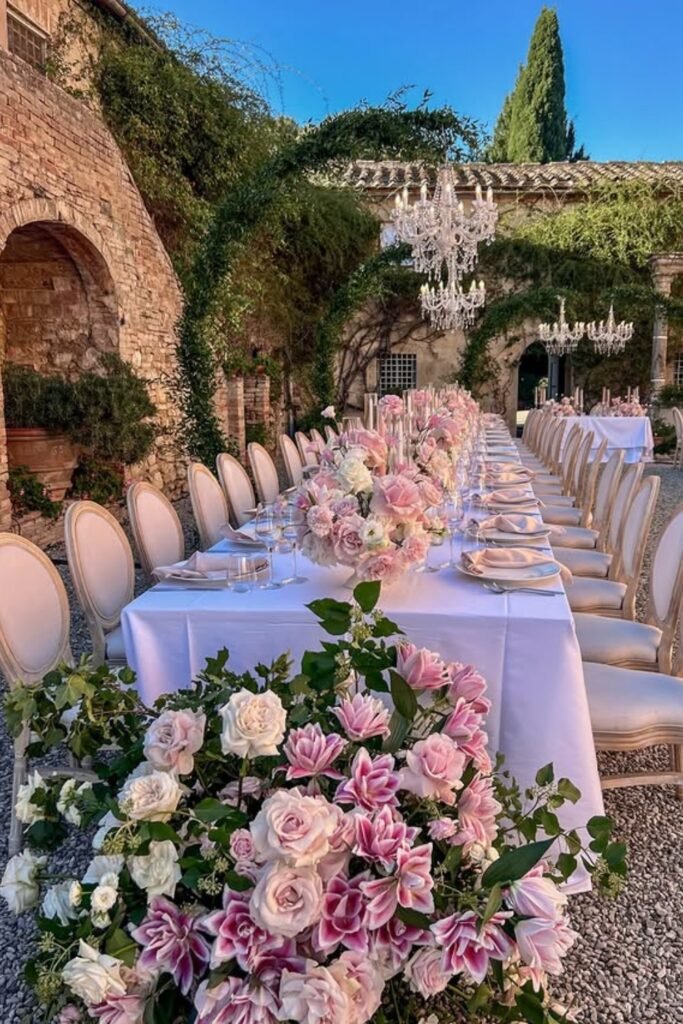
Garden Ceremony Focus
Some gardens are so well-designed that they naturally direct all the attention exactly where you want it — toward the couple — without you having to build elaborate ceremony structures.
The hedges, pathways, and water features create emotional impact through the setting itself. You barely need to add anything.
When you find a space like this, resist the urge to over-decorate. A simple floral accent is enough.
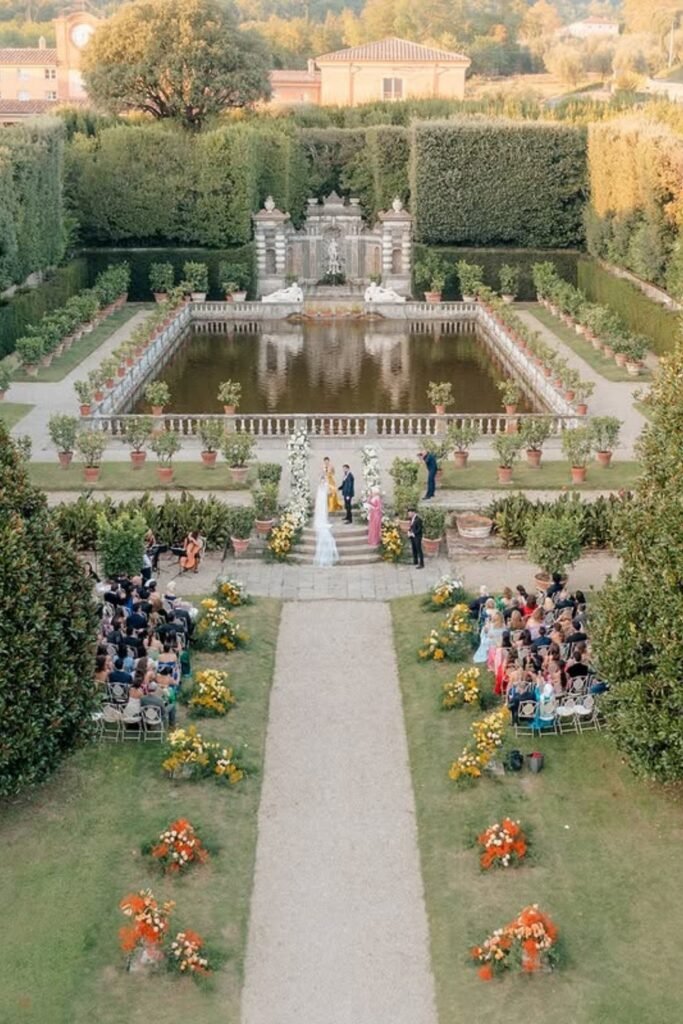
Long-Table Tradition
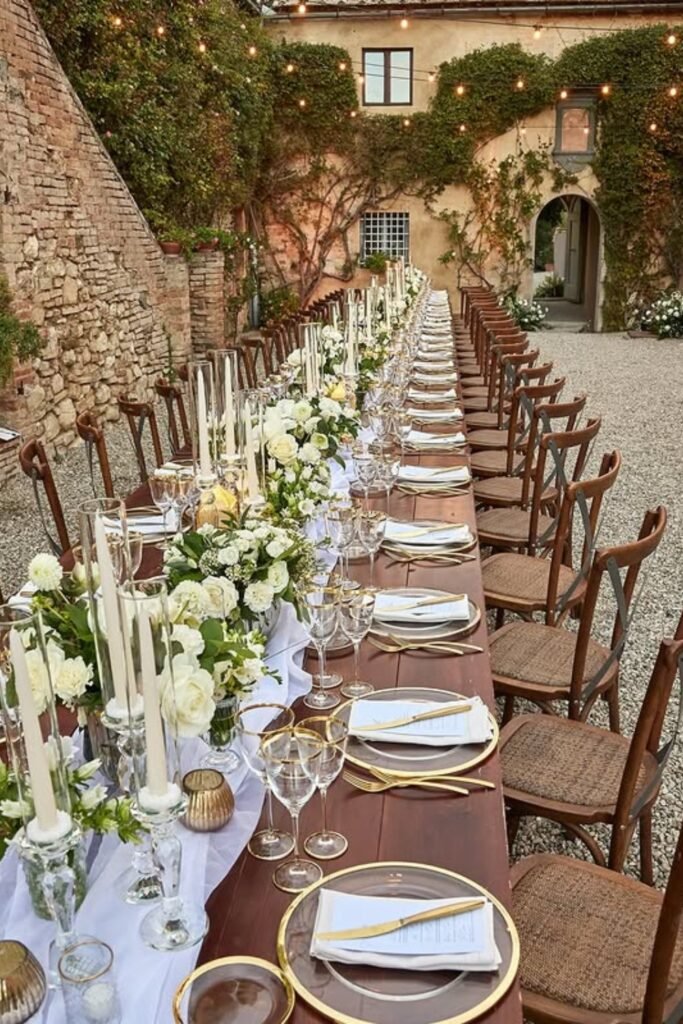
There’s something about communal tables that immediately shifts the energy from formal dinner party to actual celebration where people talk to each other.
When you pair long tables with simple runners, consistent candlelight, and matching place settings, it feels timeless rather than trendy. Like this is how people have always celebrated in Italy.
Courtyard receptions are perfect for this format — the table length works with the scale of the space.
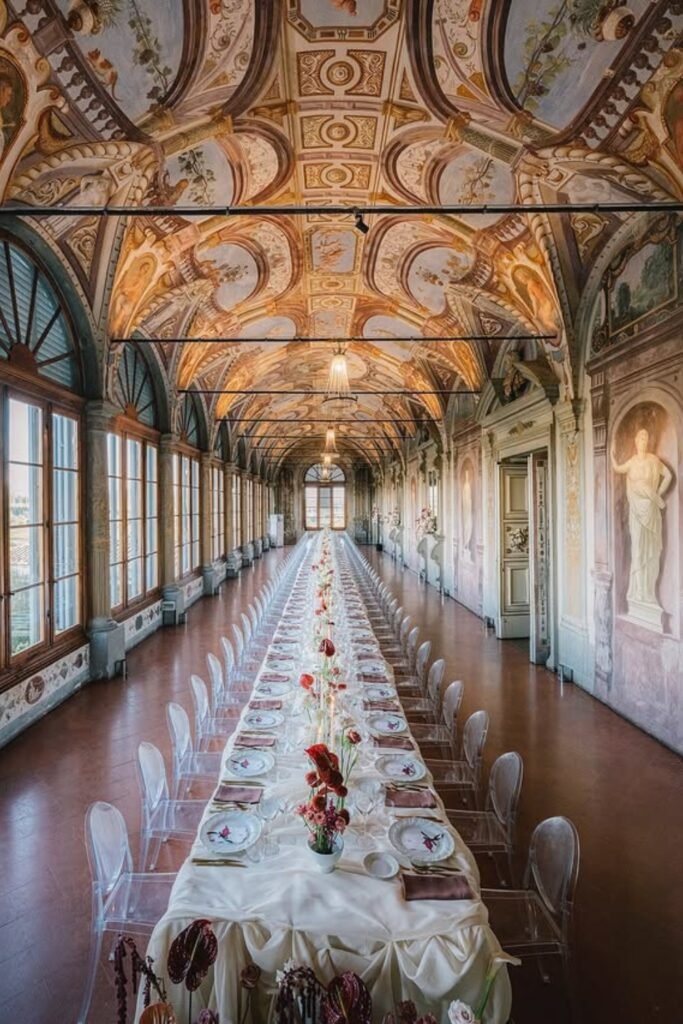
Painted Gallery Dinner
A frescoed gallery is already doing all the visual work, so your job is to stay out of its way. Keep the table understated and let the artwork, arches, and ceiling details be the real focal point.
Clean linens and transparent chairs work beautifully here because they don’t interrupt sightlines or try to compete with centuries-old surroundings.
This is ideal for formal indoor dinners where the architecture tells the story and your styling just quietly supports it.
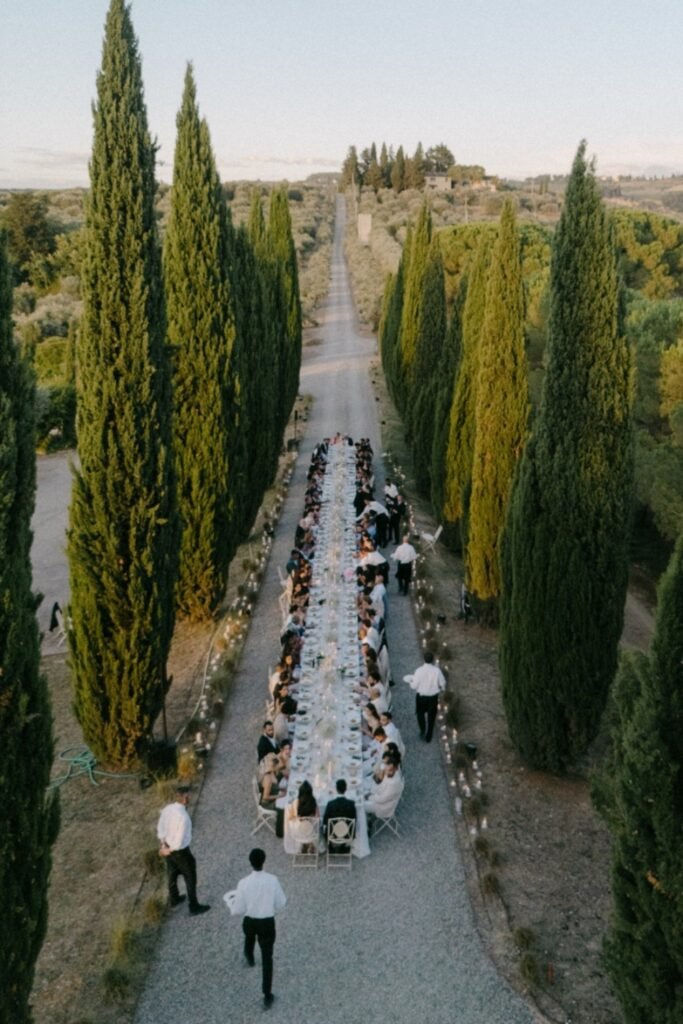
Cypress Road Banquet
I don’t think anything feels more cinematic than a dinner table stretching down a cypress-lined drive. The perspective does most of the visual work for you.
This setup relies on scale and repetition — candles and table length create the drama instead of elaborate floral installations.
Perfect for sunset receptions where guests experience the whole venue gradually, walking through the landscape before settling in for dinner.
Save this post for later ❤️
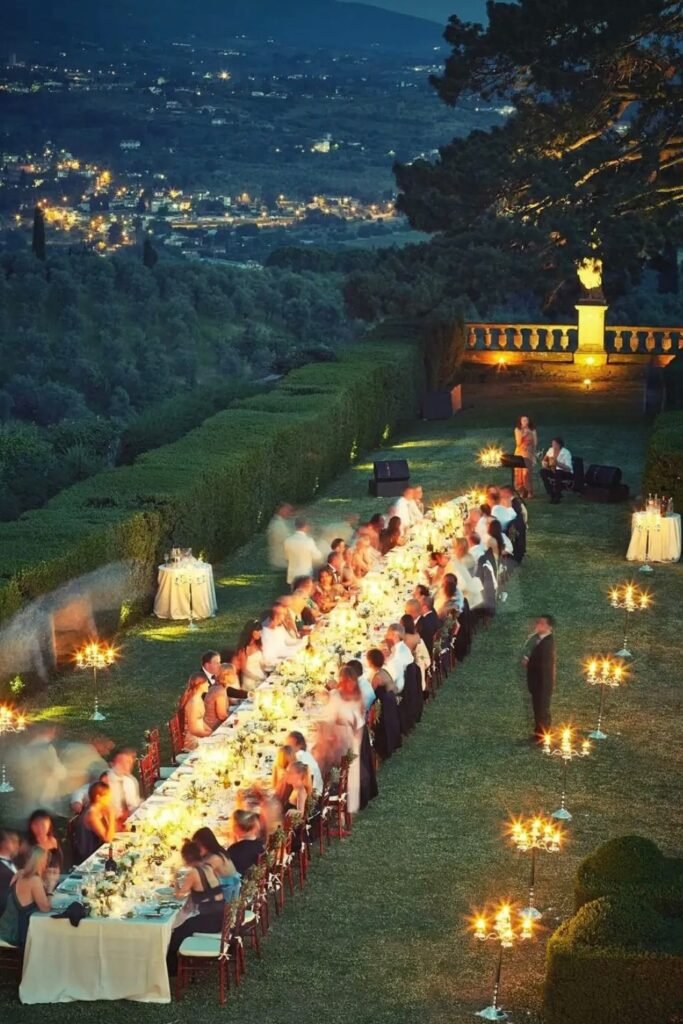
Valley View Evening
There’s something magical about how night settles over hills and distant villages — even with a long guest list, the setting shifts into something intimate.
Warm lighting pools ground the table against those expansive views without losing the emotional closeness you want for dinner.
The timing matters here. When dinner aligns with dusk, the scenery fades gently while conversation and candlelight take over.
Garden Social Tables
Sometimes breaking from long tables completely changes the rhythm — it makes the evening feel relaxed and conversational instead of visually choreographed.
This approach prioritizes guest comfort over making a statement. People can move around, linger over meals, interact naturally under string-lit trees.
Choose this when atmosphere and connection matter more to you than symmetry or grand layouts
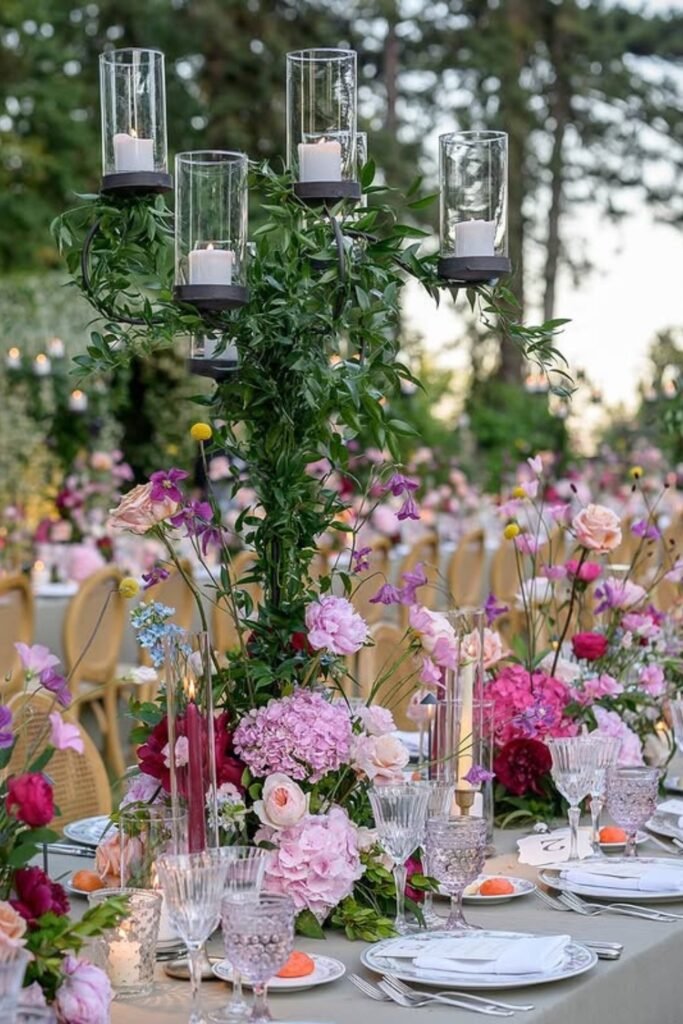
Grand Fresco Hall
This frescoed hall turns dinner into actual theatre. Painted ceilings, symmetry, long tables — it’s instant Italian wedding drama without you having to create it.
Keep florals minimal so the architecture leads. Transparent chairs and soft linens won’t compete with historic artwork and overhead grandeur.
Perfect for formal receptions or cooler seasons when indoor elegance matters more than outdoor scenery.
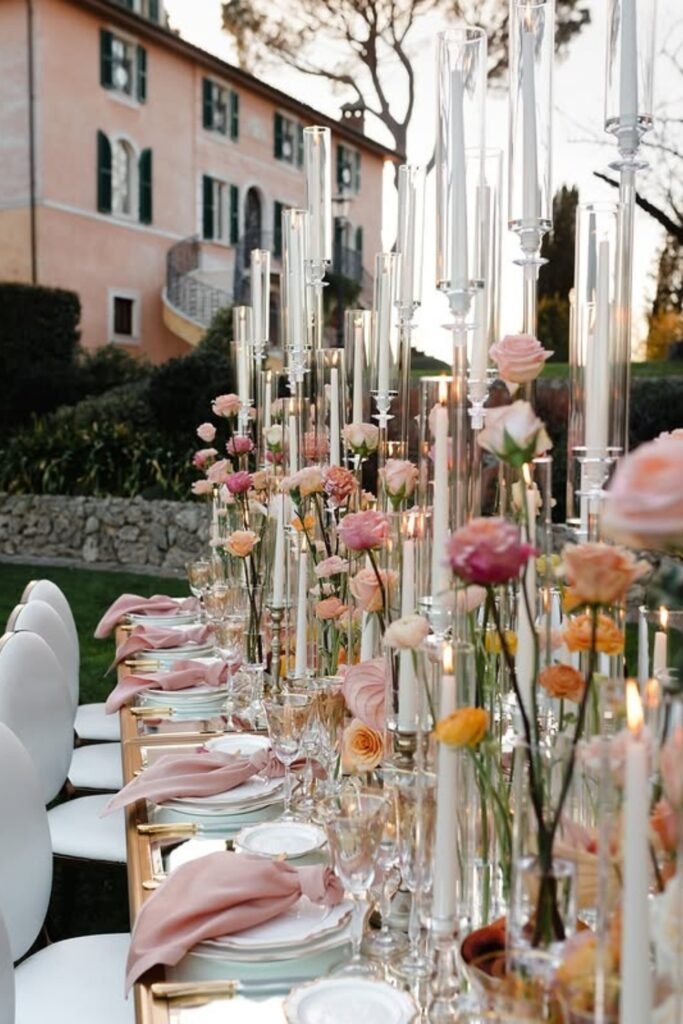
Cypress Road Banquet
A cypress-lined driveway creates that cinematic scale you see in movies — stretching one communal table through nature makes guests feel like they’re part of something truly special.
Beautiful for sunset dinners, but don’t underestimate the logistics. You need proper lighting, server access, and spacing so the length never feels overwhelming.
Neutral linens and restrained florals work best here — let the vertical drama of the trees do the heavy lifting.
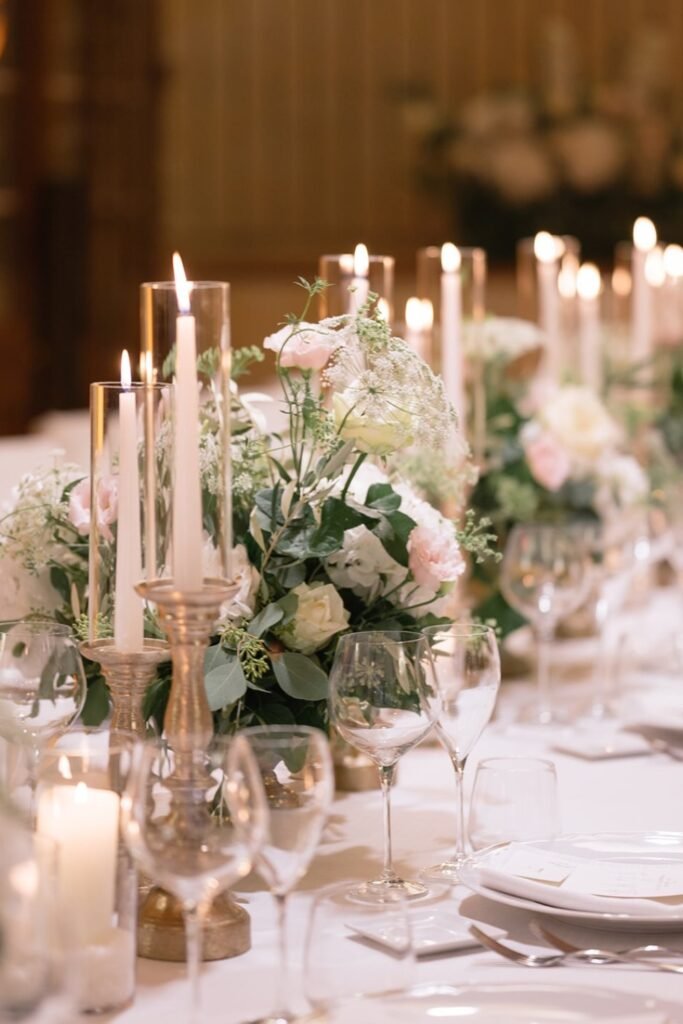
Hillside Night Feast
Night receptions overlooking rolling hills feel both intimate and grand — especially when candlelight guides the table and the scenery fades softly behind your guests.
This style works better with smaller guest counts, where slow dinners, speeches, and music can unfold naturally without feeling rushed.
Invest in lighting before florals here. Darkness amplifies glow, and minimal arrangements still photograph beautifully at night.
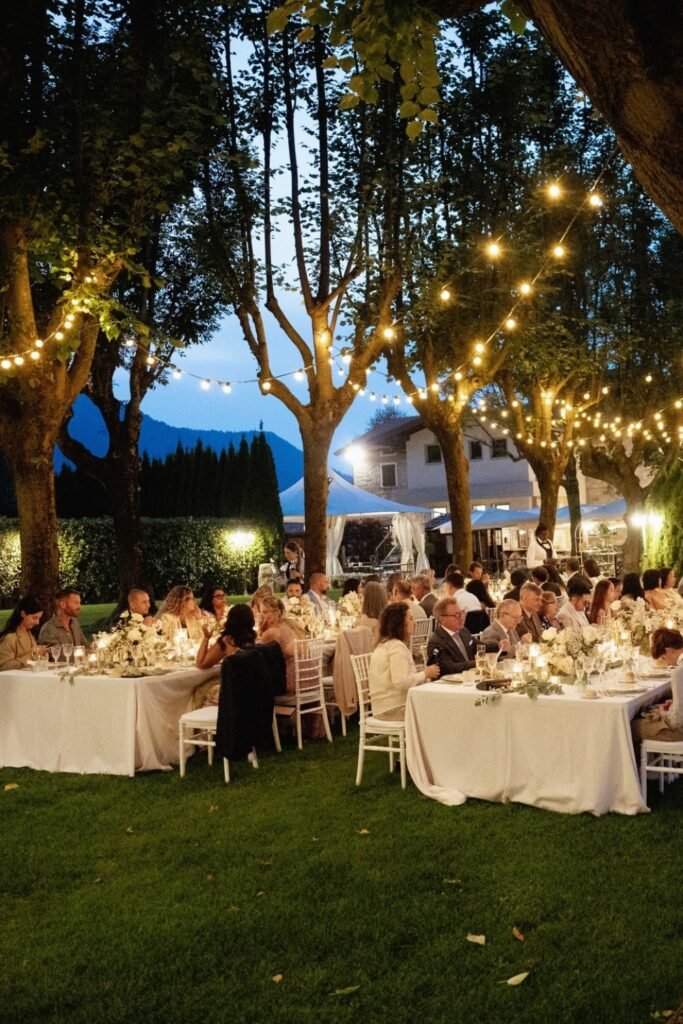
Garden String-Light Dinner
String lights woven through trees instantly soften a villa garden, creating warmth that feels relaxed yet unmistakably Italian.
This approach balances budget and beauty — replacing heavy installations with atmosphere that guests actually remember long after dinner.
Round or rectangular tables both work here, as long as spacing allows conversation and easy movement after sunset.
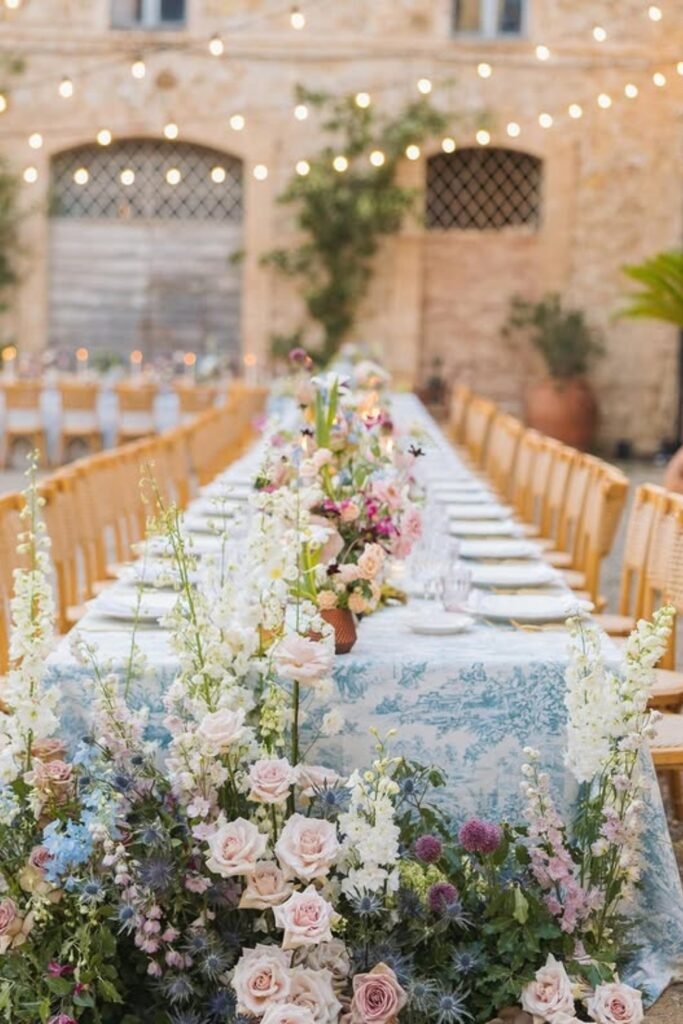
Villa Courtyard Ceremony
A villa courtyard ceremony uses the building as your backdrop instead of making you construct elaborate floral structures. The architecture does the work.
One floral arch softens the stone symmetry — keep chairs simple so all the attention stays on the couple’s entrance moment.
This setup works beautifully for midday or late-afternoon ceremonies when natural light highlights textures without requiring complex lighting.
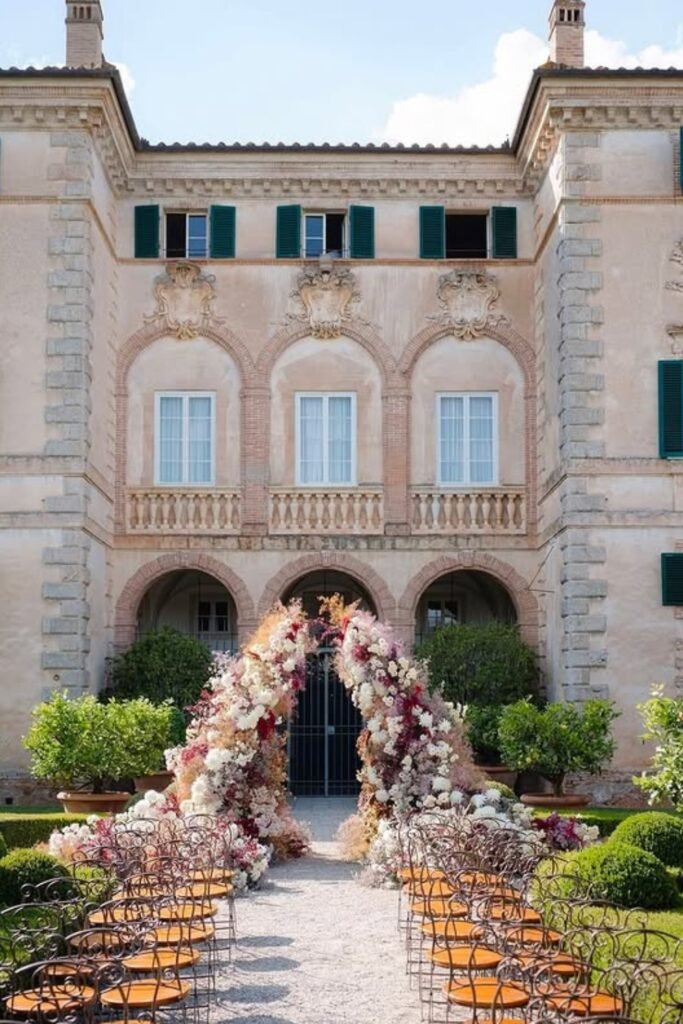
Chandelier Garden Dinner
Crystal chandeliers suspended above garden tables — it’s like old-world luxury meeting relaxed Italian countryside in the best possible way.
Balance this with simple florals below, otherwise the overhead drama can overwhelm everything and distract from dinner conversation.
This works best in enclosed gardens or pergolas where you can properly manage the hanging weight and power access safely.
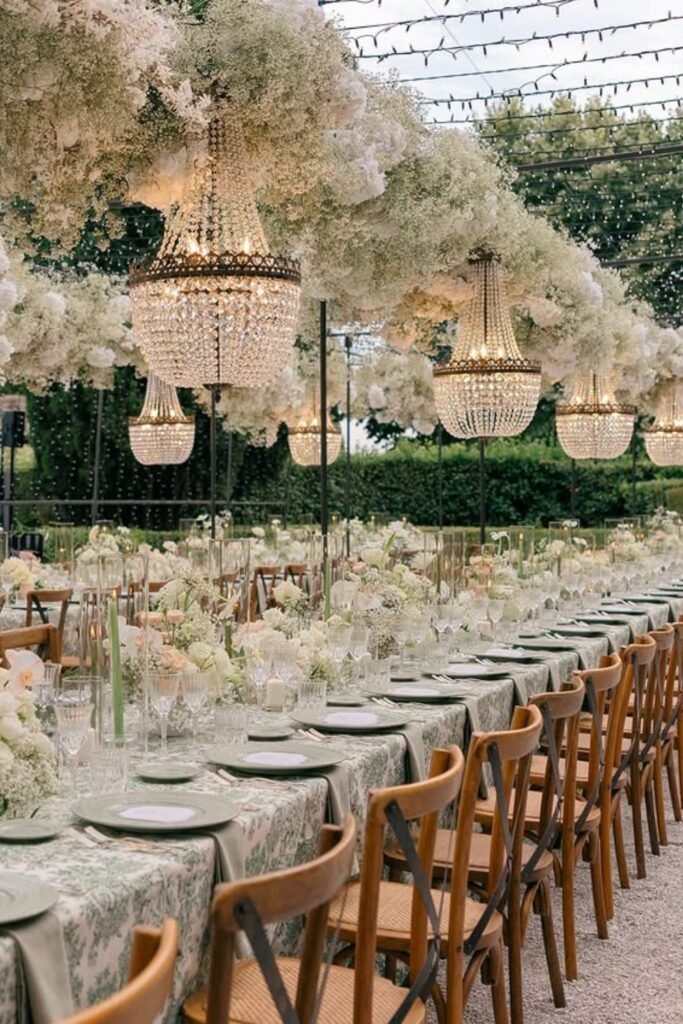
Courtyard Candle Banquet
Stone courtyards really shine when you let tables run long and guide the eye toward the villa façade with soft florals and candle clusters.
Pale linens and simple glassware let the textured walls and creeping vines stay as the visual anchors.
This setup works beautifully for intimate receptions where conversation flows easily and the setting feels personal.
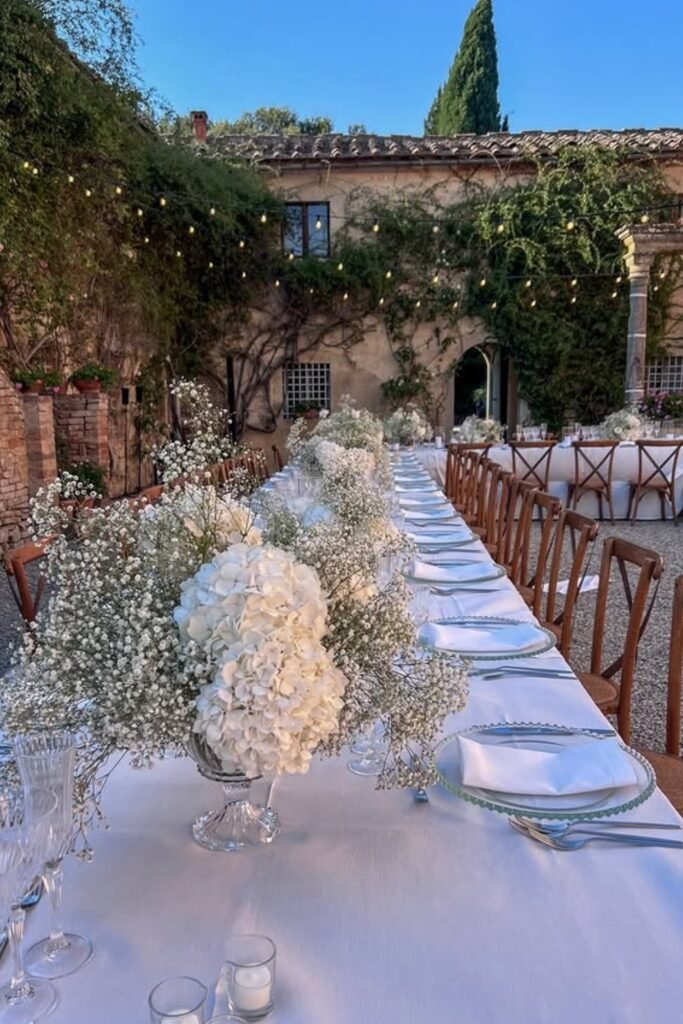
Olive Grove Table Line
Olive trees create natural rhythm and depth for a long reception table without you having to add competing decor elements.
Use low floral runners and thin candles so the branches and string lights overhead stay visible during evening hours.
Perfect for relaxed destination weddings where guests linger longer and enjoy slower, shared dining experiences.
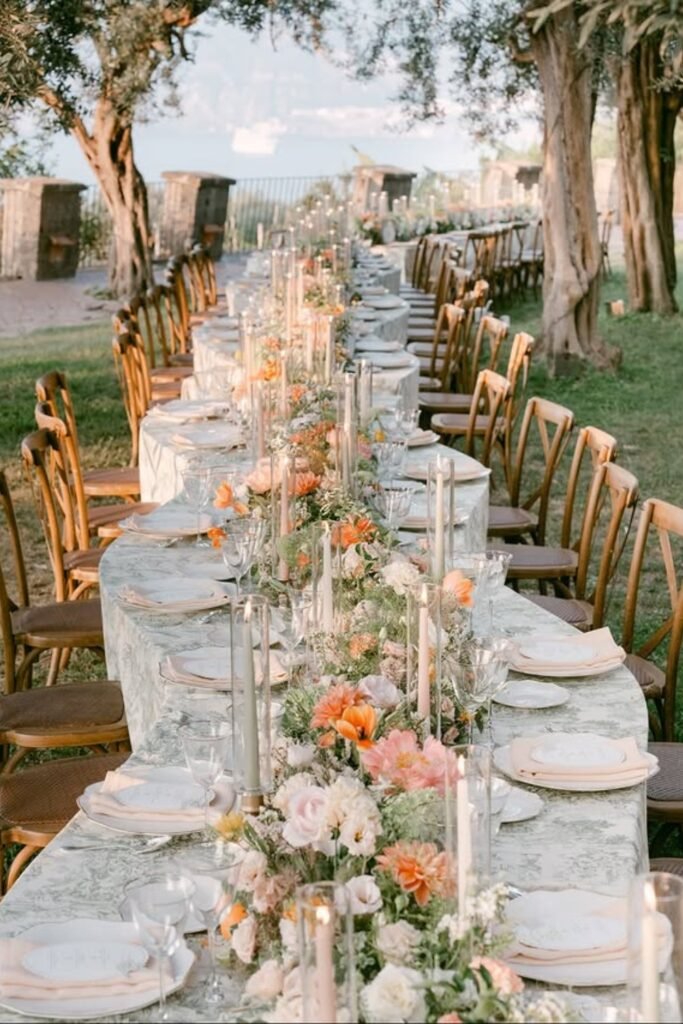
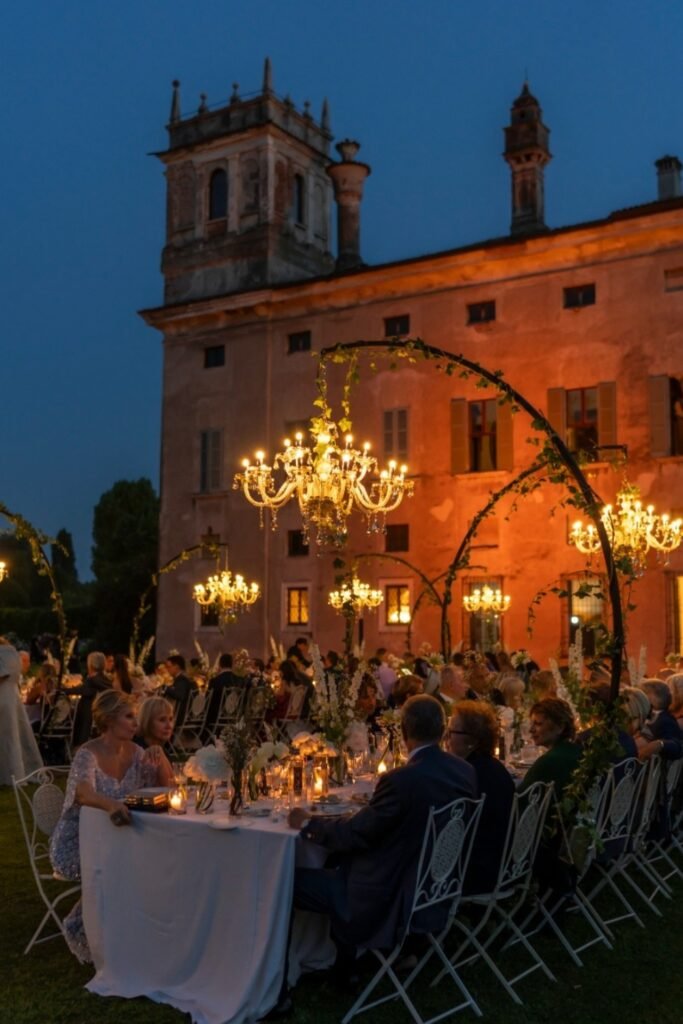
Chandelier Evening Feast
Outdoor chandeliers signal a formal evening instantly — they transform garden dining into something theatrical without actually enclosing the space.
Keep everything else understated and let the warm light reflections do the heavy visual lifting after sunset.
This is ideal for night receptions where lighting defines the mood more powerfully than any amount of floral volume.
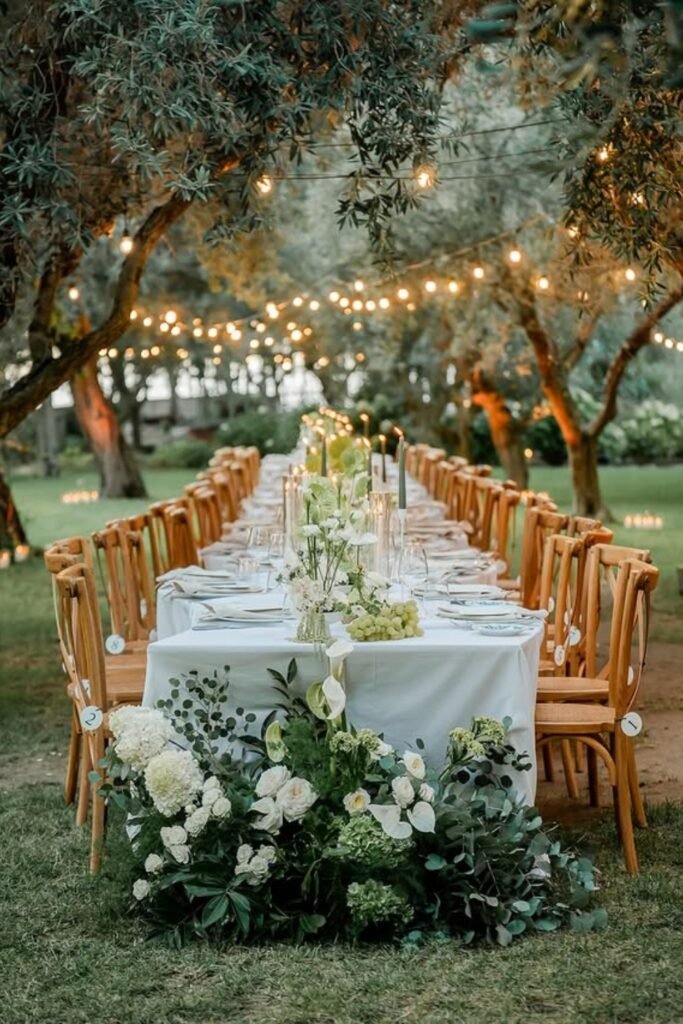
Olive Tree Head Table
A grounded floral arrangement at the table end marks importance subtly without separating the couple from everyone else.
Greenery-heavy designs blend seamlessly with surrounding trees instead of introducing colors that fight with the natural setting.
Perfect for family-style seating where connection matters more than hierarchy.
FAQs