
23 Rock Garden Ideas For 2026
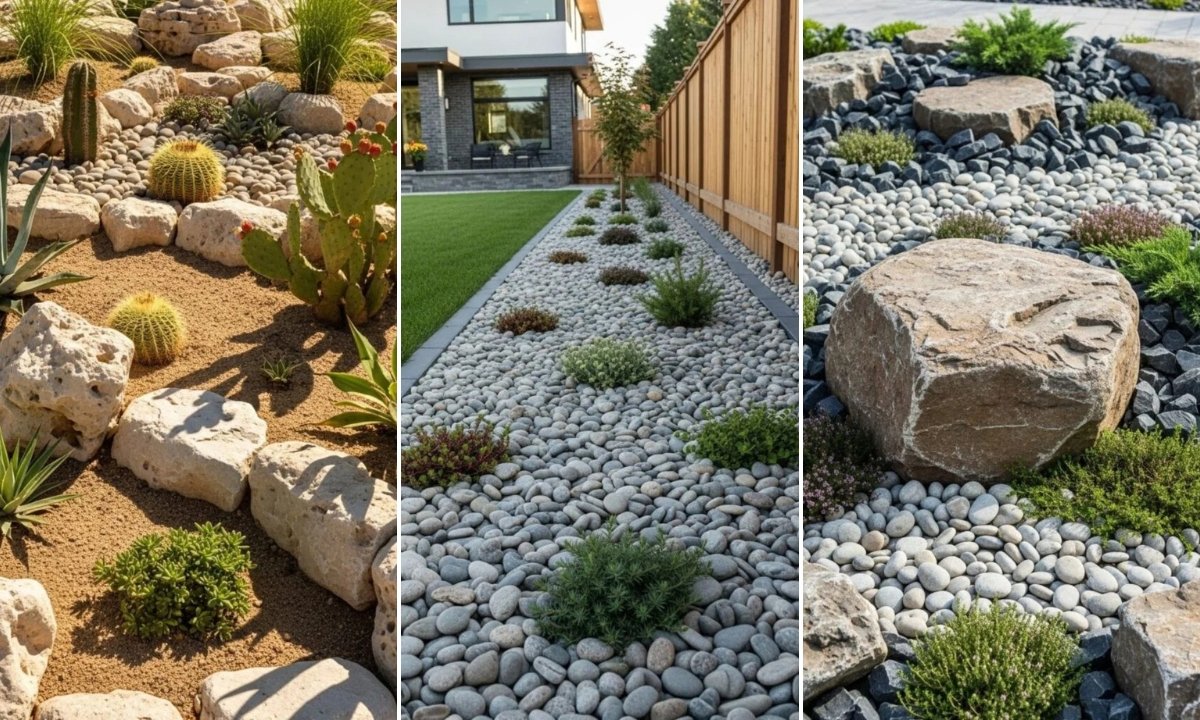
I used to think my yard needed more effort, more plants, and more time. The truth was the opposite. The real problem wasn’t lack of care it was the wrong setup.
Grass struggled, weeds kept coming back, and every “fix” added more work. That’s when I realized a garden doesn’t have to demand attention to look good.
A rock garden can solve messy spaces, cut maintenance, and still feel intentional. In this Article, you’ll explore 23 practical solutions for designing a Rock Garden in 2026.
How Do You Design a Low-Maintenance Rock Garden?
If you want a rock garden that doesn’t turn into extra work, you have to plan it before you place a single stone.
Start by choosing a spot where grass already struggles, because rocks naturally handle those areas better. Clear weeds properly first, or you’ll fight them later.
Set your largest rocks in place before adding anything else so the layout feels stable.
Use fewer plant types, not more, and give them space to grow. When rocks do most of the work, maintenance stays low.
Save this article for later! 👇👇
What Are Creative Ways to Mix Plants and Stones in a Rock Garden?
The easiest way to make a rock garden look natural is to let the stones lead and use plants to soften the edges.
Place your rocks first, then tuck plants into gaps instead of lining them up. Repeat the same plant in a few spots to keep the look calm and intentional.
Mix textures, not chaossmooth stones work well with low, spreading plants. Leave open space where rock can show. Empty space isn’t a mistake here; it’s part of what makes the design work.
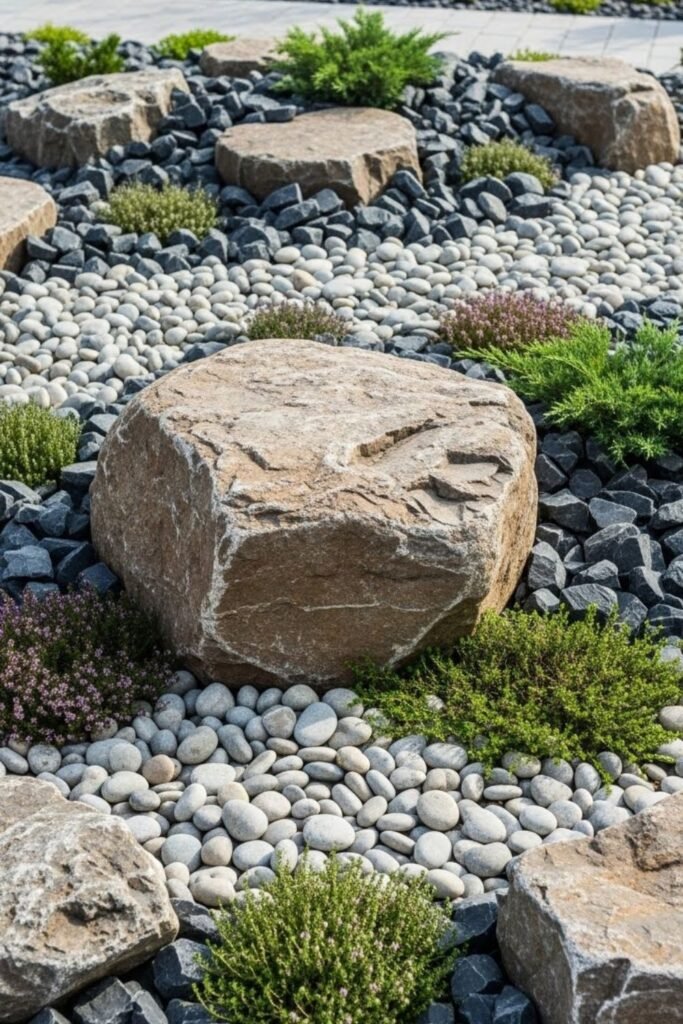
Single Boulder
I always start with one strong focal point because it instantly gives the garden purpose. One large boulder placed slightly off-center anchors everything else around it.
Smaller stones should support it, not compete with it. I like leaving space around the main rock so it can breathe visually. Add just a few low plants near the base to soften the edges.
This approach works well when you want impact without clutter or constant maintenance.
Side Strip
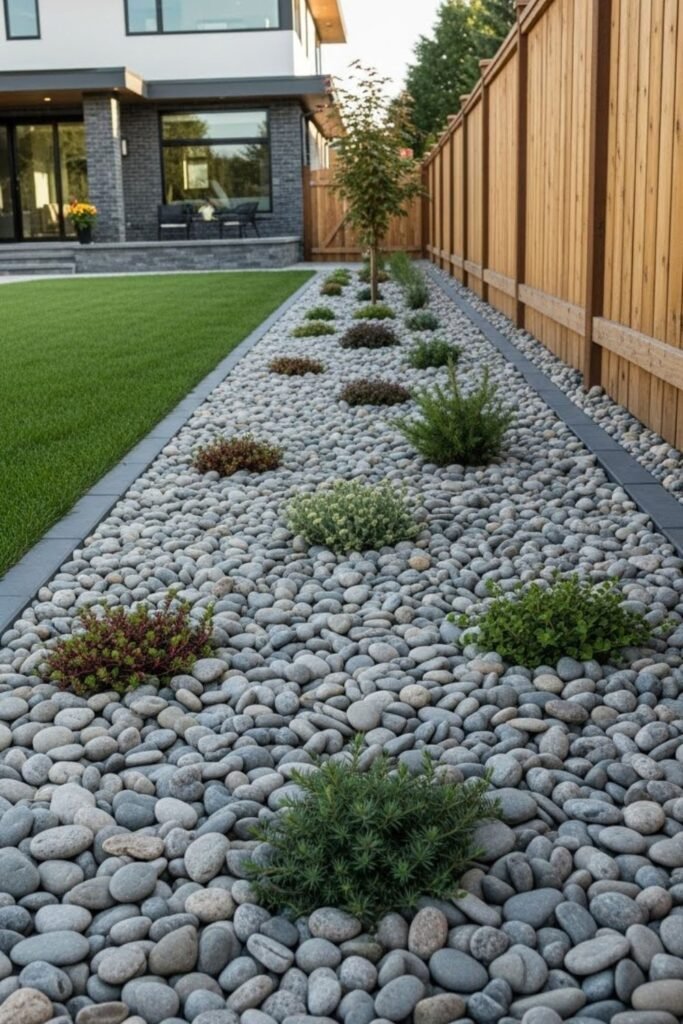
Working with narrow spaces taught me that less width doesn’t mean fewer options. Along a fence or wall, I build a long rock strip using consistent stone sizes.
Keeping the height low prevents the area from feeling crowded. I usually space plants wider than normal so growth stays controlled.
This setup turns an ignored side yard into something clean and intentional without stealing space from the rest of the yard.
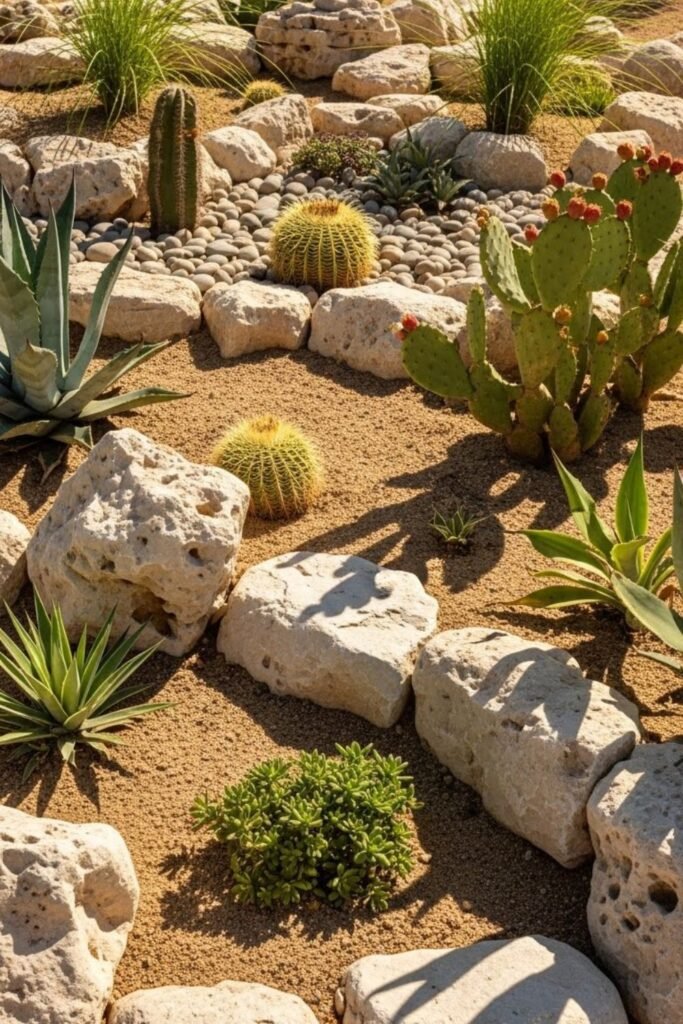
Dry Climate
Living in hot weather changes how you plan everything. For dry areas, I rely heavily on stone coverage and only a few tough plants.
Rocks help hold moisture in the soil while protecting roots from heat. I group plants instead of spreading them out so watering stays simple.
Lighter-colored stones also reduce heat buildup. This kind of rock garden survives heat waves without constant attention or stress.
Natural Slope
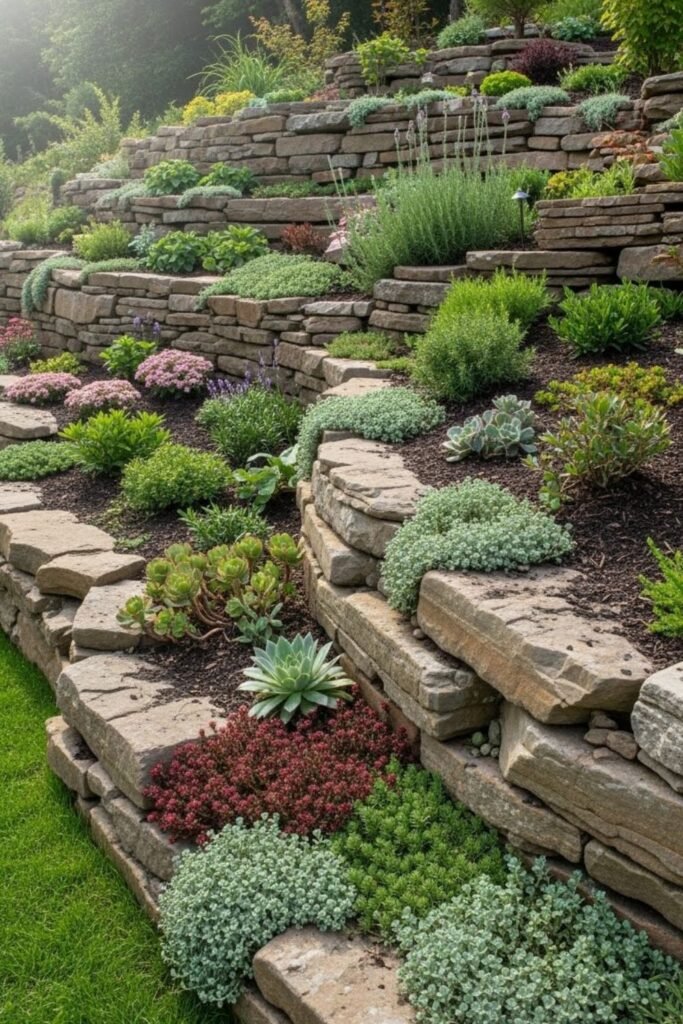
Sloped ground used to frustrate me until I stopped fighting it. Instead of leveling everything, I follow the natural rise of the land with rocks placed in loose layers.
Larger stones go lower to hold soil in place. Smaller ones sit higher to guide the eye upward.
Plants settle into gaps and help stabilize the soil over time. The slope starts looking intentional instead of unfinished.
Clean Edges
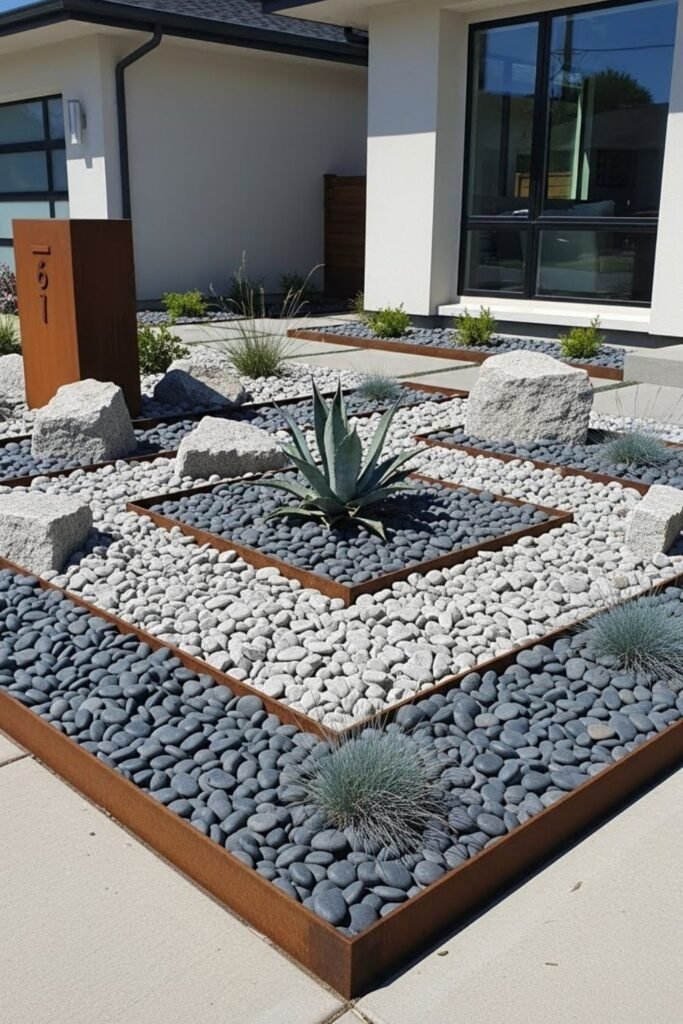
I learned quickly that crisp borders change everything in a front yard. Defining edges with metal, brick, or buried stone keeps rocks from drifting and makes maintenance predictable.
Straight lines feel modern, while gentle curves soften the look near walkways. Inside the border, I keep stone sizes consistent so the eye rests.
A few compact plants placed near corners prevent the space from feeling harsh without adding weekly chores. This approach photographs well and boosts curb appeal immediately for homes.
Two Materials
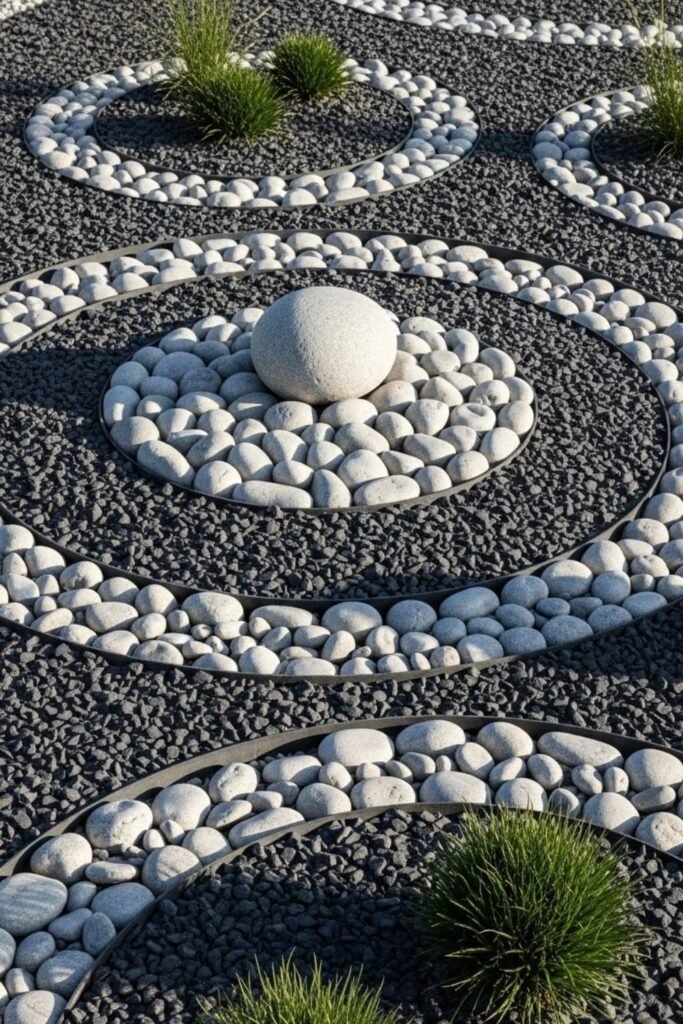
Limiting choices taught me restraint and saved time during planning. Selecting one main stone and one accent material creates harmony fast.
Gravel plus boulders, or slabs plus pebbles, both work when repeated consistently. I resist adding a third texture because it complicates the look. Plants stay minimal and match the materials’ scale.
The result feels intentional, easier to source, cheaper to build, and simpler to maintain long term. Fewer decisions mean faster installs and fewer mistakes overall for busy homeowners.
Shaded Garden
Shade changed my strategy because flowers stopped being reliable. In low light, I focus on texture, shape, and contrast instead of color.
Dark stones paired with ferns or hosta-like plants create depth without blooms. I space rocks closer to reduce exposed soil and weeds. Moisture lasts longer here, so watering drops naturally.
The garden stays calm, cool, and polished even when nothing is flowering. Maintenance stays predictable, and fallen leaves blend in rather than look messy during every quiet season.
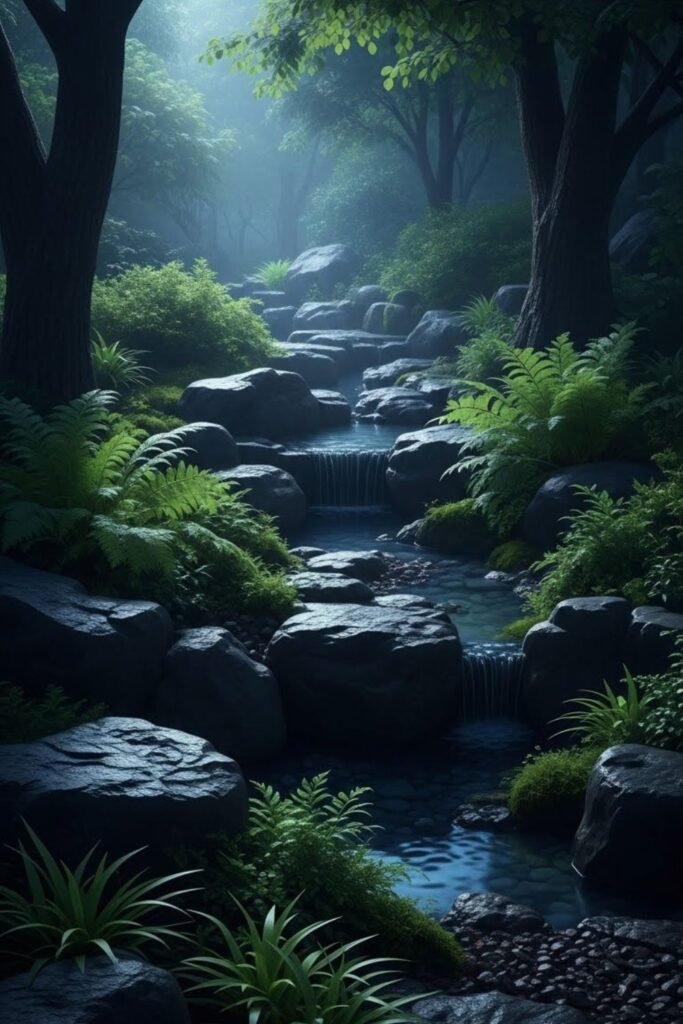
Kid Safe
Having children around forced me to rethink sharp edges. Rounded river stones feel better underfoot and reduce scraped knees.
I avoid stacking rocks high and keep everything stable and low. Paths remain wide so running feet don’t trip. Plants stay flexible and resilient, not brittle.
This setup invites play without worry and still looks intentional, proving safety and style can coexist easily.
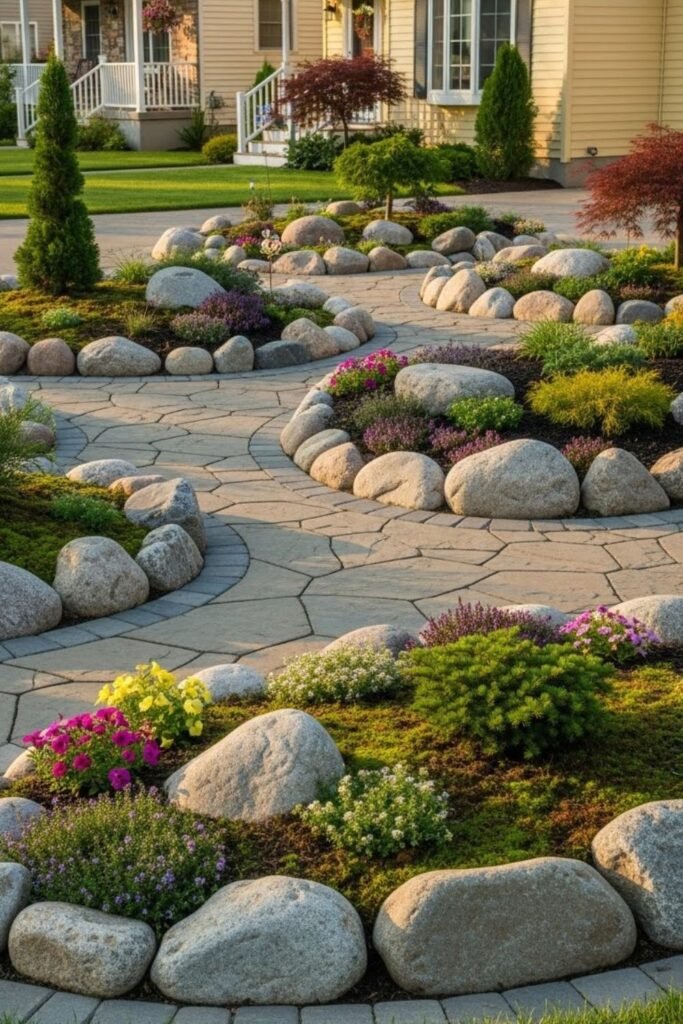
Year Round
Watching seasons change made me realize structure matters more than flowers. Stones keep their shape when plants fade, so I plan the layout to stand on its own.
Evergreens or slow-growing grasses fill gaps without stealing attention. Spacing stays generous so nothing looks crowded months later. Snow, rain, or heat doesn’t break the design.
The garden still feels finished even when plants rest, which keeps maintenance low and expectations realistic all year long for any climate.
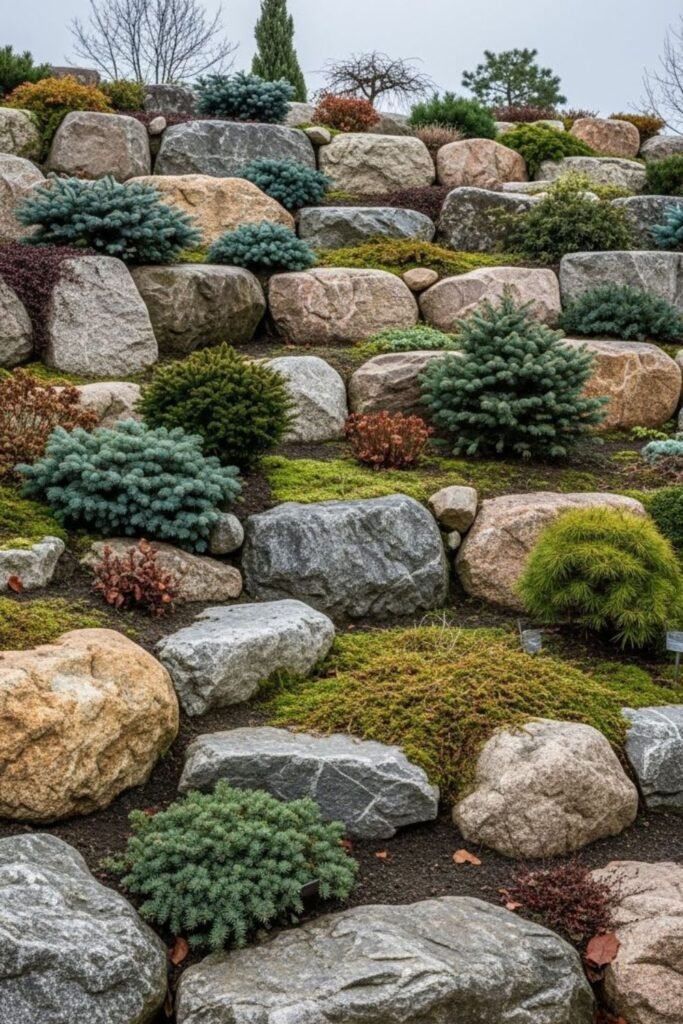
Corner Space
Unused corners always felt like forgotten mistakes until I gave them purpose. A compact rock garden fits naturally where nothing else works.
Angled stone placement helps pull the eye inward instead of outward. Height stays low to avoid blocking views. One or two plants soften the hard lines without overwhelming the space.
That once-awkward corner suddenly looks intentional, balanced, and easy to ignore when life gets busy and yard work drops down the priority list.
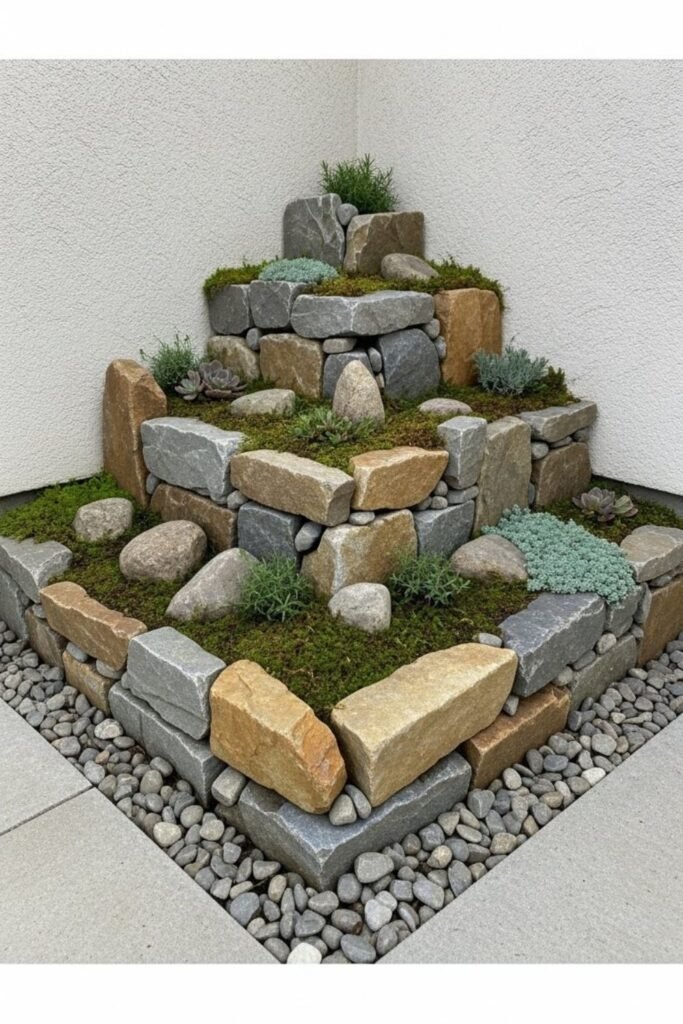
Texture Focus
Contrast does more work than color ever could. Rough stones beside smooth ones instantly add interest without plants doing much at all.
I mix flat slabs with rounded rocks so the eye keeps moving naturally. Plants stay simple and low so texture stays the star. This approach works especially well when flowers feel like too much effort.
The garden looks designed even on low-energy weeks when watering and trimming just don’t happen.
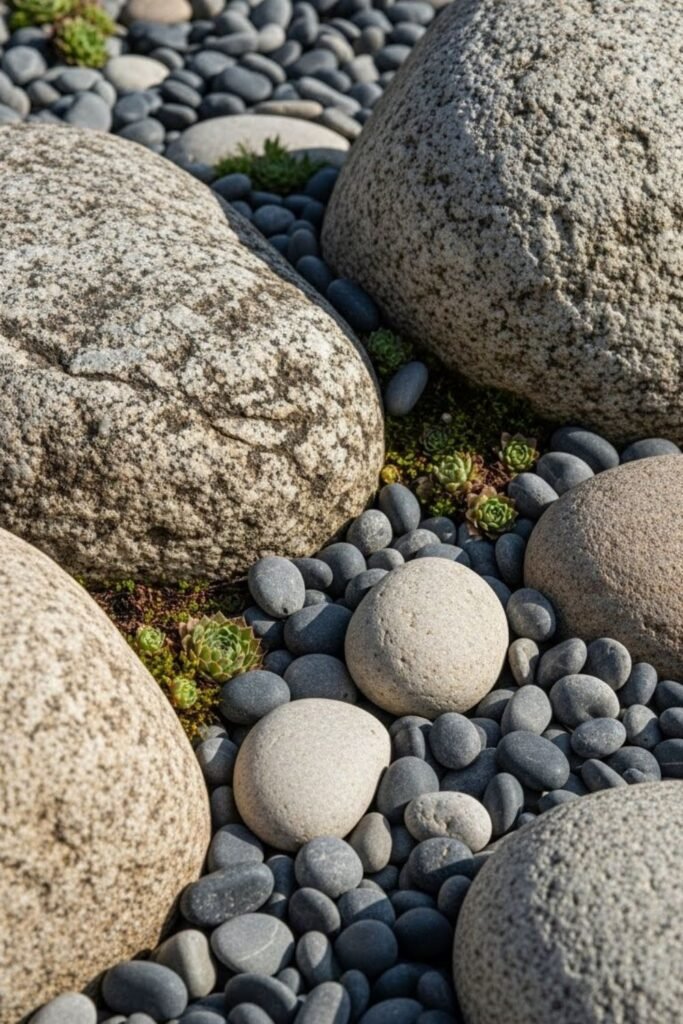
Hidden Pockets
Small gaps between stones became opportunities once I stopped filling everything tightly. Leaving pockets allows soil and plants to settle naturally.
Those hidden spaces protect roots from wind and heat while keeping growth controlled. Plants peek out instead of taking over. Maintenance stays minimal because weeds struggle in tight spaces.
The garden ends up feeling layered and natural, like it formed over time rather than being forced into place during one weekend project.
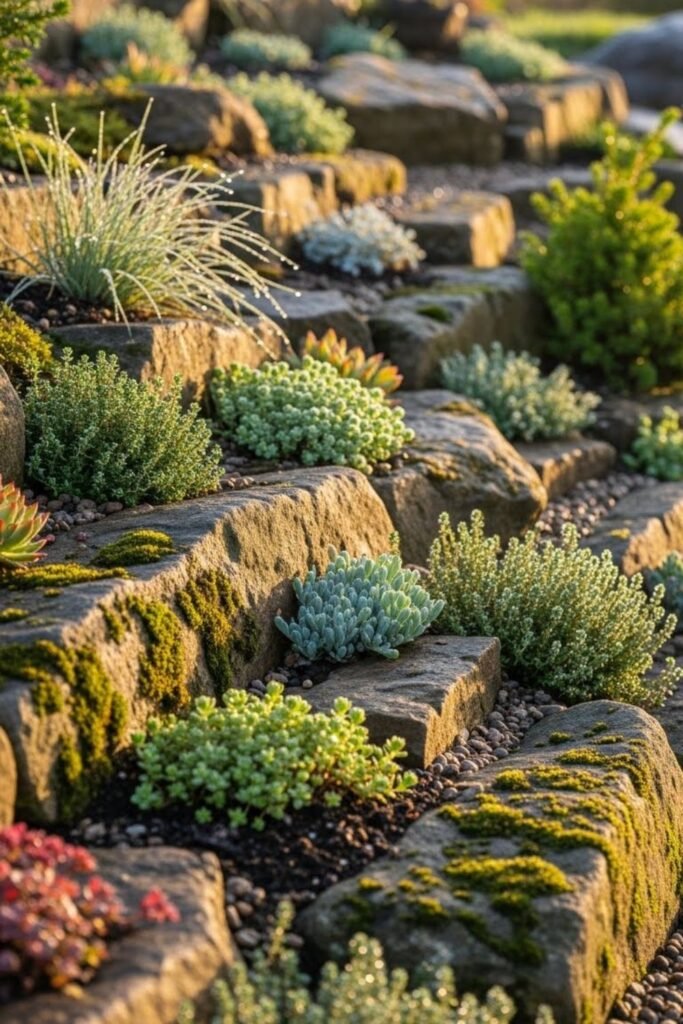
Weed Control
Battling weeds pushed me to design smarter instead of spraying more. Dense stone coverage blocks light while tight joints leave no room for growth.
I prepare the base carefully, compacting gravel before placing rocks. Fewer plants reduce disturbed soil, which weeds love. Maintenance drops because problems never start.
This method keeps the garden clean, predictable, and calm even when I skip yard work for weeks without stress or seasonal surprises appearing unexpectedly.
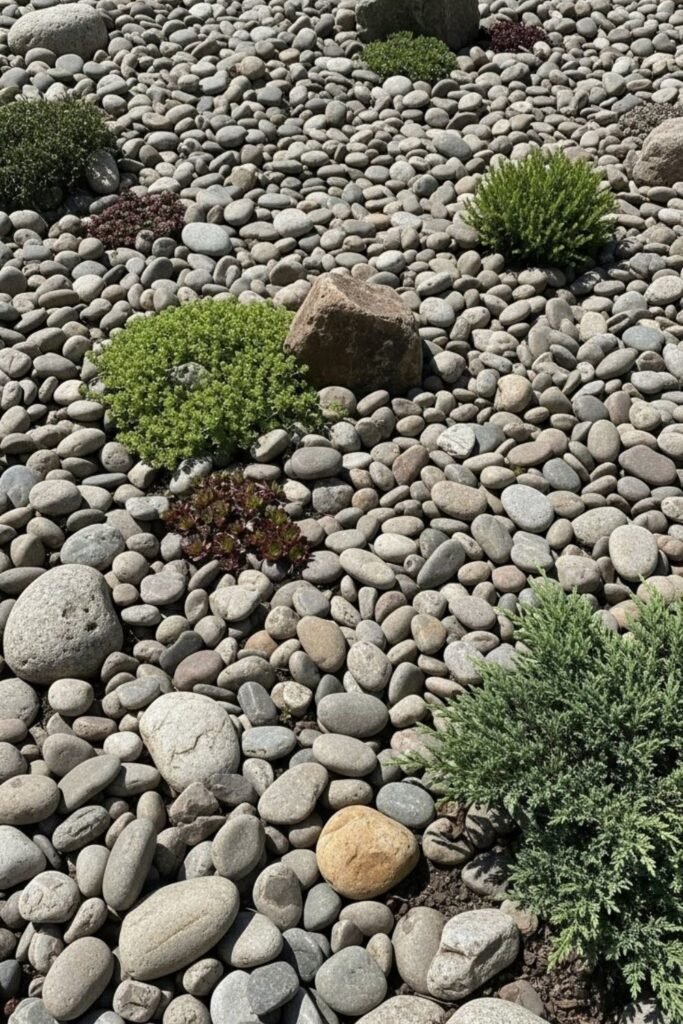
Beginner Build
Starting small saved me from costly mistakes early on. Simple layouts teach balance without overwhelming decisions. I choose easy stones, basic tools, and a forgiving plan.
Measuring less and adjusting more keeps pressure low. Progress feels steady instead of stressful. Confidence grows as the space takes shape.
This beginner-friendly approach turns hesitation into momentum and proves anyone can build something solid with patience and realistic expectations right at home on weekends.
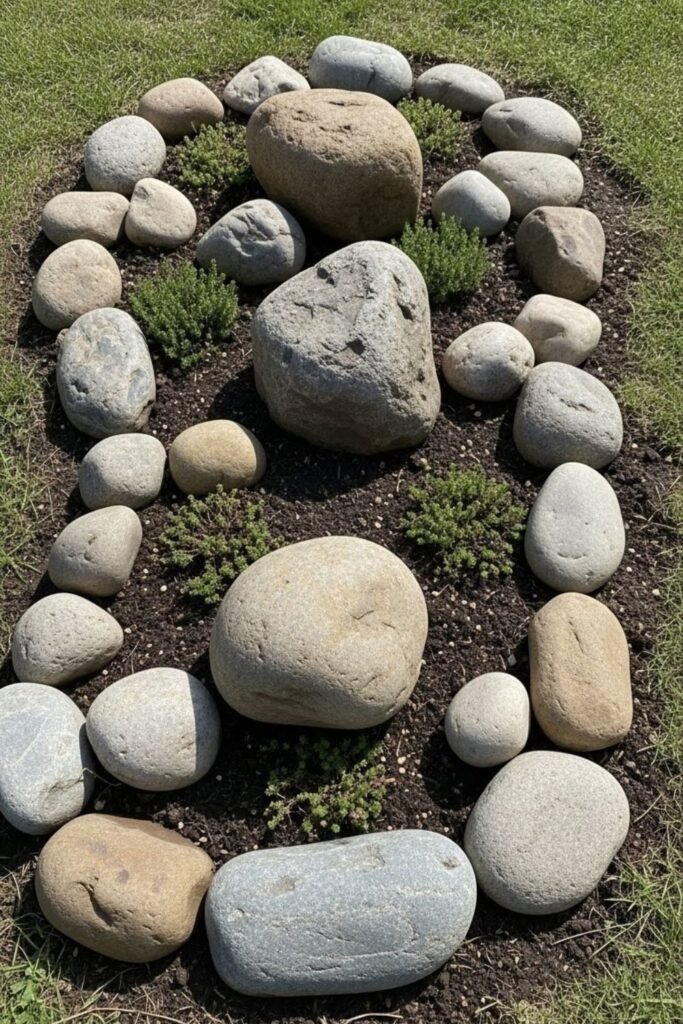
Lawn Blend
Blending stone into grass changed how my yard flows. Soft transitions avoid harsh stops between spaces. I sink rocks slightly so mowing stays easy. Plant choices stay low and flexible, never stiff.
The garden feels connected instead of separate. Edges blur naturally, making maintenance simpler.
This approach keeps the lawn usable while adding interest without stealing space or creating obstacles that complicate movement.
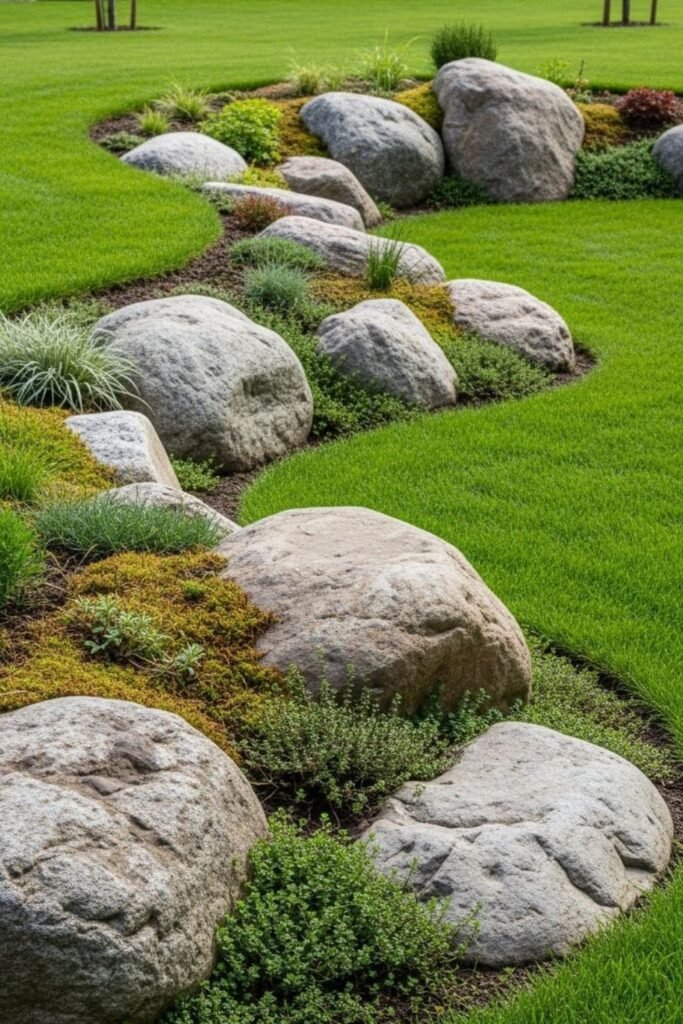
Pattern Repeat
Repeating shapes brought calm where chaos once lived. Consistent spacing creates rhythm without effort. I place similar stones at regular intervals, letting the eye rest.
Plants echo that pattern instead of competing. The design feels intentional even when simple. Mistakes disappear because repetition forgives small flaws.
This method suits anyone craving order without strict rules or constant adjustments while still allowing creativity to show through subtle variations in texture placement timing.
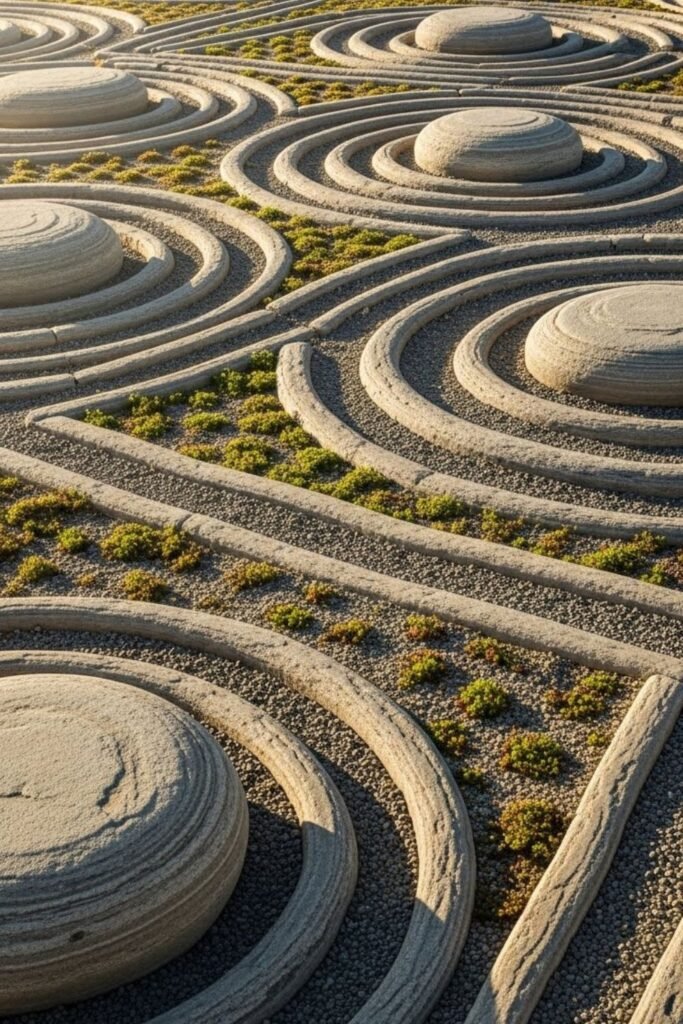
Stepping Zones
Walking through the garden helped me design it better. Stepping zones guide movement without forcing a path. Flat stones spaced naturally invite slow steps and casual pauses.
I keep surrounding rocks low so footing feels safe. Plants stay tucked away from walking areas to avoid tripping. This layout makes the garden interactive without turning it into a walkway.
Movement feels natural, maintenance stays easy, and the space becomes something you experience instead of just looking at from a distance.
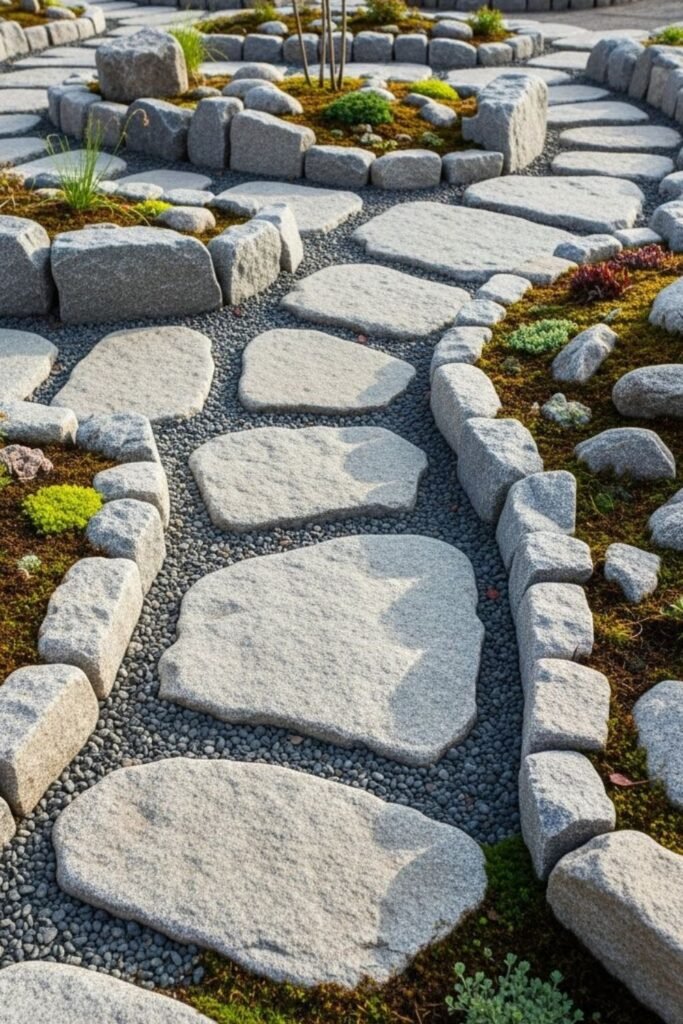
Low Profile
Keeping everything close to the ground changed how relaxed the space feels. Low-profile plants spread instead of reaching up, which reduces trimming and keeps views open.
Rocks stay partially buried so nothing looks stacked or forced. This setup handles wind better and stays neat longer. I prefer this style for small yards where height can feel overwhelming.
The garden feels calm, controlled, and easy to live with, even when I ignore it for longer than planned.
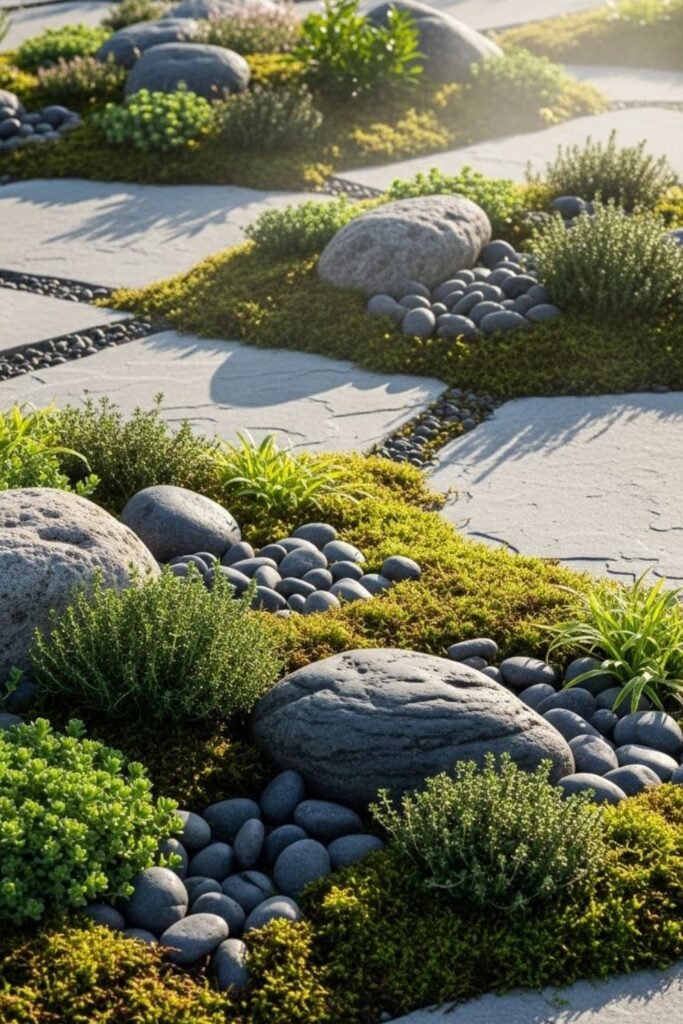
Front Appeal
First impressions matter more than we admit. Designing for curb appeal means thinking about distance, not details. I choose bold rock shapes that read clearly from the street.
Plants stay simple and repeat often so the look feels clean. Everything sits lower to avoid blocking windows or walkways. Maintenance stays minimal because front yards shouldn’t demand attention.
The result feels welcoming, polished, and intentional without turning weekends into constant upkeep sessions just to keep things looking presentable.
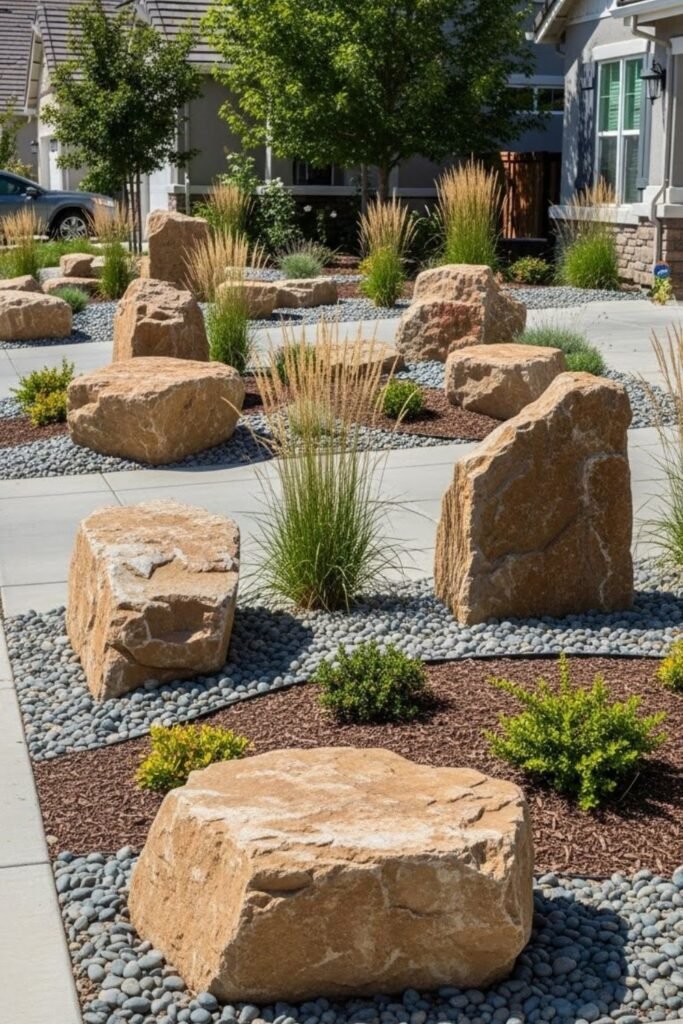
Depth Play
Flat designs felt lifeless until I added depth on purpose. Mixing stone sizes creates layers the eye can explore. Larger rocks ground the space while medium and small stones fill gaps naturally.
I avoid perfect symmetry so it doesn’t feel staged. Plants weave between levels instead of sitting on top. This approach makes even small gardens feel bigger.
And more interesting without adding complexity or maintenance. Depth brings character without demanding extra effort or constant adjustment later.
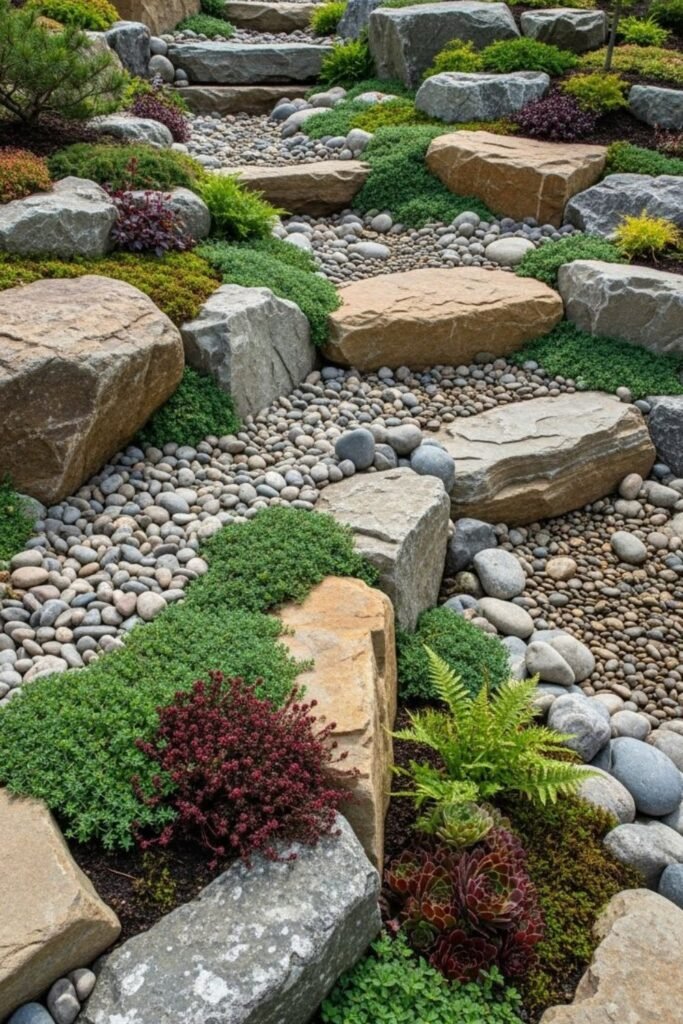
No Replant
Skipping seasonal replanting gave me back my time. I design this type of rock garden around plants that stay put and keep their shape year after year.
Growth stays slow, predictable, and easy to manage. Rocks carry most of the visual weight, so plants don’t need to perform. Once everything settles, nothing feels temporary.
This setup works best when you want consistency without reworking the space every few months or worrying about what needs replacing next season.
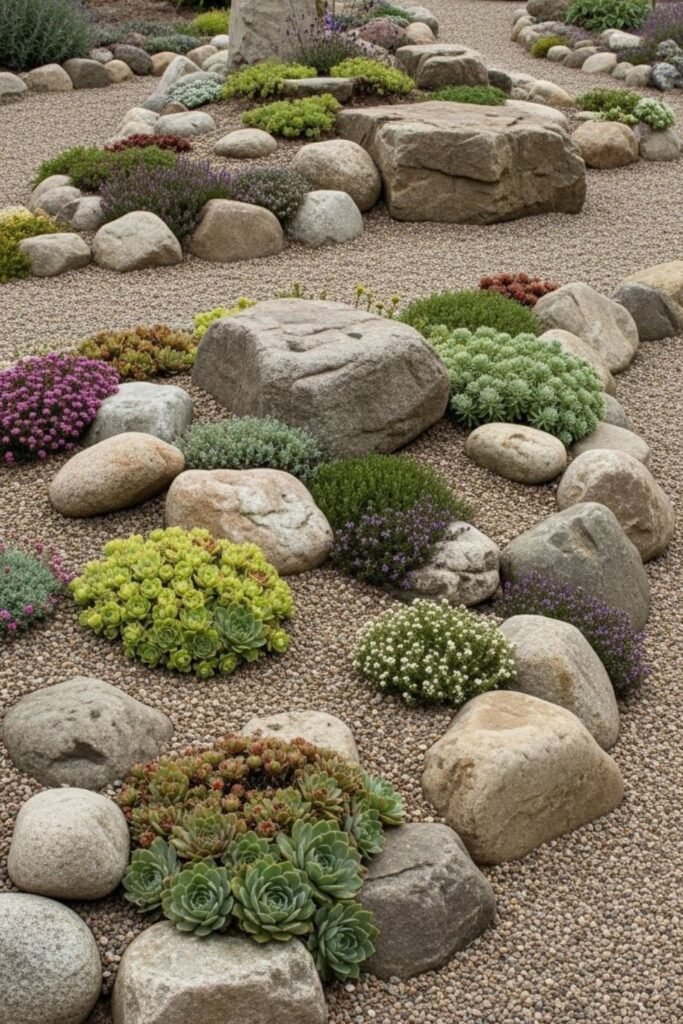
Hillside Look
Nature already knows how rock gardens should feel, so I borrow from it. Uneven spacing, irregular stone angles, and gentle height changes create a relaxed hillside effect.
I avoid straight lines completely and let gravity guide placement. Plants tuck into natural dips instead of sitting on top. The result feels settled, not designed.
This style works well when you want the garden to blend in rather than stand out, especially around slopes or uneven ground.
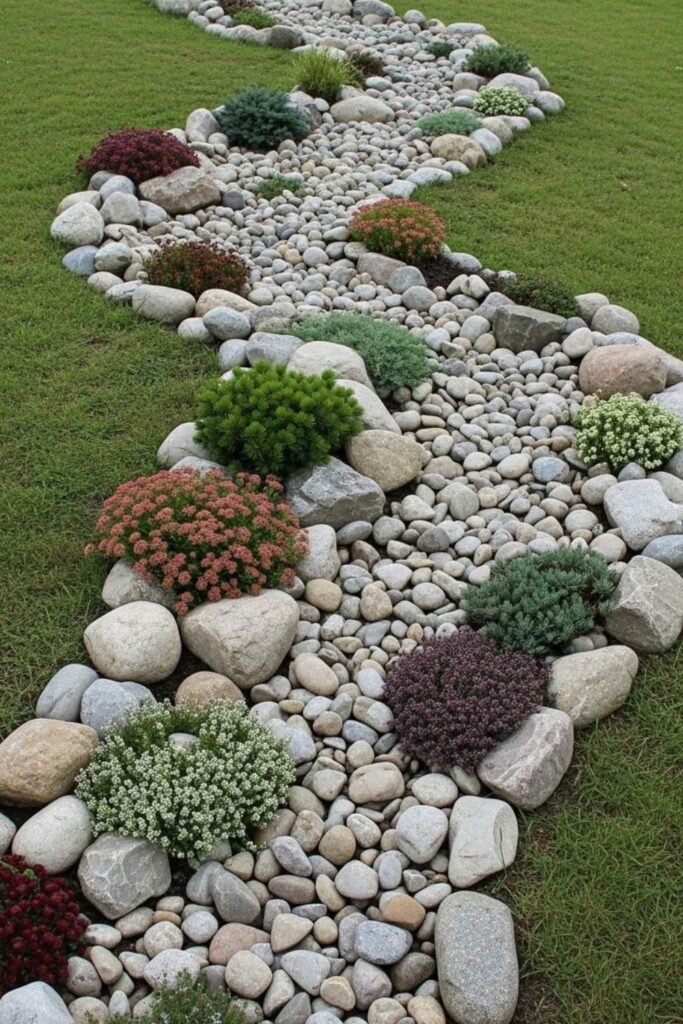
One Plant
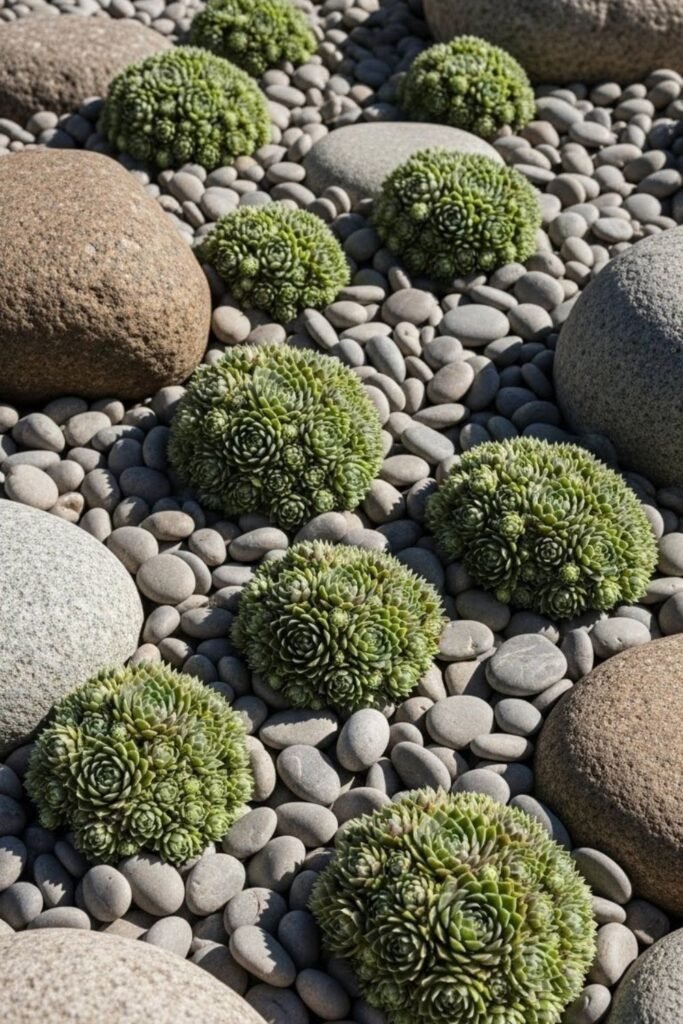
Resisting variety taught me the power of focus. Using one plant type throughout the garden creates instant harmony. Repetition feels calm instead of boring when paired with varied stone sizes.
Maintenance becomes predictable because every plant needs the same care. Visual clutter disappears, and the space feels intentional.
This approach works especially well for beginners or anyone who wants a clean look without constantly checking if different plants need different attention levels throughout the year.
FAQs
Do rock gardens actually save time, or is that a myth?
Rock gardens save time only when they’re designed right. When stones carry most of the visual weight and plants are chosen carefully, there’s less watering, trimming, and replanting.
If you overload the space with fast-growing plants or skip base preparation, maintenance comes back fast. A smart layout upfront is what makes the difference long term.
What’s the biggest mistake people make when building a rock garden?
Trying to fill every empty space. Rock gardens need breathing room to work visually and practically. Packing in too many stones or plants makes the area harder to manage.
And easier for weeds to take over. Leaving open space allows the design to settle naturally and keeps upkeep simple.

Hi, I’m Afaf! I’m a law student who loves all things home, style, and gardening. I’ve been writing for over a year about topics like home decor, DIY projects, plants, fashion, and beauty.
I like sharing ideas that are easy to try and don’t cost a fortune. Whether it’s organizing a messy closet, decorating on a budget, or keeping houseplants alive, I write about what I’ve actually tried myself.
When I’m not studying, I’m usually on Pinterest looking for my next project or adding another plant to my collection!