Boomers are done with this: 15 everyday frustrations they refuse to tolerate in 2026

There comes a point in life where patience stops being a virtue and starts feeling like a bad habit. I think most of us have reached that point, honestly. We have spent decades being polite about things that frankly deserved a stronger reaction, and somewhere along the way we started quietly deciding, no, not anymore. Not the sneaky charges, not the runaround, not the designed-in inconvenience that someone in a boardroom thought we would just accept without noticing.
And the thing is, we do notice. Maybe more than companies think we do, honestly. That is kind of the whole point. After a certain number of years, you get very good at recognizing when something is being done to you rather than for you. Whether it is a product that keeps shrinking while the price holds steady, a doctor’s office that treats your time like it matters less than theirs, or a website that ambushes you with noise the second you land on it, these things add up. And more and more, boomers are done adding them up quietly.
This list is a little bit of a knowing nod to all of it. Fifteen everyday frustrations that so many of us have simply decided we are no longer willing to absorb with a smile. Some of them will make you laugh because you have been there. Some might make you feel like finally, someone said it. Either way, come take a look. I think you will recognize a few of these.
1) Subscription Creep: Paying Monthly for Things They Already Own
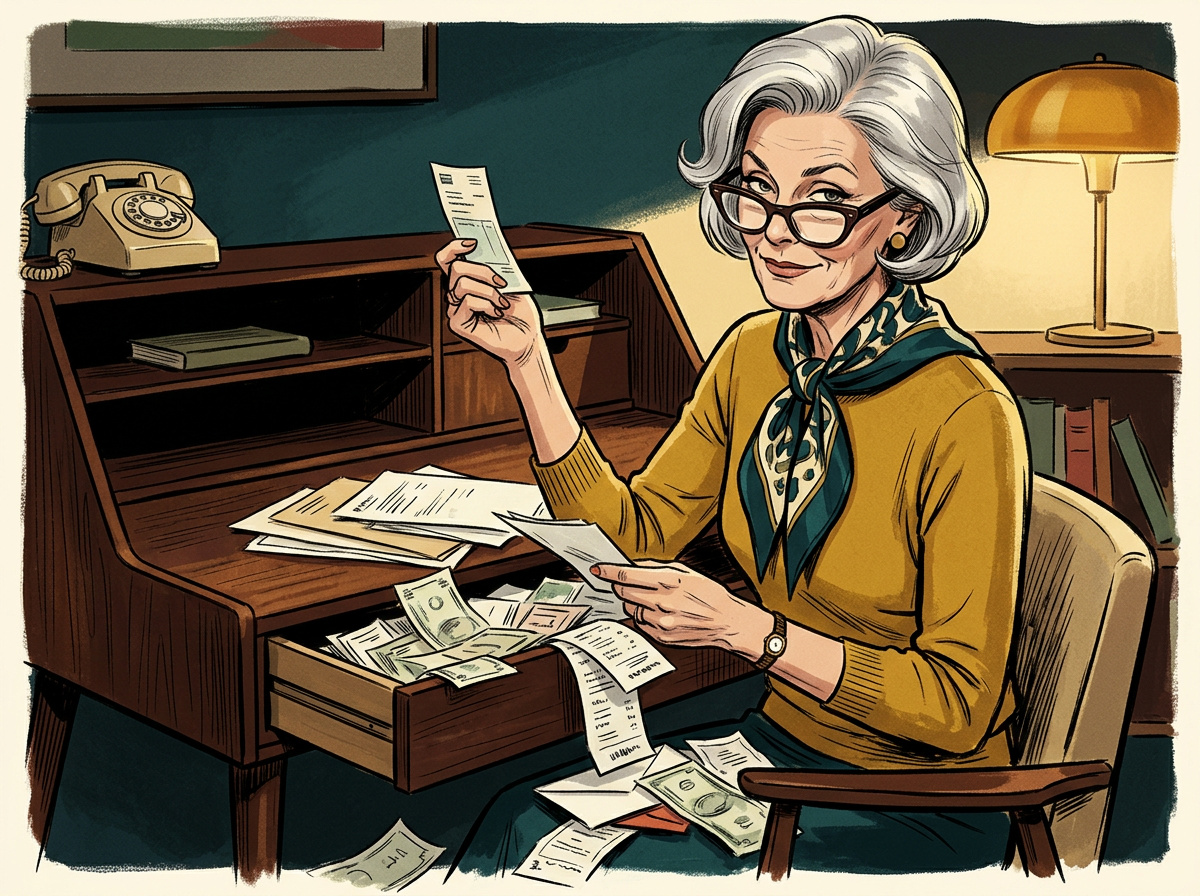
I remember when you bought software once and it was yours. You put the disc in a drawer and that was that. Now everything, from photo editing tools to recipe apps to antivirus programs, wants a monthly fee, and somehow the charges just quietly pile up in the background. It took me a while to realize how much was leaving my bank account every month for things I barely used. Subscription creep is sneaky by design, and the companies behind it are counting on the fact that small amounts feel too minor to bother canceling.
The real frustration is not just the money, it is the feeling of being nickel-and-dimed for access to things that used to be a simple one-time purchase. A lot of boomers have started doing regular audits of their subscriptions, and almost everyone finds at least one or two charges they had completely forgotten about. It adds up faster than you think, and honestly, the whole model feels like a relationship where the other party keeps quietly changing the terms.
2) Voicemail? They Have Not Listened Since 2019
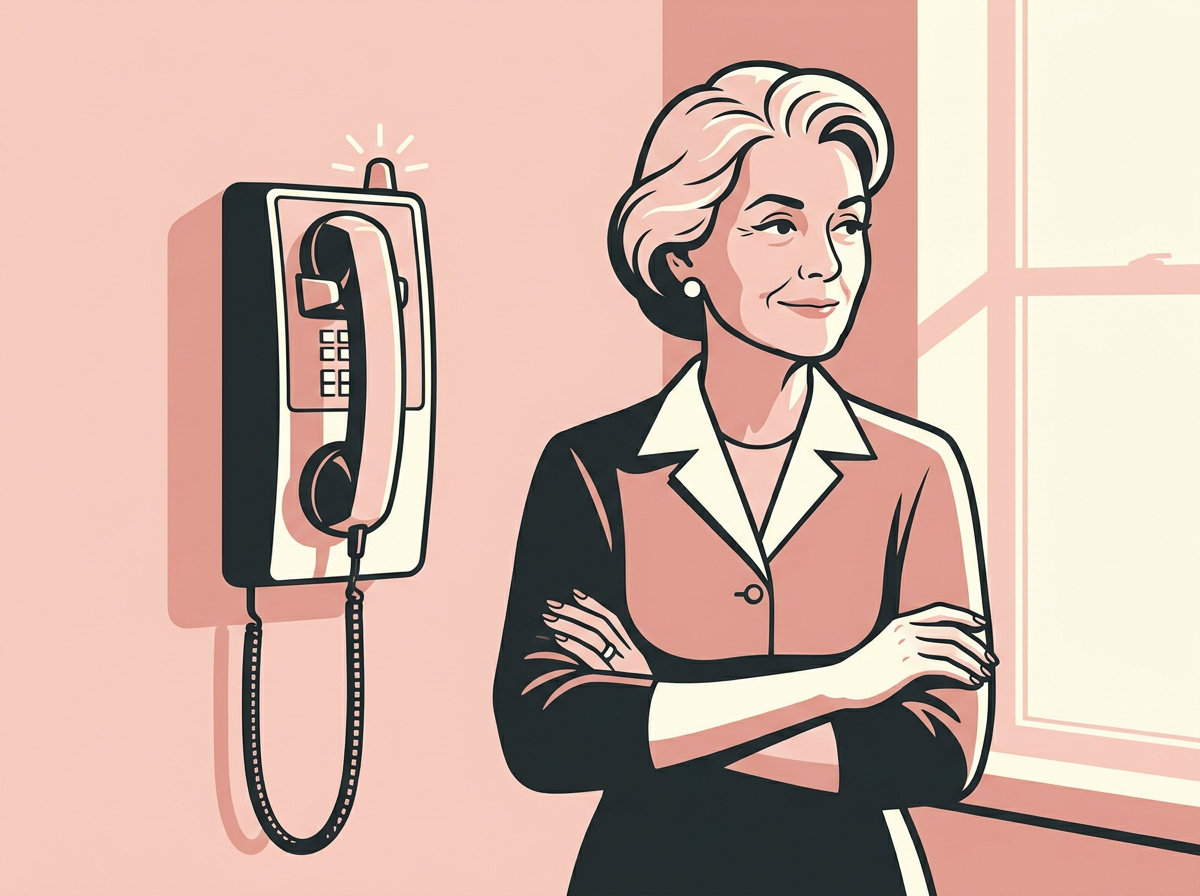
Voicemail had a good run. But at some point, it quietly stopped being a useful tool and became a small, avoidable chore that nobody wants to deal with, on either end. Most boomers have simply stopped leaving them, and a good number have stopped checking them, too. If it is important, send a text. Half the time I cannot even understand the voicemail anyway because somebody is calling from the grocery store with carts crashing around in the background. If it is really important, call back. The idea that a 90-second rambling message is a more respectful or effective way to communicate than a quick text has not held up well.
There is also the phone-tree problem, where the only way to reach an actual human being at a company is to navigate a voicemail system clearly designed to discourage you from ever getting through. That particular experience has tested the patience of even the most easygoing people. It is not that boomers are anti-technology, it is that they are very good at recognizing when a system is working against them rather than for them. And voicemail, in most of its current forms, has ended up on the wrong side of that line.
3) Self-Checkout Lines That Turn Shoppers Into Unpaid Cashiers
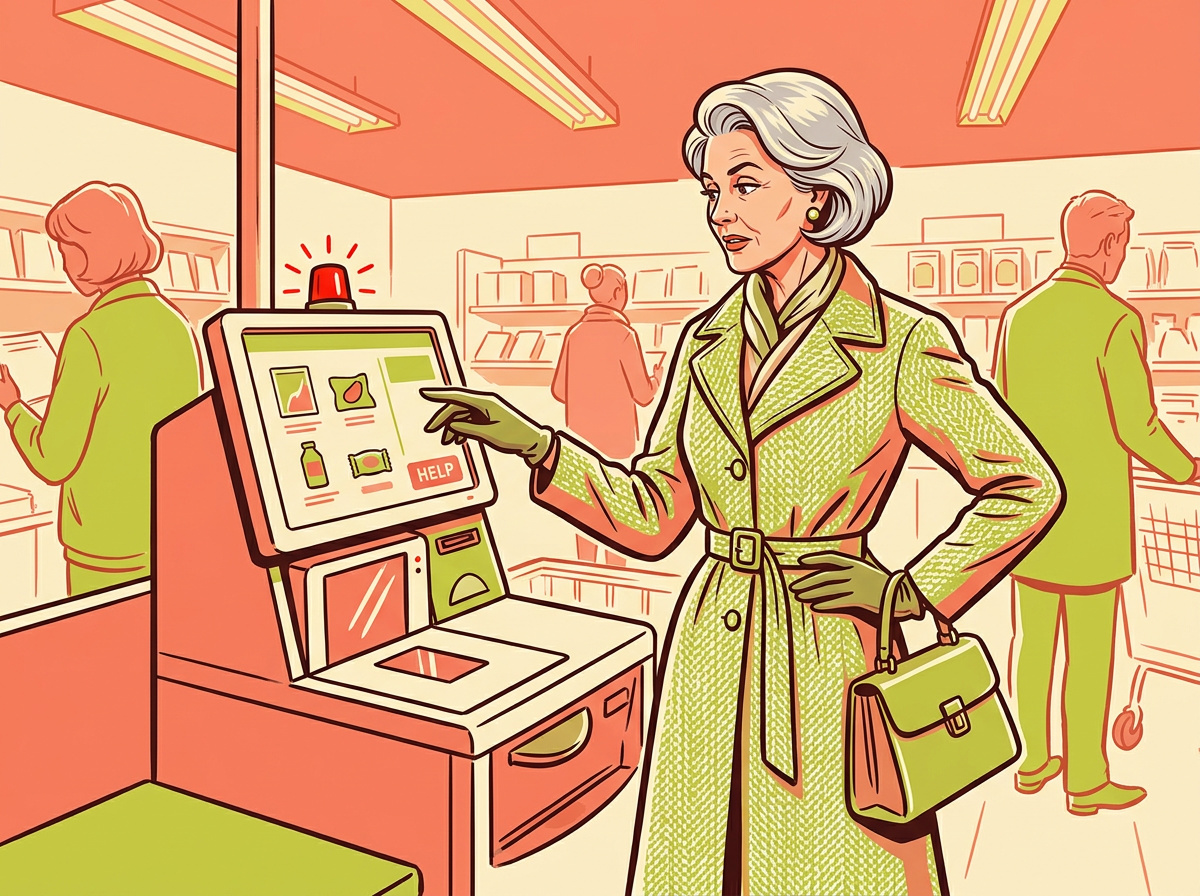
There is something almost impressive about how stores managed to frame doing the cashier’s job yourself as a convenience. Unexpected item in the bagging area. Please wait for attendant. Remove item and try again. The machine malfunctions more often than it should, and yet the staffed lanes keep getting fewer while the self-checkout kiosks multiply. I have watched perfectly capable people stand there looking flustered… and honestly the machines seem stressed too.
The frustration goes a little deeper than just the inconvenience, though. There is a reasonable feeling that stores are quietly transferring labor onto customers while keeping prices where they are, or raising them. Boomers grew up in an era when customer service was actually part of the transaction, not a premium add-on. The idea of being handed a scanner and wished good luck does not sit well, and more people are simply choosing the stores that still offer a proper checkout lane without making you feel like you are asking for something unusual.
4) Shrinkflation Dressed Up as a Redesign

The bag gets a fresh new look. The logo is updated. Everything feels modern and refreshed, and also, there are four fewer ounces in the package at the same price you paid before. Shrinkflation is not a new trick, but it has gotten more brazen, and more creative. Taller bottles with a curved base that eats into the volume. Wider chip bags with more air. A cereal box that looks identical until you notice the weight printed in smaller font on the back has quietly changed.
What gets people is not just the cost, it is the assumption that nobody will notice. Boomers especially tend to notice. We remember when a bag of chips actually stayed full all the way home. I’ve noticed myself holding a product in the grocery store thinking, this feels lighter than it used to, and usually I am right. It is a small dishonesty, and small dishonesty repeated often enough starts to feel like a larger one. A lot of people have started buying less of what they used to buy without complaint, which is its own kind of quiet vote.
5) When the Doctor’s Office Runs 45 Minutes Late With Zero Apology
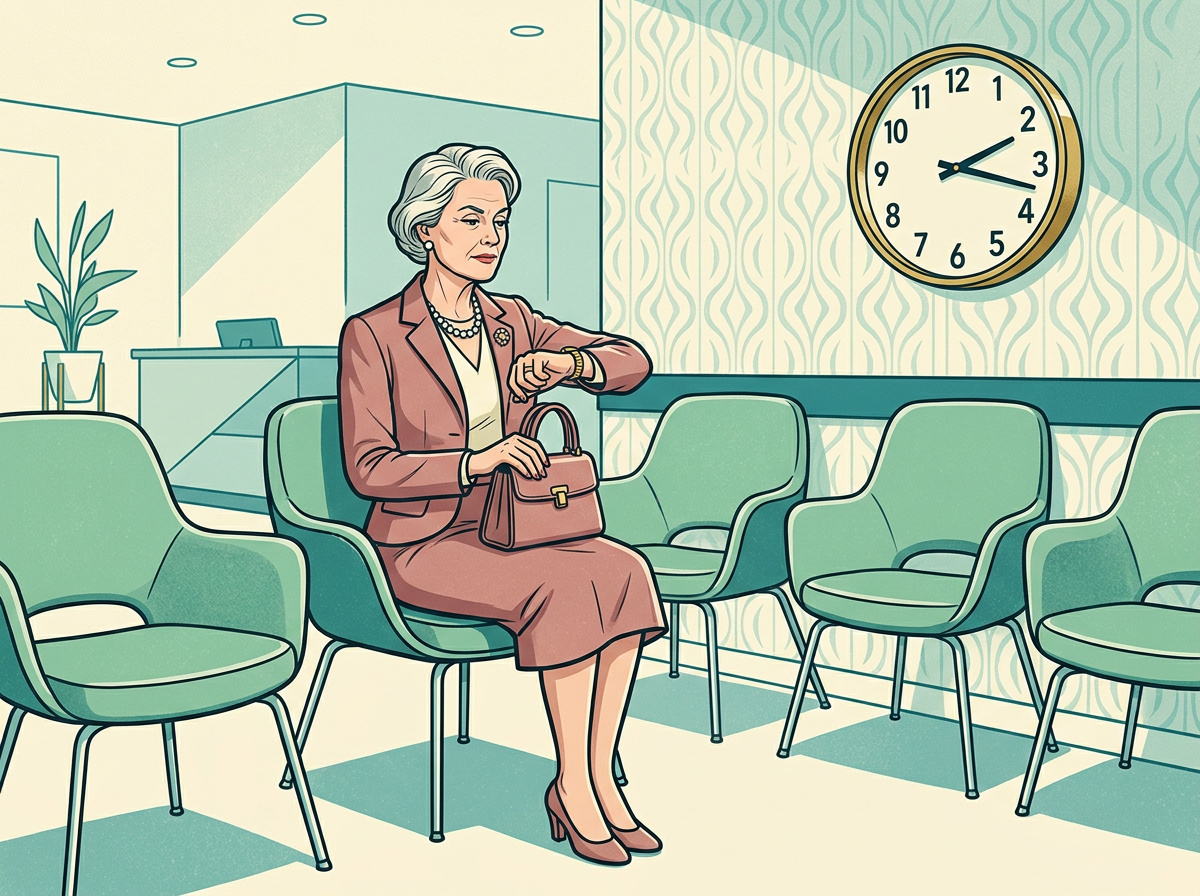
You arrive on time, because you were raised to arrive on time. You fill out the forms, even though you filled out the same forms at your last three visits. And then you sit. And sit. And eventually a nurse calls you back, and nobody mentions the 45-minute wait, and you are somehow expected to move on as if nothing happened. The lack of acknowledgment is often the worst part. A simple, genuine sorry for the wait goes a very long way. I think people underestimate how much basic courtesy still matters to alot of us, and it costs nothing, and yet it seems to be increasingly rare.
This is not about expecting perfection, emergencies happen and schedules slip, and most people genuinely understand that. What wears on people is the routine lateness that clearly has nothing to do with an emergency, combined with the office’s careful attention to billing, paperwork, and your own punctuality. I’ve started mentioning it more directly than I used to, gently but honestly, because I’ve come to believe that staying quiet about it does not make it better for anyone. Your time is real. It matters. And you are allowed to say so.
6) Auto-Play Videos on Every Website They Visit

You click a link to read an article. Before you have finished the first sentence, a video has launched itself somewhere on the page, usually with sound, often completely unrelated to what you actually came to read. Auto-play videos are one of those design choices that exists entirely for the benefit of the website, not the visitor. They inflate video view counts, serve more ads, and create the impression of engagement that was never actually invited. And they are everywhere now, which makes the whole internet feel a little more exhausting than it needs to be.
The reason this lands so hard for boomers especially is that many of them came to the internet as readers first. They wanted information, clearly presented, without interruption. The experience of trying to find the muted tab or the hidden pause button while also attempting to read something has become a familiar minor indignity. A lot of people have started keeping browser extensions installed just to manage it, which says something. When your users need a workaround to comfortably use your website, that is probably worth noticing.
7) Tipping Prompts on a Screen Before Anyone Has Served Them Anything
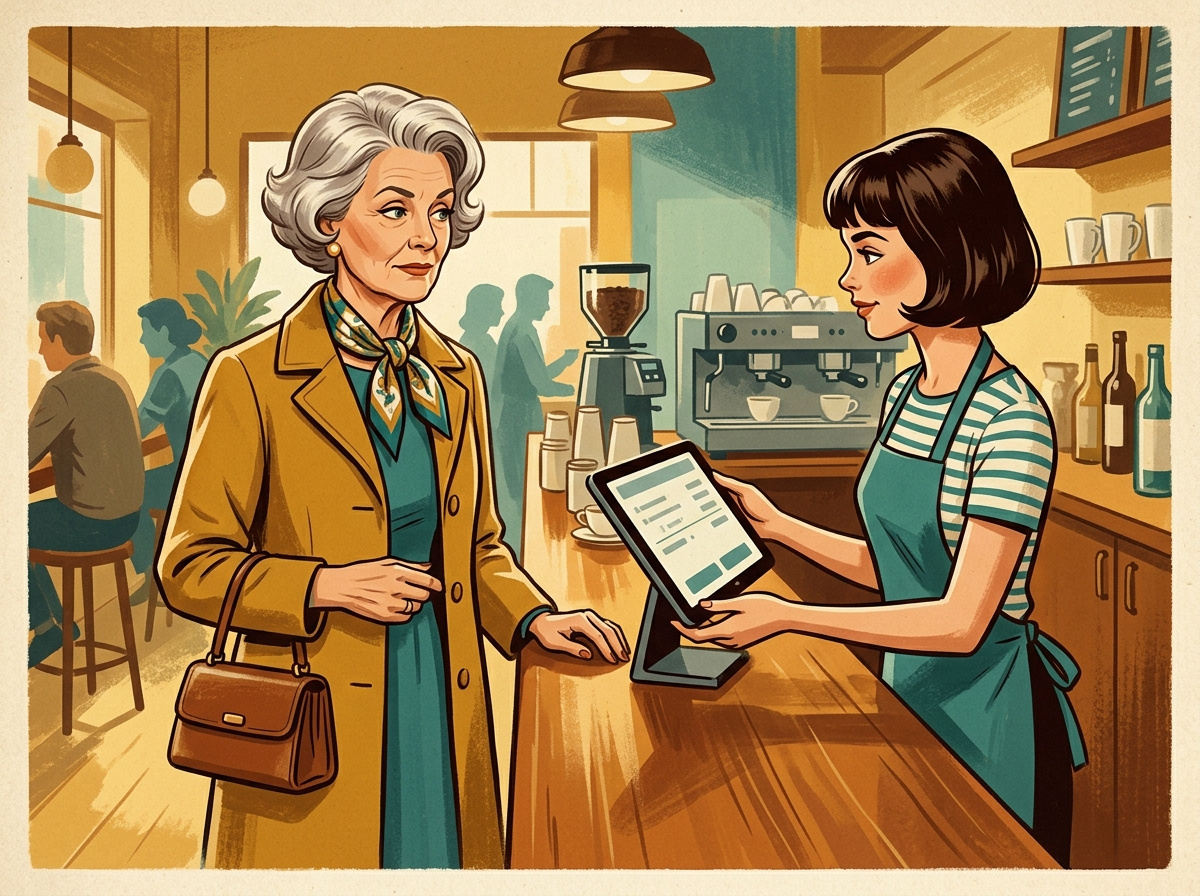
You walk up to a counter, order a coffee, watch someone press two buttons and hand you a cup, and then a screen spins around and stares at you with three tip options starting at 20 percent. I do not mind tipping generously for real service. I have done it my whole life and I always will. But there is something uncomfortable about being asked before the transaction is even finished, in front of other people, with a timer running. It puts the guilt before the experience, which still feels backwards to me no matter how many times I see it.
The awkwardness is by design, and honestly, most of us know it. The prompt is engineered to make pressing No Tip feel like a public statement of bad character. What started as a reasonable feature for full-service situations has crept into every self-serve counter, vending-adjacent kiosk, and grab-and-go window imaginable. Boomers are not opposed to generosity. They are opposed to being socially pressured into it before a single thing has been done for them.
Save this post for later ❤️
8) Furniture That Requires an Engineering Degree to Assemble
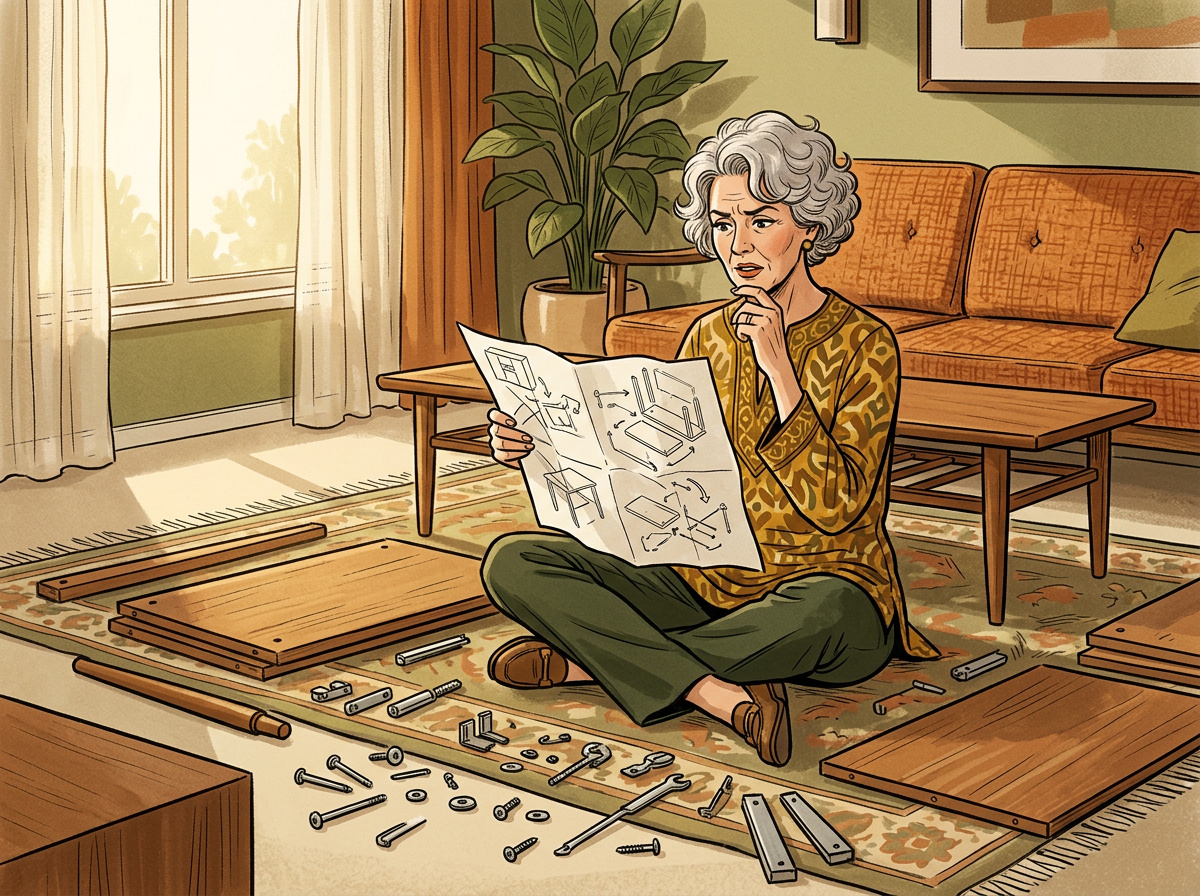
The box looked manageable. The picture on the front looked simple. And then you open it and find seventeen unlabeled hardware bags, a wordless instruction sheet made entirely of tiny diagrams, and one allen wrench that will inevitably strip before you reach step nine. I remember a time when furniture arrived assembled, or at least close to it. Now flat-pack everything has become so normalized that we have all just accepted spending a weekend on the floor surrounded by particle board, trying to figure out which end is which.
It is not just the physical effort, though that is real and worth saying plainly. It is the way the instructions seem to assume you have the spatial reasoning of a structural engineer and the patience of a saint. One wrong step and suddenly nothing lines up, and you cannot go back without fully disassembling what you just built. Boomers have earned furniture that does not arrive as a puzzle. A little more honesty on the box about what is actually involved would be a reasonable start.
9) Fine Print That Needs a Magnifying Glass to Read
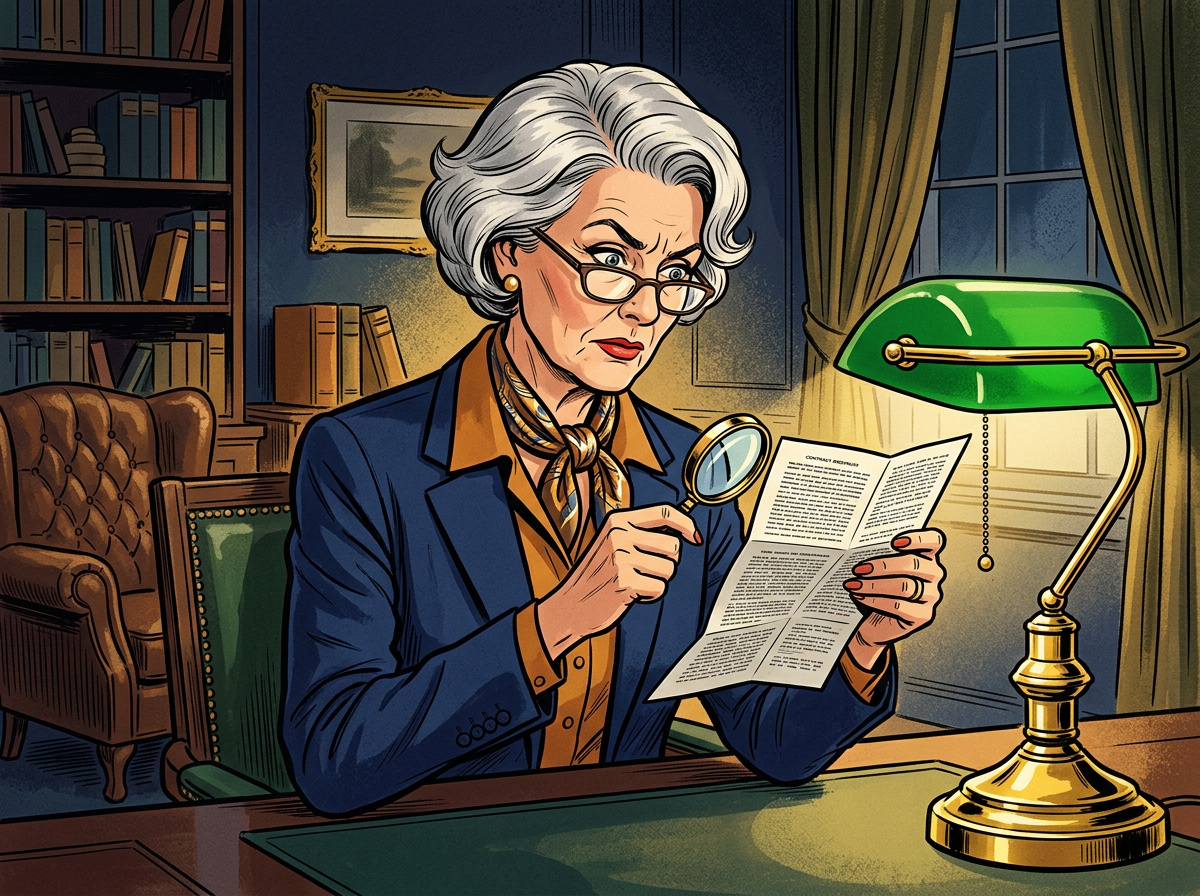
It is not a vision problem. It is a font size chosen specifically so you will not read it problem. The terms, the exclusions, the expiration dates, the fees that kick in after the introductory period, all of it tucked into text so small it practically dares you to squint. I have held my phone at three different distances trying to read the conditions on a coupon, and at some point that stops being funny. If the information matters enough to include, it matters enough to print at a size a human can actually read.
The fine print is where the real deal usually lives, and most companies are counting on you not to get there. Renewal clauses, data-sharing permissions, cancellation windows that close faster than you noticed them open. Boomers have been burned by fine print enough times to know exactly what it is hiding. The growing refusal to sign anything without reading it carefully, even when that means holding up a line or asking for a larger copy, is not stubbornness. It is just hard-won good sense.
10) Reply-All Chains That Bury the One Email That Actually Mattered
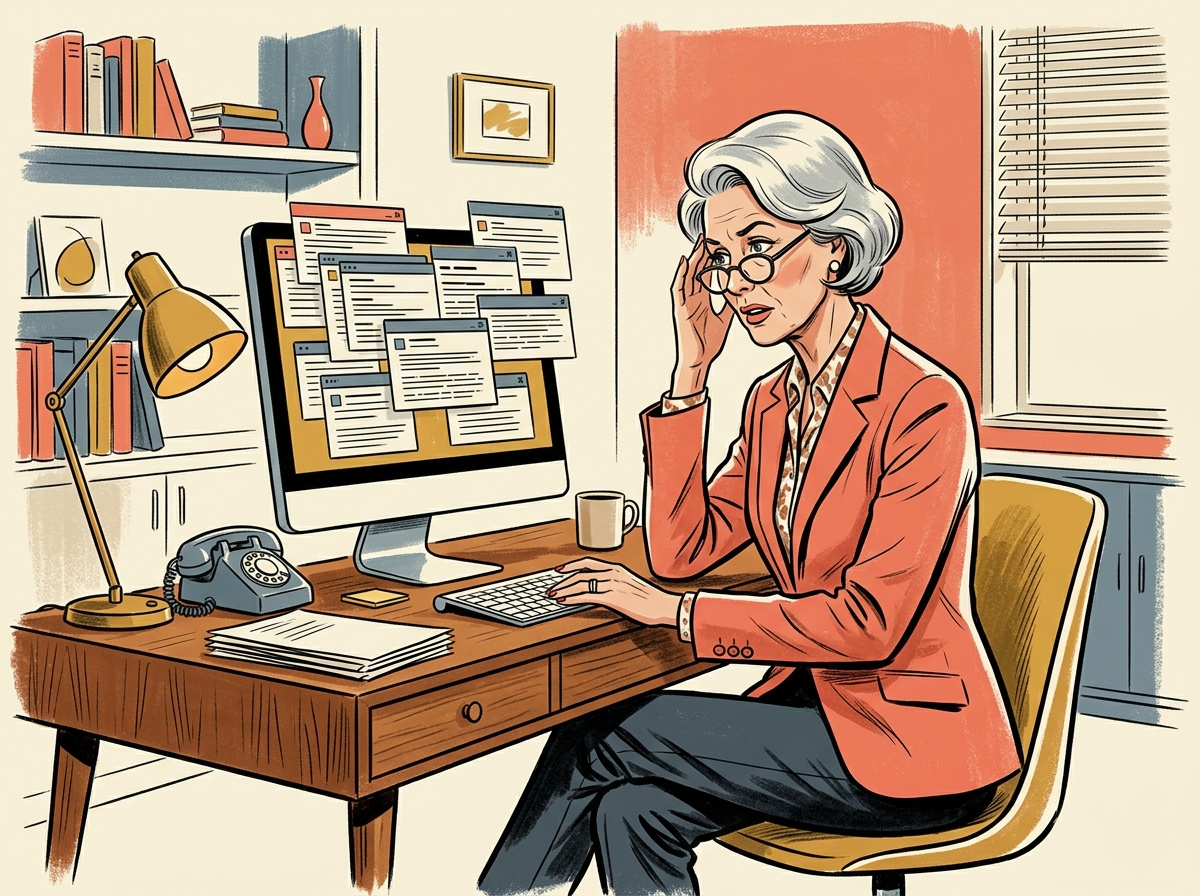
Someone sends a group email. Fine. Then someone hits reply-all to say thanks. Then someone else hits reply-all to say great, see you then. Then another person replies to ask a question that was already answered in the original message, and now your inbox has fourteen emails and the one attachment you actually needed is buried somewhere in the middle of all of it. Reply-all is one of the great plagues of modern communication, and it has been for years, and somehow it has not improved at all.
The real cost is not just the clutter. It is the time spent opening, scanning, and mentally filing messages that contain nothing useful, multiplied by every chain, every week, every month. Boomers who spent their careers respecting other people’s time find this particular habit genuinely grating. If your reply is not relevant to everyone on the thread, it belongs in a direct message. This is not a complicated principle. It is just one that a surprising number of people still have not internalized, and the rest of us are done quietly absorbing the overflow.
11) Apps That Demand an Account Just to Browse
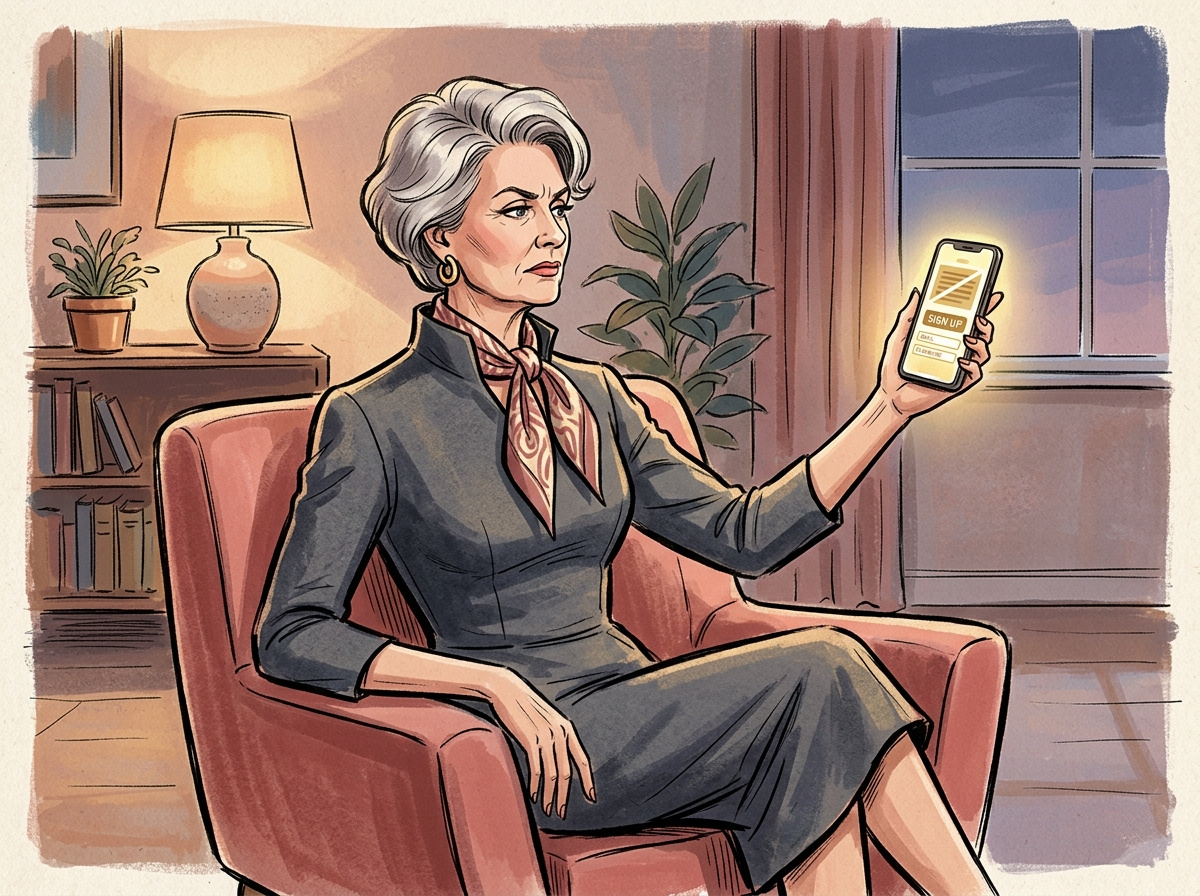
You want to look at one menu, check one price, or read one article. The app has other ideas. Create an account. Enter your email. Choose a password. Verify your email. Allow notifications. By the time you have done all of that, you have forgotten what you originally wanted to find, and also handed over your contact information to a company you are not even sure you like yet. It took me a while to realize that this is not about convenience on their end either. It is about data collection, plain and simple.
The workaround most boomers have landed on is just closing the app and finding the information somewhere else, which is a completely reasonable response. Requiring a full account setup before letting someone simply browse is a hostage negotiation, not a welcome mat. The brands that let you look around freely before asking for anything tend to earn a lot more goodwill, and honestly, a lot more actual customers. The ones that gate everything from the first second are increasingly being left behind, and good riddance.
12) Stores With No One on the Floor Who Can Answer a Question

You need to know if a product comes in a different size, or whether two items are compatible, or simply where something is located in a store that has been rearranged since your last visit. So you look around for an employee. And look. And look a little more. Eventually you find someone, and they are either stocking shelves with headphones in, or they turn out to work in a completely different department and cannot help you. Retail staffing has gotten thin enough that getting a straight answer in a physical store now feels like a minor achievement.
This one stings a little because boomers genuinely prefer shopping in person for certain things. The whole point of going to the store, rather than ordering online, is being able to ask a question and get a real answer from someone who knows the product. When that option disappears, the advantage of the physical store disappears with it. A well-staffed floor used to be a point of pride for retailers. The ones who still invest in knowledgeable people are the ones boomers keep going back to, and that loyalty is not something you earn by cutting corners on staff.
13) Hold Music Playing for 40 Minutes and Then the Call Drops
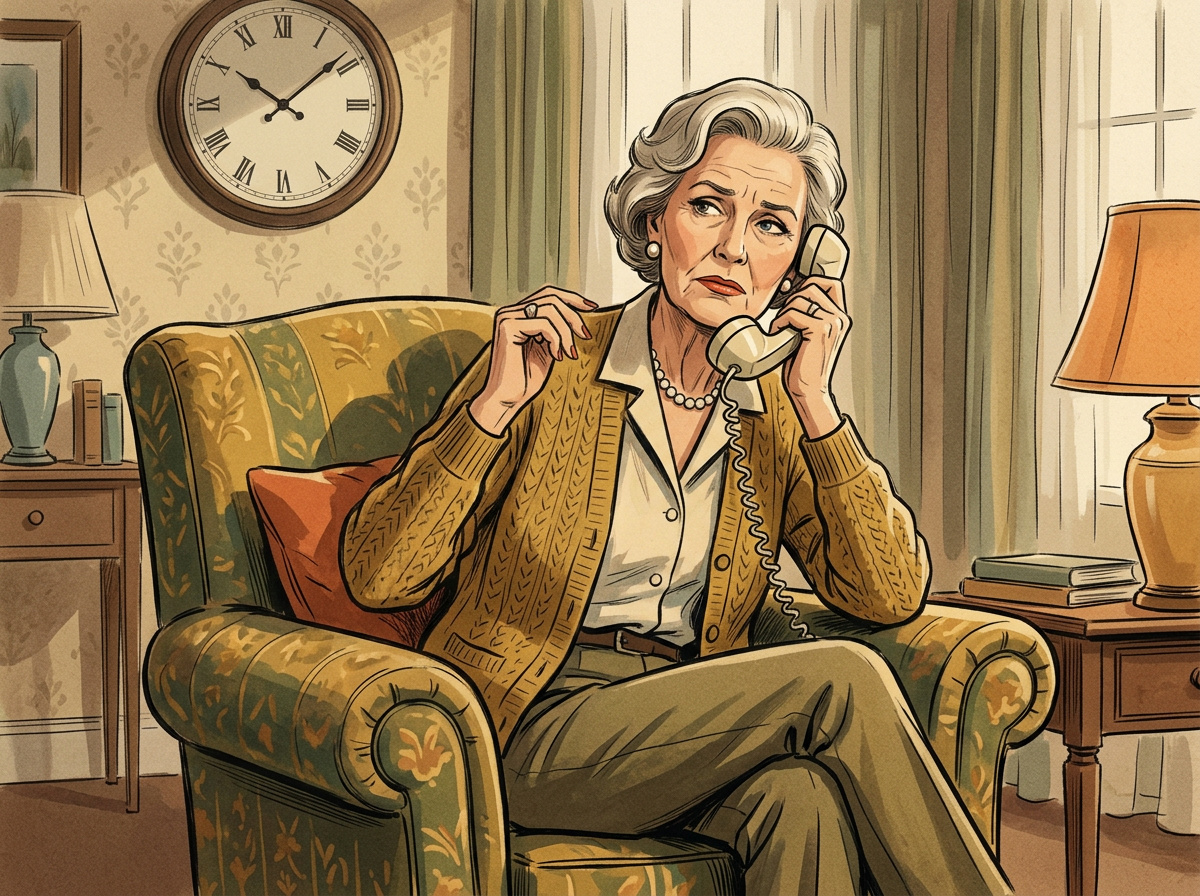
I have lost count of the number of times I have sat there, phone wedged between my ear and my shoulder, listening to the same eight bars of instrumental music loop for what feels like a geological era, only to hear a click and then silence. Not even the decency of a goodbye. Just gone. And you know what comes next, the whole thing starts over. You redial, you navigate the menu again, you explain your situation to a new person who has no idea you already explained it once.
What makes it genuinely maddening is not just the wait. It is the false promise of the wait, the sense that someone is almost there, that your patience is about to pay off. Holding feels purposeful right up until it isn’t. A callback option should be standard practice by now, and honestly, for most companies there is no good excuse why it isn’t. We have earned the right to say: call us back, or we will find someone else who will.
14) Passwords Reset for No Reason Right Before Something Important
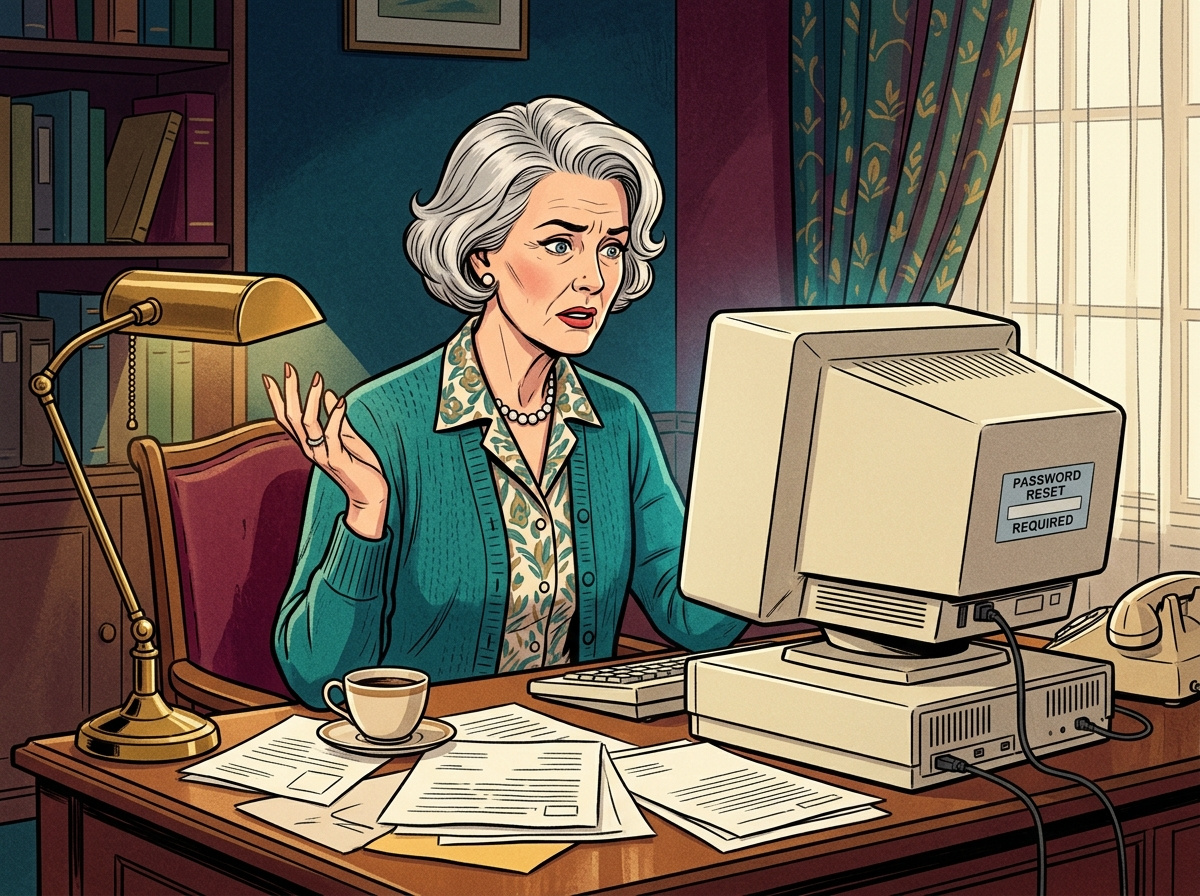
It always happens at the worst moment. You are trying to check in for a flight, pay a bill before the deadline, or pull up a confirmation you need right now, and the site has decided, without warning, that your password no longer works. Not because anything was hacked. Just because. Maybe it has been ninety days. Maybe their system updated. Maybe the digital universe simply felt like making your afternoon harder. Whatever the reason, you are now locked out at exactly the wrong time.
And the reset process is never quick, is it? There is an email to wait for, a link that expires in ten minutes, a new password that must contain a capital letter, a number, a symbol, and apparently the tears of a saint. I’ve noticed that the older I get, the less patience I have for systems that treat basic access like a security obstacle course. We are customers, not suspects. A little more grace in the design would go a long way.
15) Packaging So Armored It Draws Blood to Open
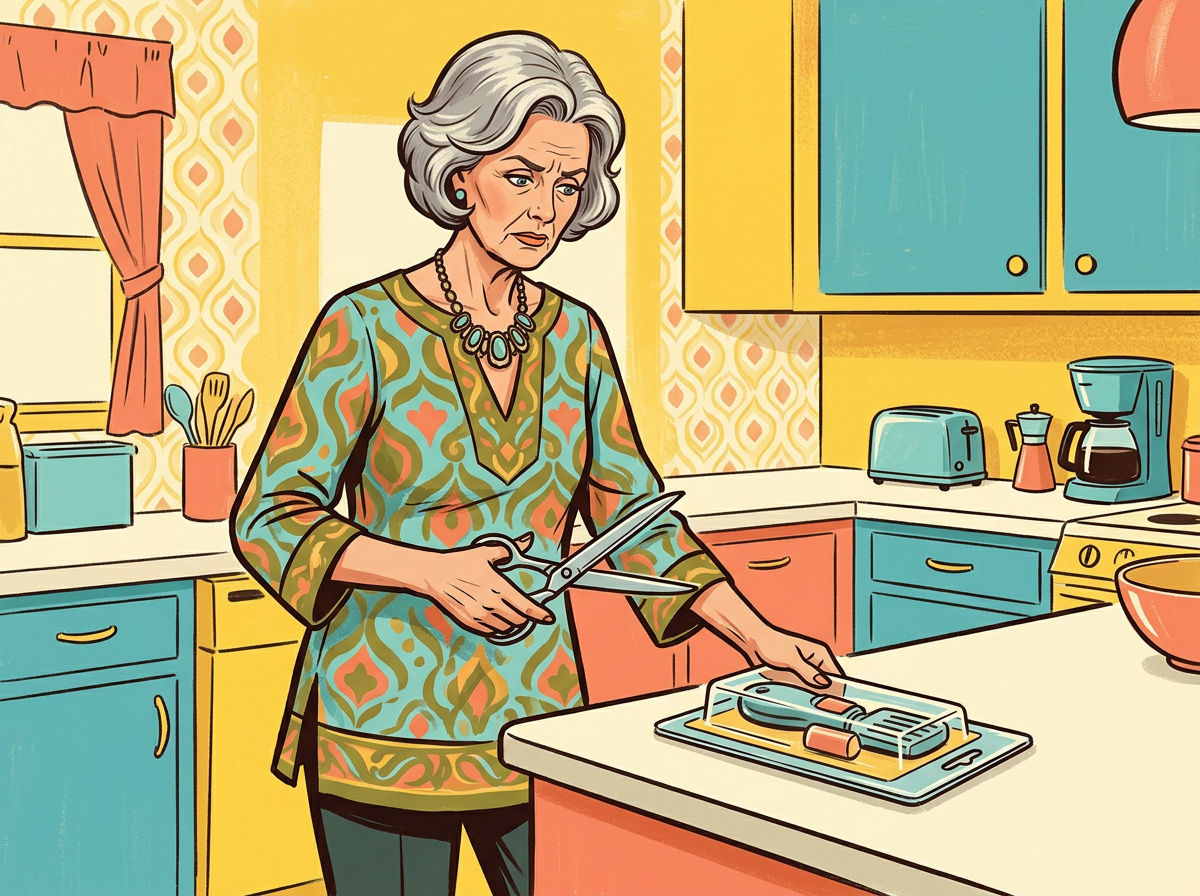
Somewhere, at some point, someone decided that packaging needed to be completely impenetrable, and nobody in the room pushed back. The hard plastic clamshells that require scissors, which then require a first aid kit. The zip ties twisted into themselves four times over. The cardboard sealed with enough tape to hold together a small aircraft. It took me a while to realize I was not doing it wrong. The packaging actually is that bad, by design or by indifference, and it treats every buyer like a potential thief rather than a person who just wants what they paid for.
The frustration goes beyond inconvenience. There is something almost insulting about wrestling with a product for ten minutes before you can even use it. Especially for anyone with arthritis, reduced grip strength, or hands that are simply not as cooperative as they used to be. Easy-open design exists. Some companies use it beautifully. The ones that do not have simply decided it is not a priority, and that, more than anything, is what makes it so hard to let go of. We notice. And we remember next time we shop.
I’ve spent over four decades building a marriage, raising a family, and learning what truly matters along the way. I write about relationships, home, and navigating life’s later seasons with grace, honesty, and a little humor. My goal is to share the kind of steady, real-life wisdom that helps you feel grounded, encouraged, and a little less alone.