
22 Kitchen Garden Ideas For 2026
You want to grow your own herbs or vegetables, but there’s one big problem – you don’t have soil, space, or a proper garden.
Maybe you live in an apartment, maybe your balcony is tiny, or maybe the idea of dealing with dirt just feels messy and overwhelming.
You’ve probably wondered if a kitchen garden is even possible in your situation. The good news is this: you don’t need soil at all.
This article brings together 22 smart Kitchen garden ideas tailored for modern outdoor living in 2026.
Let’s jump in!
Can You Create a Kitchen Garden Without Using Soil?
Yes, you absolutely can. If you think soil is the only way to grow plants, that’s where most people get stuck.
Plants don’t actually “eat” soil they need water, light, and nutrients. Soil is just one way to deliver those nutrients.
When you replace soil with water or other growing mediums, plants still grow just fine. If you can place a jar or container near sunlight and give the plant basic nutrients.
you can grow herbs and some vegetables right inside your home. No digging, no mess, no garden required.
Save this article for later! 👇👇

Structured Beds
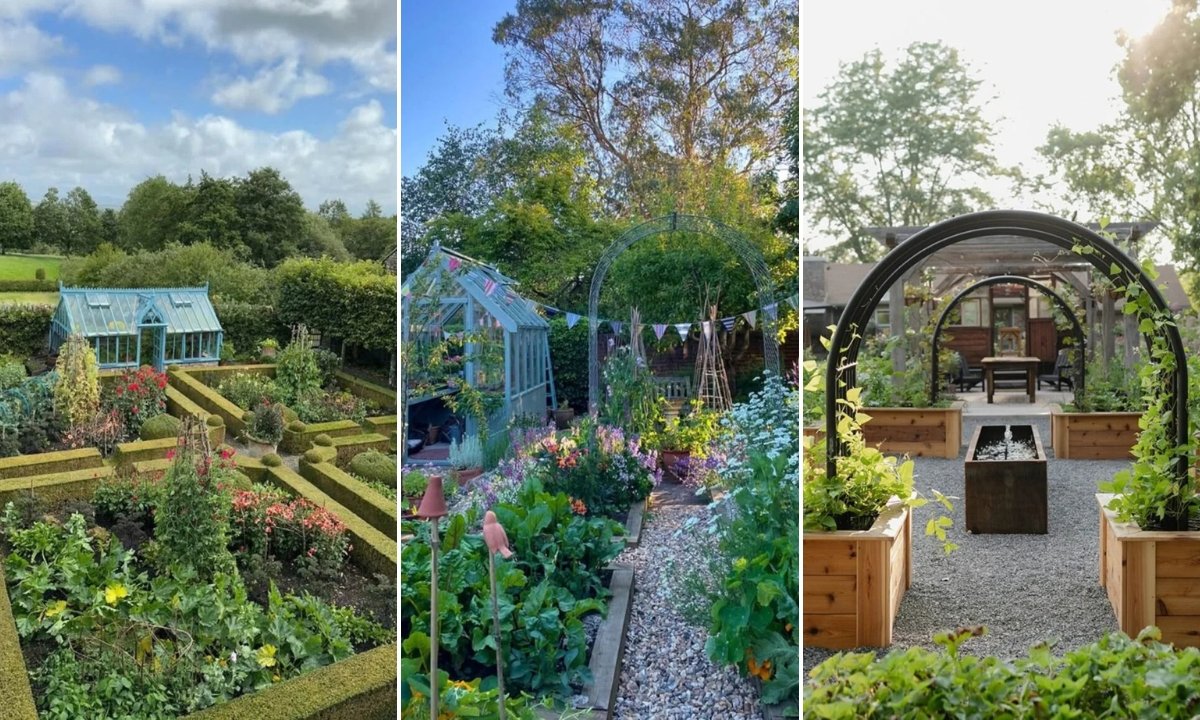
Order changes everything here. Square beds edged with low hedges turn a kitchen garden into a system.
Instead of a mess. Each section holds a specific crop, which makes watering, feeding, and harvesting easier.
Because nothing overlaps or competes. This style works best in backyards or farmhouses where space allows clear pathways.
To recreate it, divide the ground into equal sections using wooden frames or bricks first, then add compact plants inside each block.
Tall crops stay at the center or back, shorter greens near edges. When plants have fixed zones, maintenance drops and productivity goes up fast.

Living Pathway
Movement guides the garden here, not straight lines or rigid boxes. A gravel walkway pulls you forward.
While food plants grow close enough to brush your legs as you pass. Leafy greens, flowers, and climbers share space.
Which keeps the garden productive and visually alive at the same time. This setup works beautifully in medium.
To large yards where you want both growing space and a place to walk, sit, or enjoy the garden daily.
To recreate it, start with a narrow path, build raised beds on both sides, and add arches or simple supports for climbers. When plants grow around your routine, harvesting becomes effortless.

Archway Growth
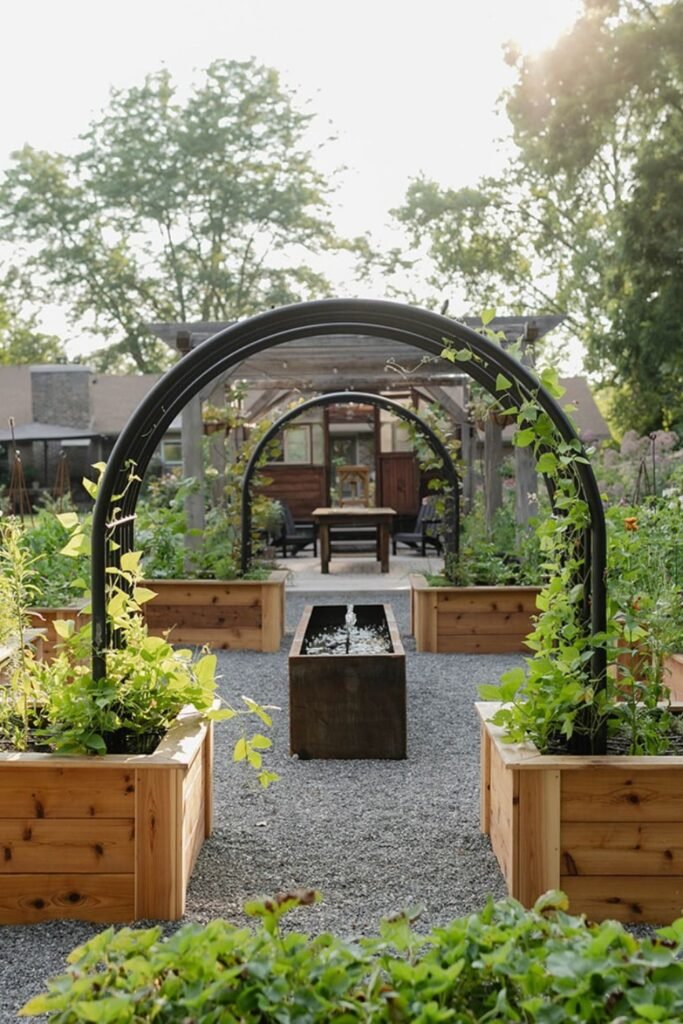
Climbing plants change how a kitchen garden feels and functions here. Vines rise instead of spreading, which keeps the ground open and the harvest at eye level.
Beans, cucumbers, or even flowering climbers work well on curved frames like this, especially in medium or large gardens where paths matter.
To recreate it, fix sturdy arches between raised wooden beds and guide young plants upward early.
Once vines lock onto the frame, they shade the walkway slightly and improve airflow around the plants.
Vertical growth like this saves space, reduces pest problems, and turns a simple walk through the garden into a productive growing zone.
Greenhouse Focus
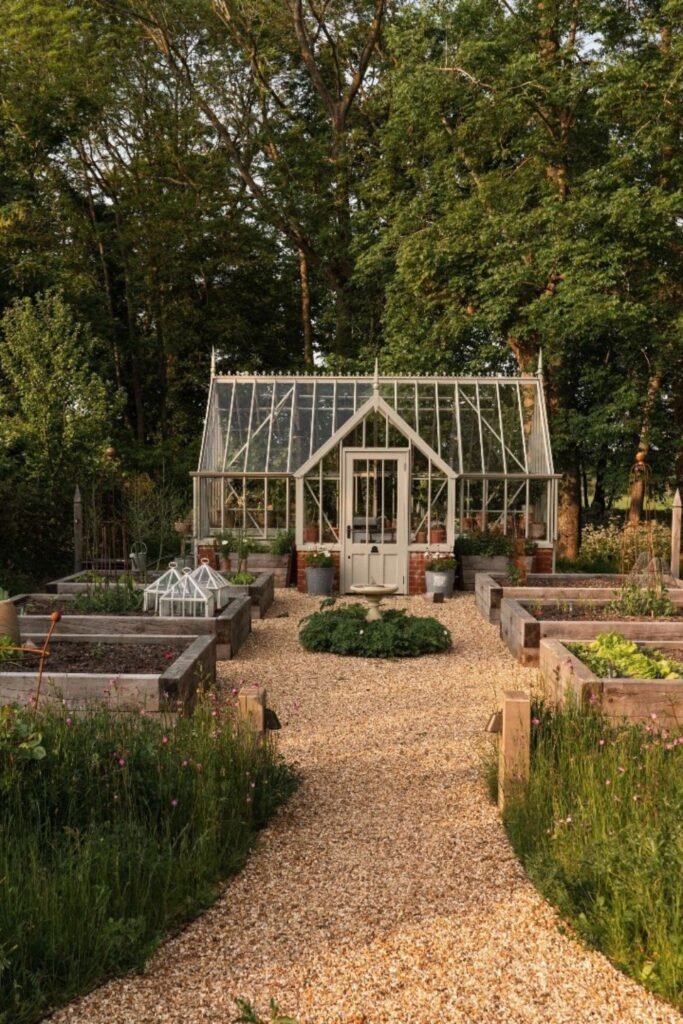
Season control sits at the heart of this garden. A central greenhouse anchors everything, allowing year-round growing.
While outdoor beds handle seasonal crops. This setup suits larger yards where consistency matters more than quick harvests.
Raised beds surround the structure so plants benefit from warmth, wind protection, and easy access to tools and water.
To recreate it, place a small greenhouse or poly tunnel at the center, then build evenly spaced beds around it with gravel paths for drainage.
When weather turns unpredictable, the greenhouse keeps seedlings alive and extends your growing season without forcing you to rely on store-bought produce.
Compact Orchard
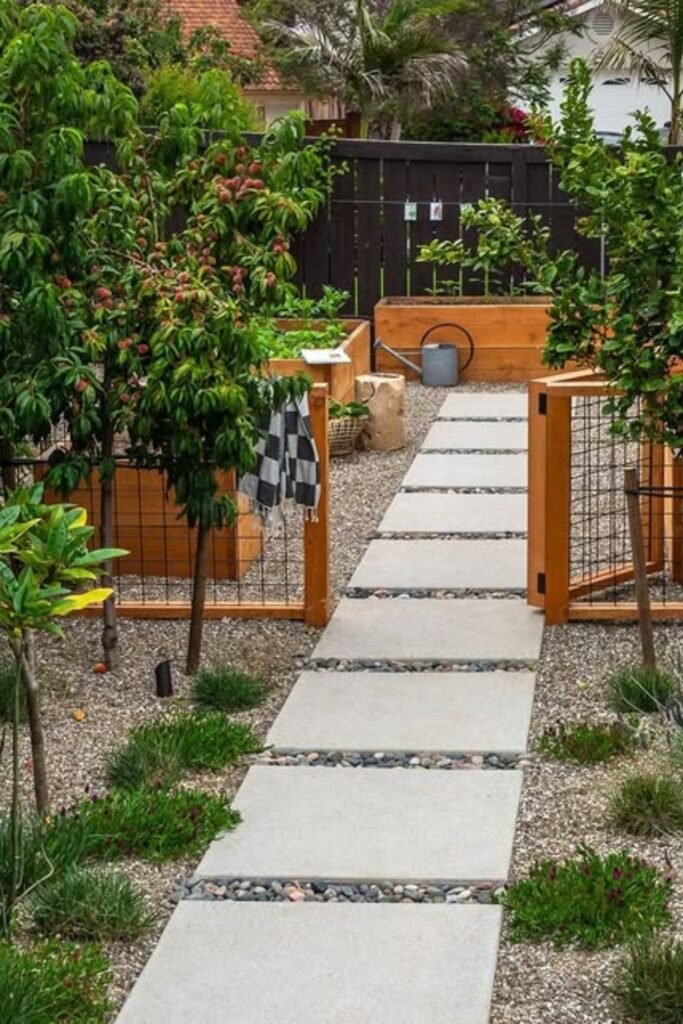
Fruit trees don’t need open land to perform well. Narrow pathways with boxed planters allow dwarf fruit trees to grow without taking over the space.
Apples, lemons, peaches, or figs thrive when roots stay contained and pruning stays consistent.
This setup works best in small backyards where you want structure and long-term harvests without chaos.
To recreate it, choose dwarf or semi-dwarf trees, plant them in deep wooden boxes, and leave a clear walking path between rows.
Gravel or stone keeps the area clean and low maintenance. Controlled roots mean controlled growth, and that’s what keeps fruit production steady in tight spaces.
Zoned Harvest
Purpose drives every section in this garden. Separate raised beds allow different crops to grow on their own schedule without competing for nutrients or space.
Leafy greens stay contained, root vegetables get deeper soil, and climbers rise on dedicated supports.
This approach works best in backyards where you want steady harvests instead of seasonal chaos.
To recreate it, assign each bed a single role before planting and stick to it. Use mulch or bark chips between beds to control weeds and retain moisture.
When crops stay in clearly defined zones, crop rotation becomes easier and soil health improves year after year.

Winter Frame
Bare branches don’t mean a dead kitchen garden. Tall bamboo frames keep the structure alive even when most plants rest.
This setup supports peas, beans, or flowering climbers during warmer months and still holds shape in winter.
Which helps you plan the next season early. It works well in gardens where space stays active year-round.
Instead of being cleared out. To recreate it, push bamboo canes into the soil in a circle and tie them at the top.
When spring arrives, young climbers already know where to grow, and you don’t lose time rebuilding supports.

Gravel Balance
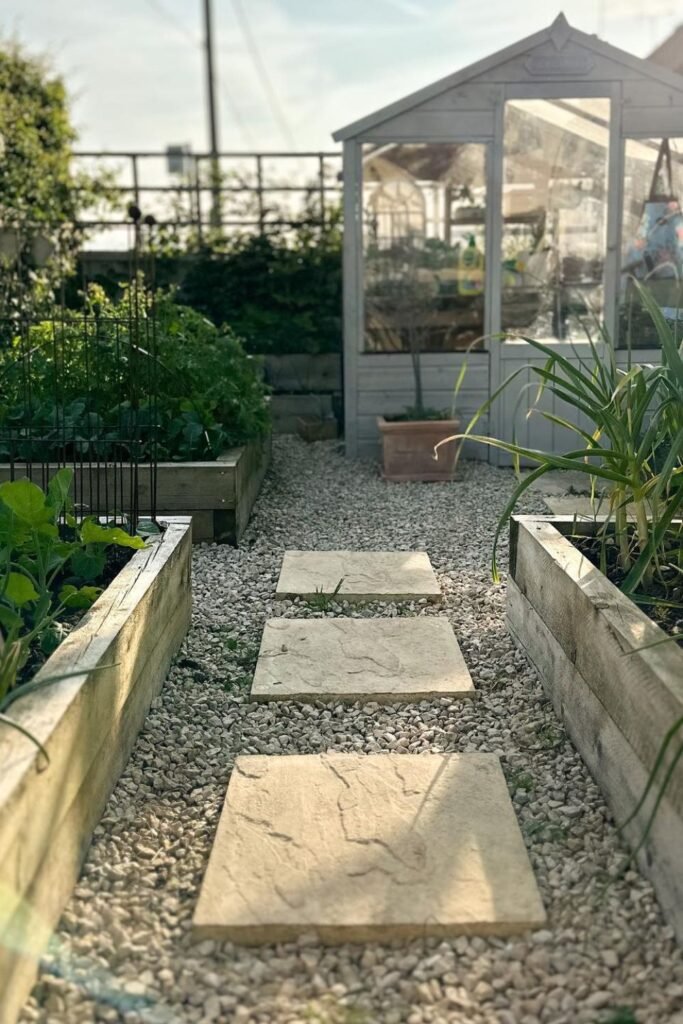
Clean footing keeps this garden functional every single day. Gravel paths with flat stepping stones stop mud, improve drainage.
And make watering less stressful for nearby plants. Raised wooden beds on both sides protect roots from being compacted by foot traffic.
This setup fits perfectly in small to medium backyards where rain or frequent watering turns soil messy fast.
To recreate it, lay landscape fabric first, add gravel, then place large flat stones at walking distance.
Beds stay tidy, shoes stay clean, and plant roots stay undisturbed. When movement feels easy, garden care becomes a habit instead of a chore.
Seasonal Rows
Timing takes center stage in this garden. Raised beds run parallel so crops can grow, mature, and be cleared in sequence without disturbing the rest.
Leafy greens, brassicas, and herbs thrive here because spacing stays consistent and airflow stays strong.
Even late in the season. This layout works best in backyards where you want reliable harvests month after month.
To recreate it, line up identical beds with a wide gravel path between them and plant according to growth speed, not size.
Fast growers go near the front, slower crops toward the back. When timing stays organized, nothing gets wasted and harvesting stays smooth.

Enclosed Herbs
Boundaries make small gardens feel intentional instead of cramped. A low fence creates a protected pocket where herbs, compact vegetables.
And a few flowering plants grow without disturbance. This kind of setup works especially well in small yards or side gardens.
Where pets, kids, or foot traffic usually cause damage. To recreate it, fence off a modest area, place one central planter or basket.
And surround it with herbs like thyme, chives, mint, and parsley. Gravel keeps the ground tidy and drains water fast.
When plants stay contained and protected, growth stays steady and harvesting becomes part of your daily routine rather than a cleanup task.

Polytunnel Support
Weather protection decides how long your kitchen garden stays productive. A polytunnel placed beside raised beds creates a backup plan.
When temperatures drop or rain becomes unpredictable. Seedlings start earlier inside, while outdoor beds handle mature crops without stress.
This setup suits serious home growers who want steady harvests beyond peak seasons.
To recreate it, position a small tunnel along one edge of the garden and surround it with evenly spaced beds. Use wood chips or mulch for paths to keep moisture under control.
When fragile plants get shelter and strong plants stay outside, growth stays balanced and crop losses drop sharply.

Pergola Climb
Shade and harvest share the same structure here. A wooden pergola turns climbing vegetables and flowering plants into a living roof.
Keeping the pathway cooler while producing food at arm’s reach. Beans, gourds, nasturtiums, or even grapes thrive when trained overhead instead of spreading on the ground.
This idea works best in medium to large gardens where walkways connect different growing zones.
To recreate it, install a sturdy wooden frame, plant climbers at the base, and guide early growth upward with soft ties.
Over time, the structure fills in, sunlight filters through leaves, and harvesting becomes part of a shaded daily walk instead of a bending task.

Modular Blocks
Flexibility runs the show in this garden. Individual wooden boxes act like movable units, letting you change crops, spacing, or layout without redesigning the whole space.
Herbs, small shrubs, and vegetables each get their own box, which keeps roots from competing and makes soil control easier.
This setup works especially well in backyards where the garden evolves over time or space is irregular.
To recreate it, build or buy identical wooden planters and arrange them based on sunlight, not symmetry.
When one plant finishes its cycle, that box can be refreshed or relocated without disturbing the rest of the garden.

Formal Geometry
Symmetry brings discipline to food growing here. Low hedges carve the garden into precise sections, giving every crop a defined boundary and clear growing role.
This kind of layout works best in large open gardens where structure helps prevent sprawl and uneven growth.
Vegetables grow inside the hedged beds while paths stay clean and accessible year-round.
To recreate it, mark out geometric shapes first, plant slow-growing hedges along the edges, and keep crops low and seasonal inside each section.
When space is clearly divided, planning, rotation, and maintenance become easier and the garden stays productive without ever looking chaotic.

Mixed Planting
Diversity keeps problems from settling in. Vegetables, flowers, and herbs grow side by side here, which helps confuse pests and improves pollination naturally.
Tall plants offer light shade, low growers cover the soil, and flowers pull in insects that protect crops.
This style works best in backyards where the goal is steady growth rather than perfect order.To recreate it, skip strict rows.
And mix crops with different heights and root depths in the same bed. Add a few flowering plants between vegetables to balance the space.
When plants support each other instead of competing, the garden becomes more resilient and needs less intervention overall.

Garden Gate
Entry sets the tone before a single plant gets noticed. A small wooden gate instantly separates the growing space from the rest of the yard.
Which makes the kitchen garden feel intentional and cared for. Flowers rise alongside vegetables here, softening the look while still keeping the space productive.
This approach works beautifully in family homes where you want structure without making the garden feel strict.
To recreate it, add a low fence, leave a narrow gravel path, and mix edible plants with tall blooms along the borders.
Clear boundaries protect crops, while flowers keep the space inviting enough that you’ll actually want to walk in and harvest every day.

Central Axis
Alignment gives this kitchen garden its calm. Raised beds sit evenly on both sides of a straight path, so every plant.
Gets equal light and attention. Metal beds hold soil neatly, reduce spreading, and warm up faster in cooler weather.
This setup works best in narrow or rectangular yards where space needs to feel open, not crowded.
To recreate it, mark a central walkway first, then place identical beds on each side before planting anything. Keep taller plants toward the back and low growers near the path.
When everything lines up visually, maintenance feels lighter and the garden becomes easier to manage week after week.

Open Growth
Sunlight becomes the main advantage in this setup. Raised wooden beds sit wide and exposed, giving vegetables uninterrupted light and airflow throughout the day.
Tall stakes support tomatoes and climbers without crowding nearby plants, which keeps diseases low.
And growth steady. This idea works best in open backyards or countryside spaces where shade isn’t an issue.
To recreate it, position beds away from trees, leave space between rows, and add simple vertical supports early.
Gravel paths keep soil from spreading and make movement easy after watering. When plants get full sun and room to breathe, yields improve without adding extra effort or fertilizers.

Framed Climb
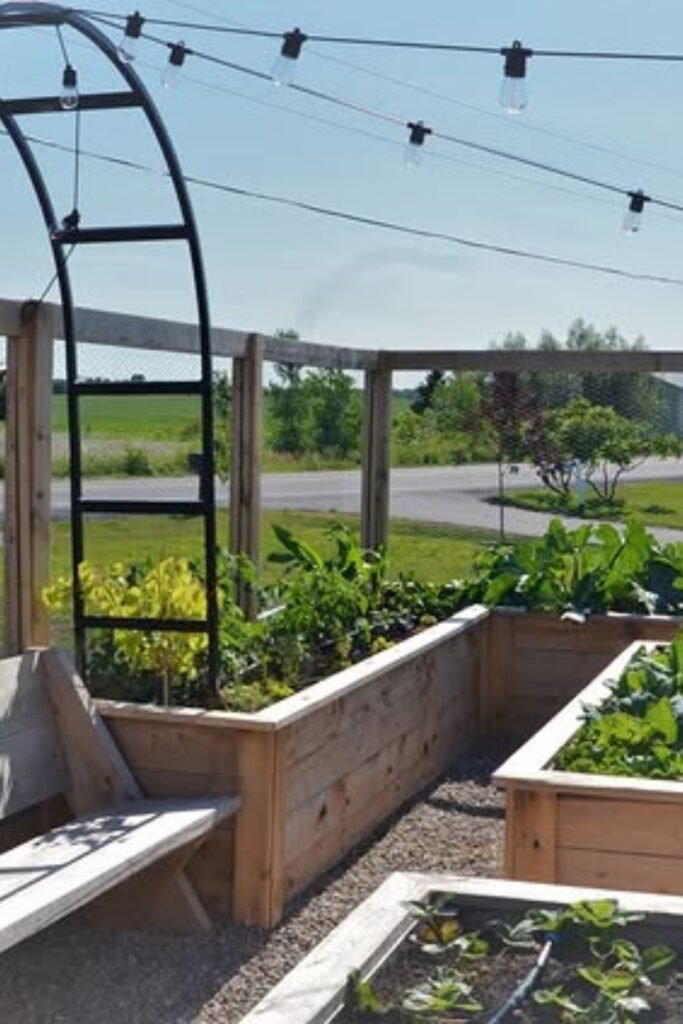
Vertical frames turn limited ground space into productive height. Metal arches and cages guide climbers upward.
Keeping beds open for leafy crops below. Beans, cucumbers, peas, or squash grow cleaner when lifted off the soil.
Which cuts down rot and pests. This setup works well in backyard gardens where raised beds sit close together.
To recreate it, fix sturdy arches or cages at the center or edge of each bed and train young plants early before vines harden.
String lights aren’t just decorative here they make evening watering and harvesting easier. When plants grow upward instead of outward, every square foot starts working harder for you.
Edible Design
Food production blends into landscape design here instead of standing apart from it. Raised beds grow vegetables.
While trimmed shrubs and herbs soften edges and guide movement through the space. This balance works best in larger gardens.
Where appearance matters as much as harvest. To recreate it, keep vegetables in clean wooden beds.
And surround them with low-maintenance plants like lavender, rosemary, or box shrubs. Paths should curve gently to slow movement and make harvesting feel relaxed.
When edible plants live alongside decorative ones, the garden stays productive without ever looking like a working field.

Green Corridor
Walking space doubles as growing space in this setup. Wooden pergolas guide climbers overhead while herbs and low vegetables fill the edges of a curved path.
The garden grows around movement instead of blocking it, which makes daily care feel natural.
Rather than planned. This idea works best in long or narrow gardens where straight rows feel boring or restrictive.
To recreate it, install simple wooden frames along a path and plant climbers like beans, peas, or flowering vines at the base. Keep herbs and ground covers along the sides.
When food grows along your walking route, harvesting becomes something you do without thinking about it.

Narrow Yield
Tight spaces still grow serious food when planting follows the edges. A narrow pathway runs through the center.
While vegetables spill outward instead of inward, keeping movement clear and plants happy.
Squash, leafy greens, sunflowers, and herbs share space without choking each other because growth spreads vertically and sideways, not across the path.
This idea works best in side yards or long, narrow plots where width is limited. To recreate it, keep the walkway slim, plant larger crops along fences or walls, and use pots to fill gaps.
When plants grow outward instead of blocking your steps, even the smallest strip of land turns productive fast.

FAQs
Can a kitchen garden survive if I forget to water it sometimes?
Yes, but only if you plan for it. Self-watering containers, gravel paths, and mulch help retain moisture longer. If plants dry out daily, growth slows fast.
Choosing herbs and leafy greens that bounce back easily makes a big difference when watering isn’t perfectly consistent.
Is it better to grow fewer plants or fill every space in a small kitchen garden?
Fewer plants usually win. Crowding blocks airflow and invites pests. When each plant has room, roots stay healthier and harvesting becomes easier.
A smaller number of well-placed plants often produces more usable food than a packed, messy setup.

Hi, I’m Afaf! I’m a law student who loves all things home, style, and gardening. I’ve been writing for over a year about topics like home decor, DIY projects, plants, fashion, and beauty.
I like sharing ideas that are easy to try and don’t cost a fortune. Whether it’s organizing a messy closet, decorating on a budget, or keeping houseplants alive, I write about what I’ve actually tried myself.
When I’m not studying, I’m usually on Pinterest looking for my next project or adding another plant to my collection!