
20 Chic Wedding Ideas for 2026
A chic wedding isn’t about adding more details, making intentional ones. Many weddings look fine but feel forgettable because they lack balance and clarity.
When styling decisions are driven by trends or pressure, the result feels either too plain or too busy.
Chic lives in restraint, proportion, and thoughtful choices that quietly elevate the entire experience.
This article explains what truly defines a chic wedding, where most couples go wrong, and how to create a refined, confident look without overdecorating.
How to Know If Your Wedding Style Is Truly Chic?
If you’re wondering whether your wedding style is truly chic, start by looking at how intentional your choices feel, not how many details you’ve added.
A chic wedding feels calm, cohesive, and confident. Nothing looks random, forced, or copied just because it’s trending.
If you can explain why you chose a color, a fabric, or a setup and that reason is clarity, balance, or simplicity you’re on the right track.
Chic weddings also avoid visual noise: fewer colors, fewer statement pieces, and more breathing room.
When your décor feels edited rather than filled, and your space looks refined from every angle, that’s a strong sign your wedding style is genuinely chic.
Save this article for later! 👇👇
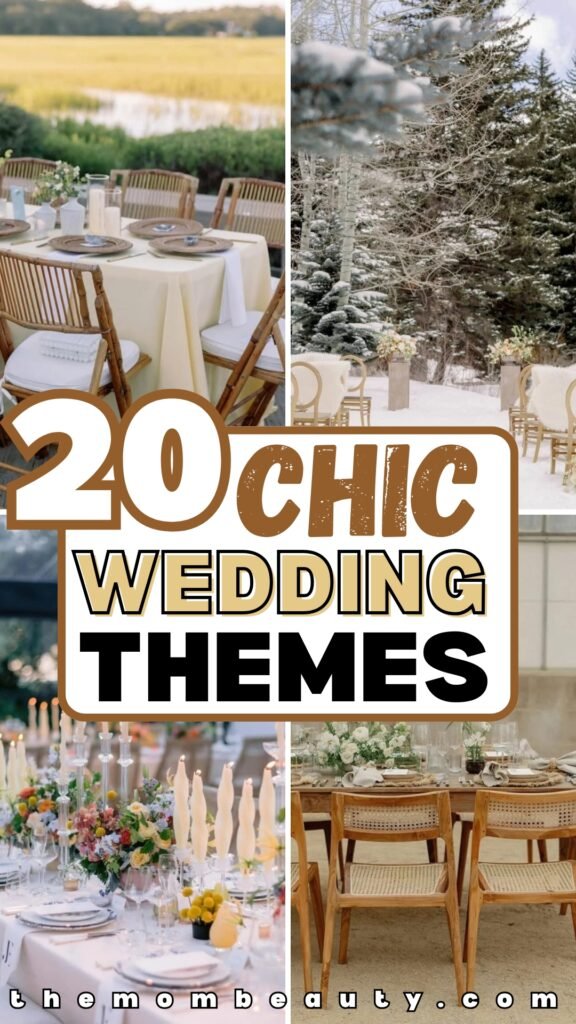
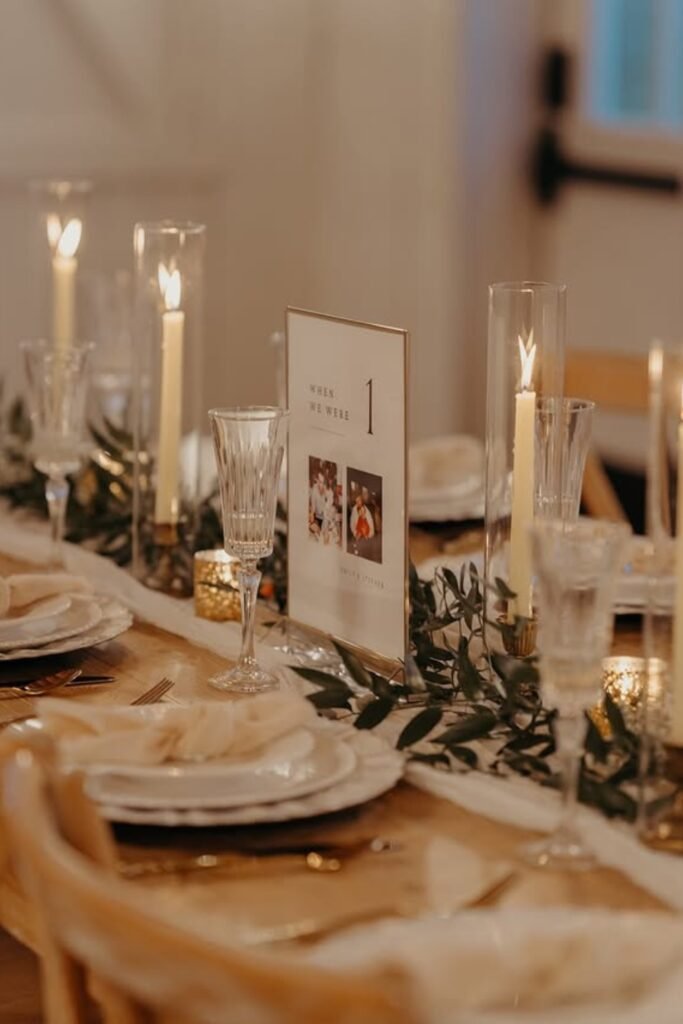
Candle Layers
Tall tapered candles create instant elegance when grouped thoughtfully, adding height and warmth without crowding the table or blocking conversation.
Mixing clear holders with soft florals keeps the setting light, letting candlelight elevate the mood instead of heavy decorative elements.
This works best for evening receptions where glow matters more than color and atmosphere carries the entire table design.
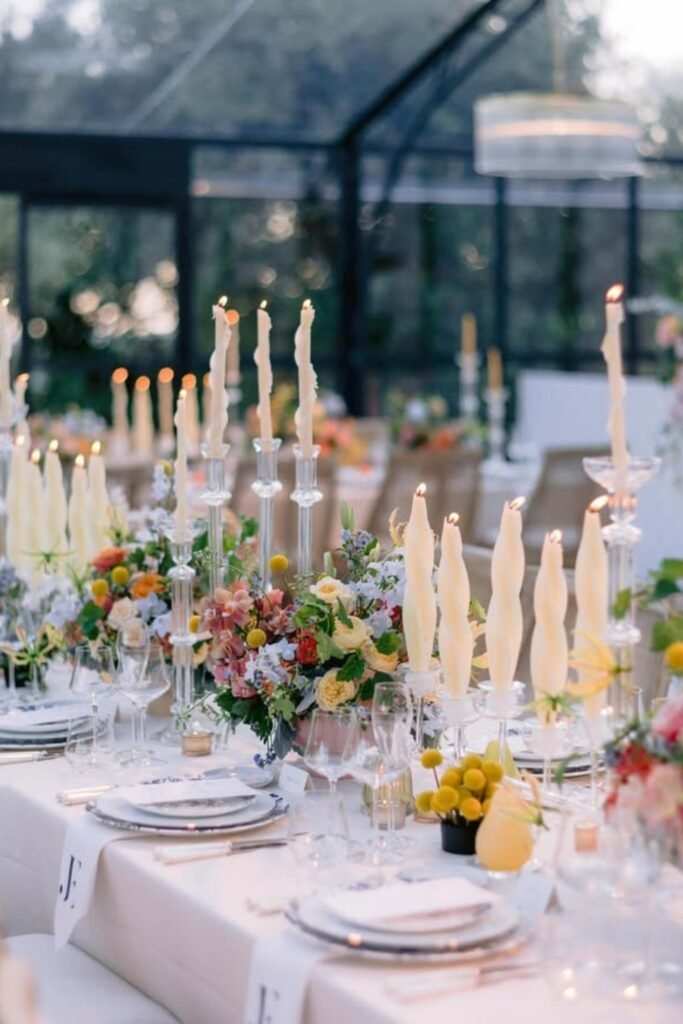
Winter Restraint
Snowy ceremonies feel chic when seating stays minimal, allowing nature to become the statement rather than overpowering decor choices.
Soft textures on chairs add warmth visually, balancing the cold setting while keeping the overall look clean and intentional.
Limiting florals to simple accents helps the ceremony feel calm, curated, and quietly luxurious within a dramatic winter landscape.
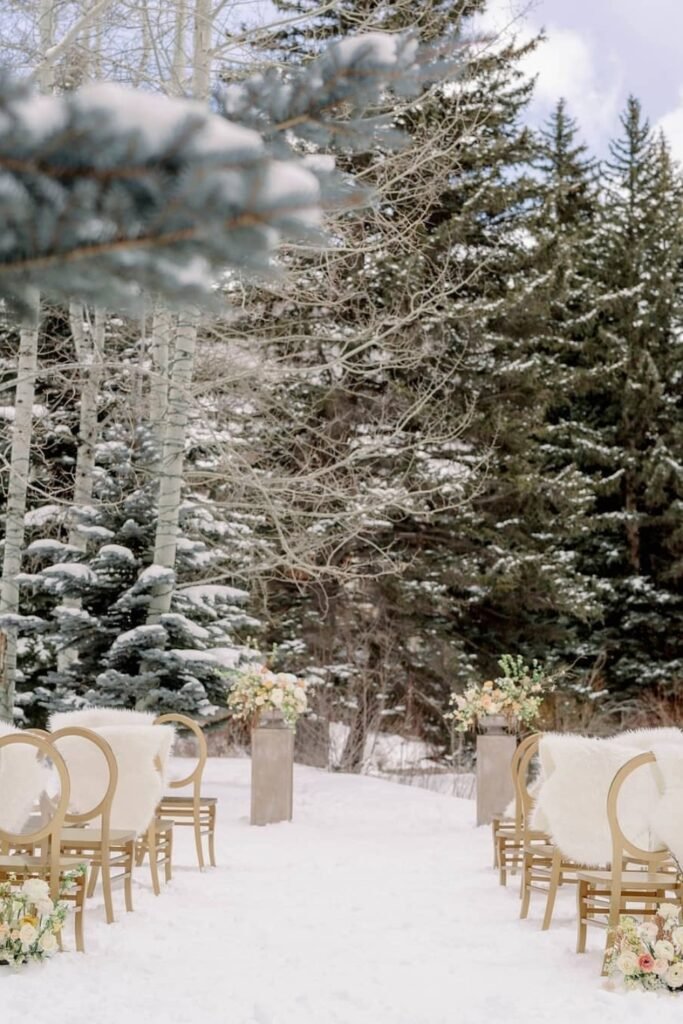
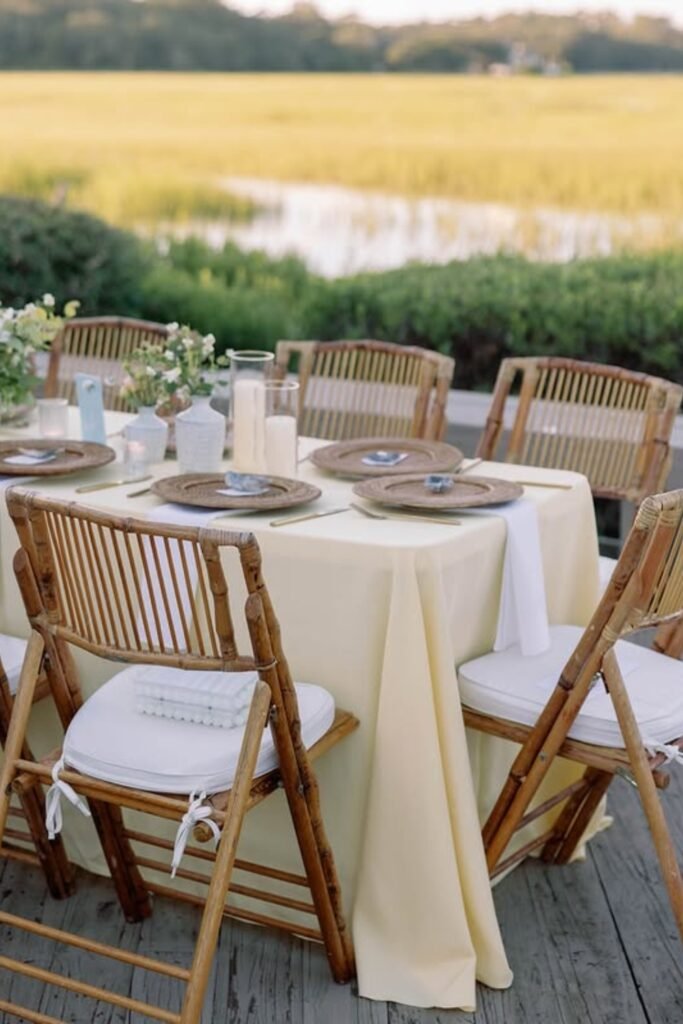
Natural Texture
Outdoor tables feel refined when natural materials lead the design, letting woven chairs and soft linens create understated elegance.
Keeping colors muted allows surrounding landscapes to shine, making the table feel connected to its setting rather than staged.
This approach works beautifully for daytime receptions where simplicity photographs better than bold decor or heavy centerpieces.
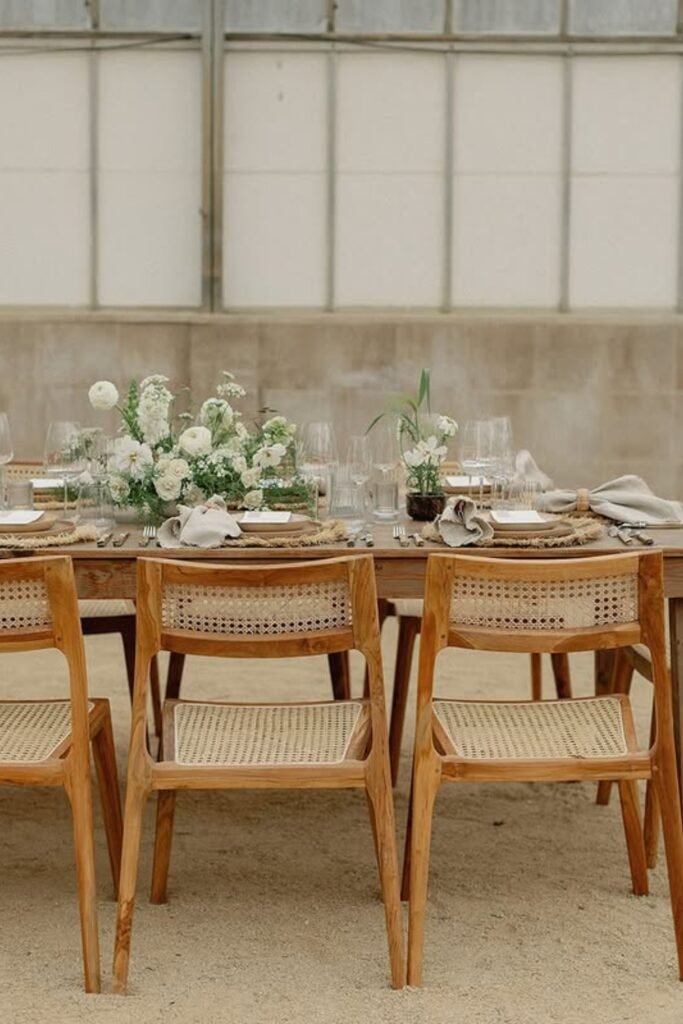
Edited Wood
A wooden table looks chic when styling stays restrained, highlighting craftsmanship instead of layering excessive decor across the surface.
Neutral florals and relaxed place settings keep the focus balanced, creating a space that feels thoughtful rather than overdesigned.
This style suits greenhouse or indoor venues where structure already adds interest and decor simply supports the architecture.
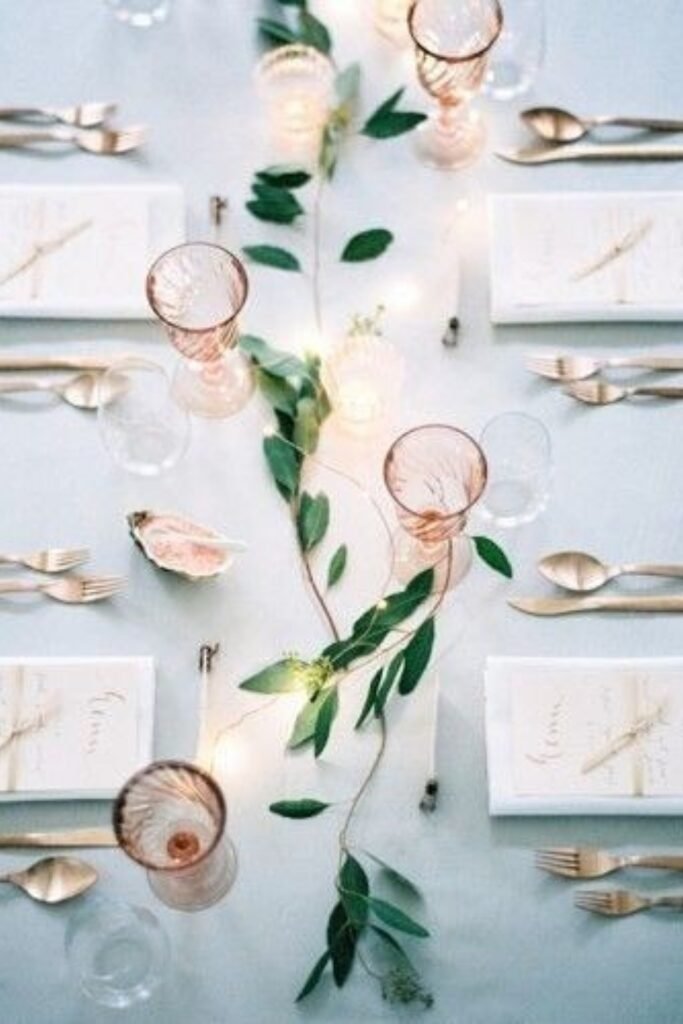
Quiet Geometry
Order shows up immediately through aligned menus, straight cutlery, and centered greenery, giving the table a calm, edited presence.
Instead of decoration doing the work, shadows, glass reflections, and negative space quietly create visual interest.
When you want chic without effort, controlling spacing often delivers more impact than adding florals or layered accessories.
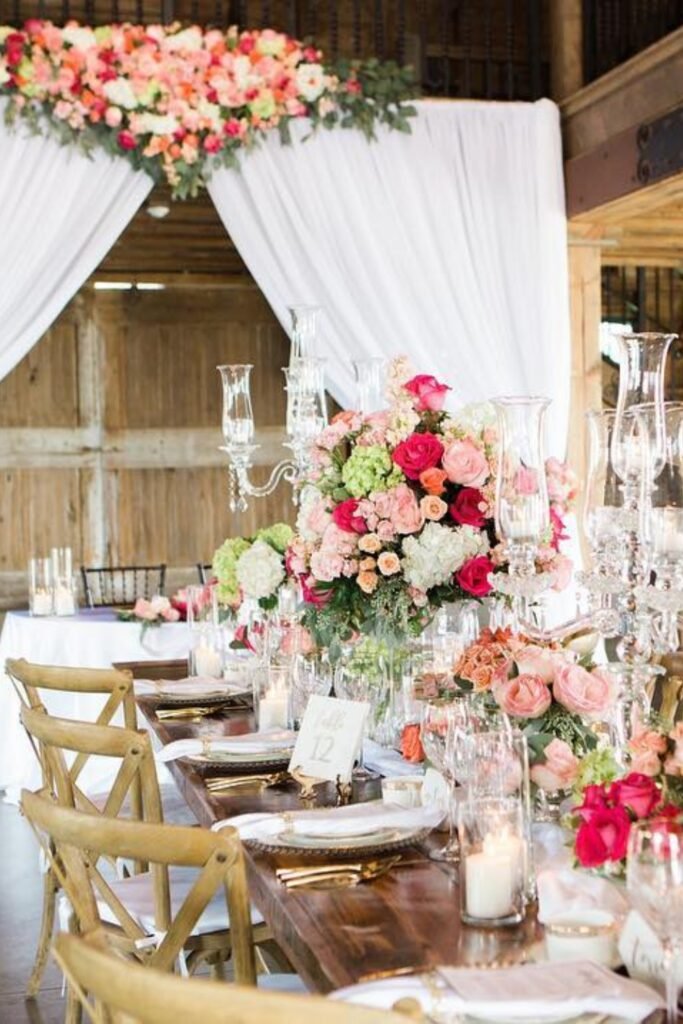
Soft Grandeur
What elevates this ceremony space is how fabric frames the structure, softening strong architecture rather than hiding it.
Height comes from vertical florals and glass hurricanes, stretching the room visually without making it feel heavy.
This approach shines in character-rich venues, where décor supports the space instead of competing for attention.
Candle Narrative
Light leads the eye here, with candles creating a visual path that pulls attention toward the center naturally.
Supporting details like layered glassware and folded linens stay quiet, letting glow become the emotional anchor.
For an intimate feel, lighting can communicate romance more effectively than piling on decorative elements.
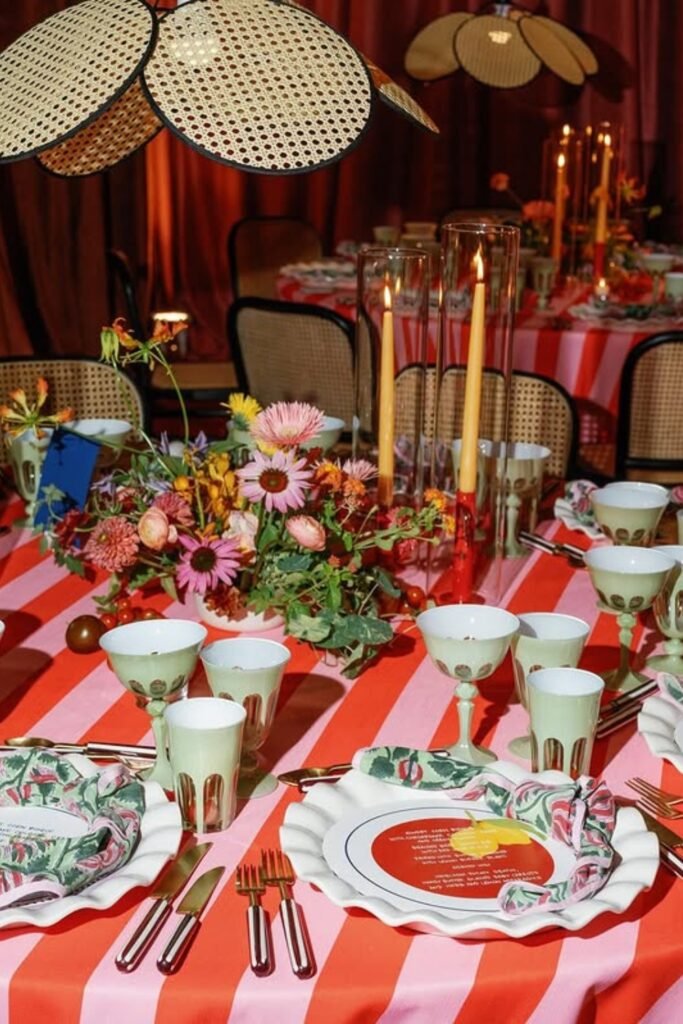
Playful Control
Energy enters through stripes and color, yet the table still feels refined because repetition keeps everything visually grounded.
Each tone appears across linens, florals, and stationery, preventing the look from drifting into chaos.
Bold choices feel chic when they’re repeated with intention instead of introduced once for shock value.
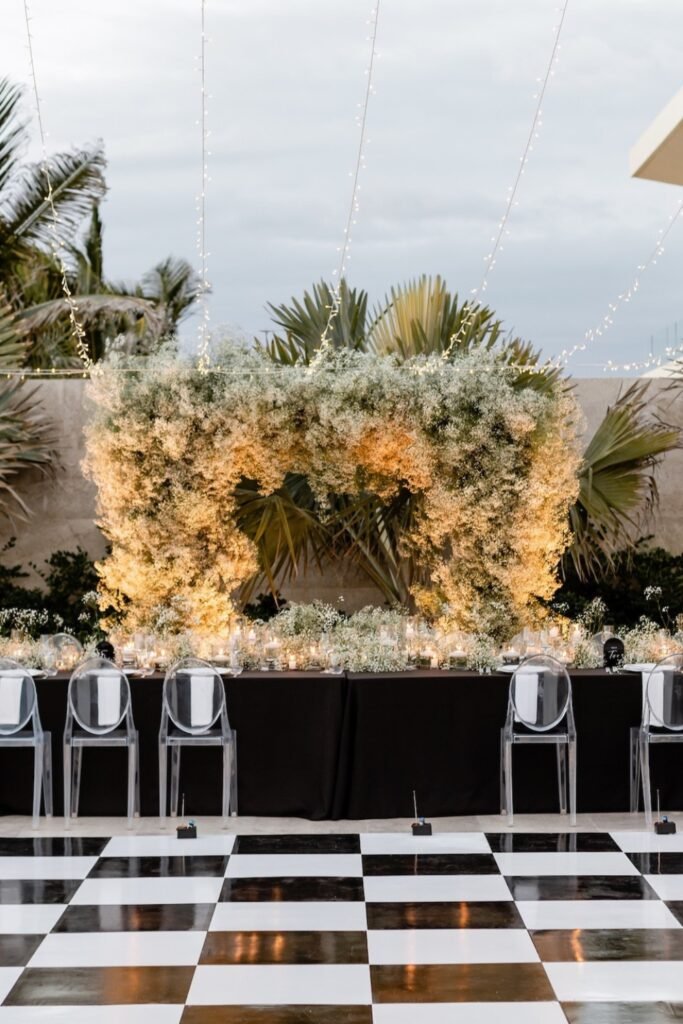
Light Architecture
String lights stretch the space upward, turning open air into a ceiling and giving the reception structure without enclosing it completely.
Florals act as a soft anchor, grounding the glow so the scene feels intentional rather than floating at night visually balanced elegantly.
When outdoor weddings feel unfinished, vertical lighting often solves the problem better than additional décor without overwhelming guests.
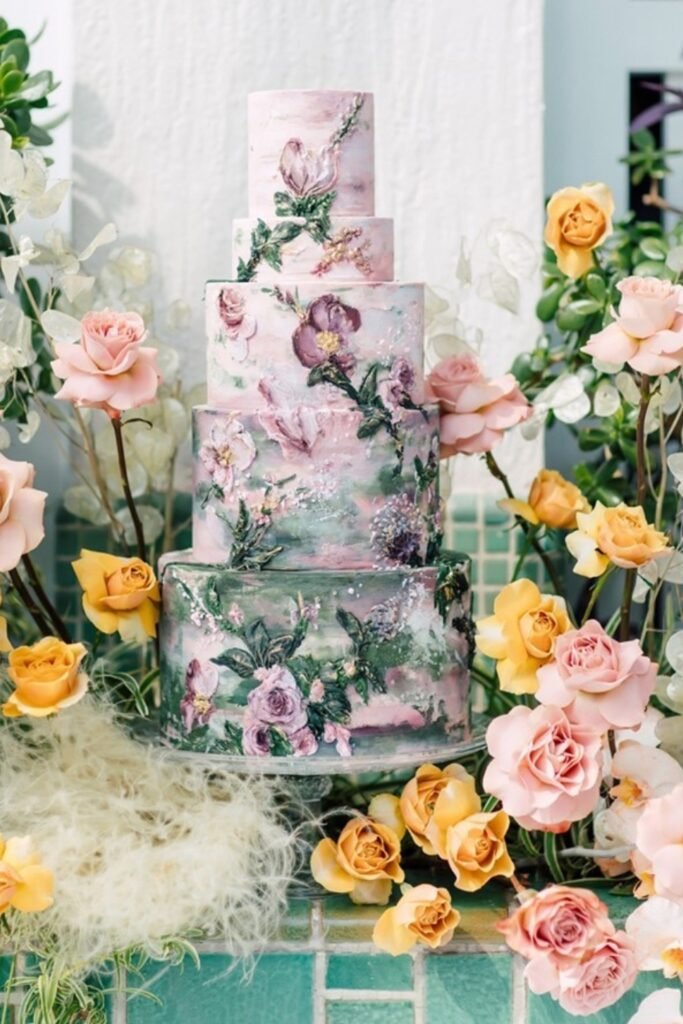
Artful Center
Instead of matching florals, the painted cake becomes the visual statement, carrying color and texture on its own with confident artistic presence.
Surrounding blooms echo the palette quietly, keeping attention centered without competing with the cake as the intentional focal point visually always.
If you want drama without clutter, let one element carry the personality and let everything else support it calmly with restraint.
Ceiling Moment
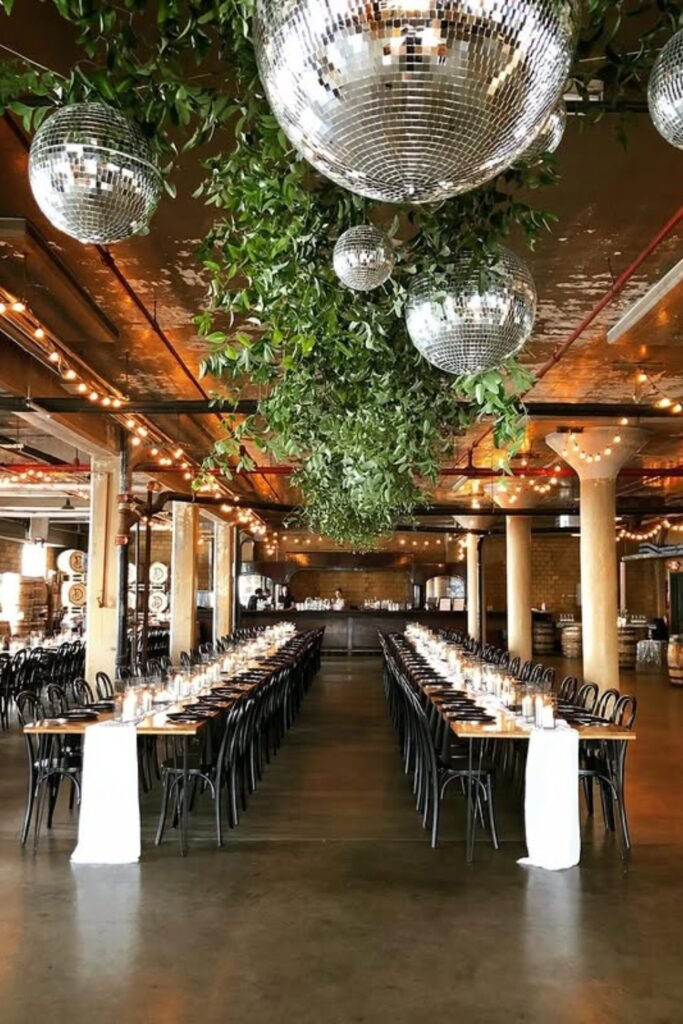
Eyes naturally lift here, where greenery and disco balls transform an industrial ceiling into a focal feature that defines the entire space.
Reflections scatter light across long tables, making repetition feel dynamic rather than rigid and visually engaging for guests throughout dinner service.
When tables are simple, investing above guest level creates impact without overwhelming the dining experience or crowding the visual field unnecessarily.
Polished Contrast
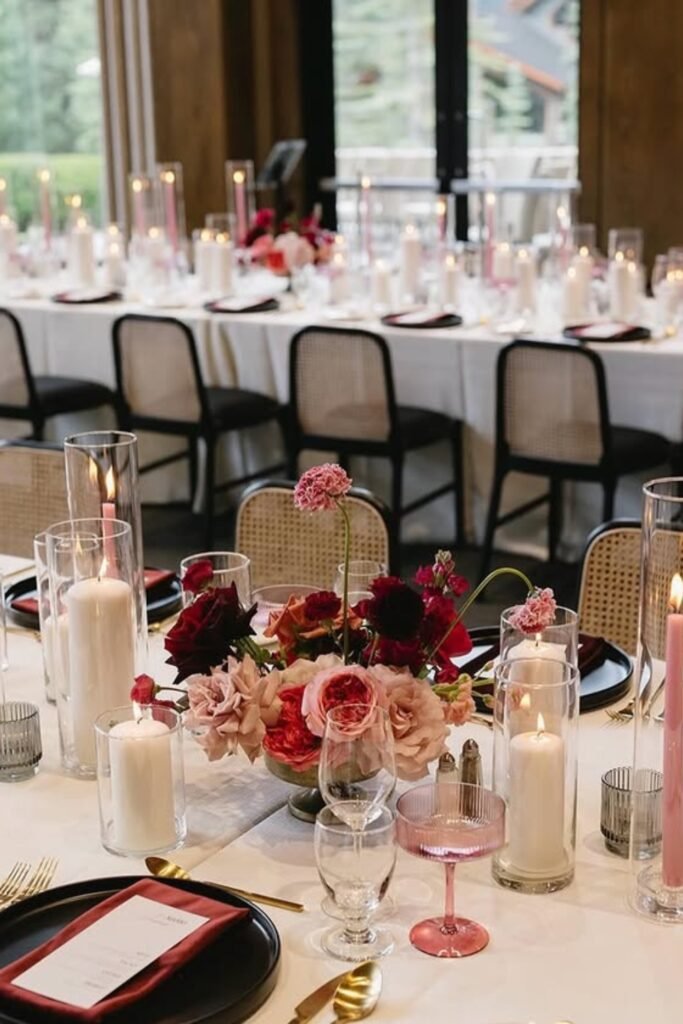
Soft florals and candles soften the long table, but darker plates and glassware keep the setting grounded and visually balanced overall.
That contrast prevents the design from drifting into overly romantic territory while maintaining sophistication and adult elegance throughout the entire setup.
Chic weddings often balance softness with structure, letting elegance feel confident instead of fragile or overly styled visually for guests today.
Soft Entry
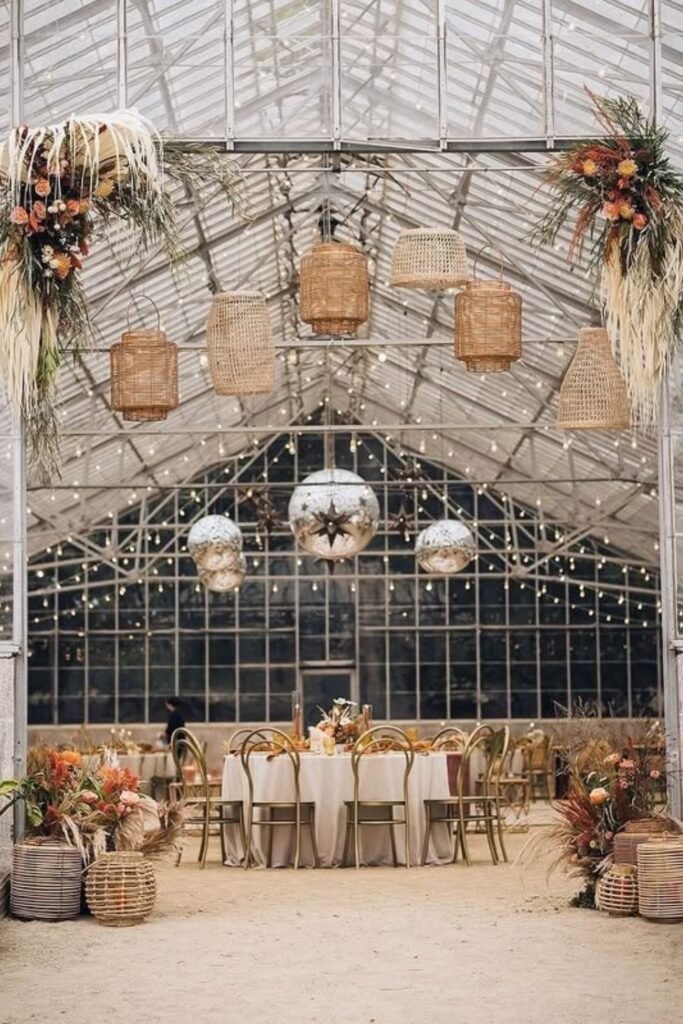
Walking into this space already sets the tone, where texture and warm light replace traditional arches with something relaxed yet elevated.
Woven lanterns soften the glass structure, proving chic weddings don’t need heavy florals to feel layered or intentionally styled.
If your venue feels cold or industrial, warming the entrance instantly shifts guest expectations before the ceremony even begins.
Unexpected DJ
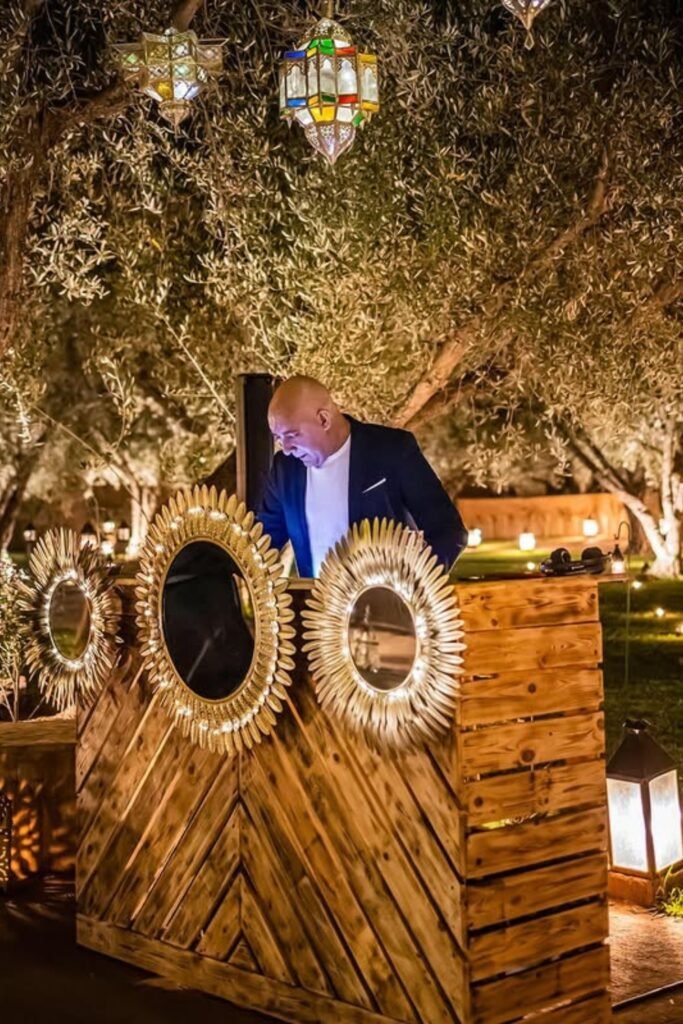
Rather than hiding entertainment, the setup turns the DJ into décor, blending wood textures with reflective accents for visual interest.
Lighting stays intimate, making the booth feel part of the celebration instead of a technical corner pushed aside.
Chic design often shows confidence by spotlighting functional elements instead of disguising them behind draping or florals.
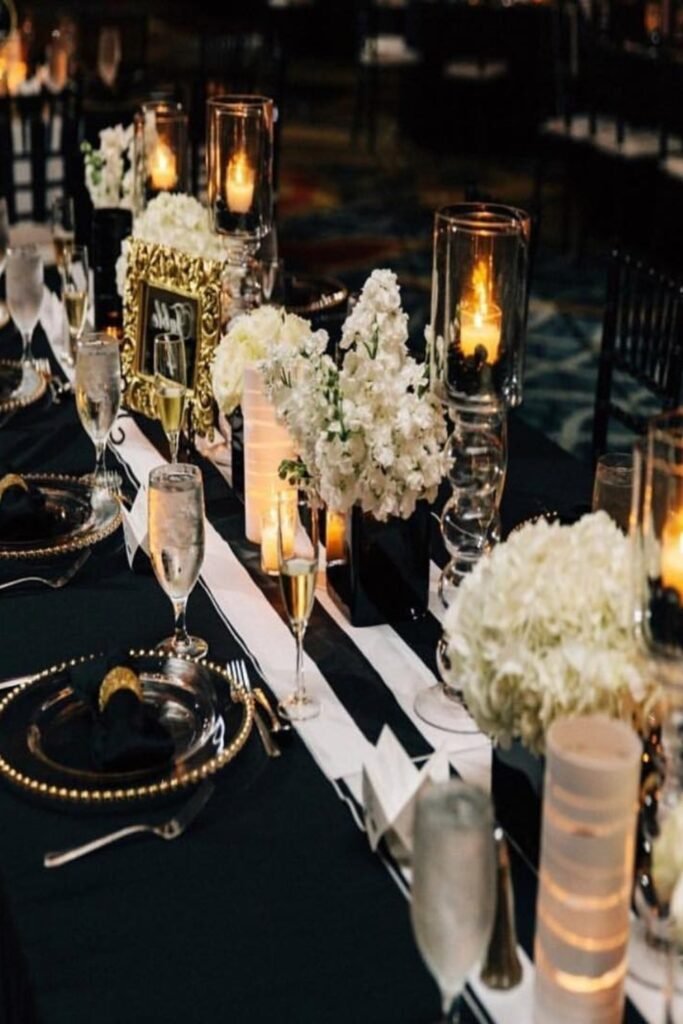
Moody Tablescape
Dark linens immediately ground the room, letting candlelight and pale florals glow without fighting for attention visually.
Gold accents add refinement, but restraint keeps the table from drifting into overly formal territory.
When guests sit longer, deeper tones create intimacy while still photographing beautifully under low lighting.
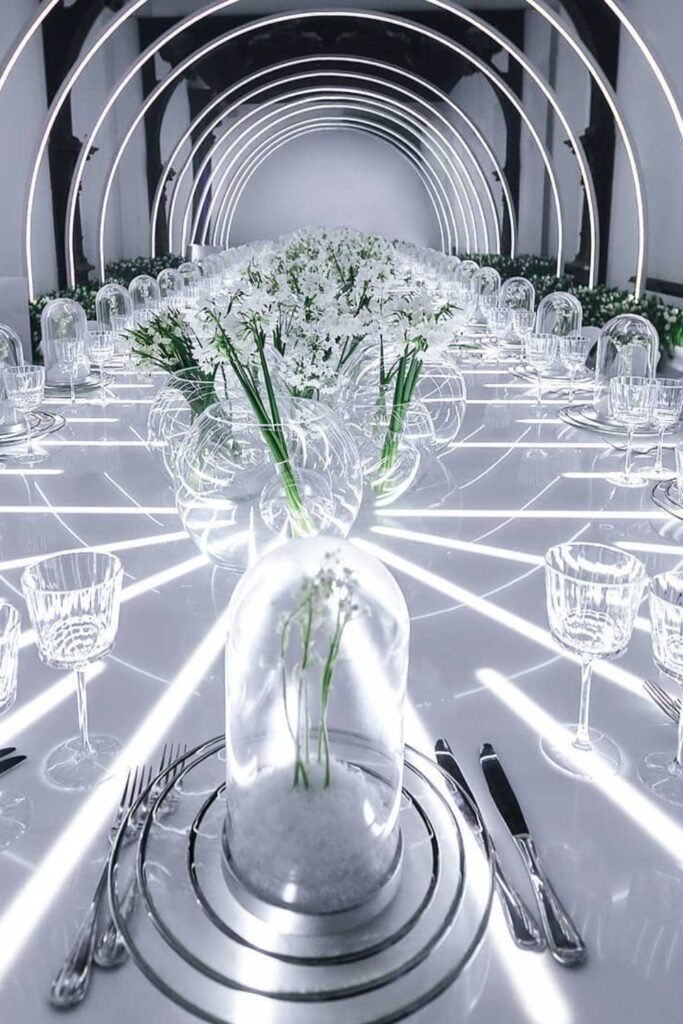
Futuristic Flow
Symmetry leads the eye forward, where lighting becomes architecture and tables feel part of a larger installation.
Clear materials prevent heaviness, allowing brightness to bounce across surfaces without visual clutter.
This works best when you want chic to feel bold, intentional, and undeniably modern rather than traditionally romantic.
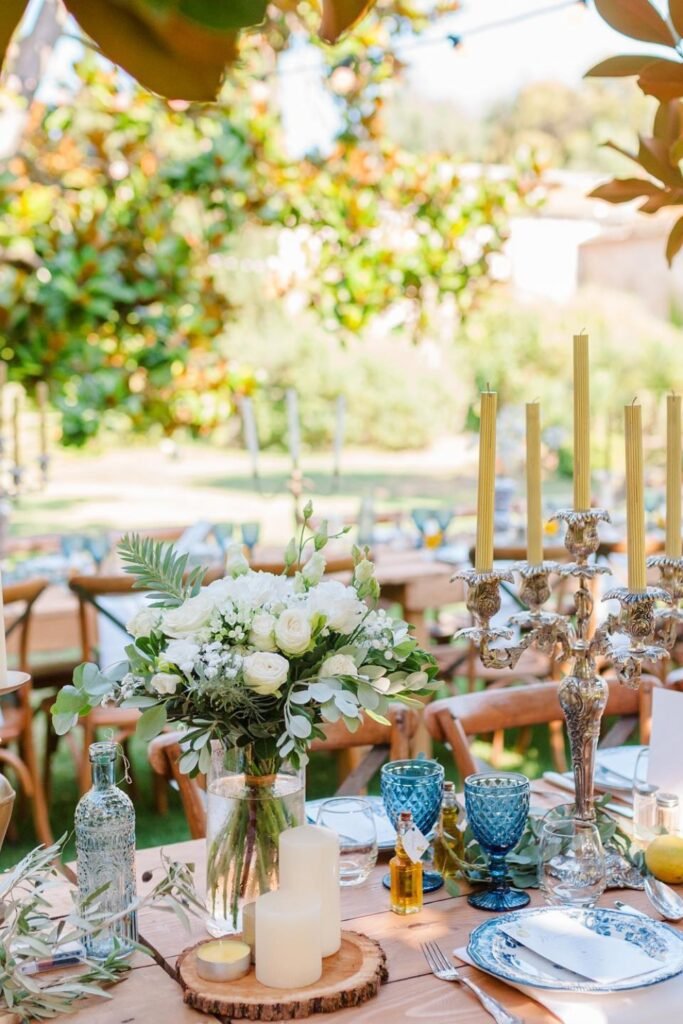
Garden Balance
Natural light and greenery do most of the work here, letting simple florals and classic candleholders feel intentional instead of overly styled.
Blue glassware adds quiet contrast, proving chic tables don’t rely on matching everything to look cohesive and thoughtfully designed.
When outdoors, choosing fewer elements with purpose keeps the setting elevated without fighting the surrounding landscape visually.
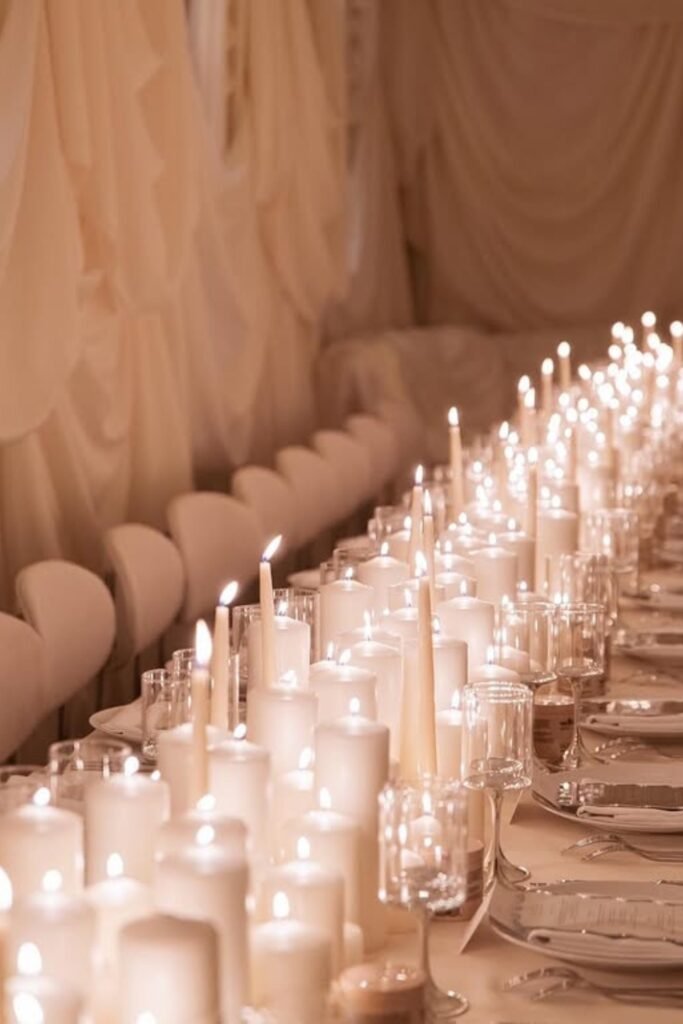
Candle Immersion
Rows of candles become the design itself, replacing florals entirely and turning the table into a glowing experience guests remember.
Soft draping removes hard edges, making the space feel intimate even when seating stretches long and formal.
This approach works best when you want elegance through repetition rather than decorative variety or color.
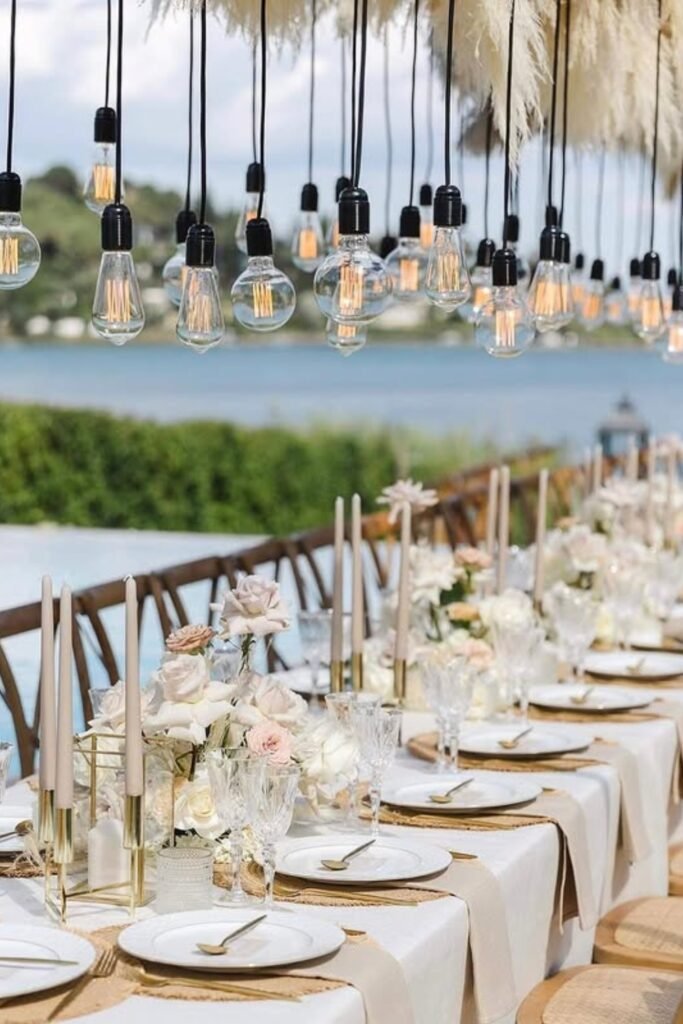
Coastal Glow
Hanging bulbs frame the table overhead, creating rhythm while keeping sightlines open to water views beyond.
Neutral linens and pale florals let the lighting lead, avoiding distractions that compete with the setting naturally.
For waterfront weddings, lighting choices matter more than centerpieces to maintain that breezy, chic atmosphere.
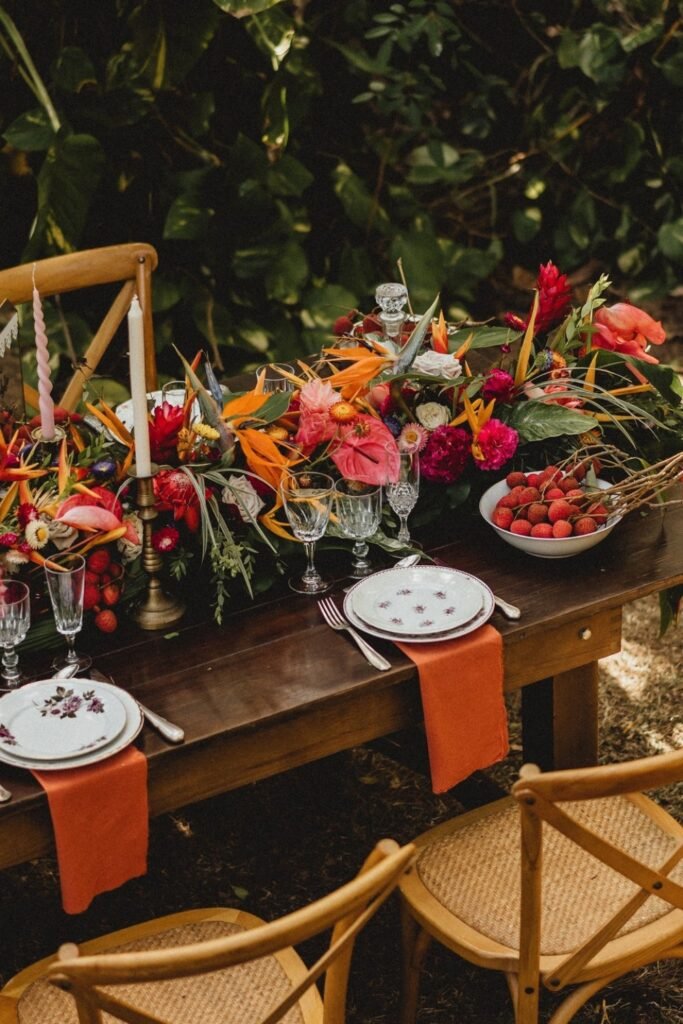
Warm Abundance
Color takes the lead here, where lush florals stretch across the table and instantly replace minimalism with richness and depth.
Earthy linens and wood tones ground the palette, keeping bold hues feeling intentional rather than overwhelming or chaotic.
When you want chic without restraint, letting florals spill generously creates confidence and warmth guests feel immediately.
FAQs
Is a chic wedding expensive to create?
A chic wedding doesn’t depend on a big budget, it depends on intentional choices. Many chic weddings actually cost less because they focus on fewer elements done well.
Prioritizing lighting, spacing, and a limited color palette often has more impact than adding layers of décor.
Can a small or simple wedding still look chic?
Yes, and small weddings often look chic more easily. Fewer tables, fewer guests, and fewer design decisions make it easier to stay cohesive.
When everything feels deliberate, chairs, linens, florals, and lighting a simple setup can look incredibly polished. Chic is about clarity and balance, not size or scale.

Hi, I’m Ali Mehmood! I’m a writer who enjoys exploring different lifestyle topics and sharing ideas that make life’s special moments better.
I write about things that interest me and might help you too – whether it’s planning celebrations, finding inspiration for events, or discovering practical tips for everyday living.
My writing style is straightforward and easy to follow. I believe good ideas don’t need to be complicated, so I focus on what actually works and makes sense.
When I’m not writing, I’m usually reading, exploring new topics, or looking for interesting stories to share.