Lavender and Sage Is the Wedding Color Palette That Keeps Stopping Me Mid-Scroll

Okay, so I’m planning my wedding and honestly obsessing over this lavender and sage color palette, but I keep seeing examples that look either too washed out or like a kindergarten art project.
The problem is that most Pinterest boards show you the pretty final photos but zero guidance on how to actually make these colors work together without looking like you raided a craft store.
I’ve saved probably 200 photos at this point and still have no idea which color should go where or how to keep it from looking too sweet.
Here’s what I’ve figured out after way too many late-night planning sessions and a few very honest conversations with my florist.
The Best Neutral Colors to Pair With Lavender and Sage
This is where most people go wrong — they think lavender and sage can carry the whole palette alone, and then everything looks flat in photos.
You need ivory or soft white as your base, period. Not cream, not off-white — something that actually brightens both colors instead of competing with them.
Warm taupe works too if you want something earthier, but test it first because sage can photograph gray if the lighting isn’t perfect.
For something a little more elevated, champagne or soft gold adds just enough warmth without making lavender look muddy.
Skip cool grays entirely. They make everything look like a sad hotel lobby, and that’s exactly what you don’t want.
Save this article for later! 👇👇
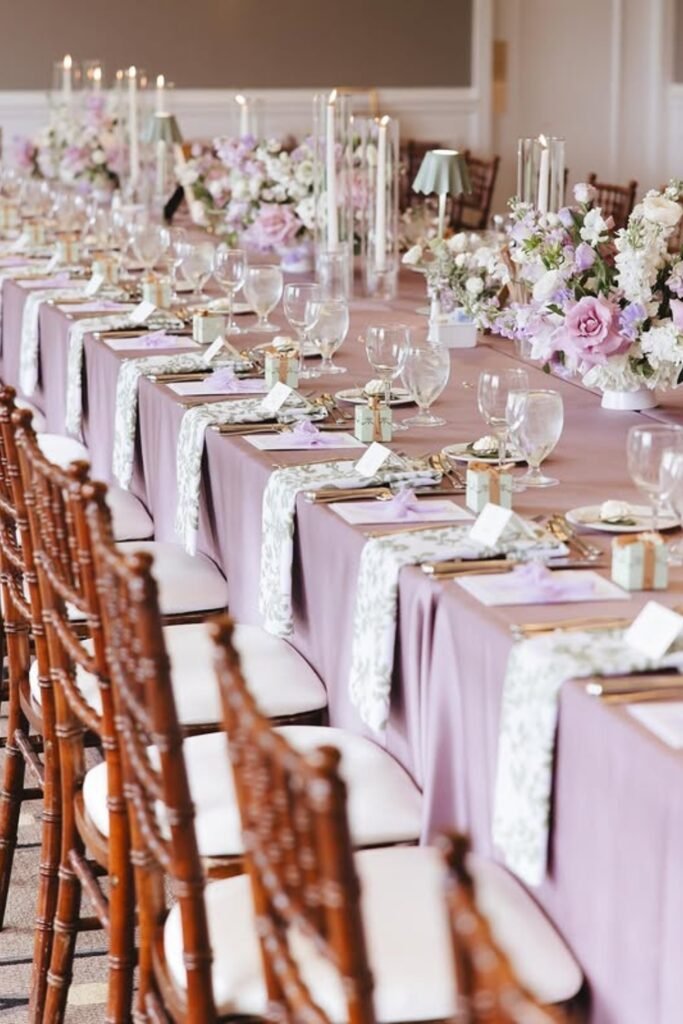
Lavender First
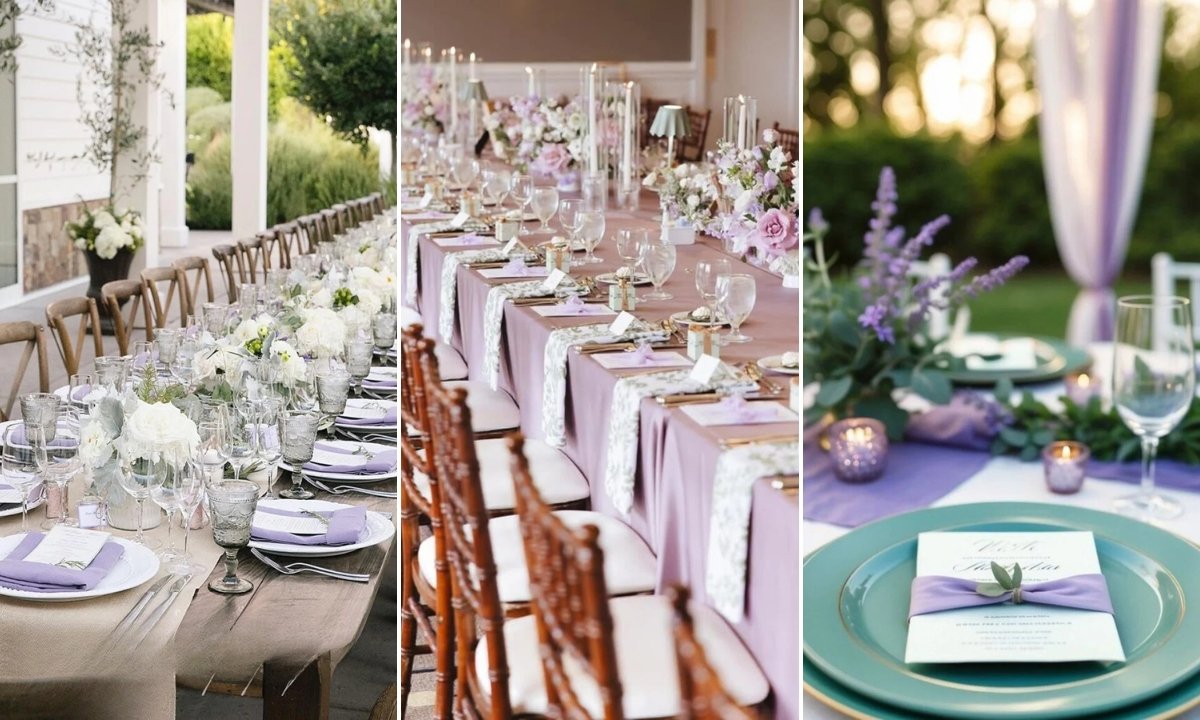
When you let lavender take the lead on table linens, everything else falls into place — but you need warm wood chairs to keep it from feeling too precious.
White florals and clear glass make lavender look intentional instead of like someone grabbed whatever was left at the craft store. The key is letting sage stay quiet here, maybe through napkin rings or small greenery touches.
This setup works best when you’re confident about lavender and want it to be the main character.
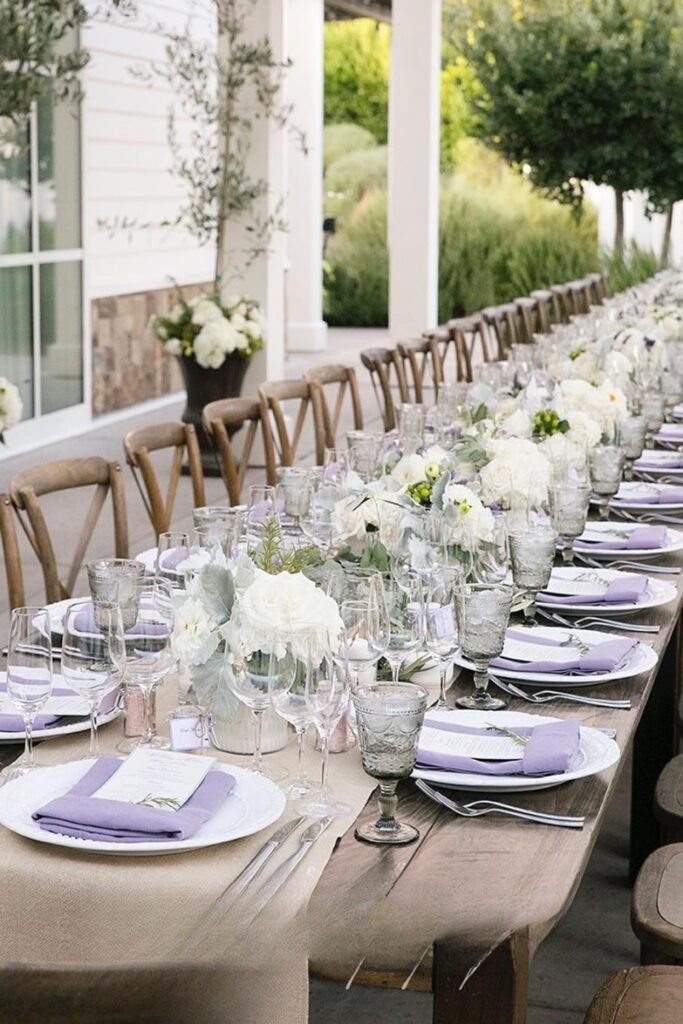
Sage Anchor
If sage feels too wimpy on its own (and honestly, it can), put it on the plates or chargers where it gets some visual weight.
Then let lavender show up in napkins or small details. This prevents sage from disappearing completely in outdoor light, which is a real problem with this color if you’re not careful.
Perfect for garden venues where you want both colors visible but don’t want them competing for attention.
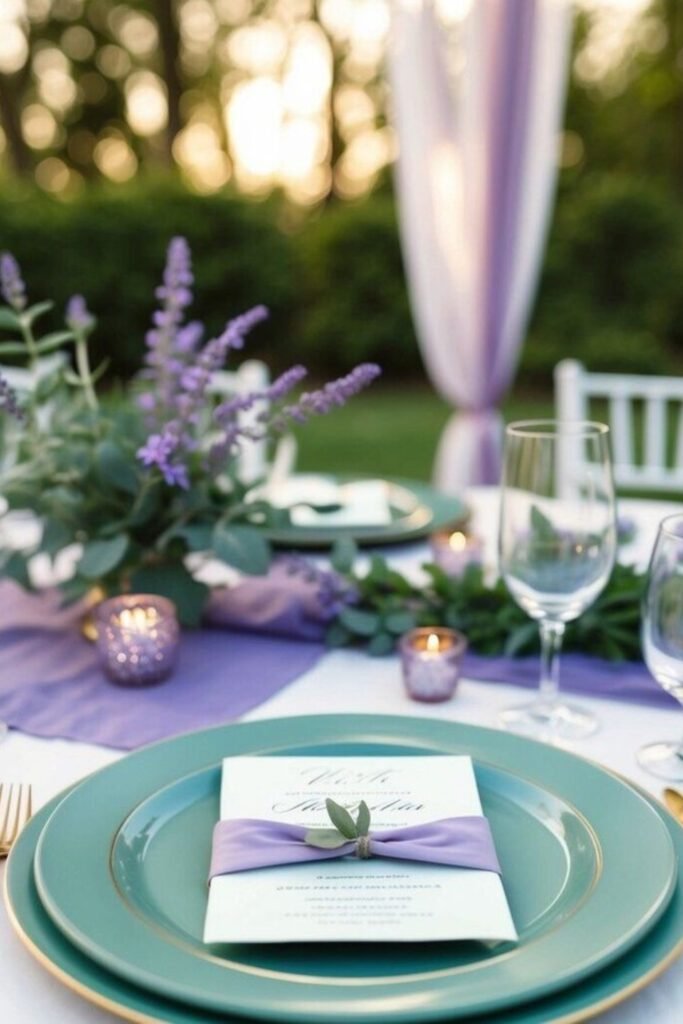
Soft Contrast
This is actually genius — sage plates with lavender menus or programs layered on top gives you instant balance without any guesswork.
Small touches like wax seals or ribbon ties make lavender feel deliberate instead of randomly sprinkled around. Plus it’s an easy way to test the combination before you commit to expensive linens or major floral arrangements.
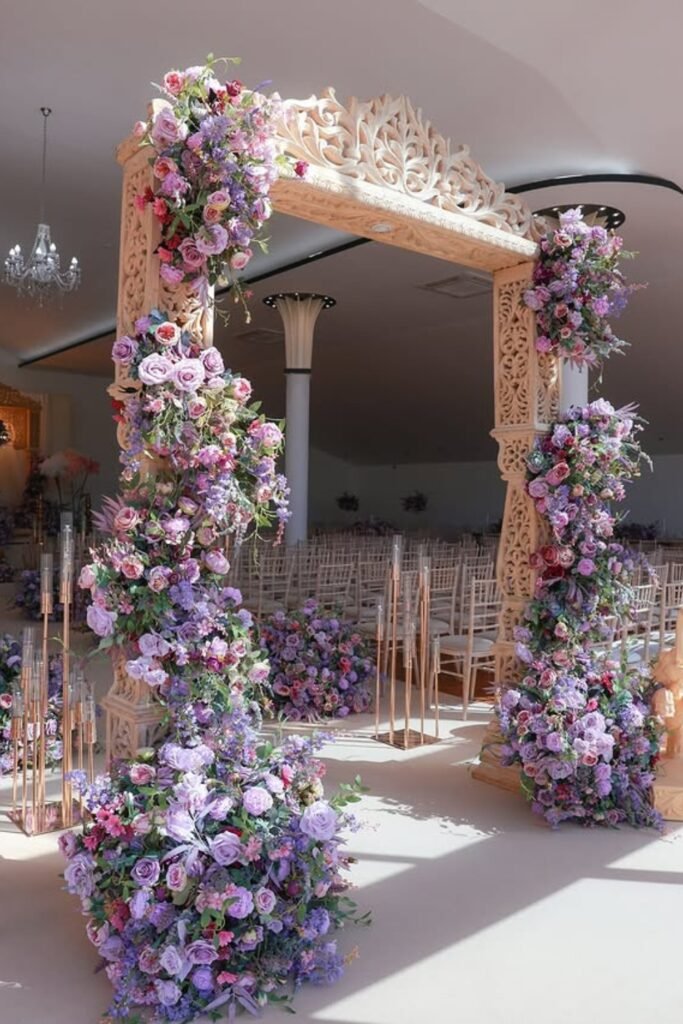
Frame Romance
For the ceremony arch, let lavender be the star and use sage greenery underneath for structure — not competing florals.
This works especially well indoors where you have actual lighting control and symmetry to help anchor everything. Keep sage supportive so it doesn’t steal focus during the actual ceremony moments.
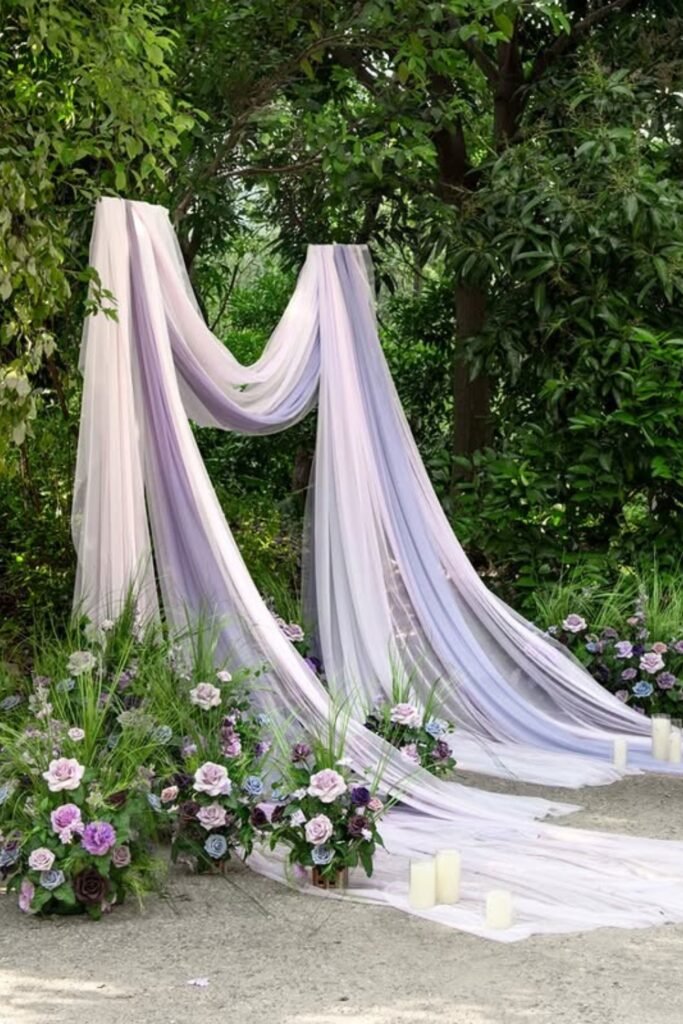
Soft Draping
Sheer lavender fabric overhead instantly makes any outdoor ceremony feel more romantic, but you need sage greenery at ground level or it looks like you’re floating in pastel nowhere.
This is perfect for venues with minimal built-in structure where you need the color to feel organic instead of obviously decorated.
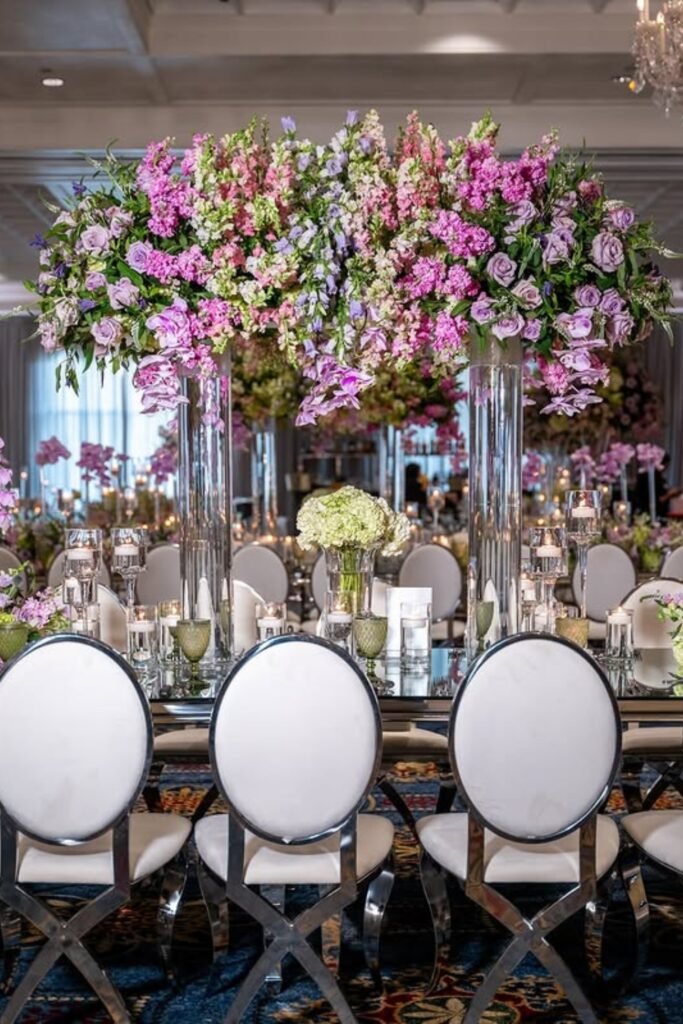
Elevated Florals
Tall arrangements let lavender take visual height while sage greenery below keeps everything balanced — just don’t make them so tall that guests can’t see each other.
This works best indoors where lighting and reflective surfaces (mirrors, glass, whatever) help bounce the soft colors around instead of absorbing them.
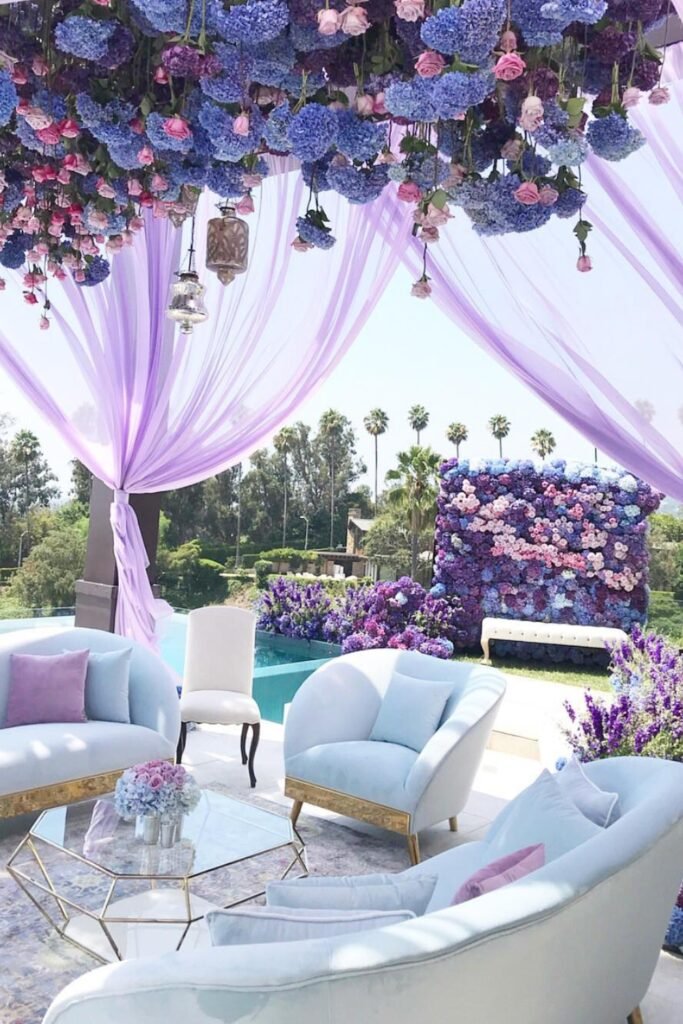
Lounge Layers
Lavender fabric overhead creates instant softness in a lounge area, especially when you pair it with sage plants and neutral seating that won’t compete.
It’s a smart way to repeat your colors beyond the dining tables without going overboard on decor everywhere. Plus it photographs beautifully if you’re doing that whole “getting ready in the morning” photo session thing.
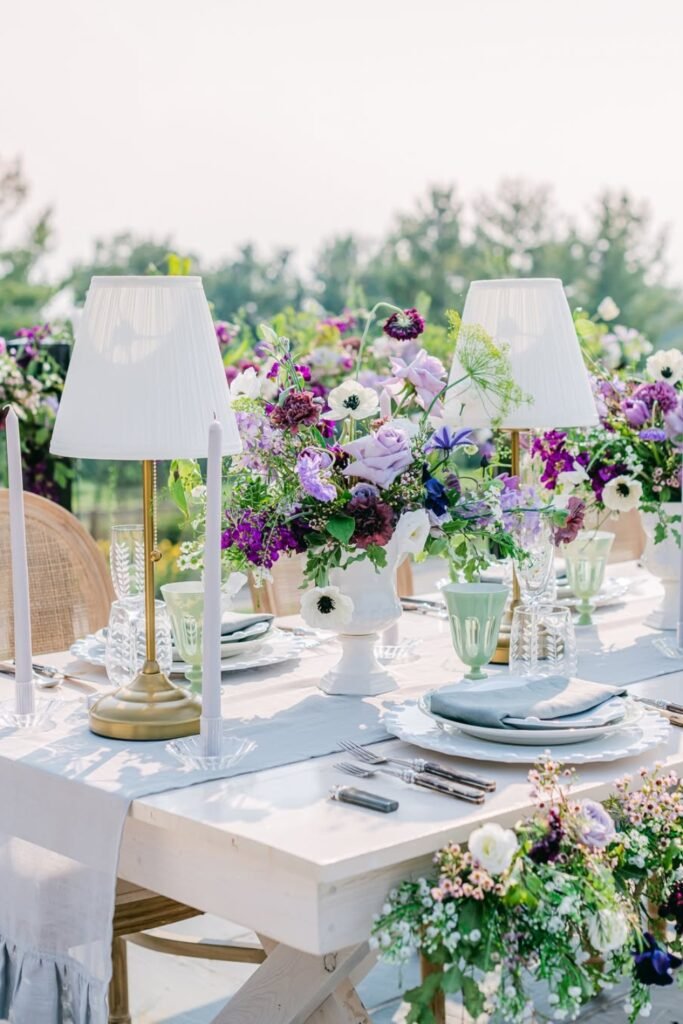
Garden Tables
White linens act as a buffer between lavender florals and sage accents — without that neutral base, they kind of blend into one soft, forgettable tone.
This is ideal for spring or summer weddings with lots of natural light that won’t wash everything out.
Moody Centerpiece
Deeper lavender centerpieces add actual richness to the palette — this keeps it from feeling too precious or pastel.
Mix it with sage foliage and candlelight for warmth during evening receptions. Pair with soft linens so the arrangement feels intentional, not dramatic for drama’s sake.
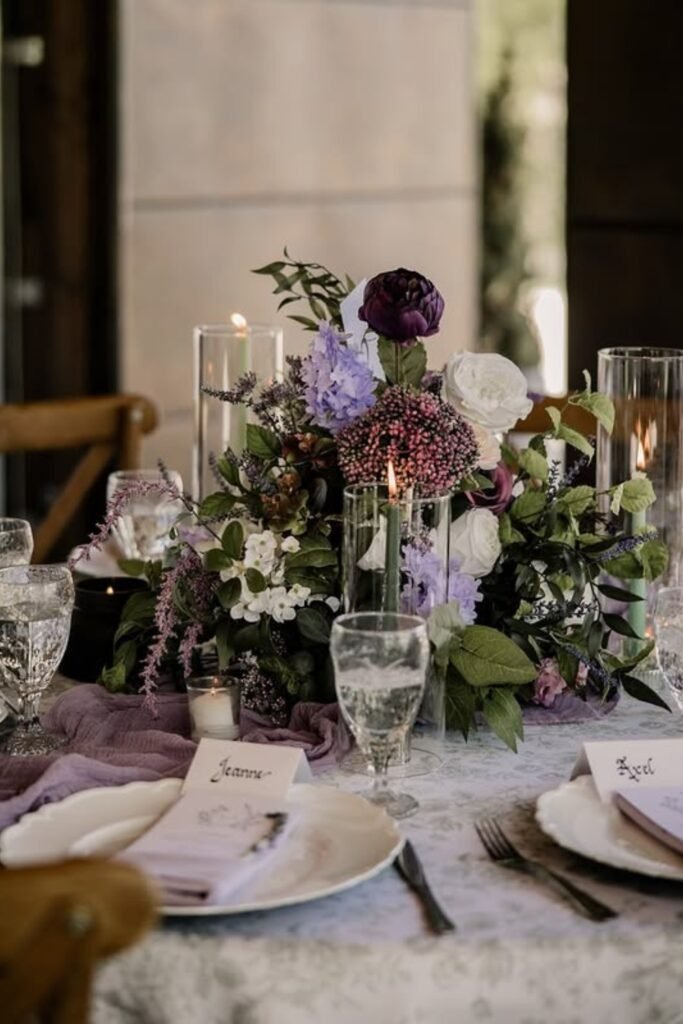
Ceiling Flow
Lavender draping overhead creates instant atmosphere, but keep sage mostly in foliage or it starts feeling costume-like.
This works when tables and chairs stay neutral so the ceiling treatment can carry the color moment without visual chaos below.
Save this post for later ❤️
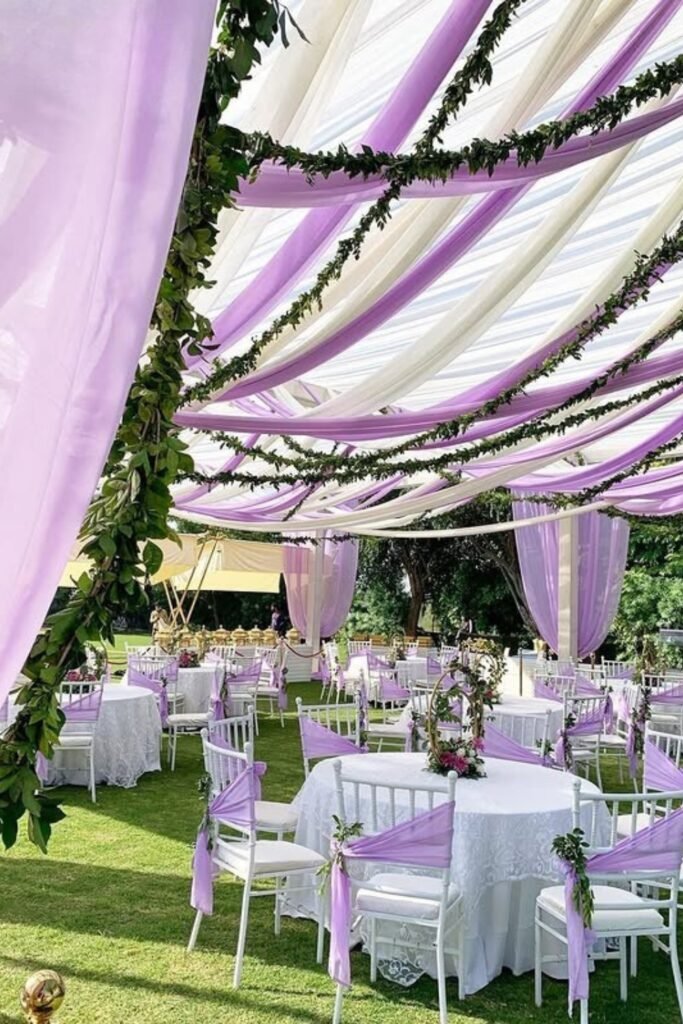
Refined Height
Tall arrangements where lavender commands attention and sage fills out the base with texture — this adds drama without crowding the table surface.
Glass and candles reflect the soft colors instead of absorbing them. Keep sage subtle here so lavender stays the star.
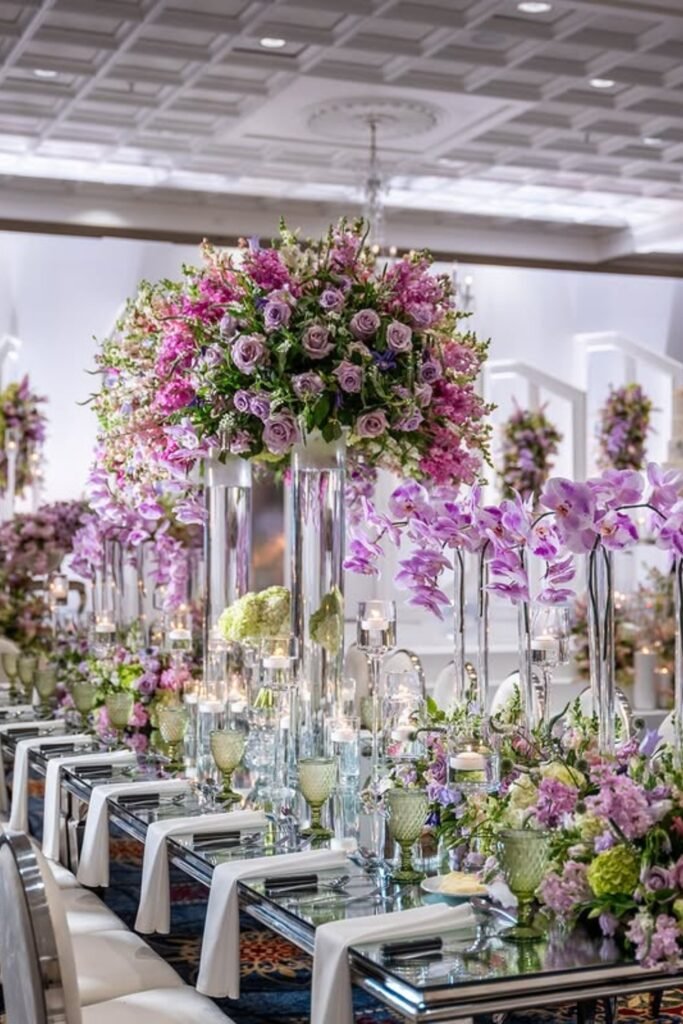
Earthy Mix
Lavender roses mixed with sage greens and unexpected textures like artichoke — this is how you get lavender without the sweetness.
Keep tableware simple so the arrangement feels intentional instead of like you threw every texture you could find into one centerpiece.
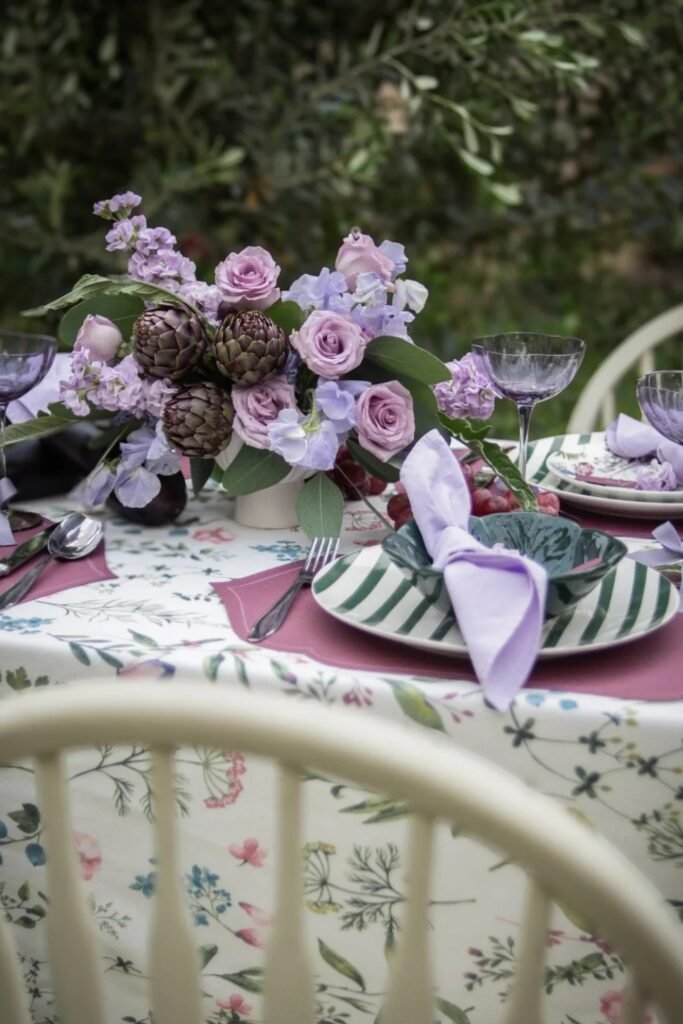
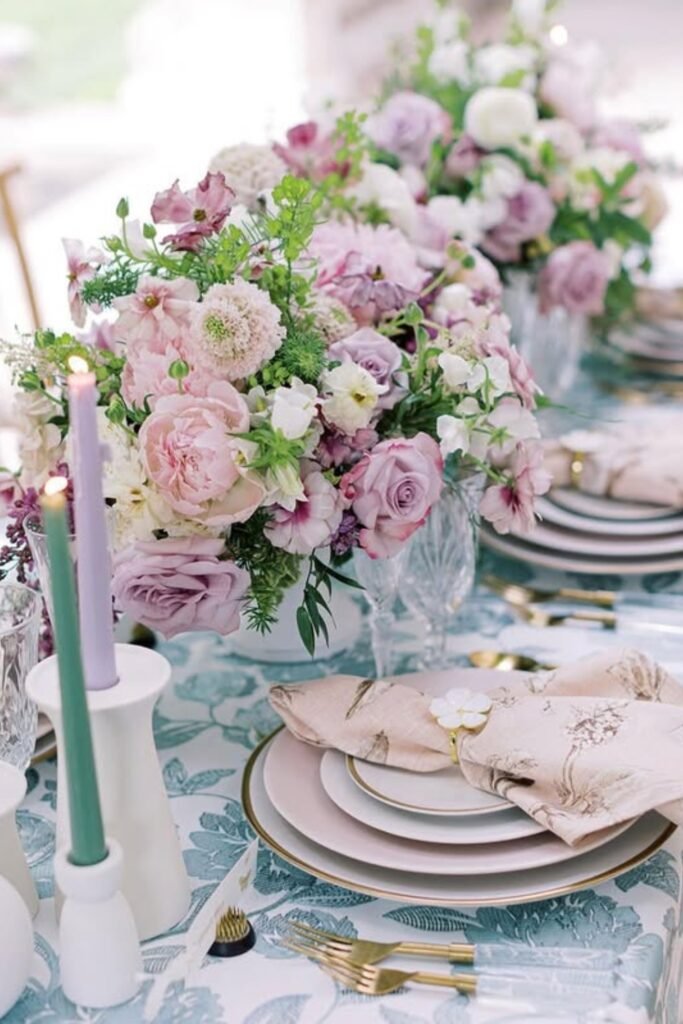
Soft Garden
Soft lavender with pale blush florals keeps things romantic while sage appears quietly through greenery — this prevents lavender from taking over completely.
Perfect for spring weddings where you want softness but still need the design to photograph well in bright daylight.
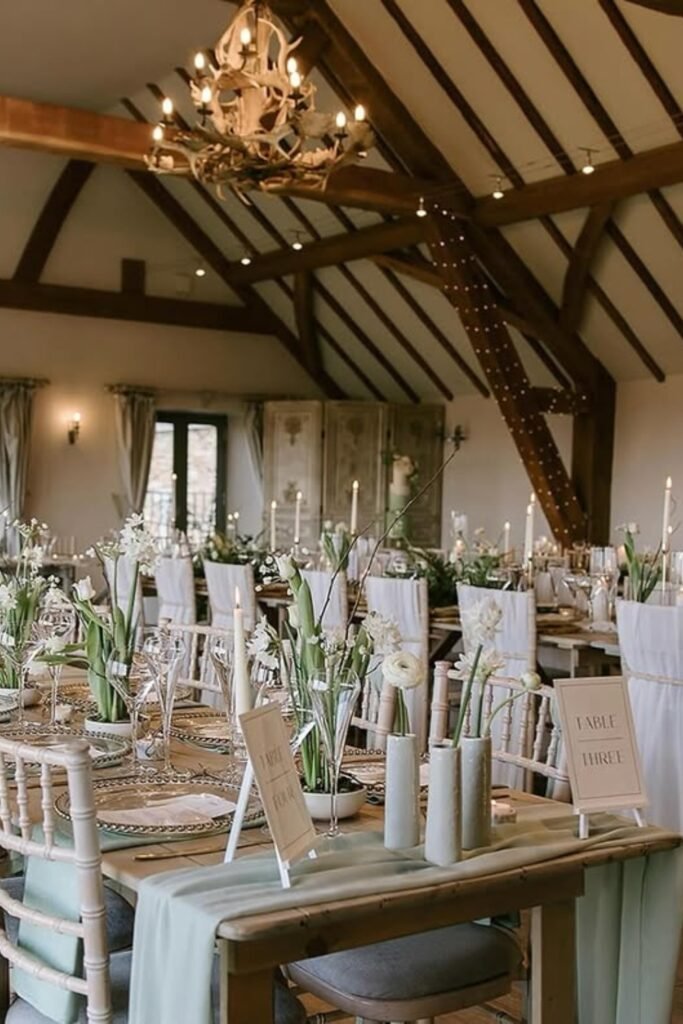
Sage Calm
Sage linens immediately cool the space — great for rustic venues with lots of warm wood where you need balance.
Use lavender as napkins or small florals to keep the palette restrained. This approach avoids pastel overload and makes sage feel like an actual design choice instead of an accident.
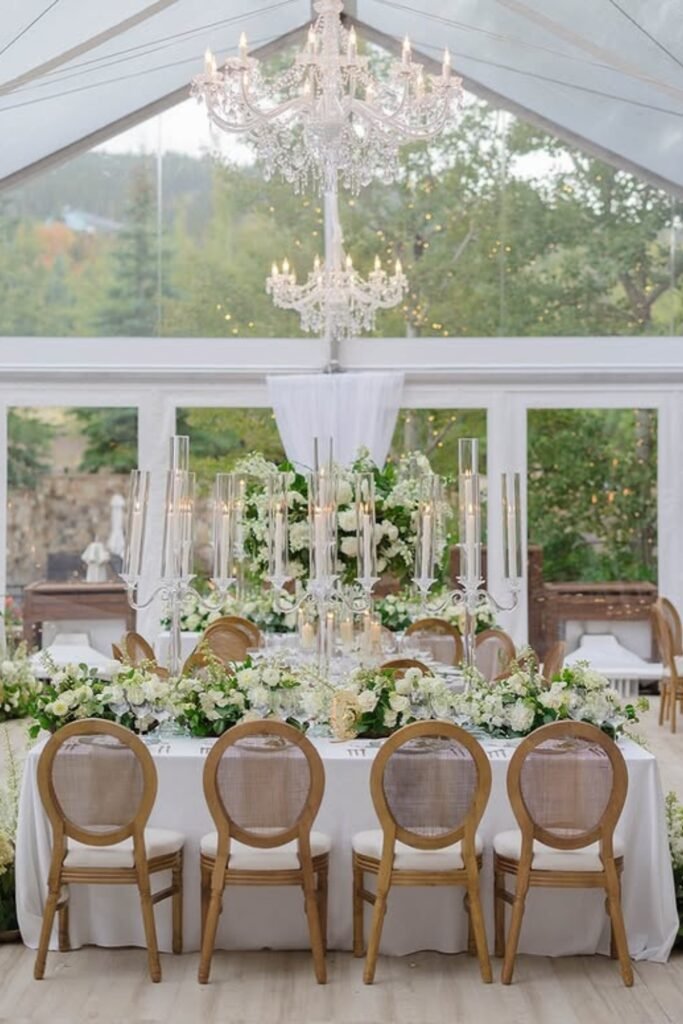
Neutral Glow
Neutral tables with sage greenery let lavender fade into supporting role — this keeps everything timeless for formal venues with architectural details that shouldn’t compete with your color choices.
Lavender shows up through florals and lighting, adding softness without fighting chandeliers or beams.
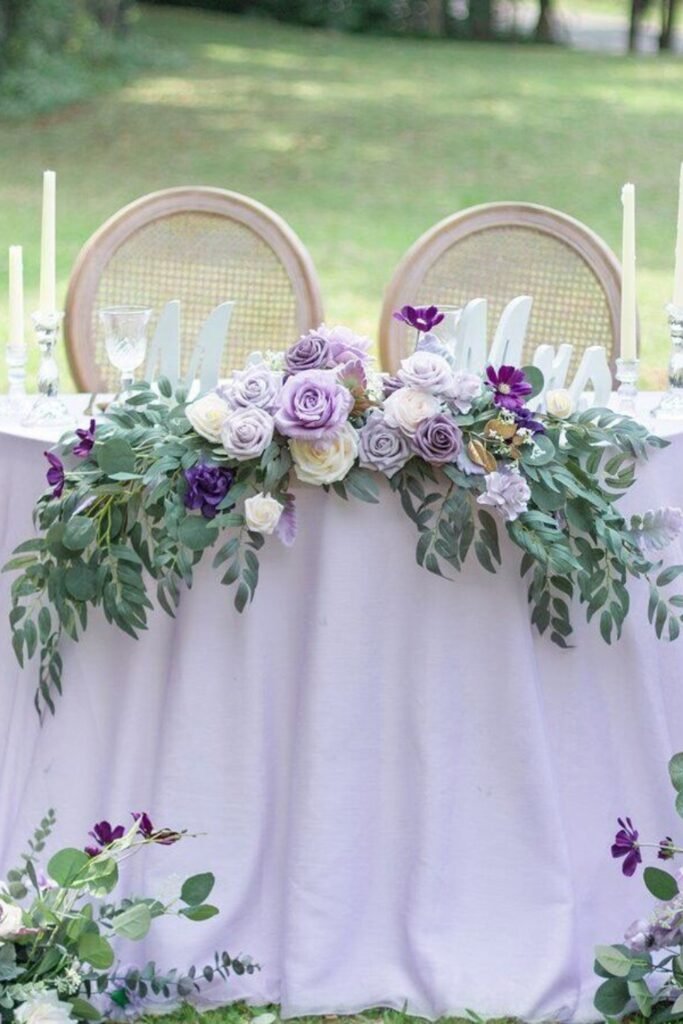
Head Table
The head table feels intimate when florals spill forward, connecting you visually to your guests instead of creating a barrier.
White linens give breathing room so lavender roses stay romantic while sage keeps everything grounded. Works best outdoors where natural light lifts the colors.
Floral Height
Tall centerpieces with lavender and sage add drama while keeping table surfaces clear for conversation. White florals mixed in prevent darker sage from feeling heavy under indoor lighting.
This style needs spacious venues where vertical design makes sense instead of overwhelming the room.
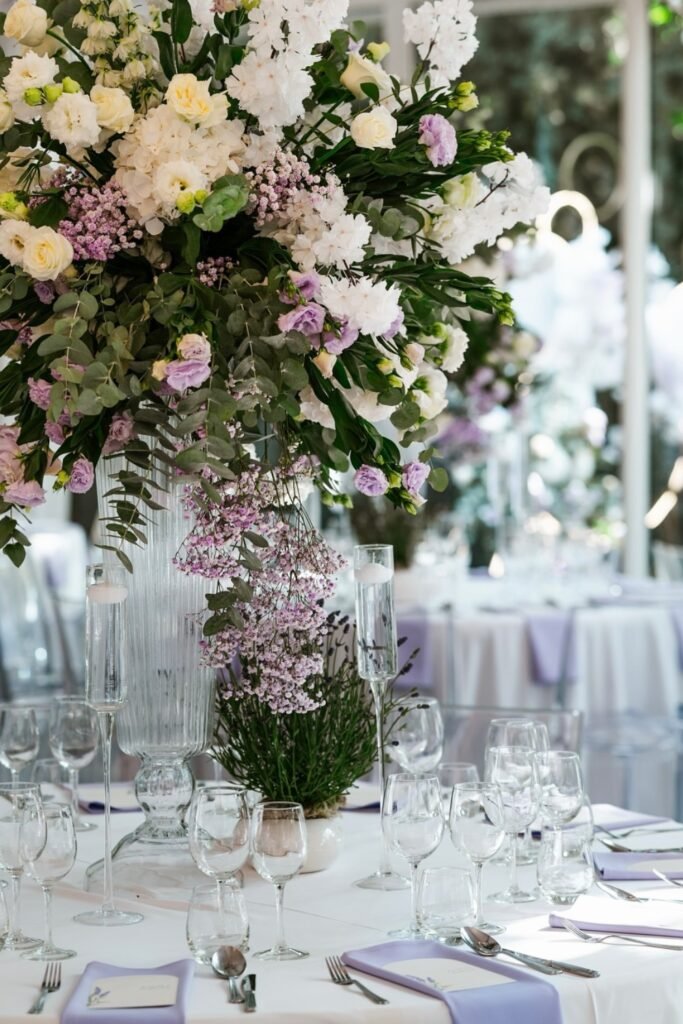
Sage Runner
A sage table runner anchors long tables and gives you structure before adding anything else — florals, candles, whatever decorative details you’re planning.
White flowers layered on top keep things fresh while lavender appears through small accents. Perfect for outdoor receptions where flowing fabric connects multiple tables into one cohesive look.
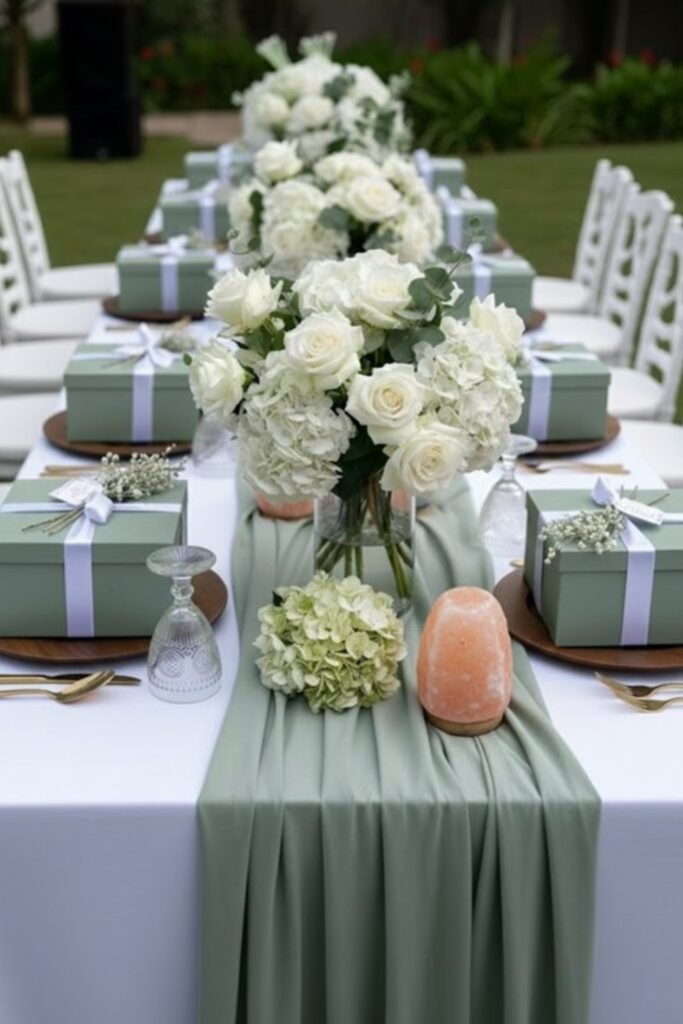
Soft Linen Layers
Layered sage linen with pale ceramics and candles — this works because comfort comes first, styling second.
Ideal for garden weddings where the greenery is already doing the heavy lifting and your table just needs to feel calm and welcoming.
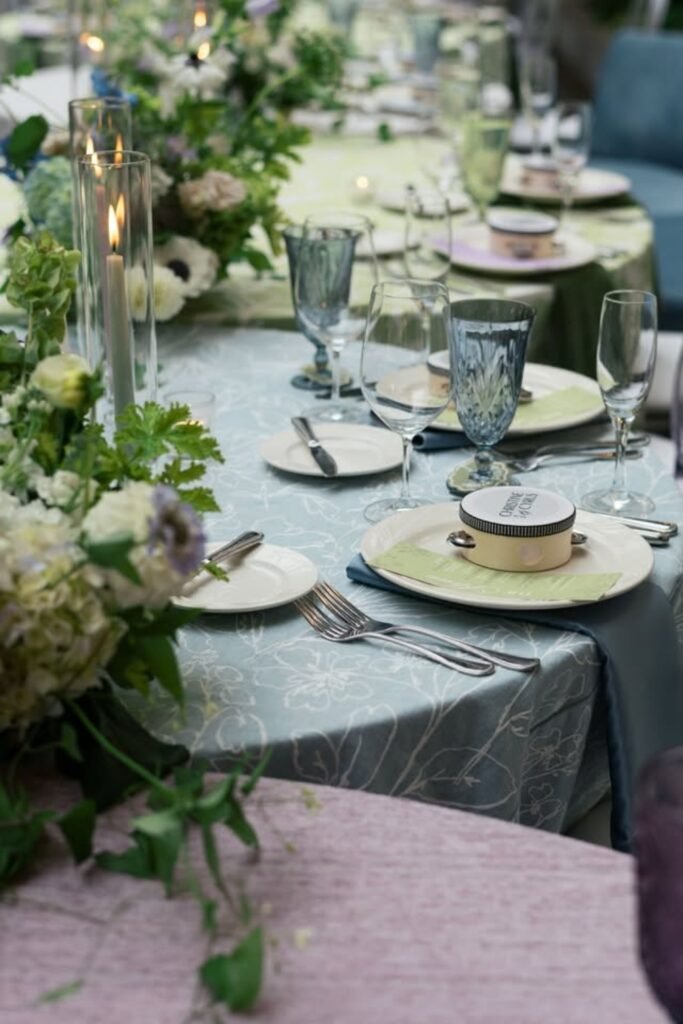
Chair Color Moments
Chair fabric alone can set the tone before you add any other decor — these ceremony chairs prove that simple repetition across rows quietly defines the mood.
Sage and dusty blue feel right outdoors, especially against natural backdrops that already have texture and movement. This works when you want color without centerpieces or big floral installations.
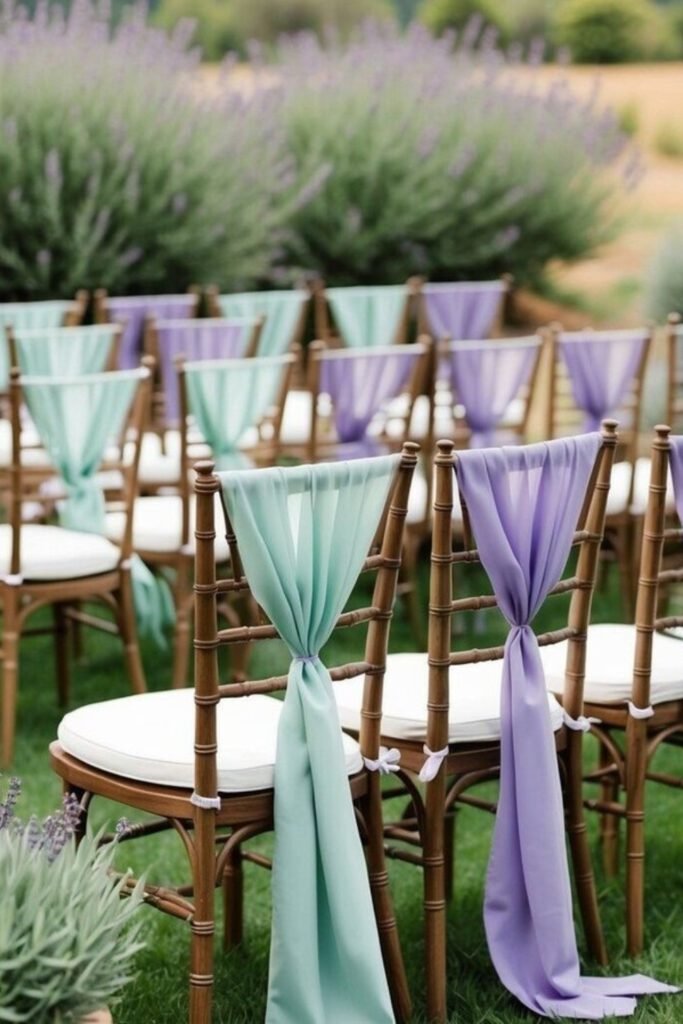
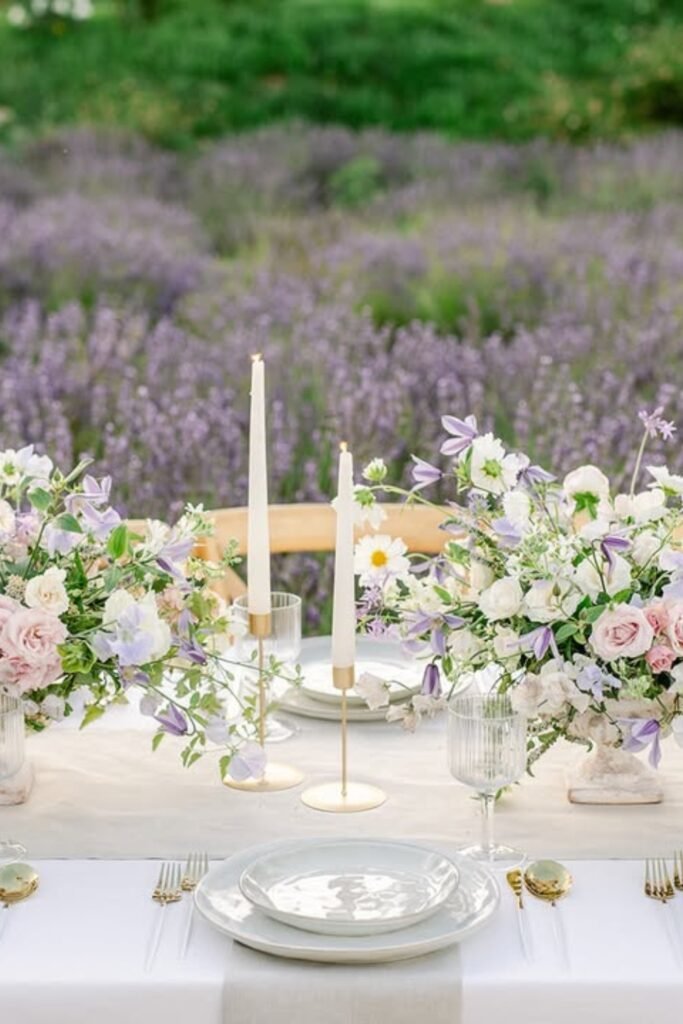
Lavender Field Balance
When your venue delivers scenery like this, restraint becomes the smartest styling choice — neutral linens and low florals let the landscape be the star.
Nothing competes with what guests actually came to see. Choose this approach for destination weddings where simplicity respects the setting instead of fighting it.
FAQs
Does lavender and sage work for all wedding seasons?
Yes, but you have to adjust the balance. Spring and summer call for lighter lavenders and fresh sage greenery.
Fall and winter need deeper lavender tones and more muted sage — pair them with ivory or champagne to keep everything from looking flat.
The key is never using both colors at the same intensity everywhere. One leads, one supports, always.
How do I keep a lavender and sage wedding from looking too pastel or dull?
Don’t use them at equal strength — that’s the biggest mistake I see. Let one color dominate and use the other as support.
Add strong neutrals like white or soft gold, and bring in texture through greenery, wood, glass, or candlelight. Without contrast and texture, any soft palette looks flat.