Plant Shelf Ideas That Turned My Boring Wall Into My Favorite Thing in the House

I bought three floating shelves last spring because they looked perfect in every Instagram post I’d seen. Put them up in what I thought was a bright corner, arranged my plants by size, and waited for the magic to happen.
Two months later, my pothos was dropping leaves and the snake plant looked like it was giving up. The shelves were fine — it was where I’d put them.
I learned that plants don’t care how the setup photographs. They care about getting enough light to actually grow, not just survive.
Here’s what I wish I’d known about plant shelf placement before I started over.
The Light Test Most People Skip
Before you mount anything, stand where you’re planning to put the shelf. At 10 AM, can you comfortably read a book without turning on a lamp? If not, your plants won’t be happy there either.
Most houseplants need what feels like bright light to us, not the dim corners we think are “bright enough.”
Check again at 2 PM and 4 PM. If the light fades dramatically by afternoon, you’ll end up with stretched, pale plants within a few weeks.
The corner I chose looked bright because it had white walls, but it was actually getting reflected light, not direct light. There’s a difference, and plants know it even when we don’t.
Save this article for later! 👇👇

Living Layers
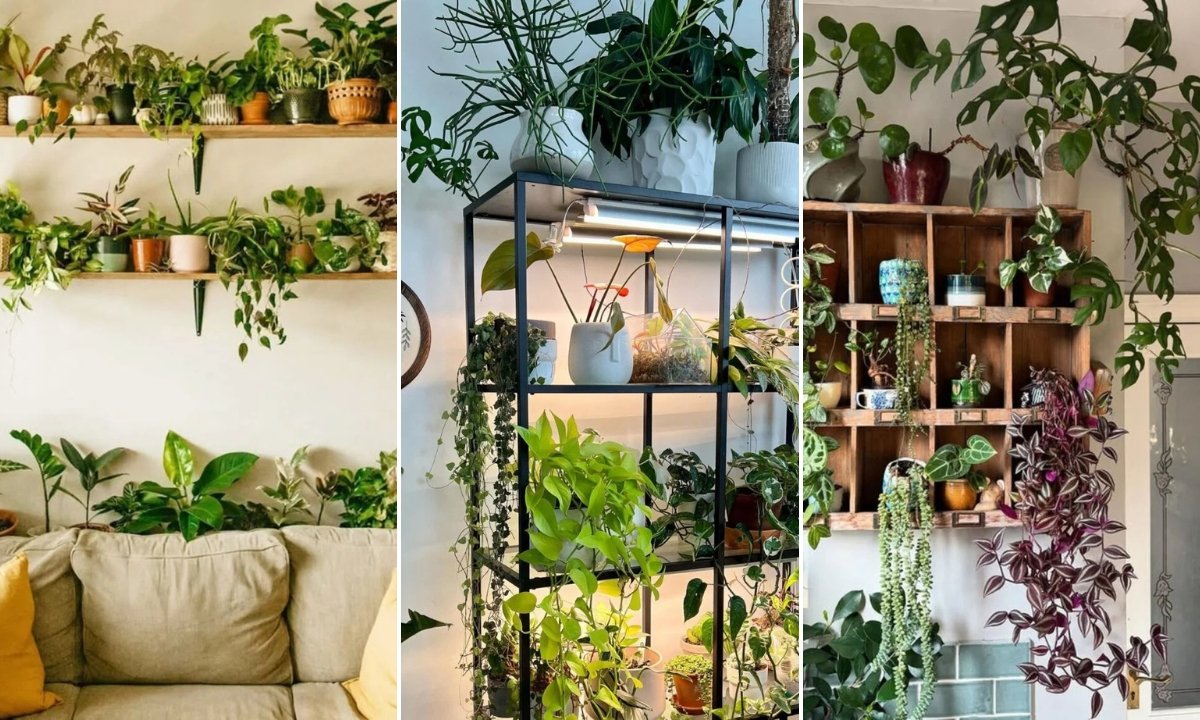
Three staggered shelves work better than one long one because trailing plants can spill forward without blocking each other’s light. I put my pothos on the top shelf now, spider plant in the middle, and philodendron on the bottom.
The vines cascade down naturally and everyone gets light. Keep the heaviest pots toward the wall side — learned that one when a clay pot nearly took out my coffee mug.
This setup works in living rooms where you have wall space but limited floor space. The plants become part of the architecture instead of sitting on every surface like mine used to.

Light Control
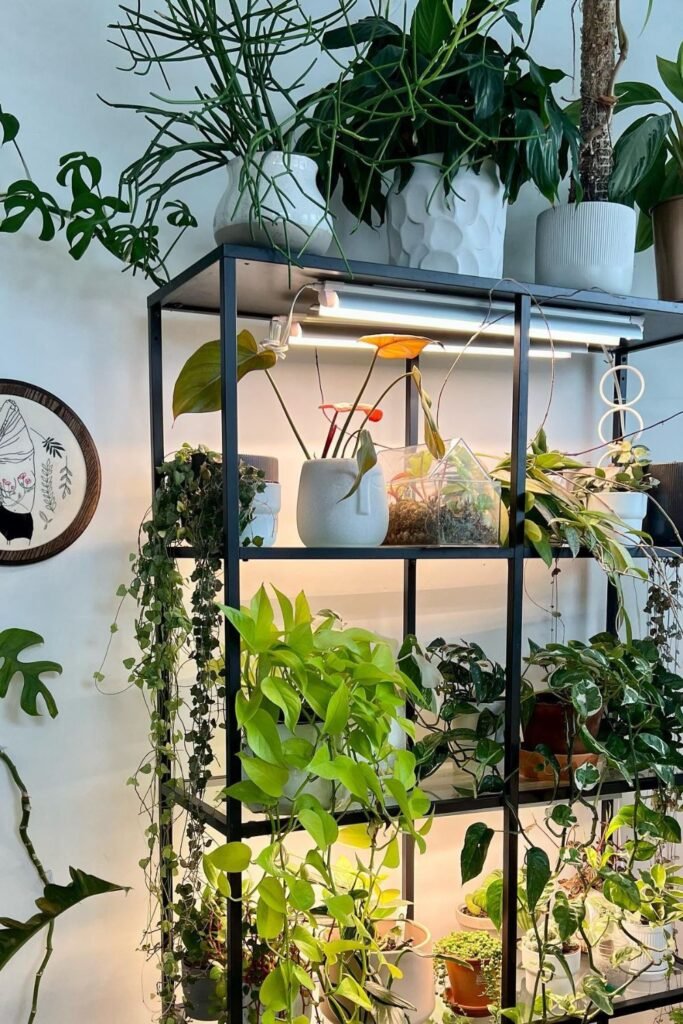
Built-in grow lights solve the biggest problem with plant shelves — uneven light distribution. I installed LED strip lights under each shelf after my first failure, and it changed everything.
Upper shelves get both natural light and supplemental lighting. Lower shelves rely more on the LEDs, but it works. My ZZ plant finally started putting out new growth after months of just sitting there looking accusatory.
Metal shelving handles the heat from the lights better than wood, and you don’t have to worry about warping or scorch marks. Timer switches make it automatic — lights on at 7 AM, off at 7 PM.
Vintage Grid
Cubby-style shelving keeps fast growers from taking over slower plants. My golden pothos was bullying my peace lily until I gave them separate compartments. Now they both have room to grow without competing for the same light pocket.
I keep trailing plants in the lower cubbies where their vines won’t block anything above them. Upright plants go higher where they can reach toward light without spreading sideways into their neighbors’ space.
Wood looks warmer than metal, but you need to seal it properly if you’re putting it anywhere near humidity. I learned this the hard way when the bottom shelf started warping near my kitchen window.

Window Halo
Circular shelving near windows gives plants side light instead of just overhead light, which keeps trailing varieties fuller. My heartleaf philodendron used to be all stems and no leaves — turns out it needed light hitting it from multiple angles.
Mount it high enough that you don’t walk into hanging vines, but not so high that watering becomes a gymnastics routine. I keep a small step stool nearby because reaching over my head with a watering can never ends well.
This works best with sheer curtains that diffuse harsh afternoon sun. Direct summer sun through glass will scorch leaves faster than you think.
Soft Divider
Open shelving between rooms solves two problems — it gives you more plant space and lets light pass through instead of creating a dark wall. I use this setup between my kitchen and dining area.
The smaller plants go on higher shelves where I don’t water them as often. Fuller plants stay lower where spills are easier to clean up and I can actually reach them without a step stool.
Light moves through the space naturally, so plants on both sides of the shelf get some benefit. It’s like having a living room divider that actually improves the light in both spaces.

Circular Growth
Round shelving encourages vines to wrap and climb instead of just hanging straight down. My pothos has gotten fuller since I switched from a straight shelf to a circular frame — the light hits more of the plant as it curves.
Built-in lighting keeps growth consistent when the shelf isn’t directly by a window. I run mine on a timer so the plants get 10-12 hours of light daily, which is what most houseplants need indoors.
Put heavier pots at the bottom for stability. Lightweight hanging planters work better for the upper portions where the frame might flex under too much weight.

Vertical Balance
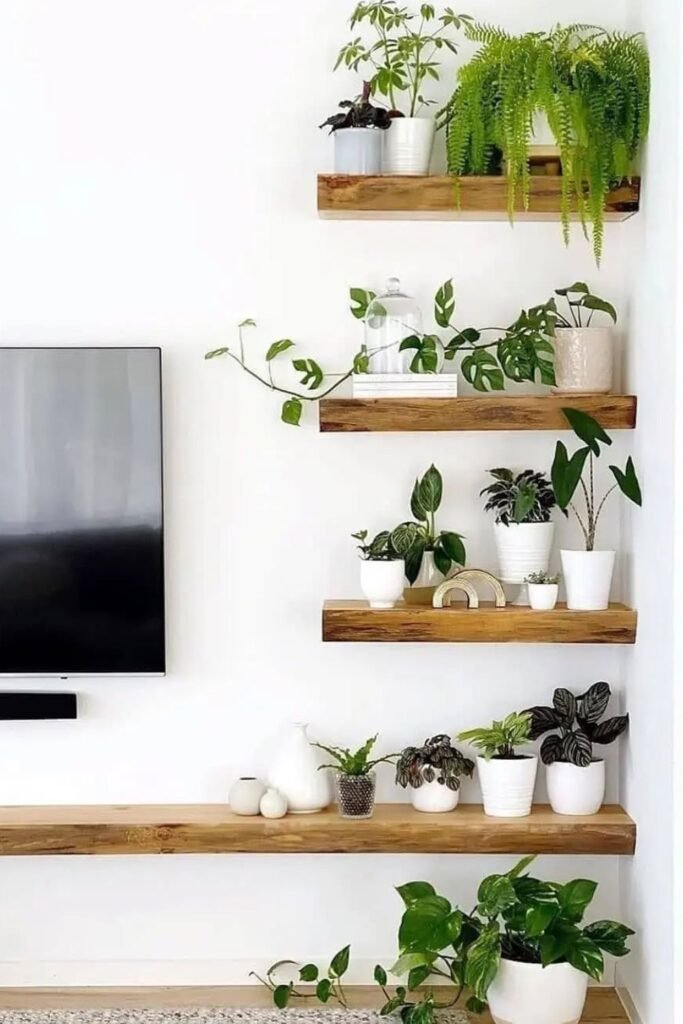
Staggered floating shelves work when you space them right. Too close together and the bottom plants get no light. Too far apart and it looks random rather than intentional.
I keep about 18 inches between shelves, which gives trailing plants room to hang without touching the shelf below. Ferns and upright plants go higher where air circulation is better and they won’t get dripped on from plants above them.
This setup works on walls that get steady indirect light most of the day. Direct sun creates too much heat buildup between the shelves and the wall.
Sleep Greens
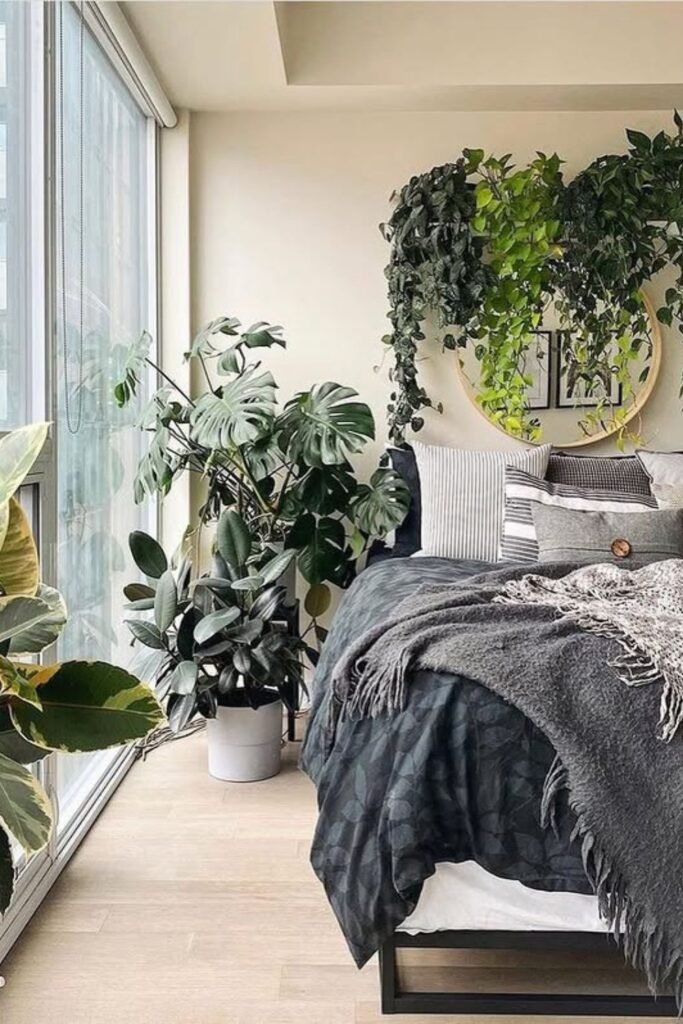
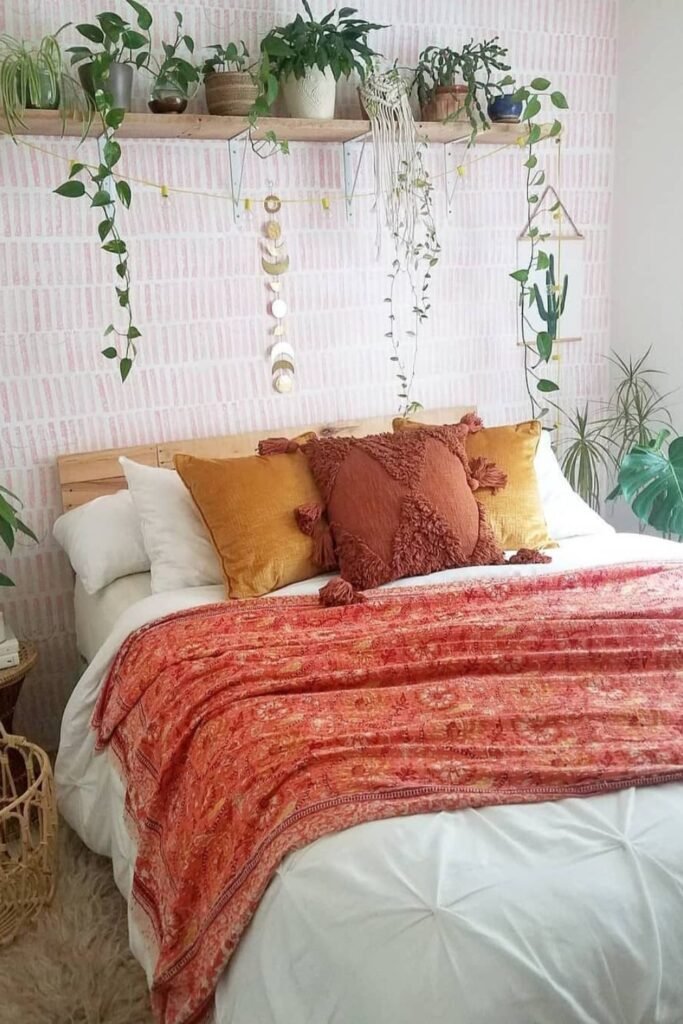
Bedroom plant shelves need to be lower maintenance than anywhere else. I keep pothos and spider plants above the headboard because they tolerate irregular watering and don’t need bright light.
Mount the shelves slightly forward so water doesn’t drip directly onto the bed. I learned this after waking up to a wet pillow one too many times.
Use lightweight pots and keep them small. Heavy ceramics above where you sleep feels risky, and you don’t want to deal with repotting frequently in a bedroom anyway.
Green Gallery
Mixed shelf heights keep light moving through the space instead of getting blocked at one level. I arrange mine with the heaviest plants closer to the floor and lighter ones higher up — both for safety and because it looks more natural.
Save this post for later ❤️
Medium-light plants sit at eye level where they get steady indirect light without being too close to windows. Trailing plants fill in gaps and soften the edges where wall meets shelf.
This works in living rooms that get good natural light for most of the day. If your room is darker, you’ll need to be more selective about which plants can handle the lower light levels.

Growth Station
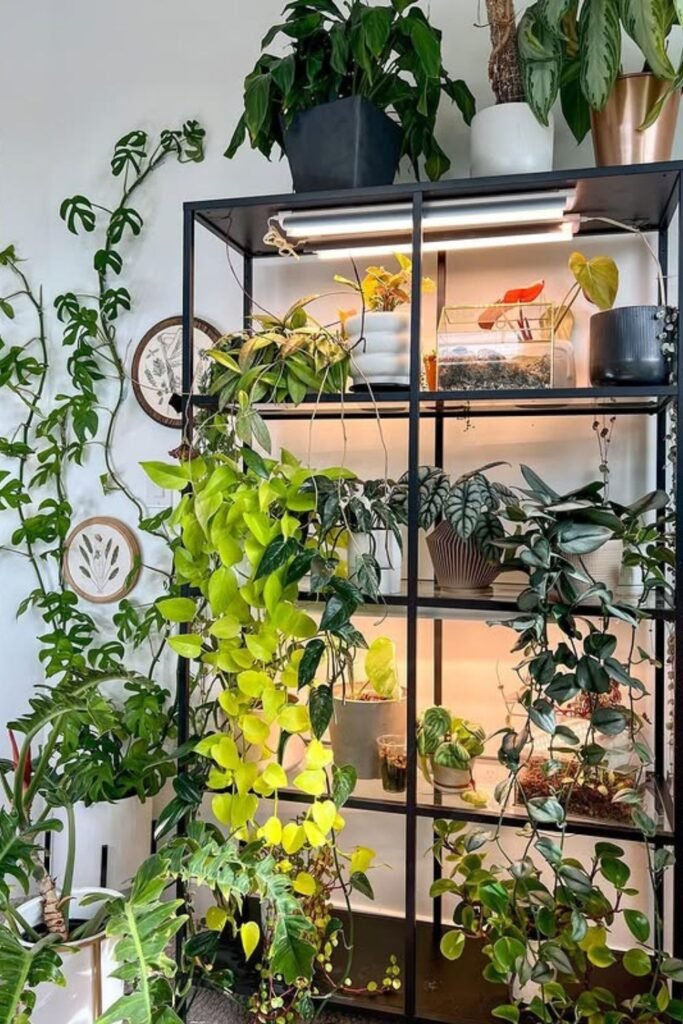
When every shelf has its own light source, you’re not dependent on window placement or room orientation. My setup like this sits in what used to be a dead corner, but the grow lights make it work as well as any bright window.
Larger plants go on upper shelves where they have room to spread without crowding smaller plants below. Active growers like monstera and fiddle leaf figs respond well to the consistent light and stay full instead of getting leggy.
The investment in good LED grow lights pays off when you can put plants anywhere in your home instead of crowding them around the few bright windows you have.
Airflow Frames
Wire shelving lets air move freely around plants, which cuts down on the fungus problems I used to get with solid wood shelves. The open design also lets trailing plants weave through naturally instead of just hanging down in one direction.
Water drains faster through wire than wood, so you have to be more careful about overwatering. But it also means roots don’t sit in damp soil for days, which is better for plant health overall.
This setup works well in darker corners where airflow matters more than maximum light, and where plants need structure without feeling enclosed.

Kitchen Greens
Kitchen humidity actually helps most houseplants, especially during winter when the rest of the house gets dry from heating. I keep open bookcase-style shelving near my sink where steam from dishwashing creates a mini greenhouse effect.
Pothos and philodendrons love it here. They get indirect light from the window, humidity from cooking, and steady air movement from daily activity. Heavy plants stay on lower shelves where spills aren’t dangerous and reaching them is easy.
Just don’t put plants directly above the stove where heat and grease can damage leaves.

Window Ladder
Tiered plant stands let you match plant height to light intensity instead of forcing everything onto one level. Sun-loving plants go higher where light is strongest, medium-light plants settle in the middle, and low-light tolerant plants work fine at the bottom.
This setup works directly in front of large windows where light changes throughout the day. Plants can adjust naturally without you having to constantly rotate pots or move them around.
The open frame design lets sunlight pass through instead of creating dark shadows, so even lower plants get some direct light during peak hours.

Honeycomb Growth
Hexagon shelving guides trailing plants to spread outward instead of just dropping straight down, which keeps them fuller and prevents bare spots near the soil line. My pothos looks completely different since I switched from a straight shelf to this style.
Compact plants work better in the center sections where light stays balanced. Trailing plants follow the angled edges naturally, which distributes the weight and keeps vines from getting too heavy on one side.
Leave a few sections empty so light can pass through to plants behind or below the shelf. Full coverage blocks too much light for the setup to work long-term.

Framed Vines
Round frames encourage plants to spill evenly on both sides instead of growing in one long, thin trail. This works especially well for heart-shaped leaf plants like heartleaf philodendron, where light hitting from different angles keeps the leaves full and prevents stems from getting bare.
Mount these on walls that get side light rather than direct overhead sun, which can cause leaf scorch on the upper portions. I pair mine with a low plant stand underneath so longer vines have somewhere to grow toward instead of trailing on the floor.
This approach works best in calm spaces where plants become part of the wall design rather than the main focal point.

Dense Canopy
Packing plants closely only works when they all lean toward the same strong light source instead of competing. I learned this by watching how my overcrowded shelf behaved — the plants that thrived were all reaching in the same direction.
Large-leaf plants handle the center where light hits strongest. Trailing plants soften the edges and help pull light downward to lower areas. Keep similar light requirements together or you’ll end up with some plants struggling while others take over.
Use slim pots so roots aren’t competing for space, and trim regularly to prevent leaves from blocking each other completely. This setup needs consistent attention to work well.

Leaning Light
Ladder shelving works near bright walls where light washes across each level rather than hitting from just one direction. The angle prevents upper shelves from shading lower ones completely, which was always my problem with straight vertical shelving.
Small to medium plants work best here since the shelves aren’t as deep as built-in units. Sun-loving plants go higher, low-light tolerant plants stay closer to the floor where light softens naturally.
This fits spaces where you can’t drill into walls but need more plant space than floor-level options provide.

Corner Rise
Tiered corner stands make dead spaces useful by letting each plant sit at its preferred light level. Taller plants catch light first at the top, while broad-leaf plants spread out lower without stretching desperately upward.
Spacing each pot separately reduces humidity buildup around roots, which prevents a lot of the rot issues I used to get when plants were crowded together on flat surfaces.
Choose plants with similar watering schedules so maintenance stays simple. Mixed care requirements in a corner setup become complicated fast when you can’t easily move things around.

Calm Cascade
Bedroom plant shelves work best when you choose plants that tolerate neglect and don’t need frequent attention. I keep trailing plants slightly off to one side so they get side light instead of harsh overhead exposure, and so the vines don’t hang directly over where I sleep.
Shallow shelves prevent overwatering accidents above the bed and limit soil weight. Choose plants like pothos, heartleaf philodendron, or spider plants that handle infrequent watering and slower growth.
This works in rooms with gentle, filtered daylight where plants support the calm atmosphere instead of demanding constant care.
I’ve spent over four decades building a marriage, raising a family, and learning what truly matters along the way. I write about relationships, home, and navigating life’s later seasons with grace, honesty, and a little humor. My goal is to share the kind of steady, real-life wisdom that helps you feel grounded, encouraged, and a little less alone.