
28 Zen Garden Ideas For 2026
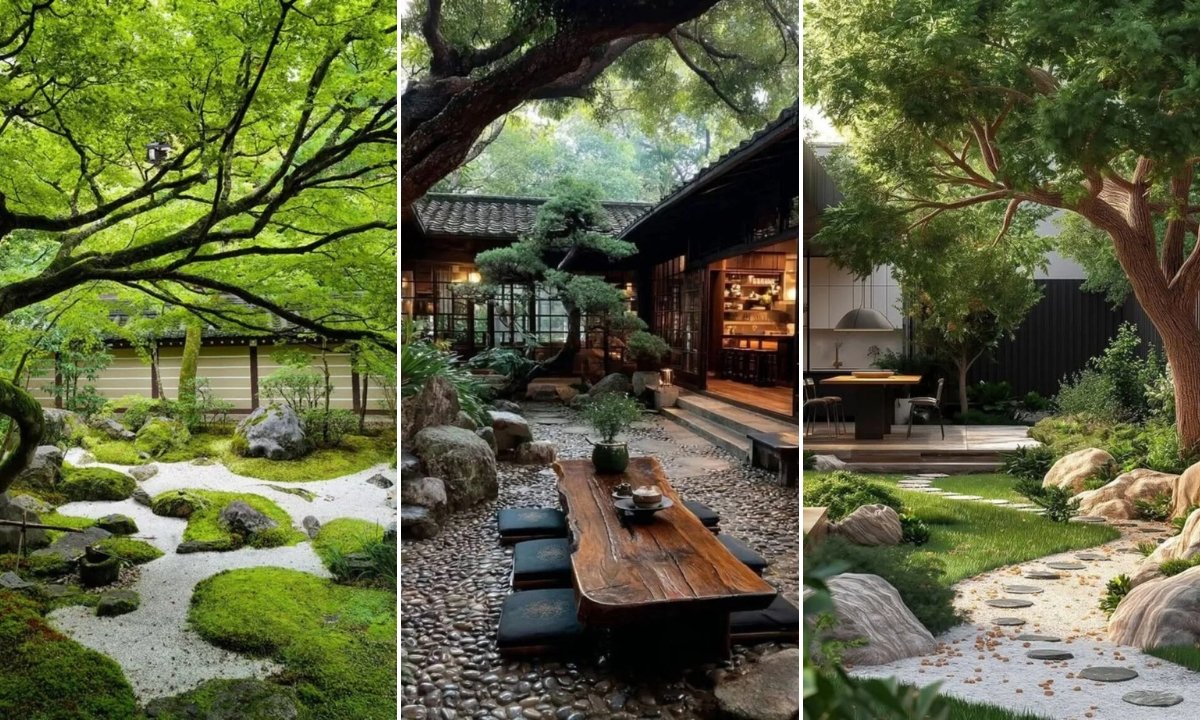
Most people think a Zen garden is supposed to look calm. That’s where they go wrong. You can copy a beautiful design from the internet and still feel restless every time you sit near it.
The real problem isn’t the rocks or the sand it’s how the space is designed to interact with your mind. If your garden keeps your eyes busy, your thoughts stay busy too.
In this article, you’ll learn 28 Zen Garden Ideas and how to design a Zen garden that actually slows your thoughts and creates calm you feel every single day.
What Actually Makes a Zen Garden Calming?
A Zen garden feels calming when it gives your mind less to process. If your eyes keep jumping from one thing to another, your brain stays alert instead of relaxed.
That’s why simplicity matters more than decoration. Fewer elements, clear spacing, and intentional placement.
Help your mind slow down without effort. When you remove visual noise, your thoughts naturally quiet down.
A Zen garden isn’t meant to impress you every time you look at it it’s meant to gently fade into the background so your mind can finally rest.
Save this article for later! 👇👇
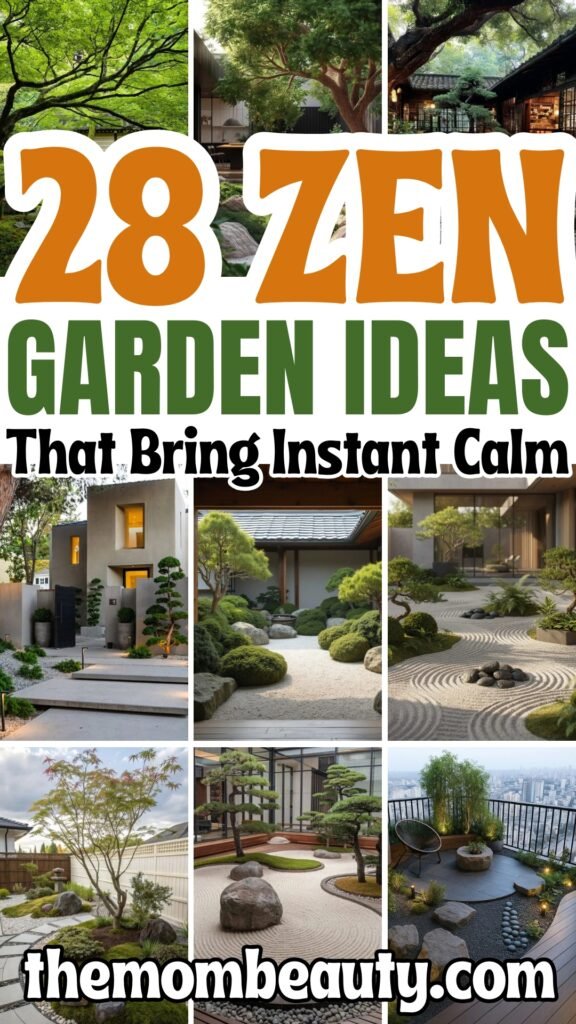
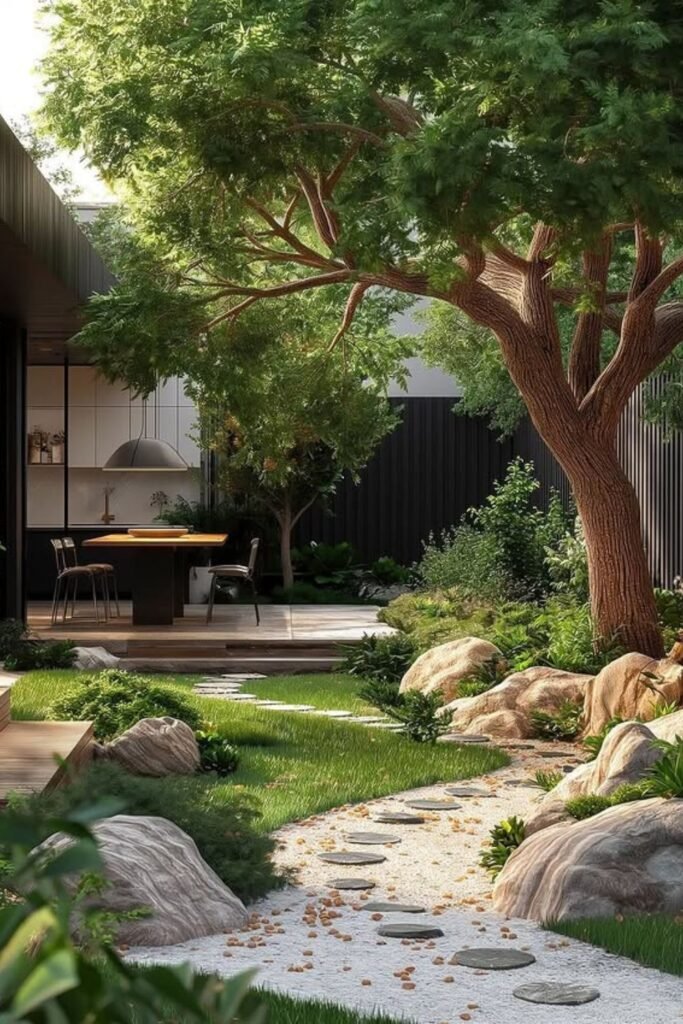
Canopy Garden
Overhead trees do the calming work here. A mature, wide-branch tree filters light, softens sound, and creates natural shade that keeps the space cool and grounded.
This approach works best in courtyards or inner yards where walls reflect noise. Let one main tree anchor the garden.
Surround it with low greenery and stones, and avoid adding more plants than needed so the canopy stays the focus.
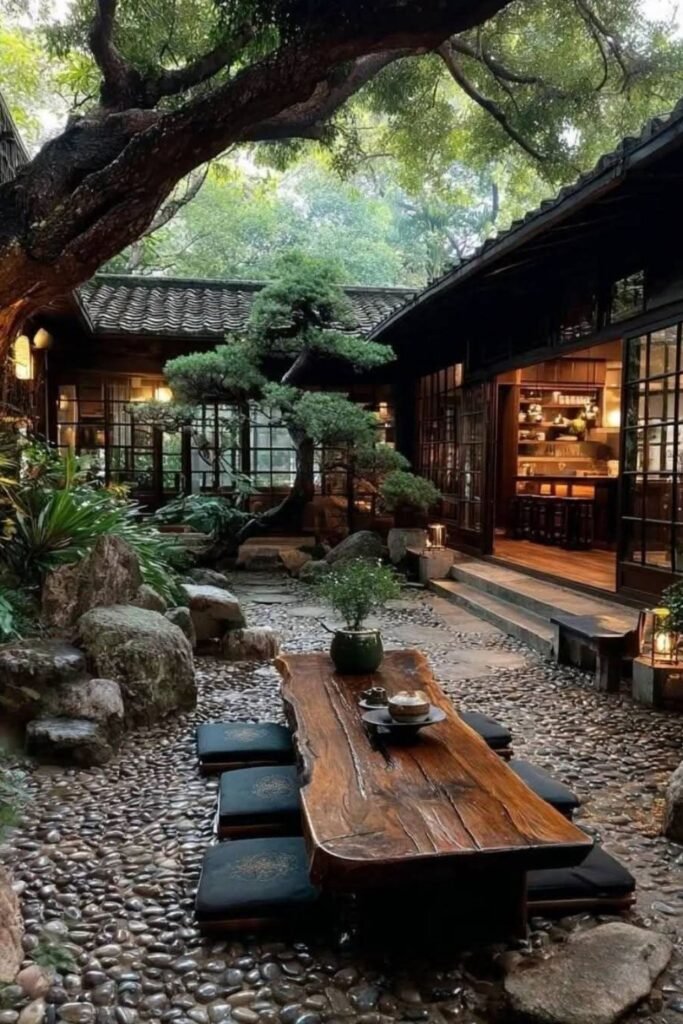
Entry Balance
Approach calm before stepping inside. A small, sculptural tree softens the sharp lines of the house and gives your eyes one clear place to land.
Rounded stones and gravel slow the movement around the entrance, while low plants keep everything grounded.
This works best in front yards or entry paths where you want to ease the transition from street noise into a quieter, more settled space.
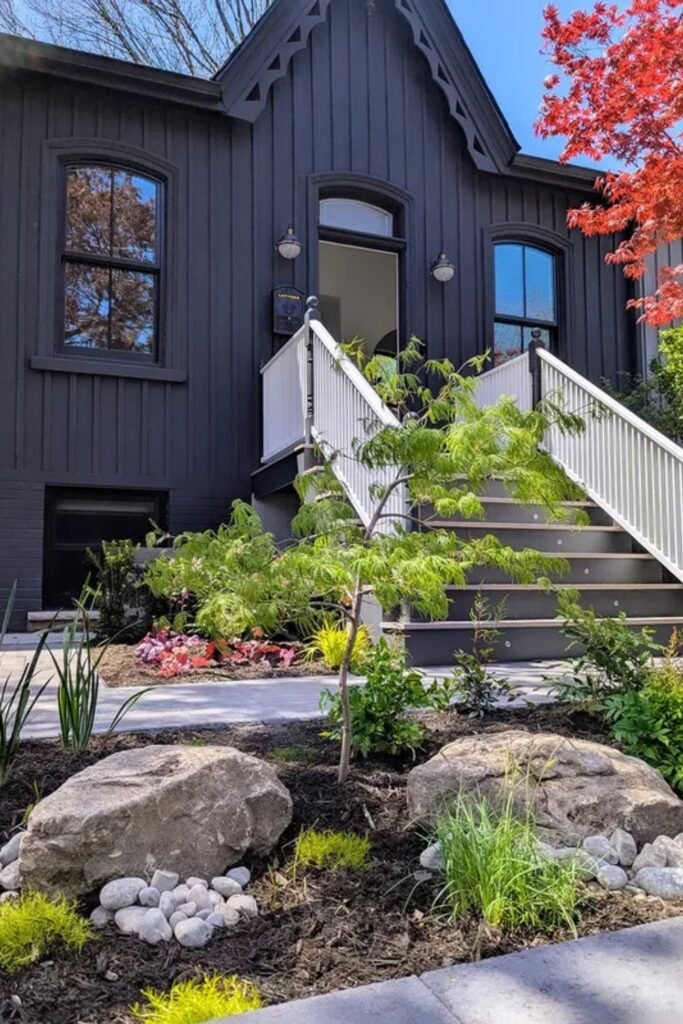
Path Rhythm
Movement slows naturally when plants guide the walk. Stepping stones spaced through grass and gravel give the feet a steady pace.
While trees and low shrubs frame the path without crowding it. This works best in side yards or inner courtyards.
Where you want to turn walking into a calming habit. Keep plant heights low near the path so the ground pattern stays visible and soothing.
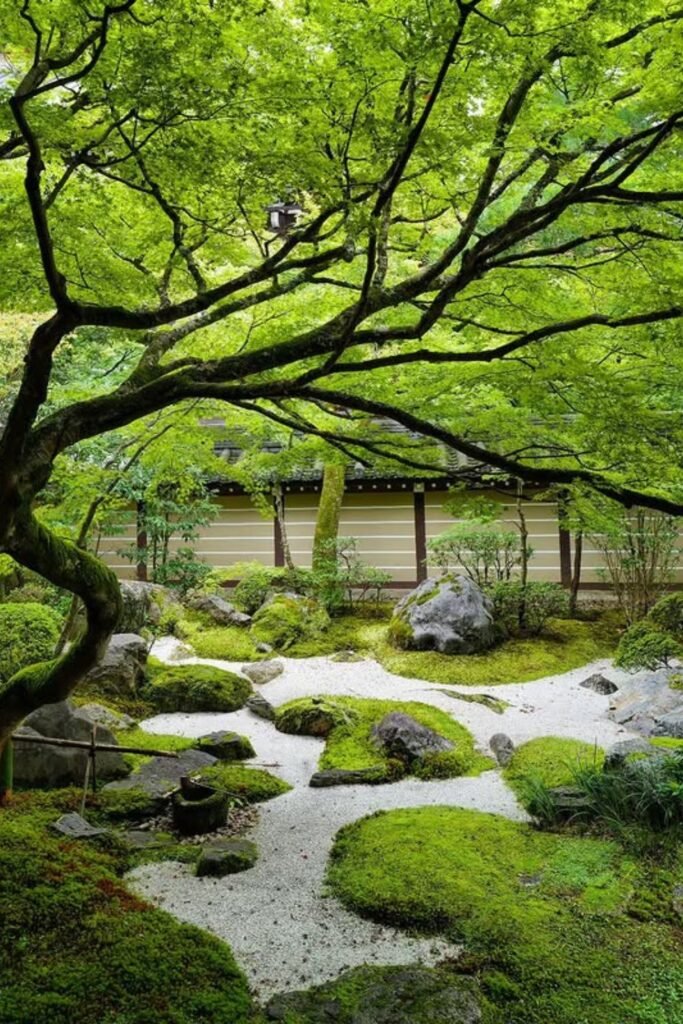
Moss Flow
Soft ground changes how the whole space feels. Moss spreads quiet underfoot, while pale gravel paths give the eyes a slow, gentle route to follow.
This setup works best in shaded courtyards or north-facing gardens where sunlight stays filtered.
Keep soil slightly acidic, control foot traffic, and let moss grow naturally instead of forcing symmetry the calm comes from its uneven rhythm.
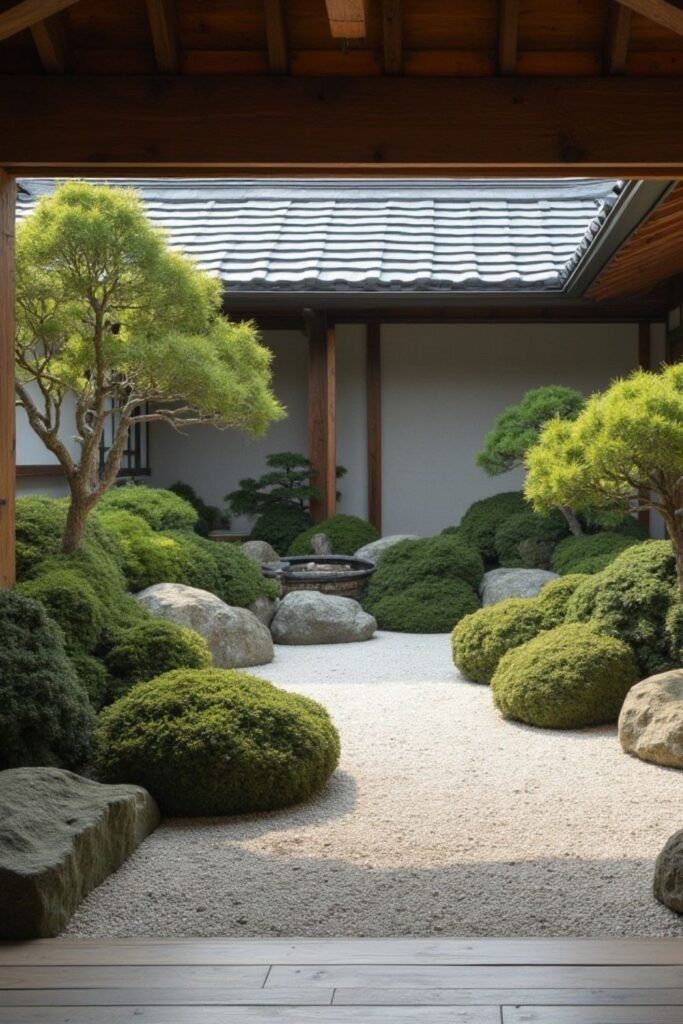
Framed Calm
Structured greenery works best when walls hold the space still. Rounded shrubs and carefully shaped trees soften hard architecture.
And keep the eye from wandering. This setup fits inner courtyards and enclosed patios where noise is already low.
Shape plants slowly over time instead of forcing symmetry, and leave open gravel paths so the greenery feels intentional rather than crowded.
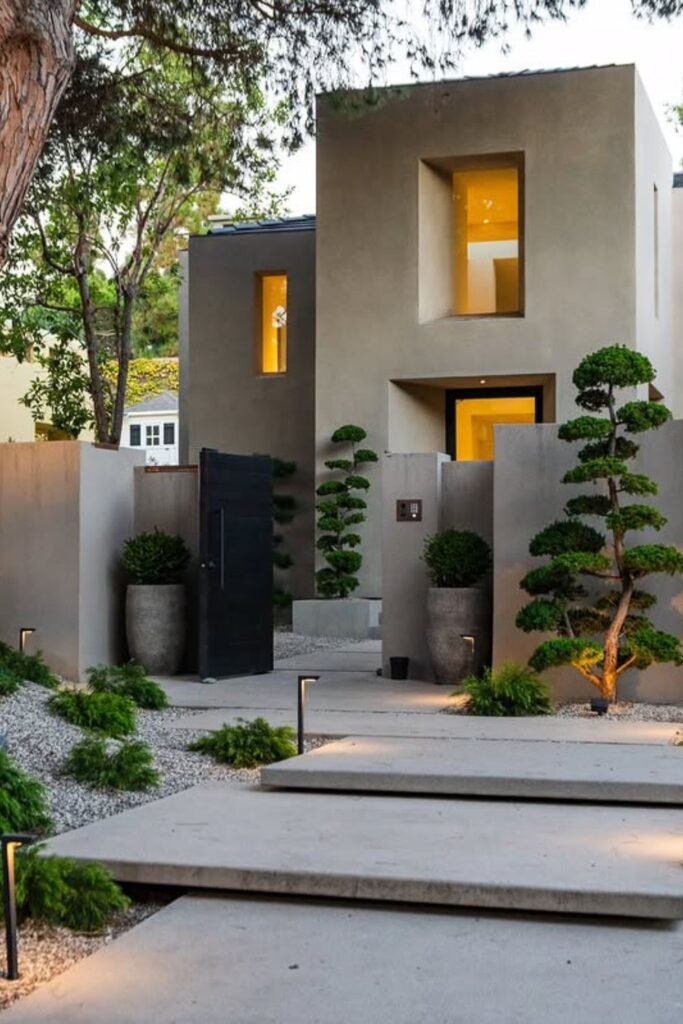
Sculpted Entry
Clean walls feel softer once greenery takes control. Carefully pruned trees and low shrubs guide the eye toward the entrance without adding clutter.
This style works best for modern homes where straight lines dominate. Use slow-growing plants, keep spacing generous.
And let gravel fill the gaps so each plant feels intentional rather than decorative. The calm comes from restraint, not abundance.
Raked Stillness
Curved rake lines slow the eyes before the mind even notices. Low bonsai-style trees and mossy mounds keep the space grounded while gravel carries the calm.
This works best in modern courtyards or open patios where clean architecture surrounds the garden.
Recreate it by limiting plant variety, spacing greenery apart, and re-raking regularly so the patterns stay soft, not perfect.
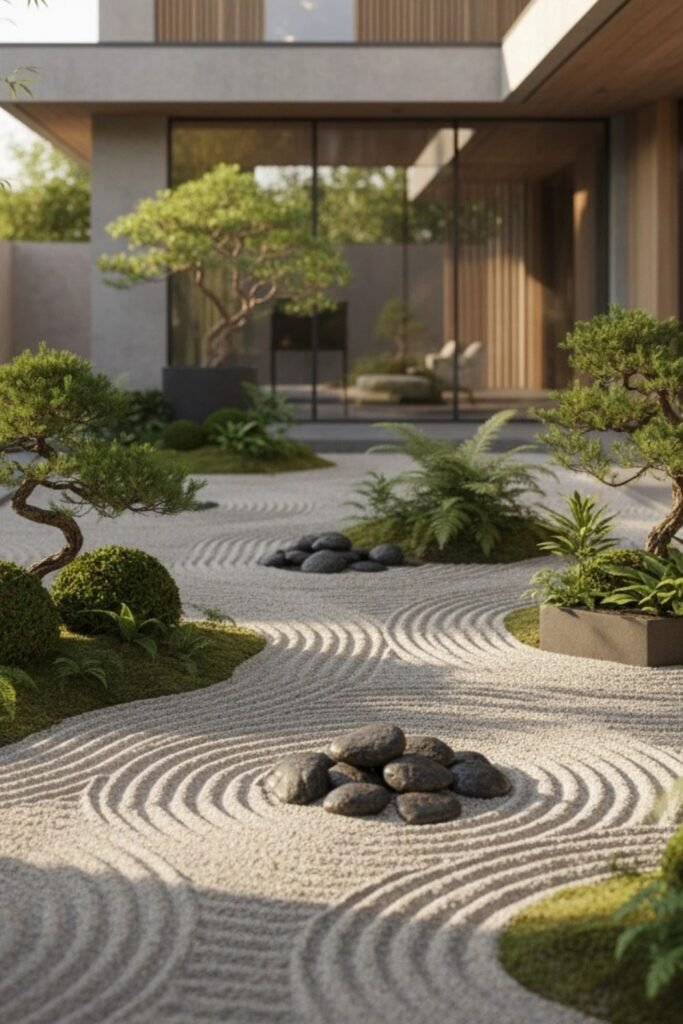
Grounded Layers
Eye-level calm comes from keeping plants close to the earth. Mossy mounds, low shrubs, and a single airy tree create depth without visual noise.
This setup fits small backyards where you want softness without blocking light. Build gentle soil rises, anchor them with stones.
And let moss spread naturally so the garden feels settled instead of landscaped.
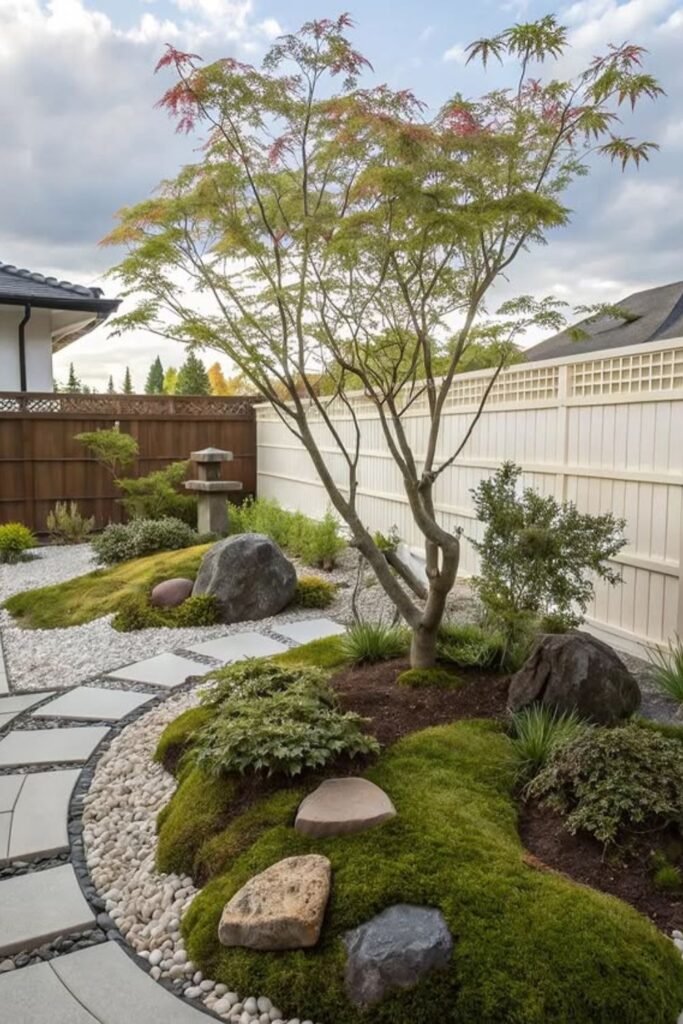
Pruned Silence
Carefully shaped trees control the mood here. Each trimmed branch slows the eye, while wide gravel circles.
Keep attention centered instead of scattered. This style fits inner courtyards and office gardens where calm needs to last all day.
Recreate it by choosing slow-growing evergreens, pruning lightly but regularly, and leaving large open gravel areas so plants never compete for attention.
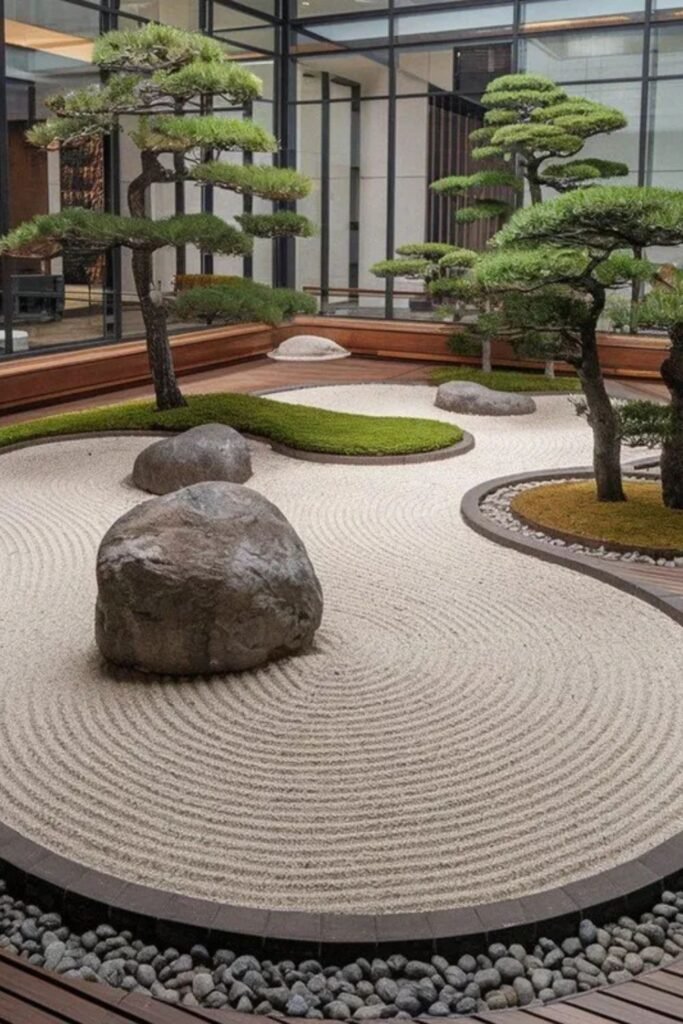
Balcony Grounding
City noise fades once plants claim the edges. Tall bamboo screens block harsh views, while low greenery and stones keep the floor feeling settled.
This setup works best on balconies where space is limited but privacy matters. Use planters to frame the corners.
Keep the center open, and rely on gravel and rocks so the garden stays calming without constant care.
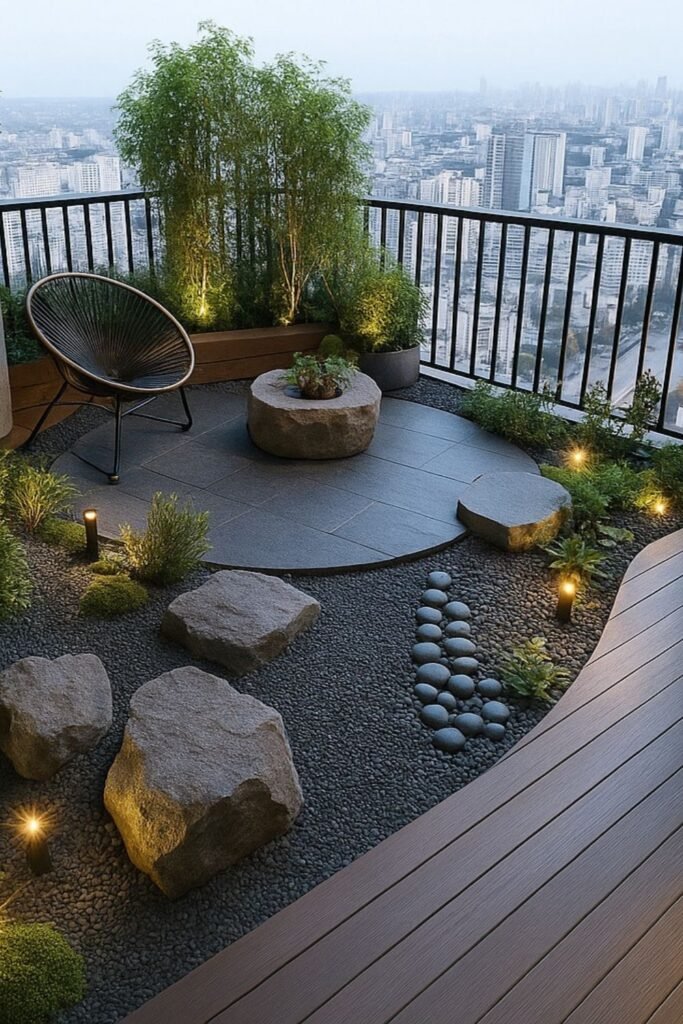
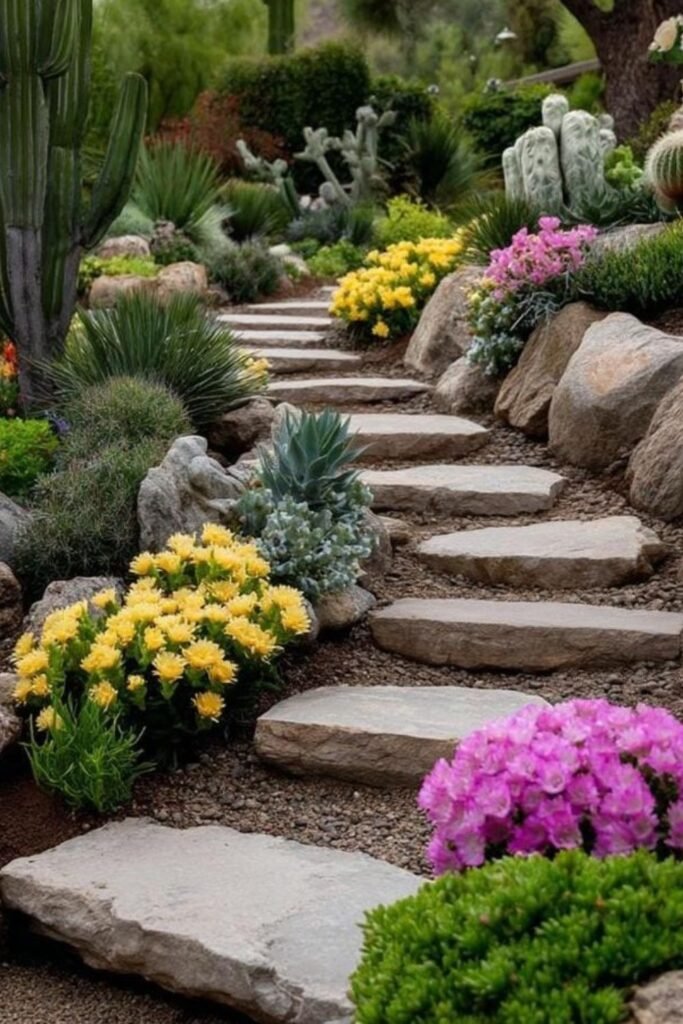
Quiet Steps
Stone steps feel calmer when plants do the guiding. Succulents, soft ground covers, and spaced rocks slow the walk without asking you to think about it.
This works best on sloped gardens or side paths where movement is unavoidable. Keep colors muted.
Repeat the same plant groups along the path, and let space between steps control the pace instead of adding more decoration.
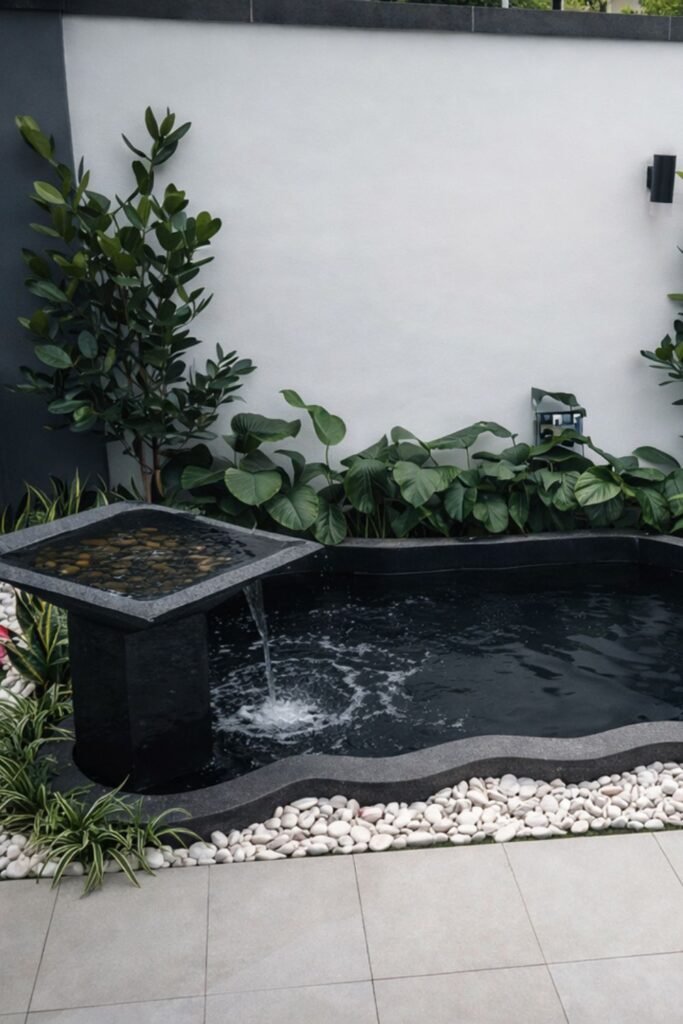
Water Focus
Flowing water pulls attention away from noise without trying. A shallow pond framed by clean stones.
And leafy plants works best in enclosed patios or quiet backyards. Keep planting simple and let greenery soften the edges while water stays central.
Use a slow, steady flow instead of splashing movement so the sound relaxes the space rather than energizing it.
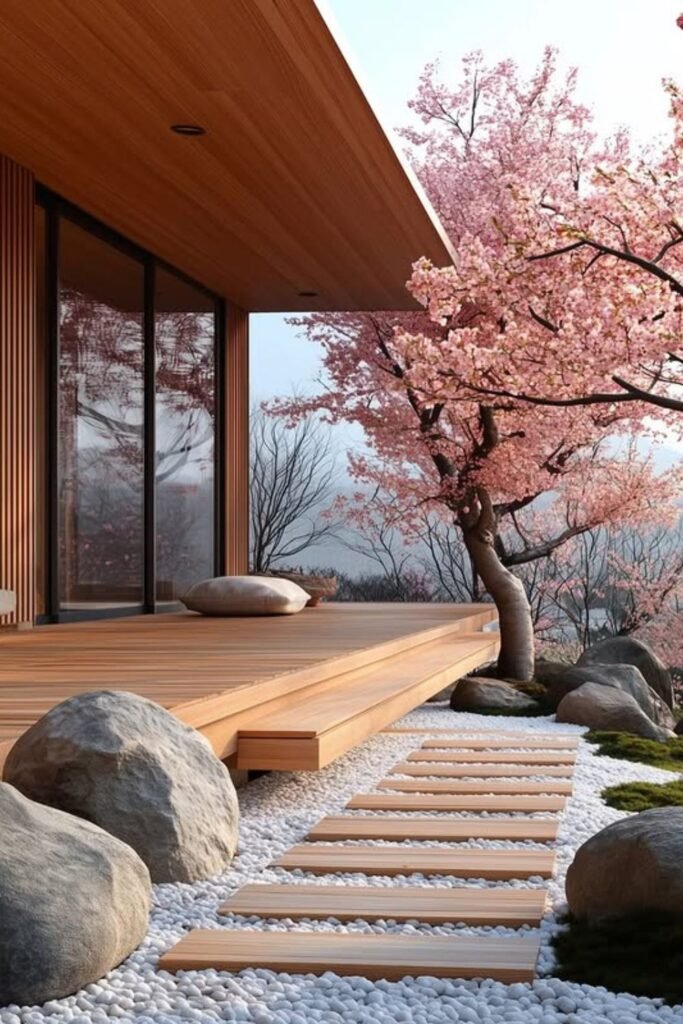
Seasonal Pause
Blooming trees change the mood without changing the layout. A single flowering tree brings softness to stone and wood.
Making the space feel alive through the year. This works best beside decks or sitting platforms where you spend quiet mornings.
Choose one seasonal tree, keep ground planting low, and let fallen petals become part of the calm instead of something to clean immediately.
Twilight Moss
Dusk changes how texture is felt. Dense moss cushions the ground, while smooth stones hold quiet weight in the open gravel.
This garden works best in shaded yards or places with soft evening light. Let moss spread slowly between rocks, avoid sharp edges.
And keep gravel pale so the darker greenery feels deeper and more calming as light fades.

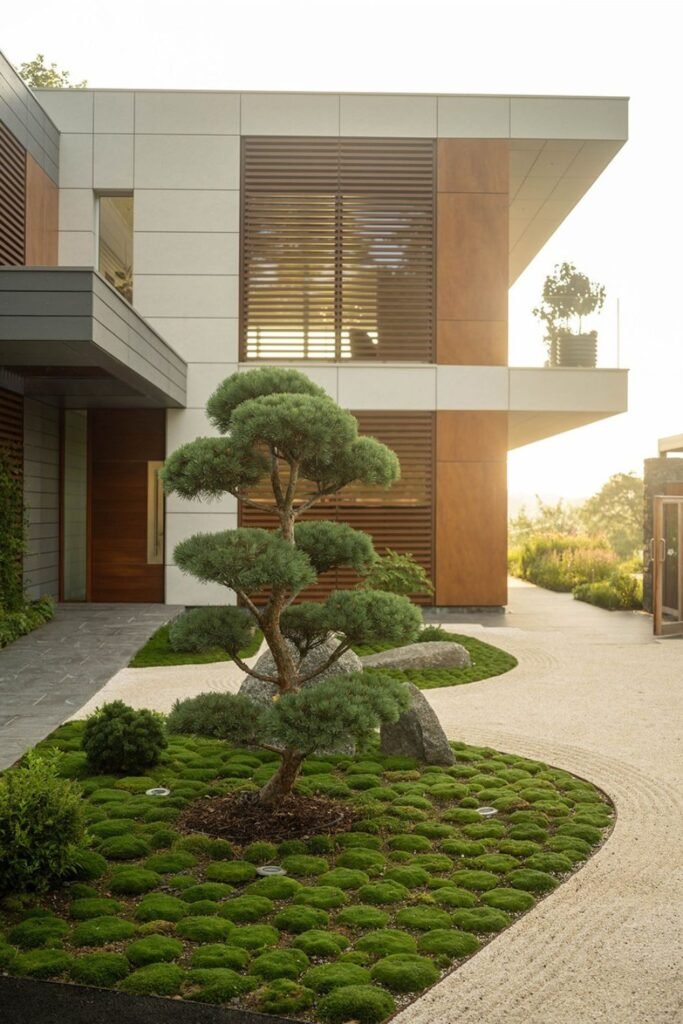
Center Anchor
One tree gives the whole garden a place to rest. A sculpted pine surrounded by moss keeps attention focused.
Instead of scattered across the space. This works best in front yards or courtyards where architecture feels strong and clean.
Shape the tree slowly, keep the ground soft and low, and let gravel paths curve around it so movement stays calm and controlled.
Living Edges
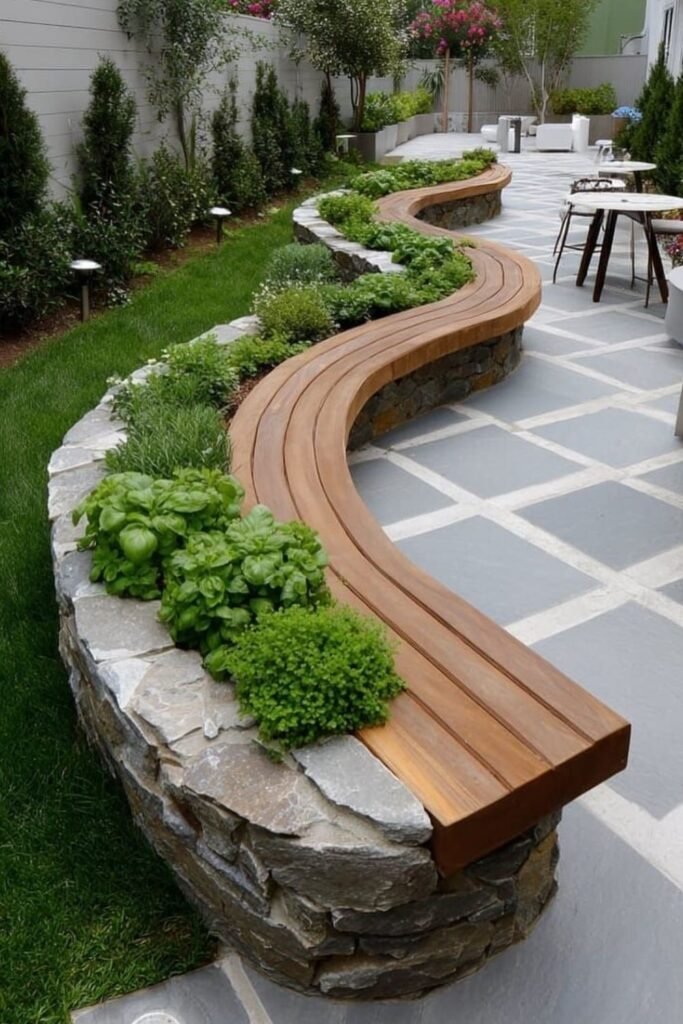
Seating feels calmer when plants soften the boundary. Low herbs and ground covers turn a hard bench into part of the garden.
Instead of furniture placed on it. This works best in patios and shared yards where people linger. Keep plants compact.
Repeat the same few varieties, and let greenery follow the curve so the edge feels natural and unforced.
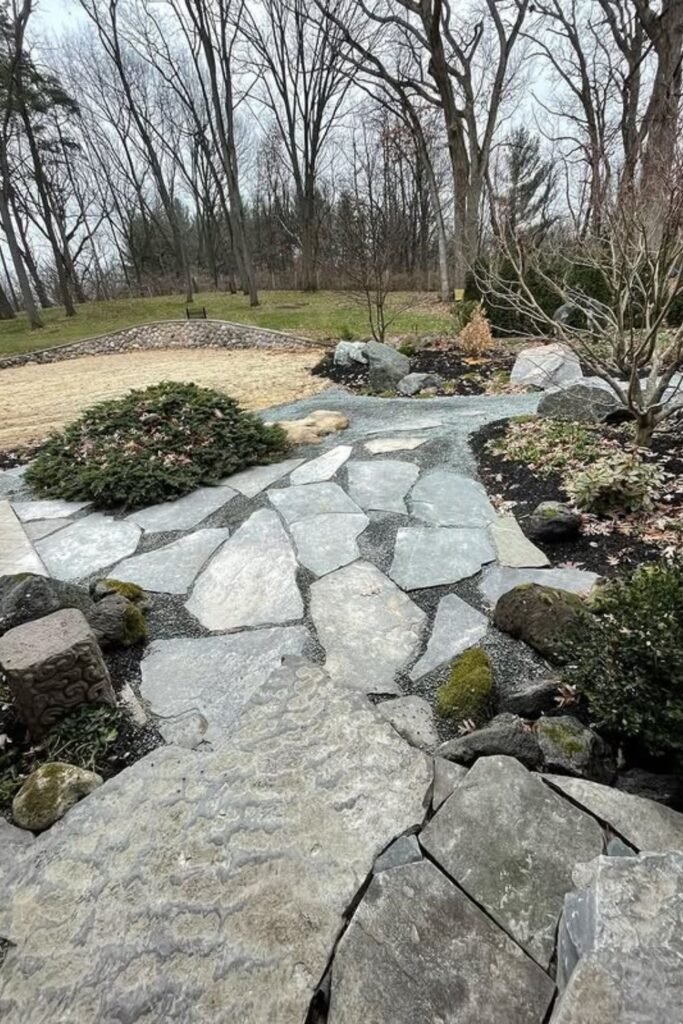
Stone Pause
Irregular stone placement keeps the walk thoughtful instead of rushed. Flat slabs slow each step.
While low shrubs and bare soil quiet the space around them. This works best in garden transitions between lawn and wooded areas.
Set stones with uneven spacing, keep plants low and sparse, and let the path feel discovered rather than designed.
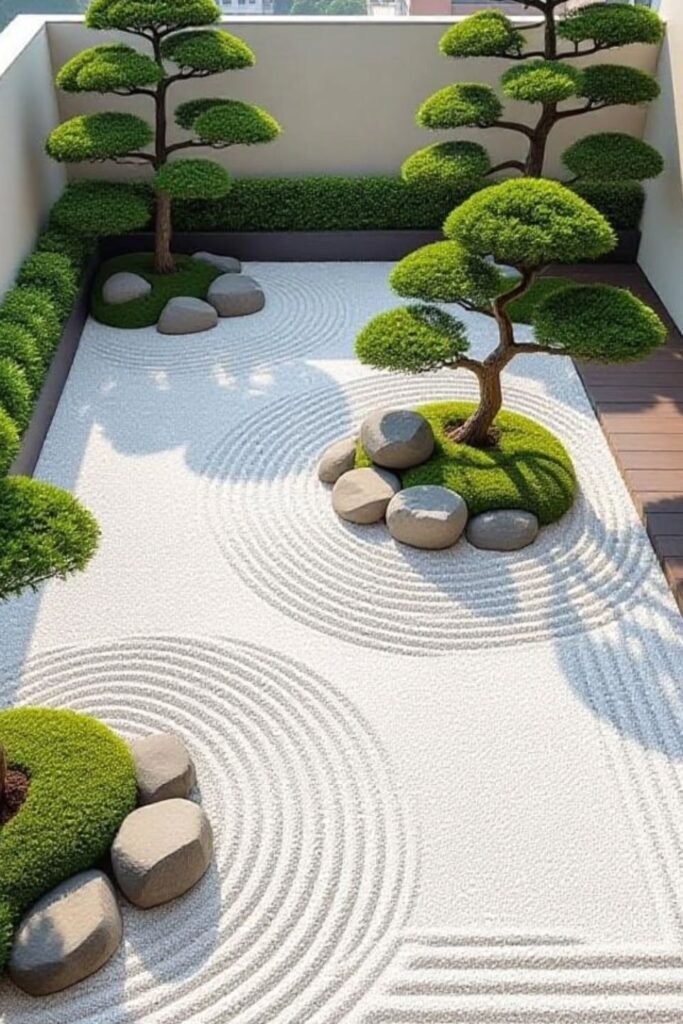
Balanced Islands
Open gravel keeps the mind quiet, while small planted mounds give it something gentle to return to.
Shaped trees and mossy bases break the space into calm zones without filling it up. This works best in compact courtyards where walls already create boundaries.
Keep gravel dominant, group stones tightly, and let each planted island stand alone so the space never feels busy.
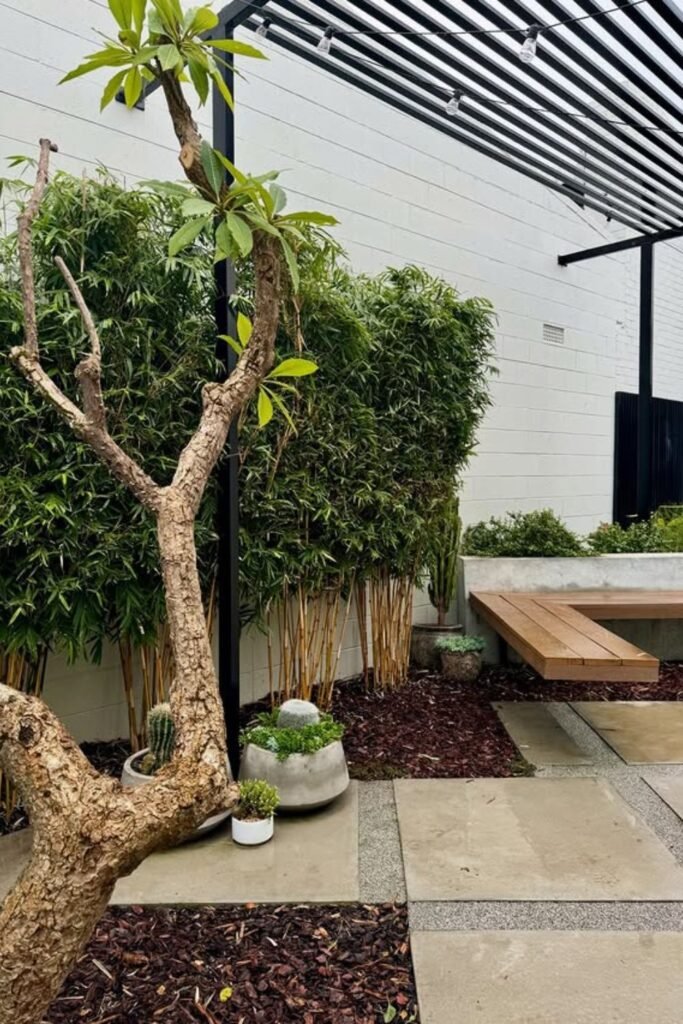
Screened Green
Tall bamboo shifts attention away from walls and corners. Dense planting creates privacy first, calm second.
Which makes this ideal for narrow patios and urban yards. Keep stems grouped tightly, let the tops stay loose.
And avoid mixing too many plant types. The greenery should feel like a soft backdrop, not something you stop to analyze.
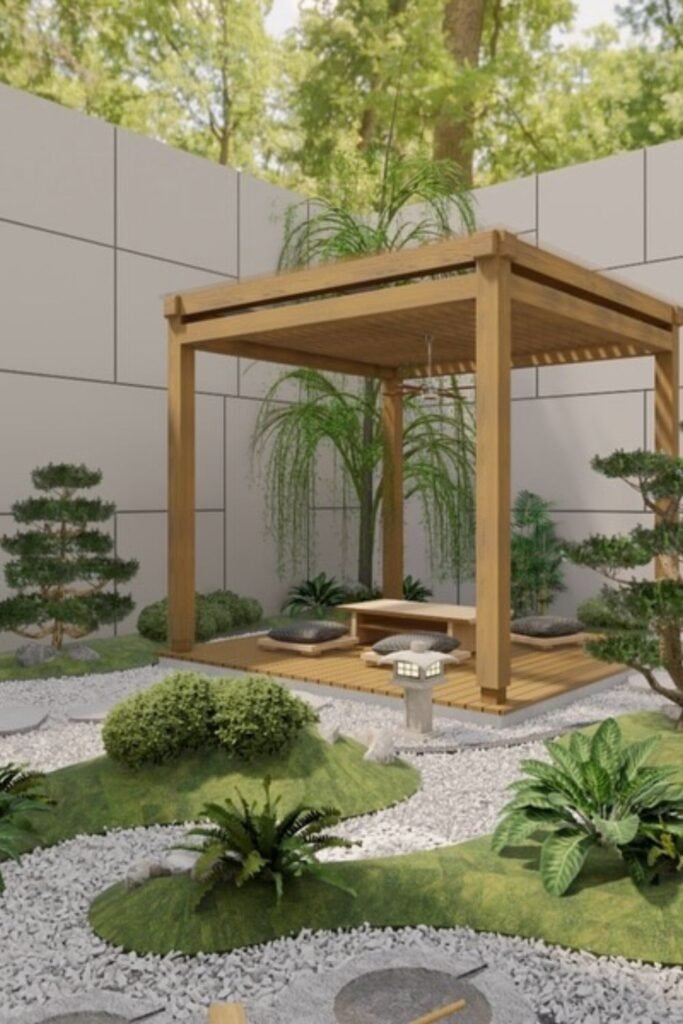
Still Pavilion
Shelter changes how long calm lasts. A simple wooden pavilion gives plants a quiet center to gather around.
Turning the garden into a place you stay, not pass through. This works best in enclosed yards where walls already block noise.
Keep greenery low and spaced, let gravel dominate the ground, and allow paths to curve gently so the pavilion feels discovered, not announced.
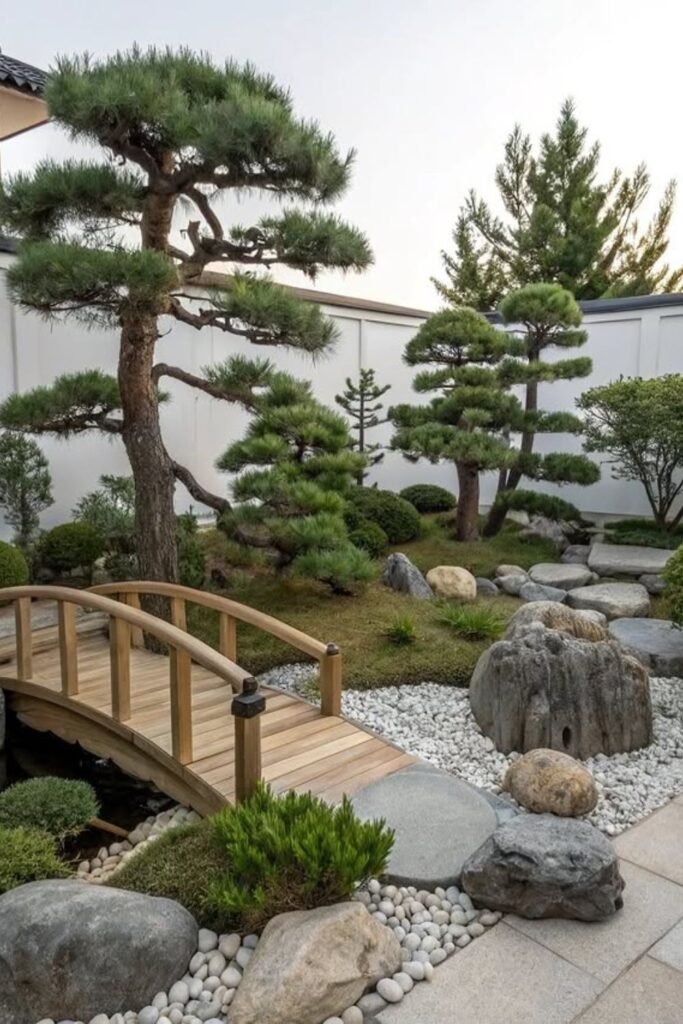
Pine Crossing
Slow growth teaches patience without words. Layered pine trees hold their shape year-round, while rocks and gravel keep the ground quiet and steady.
This layout works best in enclosed gardens where you want a sense of journey without distance. Space trees unevenly.
Anchor them with stones, and let one simple bridge connect areas so movement feels intentional, not decorative.
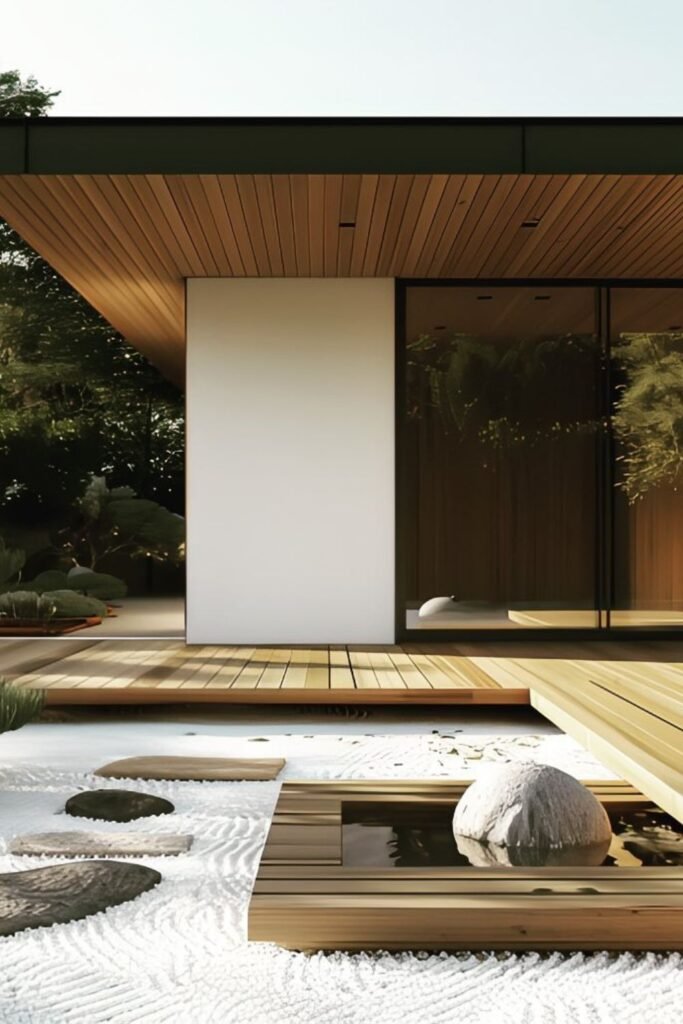
Water Threshold
Still water changes how a space is entered. A shallow reflective pool slows movement before you even step inside.
While surrounding gravel and low plants keep the focus soft. This works best near entrances or transition zones between indoors and outdoors.
Keep water calm, edges clean, and planting minimal so the reflection does the quiet work instead of decoration.
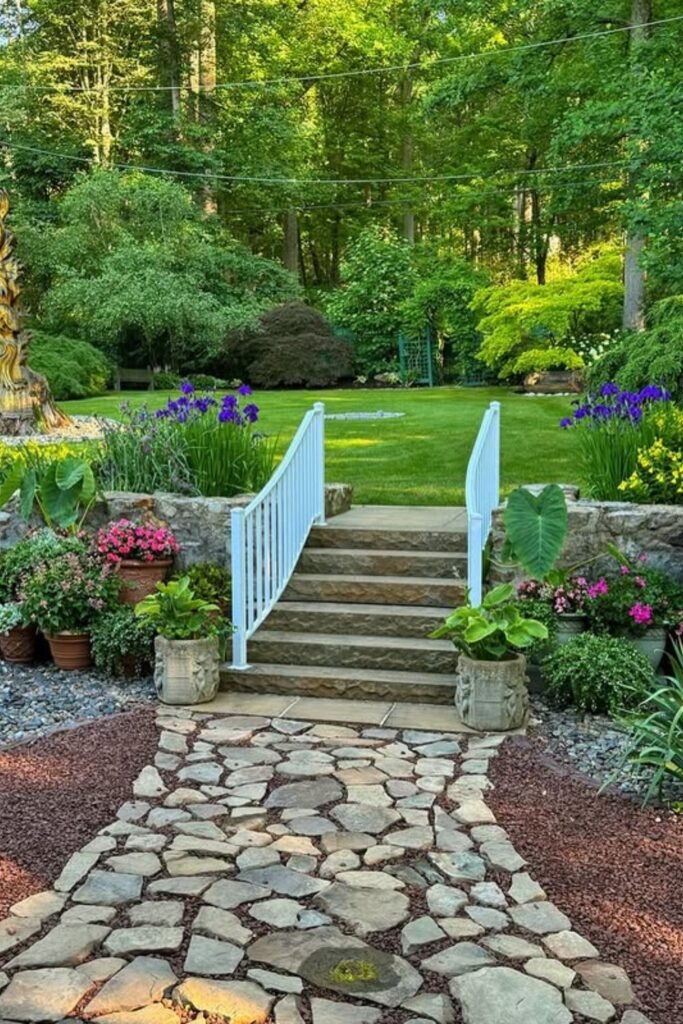
Gentle Arrival
Crossing into calm should feel gradual, not dramatic. Layered planting on both sides softens the approach, while natural stone underfoot slows your pace without forcing it.
This works best at garden entrances where you want the outside world to fade quietly. Keep plant heights balanced.
Repeat textures instead of colors, and let the path feel welcoming rather than impressive.
Layered Quiet
Trimmed greenery creates calm by controlling what you see next. Dense hedges guide movement, taller trees hold the space.
And water reflects light without pulling attention. This works best in larger gardens where structure matters more than decoration.
Keep shapes repeated, heights intentional, and paths narrow so the garden feels like it’s slowly revealing itself, not showing everything at once.
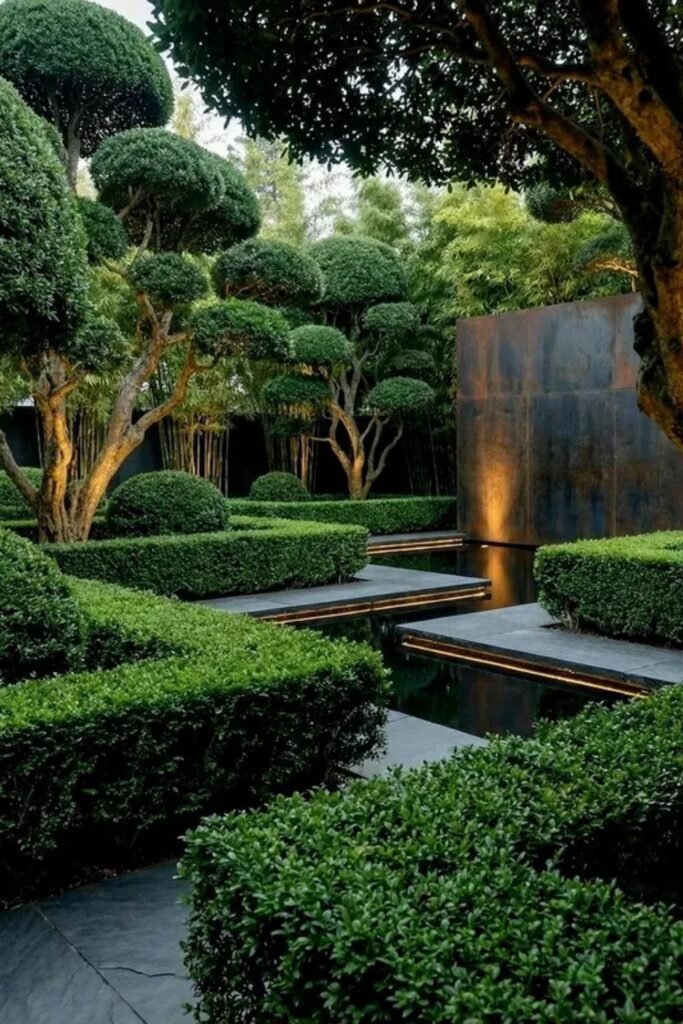
Indoor Escape
Natural calm doesn’t need open sky. A compact indoor garden with gravel, stones, and slow-growing plants turns unused corners into quiet pauses.
This works best near windows or glass doors where light stays soft. Keep the plant count low, choose one focal stone.
Water element, and let negative space do most of the work so the area feels restful, not decorative.
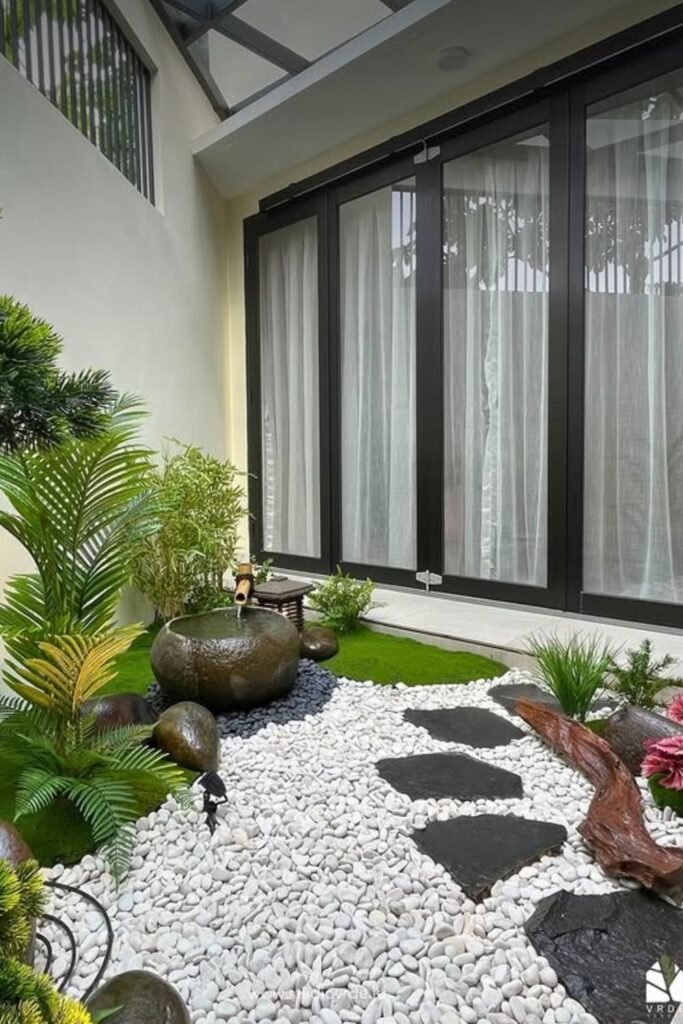
Quiet Focus
Soft light changes how stillness feels. A single lantern and one grounded focal piece draw attention inward.
While gravel and low plants keep everything else silent. This works best in small courtyards or inner corners meant for pause, not movement.
Keep lighting warm and minimal, place objects with space around them, and rake gently so the ground supports calm instead of competing for it.
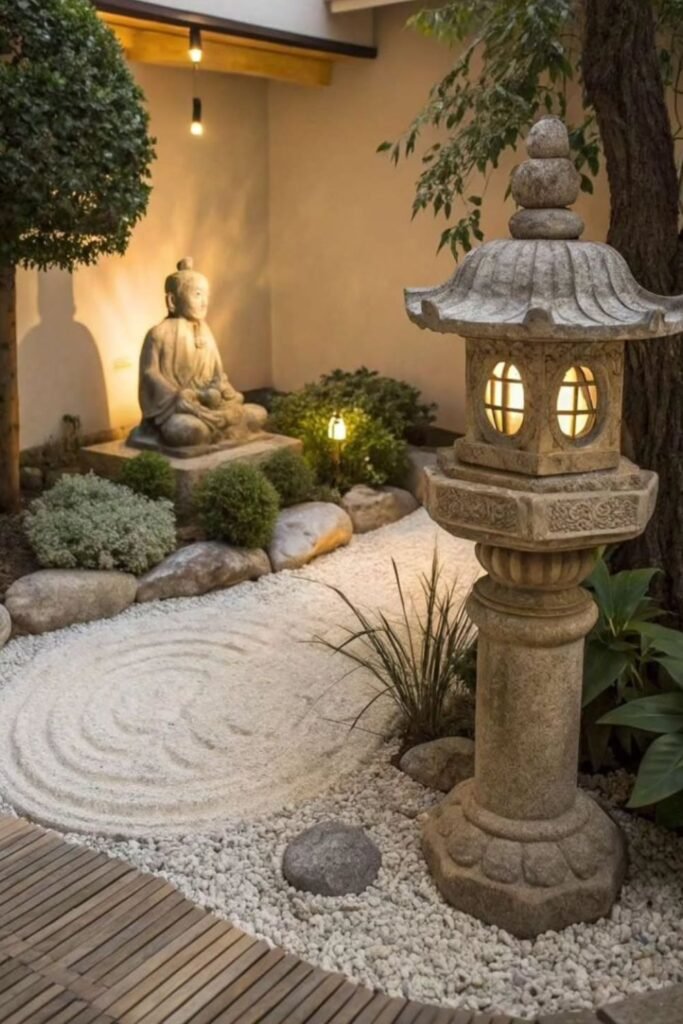
Inner Anchor
Living greenery shifts the energy of the whole room. A single sculpted tree grounded in stone and moss turns a transitional space into a pause point.
This works best under staircases or open-plan interiors where movement feels constant. Keep lighting soft from below.
Limit surrounding plants, and let the tree stand alone so calm becomes part of everyday movement, not a separate moment.
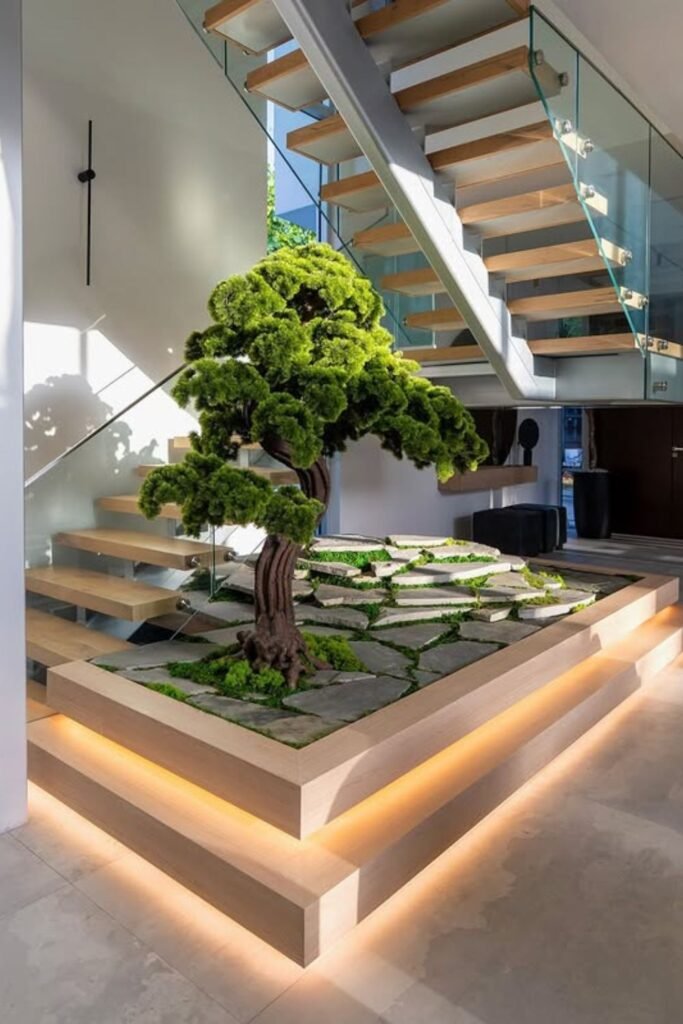
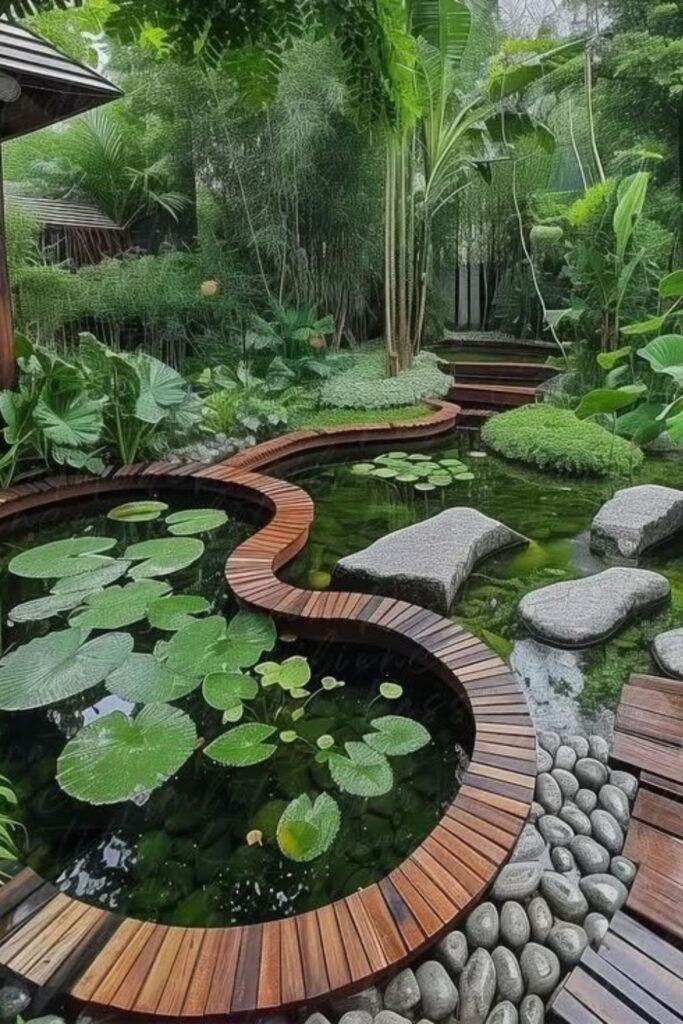
Living Water
Still ponds calm better when plants do the framing. Broad leaves soften reflections, while stepping stones slow movement across the water.
This setup fits lush backyards or tropical climates where greenery grows fast. Keep water shallow, control plant spread.
And let wooden edges guide the flow so the space feels immersive without turning wild or overwhelming.
FAQs
How much maintenance does a Zen garden really need to stay calming?
Less than most people think. Calm comes from consistency, not perfection. Light pruning, occasional raking.
And removing fallen leaves is enough. If the garden looks slightly natural instead of perfectly clean, the mind actually relaxes more.
How long does it take for a Zen garden to start feeling calming?
Calm doesn’t come instantly from design alone. Once the layout is simple and balanced, the effect grows as you interact with it daily.
Raking gravel, trimming plants, or just sitting nearby trains your mind to slow down. Most people notice a real shift after a few weeks of regular exposure.

Hi, I’m Afaf! I’m a law student who loves all things home, style, and gardening. I’ve been writing for over a year about topics like home decor, DIY projects, plants, fashion, and beauty.
I like sharing ideas that are easy to try and don’t cost a fortune. Whether it’s organizing a messy closet, decorating on a budget, or keeping houseplants alive, I write about what I’ve actually tried myself.
When I’m not studying, I’m usually on Pinterest looking for my next project or adding another plant to my collection!