
21 Courtyard Garden Ideas For 2026
You step into your courtyard and instead of relaxing, you feel exposed. Neighbors can see in. Sound travels.
So you add screens or tall plant and suddenly the space feels dark and closed.
That’s the frustrating part of courtyard gardens you want privacy and openness at the same time.
The good news is, you don’t have to choose one over the other. With the right layout and a few smart design moves, you can block views without blocking light, air, or space.
This article highlights 21 Courtyard Garden Ideas that work well for tight layouts in 2026.
How Do You Design a Courtyard Garden That Feels Private Yet Open?
If your courtyard feels exposed, the first instinct is to block everything. That’s where most people go wrong.
Privacy doesn’t come from closing the space it comes from controlling what people can see. When you break direct sightlines.
But leave light and airflow untouched, the courtyard still feels open. The goal isn’t to hide the space.
The goal is to decide where privacy matters and design around that. Once you understand this, every design choice becomes easier.
Save this article for later! 👇👇

Structured Greenery
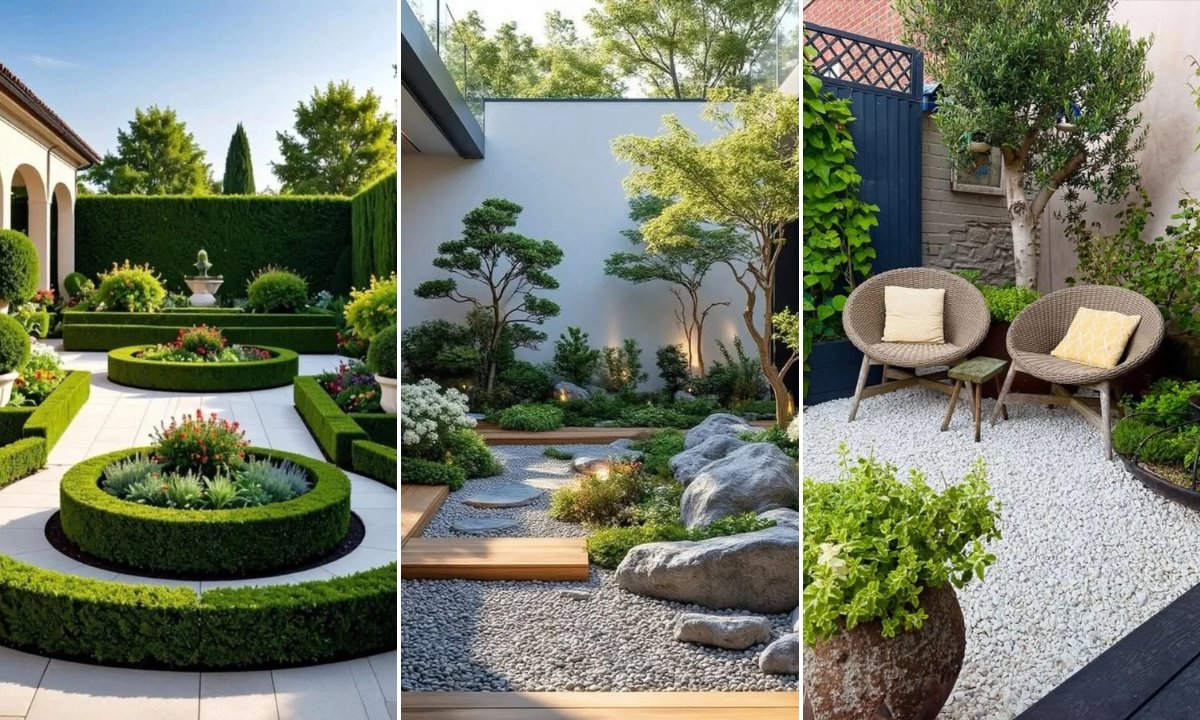
Symmetry brings instant calm to a courtyard, especially when privacy walls already frame the space. Low, clipped hedges work best here.
Because they define zones without blocking views or light. Circular planting beds soften the layout while still feeling controlled.
Start small by shaping boxwood or similar shrubs and let repetition do the work instead of adding more plants.

Layered Calm
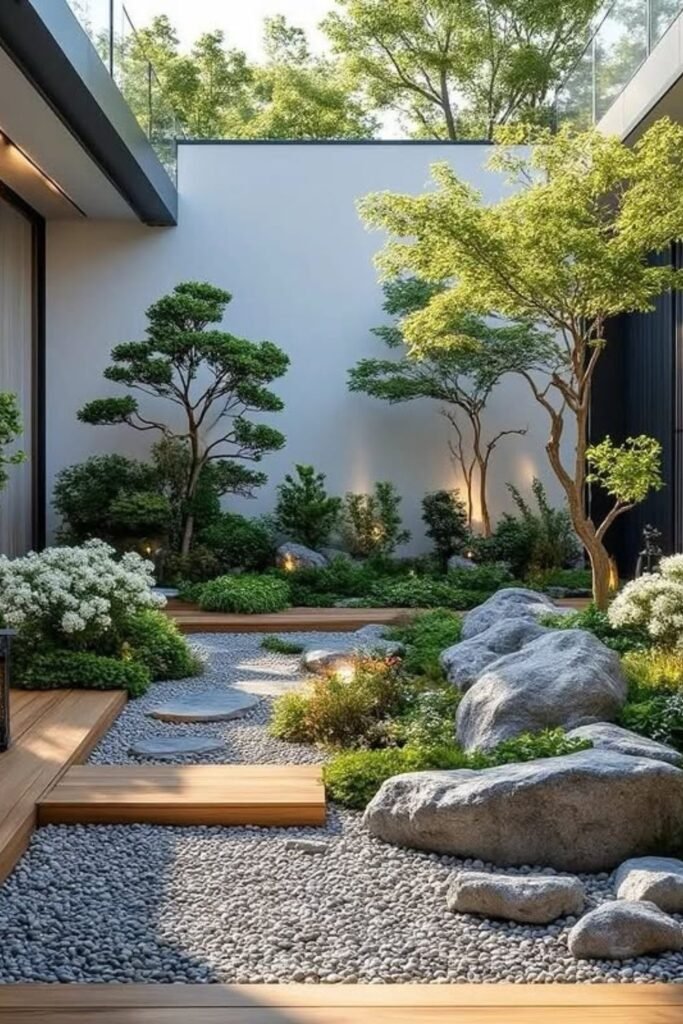
Privacy doesn’t always need height. Mixing small trees, soft shrubs, and ground plants creates depth that naturally blocks views.
While keeping the space breathable. Gravel paths and rocks slow the eye, making the courtyard feel larger and quieter.
This works best in enclosed modern courtyards where walls feel heavy. Start by planting one light-canopy tree, then build layers downward instead of adding tall screens.
Living Screens
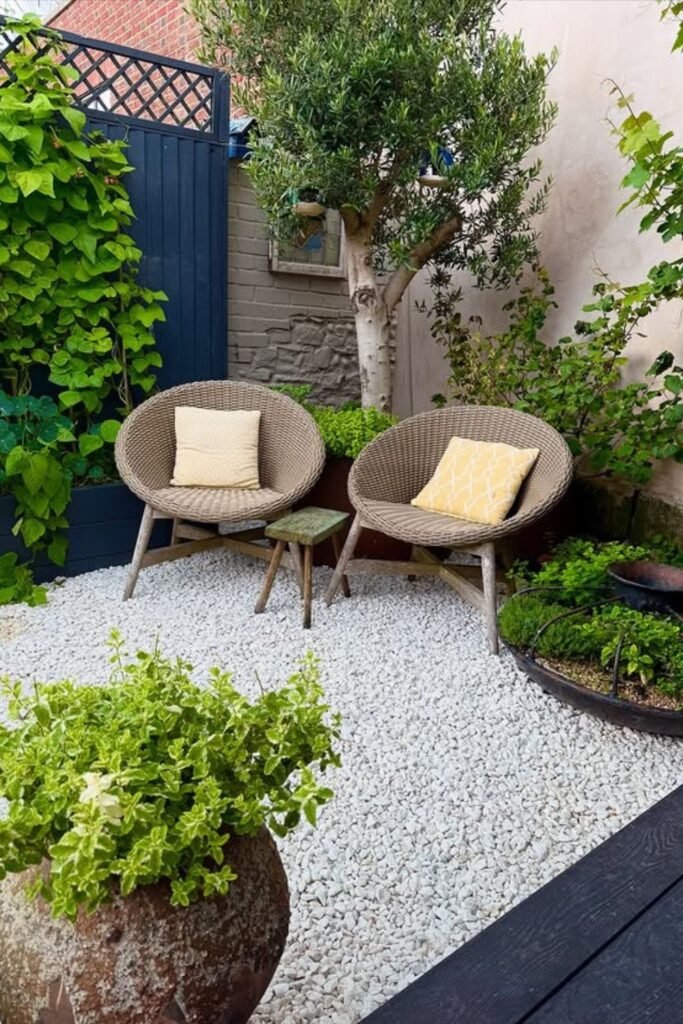
Climbing plants solve privacy quietly. Trained over a fence or trellis, they block views without eating up floor space.
Fast growers like jasmine or ivy work well in small courtyards where walls sit close together. Let the greenery do the screening instead of solid panels.
Keep the base simple with gravel so the plants stay the focus and the space doesn’t feel crowded.
Soft Boundaries
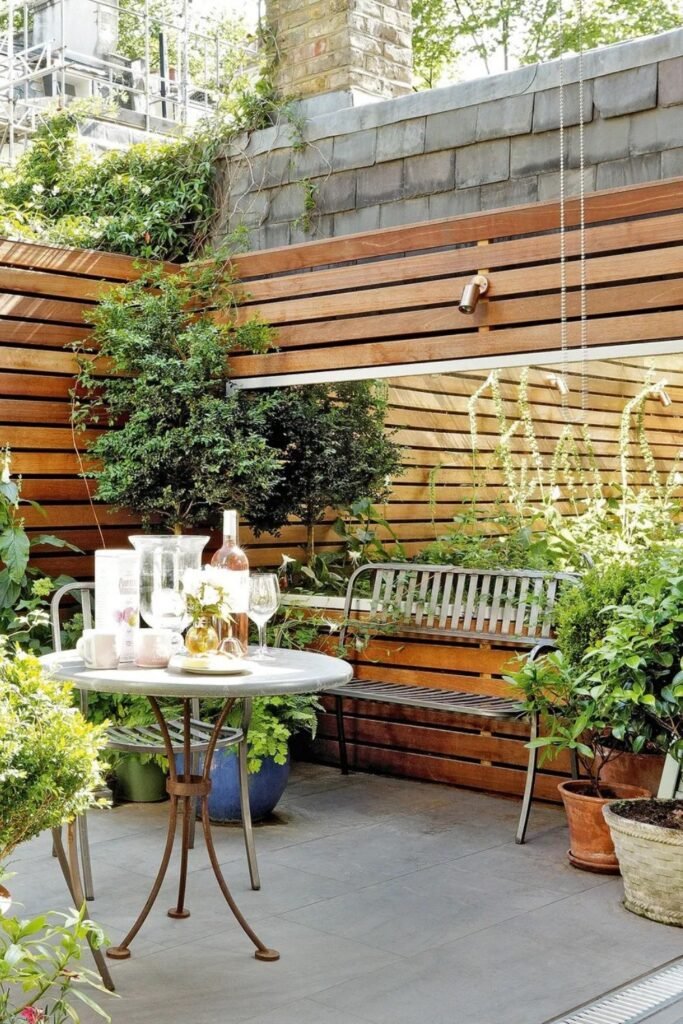
Privacy feels easier when plants share the job with structure. Shrubs and potted greenery soften the wooden slats.
So the screen doesn’t feel harsh or closed. This setup works well in narrow courtyards where walls sit close to seating areas.
Keep plants at different heights so the eye keeps moving. You get coverage where it matters, but the space still feels light and welcoming.
Overhead Cover
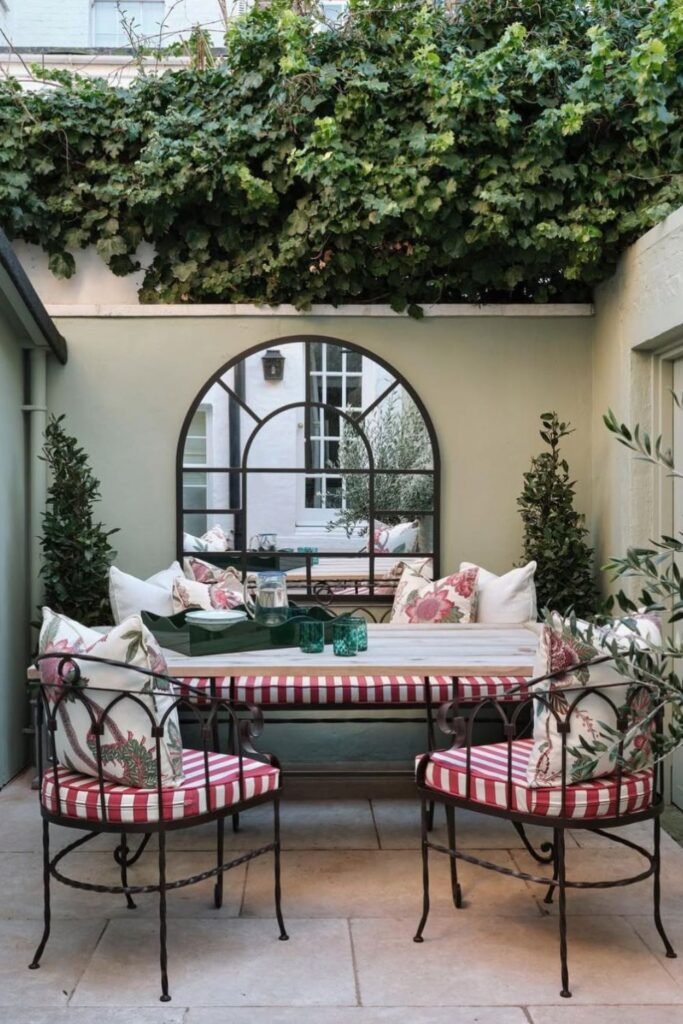
Privacy doesn’t have to sit at eye level. Letting climbers run across a pergola or wall top blocks views from above.
While keeping the courtyard open on the sides. This works especially well in narrow spaces overlooked by upper windows.
Train vines slowly and keep the structure light so sunlight still drops into the seating area without feeling boxed in.
Framed Green
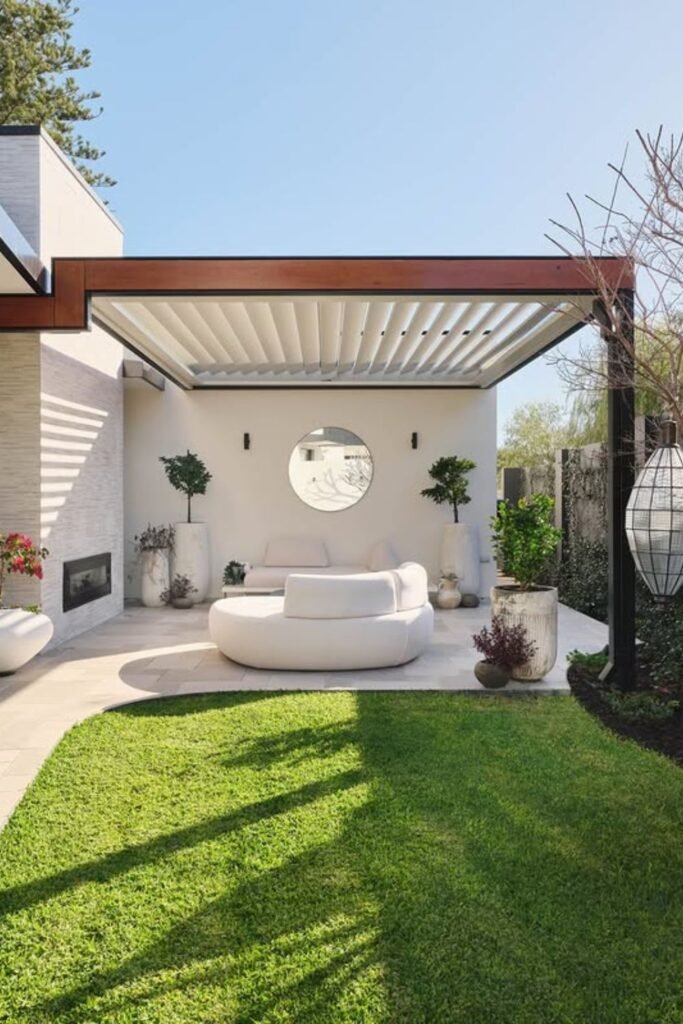
Open lawns can still feel private when greenery is placed with intention. A small grass area bordered by planters keeps the center open.
While plants quietly define the edges. This works well in modern courtyards where hard lines dominate.
Use potted trees or tall shrubs along boundaries and keep the middle clear so light, sky, and movement stay uninterrupted.
Layered Depth
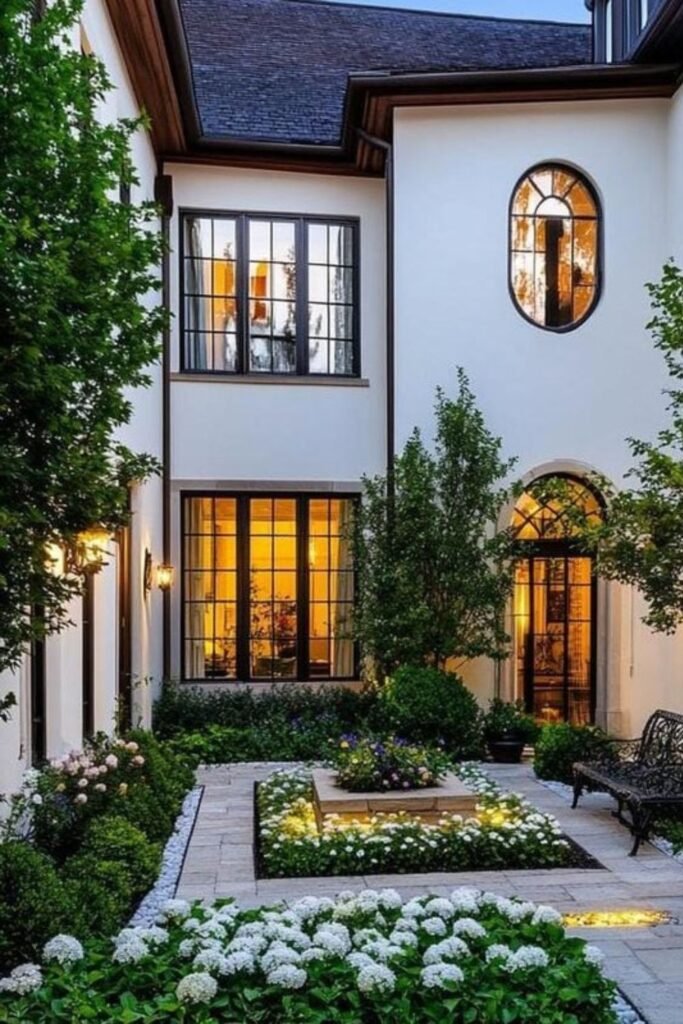
Depth creates privacy without walls doing all the work. Taller trees sit back, shrubs fill the middle, and low flowers finish the front so views get filtered naturally.
This setup works best in enclosed courtyards surrounded by windows. Start by planting the tallest greenery farthest from seating.
Then step everything down toward the path to keep the space open but visually protected.
Quiet Buffer
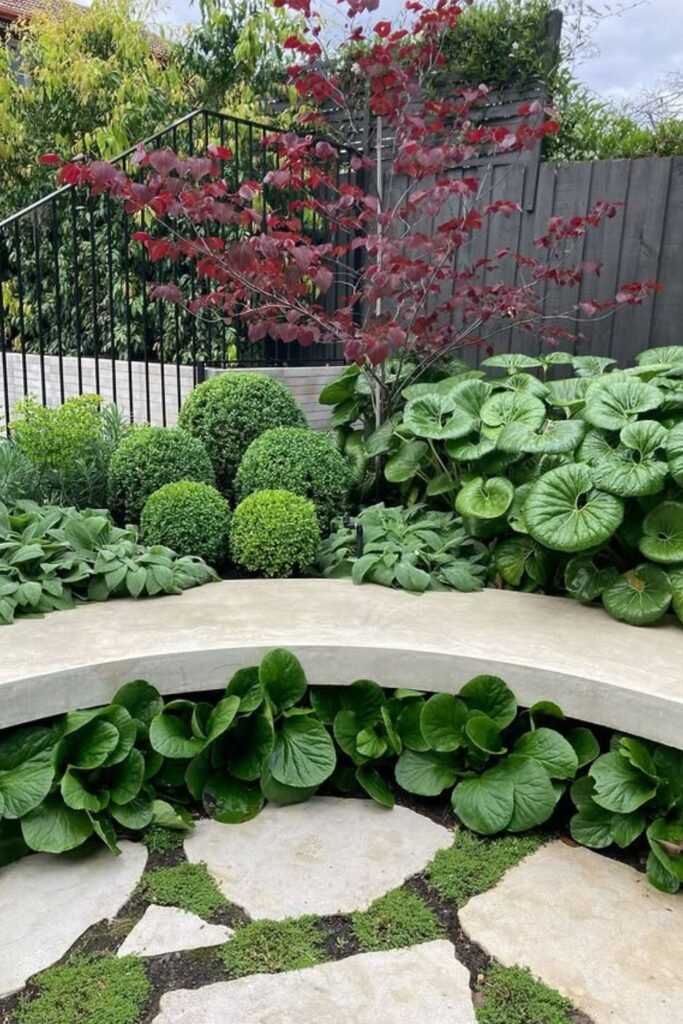
Seating feels more private when plants do the shielding instead of fences. Dense, low greenery around a bench softens sightlines.
And absorbs noise without closing the space. This works best along boundaries where you want to sit but not feel watched.
Choose broad-leaf plants and rounded shrubs, then keep taller growth behind them so the view fades naturally instead of stopping abruptly.
Canopy Layers
Overhead planting changes how exposed a courtyard feels. Tree canopies and clipped hedges pull attention upward.
So the space feels sheltered without closing in. This works best in larger courtyards where seating sits in the open. Plant trees with light.
Airy branches and keep the base clear. The shade feels intentional, not heavy, and privacy comes from above rather than walls.
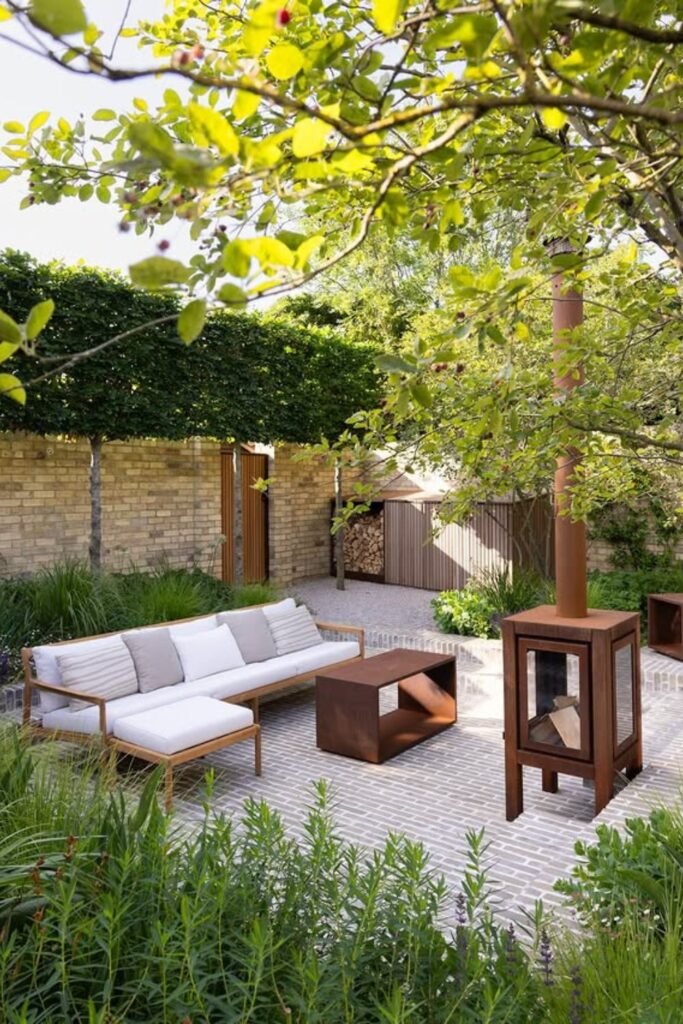
Enclosed Lushness
Stone walls already create separation, so planting here should soften, not compete. Layered greenery around the edges.
Makes the courtyard feel tucked away while keeping the center calm and usable. This works best in older or rustic homes where walls feel solid.
Use climbing plants, potted shrubs, and water-loving plants near features like a small pond to add privacy without adding height.
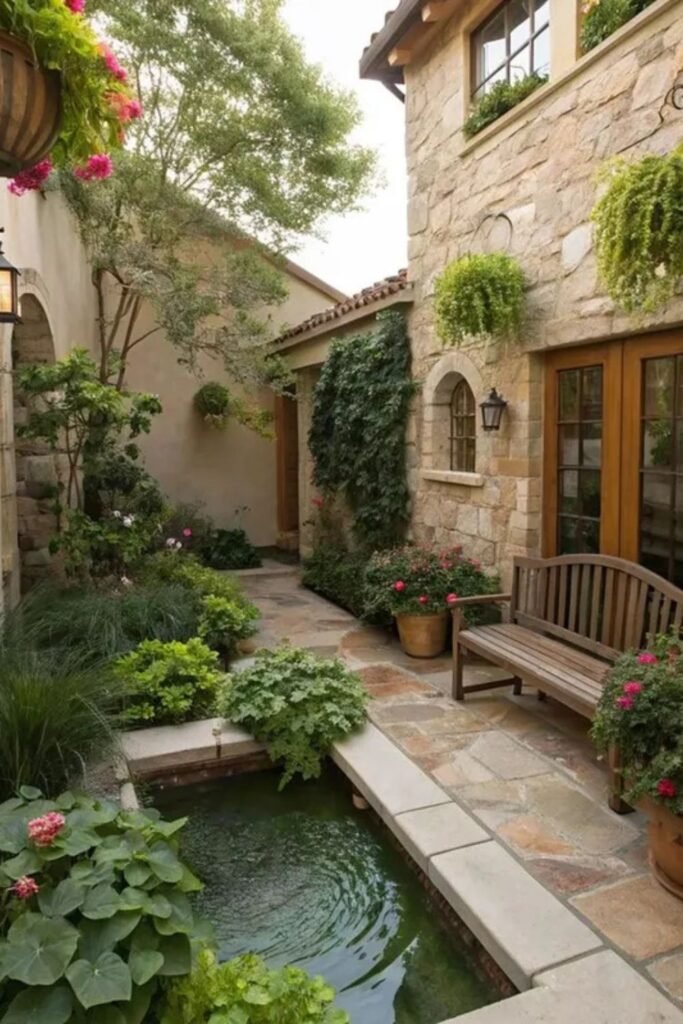
Vertical Vines
Walls don’t need height to give privacy, they need coverage. Climbers trained in loose patterns soften hard surfaces.
And quietly block views without closing the space. This works best in small courtyards where floor space is limited.
Use wire supports or slim trellises and let the plants grow upward over time. The courtyard stays open, but the walls stop feeling exposed.
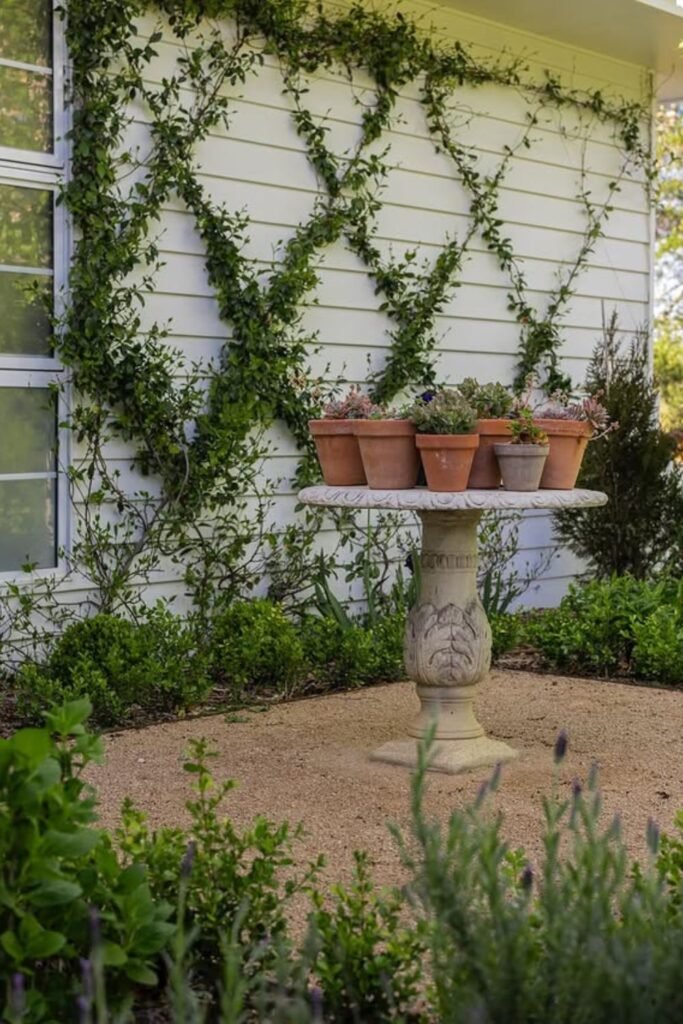
Climbing Focus
Bare walls invite attention. Climbing plants redirect it. Training flowering climbers up tall courtyard walls breaks hard sightlines.
And pulls the eye upward instead of inward. This works best in enclosed courtyards with solid boundaries and good light.
Start with one or two climbers and guide them loosely. Let gaps remain so the space still breathes while the walls stop feeling exposed.
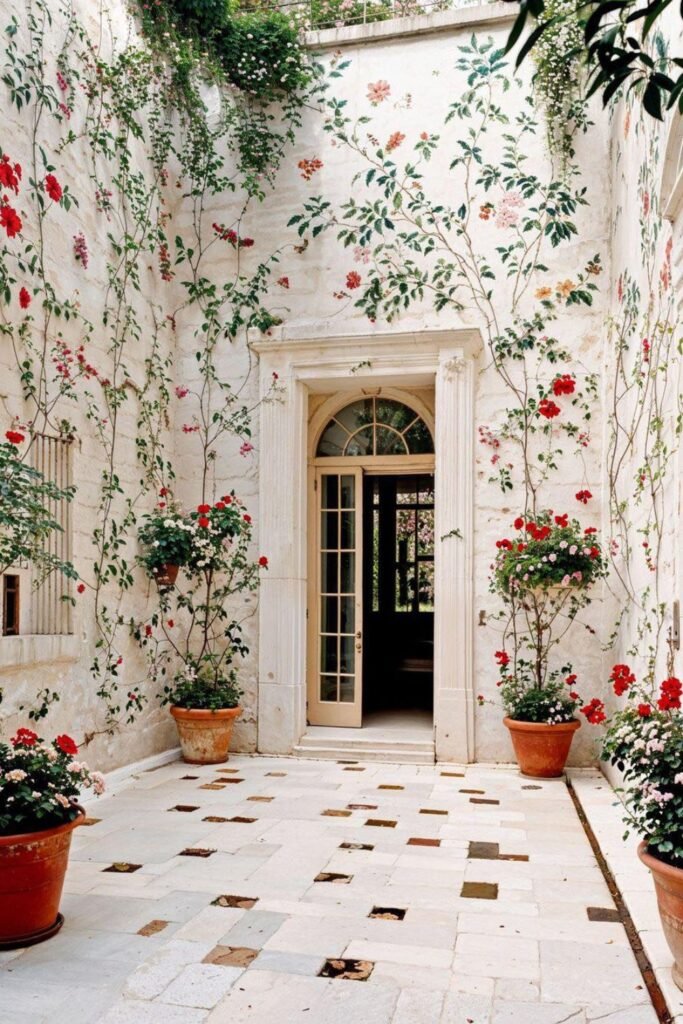
Wall Climbers
Brick walls feel softer once greenery starts climbing them. Trained vines around windows and doors blur boundaries and reduce direct views without blocking light.
This approach suits compact courtyards surrounded by buildings. Let climbers grow horizontally as well as upward so coverage feels natural.
Keep pots at the base simple and spaced out so the wall stays breathable, not overgrown.
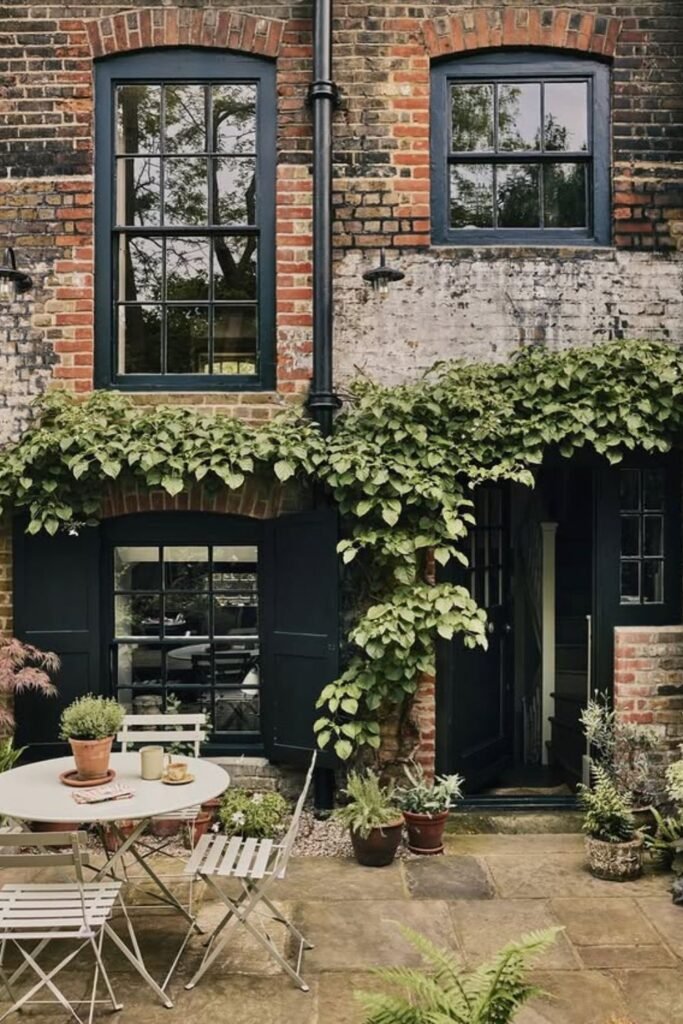
Central Anchor
A single tree can do more for privacy than multiple screens. Placed in the center, it breaks long sightlines.
And draws attention inward instead of outward. This works well in larger courtyards surrounded by tall buildings.
Choose a tree with an open canopy so light still passes through. Everything else can stay low, letting the tree quietly hold the space together.
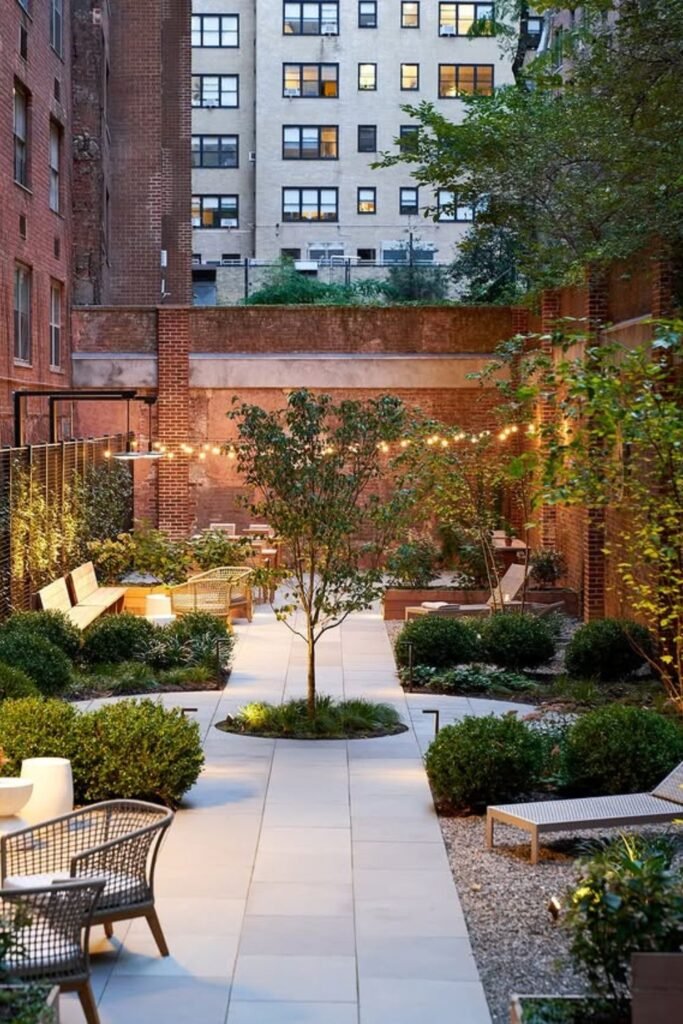
Filtered Shelter
Light slips through even when privacy is handled overhead. A slatted pergola with climbing or hanging plants softens the space without sealing it off.
This works well in courtyards overlooked from above where walls alone aren’t enough.
Let greenery trail down instead of across so air and sun still move freely. The result feels protected, not covered.
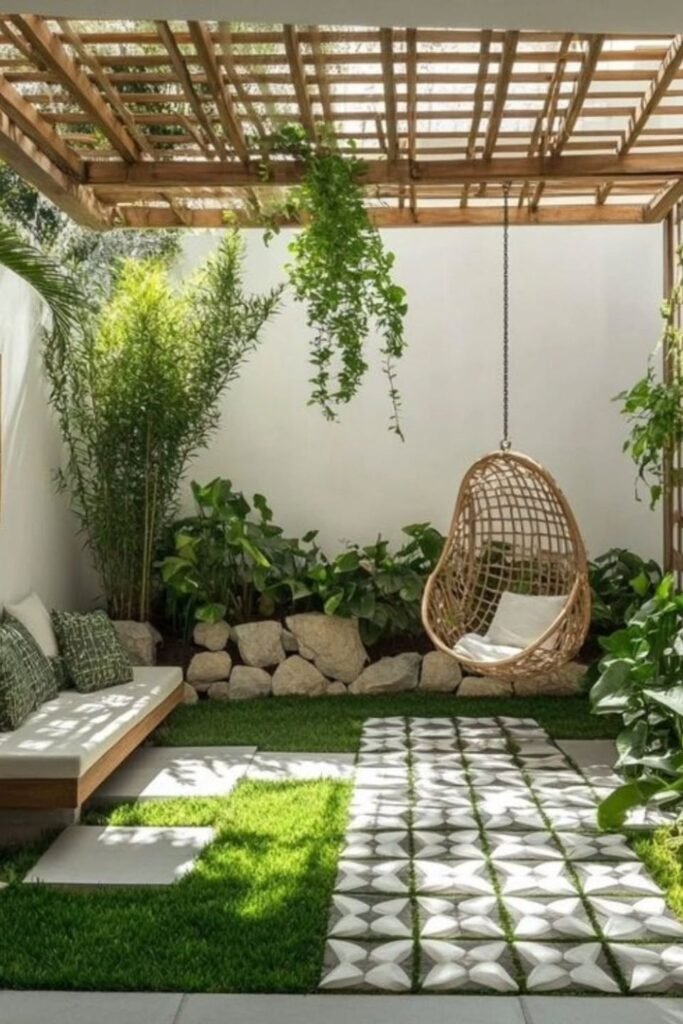
Planted Edges
Long dining areas feel exposed when boundaries stay bare. Planting along the edges fixes that without shrinking the space.
Small trees and structured shrubs soften the perimeter and pull attention away from surrounding buildings.
This works well in modern courtyards with gravel or hard flooring. Keep the center open for movement and meals, and let greenery quietly frame the space instead of crowding it.
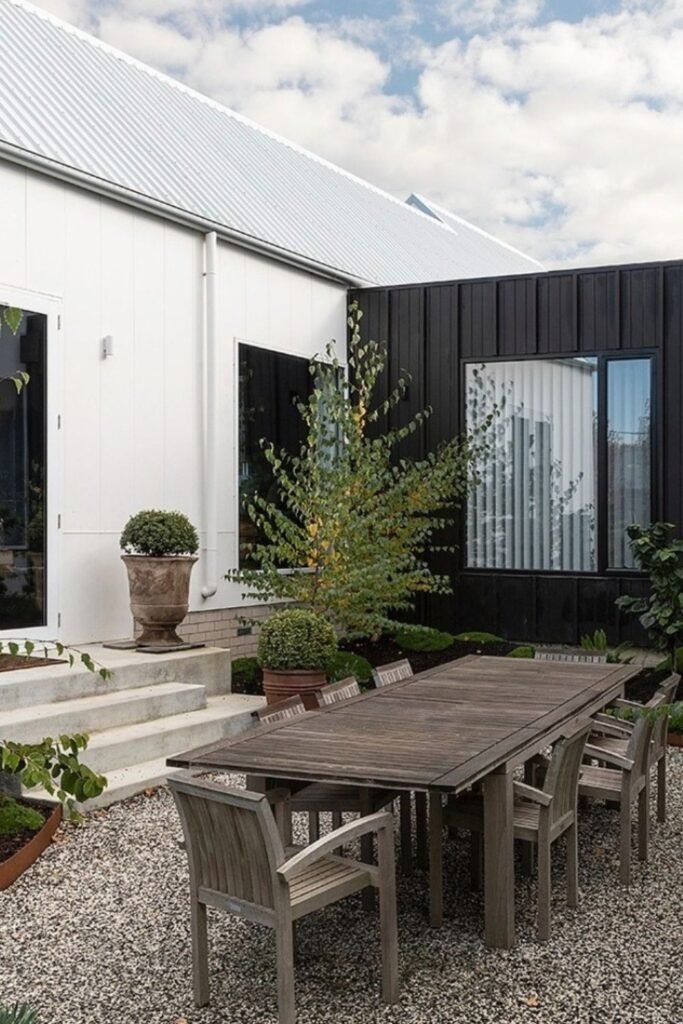
Natural Ceiling
Shade and privacy arrive together when a tree becomes the roof. A wide canopy softens views from above.
And makes seating feel tucked in without walls closing around it. This works best in open courtyards with good ground space.
Choose a tree with a spreading shape and keep the lower area clear so air and light still move freely around the seating.
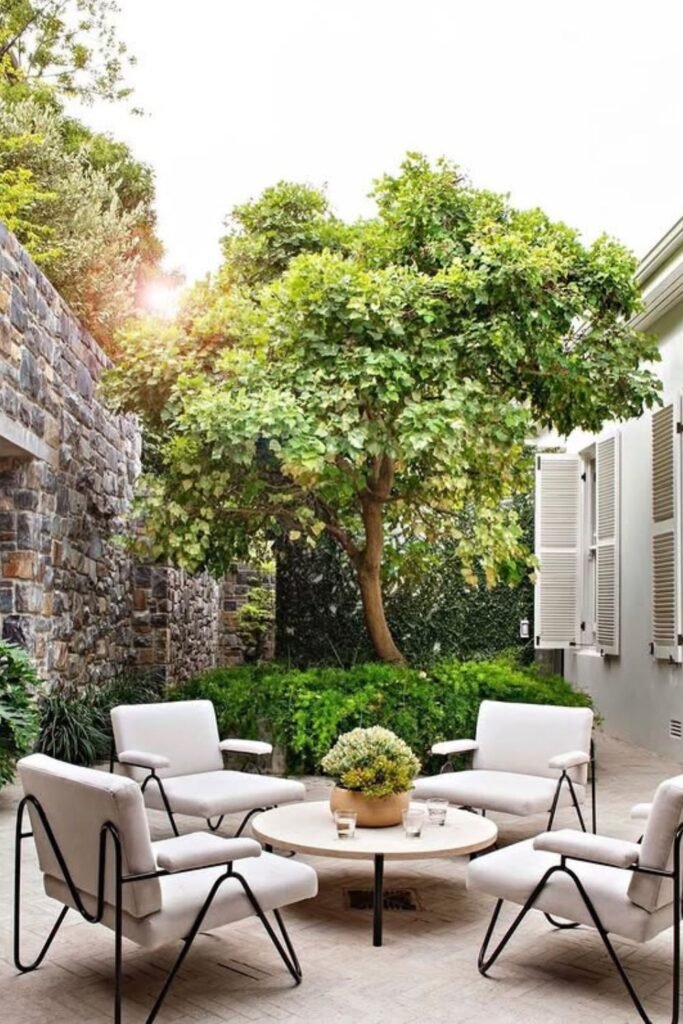
Guided Greenery
Narrow courtyards feel exposed when the eye runs straight through them. Repeating potted shrubs slows that movement and creates privacy through rhythm.
This works best in long, enclosed spaces between buildings. Use identical pots and structured plants like boxwood to keep it calm.
Spacing matters more than size here even small plants feel protective when they’re placed with intention.
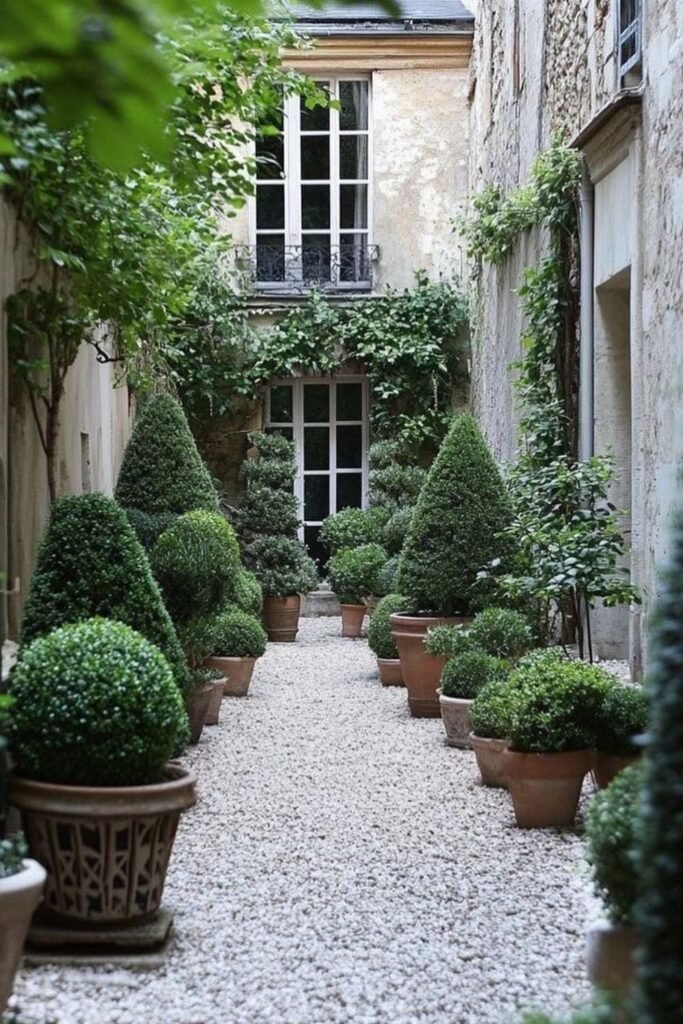
Shaded Frame
Pergolas work best when plants finish the job. Climbing vines and hanging planters break open views while the structure keeps the space airy.
This setup suits courtyards that feel exposed from neighboring windows or gardens. Let greenery grow unevenly instead of filling every beam.
The gaps keep light moving, while the plants quietly create a sense of enclosure around the seating area.
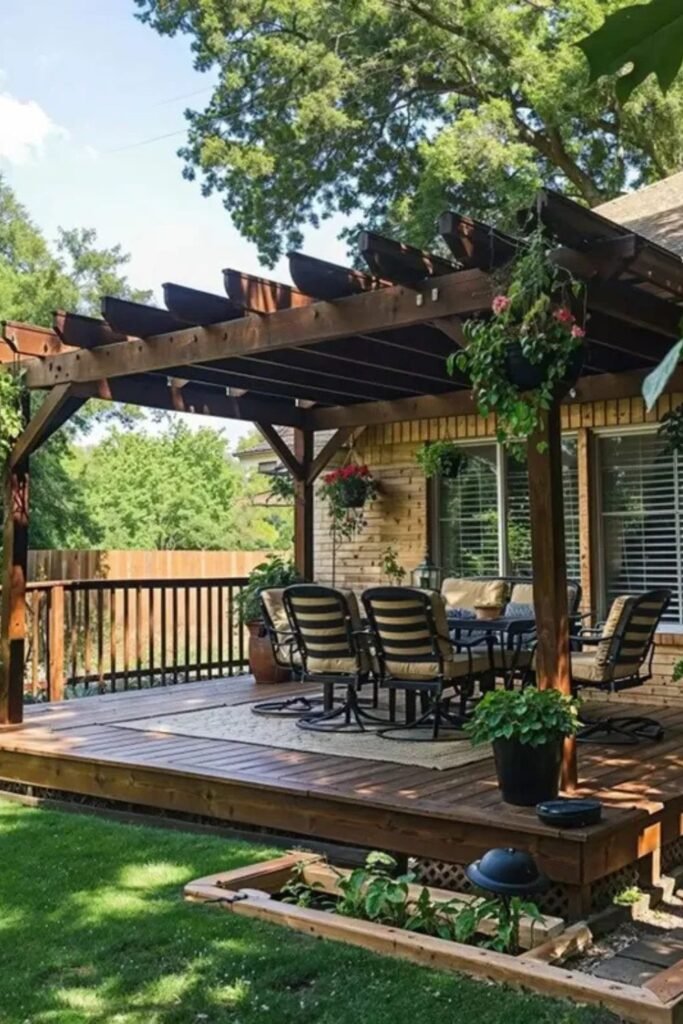
Open Framing
Privacy doesn’t mean filling every corner with plants. Wide lawns stay comfortable when planting hugs the edges instead of the center.
Low borders, small trees, and soft ground plants frame the space and pull focus inward. This works best in larger courtyards where openness matters.
Keep the middle clear for light and movement, and let the greenery quietly protect the perimeter.
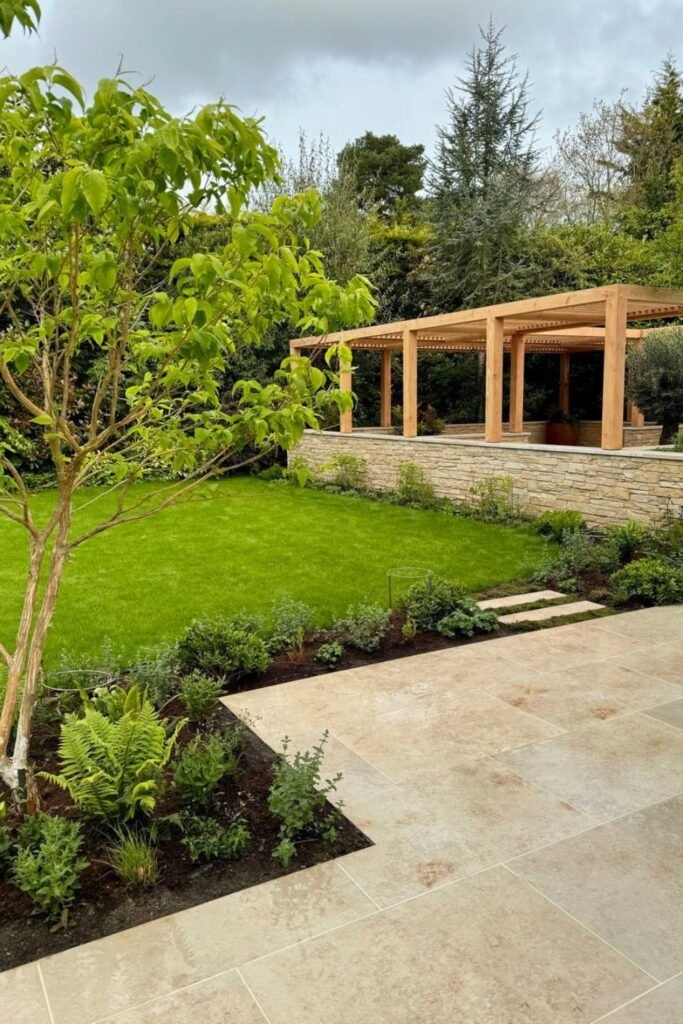
Floral Shield
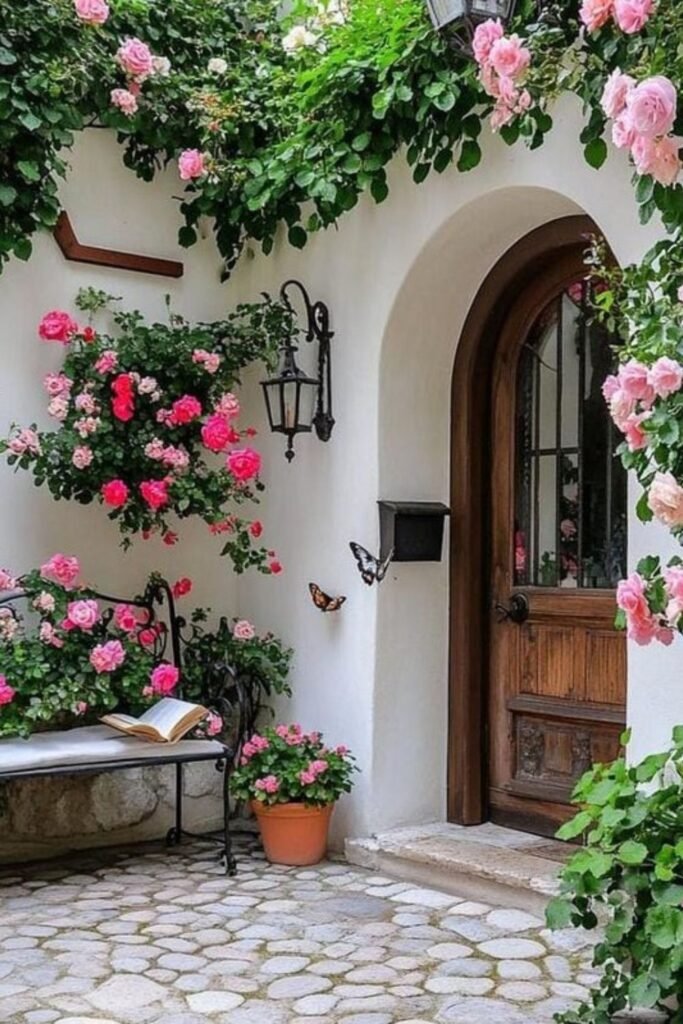
Flowers can do more than decorate a courtyard they can protect it. Climbing roses soften walls, blur sightlines, and pull attention toward color instead of neighbors.
This works best in intimate courtyards near entrances or seating corners. Train climbers around doors and walls.
Then keep the floor simple so the plants become the quiet barrier that makes the space feel personal.
FAQs
Can a courtyard still feel private without tall walls or fences?
Yes. Privacy comes from breaking direct sightlines, not sealing the space. Trees with open canopies, layered planting, climbers, and even a single focal tree can interrupt views.
While keeping light and airflow moving. When the eye can’t travel straight through the space, the courtyard feels private even without solid barriers.
What’s the biggest mistake people make when trying to add privacy to a courtyard?
Overblocking. Filling every wall with dense screens or tall plants often makes the courtyard feel smaller and darker.
A better approach is selective coverage protect seating areas, soften boundaries with greenery, and leave at least one side visually open so the space can still breathe.

Hi, I’m Afaf! I’m a law student who loves all things home, style, and gardening. I’ve been writing for over a year about topics like home decor, DIY projects, plants, fashion, and beauty.
I like sharing ideas that are easy to try and don’t cost a fortune. Whether it’s organizing a messy closet, decorating on a budget, or keeping houseplants alive, I write about what I’ve actually tried myself.
When I’m not studying, I’m usually on Pinterest looking for my next project or adding another plant to my collection!