31 Butterfly Haircut Long Hair Ideas For 2026
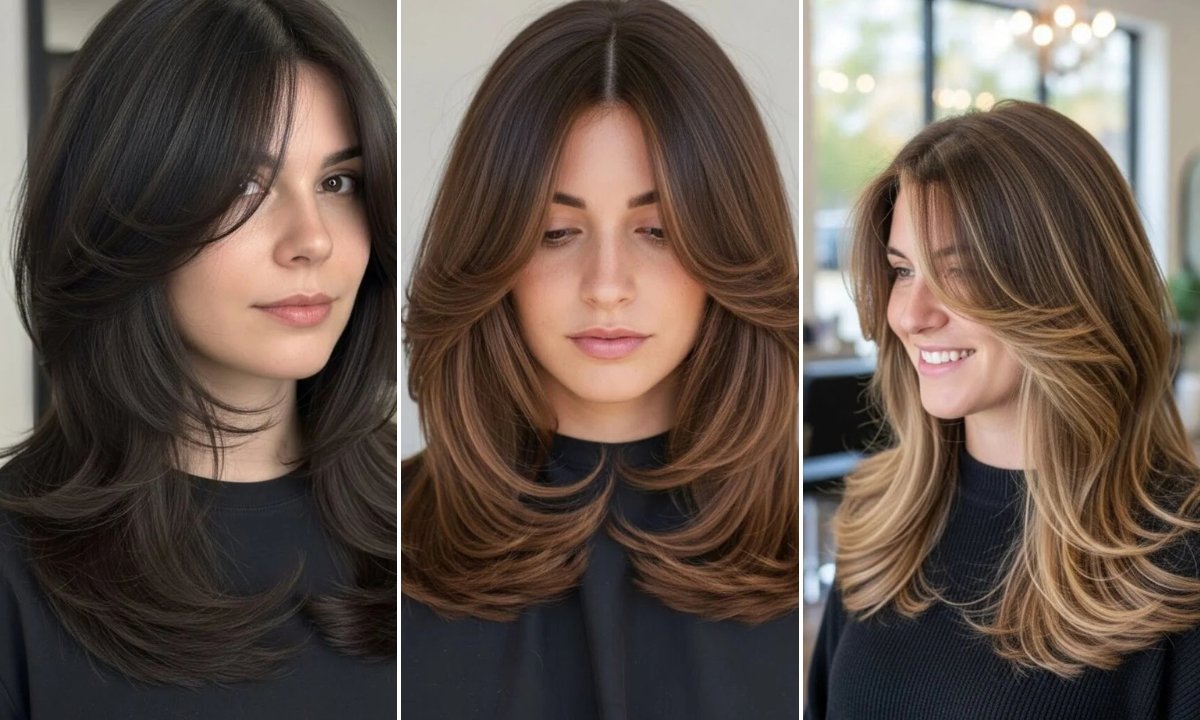
If you’ve got long hair, you’re familiar with the dilemma. You crave volume and a flattering shape, but you’re not keen on sacrificing the length you’ve cultivated over the years.
Chances are, you’ve collected haircut inspiration, entered a salon with high hopes, and emerged thinking, “This isn’t what I envisioned.”
That’s precisely why the butterfly haircut has gained traction. It’s a rare style that promises movement and lift without chopping off the length.
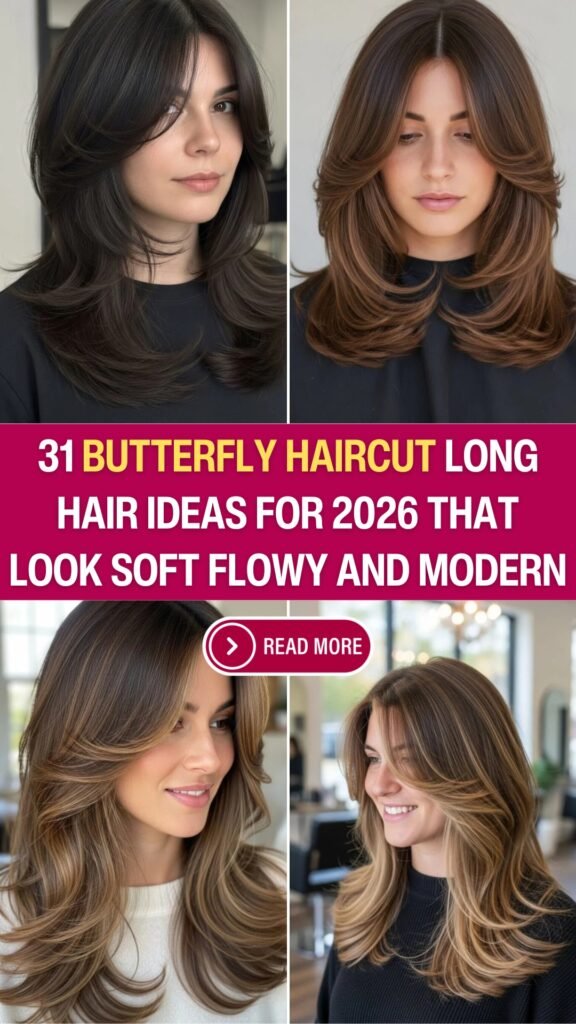
In this article, I’ve gathered 31 modern Butterfly Haircut Long Hair ideas for women can try without overthinking in 2026.
Why The Butterfly Haircut Works So Well on Long Hair?
Long hair can feel like a burden. As it gets longer, it tends to flatten out at the roots. The butterfly haircut is a solution, cleverly removing excess weight.
Where it’s not wanted while preserving length where it is. Shorter layers framing the face and at the crown add lift and movement.
While the longer layers beneath remain intact, ensuring the hair still appears long from behind. If you’re after volume without sacrificing length.
This cut is a smart choice, altering the shape without drastically changing the overall length.
Save this article for later! 👇👇
How to Style a Long Butterfly Haircut for Volume and Movement?
This haircut truly shines when you style it with purpose. If you simply let long hair air-dry, the layers will fall flat. Begin by lifting the roots as you blow-dry, rather than drying straight down.
Concentrate on the front and crown first; that’s where the butterfly shape really comes alive. For added movement, angle your brush or dryer away from your face.
Even a quick five-minute blow-dry in these areas can instantly make the haircut appear fuller and lighter, without requiring much extra work.
Curtain Butterfly
Fullness here comes from smart placement, not aggressive layering. The shorter strands framing the face hit at the chin.
Which has the effect of opening things up and preventing long hair from falling flat. This is particularly effective if your hair tends to look limp at the roots.
But has more volume toward the tips. To achieve this look, maintain the existing length and begin by blow-drying the front sections forward. Then, flip them back to secure the lift.
Deep Layers
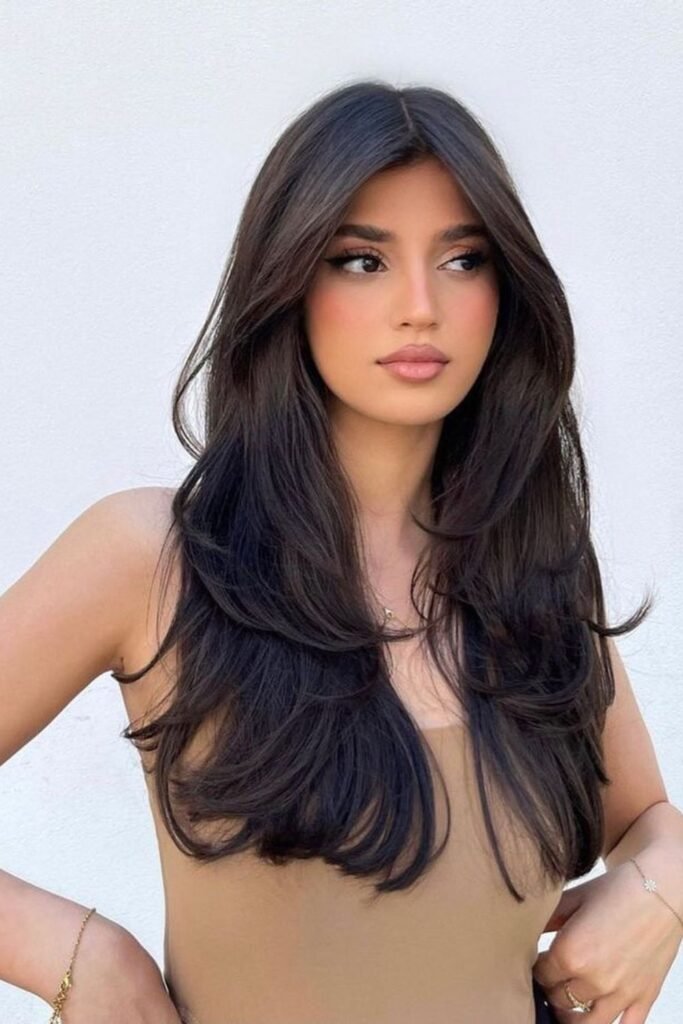
Weight stays at the bottom here, while long, sweeping layers cut through the middle to stop the hair from looking dense and stiff.
This method shines when your hair has a lot of bulk, yet seems a bit flat. Request that your stylist maintains a solid outline and incorporates long, butterfly layers that begin lower down.
To style, start by smoothing the hair, then gently flip the ends to maintain a controlled movement.
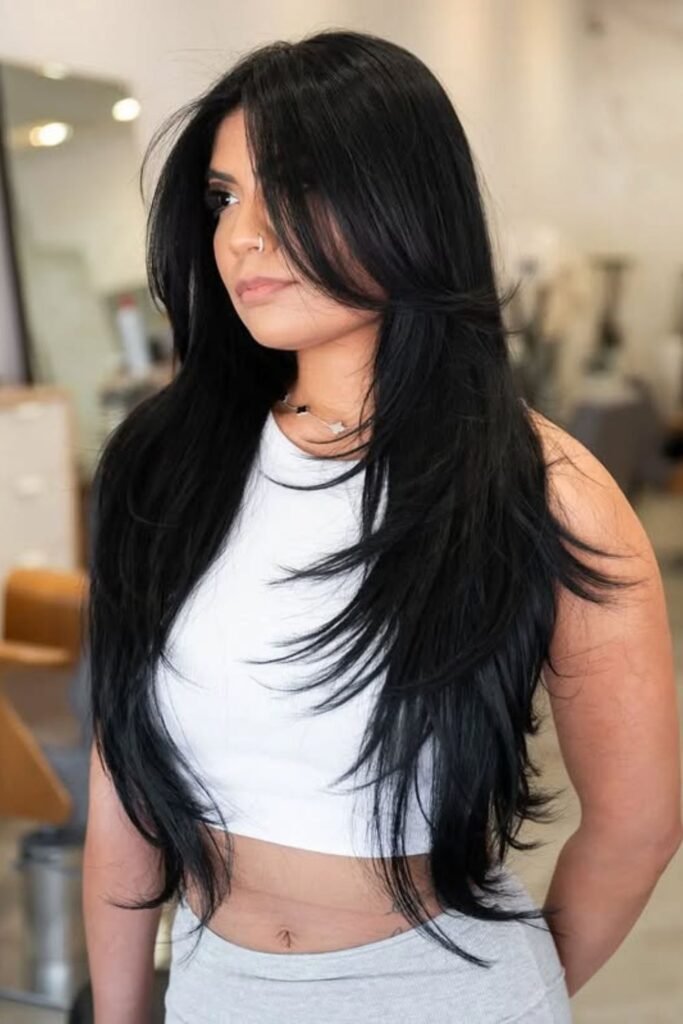
Balanced Butterfly
Everything feels controlled here, which makes this version ideal if you want movement without drama.
The layers are distributed evenly across the front and sides, creating a flattering frame for the face without the hair falling flat or flipping out excessively.
This technique is particularly effective on medium to thick hair that already has a bit of natural smoothness.
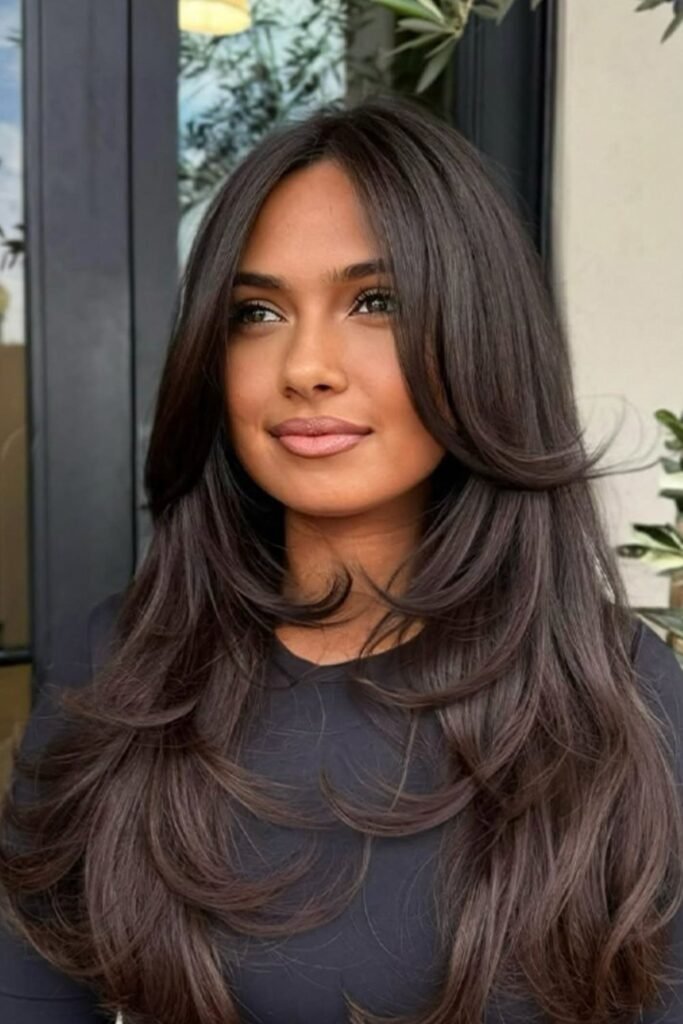
Natural Lift
Nothing feels overworked here, which is exactly why it looks full. The layers start softly around the face and blend downward, letting the length stay heavy enough to hang straight.
This approach is ideal if you’re aiming for movement without the telltale signs of styling. To achieve this, request subtle butterfly layering.
Begin by drying the hair with your hands, and then focus on the front parts to maintain a relaxed, natural appearance.
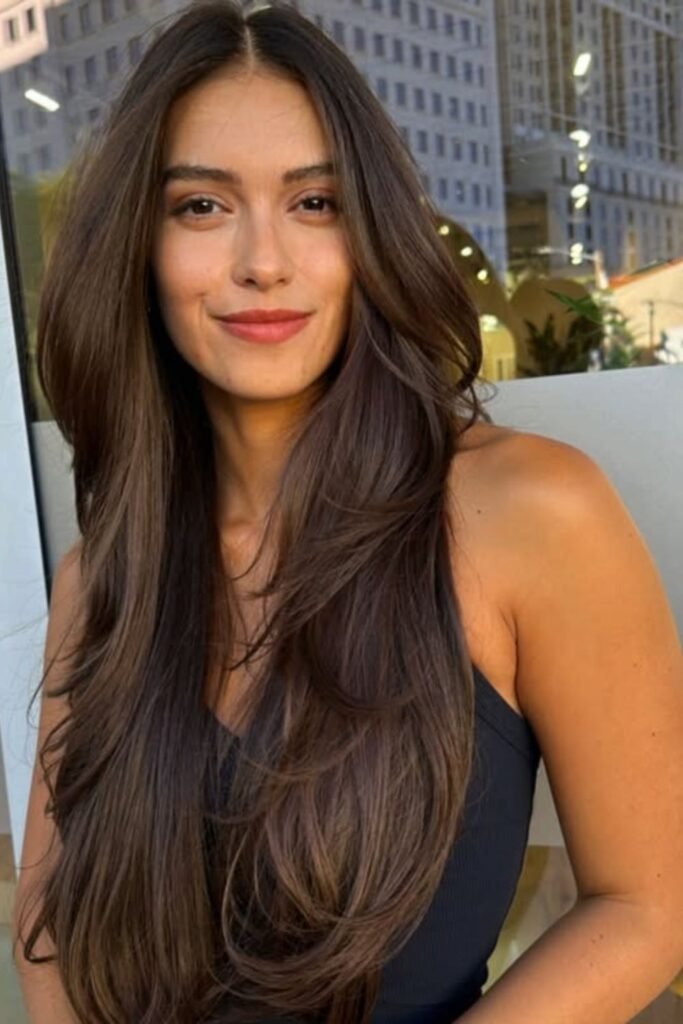
Glam Volume
Drama comes from stacking layers higher, not from cutting the length shorter. The front is lifted aggressively, which lets curls sit on top of each other instead of dragging down.
This look is ideal for those with voluminous hair or for when you want a dramatic style. To get it, request pronounced butterfly layers.
Then, style with large rollers or a curling iron, allowing the top section to cool entirely before you touch it.
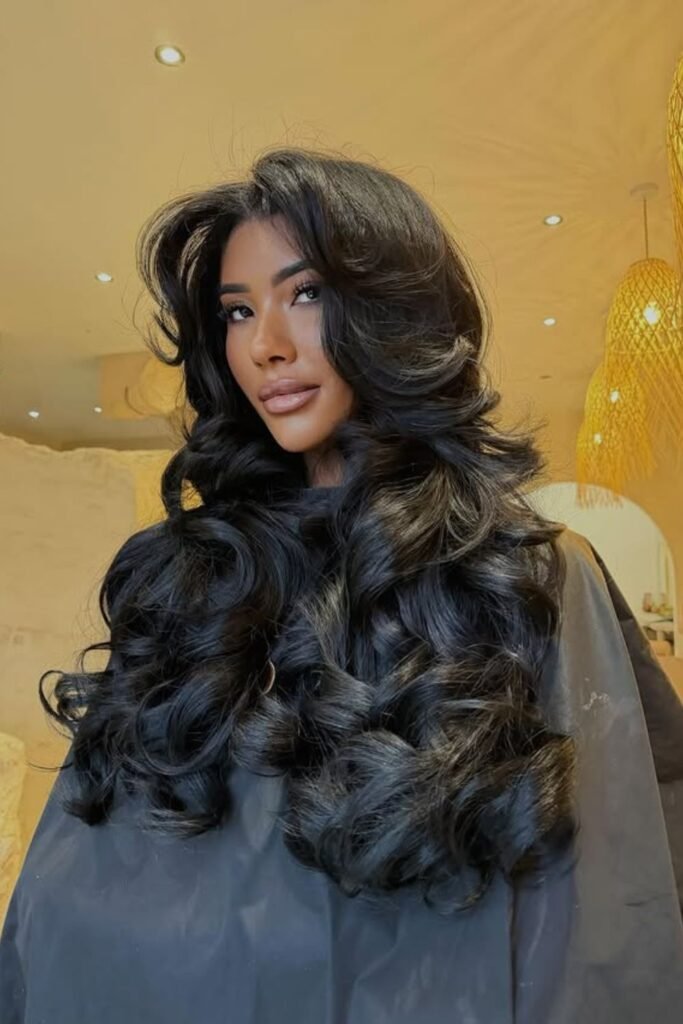
Soft Bounce
Movement shows up here without making the hair feel styled on purpose. The layers curve inward and outward just enough to stop the length from hanging straight down.
This is a good option if your hair is fine to medium and you want some form without a lot of added volume.
Request butterfly layers, with the ends softly rounded. Then, blow-dry your hair with a medium round brush, concentrating on the mid-lengths and the front sections.
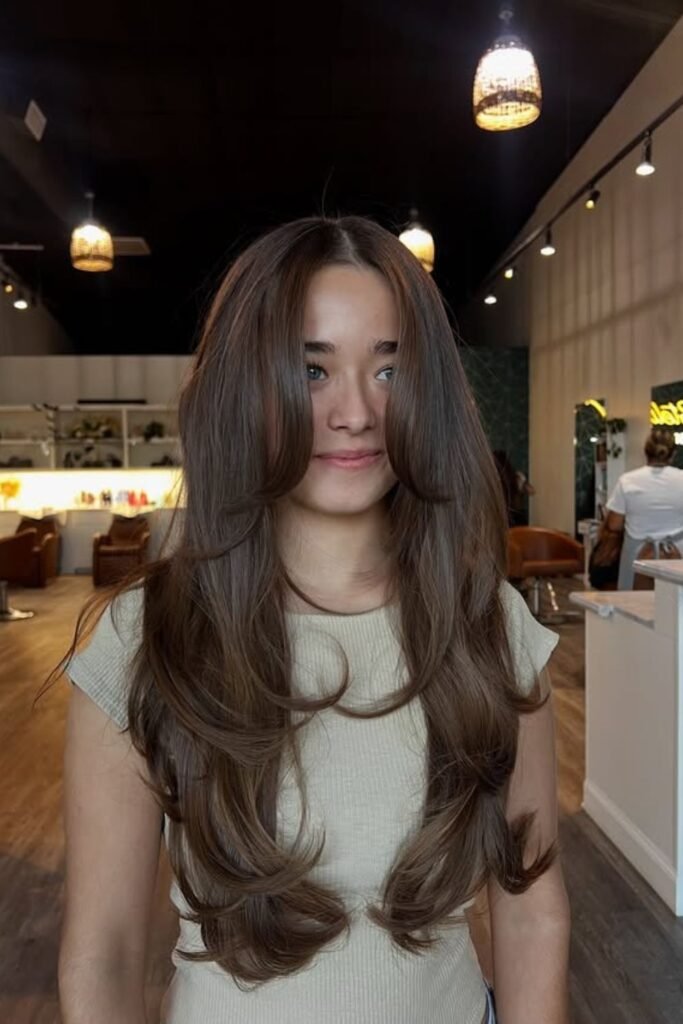
Layered Sweep
The shape here moves outward instead of falling straight down, which keeps long hair from feeling heavy.
The initial layers are snipped to fall away, creating volume right from the start, even before you do anything.
This look really shines if your hair naturally holds its shape and you prefer a style with with noticeable movement.
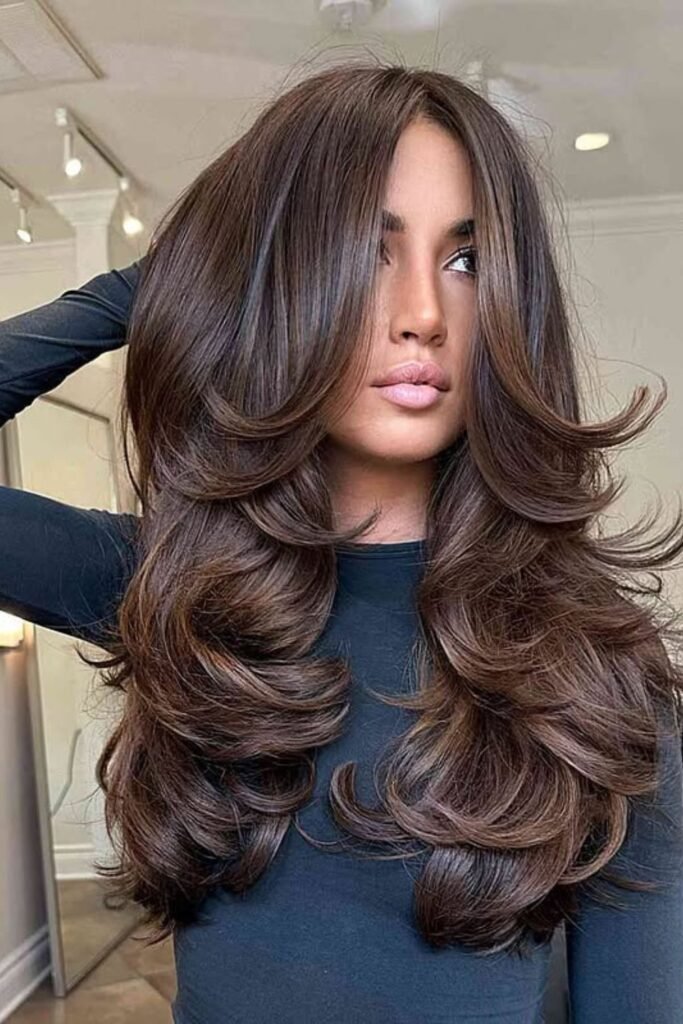
Soft Frame
Attention shifts to the face here without cutting the length short. The front layers fall gently inward, which softens strong features and keeps long hair from overwhelming the face.
This haircut is ideal if you prefer wearing your hair down frequently and are after a low-maintenance style.
Request butterfly layers that gently frame the jawline. To style, simply smooth the front with a round brush, leaving the rest of the hair loose.
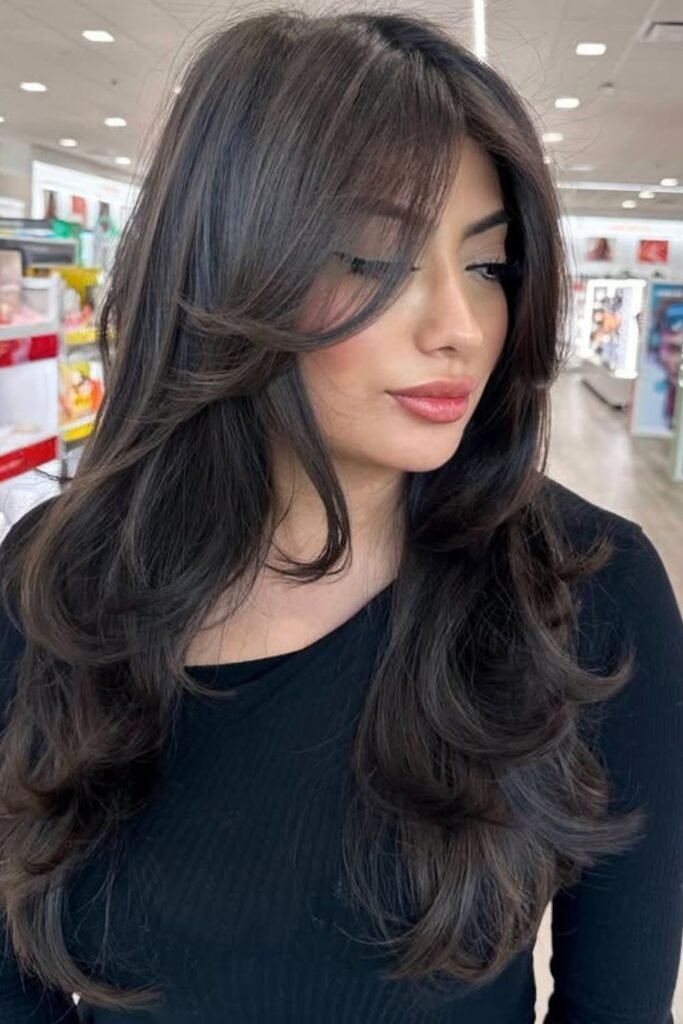
Polished Flow
Shine stands out here because the layers are controlled, not stacked too high. The hair moves, but it stays smooth.
Which makes this version ideal if you prefer a clean, put-together look. This technique is particularly effective on straight or relaxed hair.
Request butterfly layers, emphasizing longer face-framing pieces and little thinning. To style, smooth each area individually, ensuring the layers flow rather than flip.
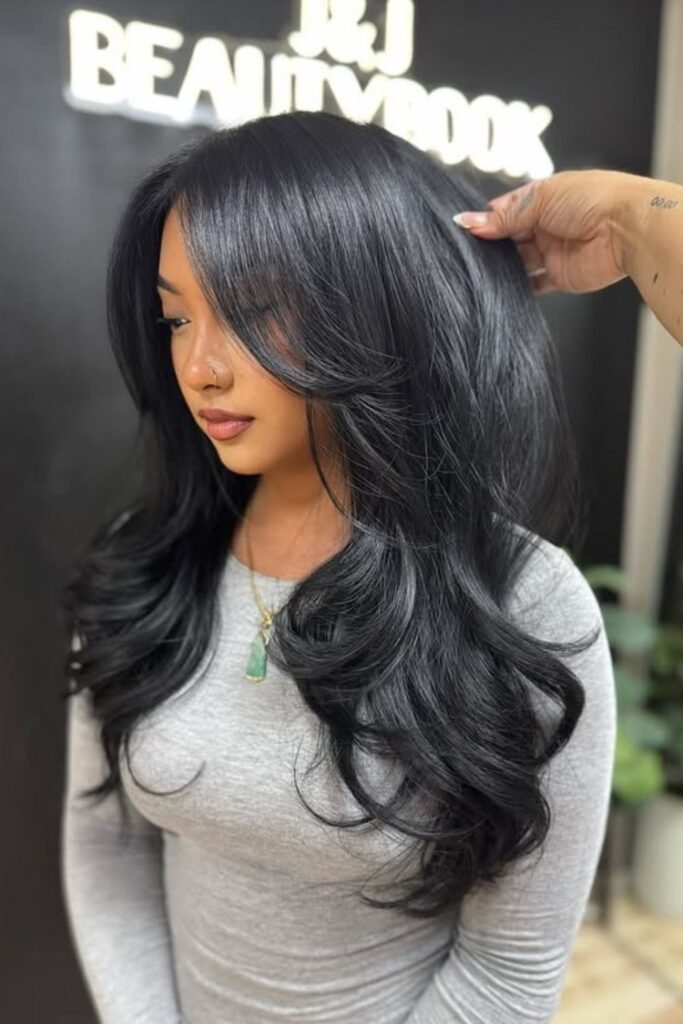
Soft Cascade
Length stays the star here, but the layers stop it from looking flat or stringy. The front pieces melt into the rest of the hair.
Creating a smooth flow instead of sharp flips. This is a great option if you’re after a feminine silhouette that doesn’t feel overly styled.
Request butterfly layers, with the longer pieces framing your face. To style, blow-dry in sections, curling the ends slightly to maintain a natural flow.
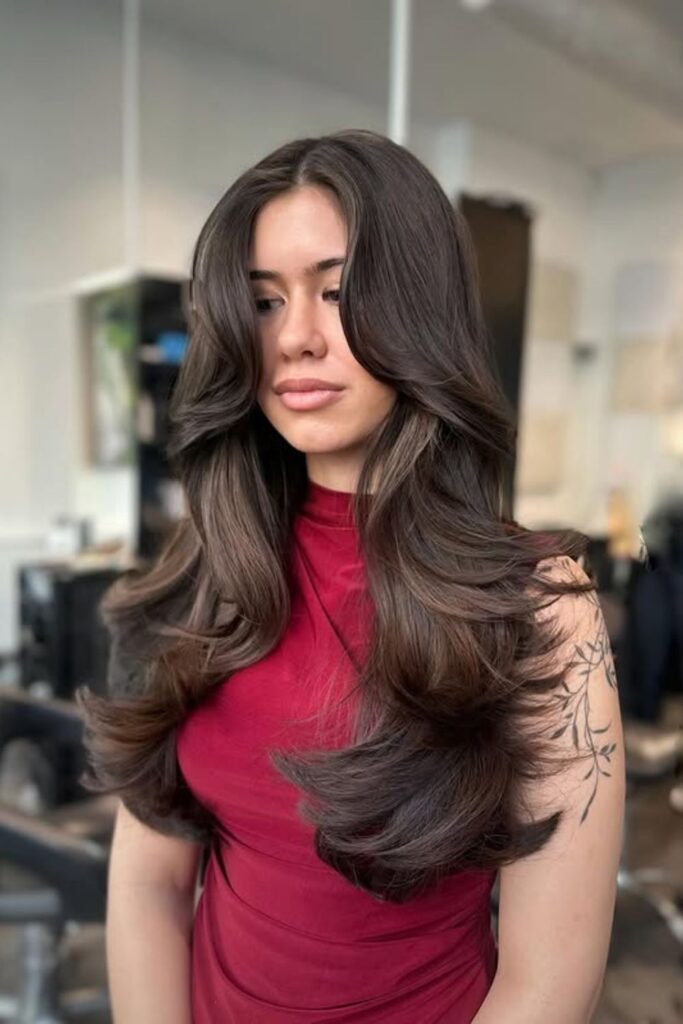
Luxe Layers
Gloss does most of the talking here, which means the cut is clean and intentional. The layers are placed to reflect light, not break it.
So the hair looks fuller without extra bulk. This look is ideal if you prefer a polished appearance and frequently wear your hair down.
Request butterfly layers with minimum texturizing, and style using a smoothing brush. Keep the heat low to maintain shine.
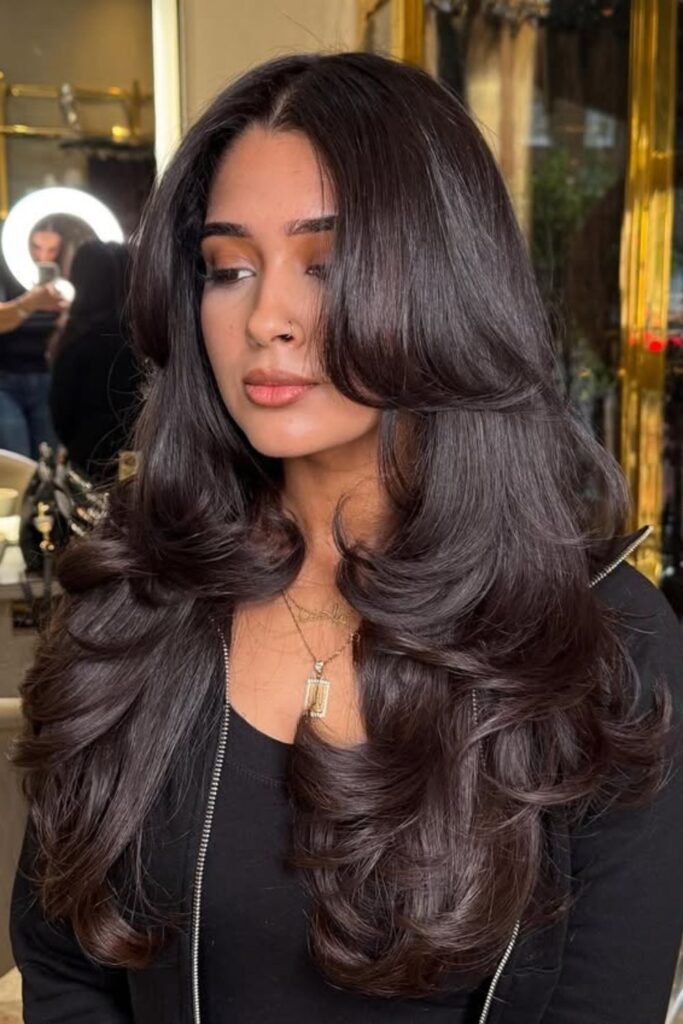
Sunlit Layers
Contrast brings this cut to life. The lighter front pieces make the butterfly layers stand out, even without heavy styling.
This technique is particularly effective if your hair seems flat or overly thick. To achieve the look, maintain long hair, incorporate butterfly layers that frame the face.
And style by blow-drying the front portions away from the face. This allows the lighter strands to rest on top, rather than disappearing into the rest of the hair.
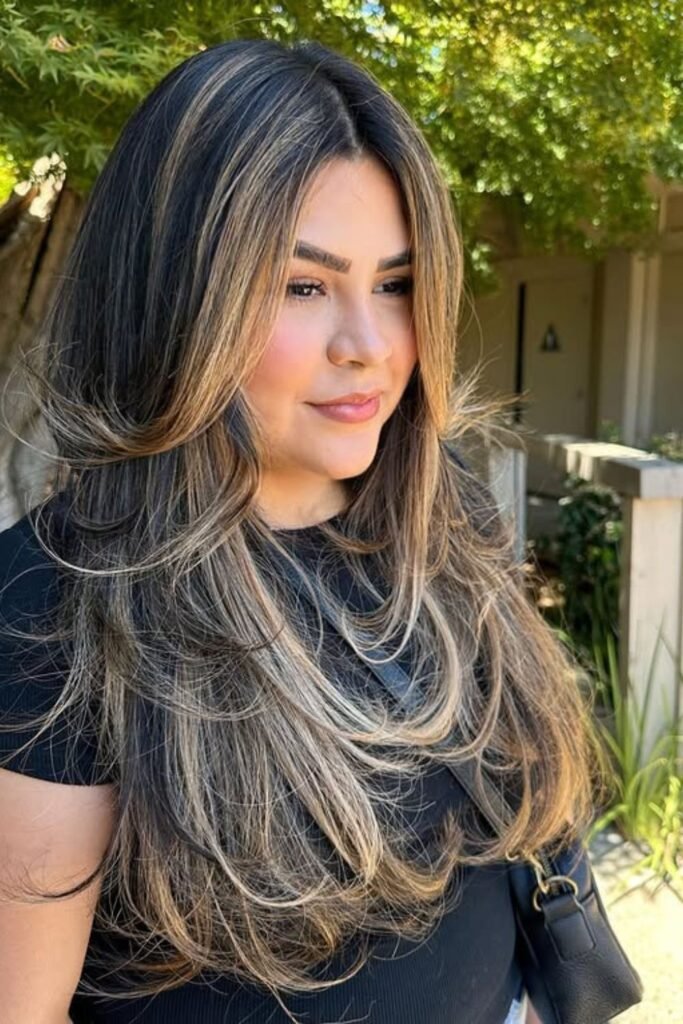
Classic Balance
Symmetry does the heavy lifting here. The layers fall evenly on both sides, so the hair looks full without needing dramatic flips or curls.
This is ideal if you’re after a reliable, go-to haircut that still looks put-together.To get the look, request classic butterfly layers, ensuring they’re balanced around the face.
The blow-dry should be straightforward: smooth at the roots, with a soft curve at the tips nothing too contrived.
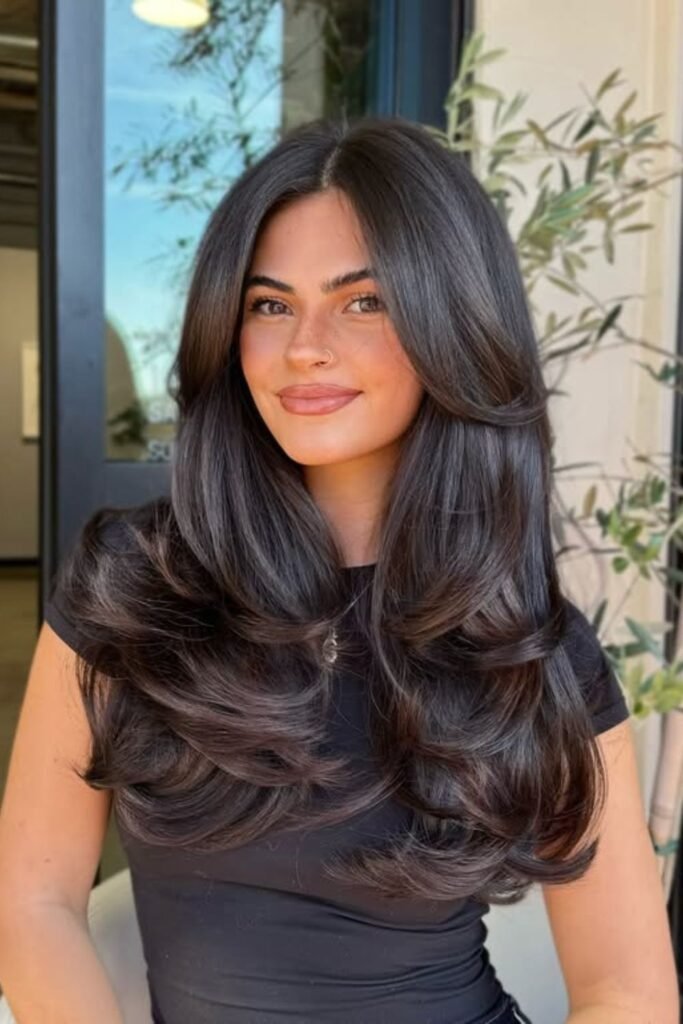
Feathered Ends
Heavy ends can ruin even the best butterfly haircut, and this approach fixes that without touching your length.
The hair’s bottom layers are the only ones softened, allowing for movement rather than a stiff, straight fall.
This technique is particularly effective if your hair seems heavy but lacks luster after a haircut. Request butterfly layering with a feathered finish, avoiding thinning shears.
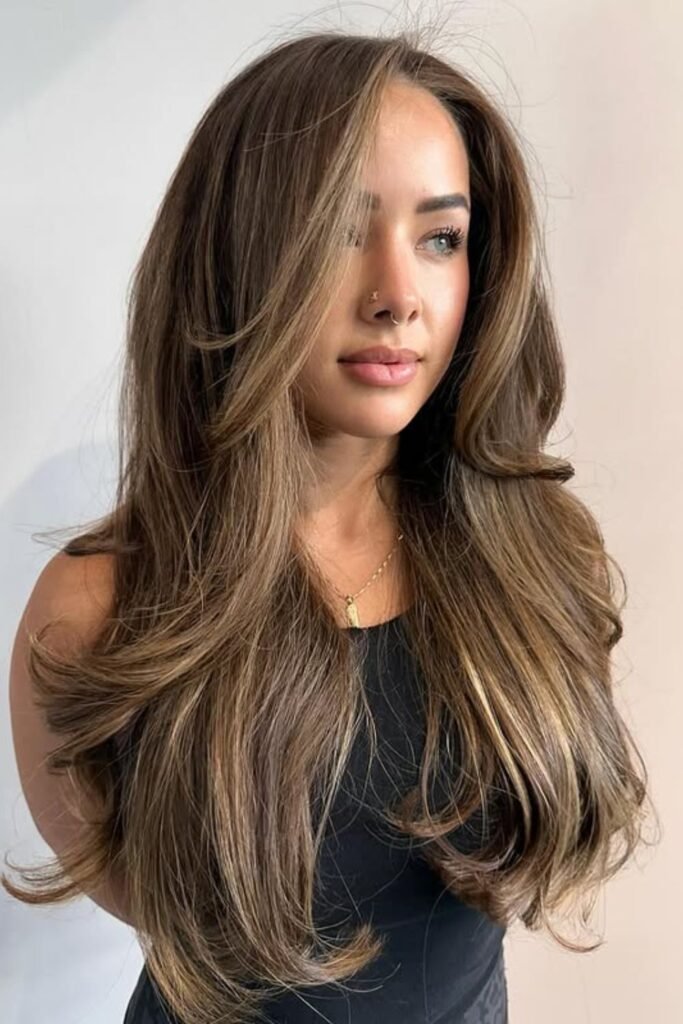
Face Focus
The cut’s structure immediately draws the eye to the cheekbones, giving the hairstyle a deliberate, rather than haphazard, appearance.
The front layers are somewhat shorter, expertly groomed to contour the face, providing definition without the heaviness of excessive volume.
It’s a good choice if you’re after some structure around your features but still want to maintain a soft, flowing length.
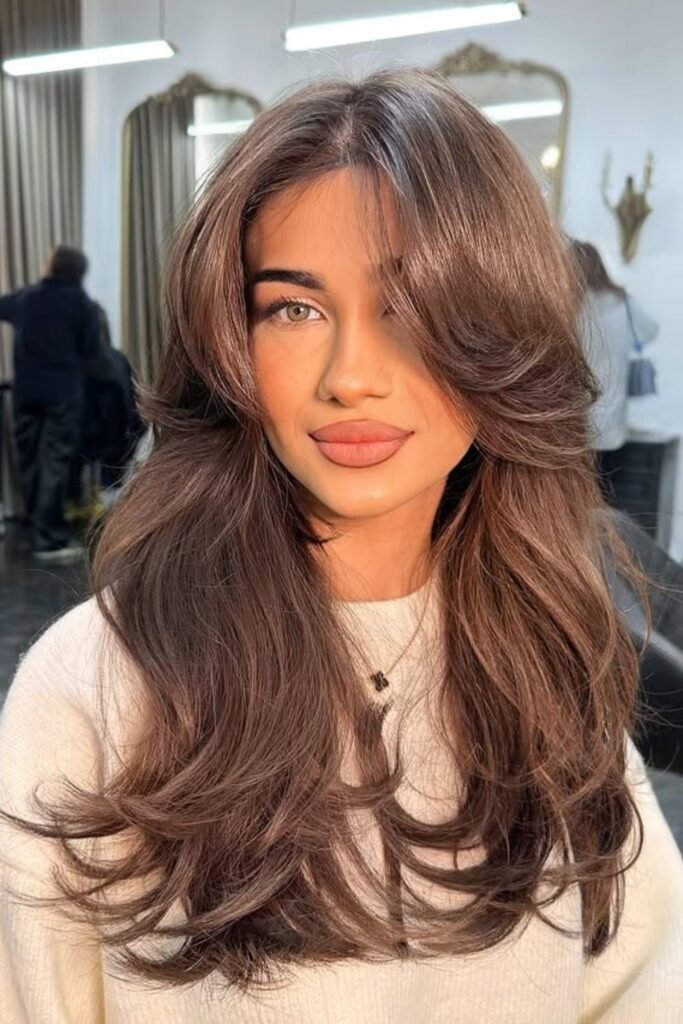
Bold Lift
Volume shows up immediately because the top layers are cut to stand away from the scalp instead of laying flat.
The length remains, however the overall effect is light and striking. This style truly shines on those with abundant hair who appreciate a defined, voluminous blowout.
To achieve this, request butterfly layers that begin higher up, near the crown. Then, style by lifting each section upward before rolling it back to secure the desired shape.
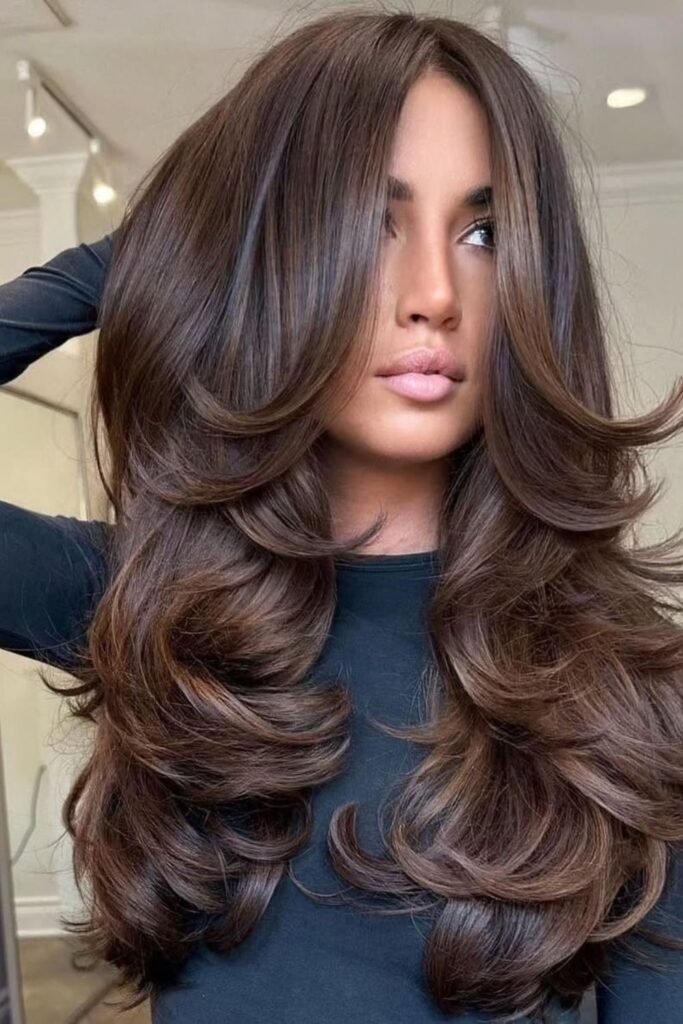
Airy Crown
Flat roots can do more damage to long hair than split ends ever could. This approach keeps the crown airy, subtly lifting layers to create volume at the top.
The goal is hair that seems fine at the roots but becomes thicker further down. Ask for butterfly layers; they’ll take away bulk from the top while leaving the ends untouched.
Start by blow-drying your hair straight up, then smooth it down to keep the height subtle, steering clear of any teasing.
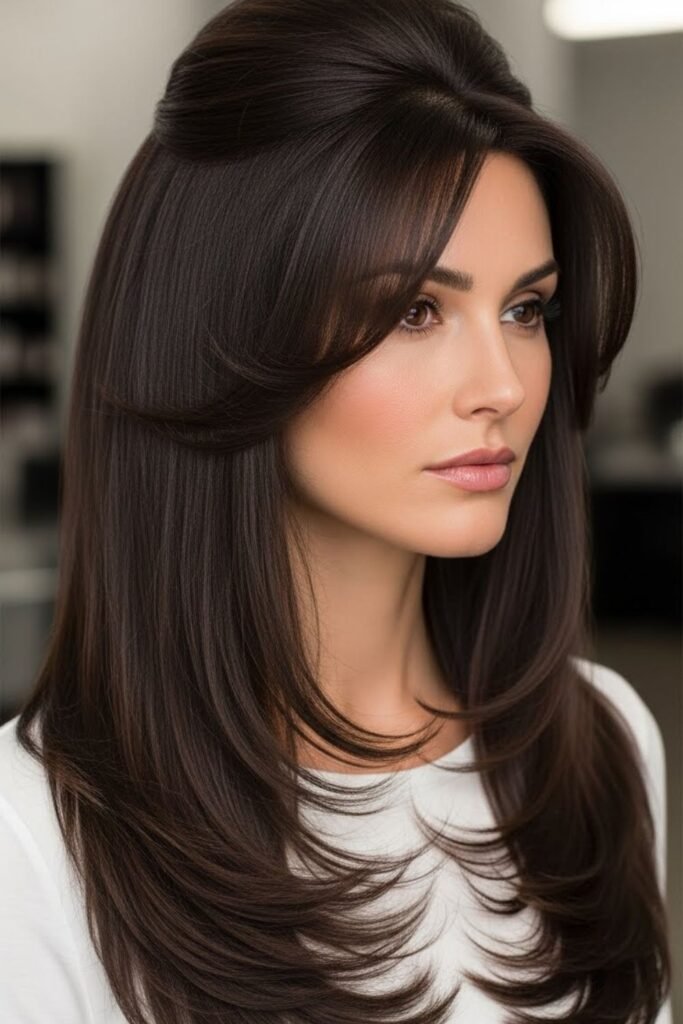
Long Contours
Movement here comes from shaping around the collarbone instead of the jaw. The layers stay longer, which keeps the haircut calm and grown-up.
This look is ideal for those who prefer a clean, defined shape without any overt styling cues. To achieve it, maintain face-framing strands that fall below the chin.
Steering clear of any short layers near the cheeks. For styling, begin by pulling the hair downwards, and then introduce a gentle bend, focusing solely on the tips.
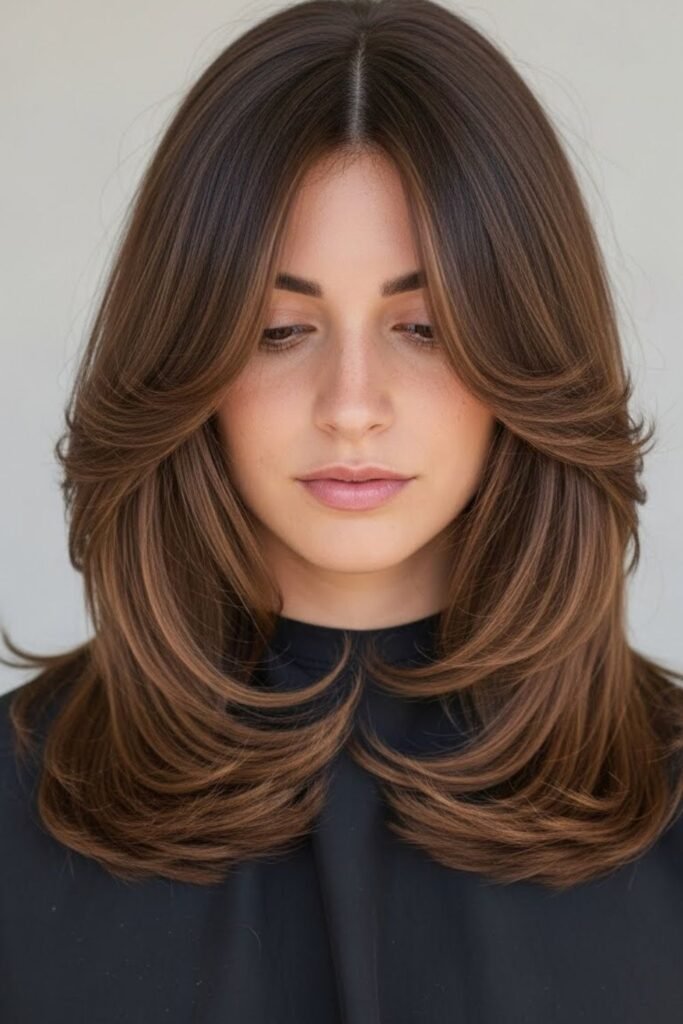
Quiet Volume
Nothing flips, nothing screams, and that’s the point. The layers sit low and blend inward, giving long hair fullness without showing effort.
This technique is ideal for straight hair that often loses its luster as the hours pass. Request butterfly layers, beginning in the middle of your hair, rather than at the top.
To style, simply smooth the roots and subtly round the ends. This helps the shape last without relying on heavy products.
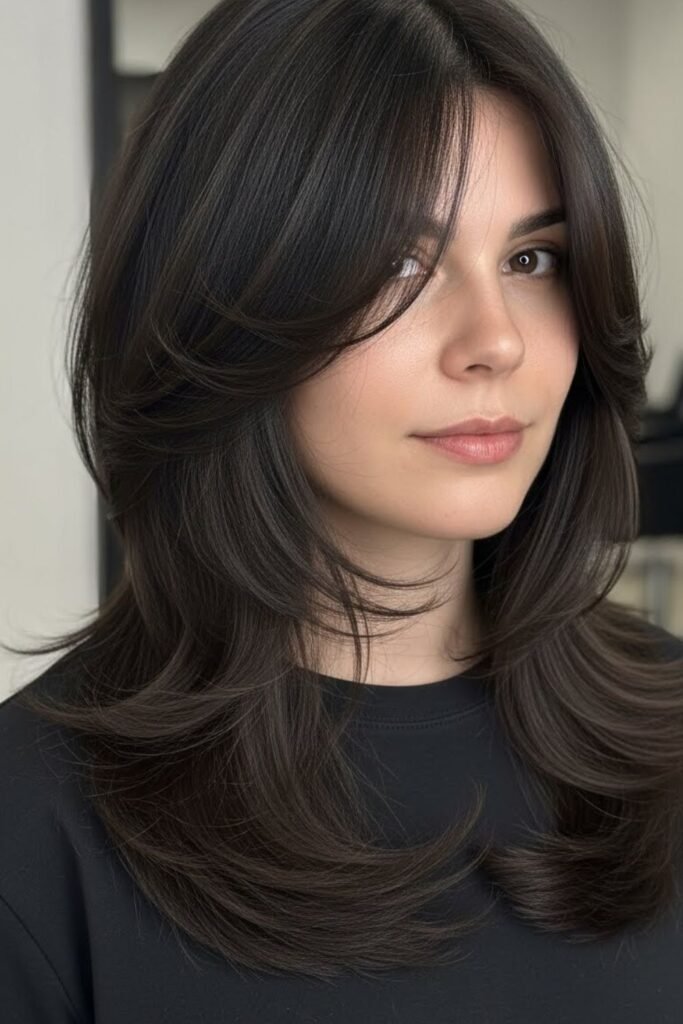
Elongated Shape
The length can seem more pronounced when the layers drag the eye down. This approach keeps the top neat or clean and encourages movement closer to the chest.
For a refined appearance that still allows for movement, request butterfly layers. These will preserve the length in the front and adding a subtle lift at the roots.
Blow-dry the hair downward, maintaining the tension throughout. To avoid a rigid appearance, add a little curve to the ends.
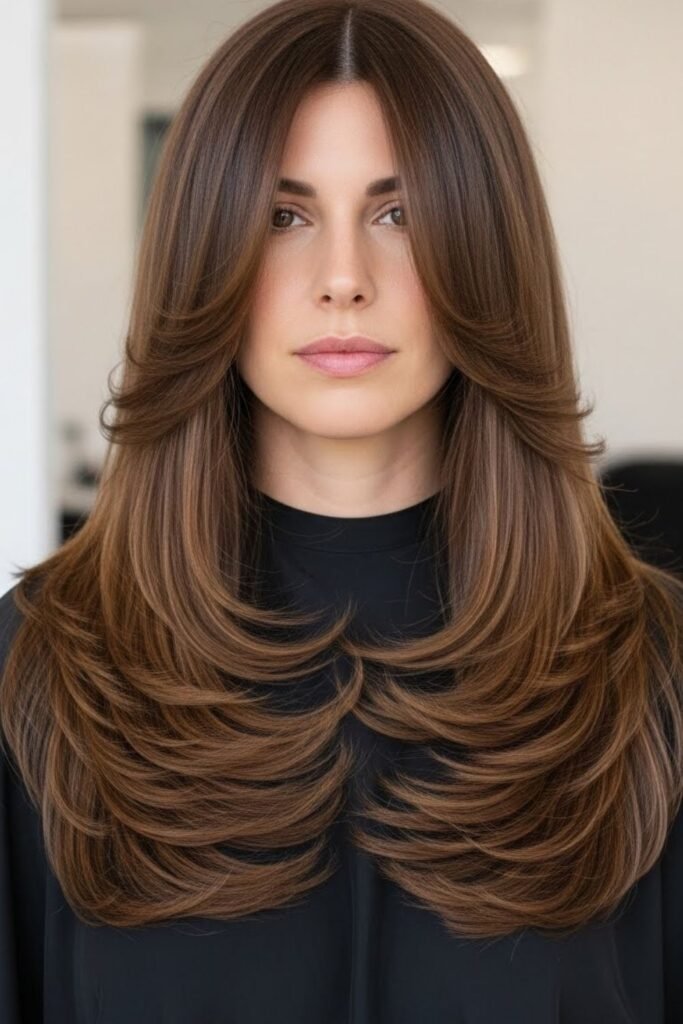
Soft Angles
Sharp lines disappear here, replaced by gentle direction changes through the layers. This works especially well if your hair tangles easily.
And looks bulky when layered too hard. Request full butterfly layers, avoiding any thinning at the edges.
Style the hair by drying it diagonally, rather than straight down. This allows the angles to develop organically, without artificially creating volume.
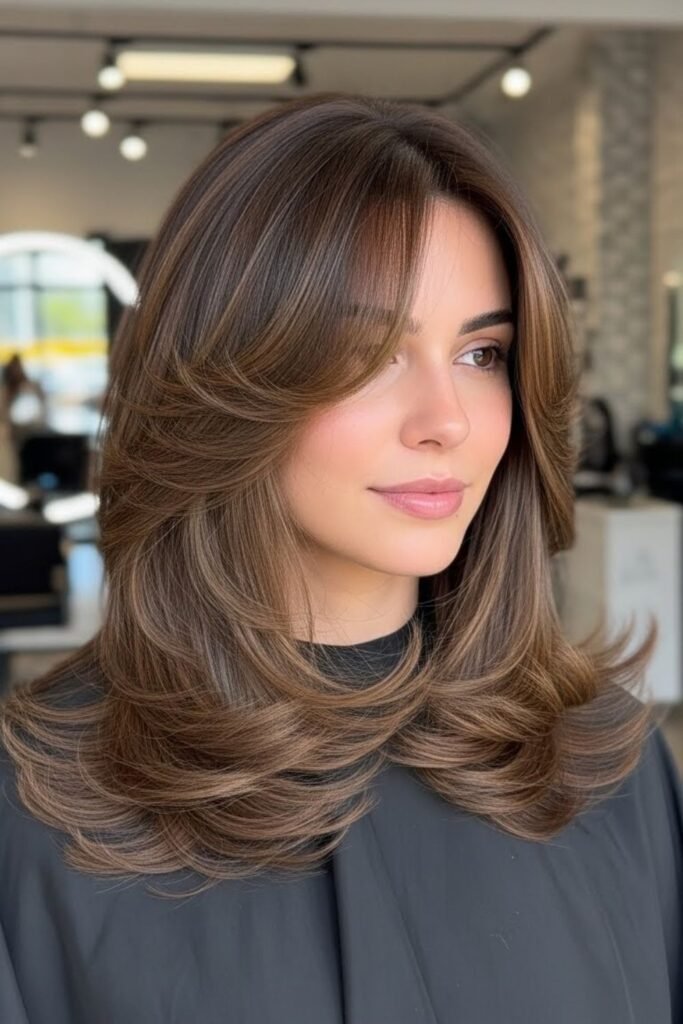
Low Drama
Some days you want shape without committing to styling. This cut keeps layers subtle enough to behave on their own.
Ideal for those with packed schedules or a preference for effortless hair. Request butterfly layers that subtly enhance the hair’s natural shape.
Allow your hair to air-dry until it’s partially dry, then tame only the front parts to maintain a polished appearance.
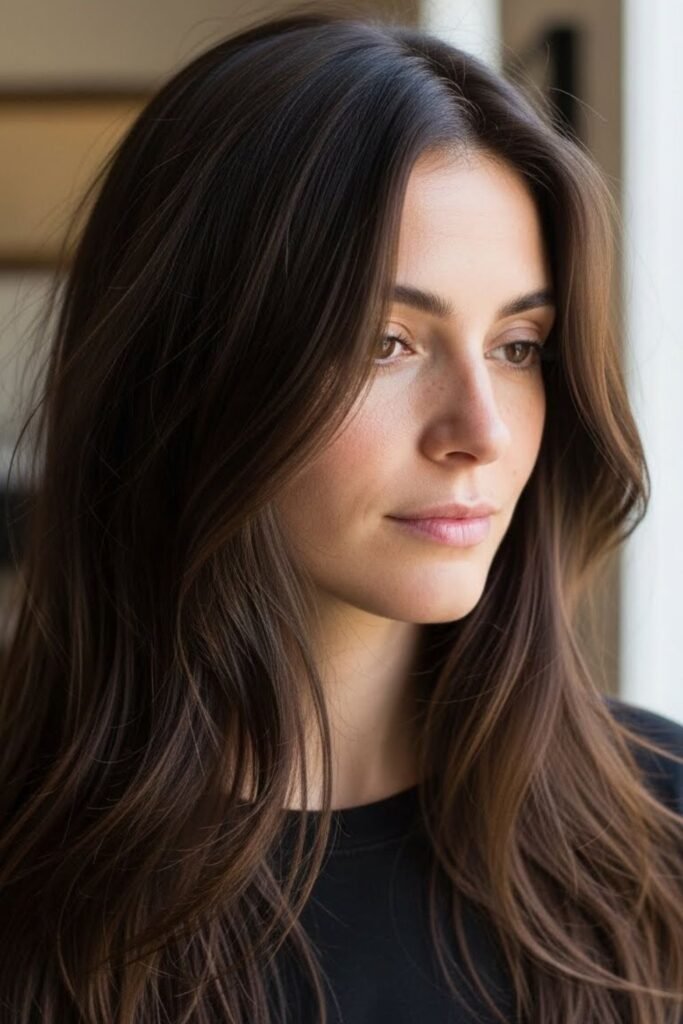
Root Balance
Heavy lengths need support at the top, not more cutting at the ends. This version redistributes weight so the hair lifts evenly.
This technique is great for those with thick hair that tends to fall flat after being styled. Request butterfly layers.
Which will thin out the hair in the middle, rather than at the edges. Before you start smoothing things down, blow-dry your roots in different directions.
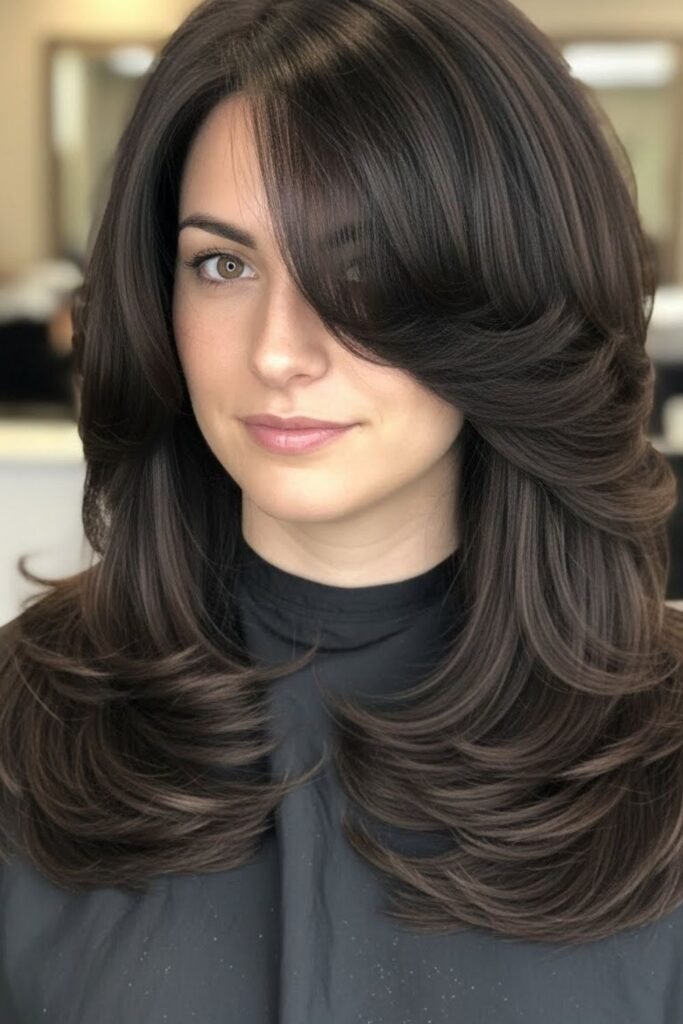
Gentle Frame
The key to softness lies in maintaining long, flexible front pieces. This approach works particularly well if you’re not a fan of hair resting directly against your cheeks.
Ask for butterfly layers that gently graze the jawline, rather than ending there. To style, start by pulling the front sections forward.
And then direct them outward. This technique keeps the face open, avoiding any harsh lines.
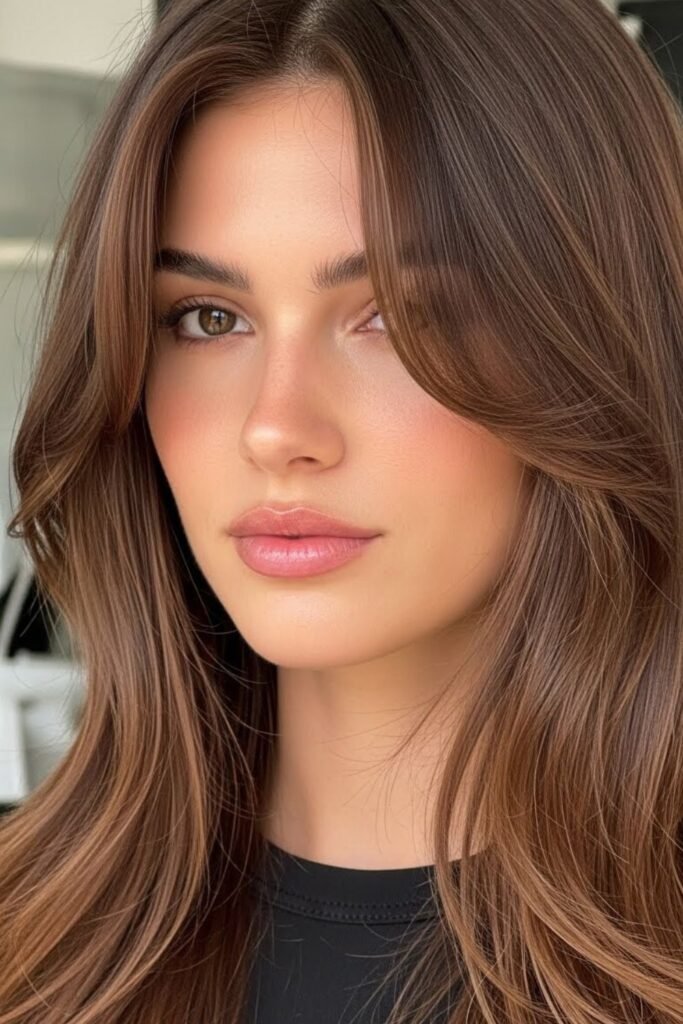
Fluid Length
Hair looks its best when it can fall freely. This approach eliminates harsh lines, allowing layers to blend seamlessly.
It’s ideal for hair that already has a bit of natural wave. Request butterfly layers with gradual transitions, rather than distinct, blunt cuts.
Start by blow-drying with your hands, then only refine the ends to maintain a relaxed feel.
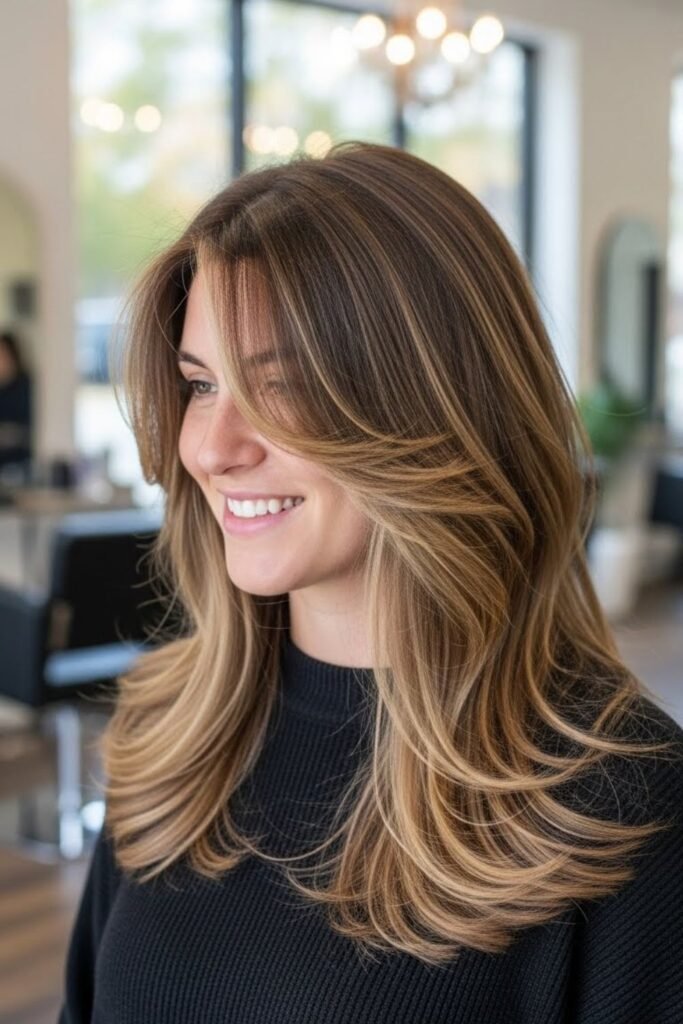
Soft Density
Thin ends get a boost here, no drastic trims required. The layers are subtly blended into cut, and building volume from the inside out.
This technique shines if your hair feels thin at the tips. Request butterfly layers; they’ll add internal structure.
While preserving the overall shape. To style, dry your hair inward, allowing the natural fullness to emerge.
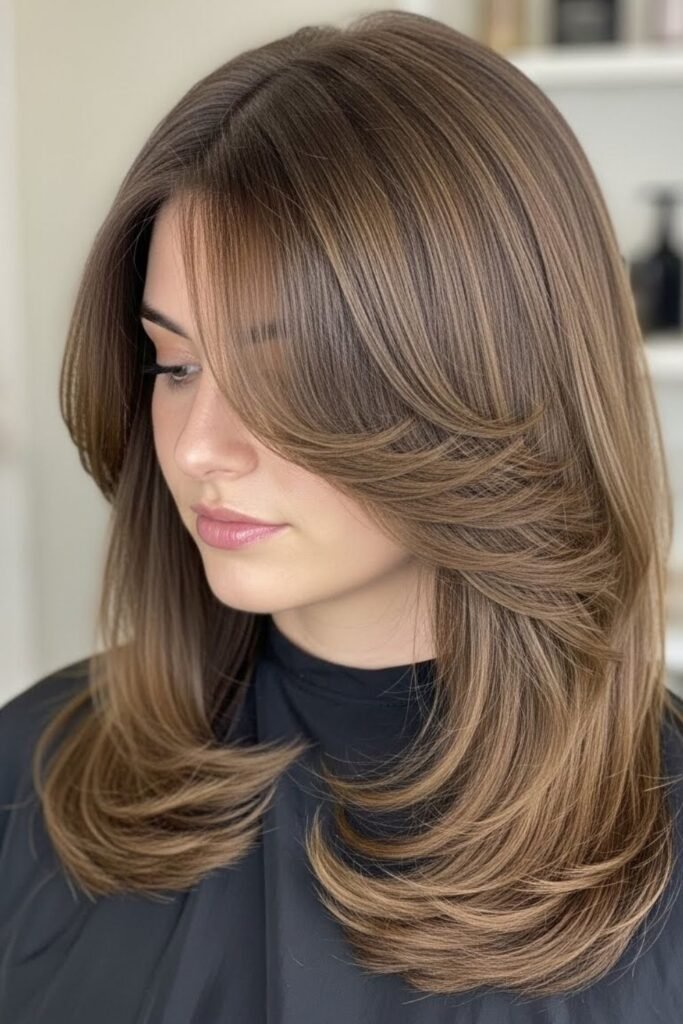
Natural Fall
Gravity does the styling with this one. The layers are placed to follow how the hair already wants to sit.
This look is perfect for those who want to embrace their hair’s natural texture. When you see your stylist, ask for butterfly layers, tailored to your hair’s natural part and how it falls.
Let your hair air dry without any manipulation no flipping or twisting to ensure the cut takes shape as planned.
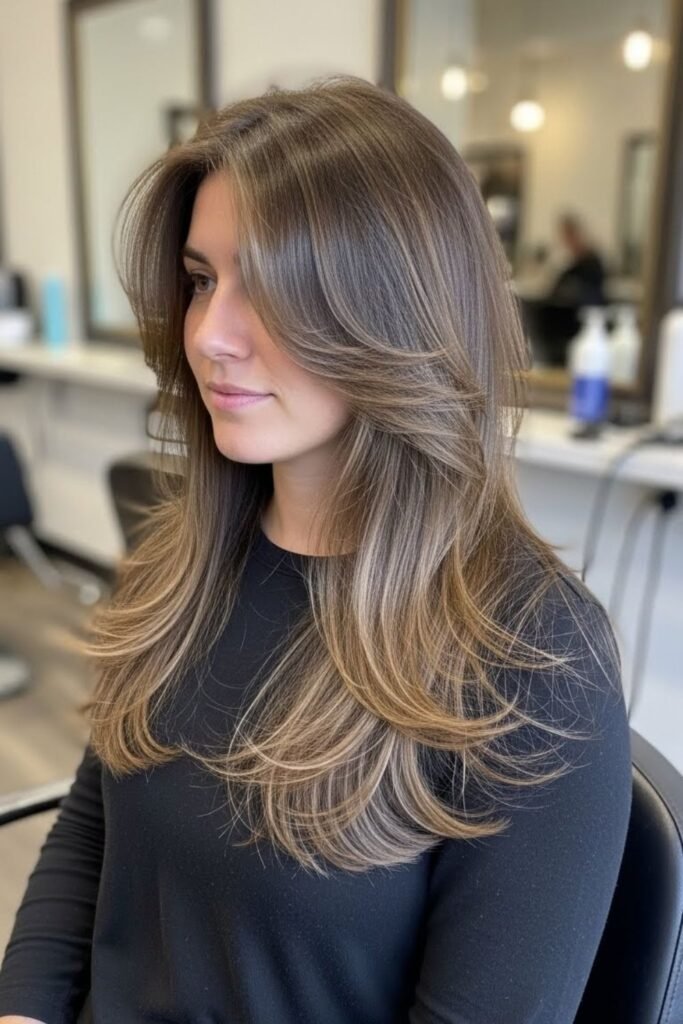
Mid Lift
Volume doesn’t always belong at the roots. This version creates fullness through the middle of the hair.
Which keeps long styles from looking stretched. If your hair tends to get limp after a while, consider butterfly layers.
That start below the shoulders. When blow-drying, use a round brush and begin at the mid-lengths, not at the roots.
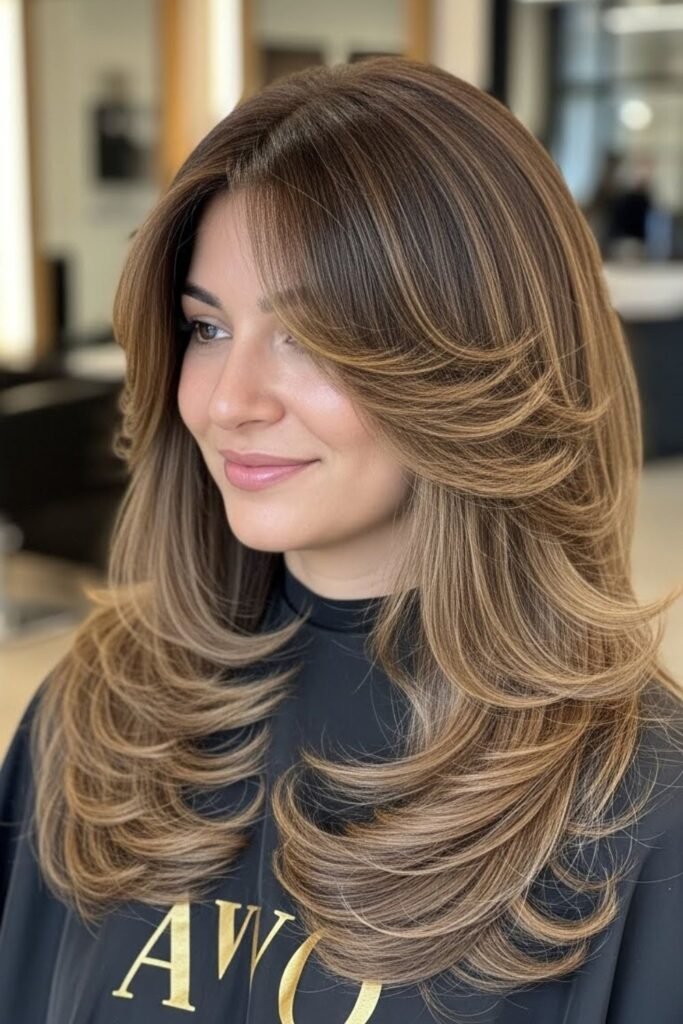
Smooth Motion
Movement shows up as flow, not bounce. This haircut keeps the everything polished while still avoiding stiffness.
It’s a good choice for straight or relaxed hair. Request butterfly layers, emphasizing clean lines and minimal texturizing.
Style gradually, using regulated heat to ensure the layers blend seamlessly, rather than being distinct.
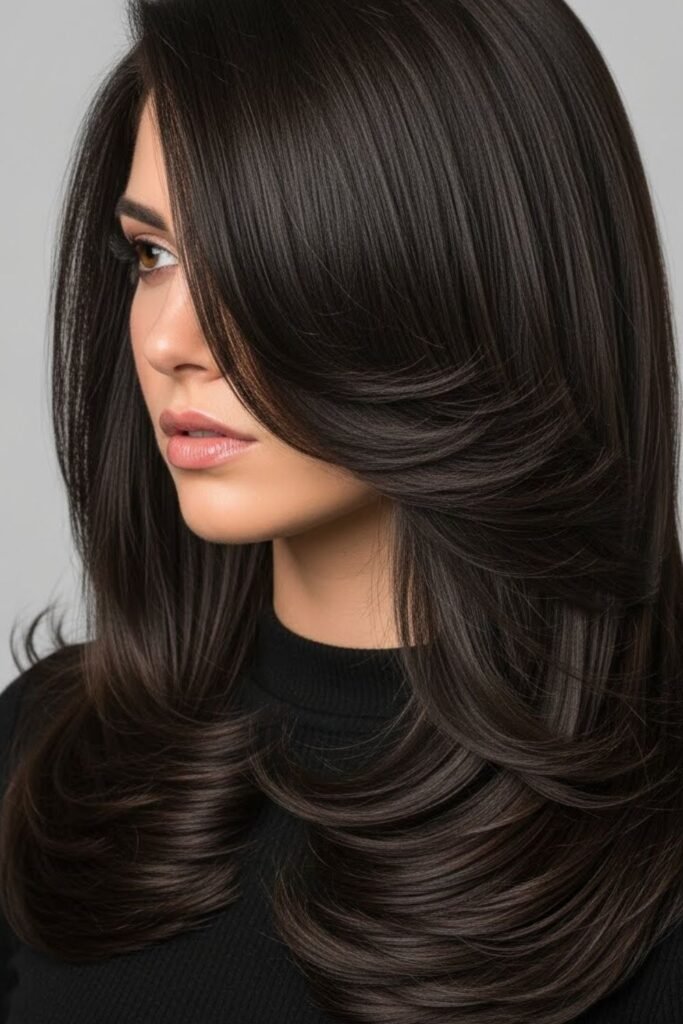
Light Finish
Long hair, even when in good shape, and can sometimes appear heavy. That’s where this technique comes in.
The length remains intact, but the very ends are subtly softened, allowing the hair to move freely rather than just hang there.
This is particularly effective if your ends feel thick or bulky after a trim. Request butterfly layers to remove excess weight from the bottom.
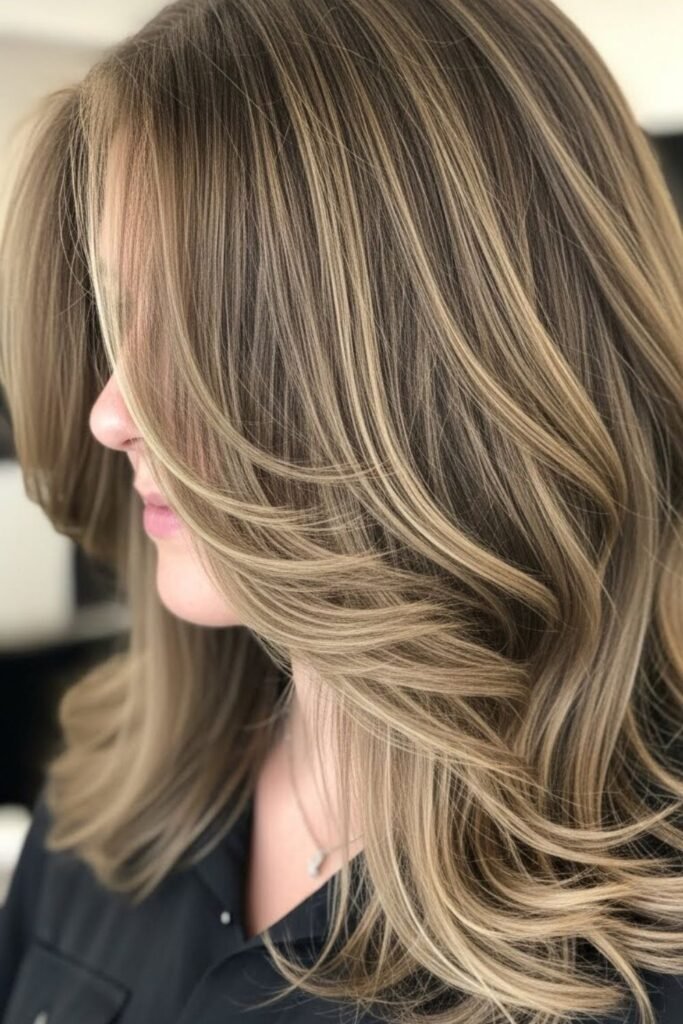
Easy Shape
The aim is a haircut that practically styles itself. The layers are cut to encourage the hair to naturally fall into place, even if you’re short on time or just don’t feel like doing anything.
This is ideal if you want your hair to look good every day, with minimal fuss. Request butterfly layers that will fall into place with a quick blow-dry.
Dry your hair in big sections, don’t overdo it with the brush, and let the haircut do its thing.
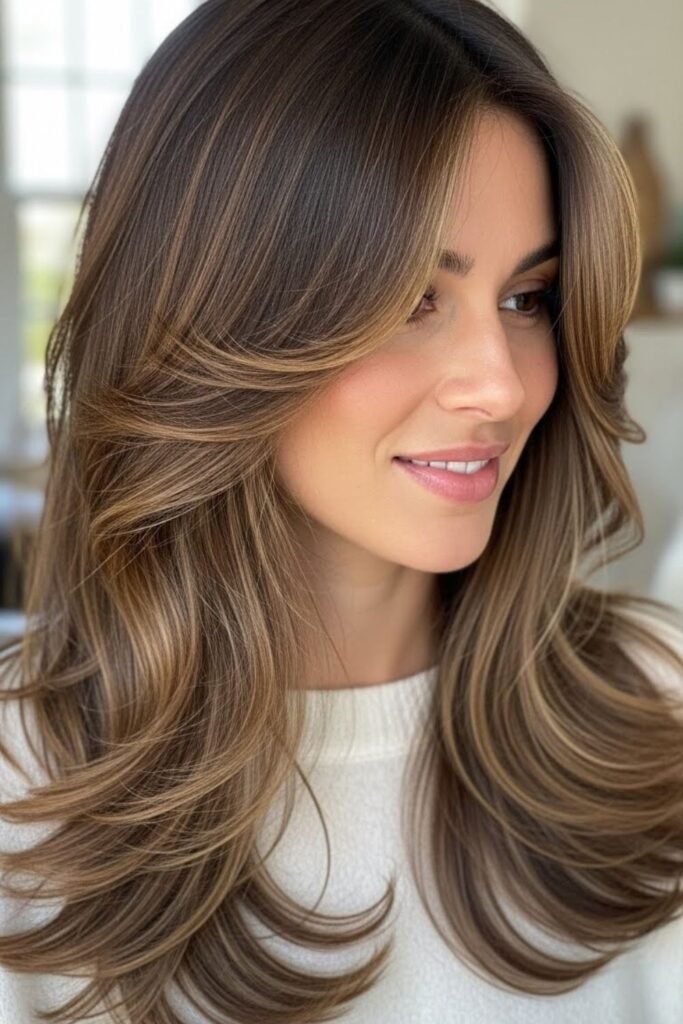
FAQs
Can a butterfly haircut still work if I never blow-dry my hair?
Yes, but the cut needs to be approached differently. Without blow-drying, the layers should begin lower and be longer, allowing them to fall naturally rather than flipping out unpredictably.
Let your stylist know you want a butterfly haircut that looks good when air-dried, not just when styled.
The overall shape will be softer, less dramatic, but you’ll still achieve movement without battling your hair each morning.
Why does a butterfly haircut sometimes look flat after a few weeks?
It’s often not the haircut itself that’s the problem; it’s the weight that creeps back in at the roots. Long hair, as it grows, tends to pull the layers down, particularly at the crown.
A quick root touch-up, a change in your part, or simply re-blow-drying the front sections can often revive the shape.
If the hair continues to fall flat, the layers might have been cut too short for the density of your hair.
You may like to read!
- 18 Mom Haircuts
- 24 Tea Party Hairstyles Ideas
- 24 Messy Pixie Haircut Ideas
- 23 Hairstyles For Thin Hair

Hi, I’m Afaf! I’m a law student who loves all things home, style, and gardening. I’ve been writing for over a year about topics like home decor, DIY projects, plants, fashion, and beauty.
I like sharing ideas that are easy to try and don’t cost a fortune. Whether it’s organizing a messy closet, decorating on a budget, or keeping houseplants alive, I write about what I’ve actually tried myself.
When I’m not studying, I’m usually on Pinterest looking for my next project or adding another plant to my collection!