
10 Best Air Purifier for 2026
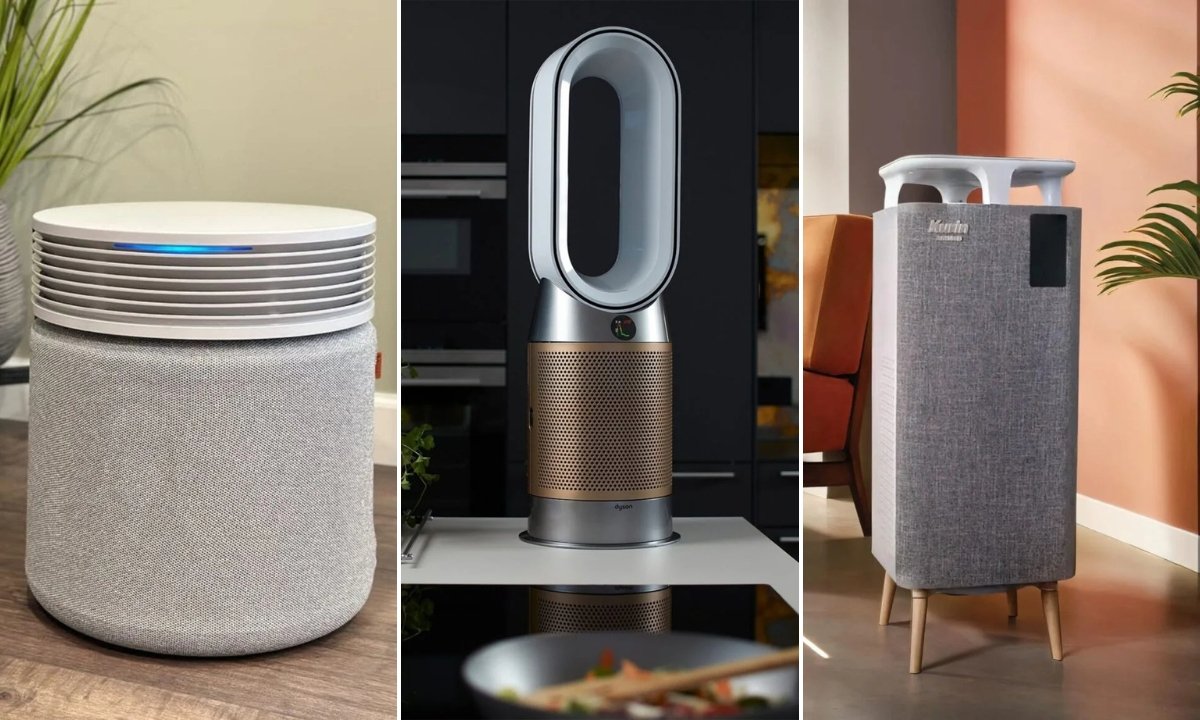
You cook dinner. Everything tastes great. But an hour later, your house still smells like fried fish. The kitchen feels heavy. The smoke alarm almost went off.
Your kids start coughing, and you’re opening windows even though it’s cold outside. You turn on the exhaust fan, but it barely helps.
Now the smell has moved into the living room and maybe even the bedrooms. If this sounds familiar, you’re not alone.
In this article, you’ll explore 10 creative Air Purifier Ideas that align with modern lifestyles.
Let’s jump in!
Can An Air Purifier Remove Cooking Smells and Smoke?
Yes but only if you pick the right one. Here’s the simple truth. When you cook, you don’t just create smell.
You release tiny grease particles, smoke, and gases into the air. A basic HEPA filter can trap smoke particles. But it will not remove strong food odors on its own.
If you want to get rid of smells like fried fish, garlic, or burnt oil, you need an air purifier with an activated carbon filter. Carbon absorbs odors. HEPA traps particles. You need both.
If your purifier only has HEPA, the smoke may clear faster, but the smell can still linger. Choose wisely, and it makes a big difference.
Save this article for later! 👇👇
Floor Placement
Heavy cooking smells don’t just float around they sink and spread across the room. Putting your air purifier directly on the floor.
Helps it pull in those lower-level particles faster, especially in open kitchens and living rooms.
Keep it a few inches away from the wall so air can move freely. Don’t push it into a corner or hide it behind furniture. Give it breathing space, and it will clean the room more evenly.
Floor placement works best in high-traffic areas where smells travel near the kitchen entrance or between the stove and living space.
If your home feels stuffy after cooking, moving the purifier down instead of keeping it on a table can make a noticeable difference.
Kitchen Guard
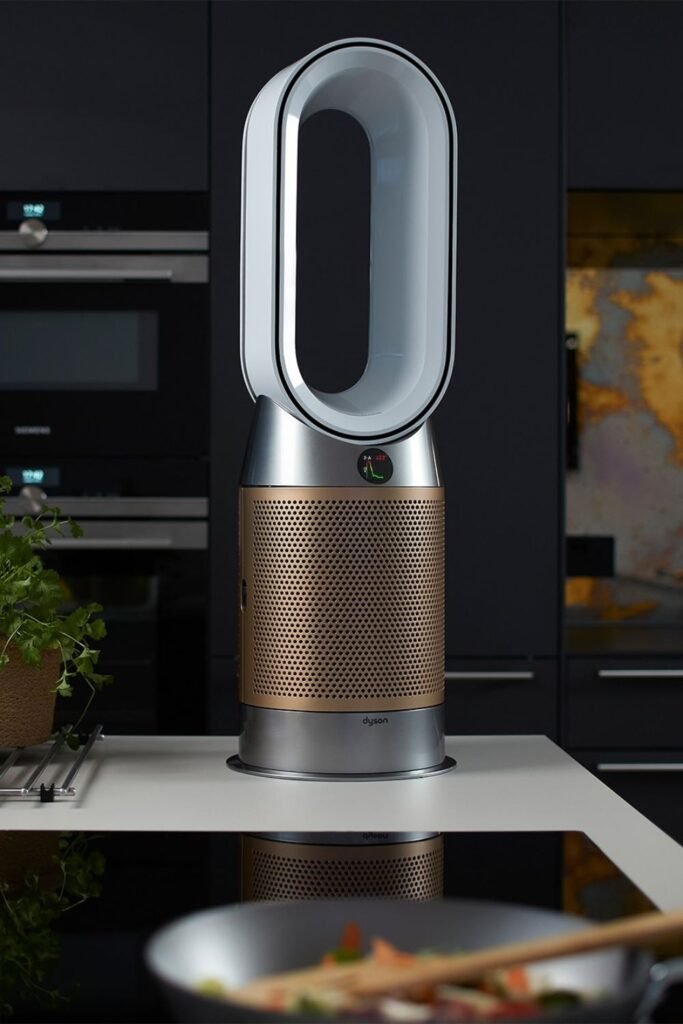
Cooking smoke rises fast, especially when you fry or grill. Placing a purifier directly on your kitchen island or counter keeps it close to the source.
So it captures smoke before it spreads through the house. That small distance makes a big difference.
Choose a model with both HEPA and activated carbon if you cook daily. HEPA handles the smoke particles. Carbon deals with the food odors.
Without carbon, your kitchen may look clear but still smell like last night’s dinner. Keep it away from direct heat and splashes, but close enough to pull in rising air.
Turn it on before you start cooking, not after the smell fills the room. Let it run at a higher speed during cooking, then switch to auto mode once the air clears.
Hidden Corner
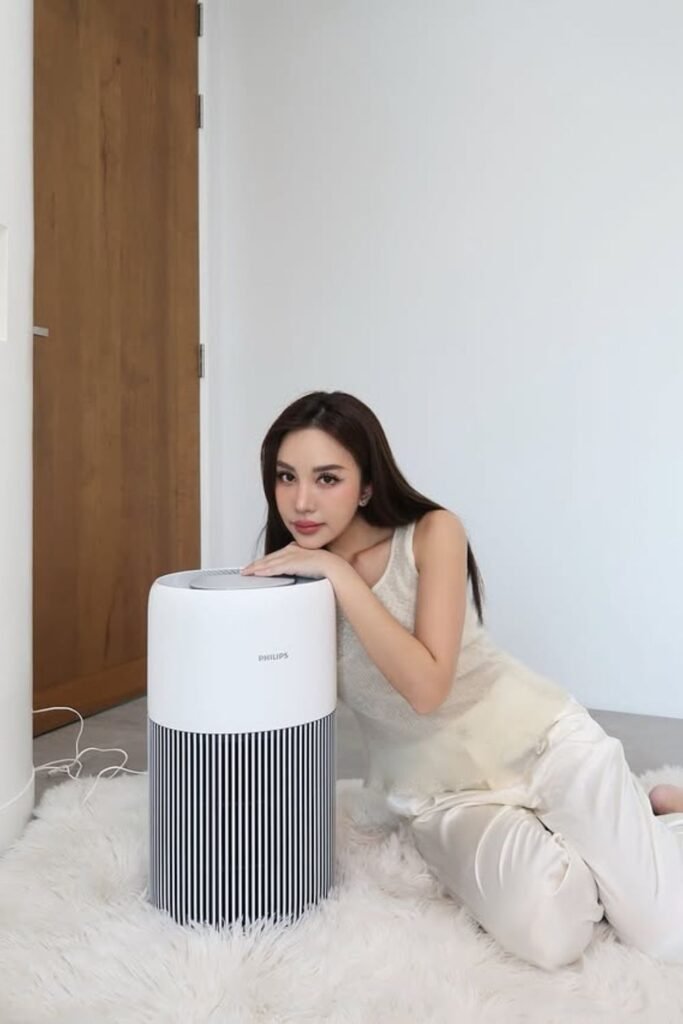
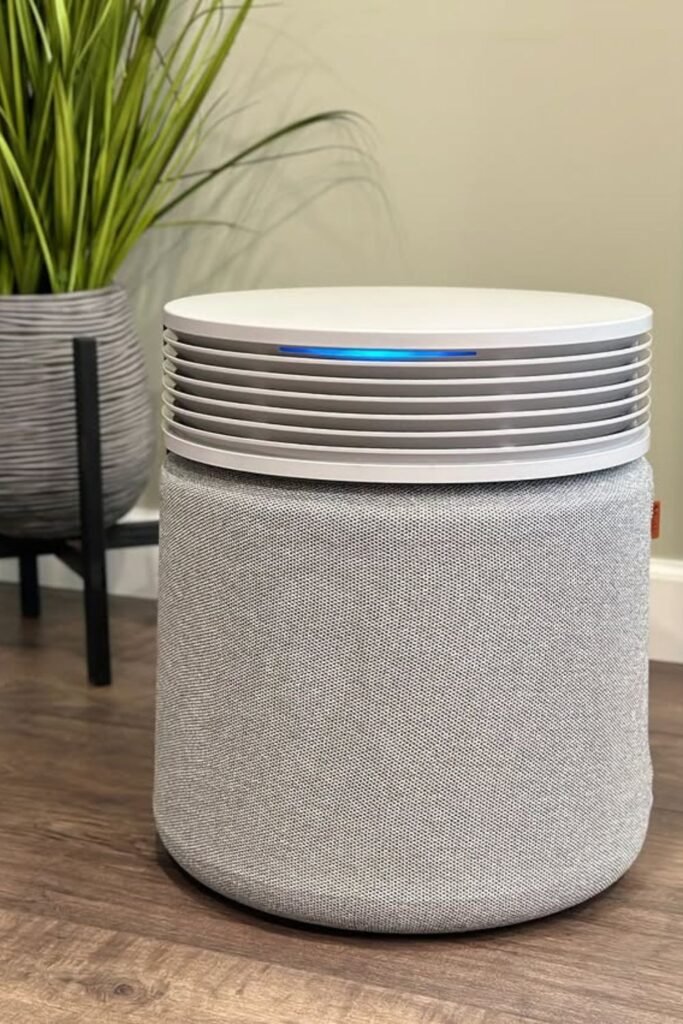
Corners often get ignored, but they’re where stale air quietly settles. Placing a compact purifier in a free corner of your kitchen or dining area.
Keeps it out of the way while still pulling in trapped smells. Leave at least a few inches between the unit and both walls so airflow doesn’t get blocked.
Many people push purifiers tightly into corners, which limits how much air they can actually pull in. Small gap, better circulation.
Compact round models work best here because they draw air from all sides. Let it run on auto mode throughout the day if you cook often.
Even when you don’t notice a smell, grease particles and smoke can linger. A quiet corner setup keeps the air fresh without taking over your space.
Elevated Stand
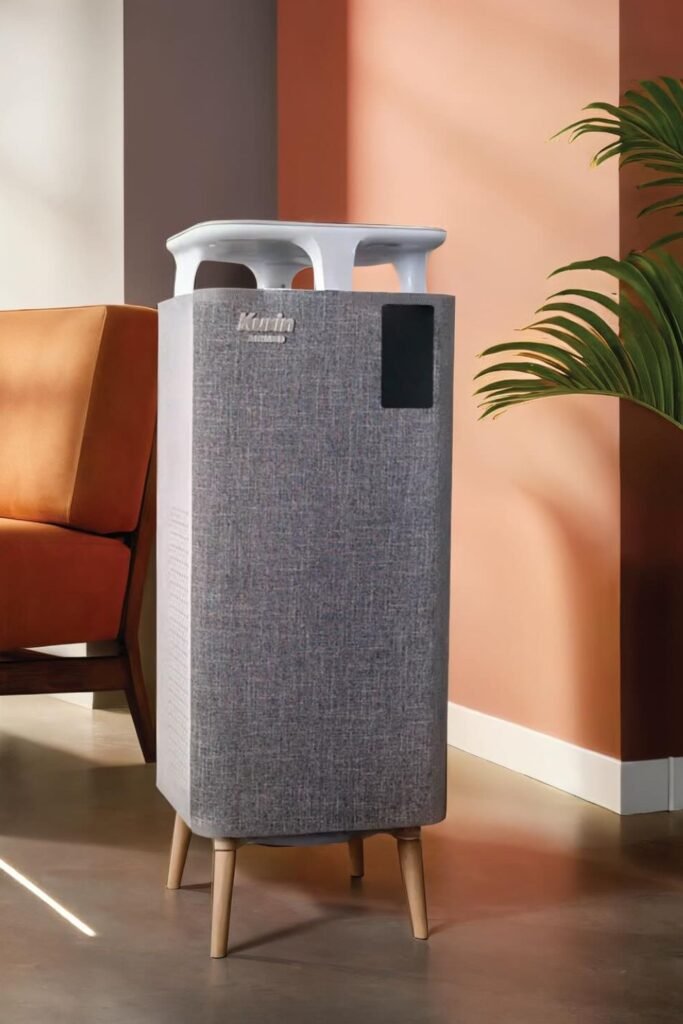
Air doesn’t just stay at one level. Smoke rises first, then spreads across the room before slowly settling.
Raising your purifier slightly off the ground helps it catch that moving air more efficiently.Tall, stand-style units work well in living rooms connected to kitchens.
The height allows better circulation, especially in open layouts where cooking smells travel fast. You don’t need to place it right next to the stove.
Position it along the airflow path between the kitchen and seating area so it cleans the air before it reaches the couch. Keep the space around the intake clear.
No tight corners, no blocking with decor. Elevated placement works best when the air can move freely around all sides. In larger family spaces, height helps coverage feel more even.
Smart Sensor
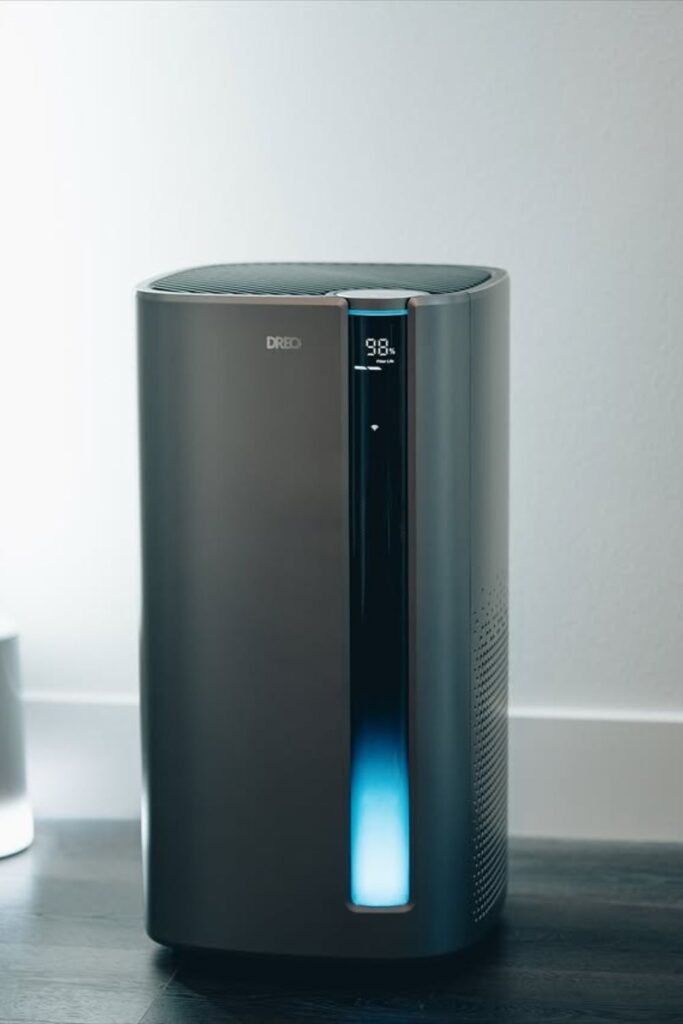
Guessing when to turn your purifier on wastes time. Models with built-in air quality sensors adjust automatically the moment smoke or strong cooking smells hit the air.
You don’t have to think about it. Place a smart unit near the edge of your kitchen, not directly next to heat or steam.
Give it a little distance so the sensor reads overall air quality, not just one hot spot. When you start frying or grilling.
It will ramp up on its own. When the air clears, it slows down to save energy. Auto mode works especially well in busy homes.
Where cooking happens at random times. You cook, it reacts. You don’t need to babysit it. That’s one less thing to manage in a full day.
Open Layout
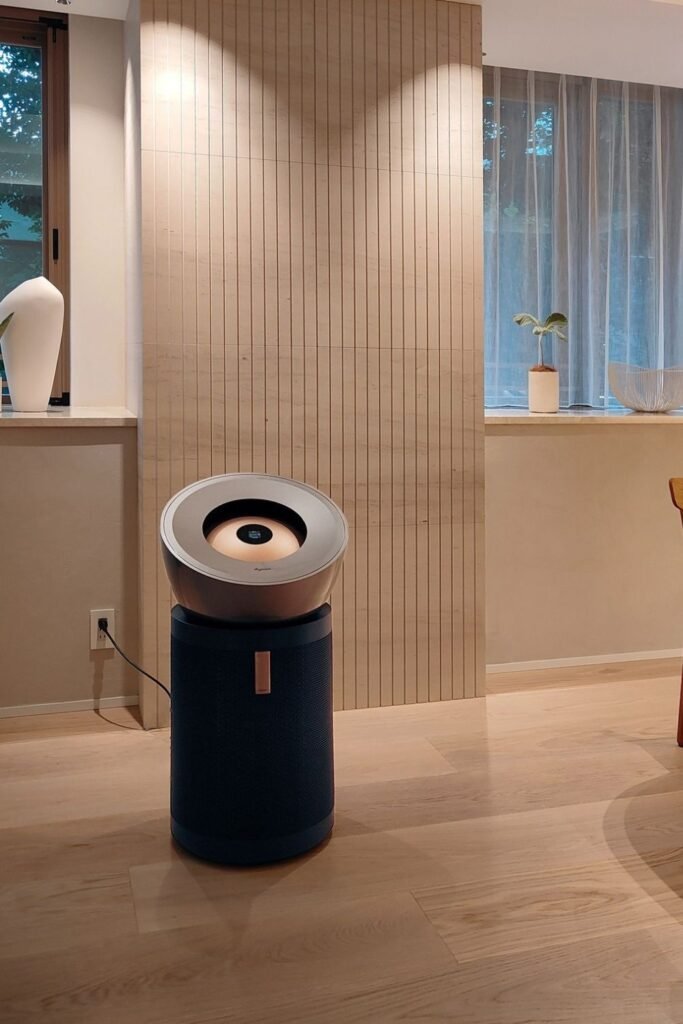
Cooking in an open kitchen means smells don’t stay in one room. They move straight into your dining and living area within minutes.
A purifier placed along that open pathway works better than one hidden deep inside the kitchen.
Position it between the cooking zone and where your family sits. Think of it as a barrier that catches smoke before it spreads.
Keep doors open so air can circulate freely through the space. Closed-off corners slow down airflow and limit coverage.
In open floor plans, bigger coverage matters. Choose a unit rated for more square footage than your kitchen alone. It should handle the combined space.
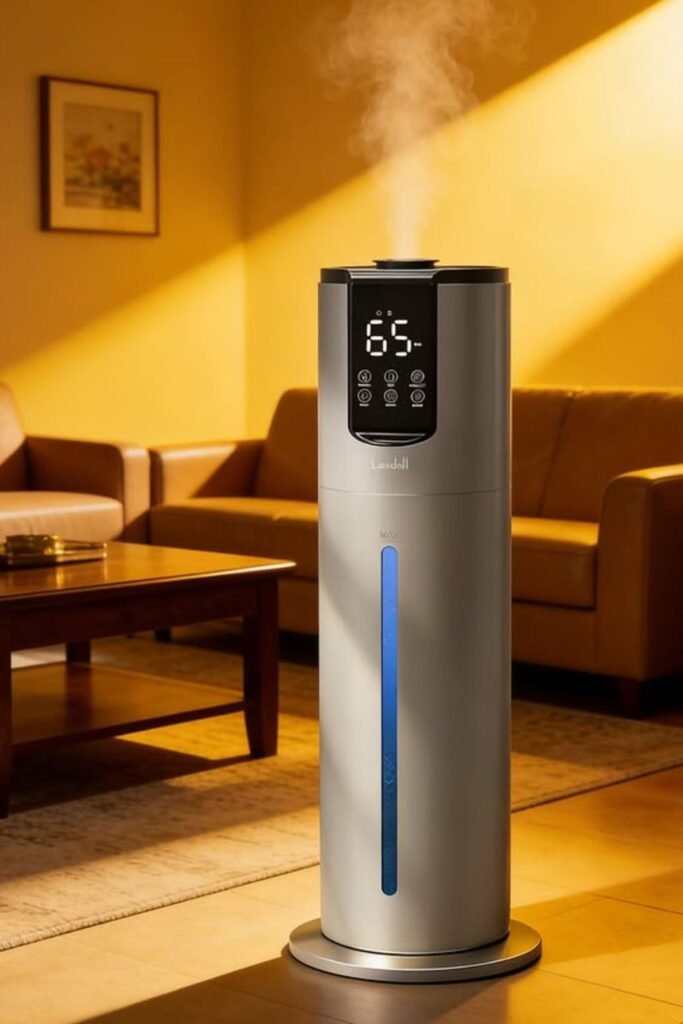
Moisture Balance
Steam from boiling, frying, or simmering doesn’t just carry smell it carries moisture. When humidity rises, odors stick around longer and the air feels heavy.
Pairing air purification with humidity control helps clear the space faster. Units that monitor humidity levels give you extra control in kitchens that get steamy.
Aim to keep indoor humidity around 40–50%. Too high, and cooking smells linger. Too low, and the air feels dry and uncomfortable.
Place the unit a few feet away from direct steam so sensors don’t spike from heat. Let it run during and after cooking to stabilize the air.
Managing moisture along with particles makes the room feel fresh instead of thick. Clean air isn’t just about removing smoke it’s about balancing the whole environment.
Quick Boost
Strong smell hitting the room? Don’t wait for auto mode. Tap the boost or high-speed setting right away.
Faster airflow means smoke particles and cooking odors get pulled in before they spread across your home.
Use this setting during frying, grilling, or when something burns slightly. Let it run on high for 20–30 minutes, then switch back to auto or medium once the air feels lighter.
High speed isn’t meant for all day use, but it works perfectly for short bursts. Place the purifier where air can move freely around it.
Blocking vents slows down performance, especially on boost mode. Quick response makes the biggest difference.
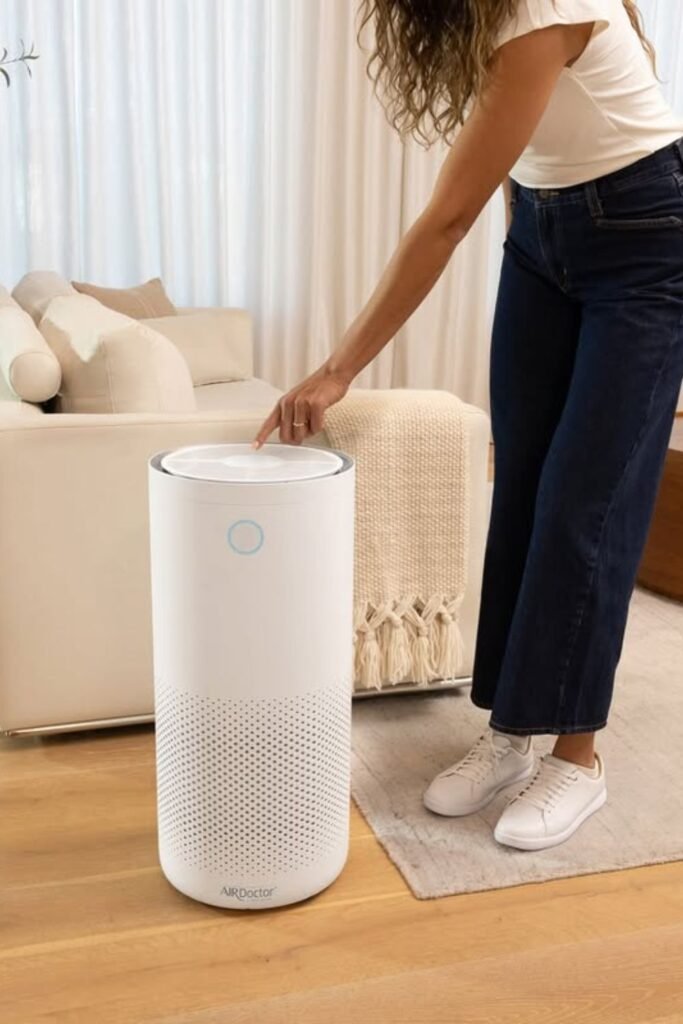
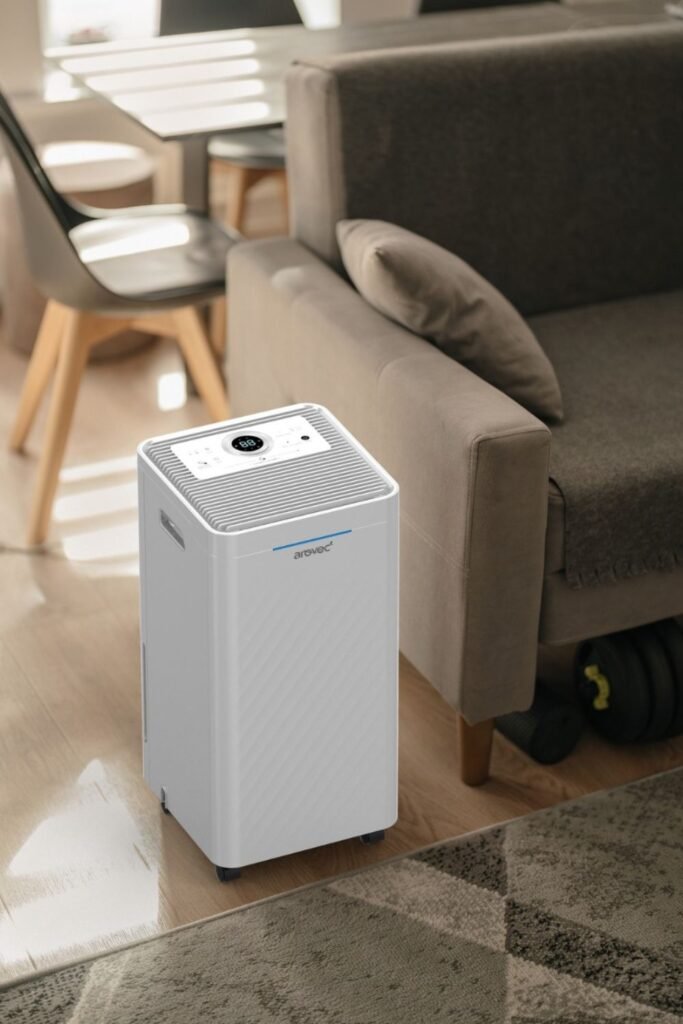
Mobile Control
Cooking smells don’t stay in one spot. One day they spread through the kitchen. Another day they drift toward the living room.
A purifier with wheels lets you move it exactly where you need it most. Roll it closer to the stove during heavy cooking.
After dinner, shift it toward the sofa or hallway if the smell travels. You don’t need multiple units if you can reposition one smartly.
Keep pathways clear so airflow isn’t blocked by furniture. When placing it near a couch, leave space around the intake vents.
Mobility gives you flexibility in smaller homes where rooms connect easily. Instead of fighting where the smell goes, follow it and clean it right there.
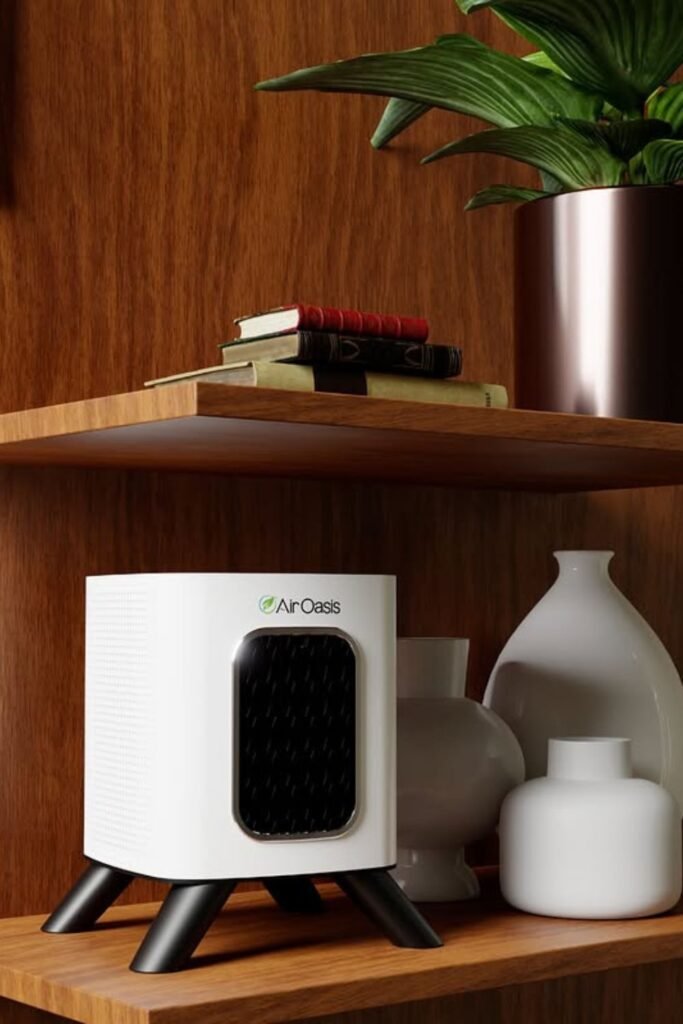
Shelf Styling
Kitchen smells don’t always stay near the stove. They rise and spread through the upper part of the room first.
Placing a compact purifier on a sturdy shelf helps capture that higher-level air before it drifts further.
Choose a lightweight unit that pulls air from the front or sides, not just the bottom. Make sure the shelf is open around it so airflow isn’t blocked by books or decor.
Leave space at the back and sides so it can breathe properly. Shelf placement works well in smaller kitchens or dining corners where floor space is limited.
Keep cords neatly secured along the wall to avoid clutter. When done right, it blends into your decor while quietly cleaning the air above head level.
FAQs
Do air purifiers remove burnt food smell completely?
They can reduce it a lot, but “completely” depends on the filter type and how fast you act. If your purifier has both HEPA and activated carbon.
It will trap smoke particles and absorb much of the odor. If it only has HEPA, the smoke may clear, but the burnt smell can still linger.
Should I run my air purifier while cooking every day?
Yes, especially if you fry, grill, or cook with strong spices often. Running it during cooking helps stop smoke and odors from spreading through the house.
Start it before you begin cooking and keep it on for a while after. Using auto mode works well for daily use, but switch to a higher setting during heavy cooking.

Hi, I’m Afaf! I’m a law student who loves all things home, style, and gardening. I’ve been writing for over a year about topics like home decor, DIY projects, plants, fashion, and beauty.
I like sharing ideas that are easy to try and don’t cost a fortune. Whether it’s organizing a messy closet, decorating on a budget, or keeping houseplants alive, I write about what I’ve actually tried myself.
When I’m not studying, I’m usually on Pinterest looking for my next project or adding another plant to my collection!