
12 Best Alarm Clock for 2026
Every night you tell yourself, Tomorrow I’ll wake up on time. And every morning? The alarm goes off you hit snooze maybe twice maybe five times.
Then suddenly you’re rushing, snapping at the kids, skipping breakfast, and starting the day already behind.
It’s not that you’re lazy. And it’s not that you lack discipline. Most alarms are built to make noise not to actually get you out of bed.
If you keep waking up late, feeling groggy, or stressed before 8 a.m., the problem isn’t you. It’s your wake-up system.
In this article, you’ll explore 12 standout Alarm Clock ideas that are already changing everyday life in 2026.
Let’s jump in!
What Are the Best Alarm Clock Ideas to Actually Wake You Up on Time?
The best alarm clock idea is the one that forces action, not just noise. If you sleep through alarms, put it across the room so you have to stand up to turn it off.
If you hate harsh beeping, use a sunrise alarm that slowly lights up your room before the sound plays.
If you keep snoozing, set two alarms one gentle, one firm 10 minutes later so you don’t drift back to deep sleep.
And if your phone keeps you up at night, switch to a simple bedside clock and charge your phone outside the bedroom. The right setup makes waking up easier without relying on willpower.
Save this article for later! 👇👇

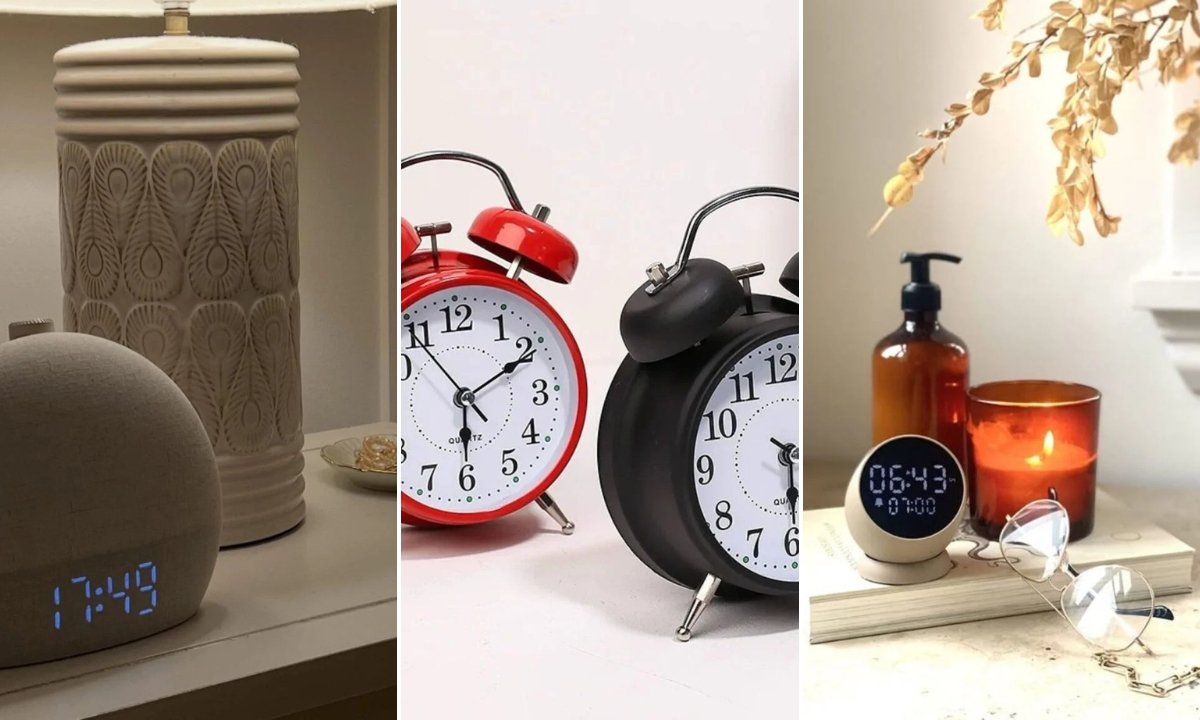
Twin Bell
Silence won’t save you here. That sharp metal ring cuts through deep sleep in seconds and that’s exactly the point.
Old-school twin bell clocks don’t rely on soft tones or gentle melodies. They shake the table, echo in the room, and force your brain to register that it’s morning.
Heavy sleeper? Chronic snoozer? Place this across the room so you physically have to stand up to shut it off. Standing breaks the sleep cycle fast.
This works best in bedrooms where you actually need a strong wake-up push especially during winter mornings when getting out of bed feels impossible.
The classic design also adds character to your nightstand, so it doesn’t look like a random gadget.
Sunrise Glow
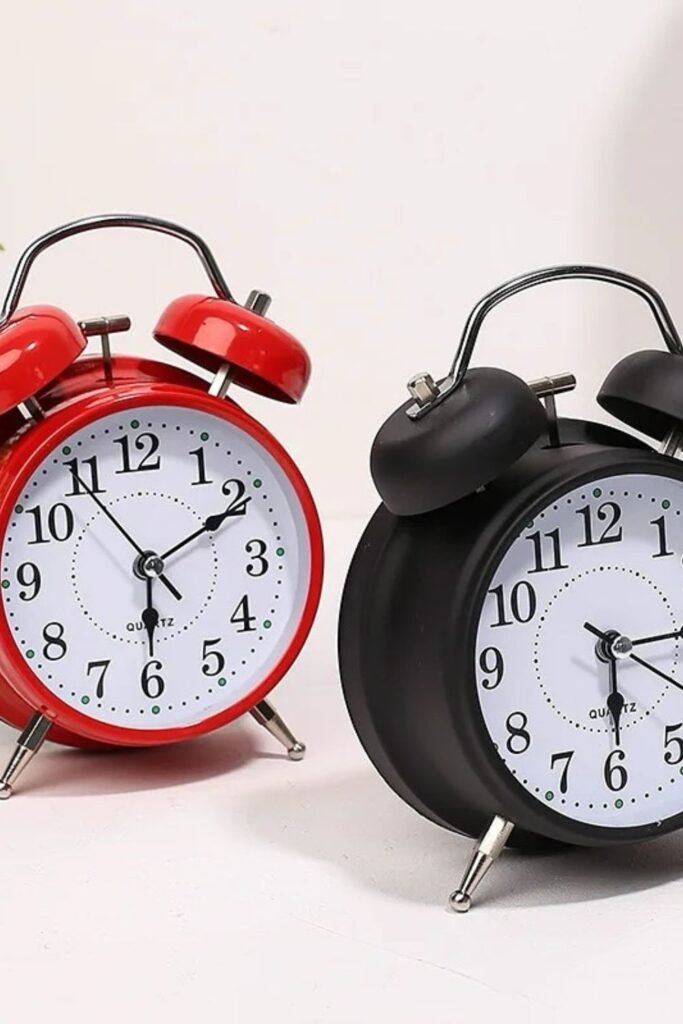
Dark rooms make it harder to wake up. Light changes everything. Sunrise alarm clocks slowly brighten your space before the sound even plays.
Your brain starts shifting out of deep sleep naturally, so you don’t feel shocked awake. That soft glow you see here works especially well in winter or in bedrooms with blackout curtains.
Set the light to begin 20–30 minutes before your actual wake-up time. Keep the sound gentle at first, then slightly stronger if you tend to roll over.
This setup fits beautifully in calm, neutral bedrooms where you want your nightstand to look cozy, not cluttered with tech.
It also helps if you share a room and don’t want a loud bell blasting at 6 a.m. Light first. Sound second. Less stress before your feet hit the floor.
Smart Display
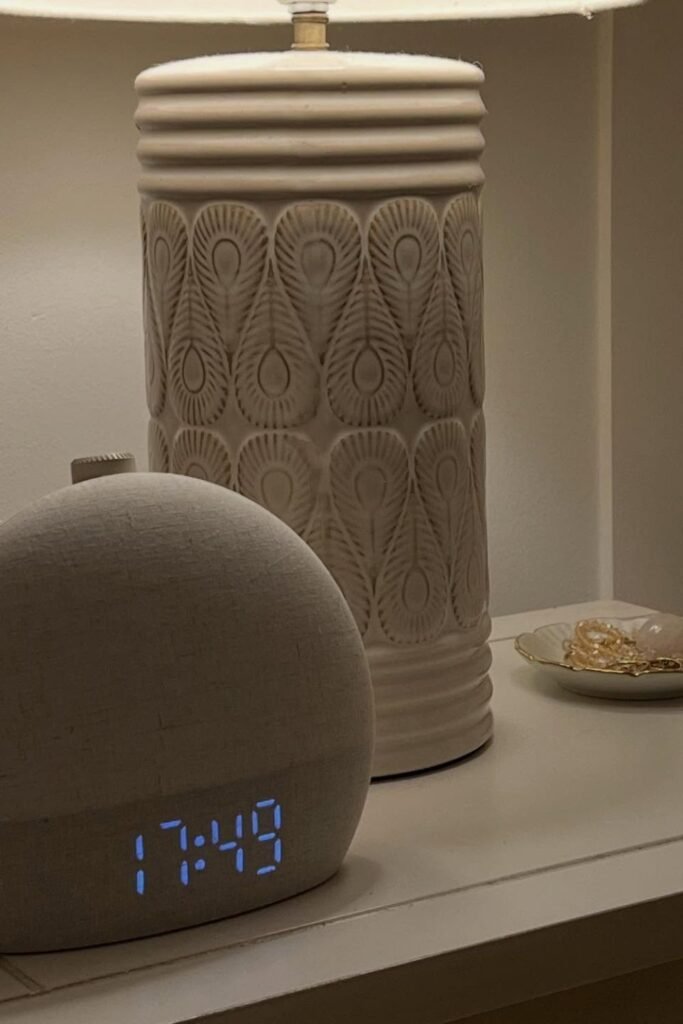
Mornings feel different when your alarm gives you more than just noise. A compact smart display like this shows the time clearly, sets multiple alarms,
And often lets you control reminders or routines in one place. Place it somewhere you can see without grabbing your phone.
That small decision matters. When your first instinct isn’t to scroll, your brain stays calmer and focused on getting up.
Use it to build a simple sequence: alarm rings, lights turn on, maybe soft music starts. No chaos. No guessing the time. No checking notifications.
This works best on styled nightstands where you want something modern but minimal. Keep the setup clean one device, one purpose.
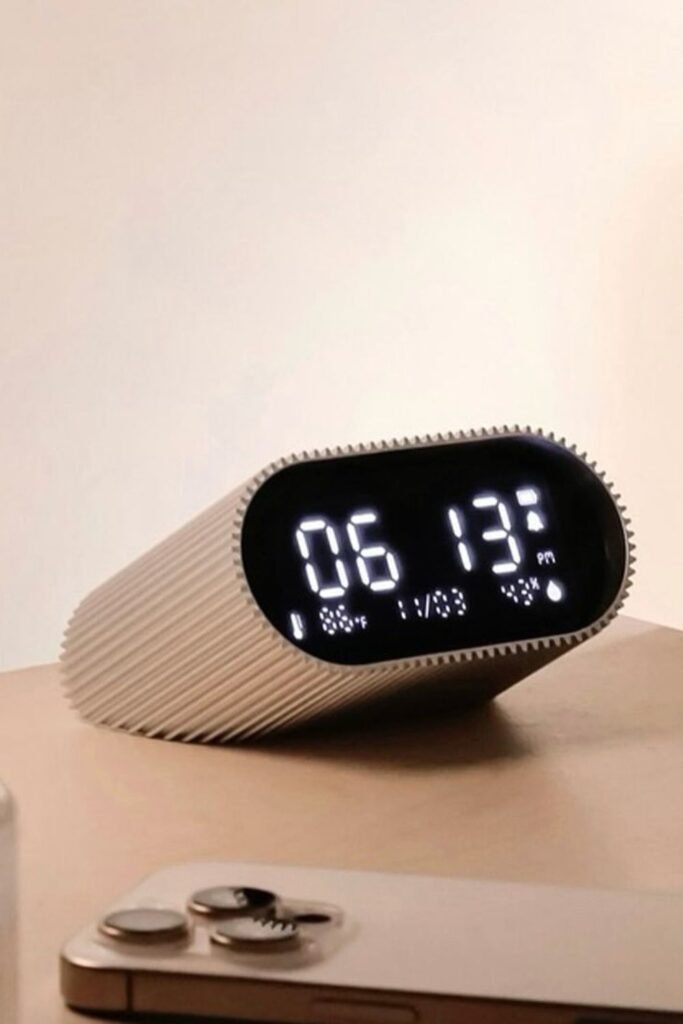
Tilt Display
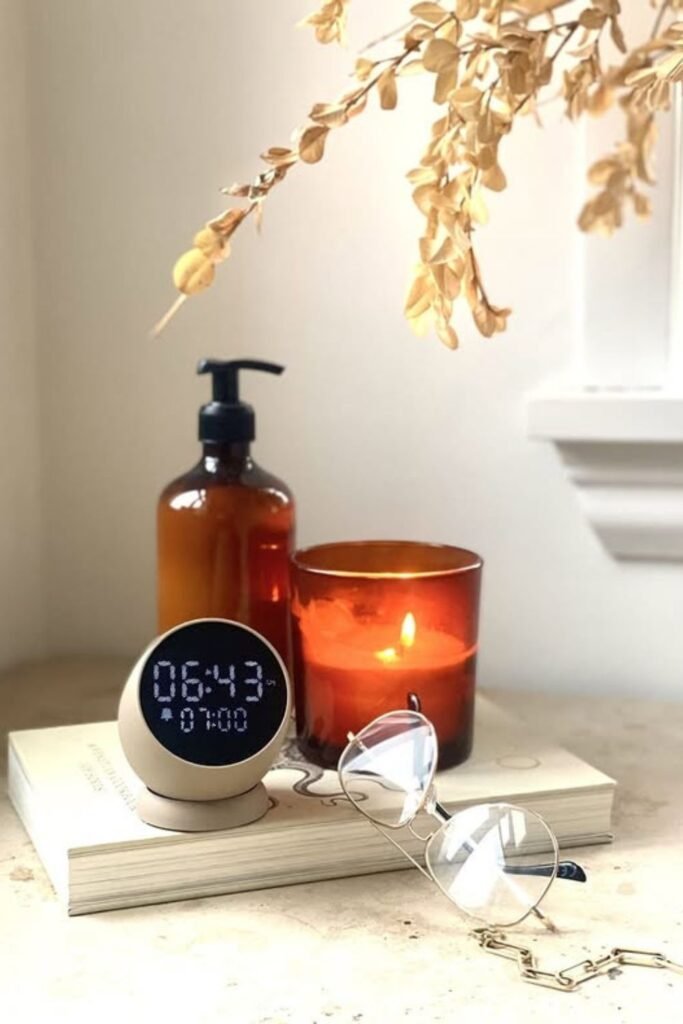
One quick glance and you know exactly where you stand. Big, clear numbers remove that half-awake guessing game that makes you grab your phone “just to check.”
Angled digital clocks like this work well on dressers or higher nightstands because the screen faces you naturally.
Brightness control is key here. Keep it dim at night so it doesn’t disturb your sleep, then let the alarm sound do its job in the morning.
Some models even show temperature or humidity, which helps if stuffy air is making you groggy. Choose this setup if you like clean, modern spaces and simple function.
Clear time, quick decision, feet on the floor. When you remove friction from the first 10 seconds of your morning, getting up feels less dramatic and more automatic.
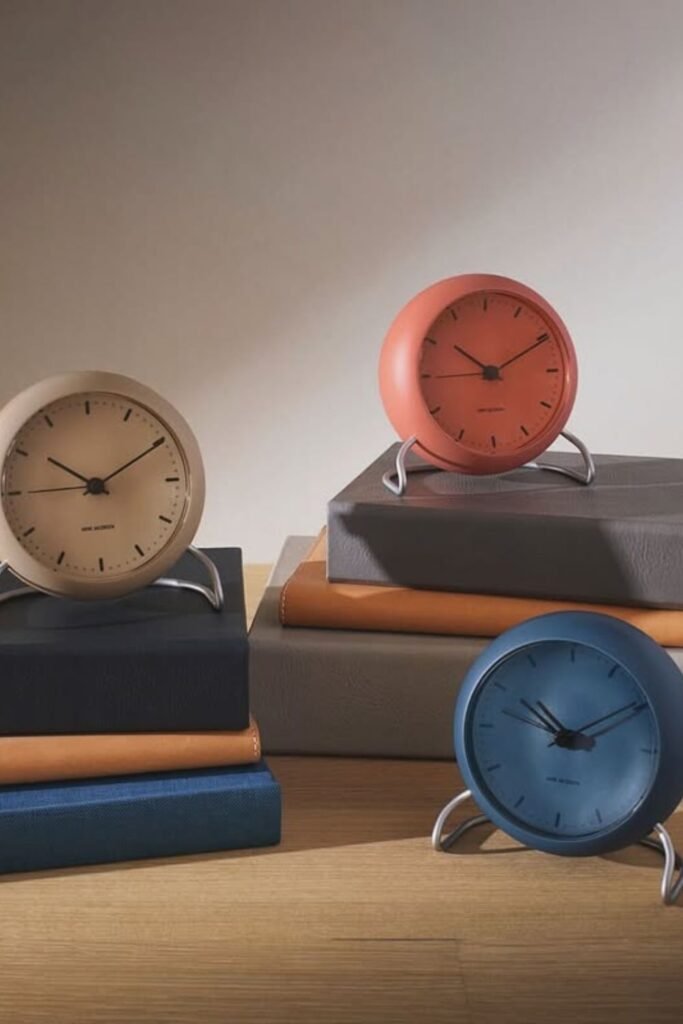
Color Pop
Mood starts before your feet hit the floor. A soft beige, warm coral, or deep blue clock like this doesn’t scream at you it blends into your space and makes the nightstand feel styled, not cluttered.
Analog faces work well if bright LED numbers bother you at night. No glowing screen. No harsh light. Just quiet ticking and a simple alarm when it’s time to move.
Pick a color that matches your room instead of defaulting to black plastic. When your bedroom feels calm and intentional, mornings feel less chaotic.
Place it slightly away from your pillow so you have to lean forward or sit up to switch it off. That small movement.
Helps break the snooze habit without blasting your ears at full volume. Simple design. Clear purpose. Peaceful wake-up.
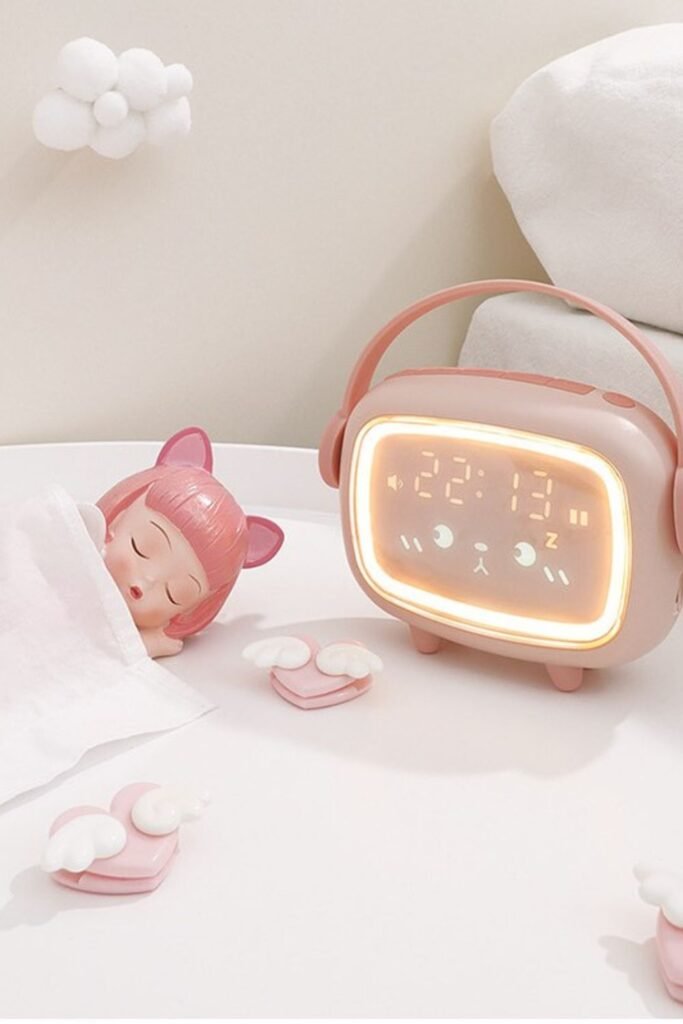
Kid Timer
School mornings don’t have to start with yelling. A cute digital clock like this turns wake-up time into something your child actually understands.
Soft light, playful face, simple numbers that combination works better than blasting a loud alarm in a kid’s room.
Set it to glow a few minutes before the actual sound so they slowly shift out of sleep instead of jumping up confused.
Use it as part of a routine: when the light turns on, it’s time to sit up. When the alarm rings, feet go on the floor. Keep the instructions consistent every day. Kids respond to patterns.
Place it where they can see it clearly from bed. No phone. No complicated buttons. Just one job — wake up gently and independently.
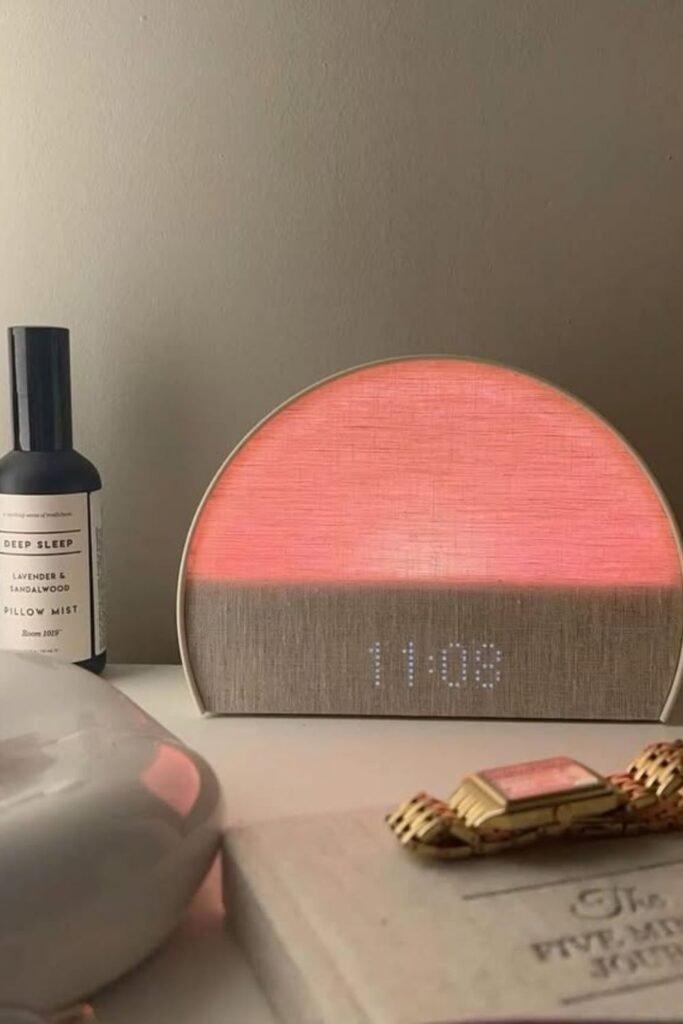
Half Moon
Gentle light feels different than sudden noise. A half-moon sunrise clock like this glows gradually, filling the room with warm color before the alarm even sounds.
That slow shift tells your body it’s morning without shocking your nervous system. Perfect if harsh alarms make you anxious or if you share a room.
And don’t want a loud bell waking everyone at once. Set the light to start 20–30 minutes before your actual wake-up time.
Keep the final brightness strong enough to notice, but not blinding. Pair it with a soft tone or calm music instead of a sharp beep.
Place it at eye level on your dresser so the light spreads across the room, not hidden behind other decor.
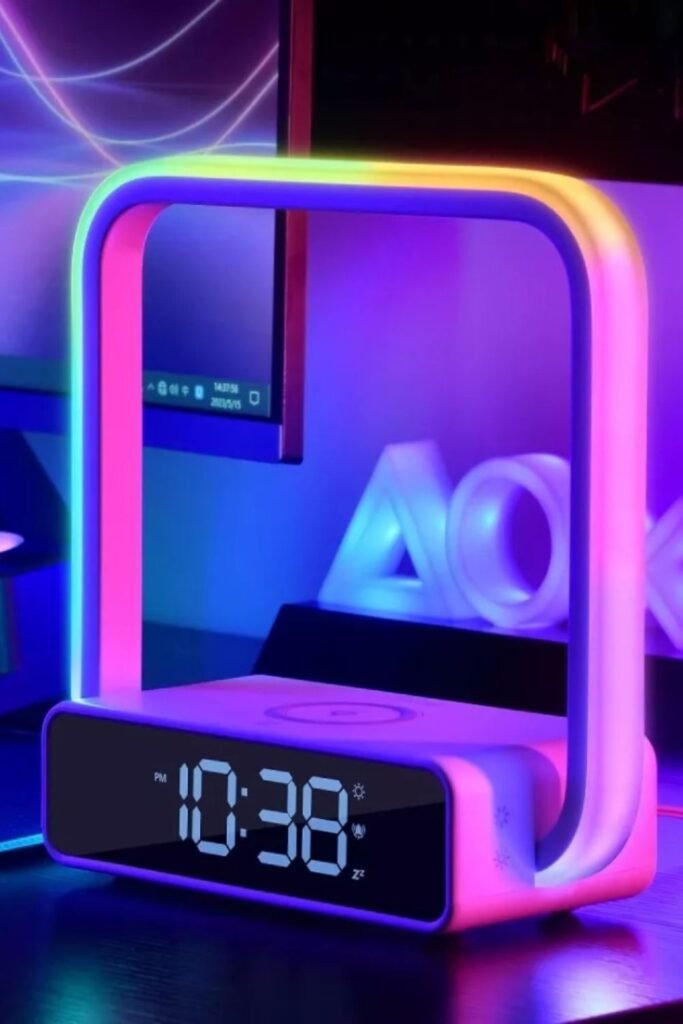
RGB Frame
Bold color changes the whole energy of your room. An RGB light clock like this doesn’t just wake you up it sets a mood.
Adjust the lighting to match your routine. Cool blue or white works if you need to feel alert fast. Warm pink or soft orange feels better if you want a smoother start.
Many models let you schedule the light to turn on before the alarm, so the glow builds gradually.
This setup fits modern desks, teen rooms, or anyone who loves a tech-inspired space. It also doubles as ambient lighting at night.
Keep brightness low before bed, then increase it as part of your wake-up sequence. When your room shifts from dark to vibrant, your brain follows.
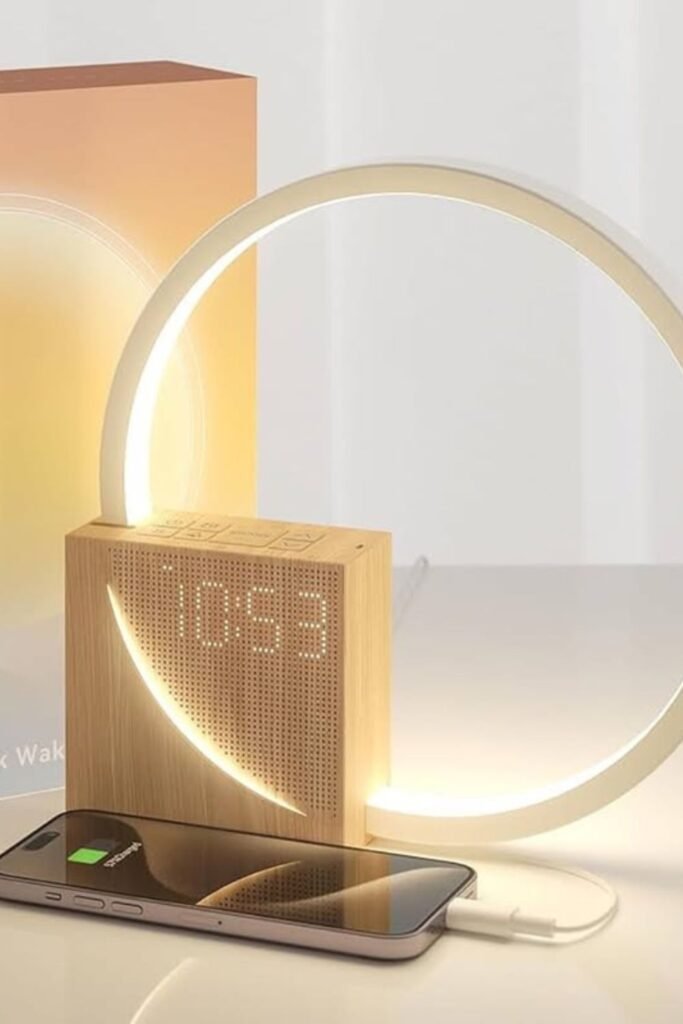
Charging Hub
Clutter steals your focus before the day even starts. A clock that doubles as a lamp and charging station keeps everything in one place.
Set your phone down here at night instead of under your pillow. Charging it across the table creates distance.
You’ll need to sit up or step forward to grab it that movement matters. The soft curved light works like a mini sunrise.
Bright enough to wake you but gentle enough to keep the room calm. Keep cables tucked neatly so the space stays clean.
Perfect for small nightstands where you don’t want five separate devices fighting for space. One station. One routine. Less chaos.
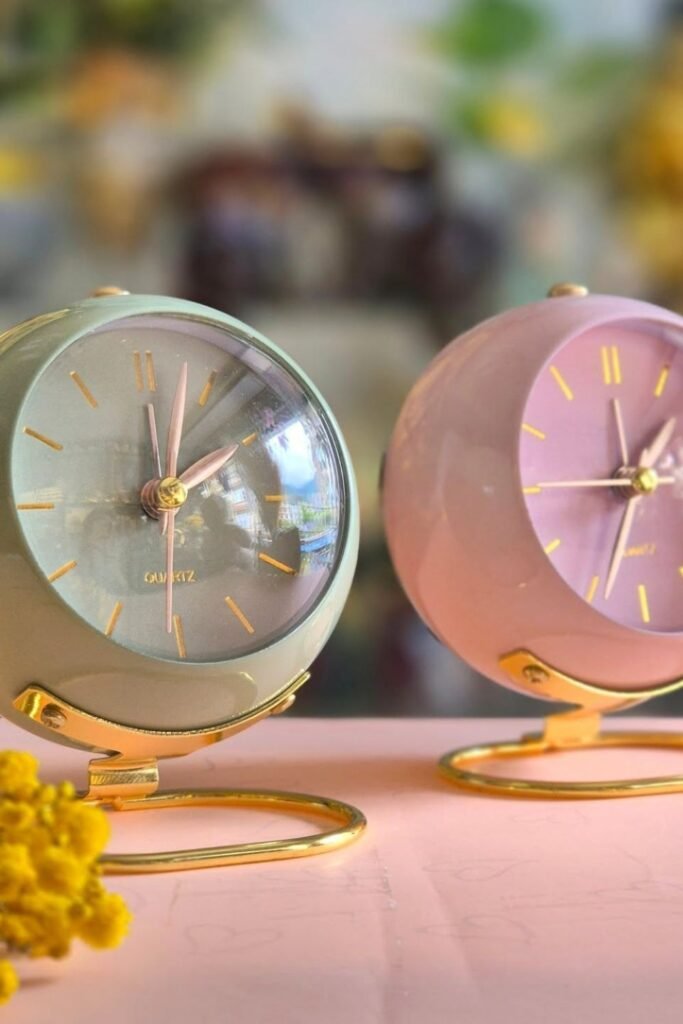
Retro Sphere
Soft curves change the feel of a bedroom instantly. Round analog clocks like these bring back that vintage charm without looking outdated.
No glowing screen. No notifications. Just clear hands and a simple alarm that does one job well. That simplicity helps if bright digital numbers keep you awake at night.
Pick a color that lifts your mood muted green for calm, blush for warmth. Place it slightly out of arm’s reach so you have to sit up to switch it off.
Works beautifully in cozy bedrooms, guest rooms, or even teen spaces where you want style without heavy tech.
When your wake-up tool feels intentional instead of random, your space feels more put together — and your mornings feel less rushed.
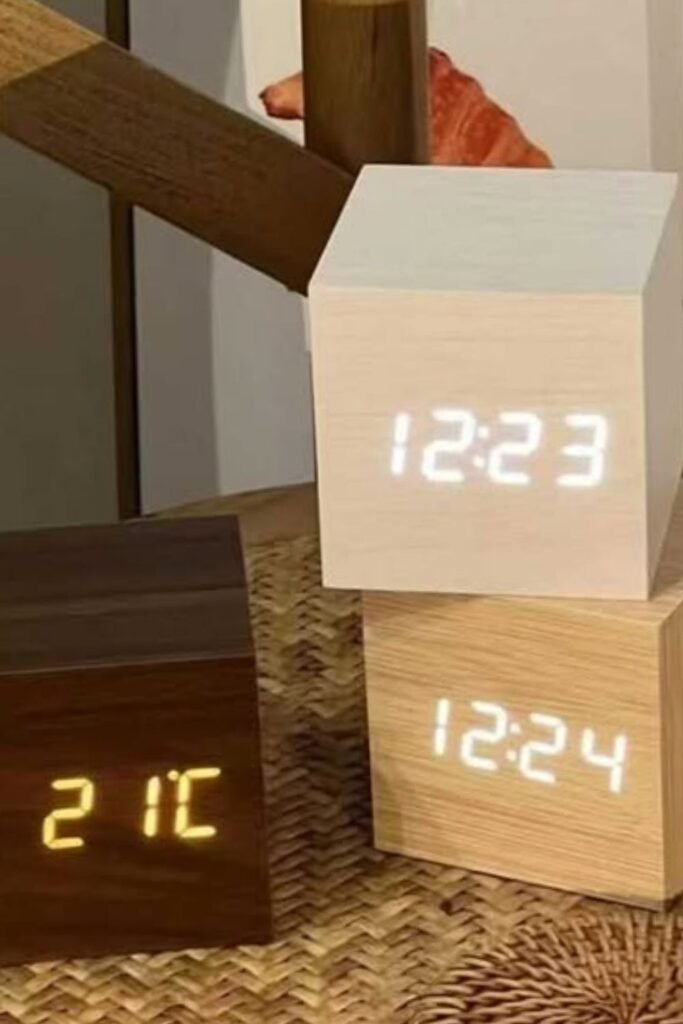
Wood Cube
Minimal space, maximum function. A wooden cube clock blends into your decor during the day and lights up only when you need it.
Tap or sound-activated displays work great if glowing numbers bother you at night. The screen stays dark while you sleep, then lights up when the alarm goes off or when you lightly touch it.
Place it on a dresser or shelf instead of right next to your pillow. The soft LED numbers are easy to read from a short distance.
Which means you don’t have to grab your phone just to check the time. Best for neutral, cozy bedrooms where you want tech to disappear into the background.
Simple design removes visual noise. Less visual noise means better sleep and better sleep makes waking up easier.
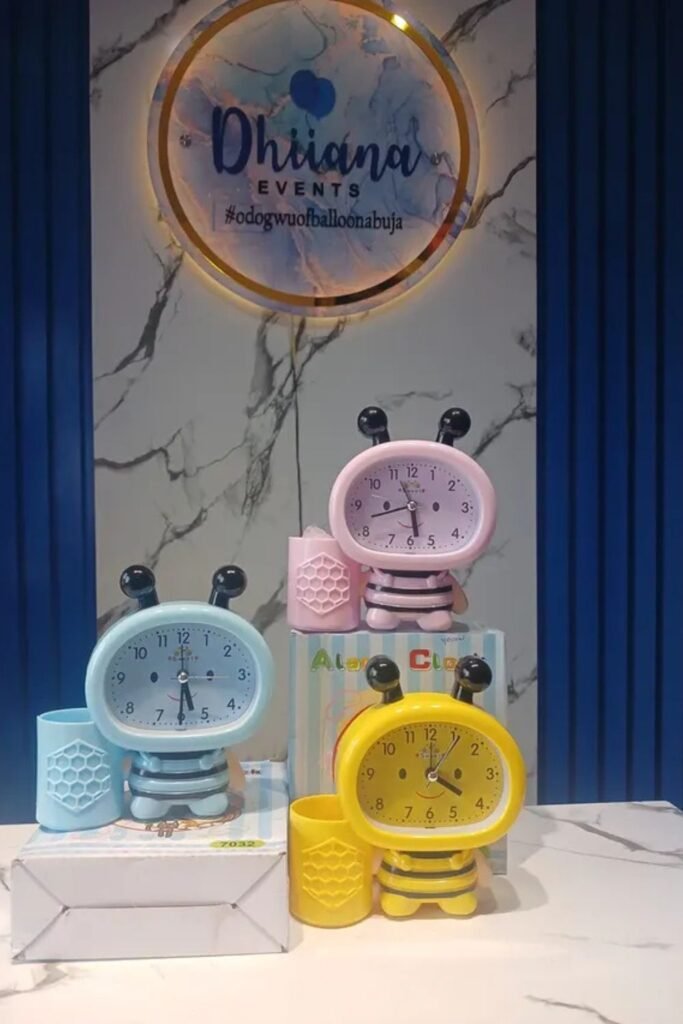
Bee Clock
Morning battles get easier when wake-up time feels playful. A character-style analog clock like this works well in kids’ rooms where design matters as much as function.
Bright colors and fun shapes grab attention fast. When the alarm rings, your child recognizes it as their clock, not just another noise in the house.
That sense of ownership helps build independence. Set a clear rule: when the bee rings, sit up. When you turn it off, feet go down.
Keep the routine the same every day. Consistency trains their brain better than shouting ever will.
Place it on a low shelf or bedside table where they can reach it without climbing. Simple knobs, clear numbers, no complicated menus.
FAQs
Why do I keep snoozing even when I really want to wake up on time?
Snoozing isn’t about laziness. Every time you hit snooze, your brain starts a new mini sleep cycle. Then you interrupt it again a few minutes later.
That makes you feel more groggy, not less. If you want to stop snoozing, change the setup. Put the alarm across the room so you have to stand up.
Use a light-based alarm that starts before the sound. Or set one firm alarm instead of five soft ones. When your body fully wakes once, it’s easier than waking five times halfway.
Is it better to use a phone alarm or a separate alarm clock?
Phones are convenient, but they also pull you into messages, emails, and social media first thing in the morning.
A separate alarm clock keeps your wake-up simple. You get up, turn it off, and start your day not your notifications.
If mornings feel chaotic or rushed, removing your phone from your bedside table can make a bigger difference than you expect.

Hi, I’m Afaf! I’m a law student who loves all things home, style, and gardening. I’ve been writing for over a year about topics like home decor, DIY projects, plants, fashion, and beauty.
I like sharing ideas that are easy to try and don’t cost a fortune. Whether it’s organizing a messy closet, decorating on a budget, or keeping houseplants alive, I write about what I’ve actually tried myself.
When I’m not studying, I’m usually on Pinterest looking for my next project or adding another plant to my collection!