
22 Fruit Garden Ideas For 2026
You might love the idea of growing your own fruit, but the first thing holding you back is space.
Maybe you’ve seen pictures of big backyards and full orchards and thought, “That’s not realistic for me.”
You might be wondering if a small yard, patio, or even a few pots are enough or if you’ll just waste time and money.
The truth is, most people overestimate how much space a fruit garden actually needs.
Once you understand how space really works, planning your fruit garden becomes simple and doable.
This article brings together 22 smart Fruit garden ideas tailored for modern outdoor living in 2026.
How Much Space Do You Really Need for a Fruit Garden?
Most people never start a fruit garden because they assume they don’t have enough space. If you’re thinking you need a big backyard or rows of trees, that’s where the confusion begins.
The amount of space you need depends on how you grow fruit, not whether you grow it at all. A few pots, a small corner, or even a sunny wall can be enough if you plan it right.
Once you stop thinking in acres and start thinking in systems, fruit gardening suddenly feels possible.
Save this article for later! 👇👇
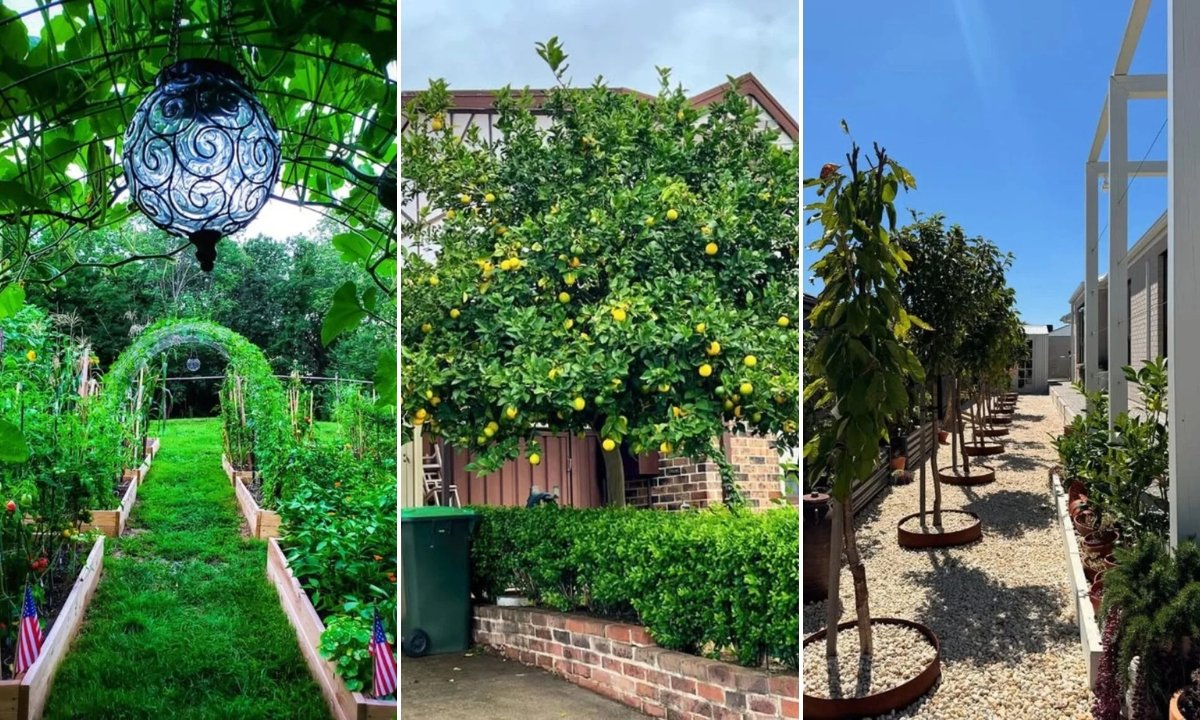
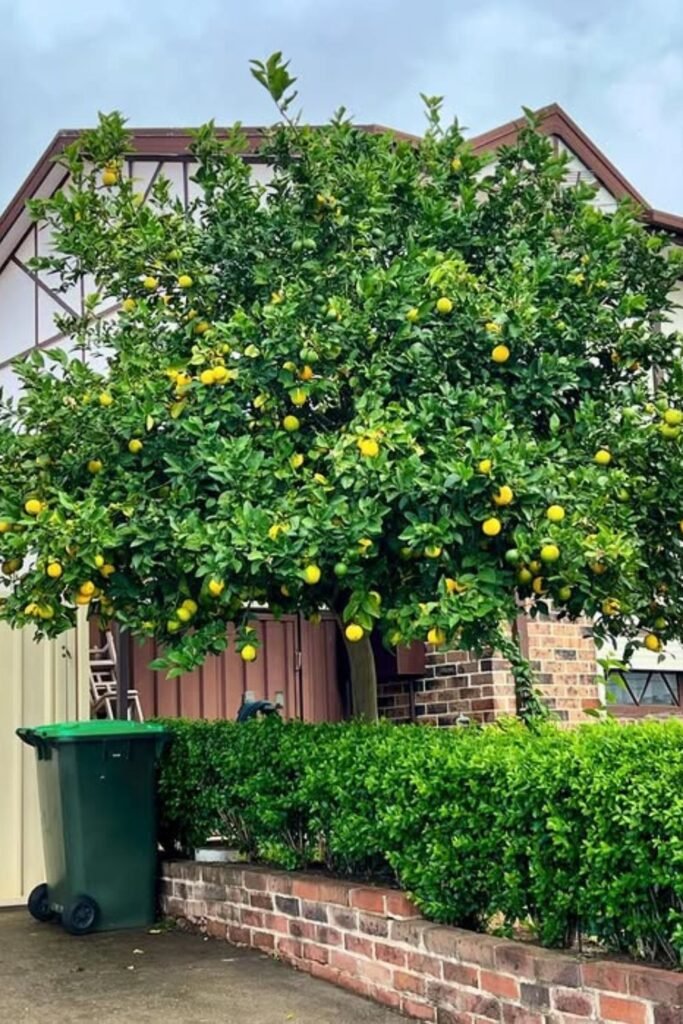
Frontyard Citrus
Curb appeal doesn’t have to be ornamental only. A well-pruned citrus tree can quietly turn your front yard.
Into a food-producing space without making it look like a farm. This setup works best in warm or mild climates where citrus thrives year-round.
The key is choosing a single tree and keeping the canopy lifted and balanced so it doesn’t block walkways or light.
Regular pruning keeps fruit reachable and prevents the tree from overpowering the space.
If you want fruit without giving up your home’s clean look, placing one productive tree near the boundary or lawn edge is a smart, low-effort move.
Living Archway
Walking through your garden can feel completely different when fruit grows overhead instead of spreading outward.
An arched trellis covered with climbing fruit plants like grapes, kiwi, or passionfruit turns a simple path into productive space.
This idea works best in backyards where ground space is limited but vertical room is available.
Strong metal or wood arches are important because fruit vines get heavy as they mature. Train the vines early, guide them along the curve, and prune regularly to keep light flowing through.
With time, the pathway becomes shade, harvest, and structure all in one move without stealing space from beds below.

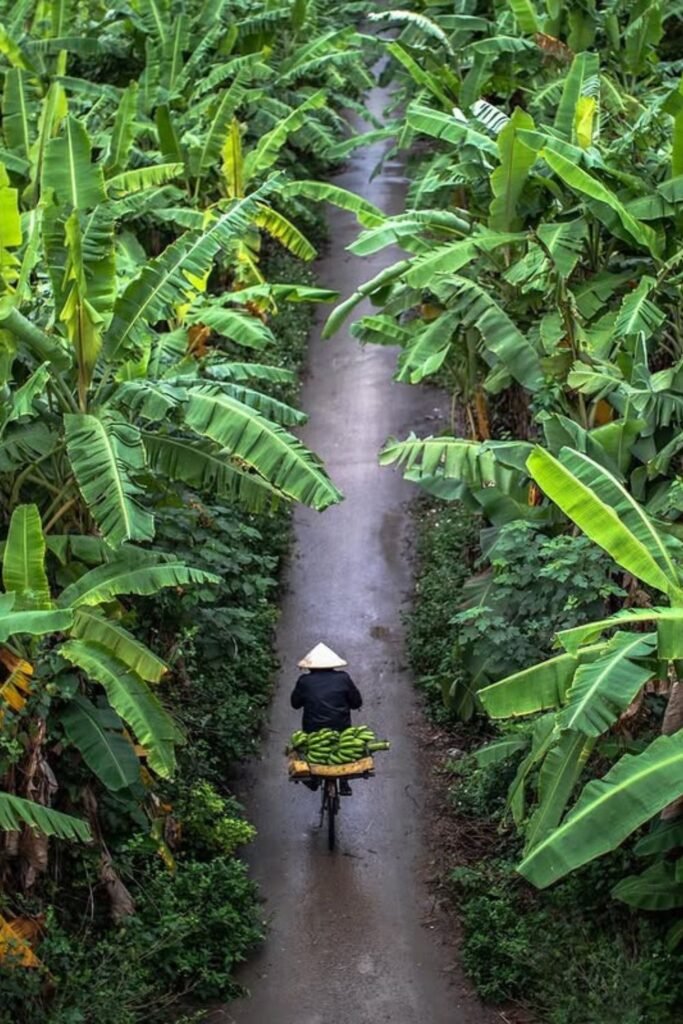
Banana Alley
Rows like this prove fruit doesn’t always belong in corners. Banana plants thrive when planted in lines.
Creating a living corridor that feels immersive and productive at the same time. This setup works best in tropical or warm climates with consistent moisture and rich soil.
Spacing matters here leave enough room between plants so air can move and leaves don’t trap humidity.
Mulch heavily to keep roots cool and feed often, because bananas are hungry growers. If you have a long pathway, boundary line, or unused strip of land.
Turning it into a banana alley gives you shade, structure, and a steady harvest without needing a traditional garden layout.
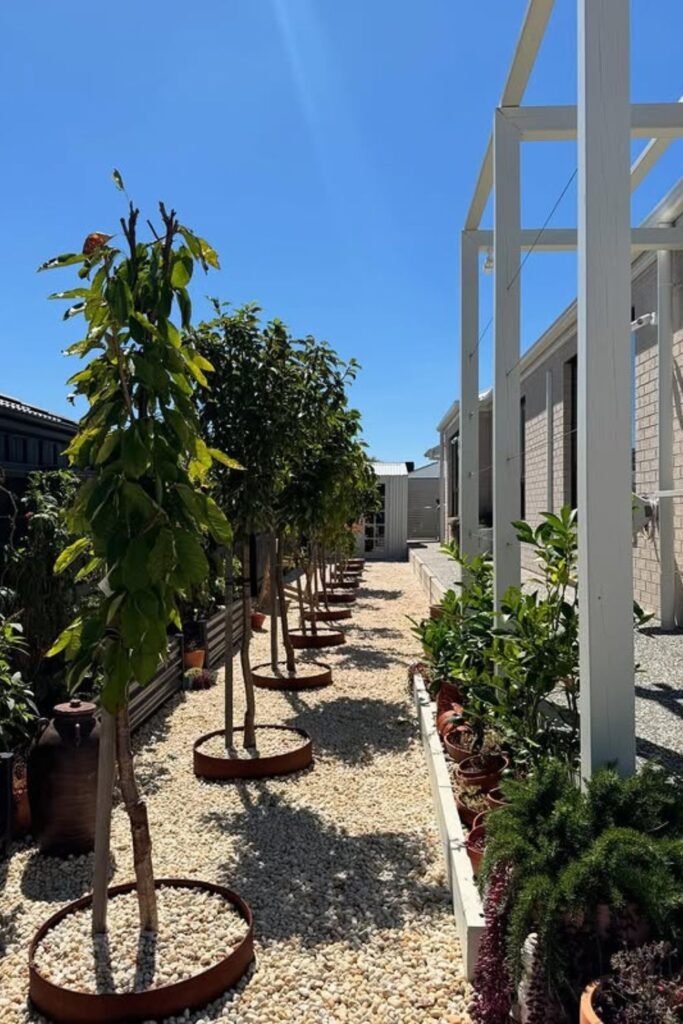
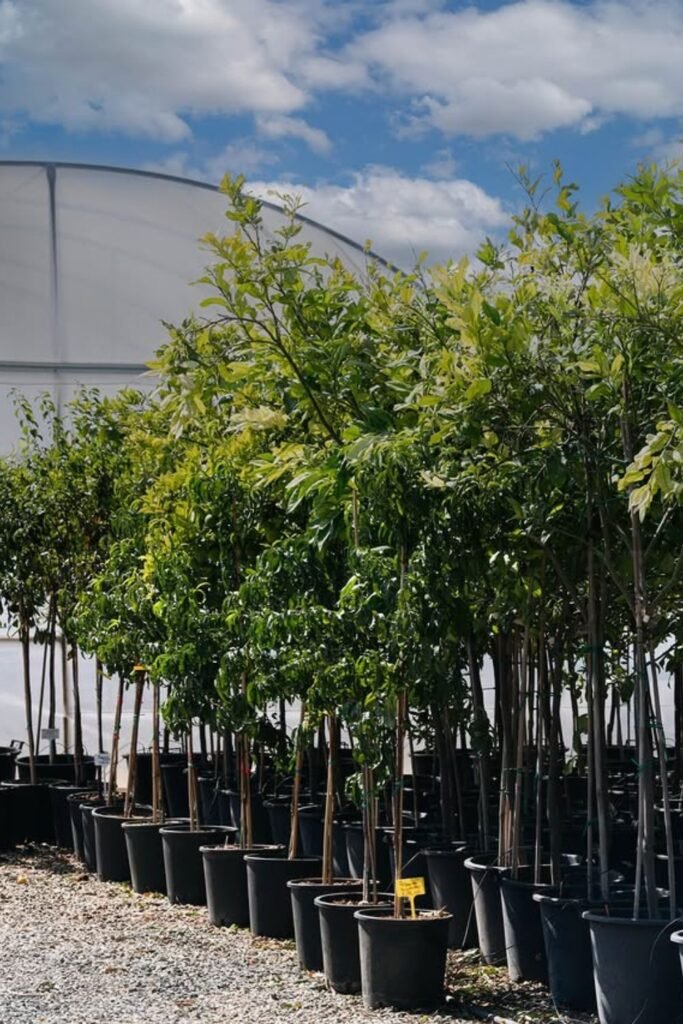
Container Orchard
Long, narrow spaces often get ignored because they don’t feel “garden-worthy,” but lining them with fruit trees changes everything.
Growing trees in large containers keeps roots controlled while letting you use pathways, side yards, or gaps beside the house productively.
This approach works best with dwarf or semi-dwarf varieties like citrus, figs, or stone fruits. Use wide, heavy pots.
So trees don’t tip and choose a well-draining mix to avoid root rot. Consistent watering matters more here than in-ground planting, so drip irrigation helps.
When space runs lengthwise instead of wide, turning it into a container orchard makes every step you take part of the harvest.
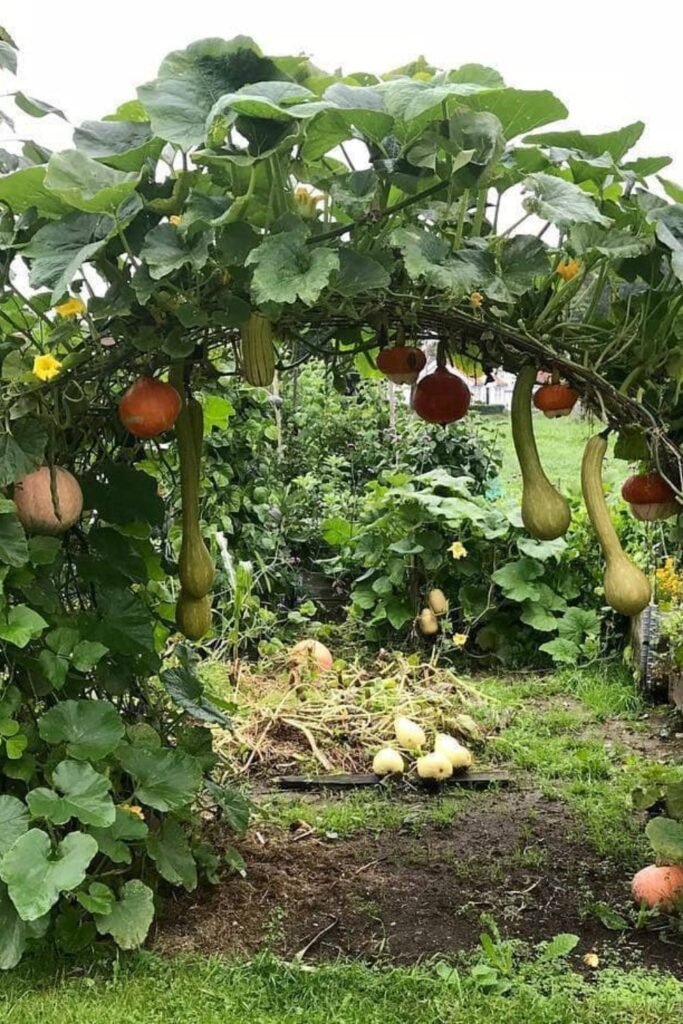
Harvest Tunnel
Few setups turn walking space into food production as efficiently as a tunnel like this. Heavy fruiting vines such as gourds, squash.
Even melons use height instead of ground, keeping beds open and harvest easy. This approach works best in open backyards.
Where sunlight can hit from all sides. Strong side supports matter because mature fruits add serious weight over time.
Train vines early and spread growth evenly across the arch to avoid weak spots. If you want one structure to act as shade, pathway.
And high-yield growing zone, building a harvest tunnel lets climbing fruit do all the work above your head.
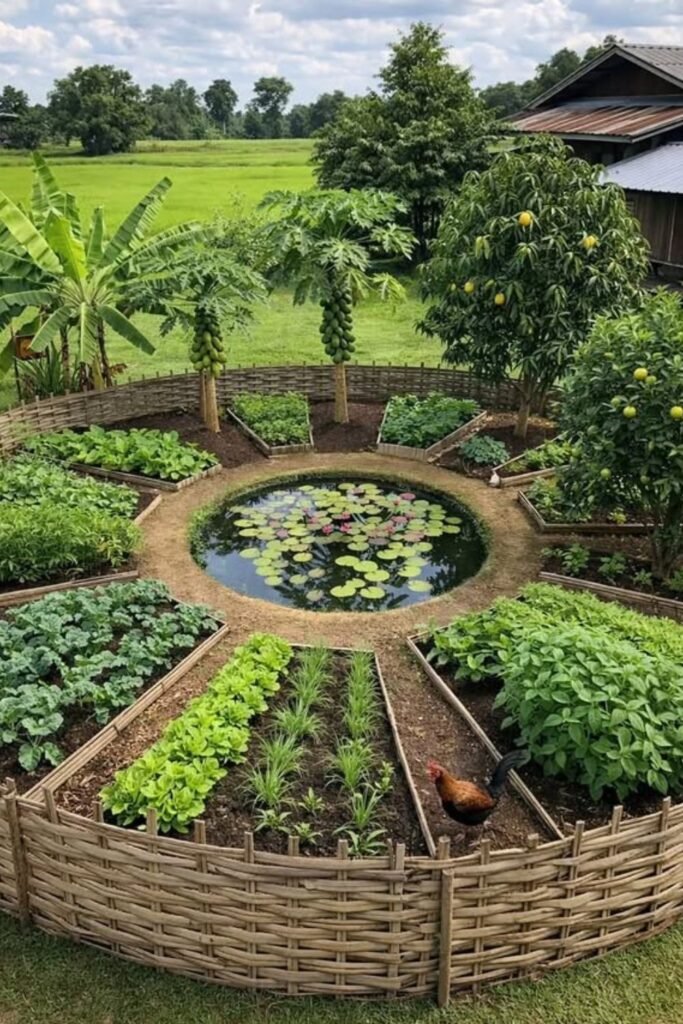
Fruit Circle
Design starts to matter once you stop planting randomly. A circular fruit garden like this creates balance, easy access, and a natural flow that keeps everything within reach.
This setup works best in open yards where you can dedicate one central area to food production.
Fruit trees sit around the outer edge while smaller crops or herbs fill the inner beds, keeping taller plants from shading everything else.
The center feature like a water basin helps regulate temperature and attract beneficial insects.
If you want structure without complexity, organizing fruit around a circle makes maintenance easier and turns the garden into a focal point rather than scattered effort.
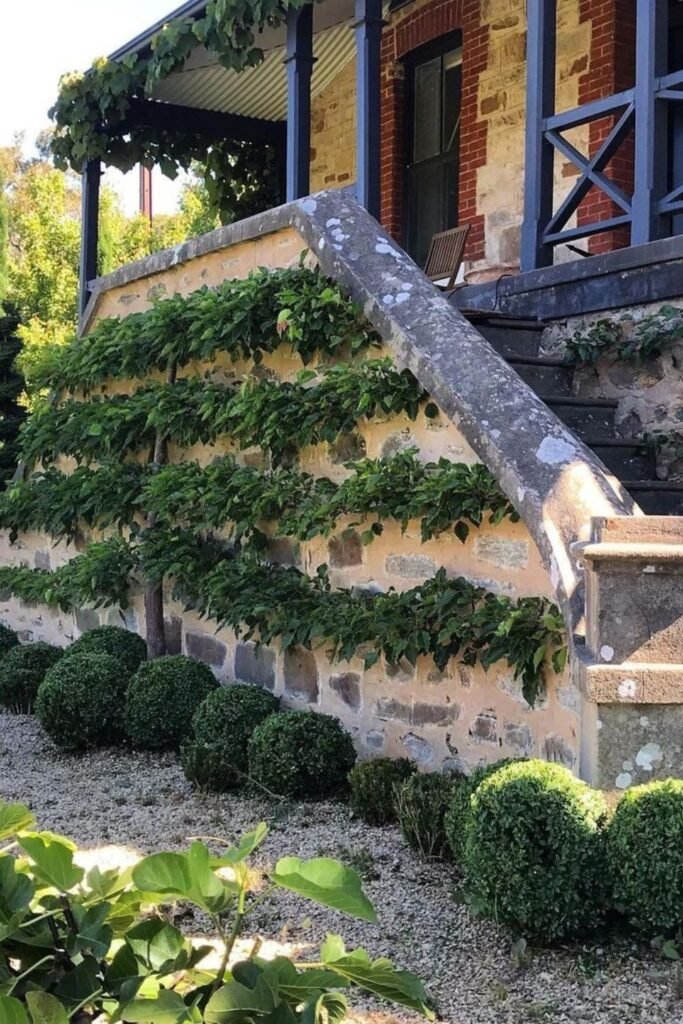
Wall Training
Flat surfaces often go unused, yet they can become some of the most productive spots in a fruit garden.
Training fruit trees against a wall keeps growth controlled while soaking up extra warmth from the structure.
This method works especially well for apples, pears, and figs in cooler climates where heat matters.
Branches are guided horizontally, which encourages more fruiting instead of leafy growth. Regular tying and seasonal pruning keep everything tight and tidy.
If ground space feels limited but walls are available, turning them into fruit-growing zones lets you harvest without sacrificing walkways or garden beds.
Orchard Rows
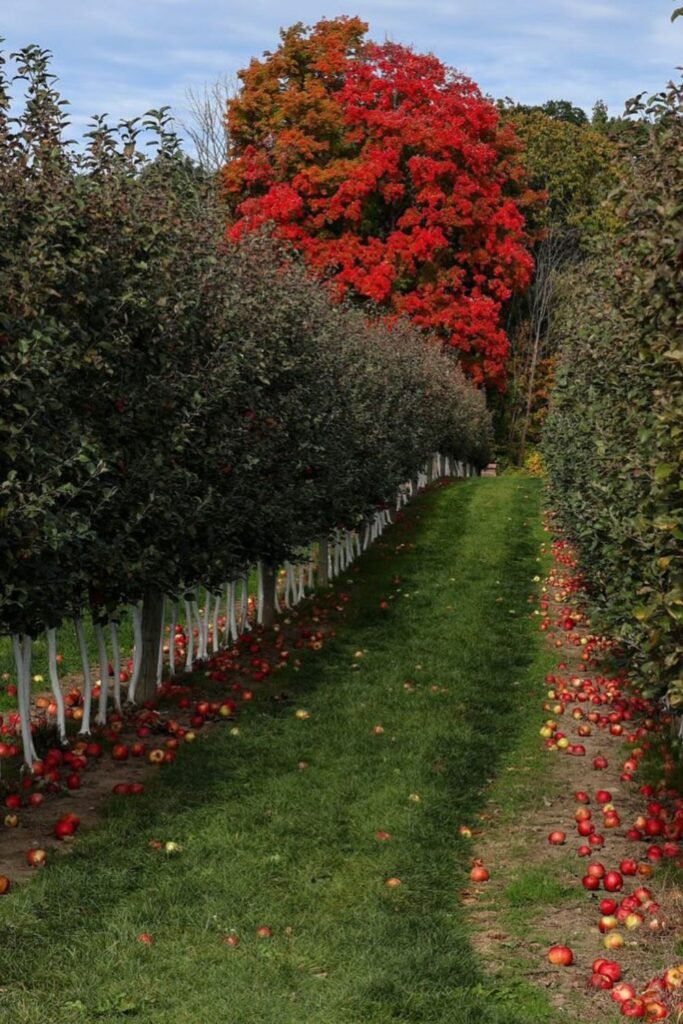
Straight lines bring discipline to fruit growing. Planting trees in clean rows makes pruning, harvesting.
And maintenance easier over the years. This approach works best in larger yards or rural spaces.
Where sunlight can reach both sides of each row. Spacing trees evenly prevents overcrowding and reduces disease caused by poor airflow.
Grass or mulch paths between rows keep fallen fruit visible and accessible instead of lost in weeds.
If you want long-term productivity without chaos, committing to orchard-style rows gives structure, predictability, and a harvest rhythm that improves with every season.
Fruit Tunnel
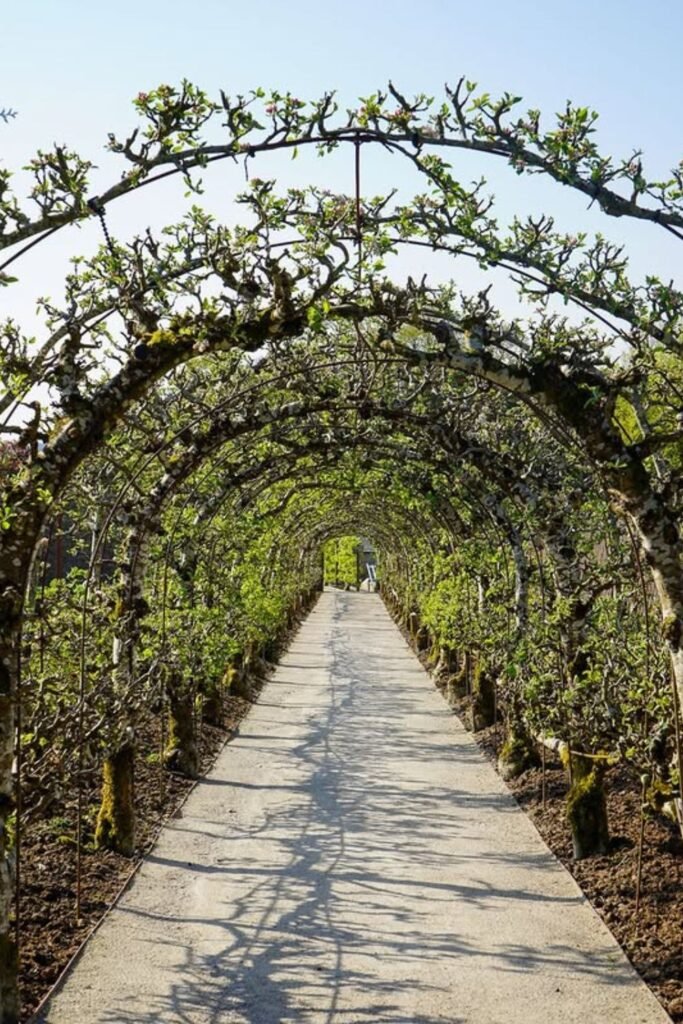
Walking paths don’t need to stay empty. Training fruit trees into an overhead tunnel turns a simple walkway into a long-term harvest zone.
This method works best with apples, pears, or stone fruits that respond well to heavy pruning and shaping.
Young trees get bent and guided onto curved frames, then maintained season by season to hold the form.
Patience matters here results build over years, not months but once established, fruit stays easy to reach and sunlight stays evenly distributed.
If you want structure, beauty, and production tied together, shaping trees over a path creates a garden feature that earns its space every single year.
Column Trees
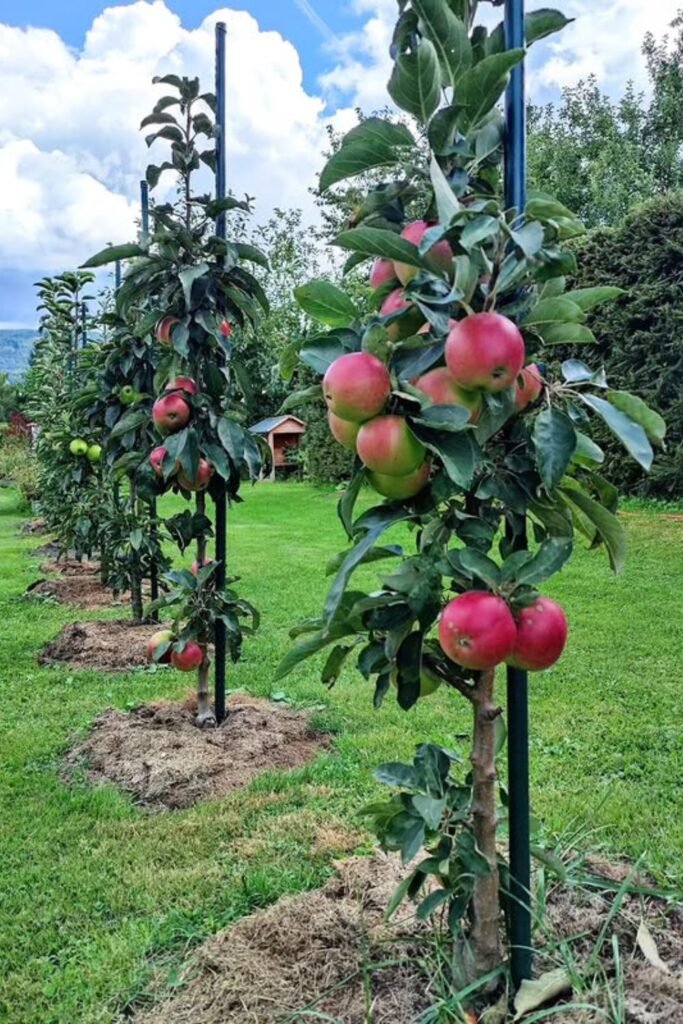
Vertical growth changes the math of fruit gardening fast. Column-style fruit trees grow upward instead of outward.
Making them ideal for lawns, narrow beds, or even along fences. Apples and pears work especially well with this method when supported by a single stake or post.
Pruning stays minimal because side branches remain short and productive. Fruit forms close to the trunk.
Which keeps harvesting simple and mess contained. If space feels tight but sunlight isn’t the issue, planting fruit in columns.
Lets you add production without redesigning your entire garden or sacrificing open ground.
Citrus Walkway
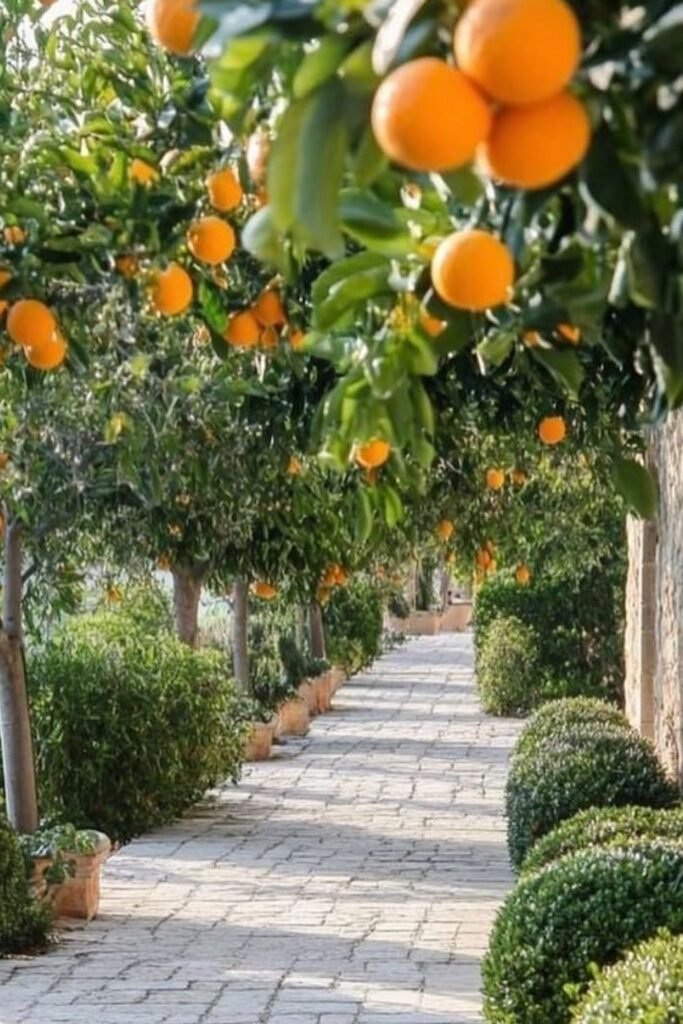
Fresh fruit feels closer when it lines the path you already use every day. Planting citrus trees along a walkway.
Turns movement space into a productive strip without crowding the garden. This works best in warm climates.
Where oranges, lemons, or mandarins can handle regular pruning. Trees should be spaced evenly and kept slightly lifted.
So branches don’t block the path or drop fruit where people walk. Low hedges or ground cover beneath keep things tidy and make fallen fruit easy to spot.
If you want beauty and harvest working together, shaping citrus along a walkway delivers both without demanding extra space.
Abundance Patch
Harvest days look different when fruit trees, berries, and supporting plants grow together instead of apart.
A mixed planting like this creates steady yields rather than one big harvest window. This approach works best in backyard gardens where you want variety without expanding space.
Fruit trees form the backbone, while berries, herbs, and flowers fill gaps and protect soil. Mulching paths.
Keeps walking areas clean and makes collecting easier. Planning layers instead of rows reduces weeds and spreads work across the season.
If the goal is frequent, flexible harvesting rather than perfection, building an abundance patch turns everyday gardening into a rhythm instead of a task.
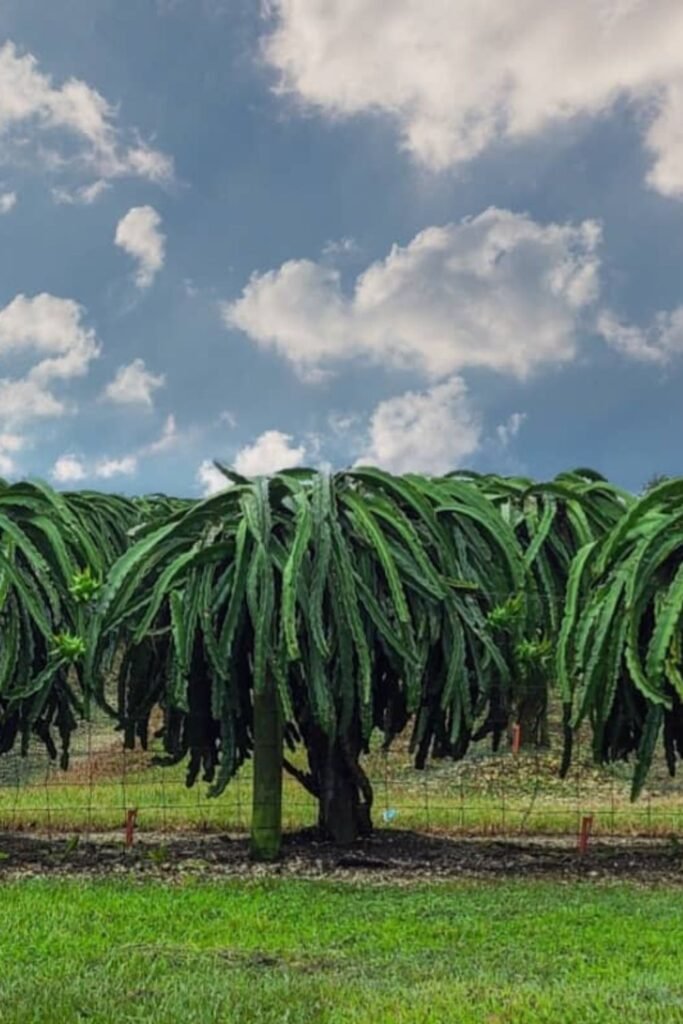
Dragon Rows
Uniform planting makes a bold statement when the fruit itself does the heavy lifting. Dragon fruit thrives when trained on individual posts.
Creating neat rows that stay productive without spreading everywhere. This setup works best in warm, dry-to-humid climates.
Where drainage and airflow matter. Each plant grows upward first, then cascades once established.
Which keeps fruit off the ground and easy to harvest. Strong center posts and simple cross supports prevent collapse as plants mature.
If you want a high-yield fruit system that looks organized instead of wild, planting dragon fruit in rows turns a sprawling cactus into a clean, repeatable structure.
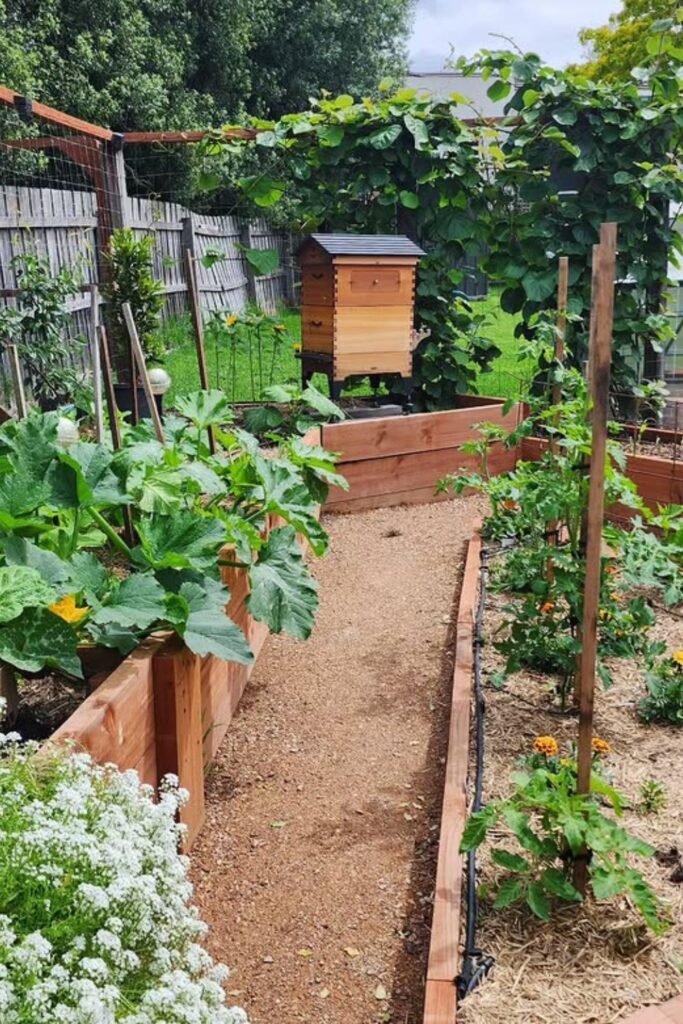
Productive Path
Gardens work better when movement and growing happen together. A central path framed by raised beds and climbing fruit vines.
Keeps everything reachable without stepping on soil. This setup fits perfectly in suburban backyards where space needs clear boundaries.
Fruit vines like grapes or hardy kiwi climb overhead, while berries or compact fruit plants grow along the sides.
Raised beds improve drainage and make maintenance easier, especially in wet seasons. Adding a small beehive or pollinator plants boosts fruit set without extra effort.
When every step through the garden gives access to food, the layout stops feeling crowded and starts feeling intentional.
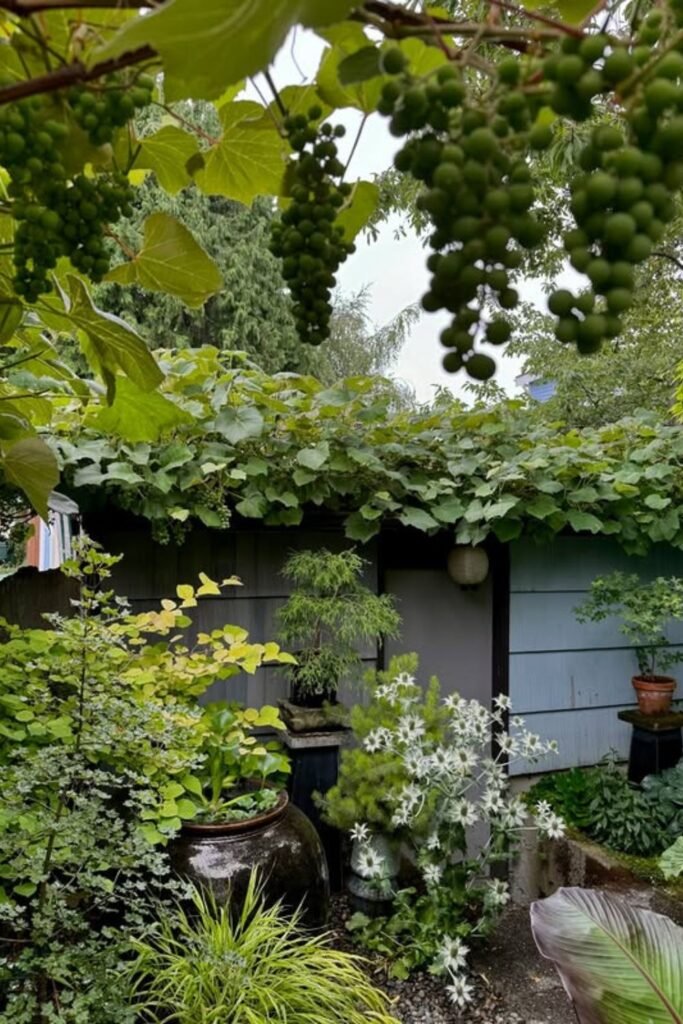
Grape Canopy
Shade becomes useful once fruit starts hanging from it. Grapevines trained overhead turn quiet corners into cool.
Productive spaces that feel intentional instead of crowded. This idea works best in backyards, patios, or side areas where summer sun gets intense.
A simple pergola, shed roof, or wire frame gives vines something to climb while keeping fruit off the ground.
Pruning controls thickness so light and airflow still reach below. Seating, containers, or small beds fit comfortably under the canopy without competing for space.
If you want fruit that doubles as natural shade, letting grapes grow above your head solves two problems at once.
Edible Landscaping
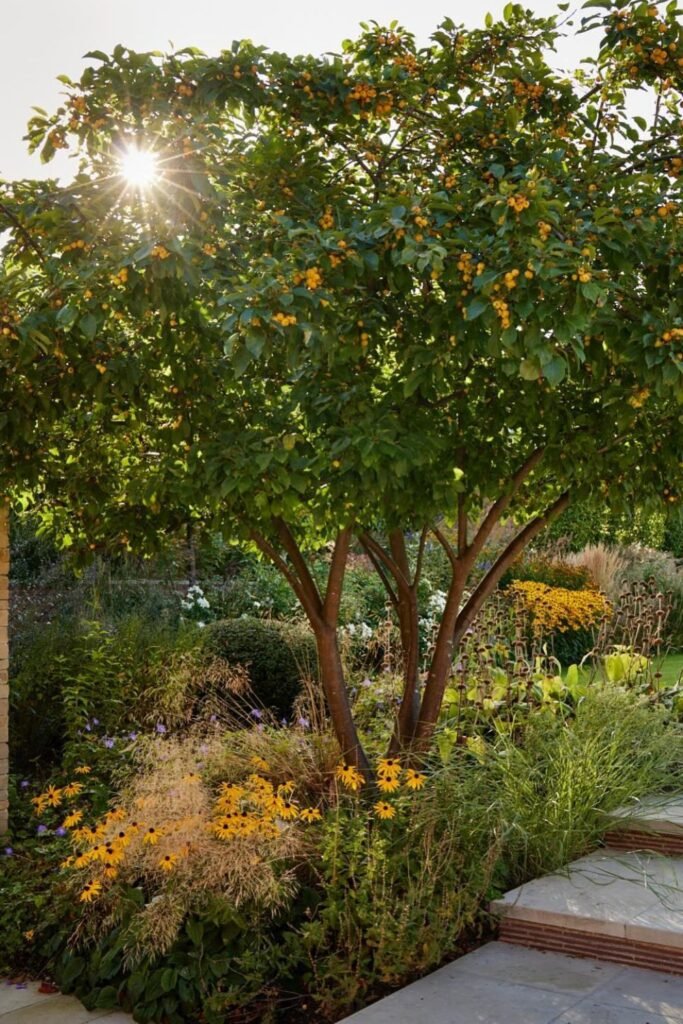
Beauty doesn’t disappear when fruit enters the picture it just becomes useful. A fruit tree blended into ornamental planting.
Keeps the garden elegant while quietly producing food. This approach works best in front yards or visible spaces where appearance matters as much as yield.
Choose fruit trees with attractive form or seasonal interest, then surround them with grasses, flowers.
Ground cover to soften the base. Pruning focuses on shape as much as harvest, keeping branches open and balanced.
If you want fruit without announcing “this is a garden,” weaving edible trees into landscape design lets productivity hide in plain sight.
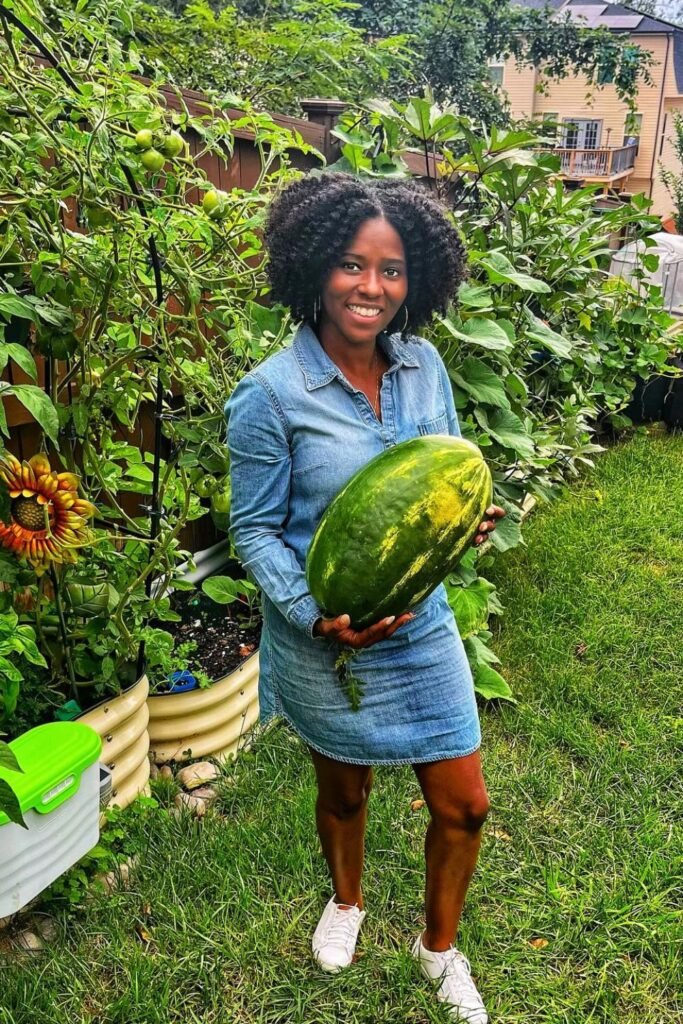
Backyard Melons
Big fruit doesn’t require big land it requires smart support. Watermelons can thrive in compact backyards when vines are guided instead of left to sprawl.
Raised beds or reinforced containers keep roots healthy, while vertical trellising or strong ground supports.
Prevent fruit rot. This setup works best in sunny yards where heat builds consistently through the day.
Slings or mesh supports help carry the weight as melons grow, reducing stress on vines. If you want impressive harvests.
Without sacrificing lawn space, training melons with intention proves size has more to do with care than square footage.
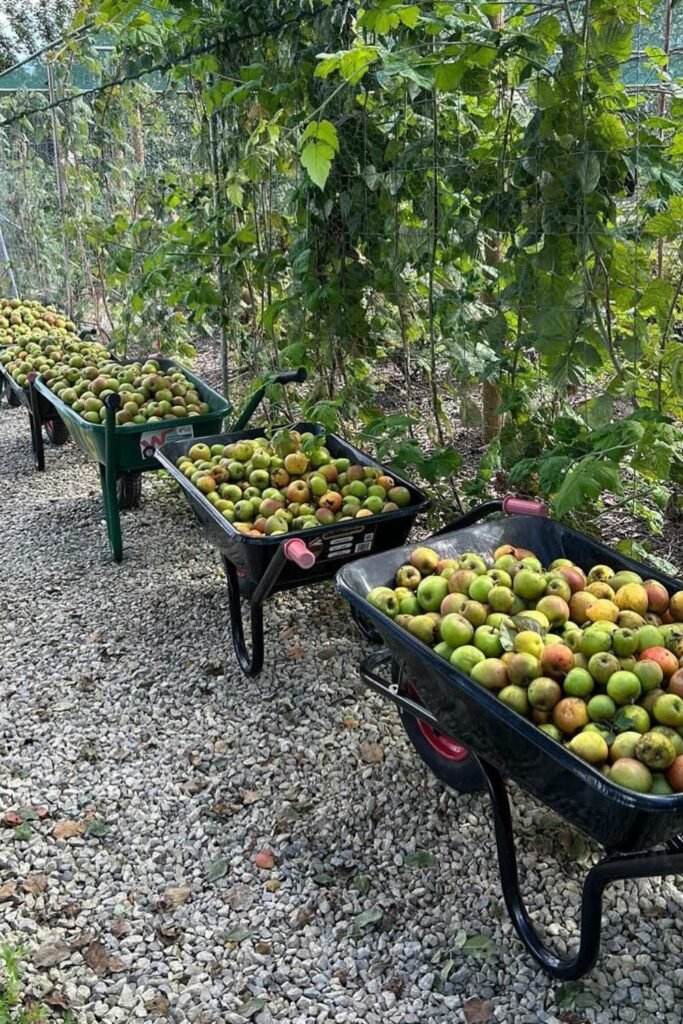
Heavy Harvest
Productivity shows up fast when planning matches reality. Rows of fruit trees paired with clear access paths.
Make large harvests manageable instead of overwhelming. This setup works best in medium to large gardens.
Where fruit production is a priority, not an afterthought. Wide paths allow wheelbarrows to move easily, saving time.
And strain during peak season. Netting, pruning, and cleanup all become simpler when trees follow a predictable layout.
If you expect serious yields, designing the garden around how fruit will be collected not just grown keeps abundance from turning into exhaustion.
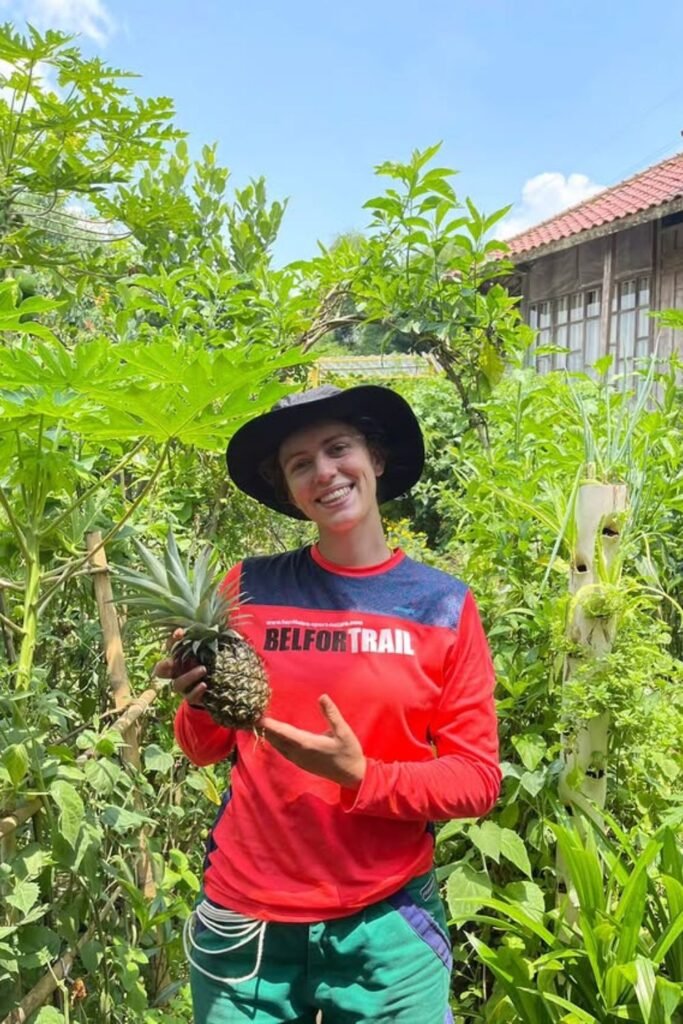
Tropical Pocket
Unexpected fruit thrives when layers replace open space. Pineapple fits naturally into mixed gardens where taller plants provide light shade and wind protection.
This approach works best in warm climates or frost-free seasons, especially in backyards that already grow corn, beans, or leafy greens.
Pineapples don’t need depth just good drainage and patience so planting them between rows or along edges uses space most gardens waste.
Water stays focused at the base, and growth remains compact. If you want to add tropical fruit.
Without redesigning everything, sliding pineapples into existing beds turns small gaps into long-term rewards.
Mobile Trees
Flexibility becomes an advantage when fruit grows in containers instead of soil. Keeping fruit trees in large pots allows you to move them.
Based on sun, wind, or seasonal needs. This method works well for renters, small yards, or climates with harsh winters.
Where trees need protection. Choose sturdy containers with excellent drainage and stick to dwarf varieties.
That handle root restriction better. Feeding becomes more important than pruning here, since nutrients wash out faster.
If permanent planting feels risky, growing fruit trees in pots gives you control without locking you into one spot.
Patio Mango
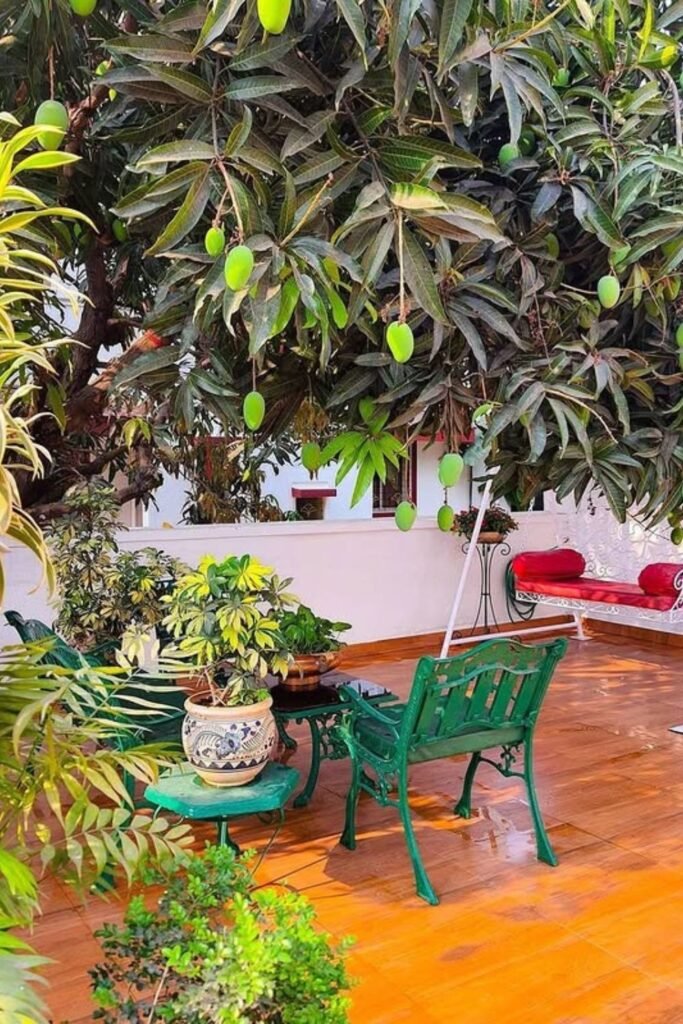
Comfort and fruit don’t have to compete for space. A mature mango tree can double as natural shade.
When it’s positioned beside a patio or seating area. This idea works best in tropical or subtropical climates.
Where mango trees thrive without protection. Keeping the canopy lifted allows airflow and light while letting fruit hang within reach.
Regular pruning controls height and prevents branches from taking over the space. Furniture placement matters leave room for fallen fruit and easy cleanup.
If you want a relaxing outdoor spot that also produces food, letting a fruit tree anchor your patio turns leisure space into something far more rewarding.
Protected Growing
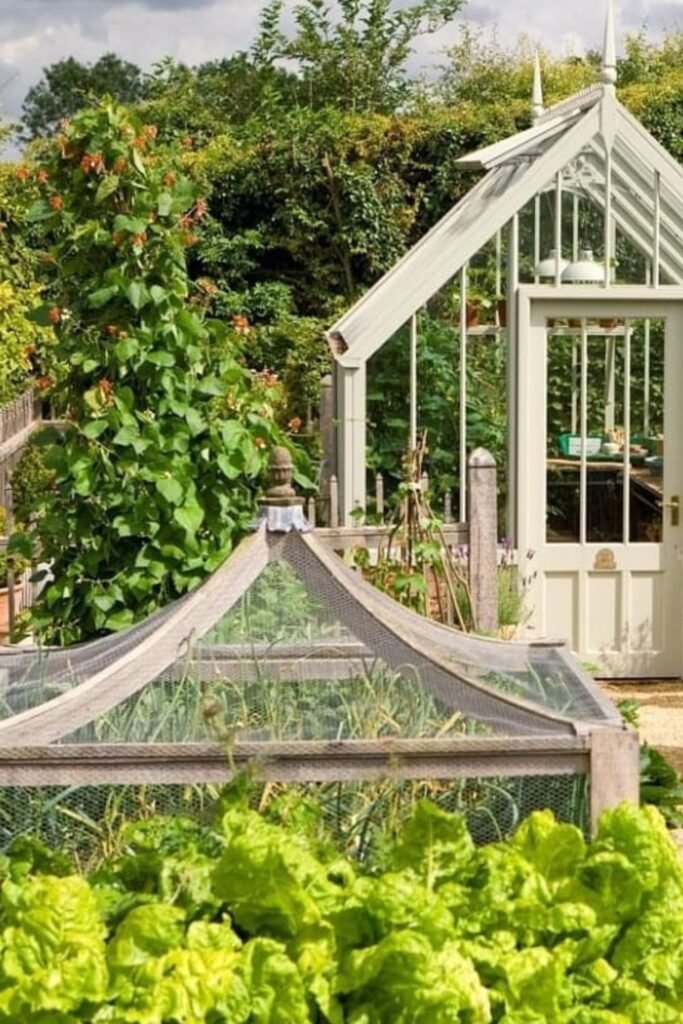
Consistency is easier when weather stops calling the shots. A greenhouse paired with raised beds creates a controlled space.
Where fruit plants get a longer season and fewer setbacks. This setup works best in cooler climates or areas with unpredictable springs and falls.
Vining fruit like grapes, passionfruit, or even berries can climb nearby frames while smaller fruit plants stay sheltered inside.
Netting and structure reduce pest pressure without constant intervention. If outdoor growing feels like a gamble where you live.
Building a protected growing zone lets fruit production continue on your terms, not the weather’s.
FAQs
Can I grow fruit if I only get a few hours of sun?
Yes, but fruit choice matters. While most fruit prefers full sun, some options still perform with 4–5 hours of light.
Figs, berries, citrus in containers, and trained fruit trees against warm walls handle partial sun better.
How long does it take before a fruit garden actually produces?
It depends on what you plant. Berries and vines can produce within the first year or two, while fruit trees usually take 2–4 years to deliver meaningful harvests.
Container-grown and trained trees often fruit sooner because growth stays controlled. Planning for staggered harvest times keeps the wait from feeling frustrating.

Hi, I’m Afaf! I’m a law student who loves all things home, style, and gardening. I’ve been writing for over a year about topics like home decor, DIY projects, plants, fashion, and beauty.
I like sharing ideas that are easy to try and don’t cost a fortune. Whether it’s organizing a messy closet, decorating on a budget, or keeping houseplants alive, I write about what I’ve actually tried myself.
When I’m not studying, I’m usually on Pinterest looking for my next project or adding another plant to my collection!