Indoor Plant Stands That Made My Plant Collection Look Like It Was Styled by a Professional

I bought a plant stand last February, put my fiddle leaf fig on it, and for about two weeks it looked perfect. Then the lower leaves started yellowing, and I couldn’t figure out why.
Turns out the problem wasn’t the plant or the stand — it was sitting three feet too far from the window, getting maybe half the light it needed.
Indoor light drops off faster than you think, and most plant problems come down to placement, not care.
Here are 28 ways to position an indoor plant stand so your plants actually get the light they need instead of slowly declining in a pretty pot.
Let’s start with the basics.
Where Should You Place an Indoor Plant Stand for the Best Light?
The biggest mistake I see people make is treating indoor light like outdoor light. Outside, shade is still pretty bright. Inside, three feet from a window might as well be a cave.
Most plants need to be closer to windows than feels natural, and plant stands help you use vertical space to catch light that would otherwise hit the floor and disappear.
The key is understanding that light indoors comes in layers — bright near windows, dimmer as you move away, and different strengths at different heights.
Position your stand to work with those layers, not against them.
Save this article for later! 👇👇

Vertical Balance
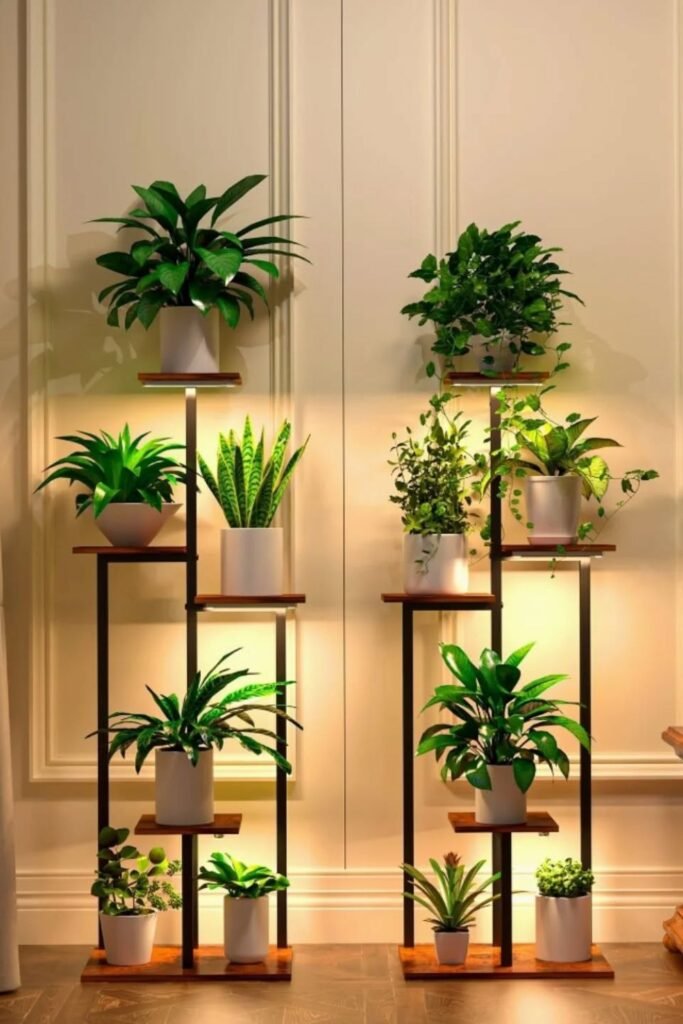
This setup makes sense when you think about how light actually moves indoors. Bright at the top, softer as it travels down, and this tiered stand puts plants exactly where they need to be for their light requirements.
I’d put this about two feet from a west-facing window where afternoon light comes in steady but not harsh. The snake plant up top can handle stronger light, while the pothos and smaller plants below get just enough filtered brightness to stay happy.
The spacing here matters too — enough room between shelves so upper plants don’t block everything below them. I learned this the hard way when my peace lily on the bottom shelf started getting leggy because my rubber plant was hogging all the light.
Keep the pots simple like this. White or neutral colors reflect light back onto the leaves instead of absorbing it
Soft Spill
Sometimes you don’t want dramatic height — you want plants to feel settled and comfortable. This low stand works perfectly near a north-facing window where light comes in gentle all day.
That trailing plant (looks like a philodendron) is smart here because it spreads outward to catch light from multiple angles instead of reaching straight up. The upright plant anchors the whole thing and soaks up whatever direct light filters through.
I have a similar setup in my bedroom, and it’s been thriving for two years. The key is matching the plant’s growth habit to how the light moves through the space.
This would also work in a reading corner where you want greenery but not something that dominates the room.

Ground Rhythm
Floor-level light gets overlooked, but it’s actually consistent if you place stands near bright windows with sheer curtains. The light bounces off the floor and comes back up, which these shorter stands take advantage of.
I like how they staggered the heights here instead of making everything uniform. Light can flow between the plants instead of hitting one and stopping. That snake plant can handle whatever direct light comes through, while the smaller plants catch the reflected glow.
This setup would work well in a living room where you want plants to feel like part of the furniture, not like a display. The heights feel natural, not staged

Light Curve
This curved stand is brilliant because it follows how light actually moves through a room. Instead of blocking it with a straight wall of plants, the curved shelves let light weave through and reach everything.
That hanging plant in the center is positioned perfectly — right in the light path where it can catch brightness without shading the plants below. The whole thing probably sits near a south-facing window where light shifts throughout the day.
You could recreate this with a regular tiered stand if you angle it slightly toward the window instead of placing it flat against the wall.
The goal is keeping light moving, not trapping it at the first level.

Focus Pedestals
Sometimes less is more. These individual pedestals give each plant its own light zone instead of making them compete. I can see this working beautifully next to a large window where you want plants to feel intentional, not crowded.
Those look like bonsai or slow-growing plants that need steady, controlled light rather than intense brightness. The height separates them just enough so they’re not casting shadows on each other.
Frank built me something similar for my orchids last year — three small wooden pedestals of different heights that I can arrange however the light changes. It’s been perfect for plants that need consistency but don’t want to share space.

Light Ladder
The wheels on this stand are smart — you can move the whole setup closer to the window in winter when light is weaker, then pull it back when summer sun gets too strong. I wish more plant stands had this flexibility.
The tiered shelves work with how window light naturally layers. Upper plants get the brightest rays, middle ones catch filtered light, and the bottom level benefits from light reflecting off the floor and nearby walls.
I’d group plants with similar watering needs but different light tolerance here. Maybe a pothos at the top, spider plants in the middle, and a peace lily at the bottom. All easy-care, but each getting exactly the light level it prefers.

Window Loop
Corners near windows usually waste good light, but this curved stand pulls it back into use. The open frame lets light pass through instead of stopping at the first plant, which is the problem with most corner setups.
I’d angle this slightly toward the window rather than pushing it flat against the corner. That small adjustment helps light reach all the shelves instead of just the top one.
This would be perfect in an apartment with those floor-to-ceiling windows where space is tight but light is generous. The curved shape keeps it from feeling boxy or intrusive.

Split Levels
This solves a problem most people don’t even realize they have. Light indoors drops off quickly as it moves down from the ceiling, and this split-level design puts two plants in completely different brightness zones without taking up extra floor space.
The taller plant gets stronger light, while the lower one sits in the softer zone where many plants actually prefer to be. Clean white walls like this reflect light back onto the leaves, which helps both plants more than you’d expect.
I’d pair something like a snake plant (which tolerates bright light) with a pothos or peace lily (which prefer it dimmer). Same watering schedule, different light needs — perfect for a setup like this.

Save this post for later ❤️
Wall Float
Eye-level light is some of the most consistent light indoors, but most people ignore it completely. These hanging planters put plants right where light travels across the room instead of trapping them near the floor.
The spacing between planters is crucial — too close and they shade each other, too far and it looks scattered. This distance looks about right for small to medium trailing plants.
I have something similar in my kitchen, mounted about six inches higher than eye level on the wall that faces our east window. The plants get steady morning light and stay out of the way when I’m cooking. Works perfectly for herbs and small houseplants that don’t need intense brightness.

Corner Lift
People assume corners are dark, but if you put height there, you can pull plants up into light that’s spilling sideways from nearby windows. These tall stands do exactly that — they rescue good light that would otherwise hit the floor and disappear.
The staggered heights prevent the plants from blocking each other, and that cascading plant on the shorter stand can spread outward to catch reflected light from the walls.
This would work well in a living room with a large window on one wall. The corner gets indirect light for most of the day, and these stands make sure it doesn’t go to waste.

Sun Steps
This stepped approach makes perfect sense when you understand that strong light loses power quickly once it hits a wall. The upper plants grab the direct brightness, while the middle and lower levels survive on light bouncing back from the surfaces around them.
I like that they mixed flowering plants with foliage here. Flowers often need more consistent light, and the stepped heights ensure each plant gets what it needs without fighting for the same rays.
This setup would be perfect near a sliding glass door or large window where light comes in strong but you want to soften it as it spreads through the room.

Window Pause
Sometimes simple is exactly what works. These narrow stands put plants right where morning and afternoon light lingers longest — close to the window but not pressed against the glass where temperature swings can stress them.
The height lifts the plants just above sill level, so they catch side light instead of just overhead light. And spacing them apart lets air circulate, which prevents the humidity problems that happen when you cluster plants too tightly.
This would work beautifully in an entryway or hallway where space is limited but you want plants to feel welcoming, not cramped.

Color Lift
That warm wall color isn’t just decoration — it’s actually helping the plants by bouncing light back onto the leaves. Light-colored walls can make a surprising difference for plants that need consistent brightness but not direct sun.
The staggered stand heights prevent the flowers from shading each other while keeping the foliage open to all that reflected light. I bet these flowering plants hold their color longer in this setup than they would against a dark wall.
This approach would work well in a dining room or hallway where windows are limited but you want plants to thrive, not just survive.

Sun Column
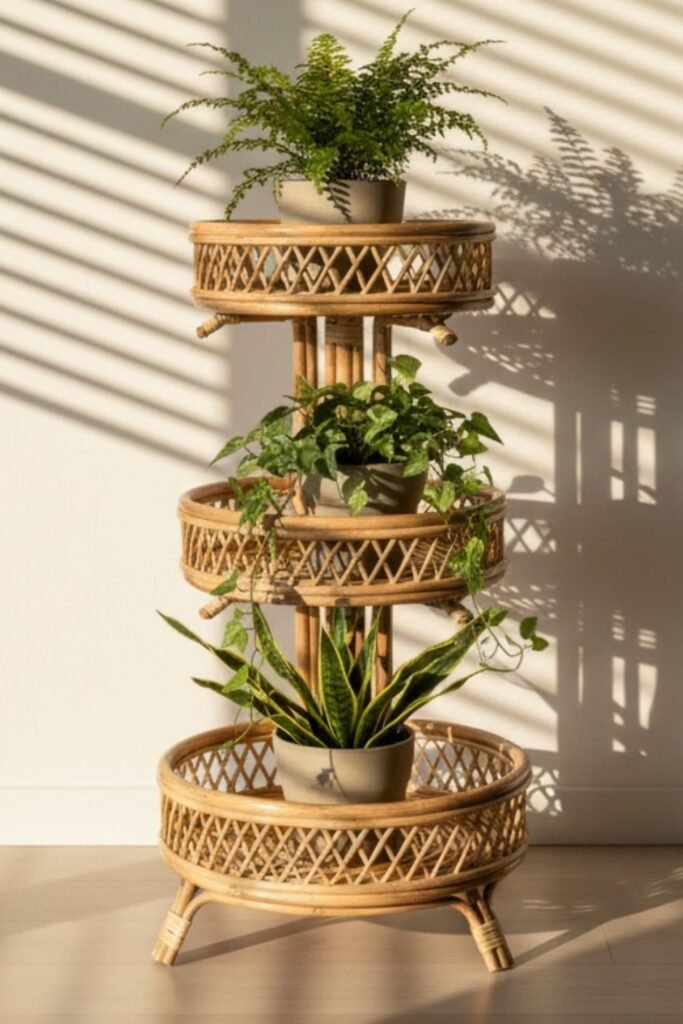
This vertical tower keeps plants stacked right in the brightest light path instead of spreading them out where some get forgotten in darker corners. The woven construction is smart — solid shelves would block light, but this lets it filter through.
I’d put tougher plants like snake plants or ZZ plants on the upper levels where light is strongest, and softer plants like pothos lower down where it’s been filtered by the layers above.
This would work perfectly near a south or west-facing window where sun moves across the wall during the day. The plants get brightness without being scorched, and the tower doesn’t take up much floor space.
Light Spine
Narrow spaces like hallways usually get written off for plants, but this vertical stand proves they can work perfectly if you think upward instead of outward. Each arm reaches a different height, so the plants don’t compete for the same light zone.
That trailing plant softens the whole arrangement and helps guide light downward to the plants below instead of blocking it. The spacing looks loose enough for good air circulation too.
This would be perfect between rooms where light spills through from both sides, or in a hallway that gets indirect light all day from nearby windows.

Side Reach
Most people only think about light coming straight through windows, but side light is often gentler and more consistent. This angled stand reaches into that side glow without blocking the window or crowding the floor space in front of it.
The slanted shelves are clever — they pull plants into usable light that would otherwise just hit the wall and stop. Perfect for a living room where you have furniture that would normally steal window access from plants.
I’d position this slightly off-center from the window, not directly in front of it, so it catches that side sweep of light without interfering with the view.

Window Grid
Light coming through a large window doesn’t spread evenly, and this grid system helps distribute it where plants actually need it. The open shelves let light pass through instead of being monopolized by whatever sits on the top level.
I like that they didn’t overfill each shelf. Leaving breathing room between pots means light can move laterally across the stand, not just up and down.
This would be perfect directly in front of a big window where you have generous light but want to make sure it gets shared fairly among multiple plants. The structure keeps everything organized without feeling rigid.

Zig Lift
Straight shelves are light blockers, but this zigzag creates gaps where sunlight can slip through to reach the lower plants. It’s such a simple solution to a problem most people don’t even realize they have.
The trailing plants spill outward instead of down, which means they’re catching side light rather than blocking the plants below them. That upright plant on the top shelf gets the brightest rays, while everything below benefits from filtered light moving through the gaps.
This setup would work beautifully along a bright wall where light spreads horizontally throughout the day.

Window Anchor
I’ve spent over four decades building a marriage, raising a family, and learning what truly matters along the way. I write about relationships, home, and navigating life’s later seasons with grace, honesty, and a little humor. My goal is to share the kind of steady, real-life wisdom that helps you feel grounded, encouraged, and a little less alone.