Low Maintenance Front Yard Landscaping Ideas That Look Beautiful Without Consuming Your Entire Weekend

Most front yards fail because people plant too much, not too little. You start with good intentions, add flowers here and shrubs there, and before long you’re spending every weekend chasing something that needs water, trimming, or fixing.
The problem isn’t your effort. It’s the expectation that a front yard should be complicated.
A good front yard works on Tuesday morning when you’re late for work, not just on Saturday when you have three hours to fuss with it.
Here are 26 low-maintenance front yard ideas that stop fighting you and start working with your actual schedule.
What Are The Best Low Maintenance Alternatives To Grass?
Grass is the reason most front yards feel like work. It needs cutting every week, water when it’s dry, and still looks patchy half the time.
Stone and gravel end mowing forever, but only if you prep the ground properly and edge everything cleanly. Mulched beds with a few reliable shrubs hold moisture better than grass and need attention maybe twice a year.
Ground covers work if you avoid the fast-spreading ones that take over everything. The key is reducing the lawn, not replacing it with something equally demanding.
Save this article for later! 👇👇

How Do I Design A Front Yard That Looks Good Year Round?
The secret is structure, not flowers. When your yard depends on things blooming to look decent, you’re setting yourself up for months when it just… doesn’t.
Start with clear lines and simple shapes. Use the same plants in groups instead of one of everything. Stick to slow-growing evergreens that keep their shape.
Leave breathing room between plants. When nothing looks crowded or stressed, the whole space feels intentional even in the dead of winter.
Shrub Focused
I replaced most of our front lawn with five boxwood shrubs spaced eight feet apart, and it changed everything. No more Sunday morning mowing, no more brown patches in August.
I water them deeply once a week in summer, trim them twice a year, and that’s it. They look the same in January as they do in July.
The space feels finished without me having to do anything. Frank was skeptical about “all that empty dirt,” but after two years of no weekend yard work, he’s converted.

Gravel Borders
Gravel only works if you treat it like flooring, not decoration. I learned this the expensive way after watching our first attempt turn into a weed garden within six months.
Now I put down landscape fabric, install metal edging, and actually rake it occasionally. It stays neat through rainstorms and heat waves.
The best part is no mud tracked onto the walkway and zero time spent with the mower. I leave spaces for a few plants instead of covering every inch.

Native Climate
I spent three summers fighting to keep East Coast plants alive in our California heat before I gave up and went local. California lilac, manzanita, and salvias that actually belong here.
They handle our dry summers without extra water and don’t look stressed by February. I group plants with similar needs instead of scattering them everywhere.
The yard finally feels like it fits the climate instead of fighting it. Maintenance happens when the seasons change, not every week.

Evergreen Structure
Evergreens are the reason our yard never looks abandoned, even in January when everything else has given up.
I built the whole layout around plants that stay green year-round. No bare branches, no seasonal collapse, no scrambling to plant annuals every spring.
The space holds its shape through weather and seasons, which means less panic and fewer emergency trips to the nursery.

Mulch Minimal
Four inches of bark mulch was my shortcut to a cleaner yard. I cover all the bare soil, plant three types of shrubs, and call it finished.
Weeds can’t push through, moisture stays put, and the whole space looks intentional even when the plants are just sitting there doing nothing.
I refresh the mulch once a year, usually in March. That’s it. No weeding, no constant watering, no weekend projects.

Stone Beds
Decorative stone solved our erosion problem and made the yard look more expensive than it was. River rock around the drainage areas, decomposed granite for the pathways.
Rain doesn’t wash everything away anymore, and nothing wilts when I forget to water. I hose it down twice a year and pull the occasional weed.
Stone handles weather better than any plant I’ve ever tried. It looks the same in December as it does in June, which is exactly what I wanted.

Stepping Paths
Flagstone stepping stones let me shrink the planted area without making the yard feel empty. People walk where they’re going to walk anyway — might as well make it official.
Less grass means less mowing, and clear paths prevent those worn dirt patches that never grow back properly.
I filled in around the stones with creeping thyme that doesn’t need cutting. The path looks intentional, and everything else stays simpler.

Raised Perennials
Raised beds gave me better drainage and fewer back problems. I filled two 4×8 cedar boxes with perennials that come back every year without replanting.
Water drains properly, weeds are easier to spot, and I don’t have to kneel on wet ground to fix things. The structure looks neat even when plants are dormant.
Maintenance is seasonal checking instead of constant crisis management.

Grass Grasses
Ornamental grasses move in the wind without me having to do anything about it. I planted fountain grass in three spots and let them do their thing.
I cut them back once a year in late winter, and that’s the entire maintenance schedule. They add movement and texture without weekly attention.
I avoided the spreading varieties after talking to our neighbor who’s still pulling pampas grass out of places she never planted it. Three clumps of the same type looks intentional without being complicated.

Hardscape Heavy
More pavers meant less everything else. I extended the walkway, added a sitting area, and suddenly had half as much yard to maintain.
Sweeping takes ten minutes. Nothing dies if I go out of town. I balance hard surfaces with small planted areas so it doesn’t feel like a parking lot.
The structure keeps everything looking intentional year-round, especially during months when plants are just surviving.

Mirror Layout
Matching plants on both sides of the front walk cut my decision-making and my maintenance in half. Same watering schedule, same pruning time, same replacement needs.
Visual balance happens automatically, and the space looks planned even when everything’s growing at different speeds.
I used four Japanese boxwoods, two on each side, spaced evenly. Simple, predictable, and it works.
Save this post for later ❤️

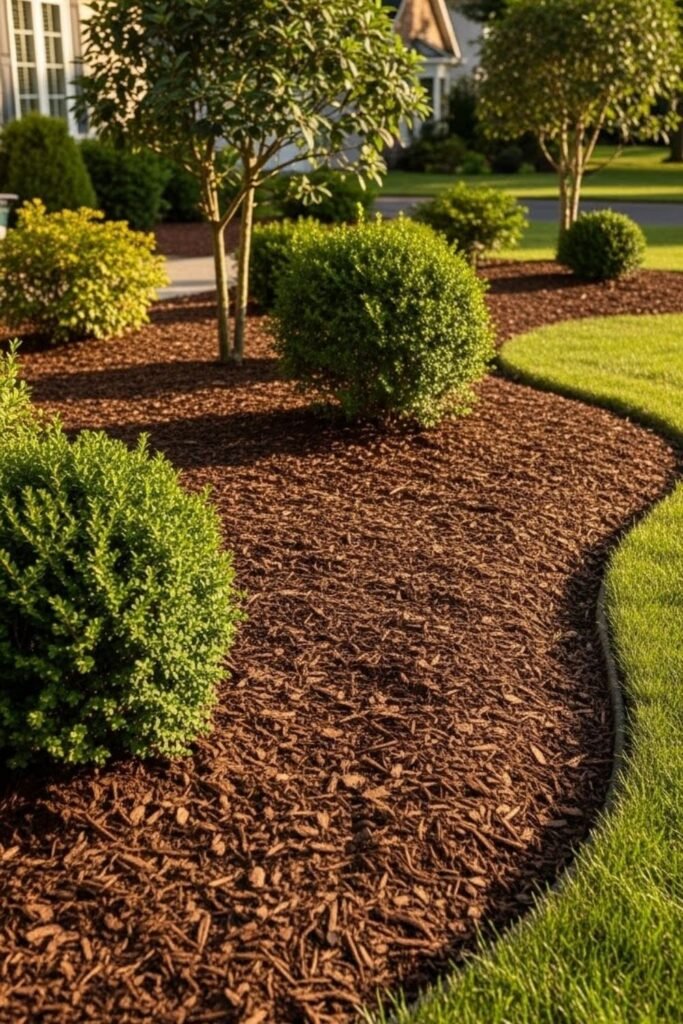
Bark Layers
Shredded bark mulch added warmth to the space and cut my watering in half. I spread it thick around sturdy shrubs that don’t need babying.
Soil stays protected, weeds struggle to establish, and the whole yard smells like cedar after rain. Bark breaks down slowly and actually improves the soil over time.
Natural texture keeps the space from looking flat or sterile. Maintenance is refreshing the mulch every eighteen months instead of weekly crisis management.
Slope Control
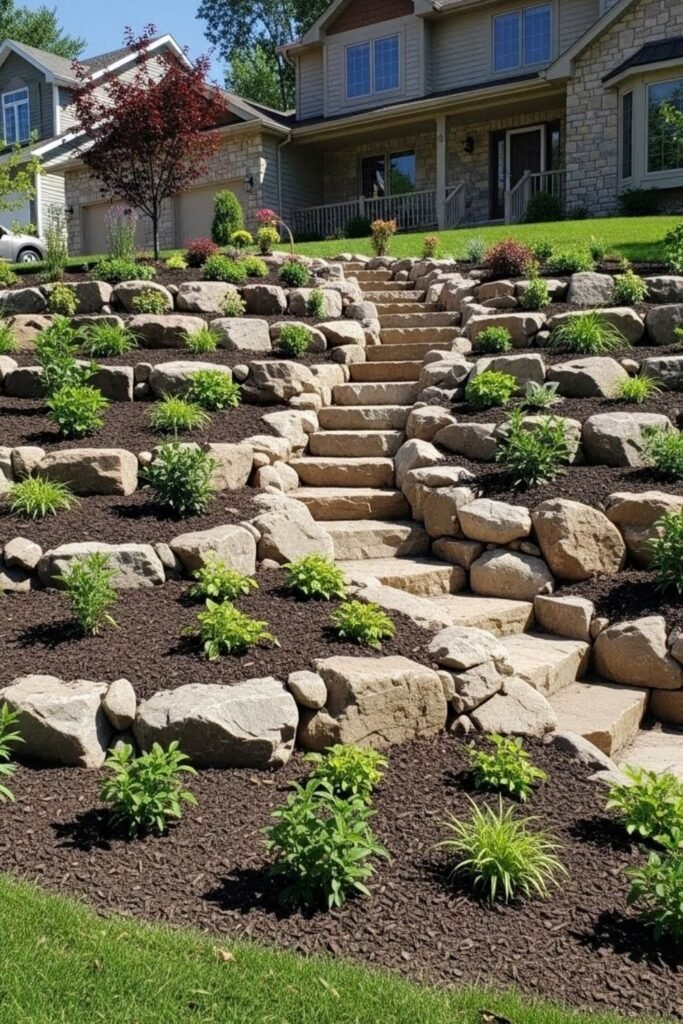
Our slope used to wash away every winter until I stopped fighting gravity and started working with it.
I anchored the space with large rocks and deep-rooted plants that hold soil in place. Runoff slows down, erosion stops, and mowing that impossible angle becomes unnecessary.
The slope finally works for me instead of against me. Visual chaos became organized terracing that actually looks intentional.
Paver Center
Centering the design around a paved area simplified everything. Walking spaces stay clean, planted areas shrink naturally, and the focus goes where people actually step.
I surrounded the pavers with small pockets of plants instead of trying to maintain large beds everywhere. Weather doesn’t bother the hardscape, and plants get defined roles.
The yard feels structured instead of scattered. Care shifts from constant trimming to simple cleaning, which actually fits into real life.

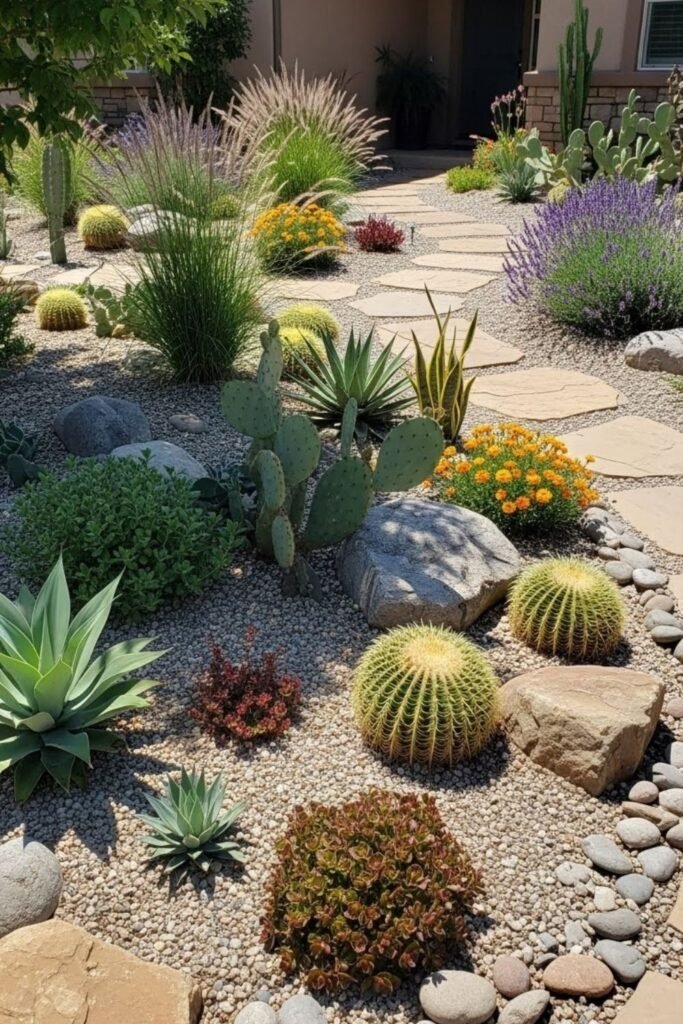
Xeriscape Plan
Water worries ended when I committed to drought-tolerant plants and stopped apologizing for it. I grouped plants by their actual water needs instead of what looked pretty together.
Mulch and decomposed granite protect soil while spacing prevents root competition. Irrigation became minimal and predictable.
The yard handles our dry summers without stress, and I stop chasing wilted leaves or brown patches. Everything feels calm, especially during months when everyone else’s lawn is struggling.
Repeat Pattern
Using the same three plants in different spots simplified my entire approach. Growth stays uniform, care stays consistent, and visual chaos disappears even when nothing’s perfect.
Maintenance routines become automatic instead of me standing there trying to remember what each plant needs. The yard looks planned without requiring constant management.
Simplicity creates stronger results than variety ever did for me. Three types of plants, repeated strategically, and that’s it.

Container Focused
Large pots near the front door gave me flexibility without permanent decisions. I can move plants when seasons change or when growth gets unbalanced.
Watering stays controlled, weeds stay minimal, and adjustments take minutes instead of weekends. I chose sturdy plants and simple containers — no fussy arrangements.
The yard looks styled without locking me into choices that might not work long-term. When something fails, I replace one pot instead of replanting an entire bed.

Clean Edging
Sharp edges between beds, paths, and lawn changed everything once I stopped treating them as optional. Lines stay defined, plants don’t creep where they don’t belong, and the whole space looks intentional.
Trimming becomes faster because boundaries are obvious. I use simple materials but place them precisely.
The yard looks finished even during slow growth periods. Good edges make average plants look better and maintenance feel manageable.

Shade Friendly
Our shaded front yard forced me to stop chasing sun plants and embrace what actually grows there. Hostas, coral bells, and Japanese painted ferns instead of struggling roses.
Water needs dropped, leaves stay healthy through summer, and bare patches disappeared. I focus on texture and foliage instead of flowers that won’t bloom anyway.
Maintenance became seasonal checking rather than constant troubleshooting. The yard feels cooler and more stable, especially during hot months when everyone else’s plants look stressed.

Slow Growing
Slow-growing plants changed my patience level with landscaping entirely. Dwarf varieties that mature gradually and hold their shape naturally, instead of plants that need constant correction.
Pruning drops to rare touch-ups instead of seasonal chores. The yard evolves without sudden overgrowth or surprise maintenance emergencies.
Planning spacing matters more upfront, but effort fades over time. Visual balance stays intact, and maintenance fits comfortably into long-term living instead of demanding weekend after weekend.

Turf Accents
Artificial turf works in small, specific problem areas — like the narrow strip between the sidewalk and driveway that never grows properly anyway.
I surround it with real plants so everything blends naturally. Maintenance drops to occasional hosing, and it solves a specific problem without creating new ones.
Used sparingly, turf handles heavy foot traffic and impossible growing conditions. Used everywhere, it looks like a putting green, which isn’t what I wanted.

Perimeter Planted
Planting only along the edges simplified my entire front yard approach. I keep the center open and manageable, with structure along the borders that frames everything naturally.
Maintenance drops because fewer plants need attention, and watering becomes targeted instead of scattered everywhere. Open ground in the middle stays clean and flexible.
This layout feels calm and intentional while requiring much less long-term effort than trying to fill every inch with something that needs care.

Texture Mixed
Mixing stone, mulch, and plants made the yard more interesting without adding work. Visual contrast handles the design heavy lifting so plants don’t have to perform constantly.
Hard surfaces stay clean through weather, soft plants add balance when they’re thriving. Different textures highlight each other naturally without competing for attention.
The result feels designed rather than just planted, which keeps upkeep light and satisfaction high through all seasons.

All Green
Green-only planting removed seasonal pressure and color anxiety from my front yard completely. Shape and consistency matter more than chasing blooms that last three weeks.
Evergreens and leafy plants carry the design through every month without gaps or failures. Maintenance stays predictable, and the yard never looks empty or overgrown.
This approach suits anyone wanting stability and reliable curb appeal without constant seasonal adjustments or emergency nursery runs.

Narrow Linear
Narrow front yards work better with linear thinking. I design lengthwise instead of trying to squeeze width that isn’t there.
Fewer plants line the path in an organized way, reducing visual clutter and maintenance confusion. Clean flow replaces the chaos of trying to fit too much into I’ve spent over four decades building a marriage, raising a family, and learning what truly matters along the way. I write about relationships, home, and navigating life’s later seasons with grace, honesty, and a little humor. My goal is to share the kind of steady, real-life wisdom that helps you feel grounded, encouraged, and a little less alone.