My Mom Finally Found Her Haircut: Short Stacked Bobs Over 50 That We Both Love

My hair hit that awkward phase last year where nothing looked right anymore. The same cut I’d been getting for three years suddenly made me look…tired. It wasn’t quite thin enough to panic about, but it wasn’t bouncing back the way it used to either.
I kept buying volumizing products and spending twenty minutes with a round brush, but by noon everything would fall flat again. The whole routine felt like I was fighting my hair instead of working with it.
Then my friend Priya (who cuts hair at a salon in Del Mar) mentioned stacked bobs, and honestly? I was skeptical. Short cuts can go wrong fast, especially when you’re dealing with hair that’s already not cooperating.
But when they’re done right, they actually solve the problems that come with hair that’s lost some of its strength. The key is getting the right kind of stacking – not the choppy, over-layered version that leaves you with wispy ends.
Here are 26 stacked bob ideas that work for hair that needs a little more support than it used to.
Are short stacked bobs good for thin hair over 50?
Yes, but the cut has to be precise. The stacking creates lift at the crown where thinning usually starts first, and the weight at the back prevents that droopy look that happens when hair loses volume.
The problem comes when stylists make the stacking too subtle or cut the back too blunt. You need actual structure back there, not just the suggestion of layers.
I’ve seen too many “stacked” bobs that are basically just regular bobs with a tiny bit of graduation. That doesn’t give you the lift you need, and it definitely doesn’t help with thinning areas.
The whole point is to build volume where your hair naturally wants to collapse and create shape that holds without constant maintenance.
Save this article for later! 👇👇

Should a bob have layers for over 50?
Layers, yes. But they need to serve a purpose, not just exist because someone thinks all mature hair needs “movement.” Too many layers and fine hair looks choppy. Too few and you get that helmet effect that drags your whole face down.
The right layers add lift without sacrificing the density you need at the ends. They should frame your face in a way that softens your jawline, not create a bunch of flyaway pieces that never lay right.
I’m not interested in volume for the sake of volume. I want lift where it matters and weight where my hair needs it to look full instead of sparse.
Soft Stacking
Sometimes you don’t need drama, just a gentle lift that looks completely natural. This approach works really well for gray hair that’s gotten a little coarse but hasn’t thinned out significantly.
The stacking is there, but it’s not screaming at you. It just quietly does its job of keeping everything lifted at the crown while the front stays smooth and controlled.
Ask for gradual layers in the back and a clean neckline. You want this to grow out gracefully, not turn into a maintenance nightmare every six weeks.

Crown Movement
Hair that sits too flat at the top needs encouragement, not force. Light stacking combined with layers that follow your head shape can give you lift that actually looks like it belongs there.
This works especially well if your hair has some natural body but tends to fall flat by the end of the day. The cut creates its own volume instead of relying on products or tools to fake it.
Tell your stylist you want layers that enhance your natural growth pattern, not fight against it

Clean Angle
An angled front can completely change how your face reads, especially if you wear glasses. The longer front pieces add weight where fine hair usually looks most sparse – around the temples and jawline.
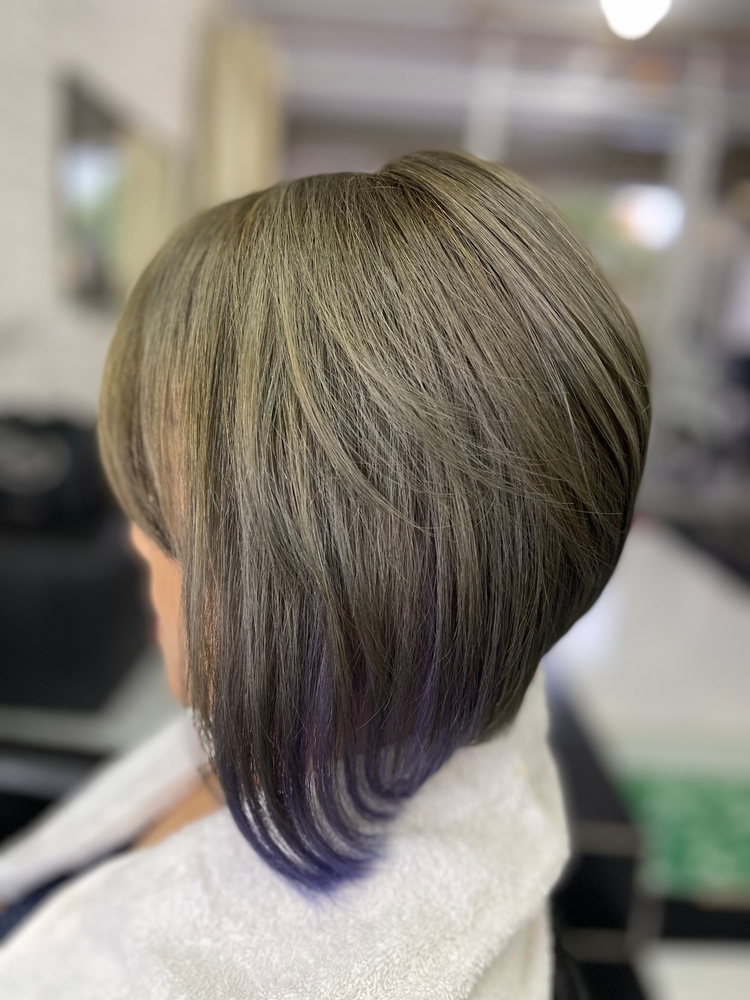
The stacked back prevents the whole cut from looking flat and one-dimensional. It’s a good compromise if you’re nervous about going too short but want something more interesting than a basic bob.
Keep the angle subtle and ask for minimal layering in the front to maintain that clean line.

Rounded Back
If your nape area has gotten patchy or thin, a rounded stack creates the illusion of fuller hair without actually adding fake volume. It’s all about the shape – keeping weight low but controlled.
This works particularly well if you want neck coverage but don’t want to deal with longer hair. The curve hugs your neckline instead of cutting across it sharply.
Make sure your stylist uses shears, not a razor, and builds the curve with clean sections so it grows out evenly.

Blunt Balance
Sometimes fine hair needs weight more than it needs layers. A strong, blunt perimeter paired with stacking in the back gives you the best of both – density where you can see it, lift where you need it.
This is especially good if your hair tends to look see-through around your face or if previous cuts have left you with wispy ends that never look polished.
Ask for a clean perimeter and let the stacking do all the work in the back. Don’t let them thin out the front.

Silver Precision
Gray hair shows every imperfection, so clean lines matter more than texture. A precise stacked bob lets silver hair fall in smooth, controlled sections instead of puffing out or looking disheveled.
This works best if your hair is naturally straight or has just a gentle wave. Trying to force curly gray hair into this shape will only lead to frustration.
Tell your stylist you want sharp lines and subtle interior layering. Skip the razor work entirely.

Soft Fringe
If you’ve been avoiding bangs because you think they’re too much work, a soft fringe with a stacked bob might change your mind. It brings attention forward to your eyes and balances out a longer face without feeling heavy.
The key is keeping them wispy and making sure they blend into the sides naturally. You don’t want a hard line across your forehead that screams “I have bangs now.”
Ask for piece-y bangs that grow out easily. They should enhance what you’ve got, not create a whole new maintenance routine.

Side Sweep
A gentle side part can shift the whole dynamic of a bob. Instead of everything falling straight down and emphasizing any thinning, you get movement that feels natural and soft around your face.
This works well if your hair is fine but still holds its shape reasonably well. The sweep creates the illusion of more volume without requiring any actual teasing or backcombing.
Keep the stacking subtle and let the direction create the interest, not layers

Sleek Length
Clean lines can actually make thin hair look fuller, which sounds counterintuitive but works. A blunt perimeter prevents wispy ends from becoming a problem, and hidden stacking keeps the crown from collapsing.
This is perfect if you prefer a polished look and don’t mind doing a little styling. The shape holds well and doesn’t require constant touch-ups.
Ask for minimal layering and a strong perimeter. The cut should look intentional, not accidental.
Save this post for later ❤️

Textured Lift
If your hair has some natural movement, you can use light texturing to enhance it without creating chaos. The key is keeping the texture controlled – you want lived-in volume, not bed head.
This works particularly well if your hair has a natural bend or wave that you’ve been fighting against. Instead of trying to make it perfectly straight, work with what you’ve got.
Ask for light surface layering combined with stacking underneath. You want movement, not destruction.

Face Framing
Length around the front can completely change how people see your face. Keeping the front pieces slightly longer draws attention away from any thinning at the crown and softens your jawline naturally.
The stacked back prevents this from looking like a basic long bob that just hangs there. You get the softening effect around your face with actual shape and structure.
Ask for a strong front perimeter and let all the layering happen in the back.

Polished Shape
Gray hair often gets coarser before it gets thinner, which means it can actually hold a precise shape better than it used to. A rounded, controlled bob takes advantage of that texture instead of fighting it.
This works best if your hair is straight or has just a gentle wave and tends to frizz when it’s over-layered. Sometimes less manipulation is better.
Ask for a rounded shape with subtle stacking and avoid any thinning at the ends.

Airy Texture
Sometimes hair needs space to look full. Light texturing through the top and sides can eliminate flatness without making the ends look thin and scraggly.
This approach works well if your hair has natural movement and you’re tired of fighting it into submission every morning. Let it do its thing, just give it better shape.
Ask for soft layering to encourage movement and stacking at the base to maintain structure.

Neck Softening
Instead of hiding your neckline, you can redirect attention with the right shape. A subtle inward curve at the nape creates flow instead of a harsh horizontal line.
This works particularly well if you’ve been avoiding shorter cuts because you’re self-conscious about your neck. The curve creates a more flattering silhouette than a blunt line.
Ask for a gentle bevel at the base that follows your neckline instead of cutting across it.

Weight Control
Too much bulk in the wrong places can make fine hair lose its shape completely. Removing some interior weight while keeping the perimeter strong prevents that puffy-but-flat situation that happens with bad layering.
This is especially helpful if your hair feels heavy on the sides but lacks strength at the crown. You need strategic removal, not random thinning.
Ask for interior weight removal, not just surface texturizing.

Part Shift
Changing where your hair falls can add instant volume without any products or styling. A stacked bob cut to work with an off-center part can lift the crown area that’s probably gotten flatter over time.
This is especially effective if your part has become more pronounced as you’ve aged. Instead of fighting it, use it to create natural lift.
Make sure the cut is shaped to work with your natural part, not against it.

Temple Coverage
Thinning at the temples shows up more with shorter cuts, but the right angled pieces can camouflage those areas without making it obvious that you’re hiding something.
The key is subtle forward angles that blend seamlessly, not chunky pieces that scream “I’m covering my hairline.” It should look intentional, not desperate.
Ask for longer front sections that taper naturally instead of blunt bangs.

Growth Planning
Most short haircut disasters happen during the grow-out phase. A well-stacked cut with height at the crown tends to soften as it grows instead of maintaining that rigid shape that looks awful at week six.
This is crucial if you don’t get to the salon every month. You need a cut that evolves gracefully, not one that looks perfect for three weeks and terrible for nine.
Ask your stylist to shape the back to fall gracefully over time

Glasses Friendly
If you wear glasses daily, your haircut needs to work with them, not against them. A stacked bob with clean lines behind the ears avoids those weird bends and pressure spots that happen when hair gets trapped.
This is especially important if you have progressive lenses or thicker frames. Your hair shouldn’t be fighting your glasses for space.
Wear your glasses to the salon and make sure the cut is shaped while you have them on.

Volume Illusion
Real volume isn’t about height – it’s about creating shadows and depth that make hair appear more substantial. Strategic stacking can make even fine hair look full without requiring any backcombing or teasing.
This technique works particularly well on straight hair that tends to lay flat and show scalp. The layers create dimension that tricks the eye.
Ask for compact, layered stacking rather than anything too tall or airy.

Jaw Balance
If you feel like your face has gotten heavier in the lower half, volume above the jawline can balance things out. A stacked bob with fullness at the back draws the eye up instead of letting it settle on your jaw.
The key is keeping the front length right at the jawline – not shorter, not longer. Too short and it emphasizes width; too long and it drags everything down.
Make sure the front doesn’t extend past your jawline.