26 Layered Haircut Ideas For 2026

If a layered haircut has been on your mind, but you’re still wavering, you’re in good company.
Perhaps you’re worried it will make your hair appear less voluminous, or you’re simply unsure if layers will flatter your face shape.
You’ve likely come across stunning layered styles online, but the specifics of who they actually suit – and who they don’t often go unexplained. That’s the crux of the issue.
In this article, I’ve gathered 26 modern Layered Haircut Ideas women can try without overthinking in 2026.
What Face Shapes Look Best With Layers?
Layers are surprisingly versatile, suitable for nearly every face shape, provided they’re expertly placed.
For people with round faces, longer layers can help create the illusion of length, preventing the face from appearing broader.
If your face is square, soft layers around the jawline soften those angular features, promoting a more harmonious look.
Oval faces enjoy the greatest flexibility, though layers that begin too high can still disrupt the overall balance.
Save this article for later! 👇👇

What Type Of Hair Is Best For Layers?
Curly hair needs layers to really show off the curls; otherwise, the result can be a bit of a mess.
Straight hair can also be layered, though the layers might not always be apparent unless you style it.
Curly hair requires layers to define the curls; otherwise, the result can be an uneven appearance.
Straight hair can also be layered, though it’s worth noting that the layers might not always be visible if you don’t style it.
Curtain Layers
Heavy hair starts behaving once layers are placed with intention. Long, flowing layers take weight off the ends while keeping the length intact.
That’s why this particular cut is a great choice for the with medium or thick hair. Curtain bangs seamlessly integrate with the layers, rather than just sitting there, rigid, on the forehead.
To achieve the look, keep the shortest pieces falling below the chin. Style with a little blowout to generate movement, but avoid going overboard with volume.

Long Layers
Flat hair usually points to one problem everything is cut the same length. Long layers fix that by creating lift through the middle while keeping the ends full.
This style works well for those with medium to thick hair that has a bit of weight to it, yet still craves length.
To get this style, request gradual layers that begin below the shoulders. Then, style with loose curls or a blow-dry that directs the hair forward, rather than straight down.

Soft Layers
Balance shows up when layers don’t scream for attention. Soft layers like these keep the hair flowing in one direction while quietly adding shape around the face.
This approach works well if you want a bit of dynamism while maintaining a polished appearance.
When you see your stylist, ask them to integrate the layers and steer clear of thinning down the ends. A quick blow-dry, with just a few gentle bends, will do the trick to make this cut shine.

Feathered Layers
Drama comes from movement, not length. Feathered layers like these give the hair a lifted, bouncy shape that frames the face without looking stiff.
This look is ideal for hair that’s medium to thick and tends to feel weighted down at the tips.
To achieve it, request layered ends with a gentle flip. Style with a round brush, directing the hair away from your face to give that light, breezy effect.

Face Layers
Clean lines don’t automatically equal flat hair. Face-framing layers, for instance, and can add shape where the hair often just hangs.
The aim is to lighten the cut’s appearance without losing any length. This particular style suits straight to slightly wavy hair, and offering movement while still looking put-together.
Ask for inward-curving layers in the front, and keep the back fuller. A quick blow-dry with a paddle brush is all you need.

Flow Layers
Hair that falls the same way every day usually needs smarter shaping, not more length. Flow layers like these guide the hair to sit naturally.
Instead of a forward collapse, this technique shines with medium-density hair, and offering movement without the telltale signs of layering.
Request long, continuous layers that mirror the shape of your head. Then, style by drying your hair in parts, allowing the ends to naturally curve, rather than forcing them.

Fringe Layers
Soft fringe changes the whole balance of long hair when it’s blended the right way. These layers pull attention toward the eyes.
It’s a good option if your hair tends to fall flat at the front, but is otherwise fine. Keep the fringe wispy, not heavy.
And request layers that blend seamlessly into the sides. This way, style remains simple, using just a round brush.

Volume Layers
Lift like this usually comes from smarter layering, not more product. Volume-focused layers build height through the crown.
This cut is ideal for the medium to thick hair that tends to lie flat at the roots but feels weighed down at tips.
Request circular layers throughout the crown, along with longer strands framing the face. To style, blow-dry the hair upwards, then finish by smoothing the ends.
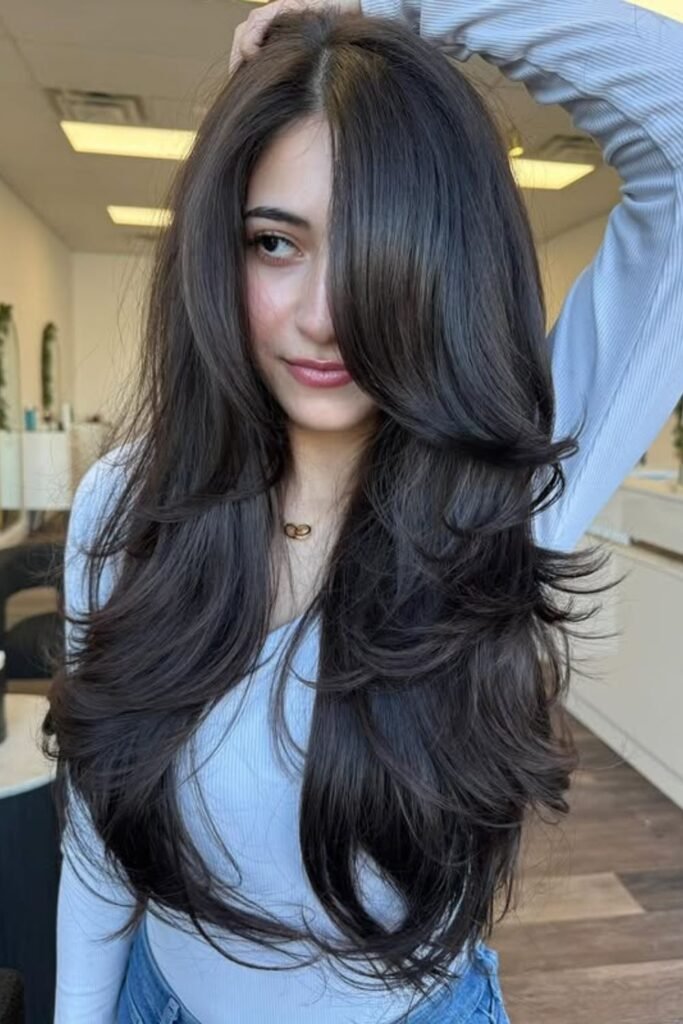
Bounce Layers
Hair that feels stiff usually needs movement built into the cut, not more styling. Bounce layers like these stack softly through the lengths.
The hair has a natural lift and fall. This technique is particularly effective on thick hair, which can appear weighed down when straightened.
Request circular layers, ensuring the fullness is concentrated at the ends. Then, use a round brush to style, or allowing the form to take center stage.

Midi Layers
Shoulder-length hair stops looking awkward once layers give it direction. Midi layers like these keep the cut light around the face.
Let the ends curl under, rather than flipping out. This is a good option if you’re tired of the upkeep of long hair, but thought of going short feels like a leap.
Request delicate layers that graze the shoulders, and then style with a light blowout to keep the form seeming effortless, not rigid.

Luxe Layers
Polish shows up when layers are shaped to fall into place on their own. Luxe layers like these create the smooth, expensive finish.
Without becoming carried away, naturally. It styling technique is best for hair that’s medium to thick – the form that can resist a blowout.
Request long or texture layers, and ensure the ends retain several body. Then, style by twisting sections inward, permitting the hair to gently contour the face.

Shag Layers
Texture is the center of the exhibit, not length. Shag layers relax the roughness of straight lines, offering a relaxed, lived-in form that doesn’t need precise styling.
This look is ideal if you’re aiming for a touch of movement with out the fuss of excessive volume or a neatly styled appearance.
Maintain a light, airy sensation in the layers at the crown and fringe. Then, both let your hair dry naturally or use a gentle touch with heat, let your hair’s basic texture shine through.

Choppy Layers
Edge emerges when the ends lose their pristine look. Choppy layers, such as these, introduce separation throughout the hair’s length.
It’s a way to inject some character into your hair without a lot of effort. This style works well for slightly wavy and straight hairs that appears a bit flat or too refined.
Ask for uneven, razor-cut layers to give the ends a rough texture. Style it casually with your fingers and use the bit of heat to keep that effortless, relaxed feel.

Butterfly Layers
Long hair is here to stay, but the actual revolution is what’s going on up front. Butterfly-shaped layers offer a shorter, more vibrant appearance.
These layers are particular crafted to accentuate the face, all while keeping the back long. It’s a brilliant option if you’re seeking volume without losing any length.
Request face-framing layers that just graze the collarbone, while keeping the longer layers in the back.

Collarbone Layers
Mid-length hair behaves better once layers land at the collarbone. This cut removes that awkward flip.
It’s a good option, especially if you’re in awkward phase of growing your hair out or trying to decide between lengths.
The key is to keep the layers soft, with a subtle inward curl at the ends. This way, they won’t clash with whatever style you’re aiming for.

Invisible Layers
Movement appears, seemingly out of nowhere. Subtle internal layers are the secret, lightening the hair’s load without altering its overall silhouette.
This method works wonders on thick, heavy hair that already boasts a polished look.
Ask for internal layering only, and be sure to tell your stylist to keep the perimeter crisp and blunt.

Razor Layers
Texture feels lighter when the cut isn’t too precise. Razor layers soften the ends and add movement without building bulk.
This look works best with hair that’s straight or has a bit of a wave, especially if the ends feel a little rigid.
When using a razor, concentrate on the mid-lengths and ends; this will keep the crown area looking sleek.

Wispy Layers
Heavy ends can make hair look lifeless even when it’s long. Wispy layers create a lighter finish that feels airy instead of thick.
This technique is ideal for fine to medium hair, especially when it tends to fall flat with a straight-across cut.
Request subtle layering towards the tips, and steer clear of short layers that could make the hair appear even thinner.

Crown Layers
Volume problems usually start at the top. Crown layers lift the hair where it tends to collapse, giving.
The entire cut is more balanced now. It’s ideal for long hair that tends to seem lifeless when seen from the front.
Ensure these layers are rounded and seamlessly blended; otherwise, they risk becoming puffy when styled.

U-Layers
Straight hems can make a haircut look heavy. U-layers, on the other hand, sculpt the back into a gentle curve, allowing the hair to move freely.
This method works particularly well for long hair that looks like it’s dragging at the ends.
Request a subtle U shape, complemented by blended layers to maintain a sleek appearance.

V-Layers
The distinct position for end commonly makes and the length seem more defined. V-shaped layers draw the hair down, resulting in a longer, more striking silhouette.
This particular cut works well for thick hair that requires definition without adding bulk.
Ensure the V is understated, and merge the face-framing layers to avoid a disjointed look at the front.

Graduated Layers
A haircut’s shape benefits from a gradual layering process, rather than a single, dramatic change.
Graduated layers add body to the hair, all while keeping the style appear neat. This technique looks great on medium-length hair, which can sometimes look a bit lifeless.
To get the style, ask your stylist to build up the layers thoughtfully. The goal is a cut that feels full, but hardly too much.

Sleek Layers
Polished hair can still have personality. Sleek layers add dimension, keeping things smooth and sophisticated.
It’s perfect for anyone that who loves straight hair but wants a little shape without any extra fuss.
To get the look, keep the layers long and seamlessly blended. Avoid thinning the ends to maintain that pristine finish.

Jaw Layers
Face-framing is most effective when it lands just where it should. Layers that touch at the jawline.
Can really drive the eye upward. Helping to define your features without making the entire haircut feel too short.
This technique is especially good for hair that feels heavy around the cheeks. To keep things balanced, it’s preferable to leave the rest of the hair longer.

Airy Layers
Lightness is achieved via careful spacing, not by removing excessive length. Airy layers, strategically placed.
Let the hair to move freely without becoming frizzy. This technique is particularly effective for hair of medium density that craves mobility.
But not added bulk. Request spaced layers and minimum thinning to maintain a sense of fullness.

Blended Layers
Harsh lines can ruin a layered haircut. Blended layers, however, allow each section to merge smoothly, banishing any awkwardness or inconsistencies.
This approach is ideal if you want layers but aren’t fond of the look of obvious cut lines.
When you visit your stylist, stress the need for seamless transitions, not abrupt changes in length.

FAQs
Do layered haircuts make hair look thinner?
They can, but only if the layers are cut too high or with too much zeal. When layers begin too close to the crown, fine or low-density hair sheds weight at the ends.
To achieve movement without thinning, layers should start lower and remain blended, preserving the fullness of the length.
How do I ask for layers without ending up with choppy hair?
Be clear about your vision for the shortest pieces and how much length you’re willing to part with, rather than simply asking for layers.
A few reference photos can be useful, but the words you choose are the most important. Ask for blended layers, and make it clear that you’re not after a look that’s too choppy or textured.
You may like to read!

Hi, I’m Afaf! I’m a law student who loves all things home, style, and gardening. I’ve been writing for over a year about topics like home decor, DIY projects, plants, fashion, and beauty.
I like sharing ideas that are easy to try and don’t cost a fortune. Whether it’s organizing a messy closet, decorating on a budget, or keeping houseplants alive, I write about what I’ve actually tried myself.
When I’m not studying, I’m usually on Pinterest looking for my next project or adding another plant to my collection!